
What is the Primary Reason People Buy Life Insurance

Jason Stolz CLTC, CRPC
The primary reason people buy life insurance is to provide financial protection for their families and loved ones if they pass away unexpectedly. Life insurance creates a financial safety net that can help replace lost income, pay off outstanding debts, cover funeral expenses, and maintain financial stability for surviving family members. For many households, life insurance represents one of the most important financial planning tools available because it ensures that dependents are protected even if the primary income earner is no longer there to provide support.
When a family relies on a person’s income to cover daily living expenses, the sudden loss of that income can create significant financial stress. Mortgage payments, rent, utilities, childcare, education costs, and basic living expenses often continue even after a loved one passes away. Life insurance helps address this risk by providing a lump-sum benefit that can help families maintain financial stability during an extremely difficult time.
Financial planning professionals frequently emphasize that life insurance should be viewed as part of a broader financial protection strategy. Just as individuals evaluate financial risk through resources such as investment risk analysis, life insurance serves as a safeguard against one of the most significant financial risks families face: the loss of a primary income earner.
While the concept of life insurance is simple, the role it plays in financial planning can be extremely powerful. Properly structured coverage can protect families, preserve long-term financial goals, and ensure that major life expenses can still be met even in the absence of a loved one.
Speak With an Insurance Advisor
Speak With an Insurance Advisor
See Real-Term Rates Side by Side
Compare annual renewable term against short multi-year options using our live calculator.
Life Insurance Quoter
Income Protection for Families
The primary reason people buy life insurance is to replace income for their families if they are no longer able to provide financial support. Many households rely on one or two primary income earners to cover everyday expenses. Without life insurance, surviving family members may struggle to maintain the same standard of living.
Life insurance benefits can help replace lost income and allow families to continue paying mortgages, rent, or other financial obligations. This financial protection can be particularly important for families with young children, where income may be needed for many years to support childcare, education, and living expenses.
Parents often purchase life insurance specifically to ensure their children have financial stability if something unexpected occurs. Coverage can help fund future educational expenses or support children through college.
Financial protection strategies frequently extend beyond income replacement. Families may also review broader financial planning topics such as downside protection strategies in bear markets to understand how unexpected financial disruptions can affect long-term financial goals.
Covering Debts and Financial Obligations
Another major reason people purchase life insurance is to ensure that outstanding debts can be paid if they pass away. Many families carry financial obligations such as mortgages, car loans, credit cards, and personal loans. Without life insurance, these debts may become the responsibility of surviving family members.
Life insurance benefits can help eliminate these financial burdens by providing funds that allow surviving family members to pay off major debts. This can be especially important for homeowners, where mortgage payments represent a significant portion of monthly expenses.
Some individuals also purchase life insurance to cover final expenses. Funeral costs can be surprisingly high, and families often prefer to avoid placing this financial burden on loved ones during an already difficult time. Resources such as how much a funeral costs can help families understand the financial impact of final arrangements.
Life Insurance as a Financial Planning Tool
Life insurance is not only about protecting families from immediate financial hardship. In many cases, life insurance plays an important role in broader financial planning strategies. Some policies can provide long-term financial benefits such as cash value accumulation, estate planning advantages, or tax-efficient wealth transfer.
Financial planning professionals often incorporate life insurance into comprehensive strategies designed to support long-term financial goals. For example, individuals planning for retirement may evaluate income strategies alongside insurance protection. Some individuals also explore retirement income strategies involving annuities such as bonus annuities with lifetime income as part of their long-term financial planning.
Combining insurance protection with investment planning can create a more resilient financial strategy that protects families from multiple types of financial risks.
Who Should Consider Buying Life Insurance
Many people assume life insurance is only necessary for parents or primary income earners. While these groups often have the greatest need for coverage, life insurance can benefit a wide range of individuals.
Young families frequently purchase life insurance to protect their children’s financial future. Married couples often use life insurance to ensure that a surviving spouse can maintain financial stability. Business owners may purchase life insurance to protect partners, employees, or business continuity.
Some individuals also purchase life insurance to address specific health risks or medical concerns. Certain policies are designed to accommodate individuals with medical conditions, such as those discussed in resources like life insurance for HIV or life insurance after stroke.
Even individuals without dependents may choose to purchase life insurance as part of an estate planning strategy or to cover final expenses.
The Long-Term Value of Life Insurance
Ultimately, the primary reason people buy life insurance is to provide peace of mind. Knowing that loved ones will be financially protected can allow individuals to focus on their careers, families, and long-term goals without worrying about what might happen if something unexpected occurs.
Life insurance provides a level of financial security that few other financial tools can match. By ensuring that funds are available when they are needed most, life insurance helps families maintain stability during one of life’s most difficult moments.
Many individuals also incorporate life insurance into broader retirement and estate planning strategies. Financial planning topics such as Social Security planning or long-term healthcare preparation through resources like the long term care playbook can complement life insurance protection and create a more complete financial plan.
By integrating life insurance into a comprehensive financial protection strategy, individuals can help ensure that their families remain financially secure regardless of what the future may bring.
Related Pages
Talk With an Advisor Today
Choose how you’d like to connect—call or message us, then book a time that works for you.
Schedule here:
calendly.com/jason-dibcompanies/diversified-quotes
Licensed in all 50 states • Fiduciary, family-owned since 1980
Frequently Asked Questions About Why People Buy Life Insurance
The primary reason people buy life insurance is to provide financial protection for their families if they pass away unexpectedly. Life insurance benefits can help replace lost income, pay off debts, cover funeral expenses, and support dependents who rely on the insured person’s financial contributions.
Life insurance provides a tax-free lump sum payment to beneficiaries when the insured person dies. These funds can help cover everyday living expenses, mortgage payments, education costs, and other financial obligations so surviving family members can maintain financial stability.
No. While many parents purchase life insurance to protect their children, coverage can also benefit spouses, business partners, or anyone who shares financial obligations. Some individuals also purchase life insurance to cover final expenses or leave a financial legacy.
Yes. Many people buy life insurance to ensure outstanding debts such as mortgages, car loans, credit cards, or personal loans can be paid if they pass away. This prevents financial burdens from being transferred to surviving family members.
Common types of life insurance include term life insurance and permanent life insurance. Term life insurance provides coverage for a specific period of time, while permanent policies such as whole life insurance may provide lifelong coverage and additional features such as cash value accumulation.
The amount of life insurance needed depends on factors such as income, debt obligations, family size, and long-term financial goals. Many financial planners recommend choosing coverage that can replace several years of income while covering major financial responsibilities.
About the Author:
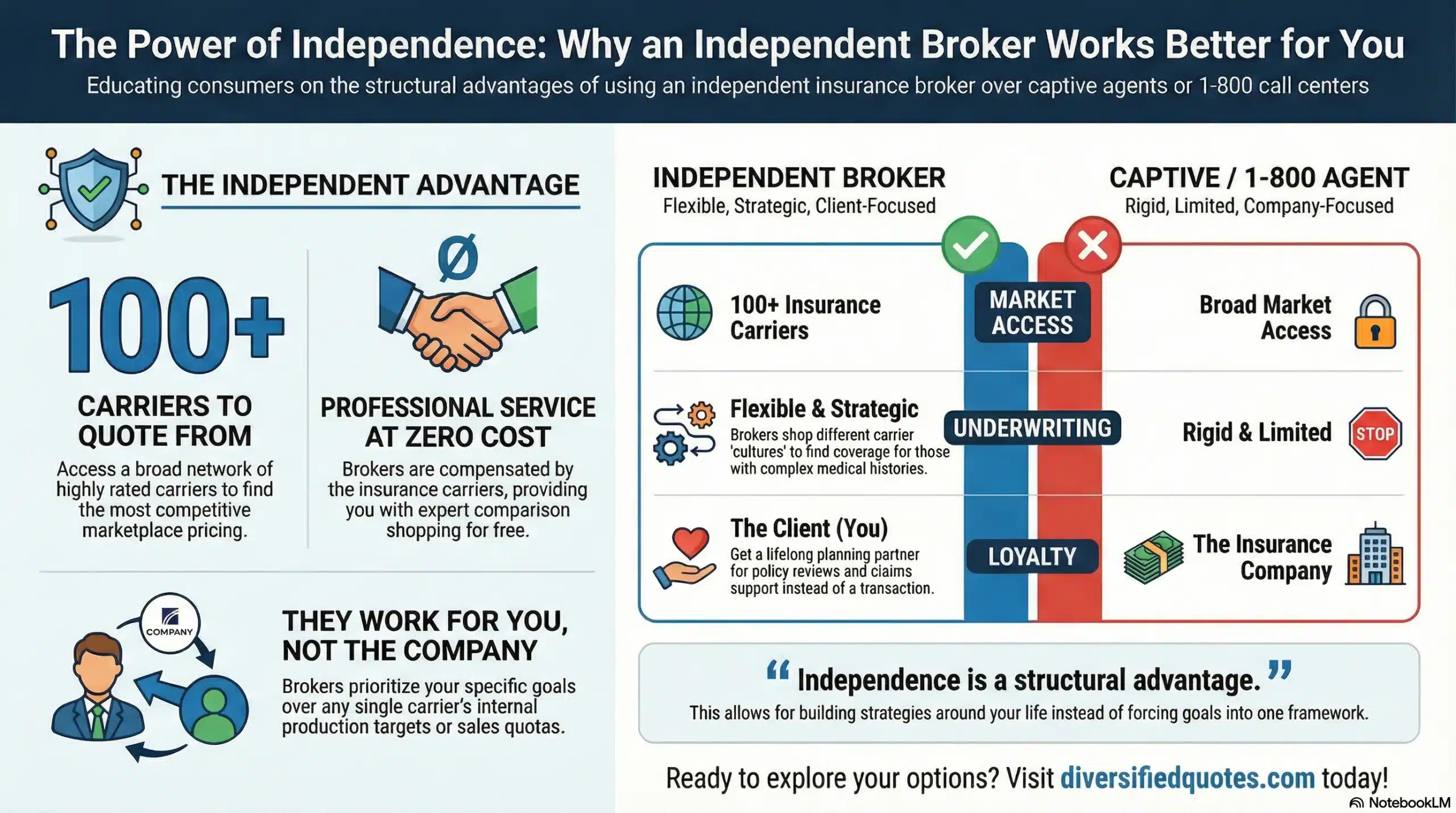
Jason Stolz, CLTC, CRPC and Chief Underwriter at Diversified Insurance Brokers (NPN 20471358), is a senior insurance and retirement professional with more than two decades of real-world experience helping individuals, families, and business owners protect their income, assets, and long-term financial stability. As a long-time partner of the nationally licensed independent agency Diversified Insurance Brokers, Jason provides trusted guidance across multiple specialties—including fixed and indexed annuities, long-term care planning, personal and business disability insurance, life insurance solutions, Group Health, and short-term health coverage. Diversified Insurance Brokers maintains active contracts with over 100 highly rated insurance carriers, ensuring clients have access to a broad and competitive marketplace.
His practical, education-first approach has earned recognition in publications such as VoyageATL, highlighting his commitment to financial clarity and client-focused planning. Drawing on deep product knowledge and years of hands-on field experience, Jason helps clients evaluate carriers, compare strategies, and build retirement and protection plans that are both secure and cost-efficient. Visitors who want to explore current annuity rates and compare options across multiple insurers can also use this annuity quote and comparison tool.
