
What is the Primary Reason People Buy Travel Medical Insurance

Jason Stolz CLTC, CRPC
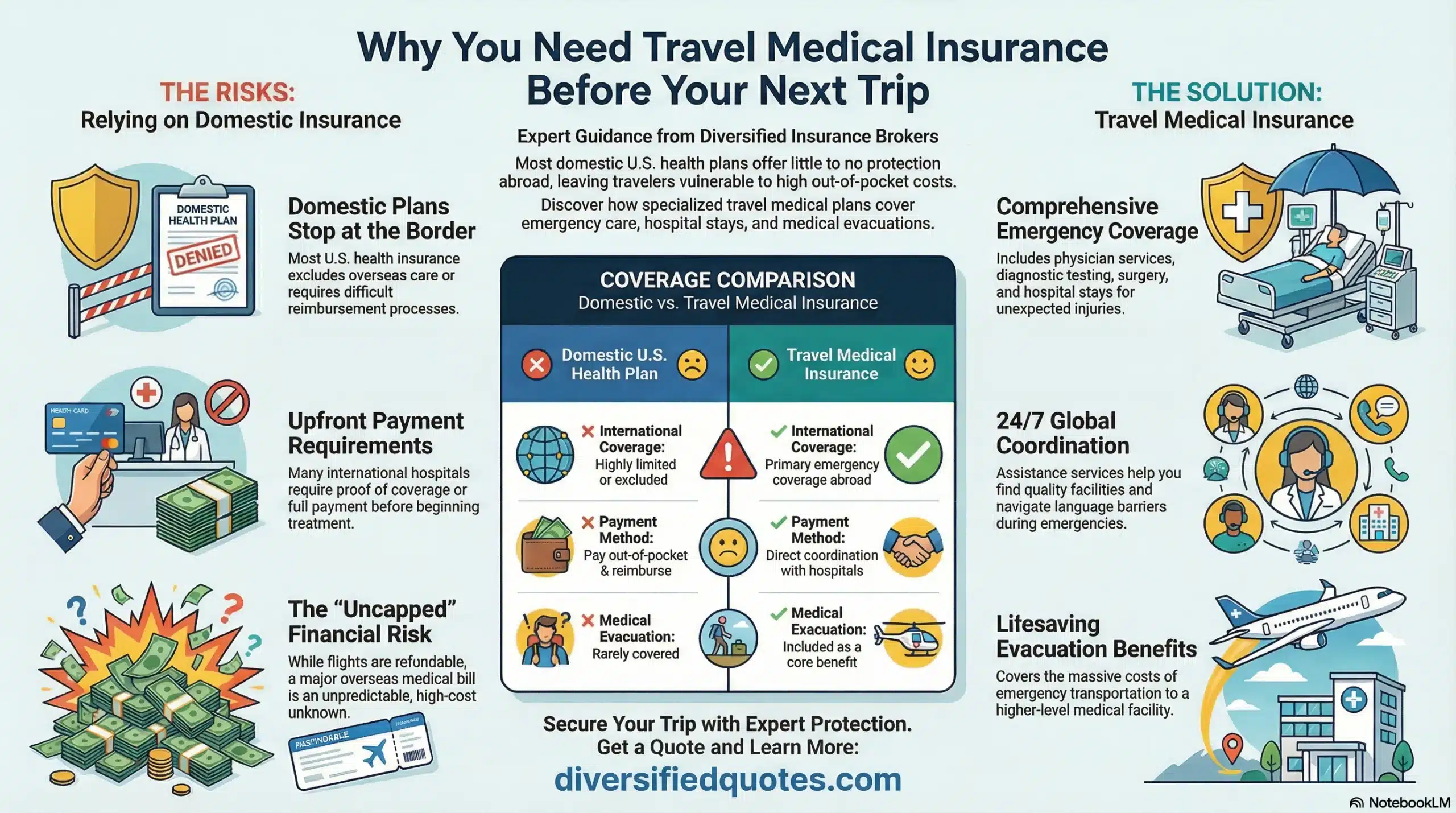
The primary reason people buy travel medical insurance is to protect themselves from unexpected healthcare expenses while traveling outside their home country. Medical care abroad can be extremely expensive, and many domestic health insurance plans provide little or no coverage for treatment received overseas. Travel medical insurance helps bridge that gap by providing coverage for emergency medical treatment, hospital services, physician visits, and medical evacuation if serious illness or injury occurs during a trip.
For many travelers, healthcare coverage becomes especially important when visiting countries where medical systems operate differently or where emergency treatment may require payment upfront. Travel medical insurance can provide financial protection and peace of mind by ensuring that medical care is accessible if something goes wrong. Without coverage, even routine medical treatment abroad could lead to significant out-of-pocket costs.
International travel has increased significantly in recent years, and with that increase comes greater awareness of the risks associated with being far from home during a medical emergency. While most trips go smoothly, accidents and illnesses can occur unexpectedly. Having travel medical insurance in place ensures that travelers can focus on enjoying their trip rather than worrying about the financial consequences of medical treatment abroad.
Travel insurance planning often becomes part of a broader financial protection strategy. Many individuals who carefully plan their finances also explore risk management strategies such as investment risk analysis to better understand how unexpected events can affect financial stability. Travel medical coverage works in a similar way by protecting travelers from potentially large medical expenses during international trips.
Speak With an Insurance Advisor
Why Medical Coverage Is Important When Traveling
The primary reason people buy travel medical insurance is the unpredictability of health emergencies during travel. When people are outside their home country, they often do not have access to the same healthcare networks, providers, or insurance protections they rely on at home. Many domestic health insurance policies limit international coverage or exclude overseas treatment entirely.
Travel medical insurance helps address this gap by providing coverage for medical emergencies that occur while traveling. Coverage may include hospital stays, doctor visits, emergency room treatment, ambulance services, prescription medications, and diagnostic testing. Some policies also include emergency dental coverage or urgent care services.
In severe situations, travel medical insurance may include emergency medical evacuation coverage. If a traveler becomes seriously ill or injured in a location where adequate medical care is not available, evacuation benefits can cover transportation to a nearby hospital or even repatriation back to the traveler’s home country.
These evacuation services can be extremely expensive without insurance coverage. Medical air transport alone can cost tens of thousands of dollars depending on the distance and level of medical support required during transport.
Individuals who frequently travel internationally sometimes combine travel medical insurance with broader financial planning strategies designed to protect assets and reduce financial risk. Some travelers explore strategies discussed in resources such as downside protection strategies in bear markets, which emphasize the importance of preparing for unexpected events that could disrupt financial stability.
Common Situations Where Travel Medical Insurance Becomes Essential
Travel medical insurance is most valuable when unexpected medical events occur far from home. While minor illnesses can sometimes be treated at local clinics, more serious conditions may require hospital treatment or specialized care.
Common situations where travel medical insurance may be necessary include food poisoning, infections, accidents during recreational activities, severe allergic reactions, respiratory illnesses, or injuries resulting from falls or vehicle accidents. Even travelers in excellent health may experience unexpected health issues while adjusting to new environments, climates, or foods.
Medical treatment costs vary significantly around the world. In some countries, private hospitals may require proof of insurance or immediate payment before treatment begins. Travel medical insurance can help streamline this process by coordinating payment with healthcare providers and assisting travelers with locating appropriate medical facilities.
In addition to covering medical expenses, many travel insurance policies also provide support services that help travelers navigate unfamiliar healthcare systems. These services may include multilingual assistance, physician referrals, and emergency travel support.
Travel planning often intersects with other financial considerations as well. Some individuals preparing for extended travel or retirement travel may review broader financial planning resources such as Social Security advice when evaluating how travel expenses and healthcare needs fit into long-term retirement plans.
Who Should Consider Travel Medical Insurance
Travel medical insurance can benefit a wide range of travelers. Individuals traveling for vacations, business trips, international study programs, or extended stays abroad may all benefit from having medical coverage in place.
Older travelers often place particular emphasis on travel medical insurance because healthcare risks may increase with age. Some travelers also have existing medical conditions that could require treatment while abroad.
Even younger travelers may benefit from travel insurance because accidents can occur unexpectedly. Activities such as hiking, skiing, scuba diving, or adventure travel may increase the likelihood of injuries that require medical attention.
Long-term travelers and expatriates may require more comprehensive international coverage depending on how long they plan to remain outside their home country. In some cases, specialized international insurance plans may provide broader coverage than short-term travel medical policies.
Travelers who prioritize financial planning often view travel insurance as part of a larger strategy designed to protect personal finances from unexpected disruptions. Some individuals also evaluate broader financial security strategies such as long term care planning when developing comprehensive financial protection plans.
What Travel Medical Insurance Typically Covers
Travel medical insurance policies typically provide coverage for emergency medical treatment that occurs while traveling outside the insured person’s home country. Coverage may include hospital stays, physician services, emergency transportation, urgent care visits, and prescription medications related to the covered illness or injury.
Many policies also include emergency evacuation benefits. These benefits cover transportation to the nearest appropriate medical facility when adequate care is not available locally. Some policies may also include medical repatriation coverage, which provides transportation back to the traveler’s home country when medically necessary.
Coverage limits and exclusions vary between policies. Travelers should carefully review policy terms to understand what services are included and whether any exclusions apply.
Some travel insurance policies also provide additional services such as trip interruption coverage, lost baggage protection, or emergency travel assistance. However, the primary purpose of travel medical insurance remains medical protection rather than trip cancellation benefits.
Financial planning professionals often emphasize that risk protection strategies should cover multiple areas of life. For example, individuals may combine insurance planning with financial protection topics such as investment risk analysis to better understand how unexpected events can impact long-term financial stability.
The Financial Impact of Traveling Without Medical Insurance
One of the main reasons travelers purchase medical insurance is the potential cost of healthcare abroad. Medical treatment expenses can vary widely depending on the country, hospital system, and level of care required.
In some cases, hospital stays in foreign countries can cost thousands of dollars per day. Emergency surgery, intensive care treatment, or medical evacuation can dramatically increase total expenses.
Travelers who do not have adequate insurance coverage may be responsible for paying these costs out of pocket. In some situations, hospitals may require payment before treatment begins, which can create serious challenges during emergencies.
Travel medical insurance helps reduce these financial risks by covering many of the expenses associated with emergency medical treatment abroad.
For travelers who prioritize financial preparedness, travel medical insurance functions as a safeguard similar to other financial protection strategies designed to mitigate unexpected risks.
Speak With an Insurance Advisor
Related Pages
Talk With an Advisor Today
Choose how you’d like to connect—call or message us, then book a time that works for you.
Schedule here:
calendly.com/jason-dibcompanies/diversified-quotes
Licensed in all 50 states • Fiduciary, family-owned since 1980
Frequently Asked Questions About Travel Medical Insurance
The primary reason people buy travel medical insurance is to protect themselves from unexpected medical expenses while traveling outside their home country. Many domestic health insurance plans provide little or no coverage overseas, so travel medical insurance helps cover emergency treatment, hospital visits, and medical evacuation if illness or injury occurs during a trip.
Yes. Most travel medical insurance policies cover emergency medical treatment including hospital stays, physician visits, ambulance services, and diagnostic testing when a covered illness or injury occurs during travel. Coverage limits and exclusions vary depending on the policy.
Many domestic health insurance plans provide limited coverage outside the United States or may not cover international medical treatment at all. Travel medical insurance helps fill this gap by providing coverage for emergency care while traveling abroad.
Many travel medical insurance policies include emergency medical evacuation benefits. If adequate medical care is not available locally, the policy may cover transportation to a nearby hospital or back to the traveler’s home country when medically necessary.
Travel medical insurance is beneficial for anyone traveling internationally, especially older travelers, individuals with preexisting health conditions, or travelers participating in activities that may increase the risk of injury or illness.
The cost of travel medical insurance varies based on factors such as the traveler’s age, destination, trip duration, and coverage limits. In most cases, travel medical insurance represents a relatively small percentage of the total cost of a trip.
About the Author:
Jason Stolz, CLTC, CRPC and Chief Underwriter at Diversified Insurance Brokers (NPN 20471358), is a senior insurance and retirement professional with more than two decades of real-world experience helping individuals, families, and business owners protect their income, assets, and long-term financial stability. As a long-time partner of the nationally licensed independent agency Diversified Insurance Brokers, Jason provides trusted guidance across multiple specialties—including fixed and indexed annuities, long-term care planning, personal and business disability insurance, life insurance solutions, Group Health, and short-term health coverage. Diversified Insurance Brokers maintains active contracts with over 100 highly rated insurance carriers, ensuring clients have access to a broad and competitive marketplace.
His practical, education-first approach has earned recognition in publications such as VoyageATL, highlighting his commitment to financial clarity and client-focused planning. Drawing on deep product knowledge and years of hands-on field experience, Jason helps clients evaluate carriers, compare strategies, and build retirement and protection plans that are both secure and cost-efficient. Visitors who want to explore current annuity rates and compare options across multiple insurers can also use this annuity quote and comparison tool.
