
Cash Advance for Lawsuit – Fast Pre Settlement Funding

Jason Stolz CLTC, CRPC
When legal cases drag on, the financial strain can be overwhelming. A cash advance for your lawsuit can provide access to funds while you wait for your settlement, helping you stay current on bills, medical expenses, transportation, and everyday costs. The biggest challenge for many plaintiffs is that life keeps moving even when the case is still pending—rent is due, groceries are needed, and medical treatment rarely comes with a “pause” button. That’s why lawsuit funding exists: to give you breathing room while your attorney continues working toward the strongest possible outcome.
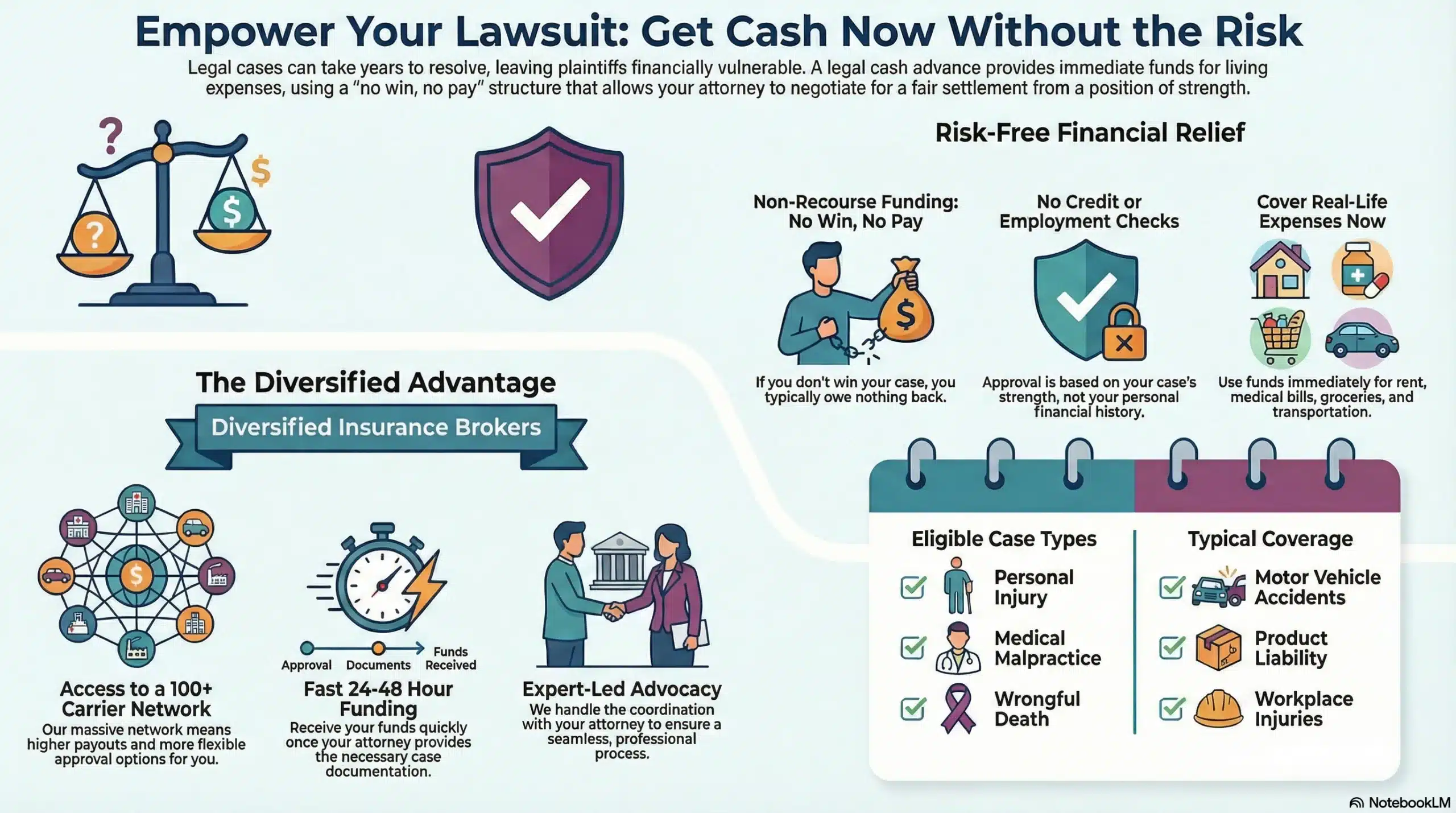
It’s also important to understand what this is—and what it is not. In most situations, a lawsuit cash advance is non-recourse pre-settlement funding, not a traditional bank loan. “Non-recourse” typically means repayment is required only if your case results in a recovery (a settlement or judgment). If you lose, most agreements do not require repayment. Your contract controls the details, so reviewing the written terms and payoff structure is essential before accepting any funding.
We partner with one of the largest funding networks in the country, which allows us to match cases to the right funding source and often secure stronger advance amounts than many smaller providers can offer. The goal is not to encourage over-borrowing. The goal is to help you avoid being forced into an early, low settlement simply because financial pressure is building while the case moves through the system.
Apply for a Cash Advance on Your Lawsuit
Fast review, higher payouts, and typically no repayment if you lose your case.
What Is a Cash Advance for a Lawsuit?
A cash advance for a lawsuit—often called pre-settlement funding—is a cash advance against a potential future settlement. Instead of underwriting your personal credit or income the way a bank would, funding decisions focus on the case itself: liability, damages, available insurance coverage, venue, and how the case is likely to resolve. The funding company typically coordinates directly with your attorney because the advance is tied to the claim and repaid (if applicable) from the settlement proceeds.
Because this funding is usually non-recourse, the case outcome matters. If there is no recovery, many agreements do not require repayment. That said, you should always review the agreement carefully with your attorney, confirm whether fees accrue monthly, whether costs compound, and what the projected payoff looks like at different time points. Understanding the “true cost over time” is one of the most important steps in making a smart decision.
Why People Use Pre-Settlement Funding
The legal timeline can be unpredictable. Even strong cases can take longer than expected due to medical treatment timelines, insurance investigations, negotiations, scheduling, and court backlogs. Meanwhile, financial obligations continue. Many plaintiffs use funding to cover rent or mortgage payments, keep utilities on, pay for childcare, maintain transportation, or avoid falling behind while they recover.
Another common reason is negotiation leverage. Insurance companies are aware that financial pressure can push people to accept less than their claim may be worth. Funding can help reduce that pressure so your attorney has time to build the case properly, document damages, negotiate from a stronger position, and pursue a resolution that better matches the facts of the claim.
If your injury created longer-term financial concerns, this can also be a good time to review broader protection planning while you’re in recovery. Some clients explore options like short-term health insurance to bridge coverage gaps, protecting income with disability coverage, or securing long-term family protection through life insurance planning. Those tools don’t replace funding, but they can reduce future financial vulnerability when a case takes time.
How the Process Works
The process is designed to be simple and attorney-coordinated. You submit a short request with basic details about your case and your lawyer. Next, the funding team reaches out to your attorney to confirm representation and request case information. Approvals are typically based on the strength of liability, the extent of damages, insurance coverage limits, and the expected timeline—not your credit score or job history.
If the case is approved, you’ll receive documents that outline the advance amount, the fee structure, and how payoff is handled if the case settles. Once the agreement is signed and attorney confirmation is complete, funds can often be sent quickly—timing depends heavily on attorney responsiveness and how quickly key information is provided.
What You’ll Typically Need
In most cases, the key documentation is provided through your attorney’s office. Common items include confirmation of contingency representation, basic case details, available insurance coverage, medical treatment information, and any demand or negotiation history if it exists. In cases where treatment is ongoing, the timeline and stability of damages documentation can influence how a funder evaluates risk and sizes the advance.
If you are early in the claim and don’t have full medical documentation yet, you may still be eligible, but reviews can take longer or advance amounts may be more conservative. The strongest approvals generally occur when liability is clear and damages are well-documented.
How Much Funding Can You Receive?
Funding amounts vary by case. Many funders advance a percentage of the estimated net case value after factoring in attorney fees, costs, and potential medical liens. The clearer the liability, the more documented the injury, and the stronger the insurance coverage, the more straightforward it is to evaluate the potential settlement range.
A key recommendation for many plaintiffs is to borrow only what you need. Because many agreements involve monthly fees (sometimes compounding), taking a smaller advance can help keep the payoff manageable if the case timeline extends. If you need additional funds later, some cases allow a second advance depending on updated case status and attorney approval—but each additional advance increases the total payoff.
Understanding Cost and Repayment
Pre-settlement funding costs can be significant. It’s common for fees to accrue monthly, and in some agreements those fees compound. Before you accept an advance, ask for a written payoff schedule that shows estimated totals at 6, 12, and 18 months. That single step can prevent surprises later and helps you make a decision based on realistic timing.
Repayment is typically handled through your attorney at settlement. The attorney pays the funder from the settlement proceeds, then distributes the remainder after fees, costs, and liens. This is why funding should be weighed carefully: it can be a helpful bridge, but it reduces your net recovery.
It can also help to understand the difference between pre-settlement and post-settlement funding. Pre-settlement funding happens while the case is still pending and generally costs more due to higher risk. Post-settlement funding occurs after settlement is reached but before the check is received; it often costs less because the outcome is already known.
Common Alternatives to a Lawsuit Cash Advance
Funding is not the only option. Depending on your situation, alternatives may include PIP/MedPay benefits (where available), medical provider liens or letters of protection, attorney-negotiated bill holds, payment plans, credit union products, or temporary support from family. Many of those options can be lower cost. Your attorney is usually the best person to explain what’s available in your specific jurisdiction and case type.
If you decide to pursue funding, the best approach is a careful one: confirm terms, verify payoff structure, borrow conservatively, and keep your attorney involved at every step.
Start Your Lawsuit Cash Advance Today
Quick approval, higher payouts, and a simple attorney-coordinated process.
Funding availability, timing, and terms vary by state and case details. Always review the agreement with your attorney.
Related Pages
Explore additional lawsuit funding resources and options.
Financial Protection Essentials
ACA alternatives, indexed annuity education, inclusive life insurance solutions, and employer group coverage strategies.
Talk With an Advisor Today
Choose how you’d like to connect—call or message us, then book a time that works for you.
Schedule here:
calendly.com/jason-dibcompanies/diversified-quotes
Licensed in all 50 states • Fiduciary, family-owned since 1980
FAQs: Cash Advance for Lawsuit (Pre-Settlement Funding)
What is a cash advance for a lawsuit?
It’s typically non-recourse pre-settlement funding that advances part of your expected case proceeds before the case resolves. It is not a bank loan and is usually repaid only from settlement or judgment proceeds.
Who qualifies for pre-settlement funding?
You generally need an attorney on a contingency fee and a viable claim with insurance coverage or collectible damages. Availability varies by state and case details.
Do I need good credit or a job to be approved?
Typically no. Approval focuses on the case—liability, damages, and coverage—not your credit score or income. Attorney cooperation is essential.
How much funding can I receive?
Amounts vary, but many funders advance a percentage of the estimated net case value (after attorney fees and potential liens). The stronger the case and coverage, the more straightforward approvals tend to be.
How fast can I get the money?
With prompt attorney responses and available records, decisions may arrive within 24–48 hours, with funding shortly after. Complex cases can take longer.
What documents are usually required?
Your attorney may provide confirmation of representation, incident reports, medical records and bills, insurance details, and any settlement discussions or demand materials.
What does a lawsuit cash advance cost?
Costs can be high and often accrue monthly (sometimes compounding). Ask for a written payoff schedule at multiple time points and borrow only what you need.
Do I repay anything if I lose?
Generally, non-recourse funding is repaid only if you recover money. Review your contract for the exact terms, exceptions, and fees.
Will funding affect my case?
It should not change liability or damages. However, the payoff comes from your proceeds, which reduces your net recovery. Discuss implications with your attorney.
What’s the difference between pre- and post-settlement funding?
Pre-settlement funding happens before the case resolves and usually costs more due to higher risk. Post-settlement funding happens after settlement is reached while payment is pending and is often less expensive.
About the Author:
Jason Stolz, CLTC, CRPC and Chief Underwriter at Diversified Insurance Brokers, is a senior insurance and retirement professional with more than two decades of real-world experience helping individuals, families, and business owners protect their income, assets, and long-term financial stability. As a long-time partner of the nationally licensed independent agency Diversified Insurance Brokers, Jason provides trusted guidance across multiple specialties—including fixed and indexed annuities, long-term care planning, personal and business disability insurance, life insurance solutions, and short-term health coverage. Diversified Insurance Brokers maintains active contracts with over 100 highly rated insurance carriers, ensuring clients have access to a broad and competitive marketplace.
His practical, education-first approach has earned recognition in publications such as VoyageATL, highlighting his commitment to financial clarity and client-focused planning. Drawing on deep product knowledge and years of hands-on field experience, Jason helps clients evaluate carriers, compare strategies, and build retirement and protection plans that are both secure and cost-efficient.
