
Disability Insurance for Airline Security Personnel

Jason Stolz CLTC, CRPC
Disability insurance for airline security personnel is a critical form of financial protection for professionals responsible for maintaining safety, enforcing regulations, and managing high-pressure environments within airports and aviation systems. Whether working as TSA agents, private security contractors, or airport screening personnel, these roles require constant alertness, physical capability, and the ability to respond quickly to potential threats.
Airline security personnel operate in environments where physical presence, situational awareness, and decision-making are essential. If an injury or illness prevents you from performing your duties, your ability to earn income can be immediately impacted. Unlike desk-based roles, there are limited opportunities for modified duties that provide comparable income.
At Diversified Insurance Brokers, we help airline security professionals structure disability insurance policies that reflect the physical and mental demands of their roles. A properly designed policy ensures that if your ability to work is interrupted, your financial stability remains intact.
Protect Your Income as Airline Security Personnel
Compare disability insurance options designed for high-responsibility and safety-critical roles.
Why Disability Insurance Is Essential for Airline Security Personnel
Airline security roles require a combination of physical readiness, mental focus, and the ability to respond to dynamic situations. Employees must stand for extended periods, monitor passengers and baggage, handle equipment, and react quickly to potential risks. If any of these abilities are compromised, continuing in the role may not be possible.
Even a relatively minor injury, such as a knee issue or back strain, can prevent an individual from standing for long periods or responding quickly in critical situations. Similarly, stress-related conditions or illnesses can impact focus and decision-making, both of which are essential in security roles.
While some professionals explore broader protections like life insurance for military personnel, disability insurance specifically addresses the risk of lost income due to an inability to work.
Physical and Mental Demands of the Role
Airline security personnel are required to maintain a high level of vigilance throughout their shifts. This often involves standing or walking for long periods, lifting or inspecting baggage, and operating screening equipment. These repetitive physical activities can lead to fatigue, joint strain, and long-term musculoskeletal issues.
In addition to physical demands, the role carries significant mental stress. Security personnel must remain alert to potential threats, manage interactions with passengers, and make quick decisions under pressure. Over time, this can contribute to burnout, anxiety, or other stress-related conditions that may impact the ability to work.
Travel-related exposure also introduces additional risks. While not identical, some parallels can be drawn to considerations found in travel medical coverage scenarios, where environmental and situational factors increase risk exposure.
Income Stability and Occupational Risk
Many airline security professionals rely on consistent hourly wages or structured schedules to maintain financial stability. If a disability occurs, income can stop immediately, especially if there is no long-term employer coverage or if benefits are limited.
Unlike some professions that allow remote work or modified duties, airline security roles typically require full physical and mental capability. This makes disability insurance especially important, as there are few alternatives that provide comparable income if you are unable to perform your duties.
Understanding financial planning concepts such as cost of living adjustments can also be helpful when evaluating long-term income protection strategies.
Case Study: Airline Security Professional Earning $60,000 Per Year
Consider an airline security professional earning $60,000 annually. If this individual experiences a disabling injury that prevents them from working for five years, the financial impact can be significant.
| Scenario | Without Disability Insurance | With Disability Insurance |
|---|---|---|
| Annual Income | $0 | $36,000–$42,000 |
| 5-Year Income | $0 | $180,000–$210,000 |
| Financial Outcome | Severe disruption | Income continuity |
This example demonstrates how disability insurance can provide stability and protect long-term financial security during periods of recovery.
Designing a Policy for Airline Security Personnel
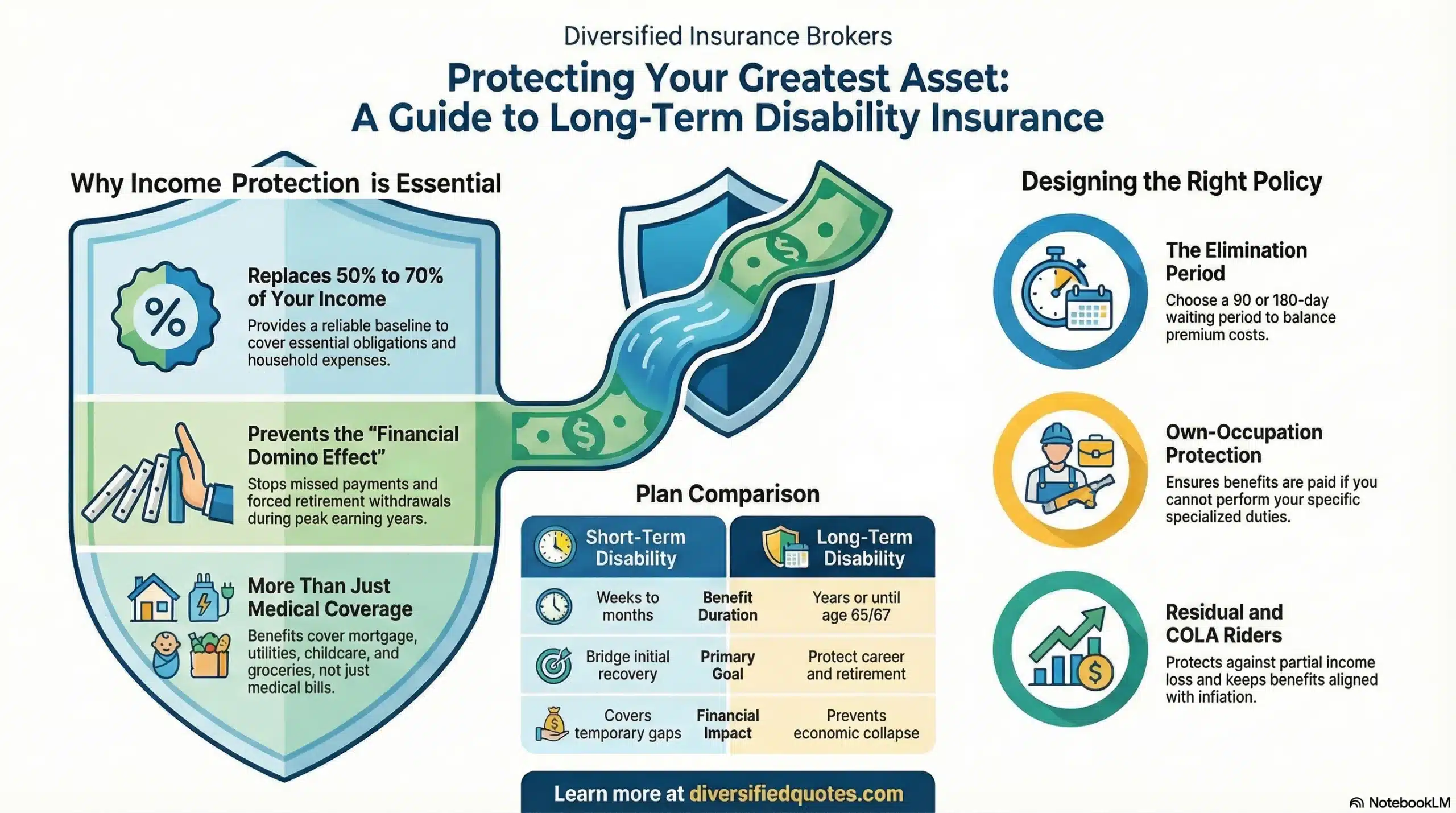
Disability insurance for airline security professionals should be tailored to reflect the physical and mental demands of the role. Benefit amounts should align with income, while benefit periods should account for the possibility of extended recovery times.
Elimination periods should be selected based on available savings. A longer elimination period may reduce premiums, while a shorter period provides faster access to benefits. The right structure depends on your financial situation and risk tolerance.
Incorporating broader financial protections, such as long-term care planning considerations, can further strengthen overall financial security.
Why Work with an Independent Disability Insurance Broker
Disability insurance policies vary widely, especially for roles with elevated risk like airline security. Working with an independent broker allows you to compare multiple options and structure coverage that aligns with your specific needs.
An independent broker focuses on customization, helping you secure coverage that reflects your occupation, income level, and long-term goals. This approach often results in stronger protection and better overall value.
To understand the advantages of this approach, review why working with an independent disability insurance broker matters.
Integrating Disability Insurance Into Your Financial Plan
For airline security personnel, disability insurance is a foundational component of financial planning. It protects income, which supports daily expenses, savings, and long-term financial goals.
Exploring additional strategies such as retirement distribution planning can complement income protection and create a more stable financial future.
Final Thoughts
Airline security personnel play a vital role in maintaining safety and order within the aviation system. This responsibility comes with both physical and mental demands that can increase the risk of disability.
Disability insurance ensures that if your ability to perform your duties is compromised, your financial life remains stable. It provides income protection, peace of mind, and the ability to focus on recovery without financial stress.
A well-structured policy protects your income and supports your long-term financial goals. Working with an experienced broker ensures that your coverage is tailored to your profession and aligned with your needs.
Related Pages
Talk With an Advisor Today
Choose how you’d like to connect—call or message us, then book a time that works for you.
Schedule here:
calendly.com/jason-dibcompanies/diversified-quotes
Licensed in all 50 states • Fiduciary, family-owned since 1980
Disability Insurance for Airline Security Personnel FAQs
Yes, airline security personnel typically qualify for disability insurance. Policies are designed based on occupational duties, and coverage can be structured to reflect the physical and mental demands of security roles.
Common issues include back strain, joint injuries from standing for long periods, repetitive stress injuries, and fatigue-related conditions. Mental stress and burnout can also impact the ability to perform duties effectively.
Many policies provide coverage for mental health conditions, including stress and anxiety, although terms and limitations can vary. It is important to review policy details to understand how these conditions are covered.
If you are unable to perform the essential duties of your role due to injury or illness, disability insurance can provide income replacement based on the terms of your policy.
Most policies replace between 50 percent and 70 percent of your income, depending on the coverage selected and underwriting guidelines.
The best time to apply is while you are healthy and actively working. This helps ensure access to better rates and more comprehensive coverage options.
About the Author:
Jason Stolz, CLTC, CRPC and Chief Underwriter at Diversified Insurance Brokers (NPN 20471358), is a senior insurance and retirement professional with more than two decades of real-world experience helping individuals, families, and business owners protect their income, assets, and long-term financial stability. As a long-time partner of the nationally licensed independent agency Diversified Insurance Brokers, Jason provides trusted guidance across multiple specialties—including fixed and indexed annuities, long-term care planning, personal and business disability insurance, life insurance solutions, Group Health, and short-term health coverage. Diversified Insurance Brokers maintains active contracts with over 100 highly rated insurance carriers, ensuring clients have access to a broad and competitive marketplace.
His practical, education-first approach has earned recognition in publications such as VoyageATL, highlighting his commitment to financial clarity and client-focused planning. Drawing on deep product knowledge and years of hands-on field experience, Jason helps clients evaluate carriers, compare strategies, and build retirement and protection plans that are both secure and cost-efficient. Visitors who want to explore current annuity rates and compare options across multiple insurers can also use this annuity quote and comparison tool.
