
Disability Insurance for High Risk Occupations

Jason Stolz CLTC, CRPC
Disability Insurance for High Risk Occupations is not a luxury — it is often the most important financial protection someone in a physically demanding, hazardous, or specialized career can own. If your income depends on your ability to perform skilled labor, operate equipment, travel internationally, work at heights, respond to emergencies, or handle dangerous materials, then your paycheck is directly tied to your health. A broken hand, back injury, chronic illness, or occupational accident could interrupt your income for months or years. Unlike office-based roles where modified duties may be possible, many high-risk professionals cannot simply “light duty” their way through recovery. Whether you are a pilot, lineman, contractor, oil field worker, law enforcement officer, firefighter, overseas consultant, or someone whose career involves elevated physical risk, disability insurance becomes the safety net that protects your lifestyle, family, savings, and long-term retirement plan.
Many people in high-risk jobs assume coverage will be either unavailable or unaffordable. That is not necessarily true. Carriers assess risk carefully, but underwriting does not automatically mean decline. Policies can often be structured with adjusted benefit periods, elimination periods, riders, or occupation classifications that make coverage possible. If you are in aviation, for example, specialty underwriting may apply. If you operate heavy machinery or perform hazardous fieldwork, pricing will reflect occupational class — but that does not mean protection is out of reach. Professionals such as commercial pilots may find more tailored solutions when reviewing options like Disability Insurance for Pilots, while early-career specialists transitioning into risk-heavy fields may compare planning strategies against guidance such as Disability Insurance for New Professionals. The key is structuring the policy correctly the first time so your occupation is accurately classified and your definition of disability protects your true earning power.
High-risk occupations typically fall into more restrictive underwriting classes because the statistical probability of injury is higher. That does not mean claims are frequent for every individual — but insurers price based on risk pools. Electricians working at heights, offshore oil technicians, law enforcement officers, construction supervisors, and specialized contractors are commonly rated differently than administrative professionals. The good news is that income protection can still be designed around your specific duties. For instance, some roles combine management and physical labor. Properly describing your daily tasks can materially affect how your policy is classified. The difference between 30% fieldwork and 80% fieldwork matters. Clarity protects you from overpaying — and from being misclassified.
Income protection is especially critical when your retirement strategy depends on consistent contributions. Many high-risk earners fund IRAs, defined benefit plans, or annuity contracts to create future guaranteed income. If a disability interrupts contributions for years, the long-term impact compounds. That is why disability insurance should coordinate with retirement planning. If you are rolling funds or repositioning assets, resources such as How to Transfer an IRA to an Annuity or education around Laddering Annuities may complement income protection planning. Disability coverage preserves the ability to continue funding those strategies — even when you cannot work.
Request Your Disability Income Quote
High-risk occupation? Get customized disability coverage options built around your job duties and income level.
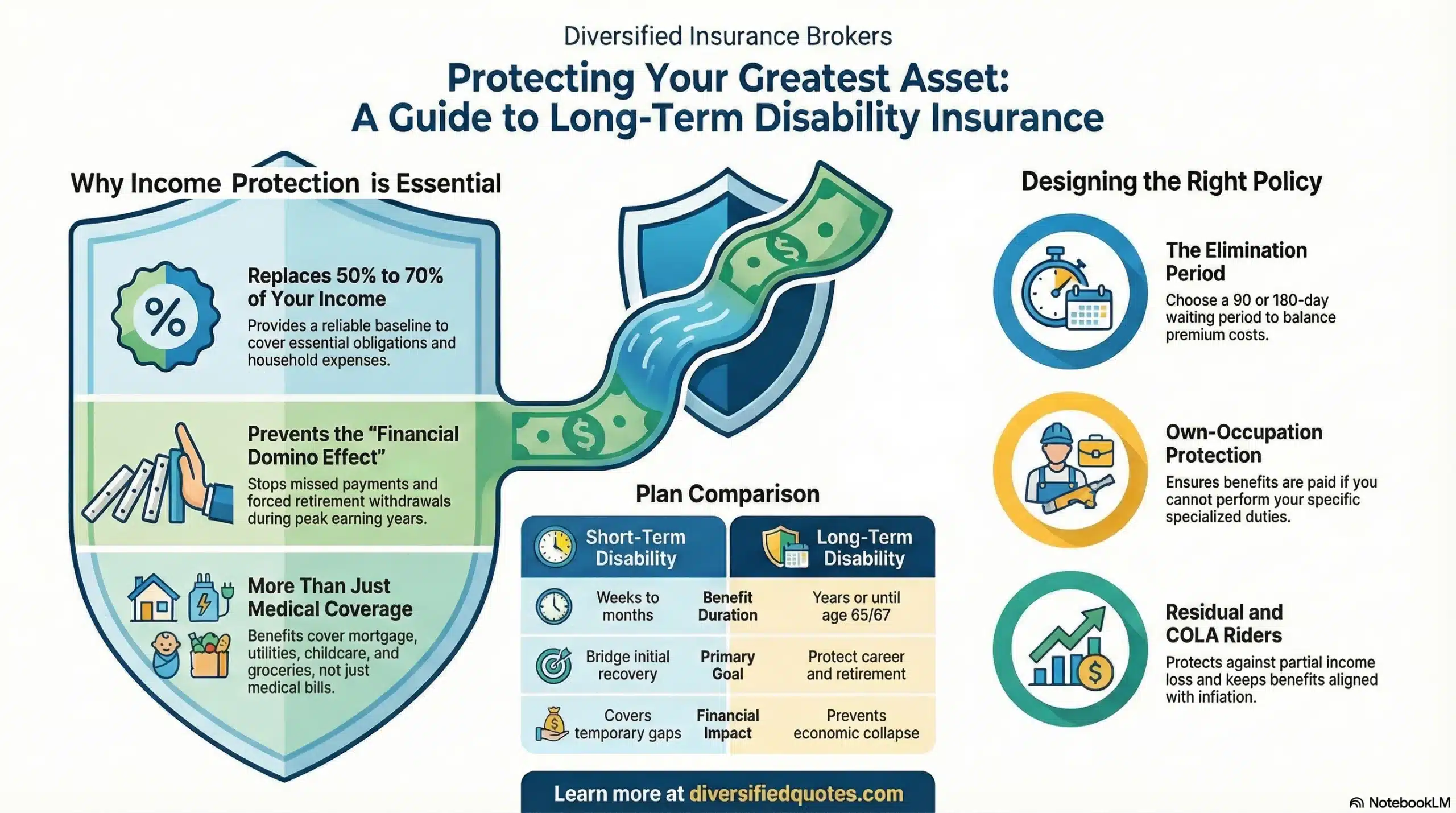
Another critical consideration for high-risk professionals is the definition of disability. An “own-occupation” policy means you are considered disabled if you cannot perform the material and substantial duties of your specific occupation — even if you could work elsewhere. For surgeons, pilots, specialized mechanics, and skilled tradespeople, this definition is often essential. Without it, a carrier could argue you are capable of working in another capacity and reduce or deny benefits. In hazardous occupations, the difference between own-occupation and any-occupation definitions can determine whether your income is truly protected.
Benefit period and elimination period also play strategic roles. A 90-day elimination period is common, but some high-risk earners prefer 180 days to reduce premium costs. Benefit periods can range from two years to age 65 or even lifetime. The correct structure depends on savings levels, emergency reserves, and long-term goals. If your retirement income strategy includes guaranteed income products, understanding how those payouts function — including concepts like Annuity Exclusion Ratio or whether Annuity Death Benefits Are Taxable — helps you coordinate disability planning with broader tax efficiency.
Some high-risk professionals work internationally or travel extensively. Overseas contractors, engineers, and aviation specialists must consider how international exposure affects underwriting and claims. Supplemental protection such as International Travel Health Coverage or destination-specific solutions like Travel Medical and Evacuation from Ireland may complement disability planning for those who operate abroad. The objective is layered protection: medical coverage handles treatment; disability insurance replaces income.
High earners in physically demanding roles often face underwriting scrutiny related to hobbies as well — aviation, scuba diving, motorsports, mountaineering. Transparency matters. Failure to disclose hazardous activities can jeopardize a future claim. A properly structured policy may exclude certain activities while still protecting primary occupational income. Full disclosure preserves claim integrity.
Business owners in high-risk industries face additional complexity. If you operate a contracting company, industrial firm, or specialized service business, disability can impact both personal income and company stability. In those cases, coverage coordination with business protection strategies such as Contract Indemnity Life Insurance or How Much Health Insurance Does My Business Need becomes part of comprehensive planning. Disability income protects your paycheck; business policies protect enterprise continuity.
Risk exposure does not stop at occupation. Age, health history, and financial documentation influence underwriting decisions. High-risk professionals should secure coverage while healthy. Waiting until symptoms appear can limit options or increase premiums. Disability insurance is easiest to obtain when you do not urgently need it.
Ensure You Are Receiving the Absolute Top Rates
Current Fixed Annuity Rates
Compare today’s best fixed annuity rates from top carriers.
Current Bonus Annuity Strategies
See how bonus structures may enhance long-term income growth.
Lifetime Income Calculator
See how protecting your income today supports guaranteed income tomorrow.
Ultimately, Disability Insurance for High Risk Occupations is about preserving control. Your skills are specialized. Your training is valuable. Your earning power may exceed national averages precisely because you accept elevated risk. The financial structure behind that income deserves equal sophistication. With correct underwriting, appropriate riders, and coordinated retirement planning, you can protect both your current paycheck and your future income stream. The earlier the planning begins, the more flexible and affordable it tends to be.
Related Pages to Explore
Financial Protection Essentials
Burial insurance comparisons, travel protection planning, carrier reviews, and post-heart attack life insurance guidance.
Talk With an Advisor Today
Choose how you’d like to connect—call or message us, then book a time that works for you.
Schedule here:
calendly.com/jason-dibcompanies/diversified-quotes
Licensed in all 50 states • Fiduciary, family-owned since 1980
Yes. Many carriers offer coverage for construction workers, contractors, and industrial trades — though premiums and benefit structures vary by occupational class. The key is accurate job classification and clear documentation of duties. If you also own your company, coordinating protection strategies like Group vs Individual Life Insurance can help protect both personal and business income.
Yes, because retirement accounts are designed for long-term growth — not income replacement during working years. A disability could force early withdrawals or derail long-term strategies. If you’re comparing retirement structures, reviewing Deferred Comp Plan Options After Retirement can help you understand how income streams are meant to function alongside protection planning.
Most individual disability policies cover both on-the-job and off-the-job injuries or illnesses, unless specifically excluded. This is important because many disabling conditions occur outside work. Supplemental legal protection may also be helpful in certain scenarios — for example, understanding options such as Advance on a Pending Lawsuit if litigation is involved.
International exposure can affect underwriting and claims handling. Coverage should be structured carefully if you spend extended time abroad. Some professionals also evaluate supplemental solutions such as Life Insurance for Foreign Travel and Residency to ensure global protection alignment.
Absolutely. Income protection ensures you can continue funding long-term strategies even if you cannot work. Retirement tools such as understanding Annuity vs 401k Planning may complement a broader protection strategy designed to safeguard both present and future income.
About the Author:
Jason Stolz, CLTC, CRPC and Chief Underwriter at Diversified Insurance Brokers, is a senior insurance and retirement professional with more than two decades of real-world experience helping individuals, families, and business owners protect their income, assets, and long-term financial stability. As a long-time partner of the nationally licensed independent agency Diversified Insurance Brokers, Jason provides trusted guidance across multiple specialties—including fixed and indexed annuities, long-term care planning, personal and business disability insurance, life insurance solutions, and short-term health coverage. Diversified Insurance Brokers maintains active contracts with over 100 highly rated insurance carriers, ensuring clients have access to a broad and competitive marketplace.
His practical, education-first approach has earned recognition in publications such as VoyageATL, highlighting his commitment to financial clarity and client-focused planning. Drawing on deep product knowledge and years of hands-on field experience, Jason helps clients evaluate carriers, compare strategies, and build retirement and protection plans that are both secure and cost-efficient.
