
How to Minimize Social Security Taxes

Jason Stolz CLTC, CRPC
Minimizing taxes on Social Security income is one of the most overlooked opportunities in retirement planning. Many retirees are surprised to learn that Social Security benefits can be partially taxable, and in some cases, up to 85% of those benefits may be subject to federal income tax. The key to reducing this tax burden is not avoiding income altogether, but structuring it properly. By understanding how Social Security taxation works and coordinating it with other income sources, retirees can often significantly reduce—or even eliminate—the taxes they pay on their benefits.
The taxation of Social Security is based on what is known as “provisional income.” This includes your adjusted gross income, tax-exempt interest, and half of your Social Security benefits. Once your provisional income crosses certain thresholds, a portion of your benefits becomes taxable. These thresholds have not been adjusted for inflation, which means more retirees are subject to taxation today than in the past. Understanding how your income sources interact is the first step in minimizing your tax liability.
One of the most effective strategies for minimizing Social Security taxes is managing when and how you take income from different sources. Retirement income can come from taxable accounts, tax-deferred accounts like IRAs, and tax-free sources such as Roth accounts. Each of these is treated differently for tax purposes, and the order in which you draw from them can significantly impact your overall tax burden. For example, withdrawals from traditional IRAs increase your provisional income, while Roth withdrawals typically do not.
This is where annuity planning often comes into play. Certain annuity strategies can help create predictable income streams while managing taxable income levels. Understanding how annuities fit into retirement planning—such as reviewing fixed indexed annuities with income riders—can help retirees balance income needs with tax efficiency.
Another important consideration is Required Minimum Distributions (RMDs). Once you reach the age where RMDs are required, these withdrawals can push your income higher and increase the portion of Social Security that is taxable. Planning ahead for RMDs by gradually drawing down accounts earlier in retirement can help reduce this impact. Strategies like Roth conversions before RMD age are commonly used to manage future tax exposure.
How Social Security Taxation Works
| Filing Status | Income Threshold | Taxable Portion |
|---|---|---|
| Single | $25,000 – $34,000 | Up to 50% |
| Single | Over $34,000 | Up to 85% |
| Married | $32,000 – $44,000 | Up to 50% |
| Married | Over $44,000 | Up to 85% |
One strategy that can help reduce Social Security taxes is spreading income across multiple years rather than taking large withdrawals in a single year. This approach can keep your provisional income below key thresholds and reduce the taxable portion of your benefits. For example, instead of taking a large IRA withdrawal in one year, spreading it over several years can help maintain a lower tax bracket.
Another approach is coordinating Social Security with other retirement benefits. For individuals with pensions, understanding how programs like the government pension offset affect Social Security can be critical. These rules can impact not only benefit amounts but also how income is taxed.
Healthcare planning also plays a role in tax efficiency. Medicare premiums are based on income, and higher income levels can lead to increased premiums through IRMAA (Income-Related Monthly Adjustment Amounts). Managing income to stay below certain thresholds can help reduce both taxes and Medicare costs. Reviewing topics like Medicare Part D can provide additional insight into how income affects healthcare expenses.
Investment strategy is another key factor. Interest, dividends, and capital gains all contribute to provisional income. Managing these income sources—such as through tax-efficient investments—can help reduce the taxable portion of Social Security. For example, municipal bonds may provide tax-free income, but they are still included in provisional income calculations, which can impact Social Security taxation.
Estate and legacy planning can also influence Social Security tax strategies. Understanding how assets will be passed on, including tools like inherited annuities or inherited IRAs, can help retirees make more informed decisions about withdrawals and income timing.
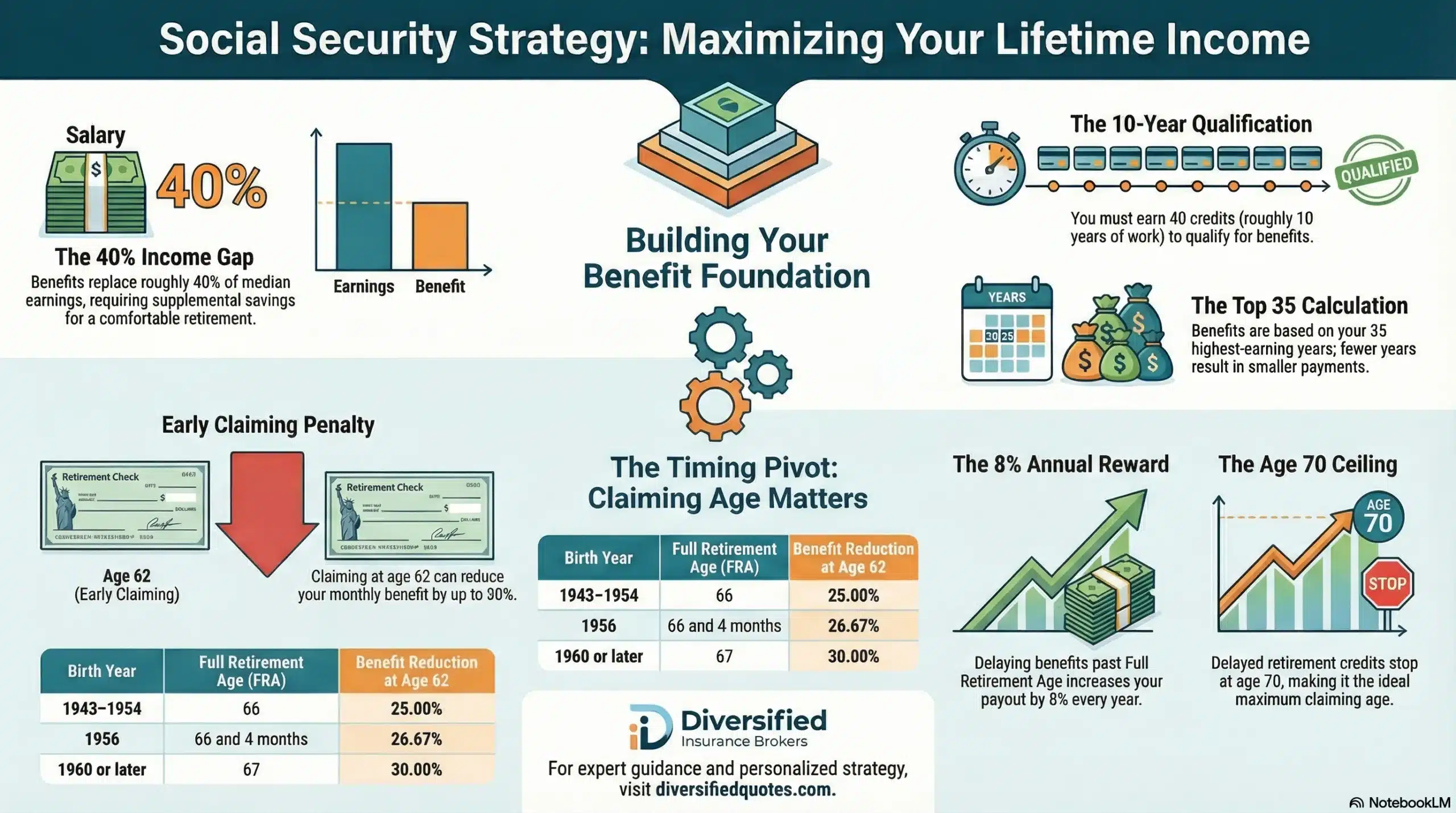
Another overlooked strategy is delaying Social Security benefits. By delaying benefits, retirees can reduce the number of years their benefits are subject to taxation while also increasing the benefit amount. This approach can be particularly effective when combined with withdrawals from other accounts in the early years of retirement.
Working with an independent advisor is one of the most effective ways to optimize your Social Security tax strategy. Independent professionals can evaluate multiple financial products and strategies, helping you create a plan that aligns with your goals. This includes evaluating options across different asset classes and insurance products to create a balanced approach.
It is also important to consider how unexpected financial events can impact your tax situation. For example, accessing funds through options like pre-settlement funding or legal funding could affect your income in a given year, potentially increasing your tax liability.
Ultimately, minimizing Social Security taxes requires a coordinated approach that considers all aspects of your financial life. By managing income sources, timing withdrawals, and working with knowledgeable professionals, retirees can significantly reduce their tax burden and preserve more of their retirement income.
Related Pages
Financial Protection Essentials
Schedule a Social Security Survivor Benefits Review
We are not affiliated with or endorsed by the Social Security Administration. Educational purposes only.
Frequently Asked Questions
No, Social Security benefits are not always taxable. Taxation depends on your provisional income, and some retirees pay no taxes on their benefits.
Provisional income includes your adjusted gross income, tax-exempt interest, and half of your Social Security benefits. It determines how much of your benefits are taxable.
You can reduce taxes by managing withdrawals from retirement accounts, using Roth accounts, and spreading income across multiple years to stay below key thresholds.
No, qualified Roth withdrawals are generally not included in provisional income, making them a useful tool for minimizing Social Security taxes.
Yes, RMDs from traditional retirement accounts increase your taxable income and can raise the percentage of your Social Security benefits that are taxable.
Yes, delaying benefits can reduce the number of years your benefits are taxed and increase your monthly benefit amount.
Indirectly, yes. Higher income can increase Medicare premiums, and both are influenced by your overall income strategy in retirement.
About the Author:
Jason Stolz, CLTC, CRPC and Chief Underwriter at Diversified Insurance Brokers (NPN 20471358), is a senior insurance and retirement professional with more than two decades of real-world experience helping individuals, families, and business owners protect their income, assets, and long-term financial stability. As a long-time partner of the nationally licensed independent agency Diversified Insurance Brokers, Jason provides trusted guidance across multiple specialties—including fixed and indexed annuities, long-term care planning, personal and business disability insurance, life insurance solutions, Group Health, and short-term health coverage. Diversified Insurance Brokers maintains active contracts with over 100 highly rated insurance carriers, ensuring clients have access to a broad and competitive marketplace.
His practical, education-first approach has earned recognition in publications such as VoyageATL, highlighting his commitment to financial clarity and client-focused planning. Drawing on deep product knowledge and years of hands-on field experience, Jason helps clients evaluate carriers, compare strategies, and build retirement and protection plans that are both secure and cost-efficient. Visitors who want to explore current annuity rates and compare options across multiple insurers can also use this annuity quote and comparison tool.
