
IRMAA Planning Strategies
As an Independent Medicare Broker, Tonia Pettitt (CMIP©) compares available plans across the major carriers to help you find the right coverage for your health, needs and budget.
IRMAA Planning Strategies

IRMAA planning strategies matter because Medicare is not “one price” for everyone. Many retirees discover that their Part B and Part D premiums can rise sharply after a high-income year — even when that income was a one-time event like a Roth conversion, a large IRA distribution, selling appreciated property, realizing significant capital gains, or a rollover that created taxable income in a single calendar year. Those higher premiums are called IRMAA — Income-Related Monthly Adjustment Amount — and they can feel like a financial penalty that arrived without warning, often two years after the decision that triggered them.
The important reality is that IRMAA is often manageable with thoughtful planning. You do not need complex strategies or obscure tax maneuvers. Most of the time, you simply need to understand how Medicare looks back at income, know which income sources count toward the threshold calculation, and coordinate major taxable events intentionally within a broader retirement income plan. That coordination is especially important for households with pensions, growing required minimum distributions, business income, large taxable brokerage accounts, or a multi-year goal to convert pre-tax IRA assets to Roth.
At Diversified Insurance Brokers, our advisors help clients coordinate Medicare and income planning so premiums do not spike unnecessarily. We focus on practical, implementable steps: smoothing taxable income across years, controlling one-time spikes through timing decisions, and aligning distributions and conversions with a longer-term retirement income strategy — protecting net cash flow without sacrificing the big-picture financial goals that motivate the underlying decisions.
Request an IRMAA Review
We’ll identify what’s driving your IRMAA risk, map a 1–3 year income timeline, and reduce the chance of avoidable Medicare premium surcharges.
IRMAA Basics: What It Is and Why It Exists
IRMAA is an additional premium amount added to Medicare Part B (outpatient medical coverage) and Medicare Part D (prescription drug coverage) when a beneficiary’s income exceeds certain thresholds set by the Social Security Administration. The purpose is to have higher-income households contribute more to the cost of their Medicare coverage. Critically, IRMAA does not provide enhanced coverage — it is purely a cost adjustment. You receive the same Medicare benefits as a beneficiary paying standard premiums; you simply pay more for them based on your reported income.
IRMAA functions more like a premium tier system than a traditional tax. It operates in distinct brackets: if your income exceeds a threshold, you pay the higher premium for that entire tier for the full year. The bracket structure creates a cliff effect — where a relatively small dollar increase in MAGI can push you into a significantly higher premium tier for the entire year, potentially increasing annual Medicare costs by thousands of dollars. This cliff effect is precisely why IRMAA planning matters so much: in many situations, adjusting a single income decision by a modest amount — doing slightly less of a conversion, spreading a gain across two years, timing a large distribution differently — can prevent a disproportionately larger premium increase.
From a retirement planning perspective, IRMAA is not just a Medicare topic. It is fundamentally an income sequencing topic — about how IRA withdrawals, Roth conversions, capital gains realizations, and other income events are timed across years, and how those timing decisions affect net retirement cash flow two years later. Understanding this connection transforms IRMAA from an unexpected penalty into a manageable planning variable.
The Two-Year Lookback: Why Premium Increases Arrive “Late”
The most confusing and most practically consequential aspect of IRMAA is the timing. Medicare generally uses your tax return from two years prior to determine whether you owe IRMAA and at which bracket level. Your Medicare premium for the current year is based on income from two years ago — creating a two-year lag between the income event and the premium consequence that catches many retirees completely off guard.
This is why IRMAA surprises are so common. A retiree sells a highly appreciated investment property, does a substantial Roth conversion, takes a large IRA distribution to fund a home purchase, or realizes significant capital gains in a portfolio repositioning — and the financial consequence does not arrive until two years later, when Medicare premiums increase even though the original taxable event is long past and often no longer clearly remembered as the cause. The connection between the prior-year decision and the current-year premium increase is not obvious without explicit understanding of the lookback mechanism.
Effective IRMAA planning treats the lookback rule as a planning tool rather than an arbitrary administrative feature. Once you understand that income echoes forward two years in Medicare premium implications, you can make deliberate decisions about when to recognize taxable income, how to spread it across years, and how to match income-generating events to years where they have the least total impact on net retirement cash flow — considering both the immediate tax cost and the IRMAA premium consequence two years later simultaneously.
What Income Counts Toward IRMAA (MAGI in Plain English)
IRMAA is calculated based on Modified Adjusted Gross Income (MAGI). For most retirees, the most practical way to understand MAGI is as the income figure that grows large when multiple taxable events occur in the same year or when a single large event dramatically increases the year’s total reported income. MAGI for IRMAA purposes typically includes wages and self-employment income, pension and annuity income, IRA and 401(k) withdrawals, interest and dividend income from taxable accounts, capital gains from selling investments or real estate, required minimum distributions, and other taxable income items — essentially the income picture reported on the federal return plus certain adjustments.
The most common IRMAA triggers are not ordinary ongoing retirement income — they are income spikes created by specific decisions or concentrated events. Large IRA withdrawals taken in a single year to fund major expenses, Roth conversion amounts that push MAGI meaningfully above the conversion amount, significant capital gains from selling appreciated securities or real estate, one-time business income events such as a business sale, and years where multiple income sources converge simultaneously are the most frequent causes. Even the growing taxation of Social Security benefits as other income rises — reaching up to 85 percent of benefits taxable above certain MAGI levels — can contribute to MAGI growth in ways that interact with IRMAA thresholds. The common thread is income concentration: large amounts recognized in a single tax year rather than spread thoughtfully across multiple years.
Why IRMAA Surprises Retirees
Many retirees approach Medicare premiums the same way they approach utility bills — as a fixed, predictable monthly cost that does not require active management. But Medicare premiums are income-sensitive, and retirement income is rarely as steady as people expect. Even in a well-managed retirement, income can be significantly “lumpy” — required minimum distributions begin and grow annually, one spouse retires while the other continues working, a pension start adds a new income stream, a portfolio experiences a strong year that increases dividend and capital gain distributions, or an asset sale creates a concentrated income event.
IRMAA also surprises retirees because the decision that triggered the premium increase may have felt entirely reasonable — even clearly beneficial — at the time it was made. A Roth conversion is a legitimate and often highly beneficial long-term tax and estate planning strategy. Selling an appreciated asset may be financially necessary or strategically sound. Taking a large distribution to pay off a mortgage may provide genuine financial security and peace of mind. The IRMAA issue is that these decisions create a premium aftershock two years later that was not visible or considered in the original decision-making process. Effective IRMAA planning integrates the two-year premium consequence into the original decision analysis, so the full cost of each income event — immediate tax cost plus two-year-forward premium impact — is visible before the decision is made rather than after.
IRMAA Planning Strategies That Actually Move the Needle
Effective IRMAA planning is not one-size-fits-all. What works for a couple with large traditional IRAs and minimal brokerage assets differs from what works for a household living primarily on pension income and taxable dividends. The foundation is identifying which income sources and decisions move your MAGI the most, then building a plan that manages those variables thoughtfully across years — funding lifestyle comfortably while avoiding unnecessary premium spikes.
Smoothing large IRA withdrawals instead of concentrating them. One of the most practically impactful IRMAA planning strategies is avoiding large one-time IRA distributions in a single tax year whenever flexibility exists. When a substantial withdrawal is stacked with other income — ongoing pension payments, Social Security benefits, dividends from a taxable portfolio — the combined MAGI can cross an IRMAA threshold quickly. In many cases, spreading the withdrawal across two or three years accomplishes the same funding objective while keeping annual MAGI below the threshold and avoiding the premium consequence. This approach is especially relevant for funding major purchases, home renovations, or debt payoff — where the cash need is flexible in timing even if it is real in amount.
Calibrating Roth conversions to both bracket and IRMAA thresholds simultaneously. Roth conversions can reduce future RMD pressure, create meaningful tax and estate planning flexibility, and improve long-term retirement income efficiency. But they are among the most common and most significant IRMAA triggers when done without accounting for the threshold consequences. An effective approach is to set an annual conversion target that is aware of both the current income tax bracket being filled and the nearest IRMAA threshold — converting up to the point where the combined income does not cross the next IRMAA bracket, or making an explicit decision to cross it as part of a deliberate multi-year strategy with a calculated total cost and benefit. Some retirees choose to accept IRMAA for defined years as part of an aggressive Roth strategy, accepting that the temporary premium cost is worthwhile relative to the long-term reduction in RMD obligations and taxable income. Others keep conversions within lower brackets and extend the conversion timeline. The right decision depends on RMD projections, estate goals, and how sensitive the household’s cash flow is to higher Medicare premiums in the near term. Our Roth conversion insights provide additional context for how to evaluate this trade-off.
Coordinating capital gains with your Medicare timeline. Capital gains realizations can be a particularly problematic IRMAA trigger because they frequently occur in years when other significant changes are already happening — retirement itself, Social Security commencement, Medicare enrollment, or a portfolio repositioning for income. Spreading discretionary gains across multiple years rather than realizing everything in a single transaction — even when the tax rate on each tranche would be the same — can prevent crossing an IRMAA threshold and avoid the premium consequence two years later. For gains that are not discretionary in timing, building awareness of the IRMAA implication into the analysis of required asset sales or distributions at least allows the consequence to be anticipated and planned around rather than discovered as a surprise.
Using Qualified Charitable Distributions when appropriate. For retirees who are charitably inclined and who hold IRA assets, Qualified Charitable Distributions (QCDs) allow up to $105,000 annually (indexed for inflation) to be transferred directly from an IRA to a qualified charity without the distribution being included in taxable income. Because QCDs are excluded from MAGI, they can be a powerful tool for both satisfying charitable giving goals and reducing the MAGI that determines IRMAA bracket placement — particularly effective once RMDs have begun, as QCDs can count toward satisfying the RMD requirement without adding to taxable income. Our Qualified Charitable Distributions guide covers the mechanics, eligibility requirements, and planning integration in detail.
Avoiding “stacking years” around major retirement transitions. Many of the most severe IRMAA cases originate in stacking years — calendar years where multiple significant income-affecting changes converge simultaneously. The final high-earning working year, a severance package, a pension commencement, Social Security starting, Medicare enrollment, and a portfolio repositioning can all create taxable income that stacks in a single year — producing a MAGI far above what any individual element would have created alone, with IRMAA consequences two years later. A practical prevention strategy is to limit the number of major income-generating moves in any single year, deliberately sequencing them across adjacent years to keep annual MAGI more stable. Sometimes this means delaying a Roth conversion by one year, spreading asset gains across a tax-year boundary, or coordinating the start date of a new income source with awareness of what the combined MAGI picture looks like for that year.
Building predictable retirement income that reduces forced taxable decisions. IRMAA risk increases substantially when retirees lack a structured income plan and are forced to pull large taxable amounts reactively — because an unexpected large expense arises, because the portfolio is not generating sufficient income, or because the retirement income system was not designed to fund essential expenses efficiently across all years. When a predictable guaranteed income floor covers essential expenses reliably, the frequency and size of reactive large IRA distributions decreases — and so does the IRMAA exposure those decisions create. This is one of the reasons many retirees explore guaranteed income planning: not because it eliminates taxes, but because it reduces the frequency of reactive taxable decisions that create avoidable income spikes. For context on how income planning reduces this specific type of risk, our lifetime income planning overview provides the relevant framework. When comparing annuity options as part of that income planning, reviewing current fixed annuity rates and current bonus annuity rates helps identify what today’s market provides for guaranteed accumulation.
Compare Income Options Before You Lock In a Plan
If you’re building predictable retirement income to reduce reactive taxable decisions, compare competitive rates and request an annuity review aligned to your timeline.
A Practical 3-Year IRMAA Planning Timeline
Because Medicare uses a two-year lookback, the most actionable planning window is the current year and the next one. The most useful framework for most households is to think in three layers simultaneously: the current tax year you are filing or about to file, the year Medicare will look at next when setting upcoming premiums, and the year after that — which is the current year’s income reflected in premiums two years from now.
In practice, this means asking before any significant income decision: “If we do this conversion, distribution, or asset sale in the current year, what will it do to our MAGI, and what will that MAGI do to Medicare premiums two years from now?” That forward projection allows you to decide whether to proceed with the original plan, scale it back to stay below the next IRMAA threshold, or spread it across two years. This is especially important when you are operating near an IRMAA bracket boundary or coordinating multiple income sources that interact in ways that are not always immediately obvious without explicit modeling.
Most households do not need a 20-year IRMAA avoidance plan. They need a clean 1 to 3-year income timeline that anticipates the largest potential MAGI events in the near term and makes deliberate decisions about their timing and magnitude — before those events occur rather than after the Medicare premium notice arrives as the first notification of the consequence.
Appealing IRMAA After a Life-Changing Event
Not every IRMAA surcharge is final, and not every income spike that triggered a premium increase was representative of your current financial situation. Medicare allows appeals — formally called IRMAA reconsiderations — when a qualifying life-changing event caused a significant reduction in income from the year used in the lookback determination. Qualifying life-changing events include retirement or reduction of work hours, loss of income-producing property, loss of pension income, marriage, divorce, or the death of a spouse — events that materially change the household’s income picture from what the two-year-old tax return reflected.
The appeal process requires clear documentation demonstrating that your current income is materially lower than the prior return Medicare used to set the premium, and that the reduction is tied to a specific qualifying event. The Social Security Administration handles IRMAA determinations and appeals — you file the appeal there rather than directly with Medicare. Appeals that succeed typically include organized, complete documentation with a clear explanation of the qualifying event and evidence of the income change. Many appeals that could succeed fail because the paperwork is incomplete, the explanation is vague, or the connection between the income change and a qualifying event is not clearly established. If your income truly changed significantly due to a qualifying event, a well-documented appeal is worthwhile rather than simply absorbing the higher premium for the full year. Even a successful appeal does not eliminate the need for forward-looking planning — avoiding the same income spike pattern in subsequent years is equally important.
When Paying IRMAA May Be the Right Decision
An effective retirement plan is not always about achieving zero IRMAA in every year. Sometimes accepting higher Medicare premiums for a defined period is entirely rational when it is part of a larger, deliberate strategy with clearly positive long-term outcomes. A Roth conversion strategy that triggers one or two years of IRMAA may still produce superior net outcomes over the full retirement period if it meaningfully reduces lifetime taxes on RMDs, improves estate planning efficiency for heirs, or eliminates the risk of mandatory large taxable distributions at ages when income is less controllable. The premium cost is real and should be included in the total cost analysis — but so should the total long-term benefit.
The right framework is a net analysis: what is the total dollar cost of IRMAA over the period affected, versus the total long-term financial benefit of the underlying strategy that triggered it? When the benefit clearly and sustainably exceeds the cost — which is often the case for well-designed Roth conversion strategies in the right situations — accepting IRMAA as part of a deliberate plan is financially sound. When the benefit does not clearly justify the premium cost, or when the strategy can be redesigned to achieve most of the benefit without crossing the IRMAA threshold, the redesign is usually the better choice. The goal is always the best net outcome over the planning horizon — not simply the lowest Medicare premium in any individual year.
Common IRMAA Mistakes to Avoid
The most common IRMAA mistakes are almost invariably about timing and concentration. Retirees execute a large taxable event — a conversion, asset sale, or distribution — in a single calendar year without modeling the two-year-forward premium consequence of the income it generates, because the Medicare connection is not obvious in the moment of decision. Or they execute multiple income-generating moves in the same year because it feels administratively efficient, and the combined MAGI exceeds a threshold by a larger margin than any single move would have.
Planning only for the current year without building a multi-year MAGI picture is a structural mistake that creates IRMAA exposure repeatedly. When RMDs begin and grow, when a pension starts, when Social Security commences at full or delayed age, when a spouse retires — each of these events changes the household’s annual MAGI profile in ways that interact with each other and with discretionary income decisions. The households that manage IRMAA best are those that maintain a forward-looking 2 to 3 year MAGI projection rather than planning one year at a time and discovering threshold crossings only after they are reflected in the next Medicare premium notice.
Underestimating how quickly thresholds can be crossed when income sources stack is another consistent pattern. Each individual income source may seem manageable in isolation — the pension is $40,000, Social Security is $30,000, RMDs are $25,000, dividends are $10,000 — but the combined MAGI is already $105,000 before any discretionary decisions, and a Roth conversion or capital gain realization on top of that can cross a threshold with a relatively small additional amount. Knowing the household’s baseline MAGI before discretionary decisions is the essential starting point for meaningful IRMAA planning.
Get an IRMAA + Retirement Income Review
Submit one request and we’ll help you map an income strategy that reduces unnecessary Medicare premium surcharges while protecting your retirement cash flow and long-term financial plan.
Financial Protection Essentials
Medicare planning, retirement income coordination, and annuity comparison resources for IRMAA-aware retirement planning.
Related Medicare + Retirement Income Pages
Use these guides to coordinate Medicare costs, income sequencing, and long-term retirement planning.
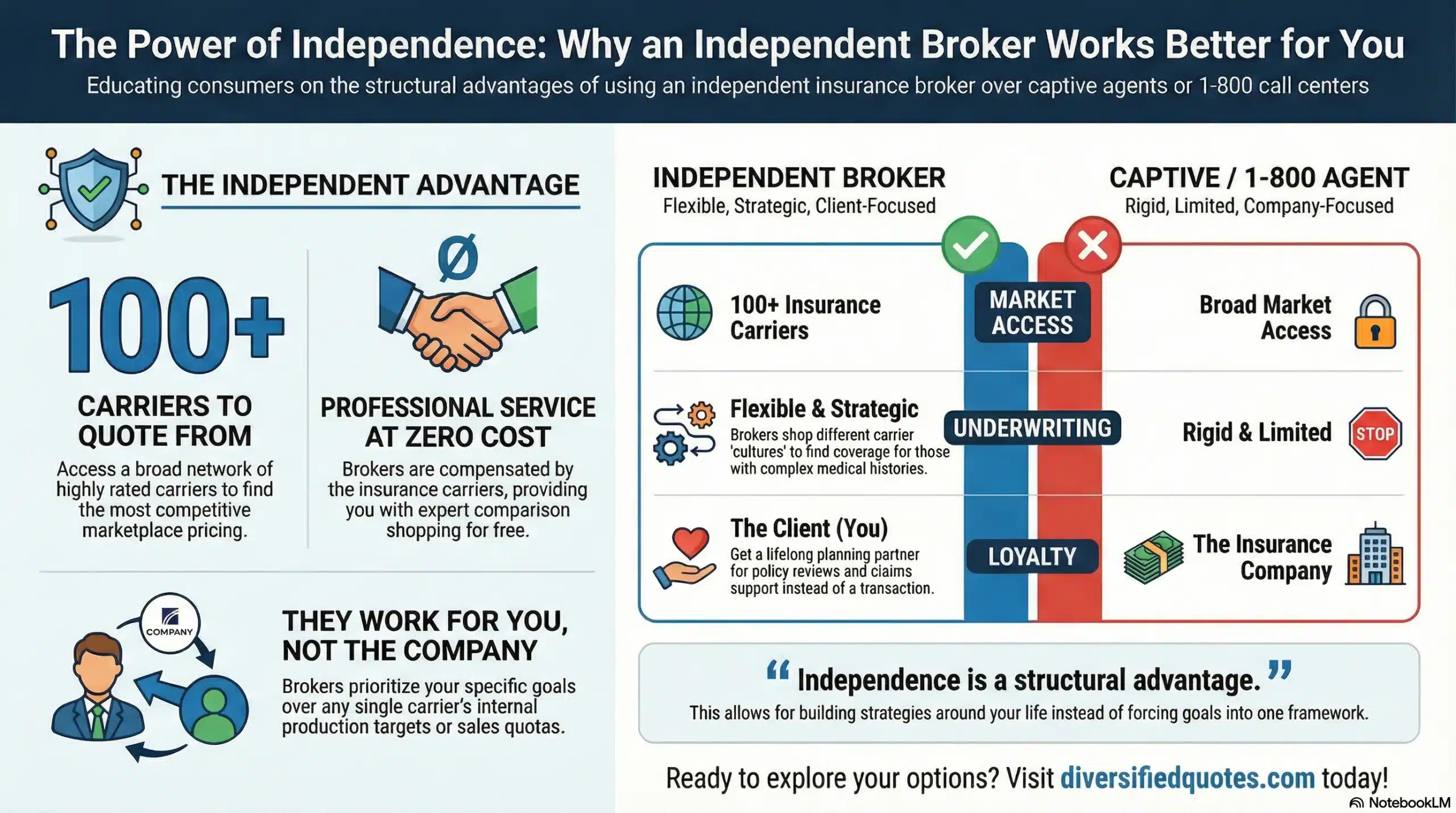
Compare Medicare Carriers
Book a free consultation with Tonia to review highly-rated Medicare Advantage plans and choose the best fit for your retirement.
FAQs: IRMAA Planning Strategies
IRMAA stands for Income-Related Monthly Adjustment Amount. It is a surcharge added to Medicare Part B and Part D premiums when a beneficiary’s Modified Adjusted Gross Income exceeds specific thresholds set annually by the Social Security Administration. IRMAA does not provide enhanced Medicare coverage — it is purely a cost adjustment based on income level, meaning higher-income beneficiaries pay more for the same coverage that lower-income beneficiaries receive at the standard premium. The surcharge operates in tiers: income above a threshold triggers the full higher premium for that tier for the entire year, creating a cliff effect where a relatively small dollar increase in MAGI can produce a disproportionately large increase in annual Medicare premiums. This cliff effect is the central reason IRMAA planning matters — often a small adjustment to income timing can prevent crossing into a significantly higher premium tier.
Medicare uses a two-year lookback because tax returns take time to file, process, and become available to the Social Security Administration, which administers IRMAA determinations. By the time Medicare needs to set premiums for an upcoming year, the most recent complete and verified tax data is typically from two years prior. This administrative lag creates the timing mismatch that catches many retirees by surprise: a one-time income event — a large Roth conversion, a significant asset sale, a substantial IRA distribution — affects Medicare premiums two full years after the decision that triggered it, often at a point when the retiree no longer clearly connects the current premium notice to the prior income decision. Once this lookback mechanism is understood, it becomes a planning tool: decisions made today about income recognition have predictable Medicare consequences two years forward, which can be modeled and optimized before the decisions are executed.
The most common IRMAA triggers are not ordinary ongoing retirement income — they are income spikes created by specific concentrated events or decisions. Large IRA withdrawals taken in a single year to fund major expenses or purchases, Roth conversion amounts that push combined MAGI into a higher bracket, significant capital gains from selling appreciated securities or real estate, one-time business income events such as a practice sale or business liquidity event, and years where multiple income sources converge simultaneously are the most frequent causes. Social Security income becoming more heavily taxable as other income rises also contributes to MAGI growth in ways that interact with IRMAA thresholds. The common thread across all common triggers is income concentration — substantial amounts recognized in a single calendar year rather than spread across multiple years. Many IRMAA situations could have been avoided or significantly reduced with timing adjustments that are easy to implement before the income event occurs but impossible to reverse after.
Yes — Roth conversions are included in MAGI as taxable income in the year the conversion is executed, and a conversion that pushes MAGI above an IRMAA threshold will increase Medicare premiums two years later. This does not mean Roth conversions are a poor strategy — in many retirement situations, the long-term tax reduction, RMD relief, and estate planning benefits of systematic Roth conversion substantially outweigh the temporary IRMAA cost, particularly for households with large traditional IRA balances that are growing and will generate escalating RMDs. The planning opportunity is in the pacing and calibration: converting with an annual amount that is aware of both the current income tax bracket being filled and the nearest IRMAA threshold allows consistent Roth progress without unnecessary premium bracket crossings. Some households choose to deliberately accept IRMAA for defined years as part of an accelerated conversion strategy, making that decision explicitly with full knowledge of the premium cost rather than discovering it as a surprise. The correct approach depends on the household’s RMD trajectory, estate goals, tax bracket comparison, and cash flow sensitivity to higher Medicare premiums in the near term.
In many cases, yes. Medicare allows IRMAA appeals — formally called IRMAA reconsiderations — when a qualifying life-changing event caused a significant income reduction from the year used in the two-year lookback determination. Qualifying events include retirement, reduction of work hours, loss of income-producing property, loss of pension income, marriage, divorce, and the death of a spouse. The appeal requires documentation demonstrating that your current income is materially lower than what the prior tax return showed, and that the reduction is directly tied to a specific qualifying event. The Social Security Administration handles IRMAA determinations and appeals. Appeals that succeed typically include well-organized, complete documentation with a clear narrative connecting the income reduction to the qualifying event and supporting evidence of the change. Many potentially successful appeals fail due to incomplete paperwork or unclear explanations of the qualifying event. If your income genuinely dropped significantly due to a qualifying circumstance, pursuing an appeal rather than simply absorbing the higher premium for the full year is worthwhile.
Not always. Avoiding IRMAA entirely is a reasonable default planning objective, but it should never override a decision that produces superior long-term net outcomes for the household. A Roth conversion strategy that triggers one or two years of IRMAA may still represent the financially superior choice if it meaningfully reduces lifetime taxes on RMDs, improves estate planning outcomes for heirs, eliminates forced large distributions at ages when income is less controllable, or reduces the long-term tax burden on a surviving spouse. The correct analytical framework is a net analysis over the full planning horizon: total cost of IRMAA for the affected years versus total long-term financial benefit of the underlying strategy. When the benefit clearly and durably exceeds the premium cost — which is often the case for well-calibrated Roth strategies in appropriate situations — accepting IRMAA as part of a deliberate plan is entirely rational. When the strategy can be redesigned to achieve most of the benefit without crossing the threshold, the redesign is usually preferable. The goal is the best net outcome over time, not simply the lowest Medicare premium in any individual year.
Annuities do not directly eliminate IRMAA, but they can play an indirect and meaningful role in reducing IRMAA risk as part of a structured retirement income plan. The connection is through income predictability: when retirees have a reliable guaranteed income floor from annuity payments (along with Social Security and any pension), they are less likely to make reactive large taxable decisions — pulling substantial IRA distributions in a single year to cover unexpected expenses, funding a major purchase with a large one-time withdrawal, or liquidating appreciated investments under time pressure. These reactive income events are among the most common causes of IRMAA threshold crossings. A structured income floor that predictably covers essential expenses without requiring large variable distributions from tax-deferred accounts keeps MAGI more stable year to year, reducing the probability of IRMAA brackets being crossed by the reactive decisions that a less structured income plan requires. The annuity does not reduce IRMAA directly — but the retirement income architecture it enables can reduce the frequency and magnitude of the taxable events that create IRMAA exposure.
The most practical and immediately actionable first step is to calculate your baseline MAGI — what your annual income picture looks like from sources that are not discretionary — and then compare it to the current IRMAA thresholds to understand how much discretionary income can be added before crossing into the next premium bracket. Your baseline MAGI includes pension income, Social Security income (at its taxable percentage based on your other income), required minimum distributions if they have begun, interest and dividends from taxable accounts, and any other ongoing income sources you cannot easily control in timing or amount. Once you know your baseline, you can see exactly how much room exists for discretionary decisions — Roth conversions, asset sales, large distributions — before crossing the nearest threshold. From there, building a 1 to 3 year forward MAGI projection that shows how baseline income is likely to change as RMDs grow, pensions start, or other income sources change provides the framework for making annual discretionary income decisions with full awareness of their IRMAA consequences. If the picture is complex, working with an advisor who coordinates income planning, Medicare awareness, and tax strategy as an integrated system is the most reliable way to avoid avoidable surcharges while still achieving the financial goals that motivate income decisions.
About the Author:
Tonia Pettitt, CMIP©, (NPN 14374308), is a seasoned Medicare specialist with more than 40 years of hands-on experience guiding individuals and families through the complexities of Medicare planning. As a senior advisor with the nationally licensed independent agency Diversified Insurance Brokers, Tonia provides clear, dependable guidance across all areas of Medicare—including Medicare Advantage, Medicare Supplement (Medigap), and Part D prescription coverage. Leveraging active contracts with dozens of highly rated insurance carriers, she helps clients compare options objectively and secure the most suitable coverage for their health and budget.
Known for her patient, education-first approach, Tonia has built a reputation as a trusted resource for retirees seeking reliable, unbiased Medicare support. With four decades of experience across evolving Medicare laws, carrier changes, and plan structures, she brings unmatched insight to every client conversation—ensuring clients feel confident, protected, and fully prepared for each stage of their retirement healthcare journey.
Explore More: Browse our complete Medicare guide — covering Medicare Advantage, Supplement plans, Part A, B, C, D & enrollment strategies from 100+ carriers.
Last Reviewed: August 24, 2026 |
Reviewed by: Tonia Pettitt, CMIP©
Medicare Specialist, Diversified Insurance Brokers, Inc. | NPN: 14374308 | Diversified Insurance Brokers, Inc. — Licensed in all 50 states
Fact Checked by: Jason Stolz, CLTC, CRPC, DIA, CAA
Chief Underwriter, Diversified Insurance Brokers, Inc. | NPN: 20471358 | Diversified Insurance Brokers, Inc. — Licensed in all 50 states
Did you find this content helpful? Leave us a Google review — it helps others find trustworthy guidance too.
Editorial Standards: Diversified Insurance Brokers maintains rigorous editorial standards to ensure accuracy, clarity, and independence in all content. Learn more about our editorial standards and commitment to transparency.
