
Pros and Cons of Pre-Settlement Funding

Jason Stolz CLTC, CRPC
Pre-settlement funding can feel like both a lifeline and a dilemma at the same time. If you are waiting on a lawsuit to resolve — whether it involves a personal injury claim, wrongful termination dispute, medical malpractice case, or another civil matter — you may be facing real financial pressure while the legal process moves slowly. Rent does not wait for court dates. Mortgage payments do not pause because negotiations are ongoing. Medical bills, transportation costs, utilities, and groceries continue regardless of how strong your case may be. That is where pre-settlement funding enters the conversation. Also known as lawsuit funding or a legal advance, this financial tool provides plaintiffs with cash upfront in exchange for a portion of their future settlement proceeds. The funding is typically non-recourse, meaning if you lose your case, you generally do not repay the advance. That single feature is one of the most significant advantages, but it is not the entire story. Understanding the true pros and cons requires a deeper look at leverage, cost structures, alternatives, case timelines, and long-term financial outcomes. If you are new to the concept, you may want to first review how pre-settlement funding works to better understand the mechanics before weighing its advantages and disadvantages.
One of the most compelling advantages of pre-settlement funding is financial breathing room. Insurance companies and defense attorneys are well aware that plaintiffs under financial stress may feel pressured to accept lower settlement offers simply to gain immediate access to cash. When you are behind on bills or facing collections, the temptation to resolve quickly — even at a discount — can be overwhelming. Funding can reduce that pressure and give your attorney additional time to negotiate for full and fair compensation. In that sense, the funding itself can indirectly increase your net recovery by preventing a premature settlement. Many plaintiffs ask, is pre-settlement funding worth it? The answer often hinges on this leverage factor. If funding allows you to wait for a significantly stronger offer, the cost of the advance may be justified. However, this must be weighed carefully against how funding fees accumulate over time, which can substantially reduce your final payout if your case takes longer than expected. Transparency regarding pre-settlement funding rates and fees is absolutely critical before signing any agreement.
Need Financial Relief While Your Case Is Pending?
Request a fast, no-obligation review to see if you qualify for non-recourse pre-settlement funding.
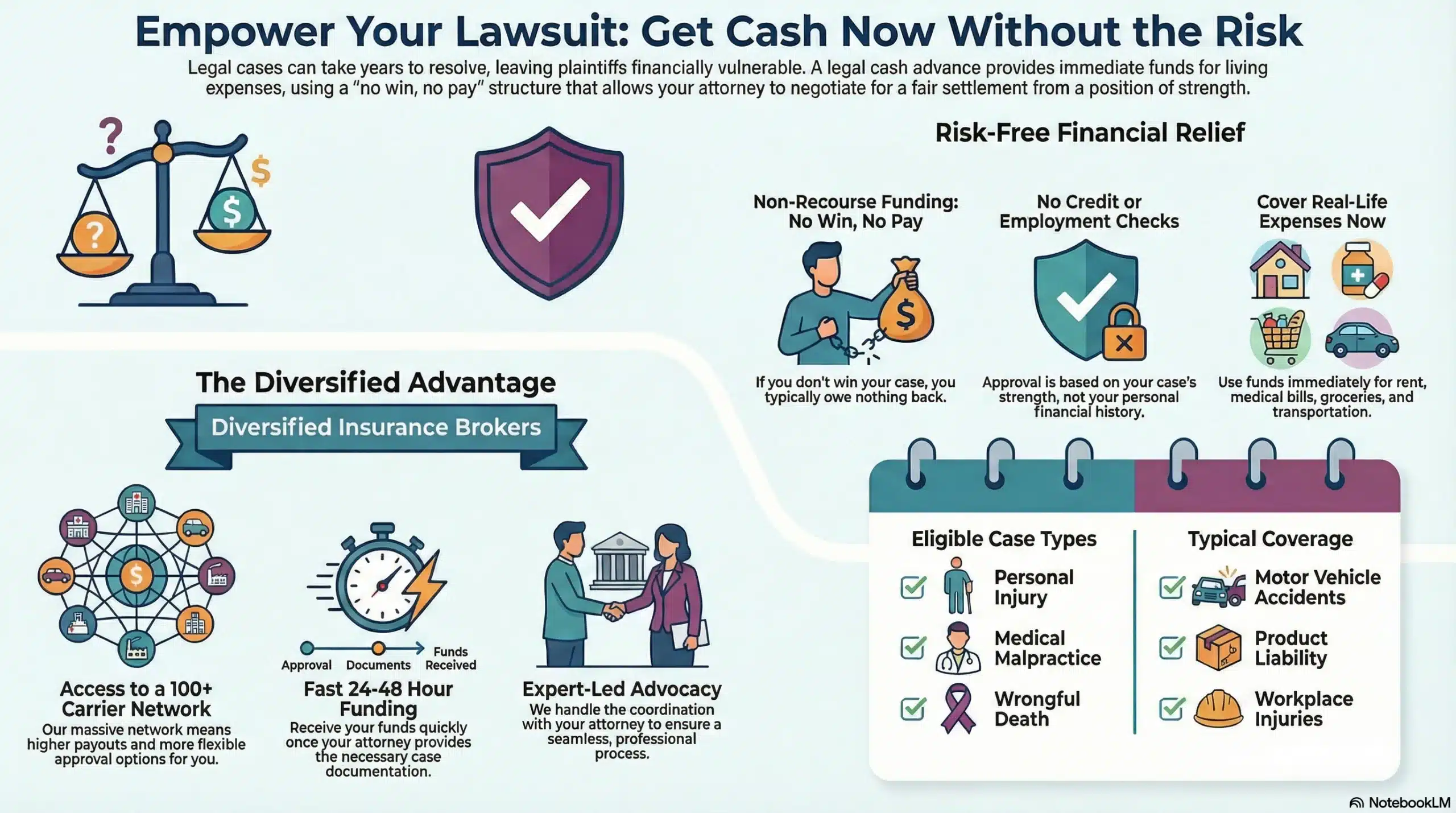
Apply for Pre-Settlement FundingAnother major benefit is accessibility. Unlike traditional loans, pre-settlement funding does not rely heavily on your credit score, income level, or employment status. Approval is based primarily on the strength of your case. The funding company evaluates liability, documentation, damages, and your attorney’s assessment of potential recovery. This case-based underwriting model allows plaintiffs who may not qualify for bank loans, credit cards, or other forms of financing to access capital. For individuals who are out of work due to injury or who have experienced financial disruption as a result of the incident underlying their lawsuit, that accessibility can be critical. Additionally, because repayment is contingent upon settlement success, you are not personally obligated to repay the advance if the case is unsuccessful. This non-recourse structure differentiates lawsuit funding from borrowing against retirement accounts, taking personal loans, or relying on high-interest credit cards — all of which require repayment regardless of outcome.
However, the cost structure represents the most frequently cited drawback. Funding fees can accumulate monthly, and in some agreements, costs compound over time. The longer your case remains unresolved, the larger the repayment amount may grow. Plaintiffs who take larger advances or who experience extended litigation timelines may see a significant portion of their eventual settlement allocated toward repayment. This is why it is essential to borrow conservatively and request a clear payoff schedule in writing before proceeding. Comparing funding to other financial tools can also provide perspective. For example, reviewing pre-settlement funding vs. personal loans can help clarify how repayment risk and cost differ between options. While personal loans may offer lower interest rates, they carry full repayment obligations regardless of whether your lawsuit succeeds. The trade-off between risk and cost must be evaluated within your personal financial reality.
Another advantage worth considering is psychological relief. Ongoing financial strain can take a serious emotional toll. When plaintiffs are worried about eviction, foreclosure, car repossession, or mounting medical debt, stress levels can interfere with both personal well-being and litigation strategy. The ability to stabilize housing, utilities, and essential expenses can create peace of mind that is difficult to quantify yet deeply meaningful. That said, critics argue that the industry requires careful oversight and consumer awareness. Not all funding agreements are structured identically, and terms can vary widely between providers. This is why researching the broader pros and cons of pre-settlement funding and discussing options with your attorney is essential before signing any contract.
Don’t Let Financial Pressure Dictate Your Settlement
Explore whether lawsuit funding can help you pursue full and fair compensation.
Check Your Eligibility NowThere are additional considerations that influence whether pre-settlement funding ultimately proves beneficial. Case duration plays a central role. If your attorney anticipates a settlement within a relatively short timeframe, funding costs may remain manageable. If the case is likely to involve extensive discovery, expert testimony, or trial preparation stretching over several years, cost accumulation becomes a more serious concern. Plaintiffs should also evaluate whether multiple advances might be necessary. While some companies allow follow-up funding, doing so increases total repayment.
Alternatives must also be examined realistically. Emergency savings, assistance from family, short-term disability benefits, structured payment arrangements with medical providers, or negotiating temporary hardship plans with creditors may reduce the need for funding. However, these alternatives are not always available or sufficient. Borrowing against retirement accounts can trigger taxes and penalties. Selling assets under financial pressure can lock in losses. Credit card balances can spiral into long-term debt cycles. In situations where no affordable alternative exists, pre-settlement funding may represent a strategic bridge rather than a burden. The key is to view it as a temporary tool — not a permanent solution — and to take only what is necessary to maintain stability.
Ultimately, the pros and cons of pre-settlement funding come down to trade-offs. On the positive side: non-recourse protection, reduced settlement pressure, accessibility regardless of credit, and immediate financial relief. On the negative side: potentially high cumulative costs, reduced net settlement proceeds, and the need for careful contract review. Used responsibly, funding can preserve negotiating leverage and protect plaintiffs from accepting undervalued settlements. Used carelessly or excessively, it can erode recovery amounts and create disappointment at case conclusion. Education, transparency, and conservative borrowing are the safeguards that determine which outcome you experience.
Talk With an Advisor Today
Choose how you’d like to connect—call or message us, then book a time that works for you.
Schedule here:
calendly.com/jason-dibcompanies/diversified-quotes
Licensed in all 50 states • Fiduciary, family-owned since 1980
Pre-settlement funding is typically structured as a non-recourse cash advance rather than a traditional loan. That means repayment usually only occurs if you win or settle your case. Learn more about how advances are structured in Legal Cash Advances Explained.
Yes. Many plaintiffs seek financial relief while their lawsuit is still active. Funding is designed specifically for this stage of litigation. See how it works in Get Cash Before Your Case Settles.
The amount depends on the strength and estimated value of your claim. Funding companies generally advance a percentage of the projected settlement value. Review what impacts approval amounts in Advance on a Pending Lawsuit.
Once approved and your attorney provides required documentation, funds can often be delivered within 24–48 hours. If you need expedited options, explore Fast Settlement Advances for Plaintiffs.
Yes. Your attorney typically must confirm case details and agree to repay the advance from settlement proceeds. This protects both you and the funding company. You can learn how providers coordinate with attorneys in Legal Funding Companies Near Me.
In most non-recourse agreements, you typically do not repay the advance if you lose. Always confirm the exact language in your contract. For additional insights into repayment scenarios, review Legal Cash Advances Explained.
About the Author:
Jason Stolz, CLTC, CRPC and Chief Underwriter at Diversified Insurance Brokers, is a senior insurance and retirement professional with more than two decades of real-world experience helping individuals, families, and business owners protect their income, assets, and long-term financial stability. As a long-time partner of the nationally licensed independent agency Diversified Insurance Brokers, Jason provides trusted guidance across multiple specialties—including fixed and indexed annuities, long-term care planning, personal and business disability insurance, life insurance solutions, and short-term health coverage. Diversified Insurance Brokers maintains active contracts with over 100 highly rated insurance carriers, ensuring clients have access to a broad and competitive marketplace.
His practical, education-first approach has earned recognition in publications such as VoyageATL, highlighting his commitment to financial clarity and client-focused planning. Drawing on deep product knowledge and years of hands-on field experience, Jason helps clients evaluate carriers, compare strategies, and build retirement and protection plans that are both secure and cost-efficient.
