
Should You Buy Long Term Care Insurance

Jason Stolz CLTC, CRPC
Should you buy Long Term Care Insurance? Planning for long-term care is one of the most important—and most overlooked—parts of retirement planning. Many retirees assume Medicare or traditional health insurance will cover extended care like assisted living, memory care, or long-term in-home assistance, but these programs focus primarily on short-term medical treatment, not long-duration custodial care. When families discover this gap during a health event, it is often too late to build an affordable funding strategy. As a result, retirement accounts, investment portfolios, and home equity often become the default funding sources. Understanding how long term care insurance works—and whether it makes sense for your retirement strategy—is essential for protecting income, assets, and family stability.
Long term care planning is no longer optional for many households. Americans are living longer, surviving serious illnesses, and managing chronic conditions for extended periods. While this is a positive development medically, it creates a new financial reality: longer retirements increase the probability of needing care. Many retirees will require some level of assistance during retirement, whether temporarily following surgery or permanently due to cognitive decline or mobility limitations. Without a structured funding plan, care costs can create a cascade of financial consequences that disrupt otherwise well-designed retirement income plans.
Long term care insurance is designed to protect your savings, your independence, and your family. It provides tax-advantaged dollars for care when you need help with daily living or experience cognitive decline. For retirees already reviewing options such as shared-benefit LTC plans or comparing the tax benefits of LTC insurance, understanding how these policies integrate into a full retirement strategy can help create long-term financial clarity.
Build a Long Term Care Strategy Before You Need It
Compare traditional LTC, hybrid life/LTC, and asset-based solutions tailored to your health, assets, and retirement goals.
Request LTC Planning OptionsThe Growing Financial Impact of Long Term Care
The financial risk associated with long term care is different from most other retirement risks. Market volatility can often recover over time. Inflation can be partially offset through investment growth. Long term care costs, however, create direct and ongoing cash flow demands that can last for years. Even households with strong retirement savings can experience financial strain if care needs extend longer than expected.
Care expenses also tend to accelerate over time. Early-stage care may involve limited home support or part-time caregiving. As conditions progress, care levels often increase to full-time in-home care, assisted living, or skilled nursing environments. Each transition typically increases cost levels. Without a dedicated funding source, these costs are typically paid from retirement assets, which can create forced withdrawals during unfavorable market conditions.
Retirees who coordinate care planning with retirement income strategies often see better long-term outcomes. Understanding how retirement accounts function—such as reviewing how an IRA works—can help retirees anticipate how withdrawals may increase during care events. Similarly, understanding guaranteed income structures like how annuities earn interest can help retirees design income floors that remain stable even during extended care periods.
Why Medicare and Traditional Health Insurance Fall Short
One of the most common misunderstandings retirees have is believing Medicare will cover long term care. Medicare was designed to cover medical treatment, hospital stays, and limited rehabilitation. It was never designed to cover ongoing assistance with daily living needs. Once a patient transitions from rehabilitation to custodial care, Medicare coverage typically ends.
This leaves retirees responsible for care expenses unless they have private coverage, significant liquid assets, or qualify for Medicaid after spending down assets. Understanding the limits of government coverage is one of the most important first steps in long term care planning. Many retirees reviewing the details of Medicare long term care coverage limits are surprised by how little support is available for extended care needs.
The Emotional and Family Impact of Long Term Care Events
Long term care events affect more than finances. They often create emotional stress for spouses and children. Many families assume they will “figure it out later,” but care decisions often occur during medical emergencies when time and emotional capacity are limited.
Without a defined plan, families must simultaneously evaluate care providers, financial resources, and legal considerations while managing medical decisions. Having long term care coverage creates a structured plan. Benefits are already defined, elimination periods are known, and care options are established before a crisis occurs.
Caregiving can also create economic consequences for adult children. Many caregivers reduce work hours, change jobs, or leave the workforce entirely. Long term care planning helps reduce this financial ripple effect across multiple generations.
When Should You Buy Long Term Care Insurance?
Most applicants explore long term care insurance between ages 50 and 65. During this window, underwriting is generally more favorable, pricing is lower, and policy options are strongest. Waiting until retirement or until health changes occur can reduce eligibility or increase cost significantly.
Medical underwriting plays a major role in approval. Many applicants benefit from reviewing qualification expectations in advance. Resources such as qualifying for long term care insurance can help applicants understand what insurers evaluate during underwriting.
Traditional vs Hybrid Long Term Care Insurance
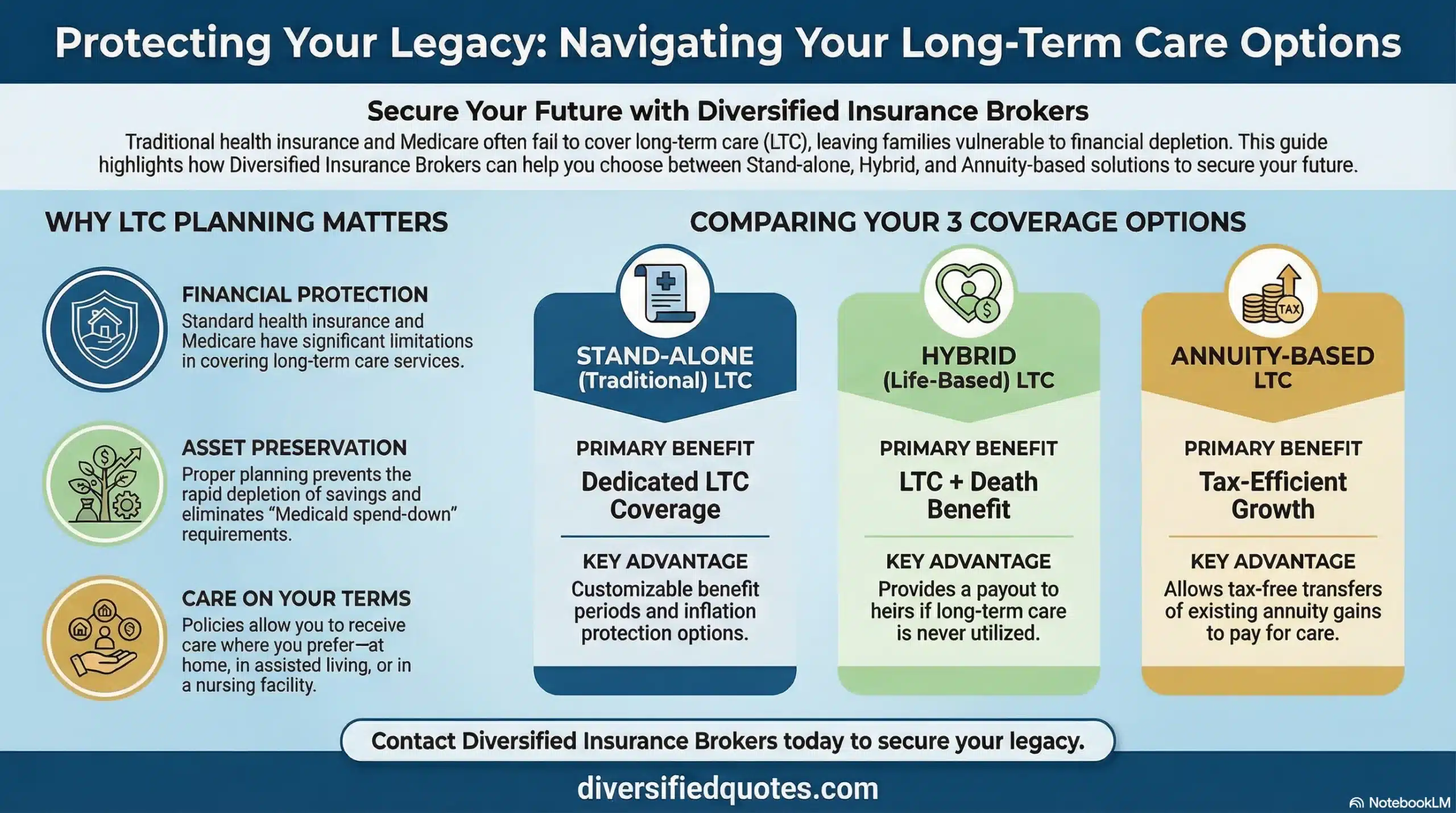
Traditional LTC insurance provides dedicated care benefits funded through ongoing premiums. Hybrid LTC strategies combine life insurance or annuities with long term care benefits. Hybrid designs often appeal to retirees who want guaranteed value even if care is never needed.
Some hybrid life/LTC strategies, including hybrid long term care insurance policies, allow repositioning assets into benefit pools that can be used for care or passed to beneficiaries. Asset-based LTC annuity strategies may provide enhanced income if care is needed while preserving principal if care is never required.
Inflation and Long Term Care Planning
Inflation is one of the most important factors in long term care planning. Care costs historically increase faster than general inflation. Policies that include benefit growth riders help maintain purchasing power over time.
Applicants in their 50s often benefit most from inflation protection because their policies have decades to grow. Older applicants may balance inflation protection with premium affordability depending on retirement income strategy.
Compare Long Term Care Strategies Side by Side
See how traditional LTC, hybrid life/LTC, and asset-based LTC strategies compare for your age and retirement goals.
Request LTC Planning OptionsHow Much Long Term Care Coverage Do You Need?
Coverage needs vary widely. Some retirees want coverage designed to protect a portion of retirement assets. Others want full lifetime coverage. Factors include family health history, available support network, retirement income sources, and overall asset structure.
Many retirees coordinate LTC coverage with retirement income strategies. Understanding retirement income tools such as deferred annuities or fixed indexed annuities can help retirees align care funding with long-term income sustainability.
Tax Advantages of Long Term Care Insurance
Many LTC policies offer tax advantages. Benefits are typically received tax-free. Some policies allow tax-deductible premiums depending on age and tax filing status. Hybrid LTC annuity strategies may allow tax-free LTC withdrawals under federal rules.
Understanding LTC tax treatment alongside retirement tax planning strategies can help retirees improve long-term efficiency and reduce unexpected tax burdens during care events.
Self-Funding vs Insurance: Which Strategy Works Best?
Some retirees choose to self-fund care expenses using savings and investments. Others prefer transferring risk through insurance. Many retirees choose a blended strategy, protecting against catastrophic care events while maintaining investment flexibility.
The right strategy depends on asset size, retirement income stability, family support structure, and personal risk tolerance. Long term care insurance typically works best when integrated into a full retirement income plan rather than viewed as a standalone decision.
Integrating Guaranteed Income and Long Term Care Planning
Guaranteed income planning can complement LTC coverage. Some retirees pair income annuities with LTC riders to protect retirement income streams. Others use annuity income as a base income layer while LTC insurance protects against catastrophic care expenses.
This layered planning approach helps ensure retirees maintain predictable income even if extended care becomes necessary.
Protect Your Retirement From Long Term Care Costs
Build a personalized plan using traditional LTC, hybrid strategies, or asset-based solutions designed for long-term protection.
Request LTC Planning OptionsRelated Long Term Care Planning Pages
Explore deeper strategies for protecting retirement assets from long term care costs.
Talk With an Advisor Today
Choose how you’d like to connect—call or message us, then book a time that works for you.
Schedule here:
calendly.com/jason-dibcompanies/diversified-quotes
Licensed in all 50 states • Fiduciary, family-owned since 1980
FAQs: Should You Buy Long Term Care Insurance?
Is long term care insurance worth it?
For many retirees, yes. LTC insurance protects assets, provides tax-advantaged benefits, and ensures you can access professional care without burdening family members.
What age is best to buy long term care insurance?
Most people apply between ages 50 and 65, when premiums are manageable and health qualifications are strongest.
Does Medicare pay for long term care?
No. Medicare covers medical care, not custodial care such as help with bathing, dressing, mobility, and extended assisted living.
What types of long term care insurance are available?
You can choose from traditional LTC insurance, hybrid life/LTC policies, single-premium asset-based plans, or annuities with LTC features.
Can I use an annuity to pay for long term care?
Yes. Some annuities offer enhanced payouts for care or allow tax-free LTC withdrawals under specific rules.
What happens if I never need long term care?
Hybrid and asset-based LTC plans can return premiums or provide a life insurance benefit to heirs if care is never used.
About the Author:
Jason Stolz, CLTC, CRPC and Chief Underwriter at Diversified Insurance Brokers (NPN 20471358), is a senior insurance and retirement professional with more than two decades of real-world experience helping individuals, families, and business owners protect their income, assets, and long-term financial stability. As a long-time partner of the nationally licensed independent agency Diversified Insurance Brokers, Jason provides trusted guidance across multiple specialties—including fixed and indexed annuities, long-term care planning, personal and business disability insurance, life insurance solutions, Group Health, and short-term health coverage. Diversified Insurance Brokers maintains active contracts with over 100 highly rated insurance carriers, ensuring clients have access to a broad and competitive marketplace.
His practical, education-first approach has earned recognition in publications such as VoyageATL, highlighting his commitment to financial clarity and client-focused planning. Drawing on deep product knowledge and years of hands-on field experience, Jason helps clients evaluate carriers, compare strategies, and build retirement and protection plans that are both secure and cost-efficient. Visitors who want to explore current annuity rates and compare options across multiple insurers can also use this annuity quote and comparison tool.
