
Travel Medical and Evacuation from Sweden

Jason Stolz CLTC, CRPC
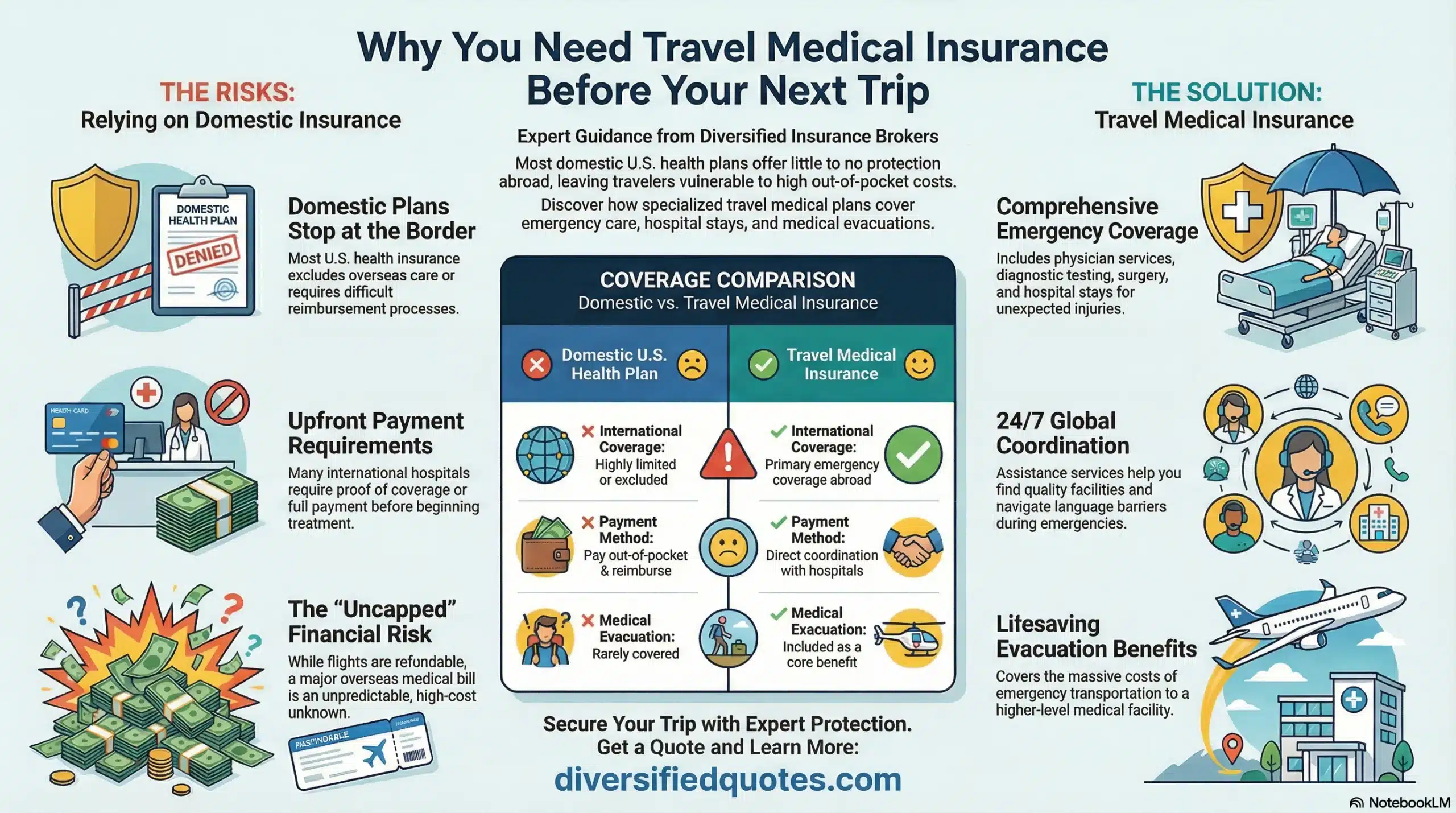
Travel Medical and Evacuation from Sweden is an easy thing to overlook because Sweden feels “safe,” organized, and medically advanced. But the real risk for most travelers isn’t whether Sweden has good hospitals—it’s what happens when a sudden medical issue, accident, or urgent diagnosis collides with cross-border logistics, unfamiliar billing systems, and the reality that many U.S. health plans either exclude international care or reimburse in very limited ways. A solid travel medical plan is designed for exactly this moment: an unplanned medical need during the trip, with an assistance team to help you find appropriate care and coordinate next steps.
Sweden also makes a great “base country” for European travel. Many trips that start in Stockholm include short flights or rail legs to other destinations, day trips, cruises, or regional travel that can quickly change your medical access, time-to-care, and transportation needs if something happens. That’s why it’s smart to think beyond “Will I be treated?” and focus on “How will I get the right care quickly, and how will the plan respond if I need transport, translation, or a medically supervised move?”
For a broader overview of how these plans work across destinations, start with our main guide to travel medical insurance. If you already know you want protection that includes higher-level transport support, it also helps to understand how emergency medical evacuation insurance typically fits into the overall structure of a travel plan.
Get Travel Medical + Evacuation Coverage for Sweden
Choose your dates and traveler details to view plan options designed for international medical care and evacuation support.
View Plans & PricingWhy Sweden trips can still create expensive medical problems
Even in countries with excellent medical infrastructure, travelers can face out-of-pocket exposure. The most common surprises come from emergency diagnostics, imaging, hospital observation stays, specialist consults, and medications that must be paid upfront. The second surprise is administrative friction: you may need help locating the right facility, understanding what paperwork to collect, or navigating a situation where the “right” care is not the closest care.
Travel medical coverage is built to address the medical event itself, but a strong plan also adds structure around it—especially when you’re trying to make good decisions under stress. That’s one reason many travelers value plans that include assistance services, because they can coordinate care, provide direction, and help you avoid delays or missteps. If you want a deeper explanation of how emergency care coverage typically functions during a trip, review our guide to emergency travel health insurance.
Sweden also has unique “travel patterns” that matter. Travelers often walk more than usual in cities, take ferries, explore winter conditions, or participate in outdoor activities that create injury risk. Sprains, fractures, head injuries, and unexpected infections can turn a great trip into a situation where you want help fast—and you want the plan to respond without confusion about what qualifies as an emergency, where to go, and how to document the claim.
What travel medical coverage is designed to pay for
Travel medical coverage is typically focused on eligible emergency and urgent care during the trip. That can include physician care, emergency room treatment, diagnostics and imaging, lab work, and hospitalization when medically necessary. Many plans also include coverage for prescription medications related to an eligible event, as well as follow-up care that is necessary to stabilize you so you can safely continue travel or return home.
Where travelers get tripped up is assuming the plan works like a U.S. major medical policy. It doesn’t. A travel medical plan is purpose-built for acute problems during a defined travel period. It’s not intended to cover routine care, elective treatment, or pre-planned procedures. It’s also not meant to become a long-term substitute for domestic insurance. The goal is to protect you from the “big bill” scenarios that can happen suddenly while you’re abroad.
If your trip involves multiple countries—common when Sweden is part of a longer European itinerary—you’ll also want to understand territory rules and how coverage follows you across borders. Our overview of international travel health coverage helps clarify what travelers should look for when the itinerary isn’t limited to one destination.
What medical evacuation really means in real life
Medical evacuation is often misunderstood. People assume it means “a helicopter ride” or “a flight home whenever I want.” In reality, evacuation benefits are typically tied to medical necessity and coordination through the plan’s assistance team. The plan may arrange transport to the nearest appropriate facility when local care can’t adequately treat the condition, or it may coordinate a medically supervised transfer when a move is required for proper treatment.
In Sweden, major cities have strong care. But evacuation can become relevant if you’re in a remote area, traveling in winter conditions, on islands, or if you need specialized care and the medically appropriate facility is not where you currently are. Evacuation can also matter when a traveler must return home under medical supervision. The biggest value is often not “distance,” but the organization and cost control around a complex transport decision.
Because evacuation is operationally complex, it’s smart to focus on how the plan coordinates the event, what triggers eligibility, and how decisions are made. That’s why many travelers start with the basics of emergency medical evacuation insurance and then compare plan certificates for the details that actually control outcomes.
Pre-existing conditions and the “gray areas” that matter most
Pre-existing conditions are one of the most important sections to read before you buy. Each plan defines “pre-existing” differently, and the definition controls what is and isn’t eligible. Some plans focus on a look-back window; others use medical stability language; others include specific carve-outs. The right approach is not guessing—it’s checking how the plan defines pre-existing conditions and whether there are any timing rules that affect eligibility.
In Sweden, the most common “gray area” scenario is not a rare disease. It’s a common condition that becomes urgent during travel: cardiac symptoms, asthma flare-ups, infections, dehydration, blood pressure spikes, or complications related to diabetes. Travelers with a known medical history should prioritize clarity in the plan language, because the wrong assumption can lead to an unpleasant surprise at claim time.
Older travelers also need to be intentional here. It’s not just the medical event risk—it’s the likelihood of needing diagnostic workups, short hospital stays, or specialist consults. If you’re shopping for parents or grandparents traveling to Sweden, review travel medical plan features in the context of age, medications, and stability. Our guide to travel medical insurance for seniors explains what to look for when the traveler profile is different than a healthy 30-year-old.
Sweden travel scenarios where coverage becomes valuable fast
City travel in Stockholm, Gothenburg, or Malmö: The most common issues are slips and falls, food-related illness, respiratory infections, and unexpected urgent care needs. The value of travel coverage here is mostly financial protection and access to support services so you can find care without wasting a day figuring out where to go.
Winter travel and outdoor activities: Many Sweden trips involve winter walking conditions, skiing, snow-related transportation, or outdoor excursions where injuries are more likely. A plan can help reduce financial exposure from imaging, ER care, and follow-up treatment, and evacuation language can become relevant if you’re not near a facility that can treat the injury appropriately.
Multi-country itineraries: If Sweden is one stop in a broader trip, the plan’s territory rules and assistance coordination become more important than the “Sweden” label. The point is having consistent protection that follows you as the itinerary changes.
Work, study, and long stays: Travelers in Sweden for study programs, longer work trips, or extended stays should focus on how coverage is triggered, how extensions work, and what documentation is needed to keep everything clean. If your trip is tied to education, start here: travel medical insurance for studying abroad.
How claims usually work when you’re overseas
Claims outcomes are heavily influenced by documentation. If you need care in Sweden and you pay out of pocket, keep itemized bills, proof of payment, and the clinical notes you can obtain before leaving the facility. Travelers sometimes leave with only a credit-card receipt and a vague discharge sheet, and that can slow down reimbursement. Your best move is gathering paperwork in the moment, while the facility can provide it easily.
Another key factor is whether the plan requires you to coordinate certain services through the assistance team. Evacuation and complex transportation are the obvious examples, but some plans also have preferred processes around hospital admissions or large expenses. If you can call the assistance number before care (for non-emergency situations), you often get a cleaner path: appropriate facility selection, documentation guidance, and fewer surprises later.
For travelers balancing the “whole trip” logistics—not just medical coverage—it can help to understand how some plans treat ancillary benefits like assistance with unexpected travel disruption expenses. If you want that deeper layer, review travel lodging and pet care benefits so you know what’s typically included and what’s not.
Compare Travel Medical + Evac Options for Sweden
Select your trip dates and travelers, then compare plan designs that fit Sweden travel—short trips, multi-country itineraries, and longer stays.
Start a QuoteHow to choose limits, deductibles, and evacuation amounts for Sweden
For Sweden travel, the most practical approach is choosing coverage that matches the financial risk you don’t want to self-insure. A higher deductible can lower premium, but it also increases the chance you’ll pay meaningful out-of-pocket costs for smaller urgent care events. A lower deductible generally makes the plan feel “more usable,” especially for families traveling with kids or travelers with any medical history.
Medical maximums matter less for minor events and more for hospitalization scenarios. Most travelers buy travel medical coverage hoping they never use it, but the real purpose is protecting your finances if a bad scenario occurs. The question isn’t “What’s the average claim?” It’s “What’s the claim that would hurt if it happened?” For many people, that’s an ER-to-hospital admission scenario or a complicated diagnosis that requires multiple tests and specialist involvement.
Evacuation amounts should be considered separately. Even if you never need evacuation, having a plan that includes coordinated transport support is valuable because it reduces the risk of making costly decisions during a crisis. The practical lens is not “How often does evacuation happen?” but “If it happens, what could it cost, and do I want expert coordination?”
Common mistakes travelers make when buying coverage for Sweden
Assuming your credit card or U.S. health plan is enough. Some travelers rely on a credit card benefit or a domestic plan that offers limited out-of-network international reimbursement. That can work in small situations, but it often fails in urgent scenarios when you need help coordinating care or you’re asked to pay significant costs upfront.
Not reading the pre-existing condition definition. The definition controls outcomes more than marketing language. Even healthy travelers can have a “pre-existing” trigger depending on how the plan defines prior symptoms, treatment, or medical advice.
Forgetting that Sweden travel often includes other countries. Many travelers buy a plan thinking “Sweden,” then realize the trip includes Denmark, Norway, Finland, or other stops. The plan should follow the itinerary rather than being narrowly aligned to one country label.
Not understanding how to use the assistance services. The plan is not only about reimbursement. The assistance team can help you find care, coordinate documentation, and support evacuation decisions when necessary.
Who benefits most from Sweden travel medical + evacuation coverage
Most travelers benefit, but the value is strongest in a few scenarios. Families traveling with children often want coverage that reduces out-of-pocket exposure from urgent care needs and surprises. Travelers over age 60 often value higher medical limits and clear definitions because the likelihood of needing diagnostics or a short hospital stay rises. Business travelers and extended-stay travelers value consistency and support—especially when the trip is complex and time matters.
It also matters if you’re traveling with a purpose that changes your risk profile. Volunteer trips, mission trips, and organized group travel can create different medical access patterns, and the need for coordination support becomes more important. If that’s your travel style, you may want to compare plans through the lens of group logistics and support services rather than just price. (For context, see: travel medical insurance for volunteer groups.)
Even if you’re a healthy traveler, the main benefit is buying down uncertainty. The plan exists to keep a medical event from becoming a financial problem and a logistical mess.
Ready to Protect Your Sweden Trip?
Lock in travel medical and evacuation protection for your dates, then travel with a plan that’s built for emergencies abroad.
Get Covered NowRelated Travel Medical Pages
If you’re comparing plan features, these pages help you dial in coverage choices, eligibility, and trip scenarios.
Related Destination Pages
If you travel to multiple countries, compare destination-specific guidance and planning considerations.
Talk With an Advisor Today
Choose how you’d like to connect—call or message us, then book a time that works for you.
Schedule here:
calendly.com/jason-dibcompanies/diversified-quotes
Licensed in all 50 states • Fiduciary, family-owned since 1980
FAQs: Travel Medical and Evacuation from Sweden
Do I need travel medical insurance for Sweden if the healthcare system is excellent?
Sweden has strong medical care, but travelers can still face out-of-pocket costs, upfront payment requirements, and administrative complexity. Travel medical insurance is designed to help with eligible emergency treatment expenses during your trip and often includes assistance support to help you find appropriate care and handle documentation.
What’s the difference between travel medical coverage and evacuation coverage?
Travel medical coverage focuses on eligible treatment costs such as urgent care, ER visits, diagnostics, and hospitalization. Evacuation coverage focuses on medically necessary transport to an appropriate facility or medically supervised return travel when required, usually coordinated through the plan’s assistance team.
If I’m traveling to remote areas or islands in Sweden, does coverage still apply?
Coverage generally applies throughout your covered territory, but remote locations can make coordination and transportation more important. In rural areas, the practical difference is how quickly you can access appropriate care and how the plan’s assistance services coordinate transport if it becomes medically necessary.
How do pre-existing conditions work for Sweden travel medical plans?
Plans define pre-existing conditions differently, and that definition controls eligibility. Focus on the plan’s definition, any look-back window language, and whether there are timing rules or stability requirements that affect coverage for condition-related events during the trip.
Is evacuation the same as “a flight home whenever I want”?
No. Evacuation benefits are typically tied to medical necessity and coordinated through the plan’s assistance team. The benefit is designed for situations where transport to the nearest appropriate facility (or a medically supervised return) is required based on the traveler’s condition and local care availability.
What should I do if I need medical care while I’m in Sweden?
If it’s an emergency, seek immediate care first. For non-emergency situations, contact the plan’s assistance resources when possible so they can help direct you to an appropriate facility and explain what documentation to collect for the claims process.
How do claims usually work if I pay out of pocket?
Keep itemized bills, proof of payment, and any clinical notes you can obtain. Reimbursement decisions depend heavily on documentation, so collect paperwork before you leave the facility whenever possible.
Can I buy coverage if my itinerary includes multiple European countries?
Many travel medical plans cover multi-country itineraries, but you should confirm territory rules and ensure your coverage dates match your full travel period. If your itinerary changes frequently, focus on a plan designed for flexible international travel rather than a narrow destination-only approach.
Does travel medical insurance replace my U.S. health insurance?
No. Travel medical insurance is designed for emergencies and urgent care during your trip. It is not a replacement for domestic coverage and typically does not cover routine care or ongoing treatment outside the trip’s scope.
Is travel medical coverage worth it for a short Sweden trip?
Many travelers find it worthwhile because even short trips can create unpredictable medical needs. The value is strongest when you want to avoid out-of-pocket exposure and you want access to assistance support if a situation becomes complicated.
About the Author:
Jason Stolz, CLTC, CRPC and Chief Underwriter at Diversified Insurance Brokers (NPN 20471358), is a senior insurance and retirement professional with more than two decades of real-world experience helping individuals, families, and business owners protect their income, assets, and long-term financial stability. As a long-time partner of the nationally licensed independent agency Diversified Insurance Brokers, Jason provides trusted guidance across multiple specialties—including fixed and indexed annuities, long-term care planning, personal and business disability insurance, life insurance solutions, Group Health, and short-term health coverage. Diversified Insurance Brokers maintains active contracts with over 100 highly rated insurance carriers, ensuring clients have access to a broad and competitive marketplace.
His practical, education-first approach has earned recognition in publications such as VoyageATL, highlighting his commitment to financial clarity and client-focused planning. Drawing on deep product knowledge and years of hands-on field experience, Jason helps clients evaluate carriers, compare strategies, and build retirement and protection plans that are both secure and cost-efficient. Visitors who want to explore current annuity rates and compare options across multiple insurers can also use this annuity quote and comparison tool.
