
Disability Insurance with Preexisting Conditions

Jason Stolz CLTC, CRPC
Understanding Disability Insurance with Preexisting Conditions
Disability insurance with preexisting conditions is one of the most common concerns people have when exploring income protection. Many professionals assume that a past medical issue automatically disqualifies them from coverage, but that is rarely the case. In reality, disability insurance underwriting evaluates the entire health profile, not just a single diagnosis. The goal of underwriting is to determine the probability that a medical condition could lead to a disability claim in the future. When a preexisting condition is stable, well-managed, and properly documented, it may still be possible to qualify for disability insurance coverage that protects your income if an illness or injury prevents you from working.
Income protection has become increasingly important as modern households rely heavily on earned income to support long-term financial goals. Mortgage payments, retirement savings, college funding, and daily living expenses often depend on consistent earnings. When a medical event interrupts that income stream, the financial consequences can escalate quickly. Disability insurance exists specifically to address that risk by replacing a portion of lost income during periods when a person cannot work because of illness or injury. For individuals who already have a medical history, understanding how insurers evaluate preexisting conditions can make the application process much clearer and more productive.
How Insurers Evaluate Preexisting Medical Conditions
Preexisting conditions can include a wide range of medical histories. Some applicants may have experienced orthopedic injuries such as back or knee problems. Others may have chronic medical conditions that are being managed with medication or lifestyle adjustments. Some people have recovered from a past illness but remain concerned about how that history might affect underwriting. Insurance carriers examine each situation individually, reviewing medical records, treatment history, and long-term prognosis to determine whether the condition presents a manageable underwriting risk.
Many applicants are surprised to learn that disability insurance underwriting focuses heavily on stability and treatment patterns rather than simply the existence of a diagnosis. A condition that has remained stable for several years, requires minimal treatment, and does not significantly impact daily activities may be viewed differently from a recently diagnosed condition that requires ongoing intensive care. Insurers also consider how the condition interacts with occupational duties. Someone working in a physically demanding profession may be evaluated differently than someone working in a sedentary occupation.
Why Income Protection Matters for Financial Planning
Income protection planning is often discussed alongside other financial safeguards such as retirement strategies and insurance protection. Individuals who are planning long-term financial security frequently review resources such as why capital preservation is the new goal for retirees when developing broader financial plans. Protecting income through disability coverage complements these strategies by ensuring that financial progress can continue even if health challenges arise.
Insurance carriers evaluate disability applications through a detailed underwriting process. This review includes medical history, occupation, income level, and lifestyle habits. For applicants with preexisting conditions, underwriters typically review physician notes, prescription history, diagnostic results, and the overall timeline of the condition. The goal is to determine whether the condition is stable and whether the likelihood of future disability is within acceptable risk parameters.
Many people who initially assume they cannot qualify for disability insurance eventually discover that options exist when multiple carriers are compared. Different insurers use different underwriting guidelines, which means one company may view a condition more favorably than another. Working with independent brokers who compare numerous carriers can significantly improve the chances of finding a suitable policy.
Request a Disability Insurance Review
Key Underwriting Factors for Disability Insurance
Condition Severity and Treatment
Understanding how preexisting conditions affect disability coverage requires examining several underwriting factors. The first is the severity of the condition. Minor conditions that are well controlled often have minimal impact on eligibility, while more complex conditions may require additional documentation. Underwriters also evaluate treatment patterns. Regular follow-up care and adherence to physician recommendations demonstrate responsible health management, which can positively influence underwriting decisions.
Length of Stability
Another important factor is how recently the condition occurred. Many insurers prefer to see a period of stability before issuing coverage. For example, a condition that was treated successfully several years ago may present far less underwriting concern than a diagnosis received within the past few months. This is because a longer history of stability provides stronger evidence that the condition is unlikely to cause immediate disability.
Occupation and Job Duties
Occupational duties also play a major role in disability insurance underwriting. Individuals working in physically demanding industries often face different underwriting considerations than professionals working in office environments. For example, someone employed in a physically intensive role such as construction work may have additional risk factors related to job duties. Understanding how occupation interacts with medical history helps underwriters assess the probability of disability claims.
Exclusion Riders
In some situations, insurers may offer coverage with a medical exclusion rider. An exclusion rider limits claims related specifically to the preexisting condition while still providing income protection for other unrelated illnesses or injuries. Although this may not provide complete coverage for the condition itself, it still offers significant financial protection in the event of unrelated health issues.
Policy Adjustments for Higher Risk Applicants
Some applicants may also qualify for modified policies with adjusted benefit structures or waiting periods. Disability insurance policies vary widely, and different contract features can influence underwriting decisions. For example, benefit periods, elimination periods, and income replacement percentages can all affect how insurers evaluate risk.
Financial planning professionals often emphasize that disability coverage is a foundational component of income protection. Many individuals focus primarily on retirement investments while overlooking the risk of losing the income that funds those investments. Long-term planning discussions frequently include topics such as institutional investing strategies, but those strategies rely heavily on consistent earnings to support ongoing contributions.
How Disability Insurance Policies Are Structured
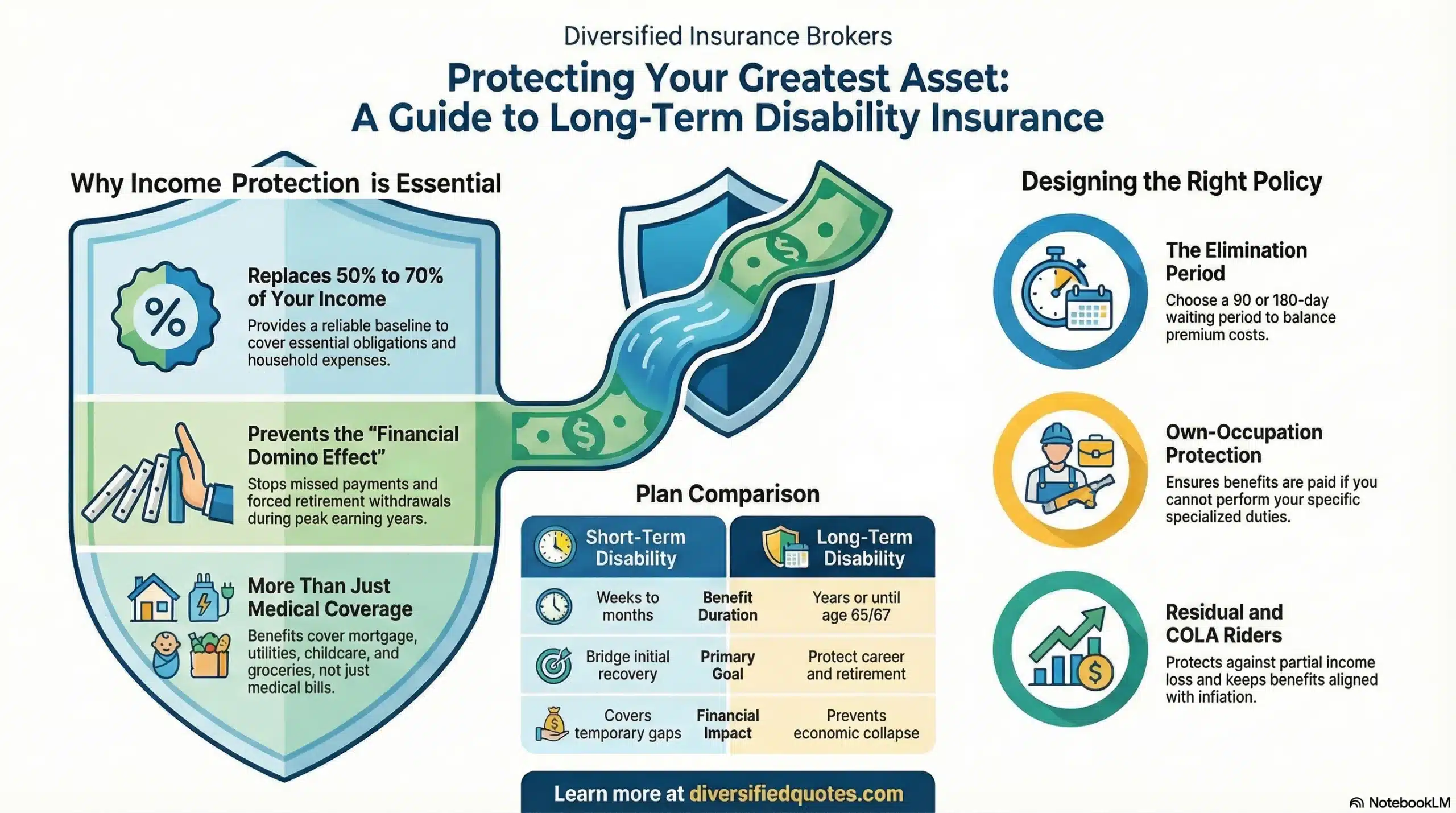
Disability insurance policies can be structured in several ways depending on individual needs. Some policies provide benefits for a limited number of years, while others extend benefits until retirement age. Waiting periods, also known as elimination periods, determine how long an insured person must wait before benefits begin. Longer waiting periods often reduce premiums but require greater emergency savings.
Applicants with preexisting conditions often benefit from preparing documentation before submitting an application. Providing recent medical records, physician statements, and treatment summaries can help underwriters evaluate the condition more efficiently. Clear documentation often speeds the underwriting process and reduces the likelihood of delays.
It is also helpful to understand how disability insurance fits within a broader protection strategy. Many households integrate multiple forms of protection including life insurance, long-term care planning, and retirement income strategies. For example, individuals who are evaluating long-term care coverage sometimes compare structures discussed in long-term care policies with limited or lifetime benefits. These decisions often intersect with disability insurance because both forms of coverage address potential income and care needs related to health conditions.
Improving Approval Chances with Medical History
Another key factor in disability underwriting is the consistency of treatment. Individuals who regularly follow medical advice and maintain stable health records typically present a lower underwriting risk. Lifestyle factors such as smoking status, body weight, and exercise habits may also influence underwriting classifications.
Applicants sometimes worry that a previous medical condition will automatically lead to denial, but that assumption is often incorrect. Many carriers specialize in underwriting complex medical histories and may offer coverage options that are not widely advertised. Comparing multiple insurers significantly increases the chances of finding a policy that accommodates preexisting conditions.
Compare Disability Insurance Options
Protecting Income for Long-Term Financial Stability
Disability insurance planning is ultimately about protecting the most valuable financial asset many people have: their ability to earn income. Even individuals with medical histories may still have access to meaningful coverage when policies are structured appropriately. Understanding underwriting guidelines, preparing documentation, and comparing multiple carriers can significantly improve the chances of securing a policy that fits both health circumstances and financial goals.
As financial planning becomes increasingly complex, individuals are also exploring additional protection strategies such as retirement income planning and annuity structures. Some retirees explore options such as deferred annuities with lifetime payouts to secure guaranteed income streams. Protecting current income with disability insurance helps ensure that individuals can continue building those long-term financial resources.
Even when medical histories include significant events, many applicants are still able to obtain disability coverage with appropriate underwriting review. The key is approaching the process with accurate information, realistic expectations, and access to multiple insurance carriers. With careful planning and professional guidance, disability insurance with preexisting conditions can still play a vital role in protecting long-term financial stability.
Related Pages
Additional disability, insurance, and financial planning resources.
Financial Protection Essentials
Additional resources covering income protection, retirement planning, and insurance strategies.
Talk With an Advisor Today
Choose how you’d like to connect—call or message us, then book a time that works for you.
Schedule here:
calendly.com/jason-dibcompanies/diversified-quotes
Licensed in all 50 states • Fiduciary, family-owned since 1980
Yes, many applicants with preexisting conditions can still qualify for disability insurance. Insurance companies evaluate the stability of the condition, treatment history, medications, and overall health profile. When a condition has remained stable and is properly managed, coverage may still be available. In some situations the insurer may add a medical exclusion rider or adjust the policy terms, but meaningful income protection can still be obtained.
A preexisting condition generally refers to any illness, injury, or medical diagnosis that existed before applying for disability insurance. This may include chronic illnesses, previous surgeries, ongoing medical treatment, prescription medications, or recurring injuries. Insurers review medical records and physician documentation to understand how the condition may impact disability risk.
No. A preexisting condition does not automatically prevent approval. Insurance carriers evaluate how severe the condition is, how long it has been stable, and whether the applicant is following recommended treatment. Many applicants with controlled medical histories are still able to obtain disability insurance.
Yes. Some disability insurance policies may include medical exclusion riders. These riders limit claims related to a specific condition while still providing benefits for other unrelated illnesses or injuries that prevent the insured person from working.
Underwriters review medical records, physician notes, prescription history, diagnostic testing, and the timeline of treatment. The goal is to determine whether the condition is stable and whether it increases the likelihood of a future disability claim.
Yes. Occupation plays a major role in disability insurance underwriting. Physically demanding jobs, hazardous environments, or repetitive tasks may increase the likelihood of disability claims. Underwriters consider how the applicant’s job duties interact with any existing medical conditions.
Yes. Many people obtain disability insurance after recovering from a past illness or injury. Insurers often look for a period of stability or recovery before issuing coverage. The longer a condition has remained stable, the more favorable underwriting decisions may be.
Individuals with medical histories may face a higher risk of income disruption if health issues worsen. Disability insurance protects earnings by replacing a portion of income if illness or injury prevents someone from working, helping preserve long-term financial stability.
About the Author:
Jason Stolz, CLTC, CRPC and Chief Underwriter at Diversified Insurance Brokers (NPN 20471358), is a senior insurance and retirement professional with more than two decades of real-world experience helping individuals, families, and business owners protect their income, assets, and long-term financial stability. As a long-time partner of the nationally licensed independent agency Diversified Insurance Brokers, Jason provides trusted guidance across multiple specialties—including fixed and indexed annuities, long-term care planning, personal and business disability insurance, life insurance solutions, Group Health, and short-term health coverage. Diversified Insurance Brokers maintains active contracts with over 100 highly rated insurance carriers, ensuring clients have access to a broad and competitive marketplace.
His practical, education-first approach has earned recognition in publications such as VoyageATL, highlighting his commitment to financial clarity and client-focused planning. Drawing on deep product knowledge and years of hands-on field experience, Jason helps clients evaluate carriers, compare strategies, and build retirement and protection plans that are both secure and cost-efficient. Visitors who want to explore current annuity rates and compare options across multiple insurers can also use this annuity quote and comparison tool.
