
Immediate vs Deferred Annuities

Jason Stolz CLTC, CRPC
Annuities are designed to provide long-term financial stability, particularly for retirees seeking predictable income. However, annuities come in several forms, and understanding the differences between them is important before choosing a contract. Two of the most common annuity categories are immediate annuities and deferred annuities. While both are issued by insurance companies and can provide retirement income, they serve very different purposes within a financial plan.
An immediate annuity begins generating income payments almost right away, typically within a year of purchase. Deferred annuities, on the other hand, allow the account value to grow for a period of time before income begins. The choice between these two structures depends largely on when the investor wants to begin receiving income and how they want their assets to grow before retirement distributions start.
Understanding how annuity income works is an important part of retirement planning. Some investors research annuity strategies while also evaluating how beneficiaries inherit annuity assets. For example, learning whether annuities have beneficiaries can help individuals coordinate retirement income with estate planning goals.
Request an Annuity Quote
What Is an Immediate Annuity?
An immediate annuity is designed to convert a lump sum of money into a stream of income payments that begin almost immediately. Typically, payments begin within 30 days to 12 months after the annuity is purchased.
This type of annuity is commonly used by retirees who want to turn a portion of their savings into predictable income right away. The payments may continue for a specific number of years or for the lifetime of the annuitant depending on the payout option selected.
Immediate annuities are often compared with other retirement income strategies. Some retirees review various annuity income options and compare how they interact with retirement accounts or inherited assets. Understanding how an inherited qualified annuity works can also help families coordinate income strategies across generations.
Ensure you are receiving the absolute top rates
Current Fixed Annuity Rates
Compare today’s best fixed annuity rates from top carriers.
Current Bonus Annuity Rates
See which annuities offer the highest upfront bonus today.
Request an Annuity Quote
Submit our annuity request form to get personalized rate options.
Lifetime Income Calculator
Use our calculator to see how much guaranteed income your annuity can provide.
Advantages of Immediate Annuities
The main benefit of an immediate annuity is the ability to create guaranteed income quickly. This makes them particularly appealing for retirees who want predictable cash flow without relying solely on withdrawals from investment portfolios.
Because the income payments are determined at the time of purchase, immediate annuities can provide stability during periods of market volatility. For retirees concerned about stock market fluctuations, predictable income streams can help reduce financial stress during retirement.
Immediate annuities can also help supplement other income sources such as Social Security or pensions. Some retirees coordinate these income streams with additional planning strategies such as understanding the government pension offset when evaluating retirement benefits.
What Is a Deferred Annuity?
A deferred annuity is structured to allow money to grow over time before income begins. Instead of starting payments immediately, the funds accumulate on a tax-deferred basis until the contract owner decides to begin withdrawals.
Deferred annuities can be funded with a single premium or through multiple contributions depending on the contract design. Over time, interest credits or investment returns increase the account value.
Deferred annuities are commonly used by individuals who want to grow retirement savings while maintaining tax deferral. Many investors compare annuity growth potential with other financial planning tools, such as reviewing resources like a deferred annuity calculator to estimate potential future values.
Types of Deferred Annuities
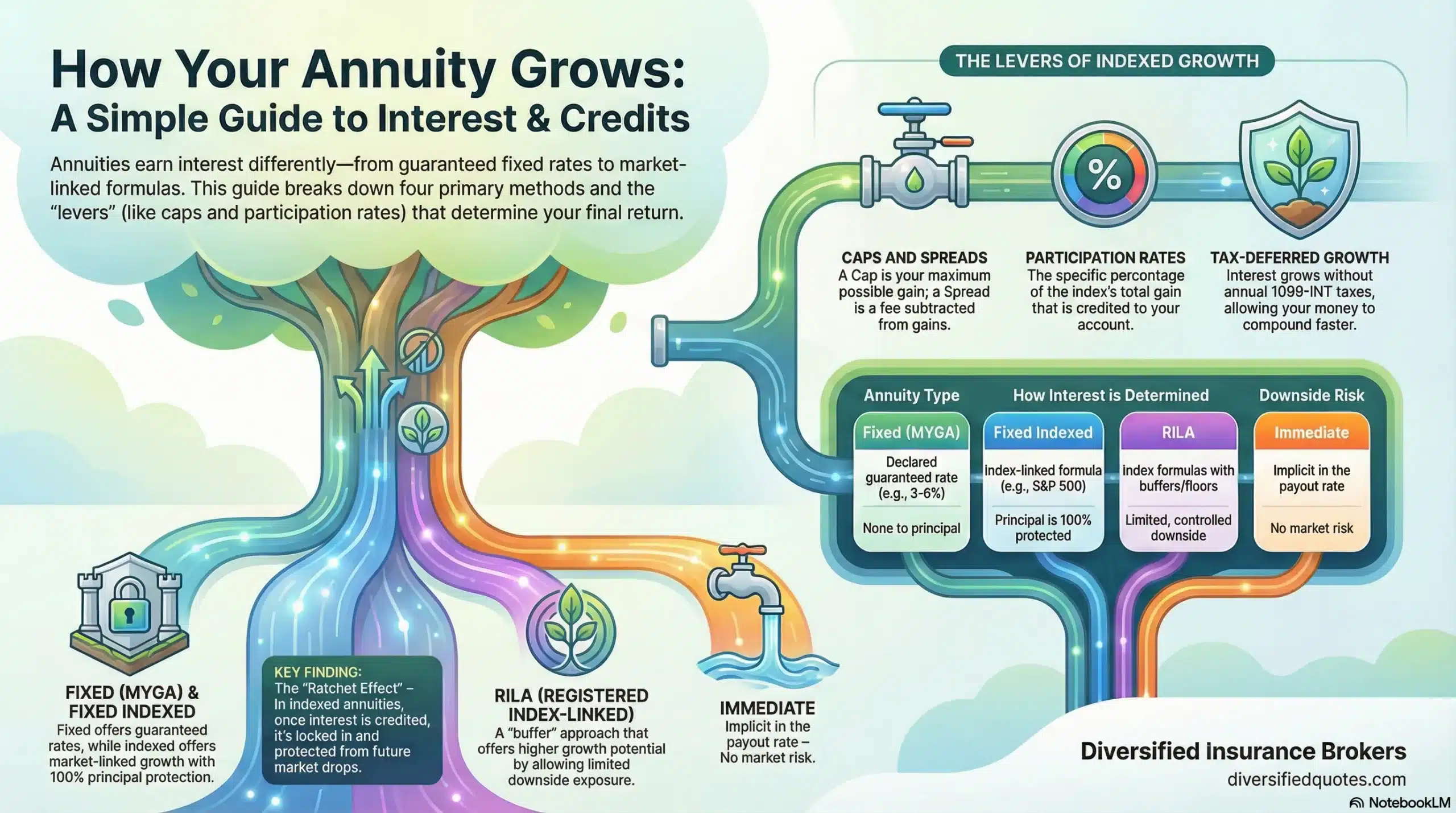
Deferred annuities come in several varieties. Fixed annuities provide a guaranteed interest rate for a specified period of time. Indexed annuities credit interest based on the performance of a market index while protecting principal from direct market losses. Variable annuities allow investments in market-based subaccounts that fluctuate with market performance.
Among these options, fixed indexed annuities have become particularly popular for individuals who want growth potential without direct exposure to market losses. These contracts often provide income riders designed to generate lifetime retirement income.
For example, some investors evaluate specific indexed annuity products such as Equitrust MarketPower Bonus annuities when researching retirement income strategies.
Key Differences Between Immediate and Deferred Annuities
The primary difference between immediate and deferred annuities is the timing of income payments. Immediate annuities begin distributing income soon after the contract is purchased, while deferred annuities allow funds to grow before income begins.
This difference can significantly impact how each annuity fits into a retirement strategy. Immediate annuities are typically used by retirees who need income right away, while deferred annuities are often used by individuals who are still accumulating retirement savings.
Another important difference involves growth potential. Deferred annuities allow the account value to grow during the accumulation phase, which can increase future income payments. Immediate annuities generally begin distributing funds immediately rather than accumulating additional growth.
Which Type of Annuity Is Better?
Neither annuity type is universally better than the other. The best choice depends on an individual’s retirement timeline and income needs. Immediate annuities are often ideal for retirees who want to begin receiving income right away. Deferred annuities may be more appropriate for individuals who want to grow retirement savings before beginning income distributions.
Many retirement plans include a combination of accumulation strategies and income-producing assets. Some individuals compare annuity options alongside other financial protection strategies when planning for retirement income and asset protection.
For example, retirees may also evaluate financial institutions when choosing investment products, sometimes researching topics such as whether Vanguard is a good investment company while building diversified retirement portfolios.
Request an Annuity Quote
Lifetime Income Calculator
Use our calculator to estimate how much guaranteed income an annuity may provide during retirement.
Related Pages
Talk With an Advisor Today
Choose how you’d like to connect—call or message us, then book a time that works for you.
Schedule here:
calendly.com/jason-dibcompanies/diversified-quotes
Licensed in all 50 states • Fiduciary, family-owned since 1980
An immediate annuity begins making income payments shortly after purchase, while a deferred annuity allows the account value to grow before income begins.
Immediate annuities may be better for retirees who want income right away, while deferred annuities are often used by individuals who want to grow savings before retirement.
Yes. Deferred annuities allow earnings to grow tax-deferred until withdrawals begin.
Yes. Many immediate annuities offer lifetime payout options that guarantee income for as long as the annuitant lives.
Yes. Deferred annuities can be converted into income streams later through annuitization or income riders.
About the Author:
Jason Stolz, CLTC, CRPC and Chief Underwriter at Diversified Insurance Brokers (NPN 20471358), is a senior insurance and retirement professional with more than two decades of real-world experience helping individuals, families, and business owners protect their income, assets, and long-term financial stability. As a long-time partner of the nationally licensed independent agency Diversified Insurance Brokers, Jason provides trusted guidance across multiple specialties—including fixed and indexed annuities, long-term care planning, personal and business disability insurance, life insurance solutions, Group Health, and short-term health coverage. Diversified Insurance Brokers maintains active contracts with over 100 highly rated insurance carriers, ensuring clients have access to a broad and competitive marketplace.
His practical, education-first approach has earned recognition in publications such as VoyageATL, highlighting his commitment to financial clarity and client-focused planning. Drawing on deep product knowledge and years of hands-on field experience, Jason helps clients evaluate carriers, compare strategies, and build retirement and protection plans that are both secure and cost-efficient. Visitors who want to explore current annuity rates and compare options across multiple insurers can also use this annuity quote and comparison tool.
