
Disability Insurance Elimination Periods Explained

Jason Stolz CLTC, CRPC
When purchasing disability insurance, one of the most important — and often misunderstood — components of the policy is the elimination period. The elimination period is the waiting period between the date your disability begins and the date your benefits start. In simple terms, it is the deductible measured in time rather than dollars. If you suffer an injury or illness and cannot work, your elimination period determines how long you must go without benefits before your policy begins paying. Understanding this feature is critical because it directly affects your premium, your emergency savings needs, and your overall income protection strategy. Whether you are comparing individual policies, reviewing employer coverage, or considering specialized protection such as Disability Insurance for High Risk Occupations, the elimination period plays a major role in structuring a policy that fits your financial reality.
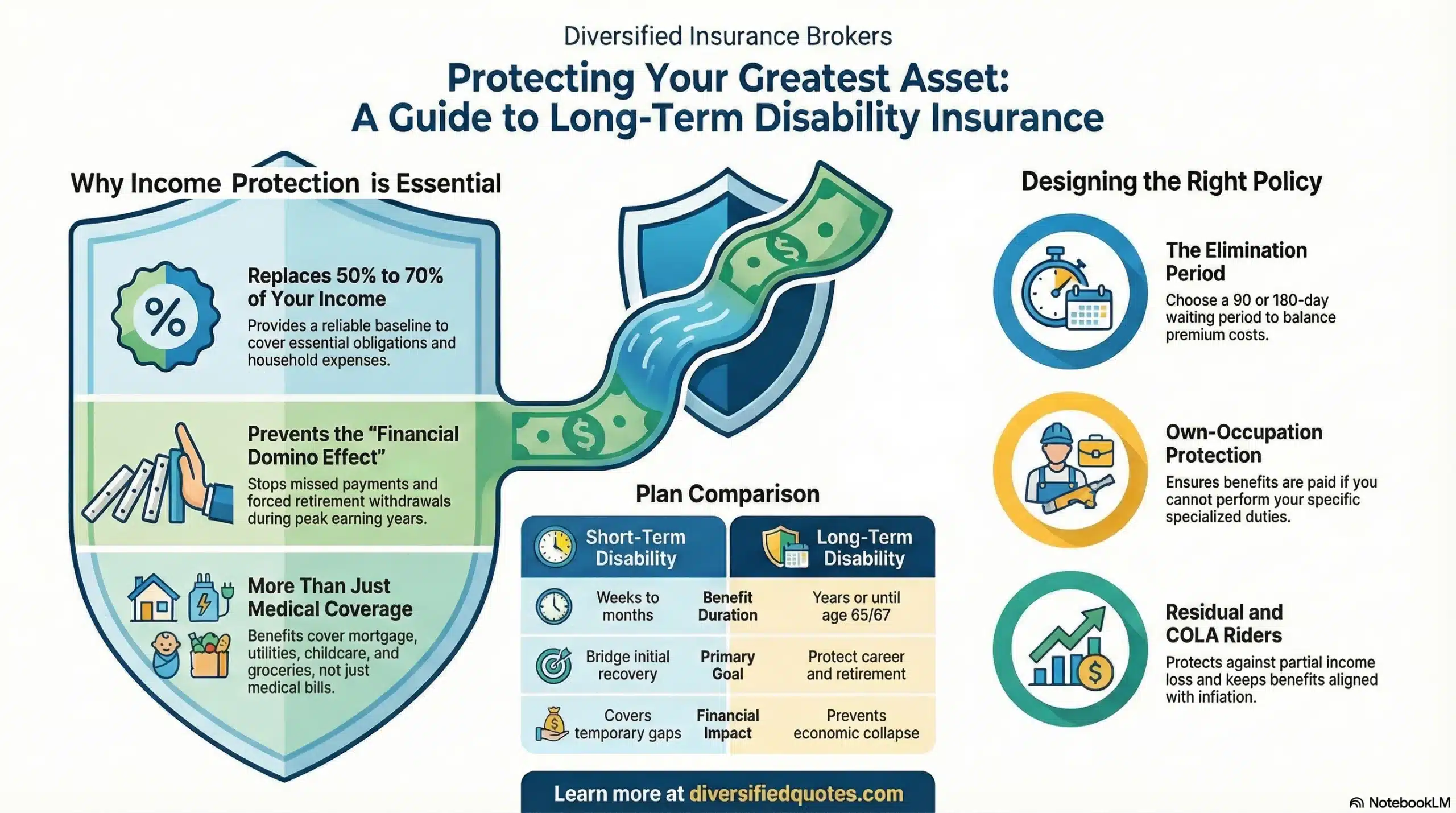
Most individual long-term disability policies offer elimination periods of 30, 60, 90, 180, or 365 days. Shorter elimination periods provide faster access to benefits but result in higher premiums. Longer elimination periods lower your premium but require you to rely on savings, short-term disability coverage, or other resources during the waiting window. The key is balance. If you have a strong emergency fund or employer-provided short-term disability plan, you may comfortably select a 90- or 180-day elimination period to reduce costs. If you are self-employed or lack backup income, a shorter waiting period may be more appropriate. This is particularly relevant for professionals transitioning from group coverage to private policies, such as those explored in Disability Insurance for New Professionals. The elimination period should align with your liquidity and cash flow resilience.
Protect Your Income With the Right Waiting Period
Request a personalized disability income quote and choose the elimination period that fits your savings strategy.
Elimination periods are counted in consecutive calendar days of disability. Some policies require continuous disability throughout the waiting period, while others allow cumulative days within a defined timeframe. This distinction matters. For example, if you return to work briefly and relapse, certain contracts reset the clock while others credit previously accumulated days. Understanding these contract mechanics can prevent costly surprises. High-income earners and specialized occupations — including aviation professionals covered under Disability Insurance for Pilots — often require careful contract review to ensure elimination period language supports real-world occupational risks.
Choosing the right elimination period also requires understanding how short-term and long-term disability policies coordinate. Short-term policies commonly have elimination periods of 0 to 14 days and pay benefits for three to six months. Long-term disability policies, by contrast, often begin after 90 or 180 days and can continue for years or until retirement age. If you carry both types of coverage, you can “stack” them so short-term benefits bridge the elimination period of your long-term policy. If you only carry long-term coverage, your savings must cover that gap. For a deeper comparison of coverage structures, see Short-Term vs. Long-Term Disability Insurance. Coordination prevents duplication while ensuring continuous income flow.
Premium pricing is directly tied to elimination period length. A 30-day elimination period may increase premiums significantly compared to a 90-day period. Extending to 180 or 365 days can reduce costs even further. For financially disciplined individuals with six to twelve months of living expenses saved, selecting a longer elimination period can be a strategic way to lower lifetime premium outlay. However, business owners or professionals with irregular income may find that waiting too long creates unacceptable stress. If you own a practice or depend on specialized skills, even partial income loss can be disruptive. Policies with residual benefits — discussed in detail in Residual Disability Insurance Benefits Explained — may still require satisfaction of the elimination period before partial benefits begin.
Tax treatment also intersects with elimination period decisions. If you pay premiums personally with after-tax dollars, benefits are typically tax-free. Employer-paid premiums generally result in taxable benefits. Understanding the net replacement income you would receive helps determine how long you can sustain yourself during the waiting period. For business owners evaluating broader benefit structures, insights from How Much Health Insurance Does My Business Need? can complement disability planning. Income continuity and health coverage often intersect during extended illness or injury.
Financial planning for an elimination period is not simply about survival; it is about maintaining stability. Mortgage payments, business overhead, student loans, and family obligations continue regardless of medical status. Some policyholders intentionally align elimination periods with other structured income sources. For example, individuals who have retirement assets in annuities — including strategies like Laddering Annuities — may feel comfortable extending elimination periods because of diversified liquidity. Others considering tax-efficient retirement planning tools such as What Is a QLAC? should evaluate how disability risk impacts broader income timing.
Ultimately, the elimination period is about risk tolerance. A shorter waiting period transfers more short-term risk to the insurer but increases your premium. A longer elimination period retains more initial risk personally but reduces cost. The right answer depends on savings, occupation, dependents, debt levels, and overall financial resilience. The most effective disability insurance strategies are not chosen in isolation; they are integrated into a larger plan that may also include life insurance planning such as Life Insurance After Divorce or employer benefit comparisons like Group vs Individual Life Insurance. Income protection is foundational because everything else depends on your ability to earn.
Secure Your Income Before an Unexpected Disability Occurs
Customize your elimination period, benefit amount, and occupation class with a personalized review.
Choosing an elimination period should never be rushed. It should reflect real cash-flow modeling, not guesswork. Whether you are a salaried professional, self-employed entrepreneur, pilot, contractor, or medical specialist, the waiting period you select determines how smoothly you transition from active income to benefit payments. The best policies align your emergency savings with a manageable elimination window while preserving long-term financial stability. By evaluating contract definitions, coordinating coverage layers, and integrating disability planning into your broader financial structure, you ensure that a temporary inability to work does not create permanent financial damage.
Income Planning Calculator
Use our calculator to project guaranteed income strategies that complement disability protection planning.
Related Pages to Explore
Financial Protection Essentials
Carrier evaluations, disability income planning for specialized professionals, and global travel medical protection resources.
Talk With an Advisor Today
Choose how you’d like to connect—call or message us, then book a time that works for you.
Schedule here:
calendly.com/jason-dibcompanies/diversified-quotes
Licensed in all 50 states • Fiduciary, family-owned since 1980
Frequently Asked Questions
An elimination period is the waiting period between when a disability begins and when your policy starts paying benefits. Common elimination periods are 30, 60, 90, and 180 days. The longer the elimination period, the lower the premium.
Yes. A 90-day elimination period is the most common choice for long-term disability insurance because it balances affordability and risk exposure. Many employer-sponsored policies also use 90 days.
Yes, but it is typically much shorter. Short-term disability policies often have 0, 7, or 14-day elimination periods. You can compare the differences in detail here: Short-Term vs. Long-Term Disability Insurance.
If you return to work and then become disabled again from the same condition, many policies apply a recurrent disability clause. This may allow you to resume the claim without restarting the elimination period, depending on the timeframe specified in your policy.
Yes. Most individual disability policies allow you to select your elimination period when applying. Choosing a longer waiting period lowers your premium but increases your out-of-pocket risk.
It can be. Certain professions may face underwriting adjustments or benefit structure differences. If you work in aviation, construction, or other specialized fields, review this guide: Disability Insurance for High Risk Occupations.
Residual or partial disability benefits may have different qualification rules during the elimination period. Some policies allow partial benefit qualification once income loss thresholds are met. Learn more here: Residual Disability Insurance Benefits Explained.
About the Author:
Jason Stolz, CLTC, CRPC and Chief Underwriter at Diversified Insurance Brokers, is a senior insurance and retirement professional with more than two decades of real-world experience helping individuals, families, and business owners protect their income, assets, and long-term financial stability. As a long-time partner of the nationally licensed independent agency Diversified Insurance Brokers, Jason provides trusted guidance across multiple specialties—including fixed and indexed annuities, long-term care planning, personal and business disability insurance, life insurance solutions, and short-term health coverage. Diversified Insurance Brokers maintains active contracts with over 100 highly rated insurance carriers, ensuring clients have access to a broad and competitive marketplace.
His practical, education-first approach has earned recognition in publications such as VoyageATL, highlighting his commitment to financial clarity and client-focused planning. Drawing on deep product knowledge and years of hands-on field experience, Jason helps clients evaluate carriers, compare strategies, and build retirement and protection plans that are both secure and cost-efficient.
