
How Much Can You Get from Pre-Settlement Funding?

Jason Stolz CLTC, CRPC
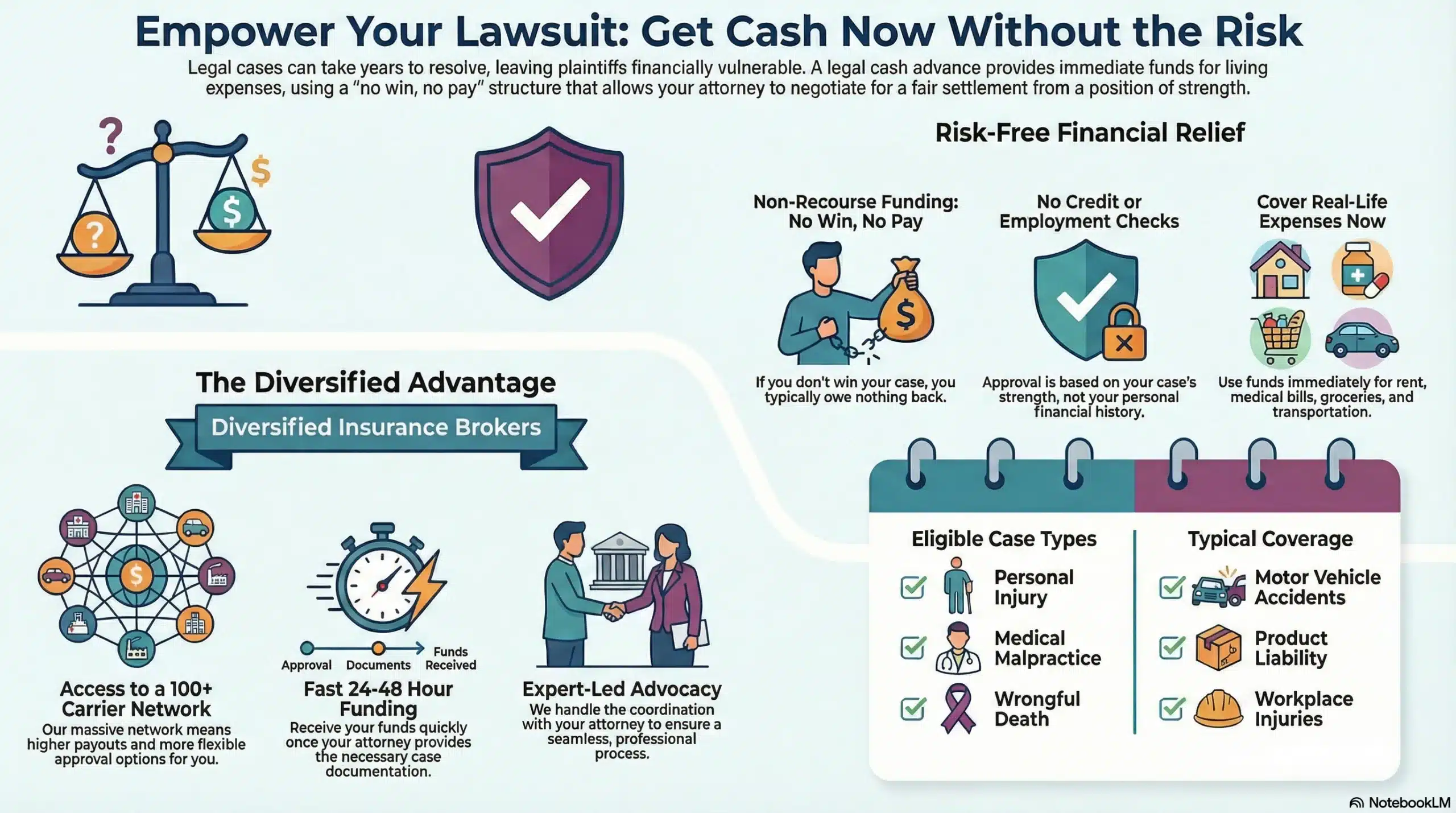
How much can you get from pre-settlement funding? It is one of the most common questions plaintiffs ask when financial pressure begins to mount during an active lawsuit. Whether you are pursuing compensation for a personal injury, workplace dispute, medical malpractice claim, product liability case, or another civil matter, the reality is the legal process takes time. Negotiations, discovery, insurance evaluations, and potential court scheduling can stretch for months or even years. Meanwhile, your financial responsibilities continue uninterrupted. Mortgage payments, rent, medical bills, car notes, insurance premiums, groceries, childcare, and utilities do not pause simply because your case is pending. Pre-settlement funding—sometimes referred to as a lawsuit advance or legal funding—offers plaintiffs access to a portion of their anticipated settlement before the case concludes. However, the amount you can receive is not arbitrary. It is calculated based on risk, projected settlement value, documented damages, liability strength, and overall case posture. Understanding these variables is essential before deciding whether to pursue funding. If you are unfamiliar with the structure itself, reviewing how pre-settlement funding works can provide helpful context before focusing specifically on funding amounts.
In most cases, plaintiffs can receive anywhere from a small bridge amount designed to cover urgent expenses to a larger advance representing a percentage of the projected net settlement value. Funding companies typically do not advance the full expected settlement. Instead, they assess the anticipated case value, subtract estimated attorney fees, case costs, and potential liens, and then offer a conservative percentage of the remaining projected recovery. This approach protects both the plaintiff and the funding company by reducing the risk of over-advancing funds that could exhaust the settlement at resolution. While some plaintiffs hope to access a majority of their expected payout upfront, responsible funding providers usually limit advances to maintain financial balance at case conclusion. The goal is not to replace your future settlement, but to bridge the financial gap while negotiations continue.
Find Out How Much You May Qualify For
Get a fast, no-obligation review and see what funding amount may be available based on your case.
The primary factor influencing how much you can receive is case strength. Liability clarity matters significantly. If fault is well-documented, supported by police reports, witness statements, medical documentation, or employer records, funding companies are more comfortable advancing higher amounts. Conversely, if liability is contested, if comparative fault may reduce recovery, or if documentation is limited, available funding may be lower. Damages also play a central role. Medical expenses, lost wages, ongoing treatment needs, pain and suffering evaluations, and long-term impact assessments contribute to the estimated value of your claim. The stronger and more clearly documented these damages are, the more predictable the settlement outcome appears—leading to potentially higher advance offers. If you are evaluating whether an advance makes sense in your situation, you may also want to review whether pre-settlement funding is worth it in relation to your financial needs and timeline.
Another variable affecting funding amounts is the stage of your case. Early-stage cases sometimes carry greater uncertainty because discovery may not be complete and settlement negotiations may not yet be underway. As cases progress—especially after depositions, mediation, or settlement conferences—valuation clarity often increases. This can result in more confident funding offers. However, even early in litigation, strong documentation can support meaningful advances. Funding providers typically communicate directly with your attorney to assess procedural posture, insurance policy limits, and anticipated timelines. Because repayment is non-recourse in most agreements, meaning you generally owe nothing if you lose, funding companies carefully evaluate risk before determining the maximum available amount.
Insurance policy limits also influence how much you can receive. If the defendant’s insurance coverage is limited to a certain maximum, that cap naturally constrains projected recovery. For example, if policy limits are relatively low compared to your damages, funding amounts may reflect that ceiling. Conversely, cases involving higher policy limits or corporate defendants with substantial coverage may allow for larger advances—assuming liability and damages are strong. This is why funding amounts vary dramatically between cases, even when injuries appear similar on the surface.
It is also important to understand that you are not obligated to take the maximum amount offered. In fact, many financial advisors and attorneys recommend borrowing only what is necessary to stabilize your finances. Because funding fees accrue over time, taking a smaller advance can significantly preserve more of your final settlement. Reviewing pre-settlement funding rates and fees explained can help you understand how repayment amounts grow over time and why conservative borrowing is often advisable. The longer your case takes to resolve, the more critical this strategy becomes.
Don’t Accept Less Than You Deserve
Secure financial breathing room while your attorney negotiates for full compensation.
Some plaintiffs wonder whether multiple advances are possible if their case extends longer than expected. In certain situations, additional funding may be available, but each subsequent advance increases total repayment obligations. Carefully evaluating multiple lawsuit advances can help you understand how layered funding affects your eventual net recovery. The key is strategic timing and necessity. Funding should function as a bridge, not a substitute for your settlement.
Another consideration when determining how much you can get is comparison to alternative financing options. Some plaintiffs explore personal loans, credit cards, or borrowing from family. Comparing pre-settlement funding vs. personal loans highlights the central distinction: repayment risk. Personal loans require repayment regardless of case outcome. Pre-settlement funding typically does not. This non-recourse structure shifts risk away from the plaintiff but comes at a cost reflected in fee structures. When evaluating how much to request, you should weigh both risk protection and total projected repayment.
Ultimately, how much you can get from pre-settlement funding depends on a combination of projected settlement value, documented damages, liability strength, insurance limits, attorney cooperation, and case stage. Advances may range from modest amounts covering essential expenses to more substantial figures designed to sustain longer litigation timelines. The most prudent approach is to request a review, evaluate the offer carefully, consult with your attorney, and borrow only what aligns with your immediate financial needs. Used responsibly, pre-settlement funding can provide critical stability without undermining your long-term recovery. The exact number available to you will always be case-specific—but clarity begins with a thorough evaluation and a realistic assessment of both opportunity and cost.
Related Pages to Explore
Financial Protection Essentials
Accident coverage, retirement timing strategy, legal funding education, and advanced life insurance planning resources.
Talk With an Advisor Today
Choose how you’d like to connect—call or message us, then book a time that works for you.
Schedule here:
calendly.com/jason-dibcompanies/diversified-quotes
Licensed in all 50 states • Fiduciary, family-owned since 1980
Most applicants receive funds within 24 to 72 hours after approval. If you need faster access to capital, you can review your options here: Get Cash Before Your Case Settles. Funding timelines depend on how quickly your attorney provides case documentation.
No. Pre-settlement funding is a non-recourse cash advance, not a traditional loan. That means you typically repay only if you win or settle your case. Learn more about how these advances work at Legal Cash Advances Explained.
Yes, in many cases plaintiffs may qualify for additional funding as their case progresses. Approval depends on the estimated settlement value and prior advances. For more guidance, visit Advance on a Pending Lawsuit.
No. Pre-settlement funding companies typically do not perform hard credit checks because approval is based on your case strength, not your credit history. You can compare your options here: Legal Funding Companies Near Me.
Personal injury, wrongful death, medical malpractice, and product liability cases often qualify for larger advances due to higher projected settlement values. To explore additional insights on maximizing your funding, visit Cash for Lawsuit Plaintiffs.
About the Author:
Jason Stolz, CLTC, CRPC and Chief Underwriter at Diversified Insurance Brokers, is a senior insurance and retirement professional with more than two decades of real-world experience helping individuals, families, and business owners protect their income, assets, and long-term financial stability. As a long-time partner of the nationally licensed independent agency Diversified Insurance Brokers, Jason provides trusted guidance across multiple specialties—including fixed and indexed annuities, long-term care planning, personal and business disability insurance, life insurance solutions, and short-term health coverage. Diversified Insurance Brokers maintains active contracts with over 100 highly rated insurance carriers, ensuring clients have access to a broad and competitive marketplace.
His practical, education-first approach has earned recognition in publications such as VoyageATL, highlighting his commitment to financial clarity and client-focused planning. Drawing on deep product knowledge and years of hands-on field experience, Jason helps clients evaluate carriers, compare strategies, and build retirement and protection plans that are both secure and cost-efficient.
