
How to Get a Will and Trust Online
How to Get a Will and Trust Online

Jason Stolz CLTC, CRPC, DIA, CAA
A will and trust together form the strongest foundation available to most families for comprehensive estate planning — and online platforms have made this combination genuinely accessible for the first time at a price point that does not require five-figure attorney fees to initiate. Understanding how a will and a revocable living trust work differently, how they complement each other, what the trust funding step actually requires, and where each document’s legal authority begins and ends is the knowledge that separates a complete and functional estate plan from a collection of signed documents that fail exactly when they are most needed. At Diversified Insurance Brokers, Jason Stolz, CLTC, CRPC, DIA, CAA, works with families across all fifty states on the financial protection architecture that surrounds estate planning — the life insurance, long-term care coverage, beneficiary coordination, and annuity planning decisions that a will and trust direct but do not fund.
The starting point is understanding what each document actually does. A last will and testament is a written declaration of how you want your probate assets distributed at death, who you designate as executor to administer your estate, and — critically for parents — who you name as guardian for any minor children. A revocable living trust is a legal entity you create during your lifetime, transfer assets into, and control as your own trustee until death or incapacity, at which point a successor trustee you have named manages and distributes those assets according to your written instructions — typically without any court involvement. Both documents can be created on guided online platforms, and most comprehensive estate planning packages include both alongside a financial power of attorney and healthcare directive. Our resource on how to get a will online covers the will-only process for those starting with that foundational document.
Secure Your Legacy — Start Your Estate Plan Today
Get a Will Online
Fast, guided, and state-specific. Name your executor, guardians, and beneficiaries in minutes.
Get a Will & Trust Online
Add a revocable living trust to avoid probate and manage assets during incapacity.
Why a Revocable Living Trust Changes the Estate Planning Equation
The most significant practical advantage of a revocable living trust over a will-only estate plan is probate avoidance for assets properly held in the trust. Probate is the court-supervised process of validating a will, notifying creditors, inventorying assets, and overseeing distribution. In some states it is relatively streamlined; in others — California being the most prominent example — it can run twelve to eighteen months, become part of the public record, and generate statutory attorney fees calculated as a percentage of the gross estate that can reach tens of thousands of dollars on a moderately valued home. A revocable living trust bypasses this process entirely for assets that have been transferred into it: the successor trustee simply steps in upon death or incapacity and administers the trust according to its terms, with no court appointment required, no probate filing required, and no public record created.
A revocable living trust also provides the most practical mechanism for managing your affairs during incapacity — the scenario most people overlook when they focus only on the death-planning dimension of estate planning. If you become unable to manage your financial life due to illness, cognitive decline, or injury, your successor trustee has immediate authority to manage trust assets and continue your financial affairs without any court proceeding. This continuity of management is one of the trust’s most valuable but least-discussed features. Without it, a family member who needs to pay your bills, manage your investments, or sell property on your behalf may need to petition a court for a conservatorship — a process that is slow, expensive, and entirely avoidable with proper planning. Our resource on what a fiduciary is covers the duty of care that applies to trustees and other fiduciaries managing assets on behalf of others.
Will vs. Trust vs. Both: How the Documents Work Together
| Feature | Last Will and Testament | Revocable Living Trust |
|---|---|---|
| When it takes effect | At death only | Immediately upon creation; manages assets during life and at death |
| Probate required | Yes — for probate assets | No — for properly funded trust assets |
| Public record | Yes — probate records are public | No — trust administration remains private |
| Guardian designation for minor children | Yes — only a will can name a guardian | No — trusts cannot name guardians |
| Incapacity planning | No — only takes effect at death | Yes — successor trustee manages assets if you become incapacitated |
| Multi-state real estate | May require ancillary probate in each state where real estate is located | Avoids ancillary probate in each state for properly titled property |
| Creditor protection | Limited; estate assets accessible to creditors during probate | None — revocable trust assets remain accessible to creditors since you retain control |
| Estate tax impact | No direct reduction — assets still in your estate | No direct reduction — revocable trust assets remain in your taxable estate |
The Pour-Over Will: Why You Need Both Documents
Even families who create a comprehensive revocable living trust still need a will — specifically, what estate planning professionals call a pour-over will. A pour-over will serves as the legal safety net for any assets that were not transferred into the trust during the grantor’s lifetime, either because they were acquired after the trust was established and never retitled, or because retitling was overlooked. The pour-over will instructs that any probate assets at death be “poured over” into the trust at the conclusion of probate, ensuring they are ultimately distributed under the trust’s terms rather than under intestacy law. The pour-over will does require a probate proceeding for those unfunded assets, which is why properly funding the trust during life remains the priority — but it provides a critical backstop against complete failure of the estate plan when not every asset makes it into the trust before death.
This is also why guardian designations must appear in the will, not the trust. A trust document cannot legally name a guardian for minor children — that designation is legally effective only in a will. For parents, this alone makes having a pour-over will alongside the trust non-negotiable. A family with a fully funded trust but no will has no legally documented guardian designation, leaving that critical decision to a court that must determine the child’s best interest without the parents’ written guidance. Most comprehensive online estate planning packages create both documents simultaneously — the trust as the primary asset-management structure and the pour-over will as the guardian designation document and safety net.
The Funding Step: Where Most Online Trust Plans Fail
Creating the trust document is the beginning of the process, not the end. A revocable living trust that has not been funded — meaning assets have not been transferred into the trust’s ownership — provides none of the probate avoidance benefit it was designed to deliver. An unfunded or partially funded trust at death requires probate for the assets that were never transferred, defeating the primary purpose. This is the single most common failure point in do-it-yourself estate plans involving trusts, and it occurs because the legal document creation is the visible, satisfying step while the funding is the administrative follow-through that most people underestimate or defer indefinitely.
Funding the trust means legally changing the title of assets from the individual’s personal name to the name of the trust. For real estate, this requires executing and recording a new deed. For bank accounts, it requires updating account ownership at the bank. For brokerage and investment accounts, it requires retitling the account registration with the custodian. For closely held business interests, it may require amending operating agreements or updating share registers. For vehicles, some states allow trust ownership; others do not, and a beneficiary designation on the title may be more practical. Most online platforms provide instructions and sample forms for the funding process, but completing the transfers requires individual action at each institution. Our resource on how 1035 exchanges work in annuity planning covers the mechanism for repositioning existing insurance and annuity contracts — a relevant consideration for beneficiaries who inherit these products through a trust structure. Our resource on annuity beneficiary death benefits covers how annuities pass to beneficiaries and how trust ownership of an annuity affects that process.
What a Trust Cannot Do
The revocable living trust is a powerful estate planning tool, but several common misconceptions about its capabilities lead families to rely on it for protection it does not provide. First, a revocable living trust provides no asset protection from creditors during the grantor’s lifetime. Because the grantor retains control of the trust and can revoke it at will, creditors of the grantor can reach trust assets the same as personal assets. Asset protection from creditors requires an irrevocable trust structure — a fundamentally different and more complex legal instrument that permanently removes assets from the grantor’s control. Our resource on what an irrevocable life insurance trust is covers this distinction specifically in the context of life insurance planning.
Second, a revocable living trust provides no estate tax savings by itself. Because the grantor retains control over and beneficial ownership of trust assets, those assets are fully included in the grantor’s taxable estate for federal and state estate tax purposes. Estate tax reduction requires irrevocable trust structures, gifting strategies, and other planning that cannot be accomplished through a standard online will-and-trust package. For estates that may approach federal estate tax thresholds or state estate tax thresholds — which are significantly lower than the federal threshold in states like Massachusetts, Oregon, and Washington — an attorney review is warranted regardless of whether the foundational documents are created online.
How Life Insurance Coordinates With a Will and Trust
Life insurance is the financial counterpart to the estate plan documents — the will and trust determine who receives assets and under what conditions; life insurance provides the liquid assets to fund those intentions and protect the people the plan is designed for. For families with a revocable living trust, naming the trust as beneficiary of life insurance policies is a common structure that allows the successor trustee to control the distribution of proceeds according to the trust’s terms — staggered distributions for minor children, conditional bequests, long-term management for special needs beneficiaries — rather than delivering a lump sum directly to a minor who cannot legally receive it or to a beneficiary who cannot manage it responsibly. Our resources on life insurance for new parents and life insurance for parents with young children address the coverage needs of families in the estate-building phase whose guardian and trustee designations make their life insurance decisions inseparable from their estate planning decisions.
For business owners, the coordination between a buy-sell agreement, key-person insurance, and the trust requires specific attention to ensure the agreement’s funding mechanism works correctly at death or disability. Our resource on life insurance to fund buy-sell agreements covers the mechanics of this coordination. For families with a special needs beneficiary, naming the trust — specifically a supplemental needs sub-trust — as beneficiary rather than the individual directly is the structure that preserves government benefit eligibility while providing additional resources. Our resource on special needs trust and life insurance addresses this coordination specifically. The long-term care dimension of estate planning — the risk that extended care costs deplete the assets the trust is designed to transfer — is addressed through our resource on long-term care insurance services and the specific tool of the non-qualified long-term care annuity that provides both care benefits and estate transfer utility in a single contract.
Talk With an Advisor Today
Choose how you’d like to connect—call or message us, then book a time that works for you.
Schedule here:
calendly.com/jason-dibcompanies/diversified-quotes
Licensed in all 50 states • Fiduciary, family-owned since 1980
Frequently Asked Questions: How to Get a Will and Trust Online
What is the difference between a will and a revocable living trust?
A last will and testament is a written document that takes effect only at death, directing how probate assets — property solely titled in your name without a beneficiary designation — are distributed, naming your executor, and designating guardians for minor children. It requires the court-supervised probate process to be validated and administered. A revocable living trust is a legal entity you create during your lifetime, transfer assets into, and control as your own trustee. At death or incapacity, the successor trustee you named manages and distributes those assets according to your instructions — without any court involvement for properly funded assets. The trust takes effect immediately upon creation and provides incapacity management capability that a will does not. The critical practical difference: the will controls probate assets and goes through court; the trust controls assets titled in its name and bypasses court. Most comprehensive estate plans use both — the trust as the primary asset-management structure and a pour-over will as the guardian designation document and backstop for unfunded assets. Our resource on irrevocable life insurance trusts addresses the more advanced trust structure used for estate tax and asset protection purposes beyond the revocable living trust.
What does “funding the trust” mean and why is it critical?
Funding the trust means legally transferring ownership of your assets from your personal name to the name of the trust. A trust document that has been drafted and signed but not funded provides no probate avoidance benefit — assets that remain titled in your personal name at death still pass through probate regardless of what the trust document says. Funding requires different steps for different asset types. Real estate requires executing and recording a new deed naming the trust as owner. Bank accounts require updating account ownership at the financial institution. Brokerage and investment accounts require retitling the account registration with the custodian. Closely held business interests may require amendments to operating agreements or share registers. Vehicles vary by state — some allow trust ownership, others make a beneficiary designation on the title more practical. Most online platforms provide instructions and sample transfer documents, but the actual transfers require individual action at each institution. Because the power of attorney you sign dies with you, any assets that were not transferred into the trust before death and that do not have beneficiary designations will require probate — even if you had a fully drafted trust. Completing the funding step is what separates an effective trust from a document that fails at the moment it was most needed.
Does a revocable living trust protect assets from creditors?
No — a revocable living trust provides no creditor protection during the grantor’s lifetime. Because you retain control of the trust and can revoke, amend, or withdraw assets from it at will, creditors of the grantor can reach trust assets the same way they would reach personal assets. The revocable nature of the trust is what makes it flexible and easy to create, but it also means you have not truly given up ownership for legal purposes. Asset protection from creditors requires an irrevocable trust structure — a fundamentally different legal instrument in which the grantor permanently gives up control and beneficial ownership of the transferred assets, removing them from reach of the grantor’s creditors. Irrevocable trusts are more complex, require attorney involvement, and involve planning decisions that cannot be undone. Many estate planning strategies for high-net-worth families involve a combination of revocable living trusts for probate avoidance and privacy, and irrevocable trusts for asset protection, estate tax reduction, and Medicaid planning. Our resource on using qualified funds for long-term care insurance covers an adjacent planning consideration for families thinking about protecting assets from long-term care costs.
Does a revocable living trust save on estate taxes?
No — a revocable living trust does not reduce estate taxes by itself. Because the grantor retains control over trust assets and can modify or revoke the trust at any time, those assets are fully included in the grantor’s taxable estate for federal and state estate tax purposes. The trust changes how assets are managed and distributed, but not how they are taxed. Estate tax reduction requires strategies that involve permanent transfers out of the taxable estate — irrevocable trusts, annual gifting programs, charitable giving structures, or qualified opportunity zone investments. For families whose estates approach or exceed federal estate tax thresholds, or whose states impose estate taxes at lower thresholds (as many do, including Massachusetts, Oregon, and Washington), an estate planning attorney is warranted to design the tax-reduction strategy, even if foundational documents like the revocable living trust are created through an online platform. The trust can be the correct primary instrument for probate avoidance and incapacity planning while other structures address the tax dimension separately. Our resource on Roth conversions covers one income-tax-reduction strategy that can be part of an integrated estate and retirement planning approach.
Can I name my trust as the beneficiary of my life insurance or retirement accounts?
Yes for life insurance; generally not the preferred approach for retirement accounts. Naming a revocable living trust as beneficiary of a life insurance policy is a common and effective structure that routes death benefits through the trust’s distribution terms — allowing the trustee to manage and distribute proceeds according to your written instructions, including provisions for minor children, special needs beneficiaries, or staggered distributions by age. This is often superior to naming a minor directly as beneficiary, since a minor cannot legally receive a large insurance payout and court appointment of a guardian of the property would be required. For retirement accounts — IRAs, 401(k)s, 403(b)s — naming a trust as beneficiary can produce adverse tax consequences under the SECURE Act’s ten-year distribution rule, because a trust typically does not qualify as an eligible designated beneficiary that would receive more favorable distribution treatment. Naming a spouse directly as beneficiary of a retirement account generally provides the most favorable tax treatment. Naming a trust as beneficiary of a retirement account should be done only with specific tax planning advice, using trust language designed to preserve favorable distribution options. Our resources on whether annuities have beneficiaries and annuity beneficiary death benefits cover the specific rules for annuity contracts held in trust or with trust beneficiary designations.
How do I provide for a beneficiary with special needs without disqualifying them from government benefits?
A direct inheritance or life insurance payout to a beneficiary who receives Supplemental Security Income or Medicaid can disqualify them from those benefits by pushing their assets above the eligibility threshold. The correct planning structure is a supplemental needs trust — also called a special needs trust — that holds assets for the benefit of the disabled person while preserving benefit eligibility. The trust provides for needs that government benefits do not cover — recreation, education, transportation, personal items, and quality-of-life expenses — without being counted as the individual’s personal assets for benefit eligibility purposes. A supplemental needs sub-trust can be incorporated within a revocable living trust, or established as a standalone document. Life insurance is the most practical funding mechanism for a special needs trust, since it delivers a predictable, tax-free benefit at death that the trustee can immediately deploy for the beneficiary’s long-term care. Our resource on special needs trust and life insurance addresses the coordination between policy design and trust structure. Our resource on special needs life insurance services covers the specific policy types and riders used in special needs planning contexts.
What happens to my annuity when I die — does it go through the trust?
An annuity with a named beneficiary passes directly to that beneficiary outside the probate process and outside the trust, regardless of what either the will or trust documents say — identical to how life insurance works. The beneficiary designation on file with the annuity carrier legally controls the distribution. If the trust is named as beneficiary of the annuity, the annuity proceeds flow to the trust and are administered by the successor trustee according to the trust’s terms — useful for ensuring structured distributions to minor beneficiaries. However, naming a trust as beneficiary of an annuity has tax implications: the trust must distribute the contract value within five years of the owner’s death in most cases (the five-year rule), rather than over the beneficiary’s life expectancy under the stretch provisions available to individual beneficiaries. Naming an individual directly as beneficiary of an annuity typically produces more favorable distribution and tax treatment than naming a trust. If the annuity is a non-qualified contract, our resource on non-qualified annuities covers the tax treatment for beneficiaries. If structuring an annuity with long-term care benefits as part of the estate plan, our resource on annuities with long-term care benefits addresses both the living benefit and the death benefit dimensions.
When should I update my will and trust after creating them online?
A will and trust should be reviewed whenever a significant life event changes the people, assets, or intentions they document. Marriage requires updating to reflect the new spouse’s role as beneficiary, co-trustee, or successor trustee. Divorce requires immediately updating both documents and — critically — all beneficiary designations on life insurance, retirement accounts, and annuities, since most states do not automatically revoke spousal designations at divorce. Birth of a child requires updating guardian designations in the will and may require establishing a supplemental trust for the child’s benefit within the existing trust structure. Death of a named executor, trustee, or guardian requires naming a replacement immediately. Acquisition of significant real property — especially in a new state — may require updating trust title documents and evaluating whether ancillary probate concerns exist. Substantial changes in net worth that push the estate toward tax thresholds warrant a professional review. A general review every three to five years regardless of specific events keeps the plan current with both life changes and changes in state and federal law. Our resource on how remarriage affects Social Security spousal benefits covers the financial planning implications of marital status changes that extend beyond just the estate plan documents themselves.
About the Author:
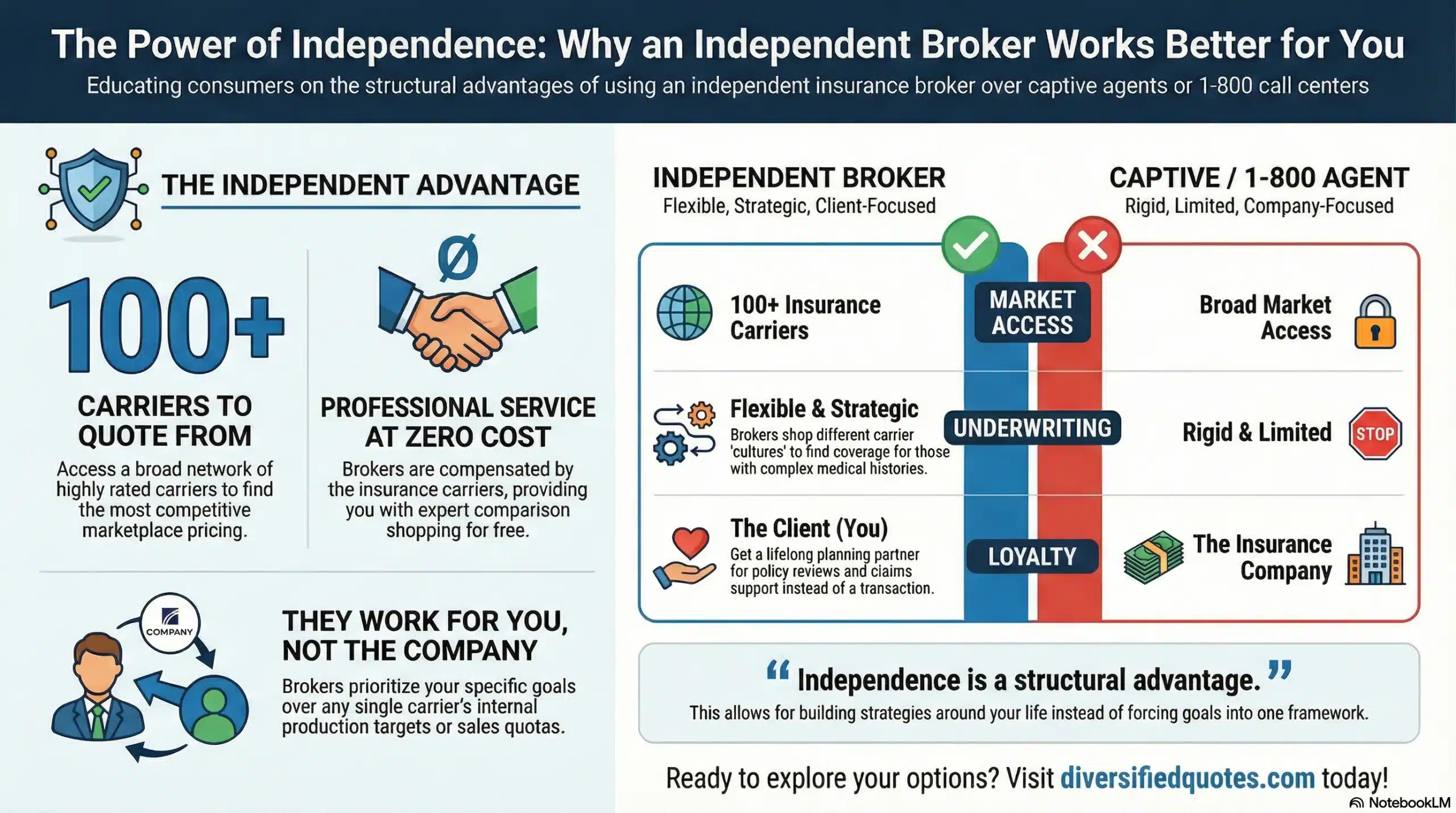
Jason Stolz, CLTC, CRPC, DIA, CAA and Chief Underwriter at Diversified Insurance Brokers (NPN 20471358), is a senior insurance and retirement professional with more than 25 years of real-world experience helping individuals, families, and business owners protect their income, assets, and long-term financial stability. As a long-time partner of the nationally licensed independent agency Diversified Insurance Brokers, Jason provides trusted guidance across multiple specialties—including fixed and indexed annuities, long-term care planning, personal and business disability insurance, life insurance solutions, Group Health, Travel Medical and Evacuation Insurance, and short-term health coverage. Diversified Insurance Brokers maintains active contracts with over 100 highly rated insurance carriers, ensuring clients have access to a broad and competitive marketplace.
His practical, education-first approach has earned recognition in publications such as VoyageATL, and contributions from his agency featured in Kiplinger and GoBankingRates— highlighting his commitment to financial clarity and client-focused planning. Drawing on deep product knowledge and years of hands-on field experience, Jason helps clients evaluate carriers, compare strategies, and build retirement and protection plans that are both secure and cost-efficient. Visitors who want to explore current annuity rates and compare options across multiple insurers can also use this annuity quote and comparison tool.
Browse More Resources: Return to our complete Wealth Strategies & General Resources guide — covering wealth building, tax strategies, fiduciary, wills & broker resources.
Last Reviewed: June 11, 2026 |
Reviewed by: Jason Stolz, CLTC, CRPC, DIA, CAA
Chief Underwriter, Diversified Insurance Brokers, Inc. | NPN: 20471358 | Diversified Insurance Brokers, Inc. — Licensed in all 50 states
Fact Checked by: Tonia Pettitt, CMIP©
Medicare Specialist, Diversified Insurance Brokers, Inc. | NPN: 14374308 | Diversified Insurance Brokers, Inc. — Licensed in all 50 states
Did you find this content helpful? Leave us a Google review — it helps others find trustworthy guidance too.
Editorial Standards: Diversified Insurance Brokers maintains rigorous editorial standards to ensure accuracy, clarity, and independence in all content. Learn more about our editorial standards and commitment to transparency.
