
Medicare for People with Chronic Conditions
As an Independent Medicare Broker, Tonia Pettitt (CMIP©) compares available plans across the major carriers to help you find the right coverage for your health, needs and budget.
Medicare for People with Chronic Conditions

Medicare for people with chronic conditions is one of the most consequential healthcare coverage decisions any retiree makes — because when a condition requires consistent specialist access, ongoing medications, regular lab work, imaging, and periodic hospitalization, the Medicare plan structure determines not just how much care costs, but how smoothly care happens. A Medicare plan designed for generally healthy enrollees who see a doctor twice a year and take one or two low-cost medications creates a fundamentally different experience for someone managing diabetes, heart failure, COPD, an autoimmune disorder, or kidney disease than a plan deliberately engineered for high-utilization, complex-care needs. The cost differences are real. The access differences are real. And the decision between plan structures — between Original Medicare with a supplement, standard Medicare Advantage, or a Chronic Special Needs Plan specifically designed around qualifying conditions — directly determines whether care is straightforward or constantly negotiated with networks, authorization requirements, and formulary restrictions.
At Diversified Insurance Brokers, Medicare specialist Tonia Pettitt, CMIP, brings more than 40 years of experience helping individuals with complex health profiles find the Medicare structure that genuinely matches how they use healthcare — not how a plan advertises itself. For people managing chronic conditions, that evaluation must go well beyond premium cost. It includes verifying whether every specialist is in-network, whether specialty medications are on a favorable formulary tier, whether prior authorization is required for the most commonly needed services, and whether the plan’s care management infrastructure actually reduces the friction of coordinating multiple providers. Our resource on how to choose the best Medicare plan covers the full evaluation framework, and our resource on Medicare Advantage versus Medicare supplement comparison covers the structural trade-offs that define the starting point for any Medicare decision for people with chronic conditions.
Compare Medicare Plans for Your Chronic Condition
We verify your doctors are in-network, your medications are on a favorable tier, and that the plan’s structure matches your actual care patterns — before you enroll.
Request a Medicare Plan ReviewWhy the Medicare Decision Is Different When You Have a Chronic Condition
For a healthy retiree who sees a primary care physician twice a year, takes one common generic medication, and has no ongoing specialist relationships, the Medicare plan comparison is primarily a premium and out-of-pocket cost exercise. For someone with a chronic condition, every dimension of that comparison changes. Provider relationships are not interchangeable — an endocrinologist managing a diabetic patient’s insulin regimen, a cardiologist managing a heart failure patient’s medication titration, or a rheumatologist managing a complex autoimmune patient’s biologic therapy represents a care relationship that took months or years to develop, and disrupting it by switching to a plan that excludes that provider creates genuine clinical risk, not just inconvenience.
Medication costs are also more consequential with chronic conditions because the drugs involved are often specialty or brand-name medications that carry significant out-of-pocket exposure under unfavorable formulary design. A medication that is $50 per month under one plan might be $300 or more under another plan if it sits on a higher tier or is subject to coinsurance rather than a flat copay. Over a full year, the difference in medication costs alone can exceed the difference in monthly premiums between plan options — which means evaluating premium without simultaneously evaluating prescription cost produces a misleading comparison for anyone managing chronic conditions on ongoing medications.
Prior authorization is the third dimension where Medicare for people with chronic conditions diverges most sharply from Medicare for healthier enrollees. Prior authorization requirements — where certain services, medications, or procedures require advance approval from the plan before they are covered — are more common in Medicare Advantage than in Original Medicare, and they create friction that affects care quality for high-utilization enrollees more severely. A person who needs an MRI twice a year for monitoring purposes, or who requires periodic infusion therapy, or who needs specialist referrals for multiple organ systems, encounters authorization requirements far more frequently than someone with minimal ongoing care needs. Understanding which plan structures minimize this friction is central to finding the right Medicare coverage for people with chronic conditions.
Three Medicare Structures for Chronic Conditions — Which Fits Your Needs?
| Medicare Structure | Provider Access | Monthly Cost | Prior Authorization | Out-of-Pocket Maximum | Best For |
|---|---|---|---|---|---|
| Original Medicare + Medigap + Part D | Any Medicare-accepting provider nationwide — no network restrictions | Higher — Part B premium + supplement premium + Part D premium | Minimal — Original Medicare rarely requires prior authorization for standard services | Effectively eliminated by supplement — Plan G covers most gaps after Part B deductible | Multiple specialists at major medical systems; frequent hospitalizations; travel; highest-complexity conditions |
| Standard Medicare Advantage (MA/MAPD) | Plan-specific network — HMO requires referrals; PPO allows broader access with higher cost-sharing out-of-network | Lower — many plans have $0 additional premium above Part B | More common — specialist referrals, imaging, specialty drugs, and procedures may require pre-approval | Required — up to $9,350 in-network in 2025 (many plans lower); Original Medicare has no maximum | Conditions managed within a localized provider network; enrollees comfortable with managed care structure; budget-conscious |
| Chronic Special Needs Plan (C-SNP) | Condition-specific network — specialists relevant to your qualifying condition typically included; broader access varies by area | Often $0 or low additional premium; condition-specific benefits may significantly reduce care costs | Present but condition-aware — plan is designed around your specific care patterns | Out-of-pocket maximum required; specialist copays often $0 for qualifying condition care | Qualifying conditions: diabetes, heart failure, COPD, ESRD, HIV/AIDS, cardiovascular disorders — care concentrated in condition-specific specialists |
Chronic Special Needs Plans (C-SNPs): Medicare Specifically Designed for Your Condition
Chronic Special Needs Plans are a category of Medicare Advantage plan that most Medicare beneficiaries with qualifying conditions have never heard of — yet they represent the most specifically engineered Medicare option available for people with serious ongoing health conditions. Research suggests that approximately two-thirds of Medicare beneficiaries live with multiple chronic conditions (this is approximate; verify current CMS data), yet a relatively small fraction of eligible individuals are enrolled in C-SNPs despite their condition-specific design advantages. Understanding what C-SNPs offer — and who qualifies — is essential to a comprehensive Medicare evaluation for anyone managing a qualifying chronic condition.
A C-SNP is a Medicare Advantage plan that has been specifically authorized by CMS to serve a defined population with particular chronic or disabling conditions. Unlike standard Medicare Advantage plans that are designed for the general Medicare population, C-SNPs must submit a Model of Care to CMS that documents how the plan will manage the specific condition it serves, including care coordination, evidence-based care standards, and provider network adequacy for condition-relevant specialists. Qualifying conditions for C-SNP enrollment most commonly include diabetes mellitus, chronic heart failure, chronic obstructive pulmonary disease (COPD) and other severe lung disease, end-stage renal disease (ESRD), HIV/AIDS, various cardiovascular disorders (arrhythmias, coronary artery disease, peripheral vascular disease, valvular heart disease), and certain other severe or disabling conditions as defined by CMS and carrier-specific plan approvals.
To enroll in a C-SNP, a beneficiary must have Medicare Part A and Part B and must have a doctor verify that they have a qualifying condition. This verification is typically completed by the treating physician within 60 days of the plan’s effective date. Enrollment is available during the Initial Enrollment Period, Annual Enrollment Period (October 15 through December 7), or through Special Enrollment Periods that may apply based on the individual’s specific circumstances. Not all C-SNPs are available in all geographic areas — availability depends on which carriers have received CMS approval to offer C-SNP products in a given county and whether a specific qualifying condition is served by the available plans in that area.
The benefit design of C-SNPs is explicitly oriented toward reducing the friction and cost of condition-relevant care. Specialist copays for providers who manage the qualifying condition — endocrinologists for diabetic C-SNP members, cardiologists for heart failure C-SNP members, nephrologists for ESRD C-SNP members — are frequently $0 or very low under C-SNP plan designs. Dedicated care management teams are a standard C-SNP feature, providing the member with a coordinated support structure that helps schedule appointments, manage referrals, monitor condition metrics, and connect to supplemental resources. Condition-specific formulary design positions the medications most commonly prescribed for the qualifying condition on favorable tiers, reducing the prescription cost that can otherwise be a significant monthly burden for chronic condition patients.
Original Medicare + Medigap: The Broadest Access Path for Complex Chronic Conditions
For Medicare beneficiaries with chronic conditions who value the broadest possible provider access, the lowest possible friction in obtaining care, and the most predictable cost-sharing structure regardless of which providers they see, Original Medicare paired with a Medigap supplement and standalone Part D prescription drug coverage is typically the strongest structural choice — though at higher premium cost than most Medicare Advantage options.
The provider access advantage of Original Medicare for people with chronic conditions is significant. Any provider or facility that accepts Medicare — and the overwhelming majority of physicians, specialists, hospitals, and outpatient facilities across the United States accept Medicare — can be accessed by an Original Medicare beneficiary without network restrictions, referral requirements, or plan-specific authorization for most services. This means a person managing a complex autoimmune disorder can see a rheumatologist at a major academic medical center without checking whether that facility is in a plan network. A person with heart failure can be transferred to the best cardiac center in the state without worrying about whether the receiving hospital is in-network. A person with cancer can access National Cancer Institute-designated comprehensive cancer centers without plan restrictions. Our resource on Medicare supplement coverage for cancer treatment covers the access and cost advantages of Medigap for cancer-related care specifically.
The Medigap supplement — particularly Plan G, which is the most comprehensive plan available to new Medicare beneficiaries after 2020 — covers the 20% coinsurance that Original Medicare does not cover for Part B services, covers hospital costs that Part A does not fully cover beyond the deductible, and effectively converts the open-ended cost exposure of Original Medicare into a defined, predictable monthly cost structure. After paying the Part B deductible of $257 in 2025, a Plan G policyholder faces essentially $0 in additional cost sharing for covered Medicare services for the remainder of the year — regardless of how frequently they see specialists, how many procedures they require, or how many hospitalizations occur. For someone with a chronic condition who sees multiple specialists repeatedly through the year, this cost certainty can be more valuable than a lower premium, because the total out-of-pocket cost at year-end is more predictable and often lower than what the same care would cost through Medicare Advantage cost-sharing. Our resource on Medicare supplement Plan G versus Plan N covers the comparison between the two most popular current Medigap options, and our resource on best Medicare supplement plans for seniors covers the carrier comparison for Medigap pricing.
Medicare Part D and the 2025 Drug Cost Cap — Critical Relief for Chronic Condition Patients
Prescription drug coverage under Medicare Part D has been fundamentally restructured by the Inflation Reduction Act (IRA), with changes that are particularly meaningful for Medicare beneficiaries with chronic conditions who rely on multiple ongoing medications. Beginning in 2025, the out-of-pocket cap for Part D drug costs is $2,000 per year — a change that provides significant financial protection for any beneficiary whose medications would otherwise create substantially higher annual drug costs. For context: before this cap took effect, there was no upper limit on Part D out-of-pocket costs in the true catastrophic phase, and some beneficiaries with specialty medications faced annual drug costs of $5,000 to $10,000 or more. The $2,000 cap changes the financial calculus for anyone managing chronic conditions that require specialty drugs, brand-name medications, or high-cost biological therapies.
For Medicare for people with chronic conditions, the Part D plan selection remains important even with the cap in place, because the path to reaching the cap — the specific copays, coinsurance, and cost-sharing at each coverage phase before the cap applies — varies significantly by plan and by formulary design. A medication on a preferred brand tier at a favorable copay level reaches the $2,000 cap at a different pace than the same medication on a specialty tier with high coinsurance, and the specific medications used for common chronic conditions may be positioned differently across competing Part D plans available in the same geographic area. Our resource on Medicare Part D explained covers the Part D structure and the coverage phases, and our resource on the Medicare Part D donut hole covers how the coverage gap phase that preceded the full cap interacted with drug costs before the IRA changes — important context for understanding the history behind the current structure.
For beneficiaries enrolled in Medicare Advantage plans with integrated drug coverage (MAPD), the drug benefit structure and formulary are built into the Advantage plan rather than existing as a standalone Part D plan. The same $2,000 cap applies to MAPD drug benefits starting in 2025. When comparing Medicare Advantage versus Original Medicare with standalone Part D for someone with chronic conditions, the medication formulary evaluation must include not just the cost of specific drugs but also the pharmacy network coverage, the prior authorization requirements for specialty medications, and the process for requesting formulary exceptions for medications not on the standard formulary. Our resource on Medicare Part D coverage provides additional context for understanding how the drug benefit phases affect annual cost planning.
Prior Authorization: The Hidden Friction in Medicare for Complex Care Needs
Prior authorization is the Medicare plan feature that most directly affects the day-to-day experience of receiving care when you have a chronic condition — and it is also the feature that is most systematically underweighted in Medicare plan comparison processes that focus primarily on premium and summary benefit comparisons. Prior authorization is the process by which a Medicare Advantage plan requires advance approval before covering certain services, medications, procedures, or durable medical equipment. When approval is obtained quickly and routinely, prior authorization is a minor inconvenience. When approval is delayed, denied, or requires extensive physician documentation for services that are clinically straightforward, prior authorization becomes a significant barrier to timely care.
For Medicare for people with chronic conditions, prior authorization exposure is higher than for healthier enrollees across multiple service categories. Specialty medications — particularly biological drugs used for autoimmune conditions, advanced diabetes therapies, cardiac drugs, and specialty inhaled medications for COPD — are frequently subject to prior authorization requirements that may require the prescribing physician to document the clinical necessity, confirm that other therapies have been tried and failed (step therapy requirements), and resubmit annually even for medications the patient has been taking for years. Imaging studies — MRIs, CT scans, echocardiograms, nuclear stress tests — are commonly subject to prior authorization in Medicare Advantage plans, creating delay for condition monitoring that a specialist determines is clinically necessary but that the plan must separately approve.
Original Medicare does not require prior authorization for most standard services, including specialist visits, imaging studies, outpatient procedures, and most medications approved under Part B. This is one of the most practical arguments for Medicare supplemented Medigap for people with complex chronic conditions: the absence of authorization requirements means that when the physician orders a service, it proceeds without an intermediate approval step that can delay care or require the physician’s office to dedicate staff time to pursuing authorization that the plan may ultimately deny. For people whose care routinely involves multiple specialists, frequent monitoring studies, and specialty medications, this friction reduction can meaningfully improve the quality and timeliness of care received throughout the year.
Condition-Specific Medicare Planning: What Different Chronic Conditions Need
Medicare for people with chronic conditions is not a uniform planning category — different chronic conditions create different plan pressure points, and the “best” Medicare structure for someone with diabetes may be substantially different from the best structure for someone with heart failure, advanced COPD, or an autoimmune condition requiring specialty biologics. Understanding which plan features matter most for the specific conditions involved helps focus the comparison on the factors that will most meaningfully affect care quality and cost.
For people managing diabetes, the most important Medicare plan features include formulary coverage for diabetes medications (insulin, GLP-1 agonists, SGLT-2 inhibitors, and other newer drug classes), coverage for diabetes supplies (blood glucose monitors, test strips, continuous glucose monitors if prescribed), specialist access for endocrinology and diabetic retinopathy screening through ophthalmology, and coverage for diabetes self-management education programs. The insulin out-of-pocket cap of $35 per month under Medicare applies to both Part D plans and Medicare Advantage plans with drug coverage for covered insulin products — a specifically important protection for insulin-dependent diabetics. For Medicare for people with chronic conditions like diabetes, a C-SNP diabetes plan may offer the most comprehensive package if one is available in the local area.
For people managing heart failure, coronary artery disease, or other cardiovascular conditions, the priority features include access to cardiology specialists, coverage for cardiac rehabilitation programs (which Medicare covers at up to 36 sessions under standard Part B rules), echocardiography and cardiac imaging coverage, prescription coverage for the medications most commonly used in heart failure management, and access to the hospital systems and cardiac centers that the treating cardiologist recommends or at which the patient has an established relationship. The authorization requirements for cardiac imaging and procedures are particularly relevant for heart failure patients who may require periodic echocardiograms, stress testing, or catheterization — all of which may require prior authorization under Medicare Advantage but are generally covered without authorization under Original Medicare.
For people managing COPD or other serious lung disease, pulmonology specialist access, pulmonary rehabilitation coverage, coverage for specialty inhaled medications (which can be expensive and are frequently subject to step therapy requirements in some Medicare Advantage plans), oxygen and respiratory therapy equipment coverage, and access to hospital systems with robust pulmonary care units are the critical plan features. The durable medical equipment (DME) component — portable oxygen concentrators, nebulizers, CPAP or BiPAP equipment for sleep apnea that commonly accompanies COPD — is covered under Medicare Part B for qualifying diagnoses, but the specific DME suppliers and the authorization requirements for equipment vary by plan structure. Our resources on Medicare Part A explained and Medicare Part B explained cover the coverage rules for hospital care and outpatient services respectively, including DME and therapy coverage.
Special Supplemental Benefits for the Chronically Ill (SSBCI)
Beginning in 2019, CMS authorized Medicare Advantage plans to offer non-primarily health-related benefits to chronically ill plan members under Special Supplemental Benefits for the Chronically Ill (SSBCI) provisions. SSBCI expands what Medicare Advantage plans can provide beyond standard medical and pharmacy coverage to chronically ill members who meet specific eligibility criteria, including benefits like healthy food stipends for groceries, in-home supports and environmental modifications, transportation to medical appointments, pest control, and other supplemental benefits designed to address social determinants of health that affect chronic condition management.
SSBCI benefits are specifically targeted to members with certain qualifying conditions — cardiovascular disorders, congestive heart failure, diabetes, and others — who are at high risk for hospitalization and require intensive care coordination. These benefits are not universally available across all Medicare Advantage plans; they are offered by plans that have chosen to include SSBCI benefits and have received CMS approval for their specific benefit designs. The availability and scope of SSBCI benefits varies by plan and geographic area, and these benefits can change annually as part of the plan’s benefit design for the following year. When evaluating Medicare Advantage for people with chronic conditions, confirming whether SSBCI benefits are available and what they specifically include for the relevant qualifying condition is part of a thorough plan comparison. Our resource on Medicare plans with dental and vision coverage covers the supplemental benefit landscape more broadly, including where dental and vision access fits alongside condition-specific supplemental benefits in Medicare Advantage plan design.
Annual Enrollment Reviews — Why They Matter More When Care Is Ongoing
Medicare plan terms are not permanent. Each year, during the Annual Notice of Change (ANOC) period, Medicare Advantage and Part D plans must notify enrolled beneficiaries of changes to their plan’s benefits, premiums, cost-sharing, and formulary for the upcoming year. Provider networks can change — specialists who were in-network one year may leave the network the next. Drug formularies can change — a medication that was on a preferred tier may move to a higher tier, or a generic may become available and the brand may lose preferred status. Out-of-pocket costs and copay structures can change. For Medicare for people with chronic conditions, these annual changes are not abstract — they directly affect the cost and access of care that happens every month throughout the year.
The Annual Enrollment Period (October 15 through December 7) is the window during which any Medicare beneficiary can switch from their current Medicare Advantage plan to a different Advantage plan, switch from Advantage to Original Medicare with a supplement (subject to Medigap underwriting in most states for non-guaranteed issue scenarios), or change their Part D plan. For people with chronic conditions, conducting a genuine annual review — not simply assuming that last year’s plan is still the best option — can identify significant changes in network, formulary, or cost-sharing that warrant a plan switch. Our resource on what the Medicare Annual Notice of Change is covers how to interpret the ANOC document that carriers send each fall, and our resource on when Medicare open enrollment is covers the enrollment period calendar and the opportunities for plan changes that occur both during AEP and at other points in the year.
IRMAA — How Income Affects Medicare Costs for Higher Earners With Chronic Conditions
For Medicare beneficiaries with chronic conditions who also have higher retirement incomes, the Income-Related Monthly Adjustment Amount (IRMAA) adds an income-based surcharge to both Part B premiums and Part D premiums that affects the total cost calculation for any Medicare structure. IRMAA is based on modified adjusted gross income from two years prior — so Medicare premiums in 2026 are based on 2024 income. For beneficiaries whose income from retirement account distributions, Social Security, capital gains, and other sources exceeds defined thresholds, Part B premiums and Part D premiums can increase substantially above the standard amounts.
For someone managing a chronic condition with Original Medicare plus a Medigap supplement, IRMAA affects Part B and Part D premiums but not the Medigap premium — the supplement premium is charged by the private carrier and is not affected by income. For someone in Medicare Advantage, IRMAA still applies to the Part B premium but may affect the integrated drug benefit premium differently depending on the plan structure. Understanding IRMAA exposure and managing income to minimize surcharges is a planning consideration that intersects Medicare and retirement income strategy. Our resources on what IRMAA is and IRMAA planning strategies cover the surcharge structure and the income management approaches that minimize Medicare premium exposure for higher-earning retirees managing chronic conditions.
Get Your Personalized Medicare Comparison for Chronic Condition Coverage
We verify your doctors, check your medications against current formularies, evaluate C-SNP availability in your area, and compare the total annual cost of each plan structure — so you choose Medicare coverage built around your actual care needs.
Request My Medicare Plan ComparisonRelated Medicare Planning Resources
Explore the complete Medicare landscape — plan comparisons, Part D, enrollment timing, and cost management.
Financial Protection Essentials for Medicare Beneficiaries
Coordinate Medicare coverage with IRMAA planning, Social Security timing, and retirement income strategy.
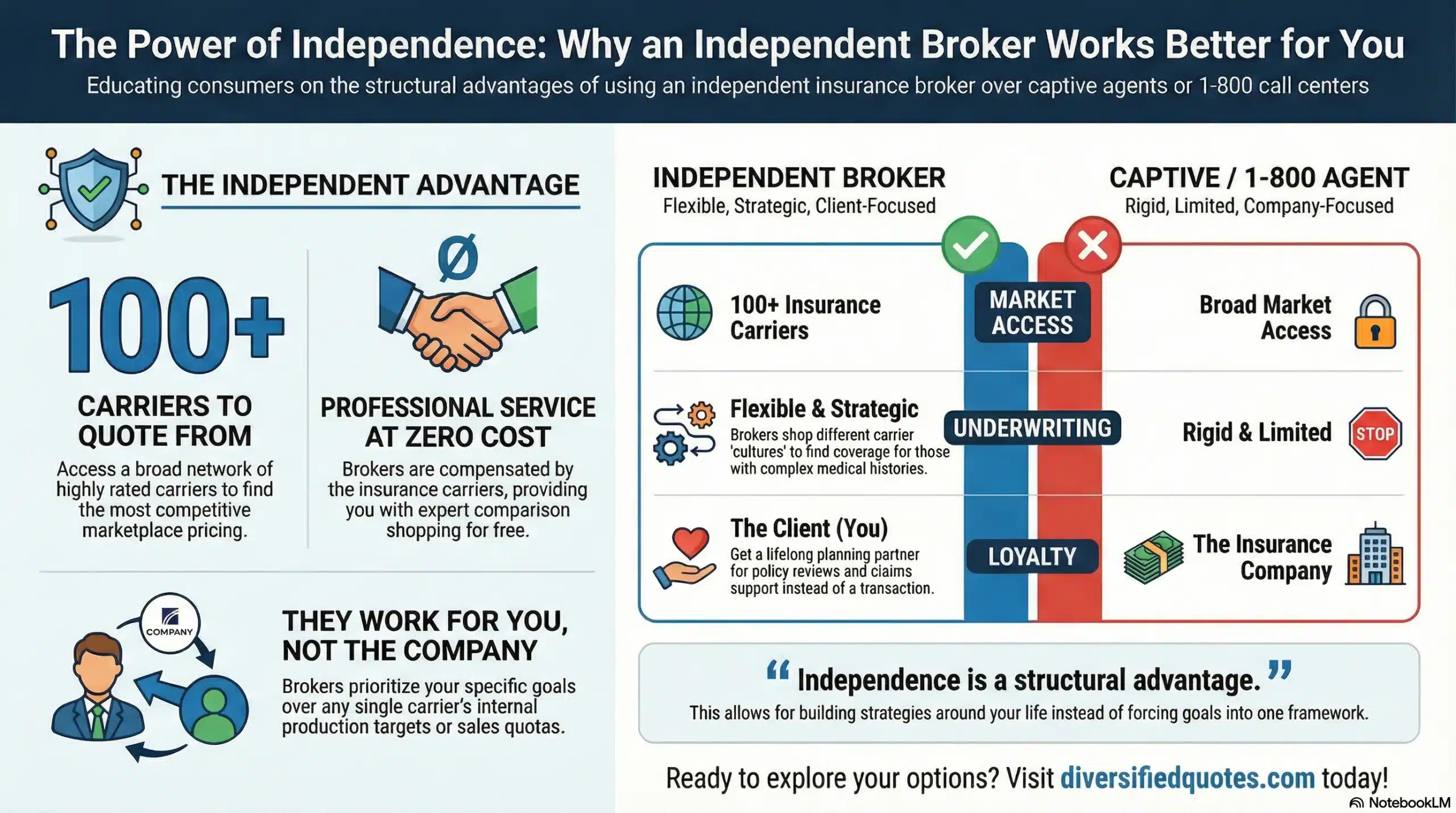
Compare Medicare Carriers
Book a free consultation with Tonia to review highly-rated Medicare Advantage plans and choose the best fit for your retirement.
Frequently Asked Questions: Medicare for People With Chronic Conditions
What is a Chronic Special Needs Plan (C-SNP) and do I qualify?
A Chronic Special Needs Plan (C-SNP) is a type of Medicare Advantage plan specifically authorized by CMS to serve Medicare beneficiaries with qualifying serious or disabling chronic conditions. C-SNPs offer condition-specific benefits — including specialist copays of $0 or very low amounts for condition-relevant providers, care management teams, specialized formularies, and often SSBCI supplemental benefits — that are tailored to the specific condition served by the plan. Qualifying conditions most commonly include diabetes, chronic heart failure, COPD and other serious lung disease, end-stage renal disease (ESRD), HIV/AIDS, and certain cardiovascular disorders. To enroll, you must have Medicare Part A and Part B and have a physician verify your qualifying condition. Not all C-SNPs are available in all geographic areas — availability depends on which carriers offer C-SNP products in your specific county.
Is Medicare Advantage or Original Medicare with a supplement better for chronic conditions?
Neither is universally better — the right choice depends on your specific condition, providers, medications, and budget. Original Medicare with a Medigap supplement typically offers broader provider access (any Medicare-accepting provider nationwide without network restrictions), minimal prior authorization requirements, and highly predictable cost-sharing that covers most care costs after the Part B deductible. This structure is often strongest for complex conditions involving multiple specialists at major medical systems, frequent hospitalizations, or specialty medications with high cost-sharing requirements. Medicare Advantage plans typically have lower monthly premiums, mandatory out-of-pocket maximums (providing catastrophic protection Original Medicare lacks), and care coordination features — but network restrictions, referral requirements, and prior authorization can create friction for high-utilization chronic condition patients. Chronic Special Needs Plans (C-SNPs) offer the most specialized design for qualifying conditions and may provide the best overall value when available locally.
Does Medicare cover pre-existing conditions?
Yes. Original Medicare covers eligible services for any covered condition, including those that existed before Medicare enrollment — there is no pre-existing condition exclusion under Original Medicare. Medicare Advantage plans are also required to accept enrollees regardless of health status and cannot deny coverage or charge higher premiums based on pre-existing conditions. Medigap supplements, however, may use medical underwriting (charging higher premiums or excluding coverage for pre-existing conditions) for applicants who are enrolling outside of their guaranteed-issue enrollment window — typically the 6-month open enrollment period beginning when both Medicare Part A and Part B are active. Medigap guaranteed-issue rights apply in this window, and some states provide additional Medigap protections beyond the federal baseline.
What is the 2025 Part D out-of-pocket cap and how does it help chronic condition patients?
Beginning in 2025, the Inflation Reduction Act capped annual out-of-pocket costs for Medicare Part D at $2,000 per year. This cap applies to both standalone Part D plans and Medicare Advantage plans with integrated drug coverage. For Medicare beneficiaries with chronic conditions who require specialty, brand-name, or biological medications, this cap provides significant financial protection — previously, there was no upper limit on out-of-pocket drug costs in the catastrophic coverage phase, leaving some beneficiaries with annual drug costs of $5,000 or more. The $2,000 cap means that once a beneficiary’s out-of-pocket drug costs reach that level in a calendar year, the plan covers 100% of additional drug costs for the rest of the year. Additionally, a separate $35-per-month cap on insulin out-of-pocket costs applies for covered insulin products under both Part D and Medicare Advantage plans with drug coverage.
Can I switch Medicare plans if my chronic condition worsens or my doctors change?
In most cases, yes. The Annual Enrollment Period (October 15 through December 7) allows Medicare beneficiaries to switch between Medicare Advantage plans, switch from Advantage to Original Medicare, or change Part D plans for coverage beginning January 1 of the following year. Additionally, certain Special Enrollment Periods (SEPs) may allow plan changes outside of AEP if specific qualifying events occur. For people switching from Medicare Advantage to Original Medicare with a supplement, Medigap underwriting may apply in most states outside of guaranteed-issue windows — meaning a carrier can charge a higher premium or decline coverage based on health status. This underwriting consideration is one reason why some Medicare advisors recommend Original Medicare with a supplement at the initial enrollment point for individuals with serious chronic conditions, rather than starting with Medicare Advantage and switching later when health may have changed.
What should I do to prepare for my Medicare enrollment if I have a chronic condition?
Before enrolling in any Medicare plan structure, compile a complete list of your treating physicians and specialists with their contact information so a Medicare advisor can verify network participation; list all current prescription medications with exact dosage for formulary comparison; identify any facilities — hospitals, outpatient surgery centers, infusion centers, imaging facilities — where you regularly receive care for your condition; document approximately how many physician visits and specialist appointments you expect annually; and review your current insurance explanation of benefits to understand your baseline healthcare utilization. With this information, an independent Medicare advisor can conduct a genuine side-by-side comparison of plan structures, check C-SNP availability for your condition and location, verify formulary placement for your specific medications, and calculate estimated annual total cost under each option — giving you the information needed to make a genuinely informed decision.
About the Author:
Tonia Pettitt, CMIP©, (NPN 14374308), is a seasoned Medicare specialist with more than 40 years of hands-on experience guiding individuals and families through the complexities of Medicare planning. As a senior advisor with the nationally licensed independent agency Diversified Insurance Brokers, Tonia provides clear, dependable guidance across all areas of Medicare—including Medicare Advantage, Medicare Supplement (Medigap), and Part D prescription coverage. Leveraging active contracts with dozens of highly rated insurance carriers, she helps clients compare options objectively and secure the most suitable coverage for their health and budget.
Known for her patient, education-first approach, Tonia has built a reputation as a trusted resource for retirees seeking reliable, unbiased Medicare support. With four decades of experience across evolving Medicare laws, carrier changes, and plan structures, she brings unmatched insight to every client conversation—ensuring clients feel confident, protected, and fully prepared for each stage of their retirement healthcare journey.
Explore More Medicare Options: Browse our complete guide to Medicare Advantage vs Medicare Supplement — covering plan comparisons, supplement plans, Advantage plans & finding the best coverage.
Last Reviewed: May 25, 2026 |
Reviewed by: Tonia Pettitt, CMIP©
Medicare Specialist, Diversified Insurance Brokers, Inc. | NPN: 14374308 | Diversified Insurance Brokers, Inc. — Licensed in all 50 states
Fact Checked by: Jason Stolz, CLTC, CRPC, DIA, CAA
Chief Underwriter, Diversified Insurance Brokers, Inc. | NPN: 20471358 | Diversified Insurance Brokers, Inc. — Licensed in all 50 states
Did you find this content helpful? Leave us a Google review — it helps others find trustworthy guidance too.
Editorial Standards: Diversified Insurance Brokers maintains rigorous editorial standards to ensure accuracy, clarity, and independence in all content. Learn more about our editorial standards and commitment to transparency.
