
Travel Medical and Evacuation from Australia

Jason Stolz CLTC, CRPC
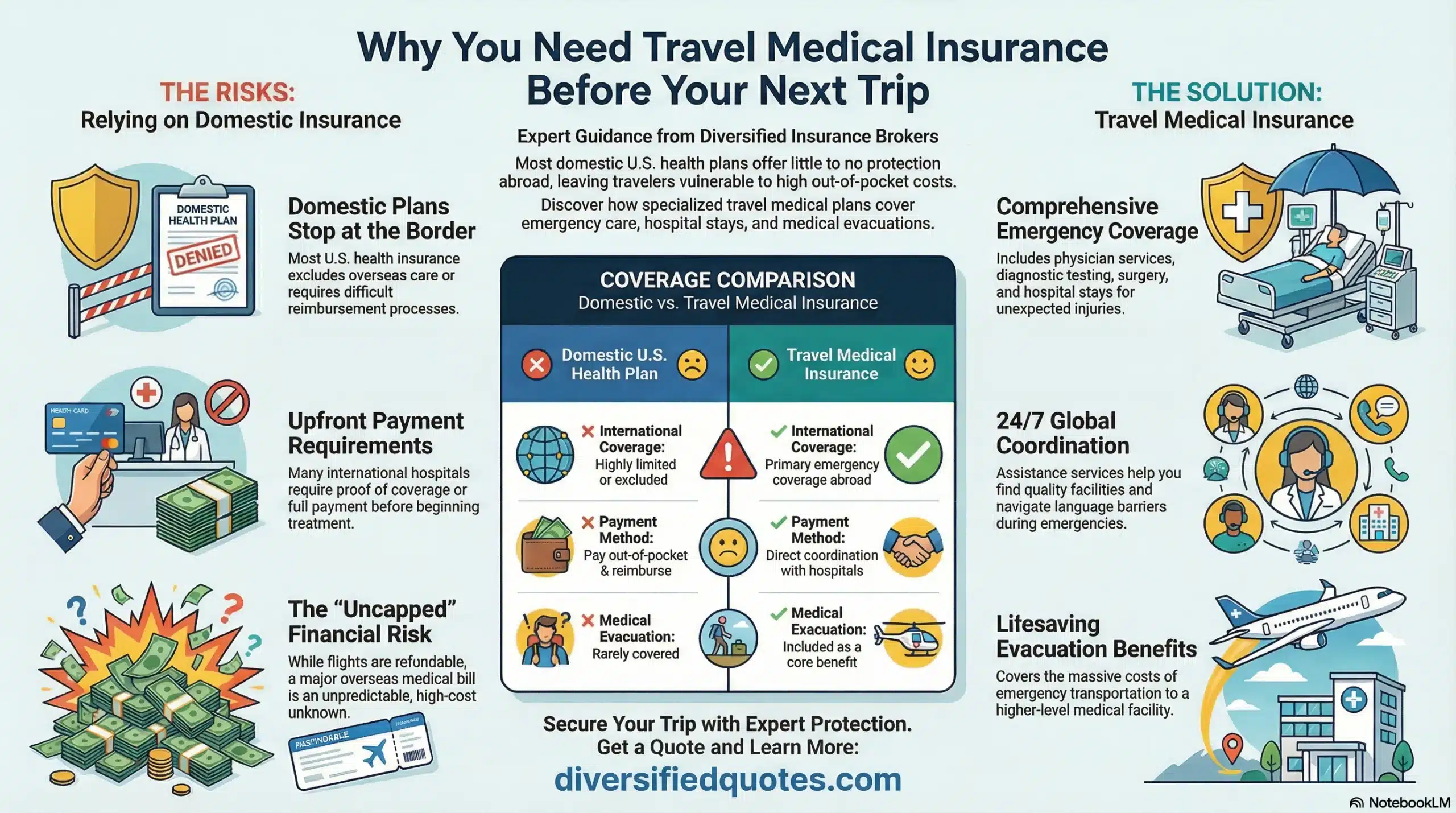
Travel Medical and Evacuation from Australia is less about “how good is the care?” and more about what happens when you need care unexpectedly while overseas. Australia has excellent healthcare and strong emergency services, but when you leave the country, your normal coverage and support systems often don’t travel with you. Many travelers don’t realize how quickly a routine event—an infection, a broken bone, a sudden abdominal issue, or an asthma flare—can turn into expensive out-of-pocket bills, complicated logistics, and time-consuming reimbursement problems.
Travel medical coverage is designed for eligible emergency and urgent care during your trip, while evacuation benefits are designed for those rare moments where a medically necessary transfer or coordinated transport is required. The “evacuation” part matters most when local care isn’t adequate for your condition, you’re in a remote area, or the fastest path to appropriate treatment requires moving you to a better-equipped facility.
If you want the big-picture fundamentals first, start with travel medical insurance. If you’re focused on transport coordination and emergency logistics, the closest companion is emergency medical evacuation insurance.
Get Travel Medical + Evacuation Coverage for Australia Travel
Compare plans built for international emergency medical care and evacuation coordination—based on your dates and traveler details.
View Plans & PricingWhy Australia travelers still benefit from travel medical and evacuation coverage
Australia travel often includes long-haul flights, multi-stop itineraries, and big time-zone shifts. Even healthy travelers can end up needing urgent care after dehydration, gastrointestinal issues, infections, or injuries. The point of coverage is not predicting a problem—it’s buying down the cost and chaos if something happens when you’re far from your normal network.
Australia-based travelers also tend to take trips that include outdoor activities, driving in unfamiliar areas, island travel, and extended stays. Those are normal, common travel patterns—but they increase the chance that an injury or medical issue happens far from the most appropriate facility. When the nearest “good enough” clinic isn’t enough, evacuation coordination can matter. If you prefer a simpler overview of what these plans are built to do, see emergency travel health insurance.
What travel medical coverage typically helps pay for during international travel
Travel medical insurance is generally designed to help pay for eligible emergency and urgent care during your covered travel period. That commonly includes physician visits, emergency room treatment, diagnostics, imaging, and hospitalization when medically necessary. Many plans also include coverage for eligible prescriptions and short-term stabilization care so you can safely continue travel or return home.
These plans typically do not cover routine checkups, elective treatment, or care you planned before departure. They’re meant for the unexpected. If you want a broader explanation of what “international” coverage really means (and where exclusions usually hide), our guide to international travel health coverage breaks it down clearly.
How medical evacuation works for Australia travelers
Evacuation is usually about medical necessity, not convenience. Plans commonly require coordination through the assistance team so the insurer can confirm the situation, choose an appropriate facility, and arrange medically supervised transport when needed. The benefit is structured to prevent a traveler from making a costly transport decision under pressure or being moved without proper medical oversight.
For Australia travelers, evacuation becomes most relevant in two situations: you’re traveling to a location where advanced care is limited (remote areas, smaller islands, rural regions), or you experience a serious medical event and need transfer to a higher-level facility. The details that matter are in the policy wording—what triggers evacuation, who authorizes it, and how coordination works. For a straight explanation of those mechanics, start with emergency medical evacuation insurance.
Pre-existing conditions: the part that causes the most claim surprises
Pre-existing condition language varies by plan and often determines whether a claim is eligible. Some plans define pre-existing conditions based on a look-back window. Others use symptom-based definitions that can feel broader than travelers expect. If you have meaningful health history—cardiac, respiratory, diabetes, autoimmune, prior surgeries, or recurring GI issues—you want to read the plan’s definition before purchase and make sure your expectations match what the certificate actually says.
If you’re helping an older traveler plan international coverage, use travel medical insurance for seniors as your lens, because age, medications, and stability typically drive plan selection more than destination does.
Common Australia travel scenarios where coverage becomes valuable quickly
Long-haul travel issues: Dehydration, infections, and “simple” urgent care needs often happen during extended itineraries. Travel medical plans help protect you from surprise international billing and support smoother claims handling.
Outdoor and adventure travel: Hiking, diving, boating, and remote excursions can raise the “time-to-care” factor. If local care is limited, evacuation coordination can be the difference between an organized transfer and a chaotic situation.
Multi-country itineraries: Australia travelers frequently combine multiple stops in one trip. Your coverage should follow you across borders for the trip period. If the travel reason is education-based, start with travel medical insurance for studying abroad.
Group travel: Organized groups tend to value simple coordination and consistent plan design across travelers. A useful reference point is travel insurance for missionary groups.
Claims basics: how to avoid reimbursement delays
If you receive care and pay out of pocket, documentation matters. Keep itemized invoices, proof of payment, and clinical notes you can obtain before leaving the facility. Travelers often lose time because they only saved a receipt or a short discharge page, and insurers need itemization to validate eligible expenses.
When possible, use the plan’s assistance resources (especially for non-emergency situations) so you can be guided to appropriate care and understand what documents to collect. If you want to understand how extra travel benefits sometimes work—and how travelers actually use them—see travel lodging and pet care benefits.
Compare Travel Medical + Evac Options
Enter your dates and traveler details to compare plan structures that match your trip style—short stays, long stays, outdoor travel, or multi-stop itineraries.
Start a QuotePicking limits and deductibles for Australia-based travelers
Think in two layers: the deductible you can comfortably pay for smaller urgent events, and a medical maximum that protects you from the hospitalization scenario. Lower deductibles make plans more usable. Higher deductibles can reduce premium, but they push more costs onto you before coverage starts paying.
Evacuation should be evaluated separately because transport coordination can be expensive and operationally complex. Even if you never use it, the benefit can prevent a financially painful decision in a high-stress moment.
Common mistakes when buying travel medical + evacuation coverage
Buying based on price only. The cheapest plan can be fine for some trips, but travelers with medical history or remote itineraries should compare definitions, coordination rules, and limits—not just the premium.
Skipping the pre-existing condition section. That definition often drives outcomes more than anything else in the certificate.
Not using the assistance number. For non-emergencies, a quick call can help you find appropriate care and collect the right paperwork for claims.
Who benefits most from this coverage
Families, older travelers, anyone with meaningful medical history, and travelers who will be far from major medical facilities typically gain the most value. Even for healthy travelers, the coverage can be worthwhile because it reduces the uncertainty around emergency costs and logistics while abroad.
Ready to Protect Your Trip?
Choose your dates and compare travel medical and evacuation options designed for international emergencies.
Get Covered NowRelated Travel Medical Pages
Use these to compare coverage types, eligibility rules, and common travel scenarios that influence plan selection.
Related Destination Pages
If your itinerary includes multiple destinations, compare country-specific guidance and travel patterns.
Talk With an Advisor Today
Choose how you’d like to connect—call or message us, then book a time that works for you.
Schedule here:
calendly.com/jason-dibcompanies/diversified-quotes
Licensed in all 50 states • Fiduciary, family-owned since 1980
FAQs: Travel Medical and Evacuation from Australia
Do Australia travelers really need travel medical insurance?
Many do, because overseas travel can create unexpected out-of-pocket medical exposure and reimbursement friction. Travel medical insurance is designed for eligible emergency and urgent care during your trip and often includes assistance services to help you coordinate care.
What does travel medical coverage typically pay for?
It typically helps pay for eligible emergency and urgent care during the trip, such as physician visits, emergency room treatment, diagnostics, imaging, hospitalization when medically necessary, and related prescriptions.
What is medical evacuation coverage actually for?
Evacuation coverage is generally designed for medically necessary transport or transfer coordination when local care isn’t adequate or when you need a higher level of care. It is usually coordinated through the plan’s assistance team.
Does evacuation mean I can choose to fly home whenever I want?
No. Evacuation is typically tied to medical necessity, not preference. The plan and assistance team generally determine whether a transfer is medically required and coordinate appropriate transport.
How do pre-existing conditions affect coverage?
Pre-existing condition definitions vary by plan and can control eligibility. Review the plan certificate’s definition, any look-back window, and whether stability or timing rules apply before you buy.
What should I do if I need care while overseas?
If it’s an emergency, seek immediate care first. For non-emergencies, contact the plan’s assistance resources when possible so they can guide you to appropriate care and explain what documentation to collect.
What documents should I keep for a claim?
Keep itemized bills, proof of payment, and clinical notes you can obtain before leaving the facility. Itemization is especially important to avoid reimbursement delays.
Is coverage worth it for a short trip?
Many travelers think so because even short trips can include unexpected urgent care needs. The main value is financial protection and simplified coordination if the situation becomes complicated.
How do I choose deductibles and limits?
Pick a deductible you’re comfortable paying for smaller events and a medical maximum that protects against hospitalization. Evaluate evacuation benefits separately because transport coordination can be expensive and complex.
What’s the biggest mistake travelers make when buying these plans?
Skipping the pre-existing condition section and buying based on price alone. Plan definitions and coordination rules often matter more than the premium.
About the Author:
Jason Stolz, CLTC, CRPC and Chief Underwriter at Diversified Insurance Brokers (NPN 20471358), is a senior insurance and retirement professional with more than two decades of real-world experience helping individuals, families, and business owners protect their income, assets, and long-term financial stability. As a long-time partner of the nationally licensed independent agency Diversified Insurance Brokers, Jason provides trusted guidance across multiple specialties—including fixed and indexed annuities, long-term care planning, personal and business disability insurance, life insurance solutions, Group Health, and short-term health coverage. Diversified Insurance Brokers maintains active contracts with over 100 highly rated insurance carriers, ensuring clients have access to a broad and competitive marketplace.
His practical, education-first approach has earned recognition in publications such as VoyageATL, highlighting his commitment to financial clarity and client-focused planning. Drawing on deep product knowledge and years of hands-on field experience, Jason helps clients evaluate carriers, compare strategies, and build retirement and protection plans that are both secure and cost-efficient. Visitors who want to explore current annuity rates and compare options across multiple insurers can also use this annuity quote and comparison tool.
