
10-Year Term Life Insurance

Jason Stolz CLTC, CRPC
10-Year Term Life Insurance is one of the cleanest ways to lock in meaningful protection for a defined window—without committing to decades of premium payments. It’s often a strong fit when your goal is time-bound: paying down a loan, covering a buy-sell or business transition period, protecting a young family through the “high-expense” years, or bridging to a longer plan later. The key is matching the policy term to the timeline of your biggest financial responsibilities so you’re not paying for coverage you don’t need—or worse, buying a 10-year policy for a 20-year problem.
At Diversified Insurance Brokers, we help you shop 10-year term in a way that actually improves results: choosing the carriers most likely to price your profile competitively, identifying the best underwriting path (no-exam vs. exam), and making sure the policy’s features—like renewability and conversion—fit how you expect life to change over the next decade. If you have a specific event coming up (a refinance, a contract period, a planned payoff window, or a new child), 10-year term can be a practical, cost-efficient solution—especially when it’s paired with a simple plan for what happens at the end of year ten.
Request a 10-Year Term Quote Review
We’ll compare carrier pricing, confirm underwriting paths (no-exam vs. exam), and help you pick the right coverage design for your needs.
Prefer to talk? Call 800-533-5969
How 10-Year Term Life Insurance Works
A 10-year term policy is designed to be simple. You choose a death benefit amount (the amount paid to beneficiaries if you pass away while the policy is active), and the insurer quotes a level premium intended to stay the same for the full 10-year term. If you pass away during the term, the policy pays the death benefit to your beneficiaries (in many situations, income-tax-free). If you outlive the term, the policy expires unless you renew it (often at sharply higher rates) or convert it to a permanent policy if a conversion option is available.
Because 10-year term is typically pure protection—usually with no cash value—it can be one of the most cost-efficient ways to put a meaningful amount of coverage in place when you have a defined timeframe. It’s also an easy policy structure to “plan around.” You can decide today what you’re protecting for the next 10 years, then schedule a review later to confirm whether the original need still exists or whether your life has shifted enough to adjust coverage.
When 10-Year Term Life Insurance Makes the Most Sense
Term insurance is strongest when it’s tied to a real obligation with a timeline. The reason 10-year term can be such a practical fit is that many financial responsibilities truly do change within a decade—debt shrinks, income rises, children become more independent, and households often build larger emergency reserves. If your biggest obligations will be dramatically smaller in 10 years, buying a longer term can feel like paying for unused runway.
Common 10-year use cases include: protecting a spouse during a career change, covering a business note or short buyout window, providing protection while you complete a debt payoff plan, or ensuring coverage during the years when your household expenses are highest and savings is still building. It can also work well as a “bridge” when you want immediate protection now but may pivot later—either by replacing the policy, laddering coverage, or converting to permanent coverage if your needs become longer term.
10-Year Term vs. Other Coverage Designs
A common mistake is choosing a term length based only on the lowest price. The better approach is to match your policy to your longest meaningful obligation. If your largest responsibilities will still be significant after 10 years—like a long mortgage horizon, multiple children still in school, or an income-replacement need that stretches well beyond a decade—it may be smarter to explore longer-duration protection first. Otherwise, you risk needing a second application later, potentially at higher rates if your health changes.
On the flip side, if your need is genuinely time-bound, 10-year term is often a clean and efficient way to get a large death benefit at a lower cost than longer terms. The decision should be driven by what must be true financially for your household between now and year ten. If you want to understand how term fits into broader planning, it can also help to explore whether life insurance is a good investment (and when it isn’t), so you’re choosing term coverage for the right reasons.
Avoid Surprises in Underwriting
Before you apply, we’ll confirm which carriers are most favorable for your profile and whether no-exam underwriting is realistic—so you don’t waste time on preventable declines.
Not sure what carriers evaluate? See what a life insurance exam includes.
What Impacts 10-Year Term Life Insurance Rates
Pricing for 10-year term insurance is based on underwriting class. Most carriers evaluate the same fundamentals: age, overall health, tobacco history, family medical history, driving record, build, medications, and the amount of coverage requested. The term length affects premium, but the biggest driver is the health class you qualify for—Preferred, Standard, or rated (tables) for higher risk.
Many applicants want to know whether they’ll need an exam. In some cases, accelerated underwriting can approve coverage using data sources and a streamlined health interview. In others, a brief paramed exam can improve pricing or clarify medical details. If you want a clear picture of what to expect, review what a life insurance exam is and why exam requirements vary by carrier and coverage amount.
Also, “cheapest premium” is not always the best overall deal. A slightly higher premium can be worth it when the policy offers stronger conversion privileges, better flexibility, or a carrier that underwrites your specific history more favorably. That’s especially important if you suspect your health could change before the 10 years are up.
How Much Coverage Should You Buy for a 10-Year Term?
The best way to choose a death benefit is to start with what you are protecting for the next 10 years. For many families, that includes remaining debt balances, a period of income replacement, and creating breathing room for housing and childcare costs. Some households plan around the idea of “replace income for X years,” while others prefer to solve concrete obligations first—like paying off a loan or ensuring a spouse is financially stable during a transition.
If your goal is closely tied to a home loan, it’s worth understanding the difference between mortgage-specific marketing and traditional term life insurance. The mechanics can look similar, but term insurance typically offers more flexibility and control. If you want an apples-to-apples breakdown, see mortgage protection vs. term life insurance.
For business owners, coverage needs can be more specific: key person protection, buy-sell planning, or temporary protection tied to a note. In those cases, 10-year term can be a clean fit when the business timeline is defined. The key is to ensure the coverage amount is financially justifiable—carriers often want to see reasonable alignment between coverage and income or business value.
Estimate Your 10-Year Term Pricing
Use the calculator to compare term options and see how pricing changes by age, amount, and term length.
Convertibility: Keeping Options Open If Your Health Changes
One of the most valuable features on many term policies is conversion. Conversion allows you to exchange your term policy for a permanent policy from the same carrier—typically without proving your health again. That can matter if your health changes during the 10-year period and you still want coverage that lasts beyond the original term.
Conversion rules vary widely by carrier. Some offer longer conversion windows, broader permanent product choices, and more favorable mechanics than others. If you’re considering 10-year term as a “bridge strategy,” it’s smart to understand how converting term to permanent life insurance works and what that could mean if you decide later that you want lifetime coverage.
What Happens When a 10-Year Term Policy Ends
As the end of year ten approaches, there are typically three paths: let the policy expire, renew it (if renewable), or convert it (if eligible). Renewal sounds easy, but it can be the most expensive option because renewal premiums generally increase sharply as you age. That’s why planning matters—most households get the best outcome by reviewing options before the policy ends rather than waiting until the final weeks.
If your health is stable, replacing the policy may be possible. If health has changed, conversion may be the most reliable way to maintain coverage. A simple best practice is to schedule a policy review around year 8 or 9 so you’re making choices from a position of control rather than reacting to a deadline.
Riders and Add-Ons That Matter Most on 10-Year Term
Most term policies include a few practical features automatically. Rather than chasing a long list of riders, focus on what changes outcomes in real life. For example, many policies include an accelerated death benefit rider that can provide earlier access to a portion of the death benefit in a qualifying terminal illness scenario. Depending on the carrier, other optional riders may exist, but definitions and costs vary, and the best “add-on” is often choosing a carrier whose core underwriting and conversion options fit your goals.
If you’re pairing term coverage with broader risk planning, disability coverage is often the next conversation—because your income is usually the asset you use to pay for everything else. If that’s relevant, exploring long-term disability insurance can help you understand how life insurance and income protection work together.
10-Year Term vs. Permanent Coverage
Term life insurance is built for affordability and simplicity. Permanent life insurance is built for long-duration planning. If you know you want coverage designed to last for life—such as a legacy goal, final-expense planning, special-needs planning, or estate-driven coverage—permanent insurance may be worth comparing. The practical takeaway is that term is best when the need has an end date, while permanent is best when the need does not.
For many households, a balanced approach works: start with term coverage to protect high-impact years, then reassess later whether a smaller amount of permanent coverage is helpful once finances and responsibilities stabilize. If your goal is more “final expense” oriented than income replacement oriented, it can also help to understand how a burial-focused design compares to term coverage. See whole life burial insurance vs. term for a clearer comparison of what each is designed to do.
Case Example: When 10-Year Term Is the Right Move
Imagine a 38-year-old professional who recently refinanced debt and planned to have it fully paid off within 10 years. The goal wasn’t lifelong insurance—it was protecting a spouse during a defined payoff period. A 10-year term policy aligned perfectly: a strong death benefit now, predictable premiums, and the ability to reassess once the debt plan was completed.
In scenarios like this, 10-year term can be both financially efficient and strategically clean. You’re not paying for coverage beyond the need, and you’re not overcomplicating the plan. You’re simply ensuring that if something happens unexpectedly during the payoff window, the household plan still works.
Common Mistakes to Avoid With 10-Year Term Life Insurance
The biggest mistake is buying a 10-year term policy for a 20-year responsibility. If your mortgage, children’s dependency window, or income-replacement need will still be large after year 10, you may be setting yourself up for a second application later—potentially at higher rates. A close second mistake is waiting too long to review options near the end of the term, which can reduce choices and increase stress.
Another mistake is assuming all carriers treat underwriting the same. Two policies with similar prices can have very different rules around medications, family history, build, and prior diagnoses. That’s why an independent strategy often matters most for people who are not “perfectly clean” Preferred applicants. If you’re navigating health history, it can also help to read through life insurance with pre-existing conditions so you know what underwriters typically look for and how carrier selection changes outcomes.
Finally, don’t ignore the beneficiary and ownership setup. A well-priced policy still needs to be structured correctly so the benefit flows cleanly to the right people. While most beneficiaries receive death benefits income-tax-free, there are planning exceptions at higher estate levels. If that question applies, start with is a life insurance death benefit taxable to understand the basics and where planning matters.
How an Independent Broker Helps You Get Better 10-Year Term Results
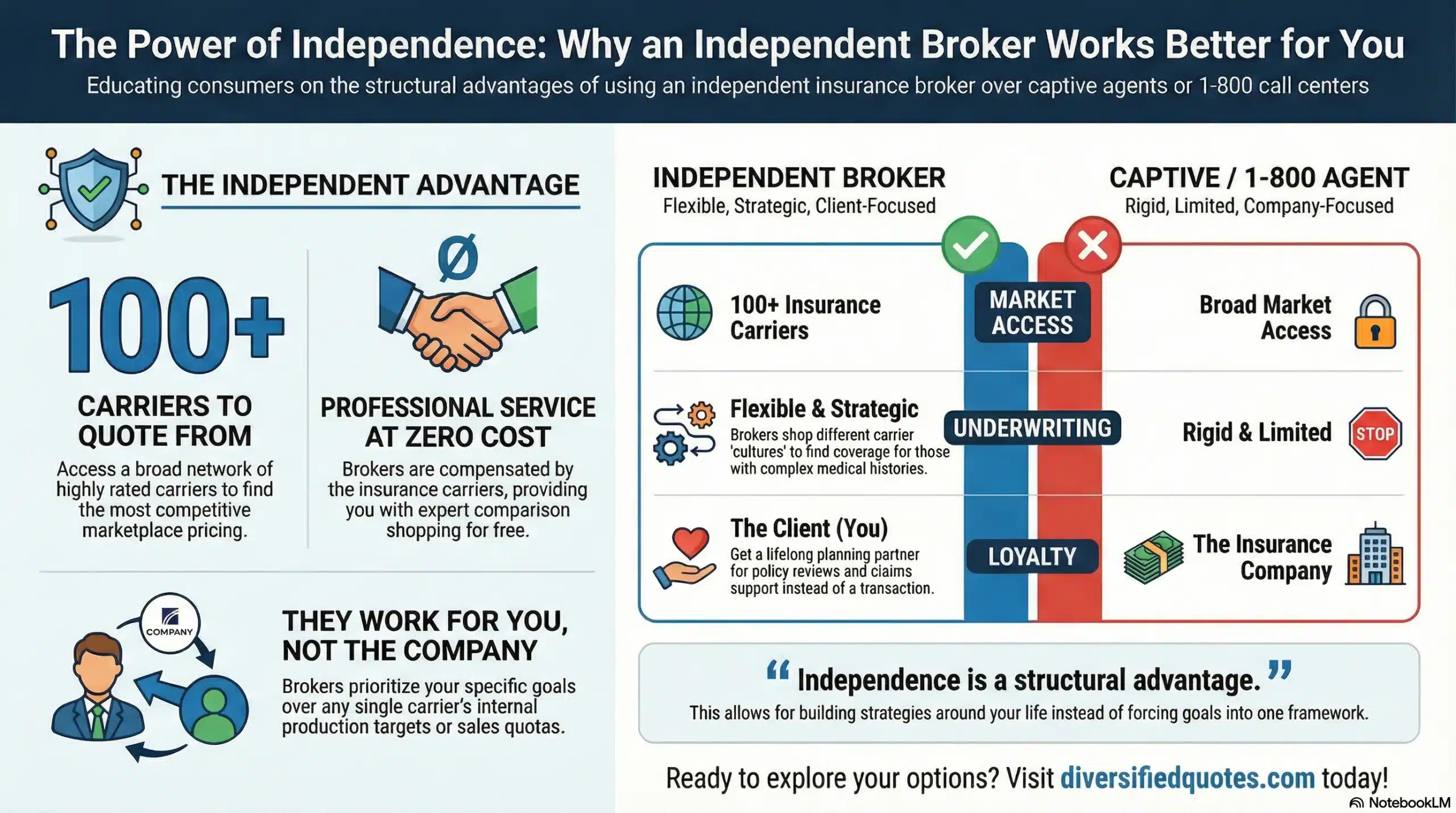
Shopping term life isn’t just about generating quotes—it’s about matching the right carrier to your underwriting profile and your timeline. Some carriers are more competitive at certain ages. Some are more favorable for specific medical histories. Some offer stronger conversion windows. Our job is to help you avoid “shopping mistakes” by narrowing the market to the carriers most likely to approve you smoothly and price you fairly.
If you want a broader view of what to look for when choosing help, our guide on best independent insurance agent walks through what matters beyond price—like carrier access, underwriting experience, and how the process is managed from application to placement.
Get Your Best 10-Year Term Options
We’ll confirm the best carriers for your situation and compare pricing so you can choose confidently.
Related Pages
Here are a few helpful pages to explore next:
Financial Protection Essentials
Carrier evaluations, senior burial planning, and guaranteed issue life insurance strategies to strengthen financial protection.
Compare Term Life Insurance Lengths
Explore different term periods to find coverage that best matches your timeline and budget.
Talk With an Advisor Today
Choose how you’d like to connect—call or message us, then book a time that works for you.
Schedule here:
calendly.com/jason-dibcompanies/diversified-quotes
Licensed in all 50 states • Fiduciary, family-owned since 1980
FAQ for 10-Year Term Life Insurance
Can I convert a 10-year term policy to permanent coverage later?
Many 10-year term policies include a conversion option that allows you to switch to permanent coverage without new medical underwriting. If you’re evaluating long-term options, understanding how whole life insurance works can help determine whether permanent coverage fits your goals.
Is a medical exam required for 10-year term life insurance?
Not always. Some applicants qualify for accelerated underwriting or simplified issue coverage. Younger applicants may explore no-exam life insurance for young adults, while others may receive better pricing through traditional underwriting.
What happens when the 10-year term ends?
When the level period ends, most policies allow annual renewal at increasing rates or conversion within the carrier’s deadline. Reviewing when to stop buying term life insurance can help you plan before your term expires.
Is 10-year term better than 15- or 20-year term?
A 10-year term typically has lower initial premiums but covers a shorter period. If obligations extend beyond a decade, reviewing overall life insurance rates across multiple term lengths can help you lock in long-term savings.
How much 10-year term life insurance do I need?
A practical approach is to calculate debt payoff needs, mortgage balances, and income replacement for the next 10 years. Tools and guidance like how to choose the right life insurance policy can help determine an appropriate coverage amount.
Are life insurance death benefits taxable?
In most cases, life insurance death benefits are received income-tax-free by beneficiaries. However, estate considerations may apply for larger policies. Understanding what deaths are not covered by life insurance can also clarify important policy limitations.
About the Author:
Jason Stolz, CLTC, CRPC and Chief Underwriter at Diversified Insurance Brokers (NPN 20471358), is a senior insurance and retirement professional with more than two decades of real-world experience helping individuals, families, and business owners protect their income, assets, and long-term financial stability. As a long-time partner of the nationally licensed independent agency Diversified Insurance Brokers, Jason provides trusted guidance across multiple specialties—including fixed and indexed annuities, long-term care planning, personal and business disability insurance, life insurance solutions, and short-term health coverage. Diversified Insurance Brokers maintains active contracts with over 100 highly rated insurance carriers, ensuring clients have access to a broad and competitive marketplace.
His practical, education-first approach has earned recognition in publications such as VoyageATL, highlighting his commitment to financial clarity and client-focused planning. Drawing on deep product knowledge and years of hands-on field experience, Jason helps clients evaluate carriers, compare strategies, and build retirement and protection plans that are both secure and cost-efficient. Visitors who want to explore current annuity rates and compare options across multiple insurers can also use this annuity quote and comparison tool.
