
Is Voya a Good Insurance Company?
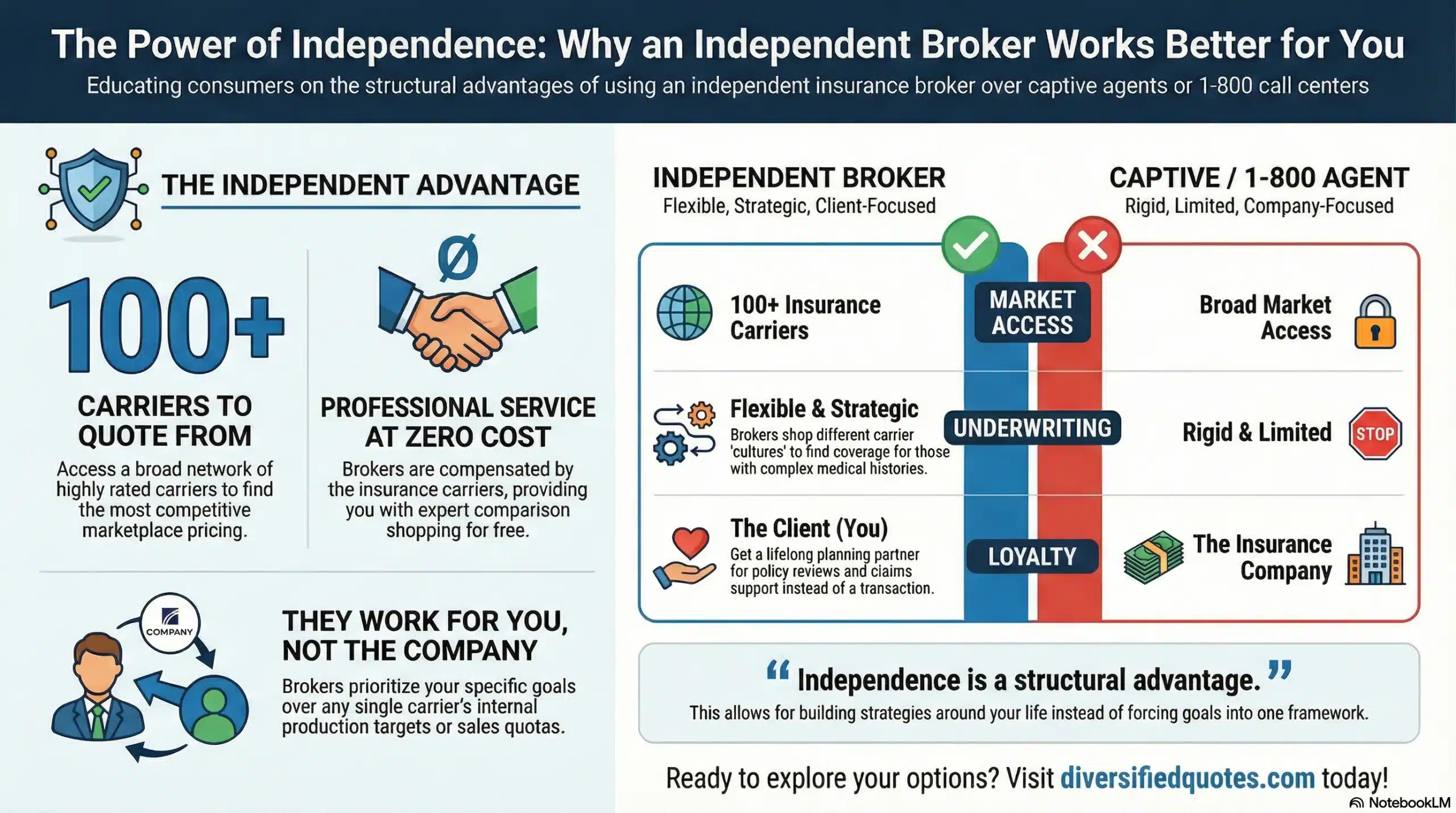
View the table near the end of the page to see why working with an independent insurance broker provides you the best possible rates.
Is Voya a Good Insurance Company?

Jason Stolz CLTC, CRPC, DIA, CAA
At Diversified Insurance Brokers, we benchmark insurers on safety, income potential, and contract flexibility — then show you how they stack up against competing carriers across the same premium, age, and income start date. If you’re wondering “Is ING a good insurance company?” the practical answer for most U.S. retirees is that many of the policies and annuity contracts people still call “ING” today are tied to Voya Financial or other successor entities that emerged after ING’s U.S. life and annuity operations were rebranded and reorganized starting in 2013 and completing in 2014. That history makes one thing essential before any comparison begins: never assume the brand name on a statement tells the full story. Always confirm the legal issuing carrier printed on the actual contract document, because guarantees, benefit mechanics, and claim obligations are tied to the legal issuer — not the nickname people use when they describe the policy.
This page is designed to help you evaluate an “ING” annuity or legacy life and annuity policy the right way: identify the actual issuing company, understand what contract role and lane the design was built for, and compare it against today’s competitive alternatives using the same premium, age, and income start date so the comparison is objective rather than brand-driven. Annuities are not interchangeable products. Even when a carrier has strong financial strength ratings, a specific contract design can be outdated, competitively underpowered for a particular goal, or structured for a rate environment that no longer exists. Our job is to help you evaluate on outcomes and contract mechanics — not on reputation or familiarity.
When clients ask us to evaluate ING/Voya-style contracts, we assess whether the design is best suited for fixed annuity accumulation, fixed indexed annuity growth with downside protection, or guaranteed lifetime income generation. We also layer the annuity evaluation into the broader retirement structure: Social Security claiming timing, RMD strategy in qualified accounts, tax efficiency across income streams, and beneficiary goals — so the contract decision supports the whole retirement plan rather than optimizing a single illustration number in isolation.
Ensure You Are Receiving the Absolute Top Rates
If you’re comparing an ING/Voya legacy annuity with today’s best guarantees, start by benchmarking current fixed and bonus annuity opportunities. Then request a personalized quote so you can compare income, liquidity, and contract rules using your exact numbers.
Note: The calculator accepts premiums up to $2,000,000. If you’re investing more, results increase in direct proportion — for example, doubling your premium roughly doubles the guaranteed income at the same age and options.
First, Clarify What “ING” Means in Today’s U.S. Retirement Market
“ING” persists as common shorthand in U.S. retirement conversations because the brand appeared prominently on older policies, workplace retirement plan statements, and prior account materials for many retirees. In practice, the contract you are evaluating today is almost certainly serviced under a different corporate name. ING Group divested its U.S. insurance and retirement operations, with the U.S. life and annuity business rebranded as Voya Financial, which completed its separation from ING Group as a publicly traded independent company in 2014. Contracts originally issued by ING Life Insurance and Annuity Company, ING Insurance Company of America, ReliaStar Life Insurance Company, or Security-Connecticut Life Insurance Company — among others — exist under various successor or assumed name structures within the Voya Financial family or related entities depending on the specific contract and state of issue.
The practical step is always the same: locate the issuing company line on the actual contract document — typically on the first or second page of the policy — and identify who is legally responsible for the guarantees and claims. That is the entity whose financial strength you should research, whose regulatory filings you can review, and whose contract terms govern every benefit, restriction, and exit provision in the policy. People often compare “ING” to another carrier at the brand level when the real comparison should evaluate five specific dimensions: the legal issuing company’s current financial strength ratings from AM Best, Moody’s, and S&P; the specific contract design and how it was built relative to the interest rate environment in which it was priced; income payout factors at the target age and income start date; all fees and rider costs including ongoing annual charges against the accumulation value; and the liquidity terms including surrender schedule, free withdrawal provisions, and any market value adjustment features.
For contracts using fixed indexed crediting strategies, the evolution of FIA design over the past decade adds additional complexity. Many older FIA contracts were designed with crediting structures — caps, participation rates, index strategies, and renewal methodologies — that reflect the rate environment and competitive landscape of their pricing era. Crediting rules in modern FIA designs have often evolved substantially from what appeared in contracts issued 10 to 15 years ago. Before assuming a legacy contract remains competitive, comparing measurable outcomes side by side with current designs using the same inputs produces a factual basis for the evaluation rather than assumption.
What to Verify Before Comparing Any ING/Voya-Style Annuity
Most annuity regret does not originate from choosing the wrong company. It originates from choosing the wrong contract role — a design built for one objective being used for a different one — and from misunderstanding the rules that govern access, income activation, and benefit renewals. The fastest path to an objective evaluation is to verify a handful of core contract elements before any side-by-side comparison begins. Once these are clear, comparisons become tractable and the relevant trade-offs become visible.
The first step is identifying the contract’s primary lane: is the design oriented toward principal protection with credited interest accumulation, measured upside participation with downside protection, or guaranteed lifetime income generation? That single determination changes what “best” means in every subsequent comparison. A design that is excellent for stable conservative accumulation may be structurally mediocre for maximizing guaranteed lifetime income — and an income-optimized design may sacrifice liquidity flexibility or legacy value that matters to a different retiree in a different situation. Matching the evaluation to the contract’s actual intended role prevents comparing a screwdriver to a hammer and concluding that one tool is inferior.
Next, confirm exactly how interest is credited to the contract’s accumulation or benefit values. For fixed indexed designs, the crediting mechanism — caps, participation rates, spreads, index selection options, and the renewal process that updates those parameters annually — determines how growth is actually calculated. Understanding the difference between a guaranteed minimum credited rate, a current cap that can be changed at renewal, and a participation rate applied to an index return is essential before interpreting any illustration. Our resource on how annuities earn interest explains these levers in plain English and helps you distinguish what is contractually guaranteed from what is currently projected.
Finally, clarify the liquidity structure — surrender schedule duration and percentages, annual free withdrawal provisions typically expressed as a percentage of account value, and whether any market value adjustment feature applies to withdrawals or full surrenders in fixed-rate designs. The annuity free withdrawal rules that govern a contract determine how much flexibility you actually have without penalty during the surrender period, and understanding those rules is essential before deciding whether to keep, exchange, or supplement a legacy contract. A contract that looks attractive on its income illustration may be far less attractive when its liquidity constraints are placed alongside the retiree’s actual cash flow needs.
Where an ING/Voya Legacy Annuity Can Still Be a Strong Fit
Legacy ING/Voya contracts can still serve their owners well in a range of situations — particularly when the contract’s design lane continues to match the retiree’s current objective and when the outcome metrics compare favorably to available alternatives. The evaluation should be factual rather than reflexive in either direction: neither assuming the legacy contract is fine without checking nor assuming it must be replaced without comparing.
For retirees whose primary goal is conservative accumulation — anchoring a portion of retirement assets in a principal-protected, interest-crediting structure that functions as a bond-like stabilizer — a legacy fixed annuity or MYGA-style design can still be appropriate when the credited rate is competitive, the surrender schedule aligns with the retiree’s time horizon, and the contract’s liquidity provisions fit the household’s cash flow needs. The foundational mechanics of what a fixed annuity provides have not changed; what changes is whether the specific contract’s credited rate remains competitive relative to current offerings with comparable surrender terms.
For retirees whose goal is protected accumulation — participating in market-linked index growth while maintaining principal protection against negative index returns — legacy fixed indexed annuity designs can still function as intended. The question is whether the crediting parameters, renewal history, and strategy options available in the legacy contract continue to produce competitive accumulation outcomes relative to current FIA designs with more modern crediting structures. Understanding how a fixed indexed annuity works at the mechanical level allows you to evaluate the legacy contract’s specific parameters against today’s alternatives rather than comparing at the brand or category level.
For retirees whose goal is guaranteed lifetime income, the evaluation centers on payout factors, income rider cost, the deferral period from current age to income start date, and how the guaranteed income coordinates with Social Security timing and other income sources. The same premium invested in two different contracts with comparable income riders can produce meaningfully different guaranteed income amounts depending on the payout factor, the accumulation method that builds the income base, and the rider cost that reduces the accumulation value. Understanding when lifetime income riders add genuine value versus when their cost structure makes them less efficient than simpler alternatives is essential for evaluating any income-oriented legacy contract.
The Biggest Trade-Offs to Evaluate With Legacy ING/Voya Contracts
The most consequential trade-off issue with legacy annuity contracts is almost never the carrier itself — it is the contract era. Contracts designed and priced in a different interest rate environment and competitive landscape may carry structures that were appropriate at issuance but have become less efficient relative to what current designs offer for the same objective. That can manifest as crediting caps or participation rates that are lower than what newer contracts provide at equivalent pricing, income rider structures where the accumulation methodology or payout factor produces less guaranteed income than comparable current offerings, or surrender schedules that no longer match the retiree’s actual planning timeline in ways that were not visible at purchase.
Liquidity is typically the first meaningful trade-off dimension. A legacy contract may look compelling on its income or accumulation metrics until the surrender schedule and free withdrawal provisions are examined in the context of the retiree’s actual cash flow situation. Understanding how annuity surrender charges work — including whether a market value adjustment applies to withdrawals or surrenders in fixed-rate designs — provides the factual basis for assessing whether the contract’s liquidity structure is genuinely compatible with how the household will actually need to use the assets during the surrender period.
Income competitiveness is the second major trade-off dimension. The correct comparison for an income-oriented legacy contract is objective and specific: same insured age, same premium amount, same income start date, and then guaranteed income amounts across multiple current carriers. A legacy contract may produce income that is acceptable in absolute terms while being meaningfully below what today’s competitive set would produce for the identical inputs — a gap that compounds over a 20 or 25-year income payment period into a substantial total income difference. Many retirees also conflate the roll-up rate credited to the income base during the deferral period with the actual income payout rate that converts the income base to an annual payment — a distinction that significantly affects what a rider actually delivers. Our resource on roll-up rate vs. payout rate explains how these two numbers interact and why the payout rate is often the more important figure for income planning.
Beneficiary outcomes represent the third trade-off dimension that deserves explicit attention rather than being treated as an afterthought. Income-optimized designs frequently involve a trade-off between maximizing guaranteed income during the annuitant’s lifetime and preserving death benefit value for beneficiaries. A contract that maximizes the guaranteed monthly or annual income payment may do so by reducing the death benefit available to heirs, while a contract with a strong legacy provision may produce lower income. If legacy goals matter to the household — and for most retirees they do — the comparison should explicitly model beneficiary outcomes alongside income outcomes. Our resource on annuity beneficiary death benefits outlines what to model and what questions to ask when evaluating this dimension.
How ING/Voya Decisions Should Align With Social Security and RMD Strategy
An annuity decision made in isolation from the rest of the retirement income plan frequently produces a result that looks optimal on the illustration but creates coordination problems — income gaps, income overlaps, unnecessary tax pressure, or RMD complications — when it interacts with the household’s other income sources and account structures. The most common coordination error we see is selecting an income start date that either creates redundant income during years when Social Security and portfolio distributions are already sufficient, or leaves an income gap during years when Social Security has been deferred and portfolio withdrawals are needed to bridge. Modeling the annuity income start date alongside Social Security claiming timing and portfolio withdrawal sequencing is the only way to identify the start date that creates genuine value rather than just appearing attractive on the income illustration.
The interaction between guaranteed annuity income and Social Security claiming can be particularly powerful when designed intentionally. Our resource on how Social Security and annuities work together explains how annuity income can function as a bridge during Social Security deferral years and how the combination of Social Security and guaranteed annuity income can create an income floor that covers essential expenses regardless of portfolio performance — allowing the remaining investment portfolio to be managed for long-term growth rather than for income production under stress conditions.
For qualified accounts — traditional IRA, rollover IRA, or 401(k) assets — required minimum distribution rules add another layer to the annuity evaluation. Annuity contracts held inside qualified accounts must satisfy RMD requirements beginning at the applicable age, and the interaction between RMD amounts and the annuity’s income or withdrawal provisions requires coordination. Some retirees explore using a portion of IRA assets to purchase a Qualifying Longevity Annuity Contract (QLAC), which defers income while reducing the RMD calculation base within defined limits. Our resource on what a QLAC is explains how these contracts work and under what circumstances they can be a useful component of qualified account planning.
When a 1035 Exchange May Be Worth Evaluating
A 1035 exchange is a provision of the Internal Revenue Code that allows the tax-free transfer of the accumulated value in one annuity contract — including accumulated gains that would otherwise be taxable upon surrender — into a new annuity contract, provided the exchange is properly structured and the contracts meet applicable requirements. For retirees holding legacy ING/Voya contracts that are no longer competitive for the current retirement objective, a 1035 exchange can allow repositioning into a more appropriate design without triggering immediate income taxation on the contract’s embedded gains.
The evaluation of whether an exchange makes sense requires comparing two specific financial paths: keeping the legacy contract and accepting its terms for the duration of the planning horizon versus exchanging into a new contract and accepting the new surrender period, new fee structure, and new income payout factors. The comparison must account for any remaining surrender charges on the legacy contract that would reduce the exchange value, the new surrender period on the replacement contract, the net improvement in income or accumulation outcomes after all costs and transition economics are factored in, and the tax consequences at the point of eventual distribution. The exchange is economically beneficial only when the net improvement in outcomes over the planning horizon clearly outweighs the costs and constraints of the transition — and that determination requires an honest quantitative comparison rather than an assumption that new is always better. Our resource on how 1035 exchanges work in annuity planning explains the mechanics and the evaluation framework in detail.
Who Should Consider Keeping an ING/Voya Contract — and Who Should Compare More Broadly
Legacy ING/Voya contracts should be kept when the contract’s design lane matches the current objective, the guaranteed outcomes compare favorably to what current alternatives would produce for the same premium at the same age and income start date, and the liquidity profile is compatible with the household’s actual cash flow needs through the remaining surrender period. Keeping a well-positioned contract that genuinely serves its purpose is frequently the right outcome — the goal of a thorough evaluation is not to replace contracts but to make the keeping or exchanging decision on a factual basis rather than on comfort, inertia, or the assumption that familiarity equals competitiveness.
A broader comparison is clearly warranted when the primary goal is the highest guaranteed lifetime income available for a specific age and planned income start date, when the legacy contract’s rider cost structure has made accumulated income base growth less efficient than originally projected, when the contract’s crediting parameters have been reduced through renewal cycles to levels that are no longer competitive with current offerings, or when the household’s planning horizon or liquidity needs have changed since the contract was purchased in ways that make the original design less suitable. For income-first evaluations, we typically compare at least four to six carriers simultaneously using identical inputs — same premium, same insured age, same income start date — so the selection is based on mathematical outcomes across the competitive field rather than on any single carrier’s illustration or on brand familiarity. The carrier that produces the highest guaranteed income for a specific scenario can change over time and varies significantly by age and income start date, which is precisely why point-in-time comparisons using current payout factors are necessary rather than relying on historical impressions of which carriers have been competitive.
Planning Example: Evaluating an “ING” Annuity the Right Way
A 64-year-old couple holds an older “ING” annuity purchased approximately ten years ago. They are now within three years of retirement and want to create a predictable income floor that complements Social Security at age 67. The evaluation begins by confirming the legal issuing carrier and the exact contract version — not the brand name — and then determining whether the existing income rider’s projected income at age 67 is competitive with what current carriers would produce using the same accumulated value as the comparison premium.
We run carrier-matched illustrations across several current providers using the same inputs and compare four dimensions: guaranteed income payout at the target start date net of all rider fees, surrender schedule and liquidity flexibility through the income activation date, beneficiary death benefit provisions at various points in the income period, and the sensitivity of income amounts to changes in income start date if the couple’s retirement timing shifts. In this scenario, the legacy contract may prove to be well-positioned and should be kept — or it may be outperformed on guaranteed income by newer designs, suggesting an exchange evaluation. If the legacy contract has stronger liquidity provisions that the couple values, a hybrid approach may be appropriate: keeping the legacy contract for its liquidity and stability function while adding a smaller current-generation contract specifically optimized for income. The result is a plan organized around distinct roles — a guaranteed income floor, accessible liquidity reserves, and a remaining investment portfolio for long-term growth — rather than a plan where one contract is asked to serve all functions simultaneously.
Bottom Line
For most U.S. retirees, “ING” is best treated as a legacy brand reference rather than a current underwriting or competitiveness shortcut. The most important first step is always confirming the legal issuing carrier and the specific contract version, because those details determine what guarantees are actually in force. From there, the right evaluation framework is factual and comparative: payout factors, rider costs, liquidity terms, surrender schedules, crediting parameters, and beneficiary provisions — all compared side by side using the same age, premium, and income start date across multiple current carriers. A legacy ING/Voya contract can be an excellent fit for a specific retiree’s situation, but that conclusion should be proven with objective numbers rather than assumed from brand familiarity. Use the calculator above as a starting benchmark and request a personalized comparison to see specifically how your existing contract stacks up against today’s competitive field.
Related Pages
Is Transamerica a Good Insurance Company? provides a benchmark comparison against another national carrier with multiple annuity product lanes and a broad distribution network.
Fixed Indexed Annuity Myths Debunked addresses the most common misunderstandings that cause retirees to mis-compare indexed guarantees or draw incorrect conclusions from FIA illustrations.
What Is an Annuity Spread Rate? explains one of the key indexed crediting levers — distinct from caps and participation rates — that materially affects growth outcomes in some FIA designs over time.
Are Annuities a Good Investment in Retirement? provides a practical framework for deciding whether any annuity — legacy or current — belongs in a retirement plan based on the specific role it is intended to fill.
Financial Protection Essentials
Explore annuity comparison, retirement income planning, and carrier evaluation resources for retirees.
Talk With an Advisor Today
Choose how you’d like to connect—call or message us, then book a time that works for you.
Schedule here:
calendly.com/jason-dibcompanies/diversified-quotes
Licensed in all 50 states • Fiduciary, family-owned since 1980
FAQs: Is ING / Voya a Good Insurance Company?
ING’s U.S. insurance and retirement operations were divested from ING Group and rebranded as Voya Financial, which completed its separation as an independent publicly traded company in 2014. ING no longer issues new life and annuity contracts in the U.S. market under the ING brand. Contracts that were issued under ING entity names — including ING Life Insurance and Annuity Company, ING Insurance Company of America, ReliaStar Life Insurance Company, and others — continue to be serviced, but under the corporate structures and names that are part of or have succeeded those original issuing entities. The practical consequence for policyholders is that the “ING” name on an older statement or policy document is a legacy brand reference, not a current legal entity name. The legal issuing company printed on the contract’s first pages is the entity whose financial strength, regulatory standing, and contractual obligations govern the policy — and that is the name that should be used for any current evaluation or comparison.
Financial strength ratings for insurance companies are issued by rating agencies including AM Best, Moody’s, S&P Global Ratings, and Fitch, and ratings can change over time as the agencies update their assessments of each company’s financial condition, capital adequacy, and business profile. Because ratings change and the specific legal entity within the Voya corporate family that issued a particular contract varies by contract type and state, the most reliable approach is to identify the specific legal issuing company on your contract and then look up that entity’s current rating directly at the rating agency’s website or through your state insurance department. As a general reference point, the major Voya Financial insurance subsidiaries have historically carried ratings in the “A” or “Excellent” category from AM Best, indicating strong ability to meet ongoing insurance obligations. However, for any significant annuity decision — whether to keep, exchange, or compare the contract against alternatives — current ratings from the specific issuing entity should be confirmed at the time of the evaluation rather than relied upon from any historical reference.
Competitiveness depends entirely on the specific contract, the specific planning objective, and the specific comparison scenario — not on the brand or issuing company in the abstract. Some legacy ING/Voya contracts remain well-positioned for the objectives they were designed to serve: a fixed annuity with a surrender term that aligns with the retiree’s planning horizon may still offer competitive guaranteed crediting; a legacy FIA with strong existing accumulation may be better held than exchanged into a new surrender period; an income rider that was priced competitively at issuance may still produce favorable income relative to alternatives when the full replacement cost is factored in. Other legacy contracts, particularly income-oriented designs issued during periods of lower payout factors or FIA contracts with caps and participation rates that have been reduced through renewal cycles, may produce meaningfully lower guaranteed outcomes than what current market alternatives would offer for the same inputs. The only reliable answer to whether a specific ING/Voya contract is competitive for your situation is a factual side-by-side comparison using identical inputs across multiple current carriers — which is exactly what our independent multi-carrier evaluation process is designed to produce.
The legal issuing company is identified on the contract document itself — typically on the first or second page of the policy, in the header or introductory section where the contract parties are identified. Look for language such as “issued by” or “underwritten by” followed by the legal company name, which will be a specific named insurance entity rather than a general brand name. If the contract is not readily available, the annual statement or most recent premium notice may identify the issuing company. Your state insurance department can also verify the legal entity associated with any policy through their policy lookup or company filing records. If you contact Voya Financial’s policyholder services directly, they can confirm which specific legal entity holds your contract and provide current service contact information for that entity. Confirming the legal issuer is the essential first step because it determines which financial strength ratings are relevant, which regulatory oversight applies, and which contractual terms govern your specific policy.
Five specific dimensions deserve explicit comparison rather than assumption. First, income payout factors: if the contract has an income rider, what guaranteed income does it produce at the target start date and age, and how does that compare to what current carriers would produce for the same accumulated value as the comparison premium? Second, rider fees and their impact on accumulation: income rider charges reduce the accumulation value annually, and the net accumulation after those charges determines the effective income base that generates the guaranteed payment. Third, surrender schedule compatibility: does the remaining surrender period on the legacy contract align with when the retiree actually needs liquidity access, or does the schedule create a constraint that conflicts with the household’s cash flow needs? Fourth, crediting parameters for indexed designs: what caps, participation rates, and strategy options are currently available in the contract, and how do they compare to what current FIA designs offer at equivalent pricing? Fifth, beneficiary outcomes: how does the contract’s death benefit provision behave during the accumulation phase, at income activation, and during the income payment period — and does that align with the household’s legacy goals? Each of these dimensions requires specific contract-level information rather than brand-level assessment.
Yes — ING Group continues to operate insurance and financial services businesses in European and Asian markets under the ING brand, and those businesses are entirely separate from the U.S. operations that were rebranded as Voya Financial. If you are evaluating an insurance or annuity product from ING outside the United States, the applicable regulatory framework, financial strength assessments, contract terms, and currency considerations are specific to the country and jurisdiction of issue and are distinct from the U.S. legacy contract evaluation framework described on this page. For international ING products, the relevant information comes from the local regulatory authority in the country of issue, the local ING entity’s financial disclosures, and the contract terms under the applicable jurisdiction’s insurance laws — not from U.S. Voya Financial information or U.S. annuity comparison frameworks.
A 1035 exchange from a legacy ING/Voya contract into a current alternative makes financial sense when the net improvement in outcomes over the planning horizon clearly outweighs the transition costs — and that determination requires a specific quantitative comparison rather than a general assumption about which direction is better. The transition costs to account for include any remaining surrender charge on the legacy contract that reduces the exchange value below the full accumulation value, the new surrender period on the replacement contract during which the retiree’s flexibility is again constrained, and any tax planning implications of the exchange structure. The outcome improvements to compare include higher guaranteed income at the target start date in income-oriented scenarios, higher credited interest or better crediting parameters in accumulation-oriented scenarios, or better liquidity provisions and benefit structures that more closely align with the household’s current planning needs. A 1035 exchange is typically most clearly justified when the legacy contract is outside or near the end of its surrender period, when the income or accumulation comparison shows a material and durable advantage in the replacement contract, and when the new surrender period is acceptable given the household’s anticipated liquidity needs. Our resource on how 1035 exchanges work in annuity planning covers the full evaluation framework.
For income-first evaluations — where the primary goal is maximizing guaranteed lifetime income — comparing at least four to six carriers simultaneously using identical inputs produces a reliable picture of what the competitive field currently offers. The carrier that produces the highest guaranteed income payout for a specific age, premium, and income start date combination changes over time as carriers update their payout factors and income rider pricing. A comparison that includes only two or three carriers may miss the current market leader for the specific scenario. For accumulation-focused evaluations — comparing credited interest rates across fixed annuity designs for a given surrender term — the competitive landscape is similarly dynamic and broad comparison produces better outcomes than limiting the review to familiar names. An independent broker who simultaneously accesses multiple carrier illustrations and presents them using the same inputs provides the most objective comparison framework, because each carrier’s own illustration inherently presents that carrier’s product in the most favorable light rather than providing a neutral multi-carrier perspective.
About the Author:
Jason Stolz, CLTC, CRPC, DIA, CAA and Chief Underwriter at Diversified Insurance Brokers (NPN 20471358), is a senior insurance and retirement professional with more than 25 years of real-world experience helping individuals, families, and business owners protect their income, assets, and long-term financial stability. As a long-time partner of the nationally licensed independent agency Diversified Insurance Brokers, Jason provides trusted guidance across multiple specialties—including fixed and indexed annuities, long-term care planning, personal and business disability insurance, life insurance solutions, Group Health, Travel Medical and Evacuation Insurance, and short-term health coverage. Diversified Insurance Brokers maintains active contracts with over 100 highly rated insurance carriers, ensuring clients have access to a broad and competitive marketplace.
His practical, education-first approach has earned recognition in publications such as VoyageATL, and contributions from his agency featured in Kiplinger and GoBankingRates— highlighting his commitment to financial clarity and client-focused planning. Drawing on deep product knowledge and years of hands-on field experience, Jason helps clients evaluate carriers, compare strategies, and build retirement and protection plans that are both secure and cost-efficient. Visitors who want to explore current annuity rates and compare options across multiple insurers can also use this annuity quote and comparison tool.
Review More Carrier Reviews: Browse our complete Annuity Company Reviews — covering Allianz, Athene, Jackson National, North American, and more annuity carriers.
Last Reviewed: June 12, 2026 |
Reviewed by: Jason Stolz, CLTC, CRPC, DIA, CAA
Chief Underwriter, Diversified Insurance Brokers, Inc. | NPN: 20471358 | Diversified Insurance Brokers, Inc. — Licensed in all 50 states
Fact Checked by: Tonia Pettitt, CMIP©
Medicare Specialist, Diversified Insurance Brokers, Inc. | NPN: 14374308 | Diversified Insurance Brokers, Inc. — Licensed in all 50 states
Did you find this content helpful? Leave us a Google review — it helps others find trustworthy guidance too.
Editorial Standards: Diversified Insurance Brokers maintains rigorous editorial standards to ensure accuracy, clarity, and independence in all content. Learn more about our editorial standards and commitment to transparency.
