
Advance on Lawsuit Settlement – Get Fast Legal Funding Now

Jason Stolz CLTC, CRPC
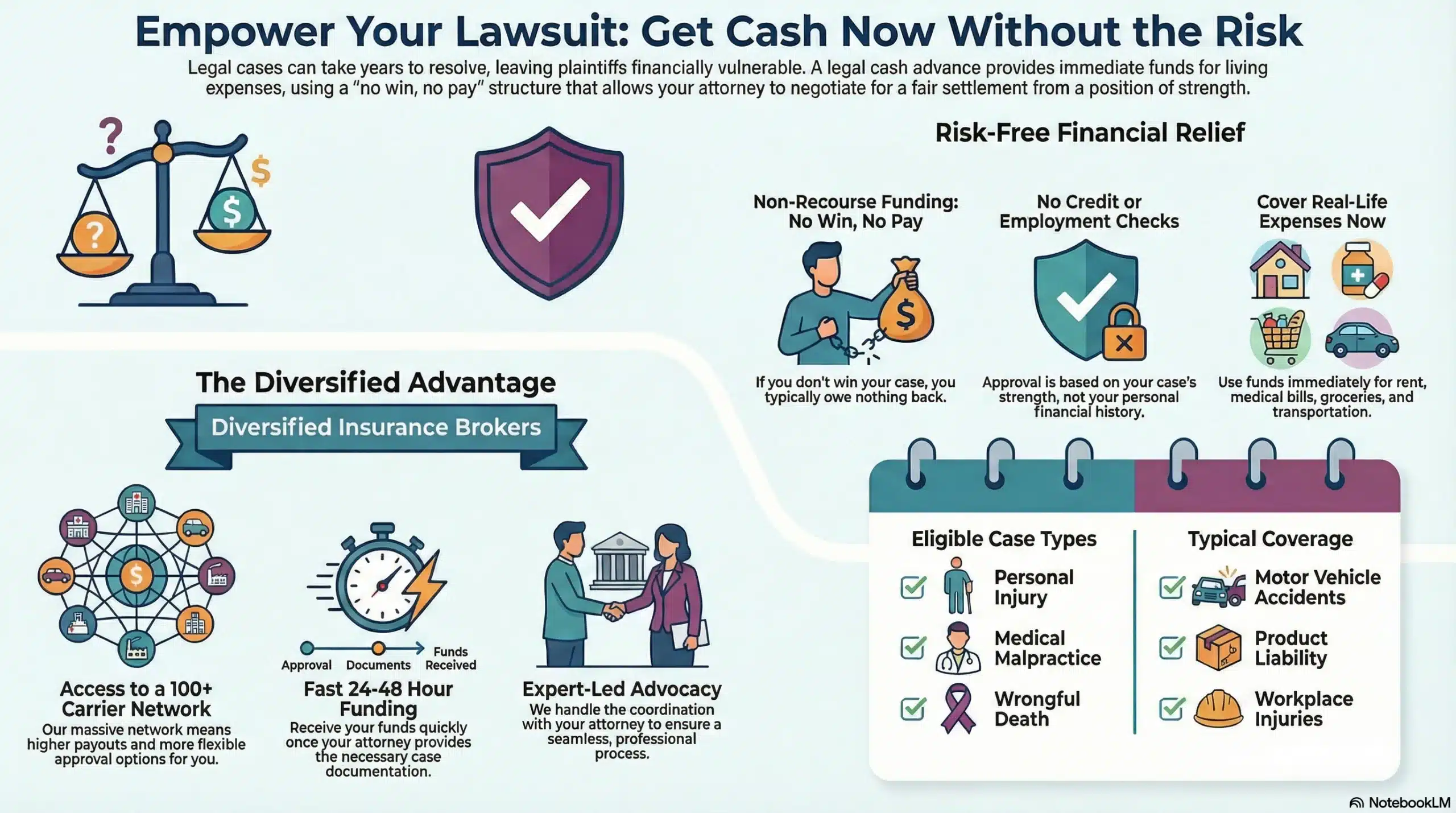
Waiting for a lawsuit to resolve can create intense financial pressure. Even strong personal injury and civil cases often take months—or longer—to reach settlement, while everyday expenses keep coming. Medical visits, prescriptions, rent or mortgage payments, utilities, car repairs, transportation, childcare, and basic living costs don’t pause just because a claim is pending. An advance on a lawsuit settlement is designed to help bridge that gap by letting plaintiffs access a portion of their expected recovery before a case officially concludes.
This type of funding is commonly called pre-settlement funding, legal funding, or a lawsuit cash advance. Despite the nickname “lawsuit loan,” it usually does not work like a traditional bank loan. In most situations the funding is non-recourse, meaning repayment is generally required only if your case successfully resolves through settlement or verdict. If there is no recovery, you typically do not repay the advance. That structure is important because it shifts the “repayment risk” away from the plaintiff and toward the funding company, which is why approvals are based more on case quality than on your credit score.
At Diversified Insurance Brokers, we help plaintiffs connect with reputable legal funding sources that evaluate cases based on merit—not credit, income, or employment history. Our role is to help you pursue the largest advance your case reasonably supports while keeping the process organized and coordinated with your attorney. When documentation is complete and the funder receives what they need, many clients can receive an approval decision quickly, and funding is often delivered in as little as 24–48 hours.
Apply for a Lawsuit Settlement Advance
Find out how much you may be able to access now—fast review, no credit checks, and no monthly payments.
Request an AdvanceWhat an Advance on a Lawsuit Settlement Really Is
A settlement advance is fundamentally different from a traditional loan. Banks and lenders look at your credit score, income, collateral, and debt-to-income ratio—and repayment is required regardless of outcome. Legal funding is different because it is primarily based on the strength, value, and expected timing of your legal claim. The funding company is evaluating whether a settlement or verdict is likely and whether there will be enough net recovery to repay the advance and still leave you meaningful proceeds.
To underwrite a case, a funder typically reviews liability (who is at fault), damages (injury severity and medical evidence), available insurance coverage, the defendant’s ability to pay, and the expected timeline to resolution. Based on that review, the funder may offer a cash advance that represents a portion of the anticipated net settlement after attorney fees and likely liens. When the case resolves, repayment typically comes directly from settlement funds held in the attorney’s trust account. This is one reason attorney cooperation matters: the funder needs verified case information, and the repayment is structured through the case proceeds.
Because funding costs can accrue over time, the most responsible approach is to request what you actually need—not the absolute maximum—and to make sure you understand how payoff amounts change if a case takes longer than expected. A transparent, well-structured advance can provide real relief. A poorly understood agreement can reduce your final net recovery more than you anticipated. That’s why a clear review process matters, and it’s why we encourage clients to treat legal funding as a tool—helpful when used carefully, harmful if used blindly.
How the Settlement Advance Process Works
The settlement advance process is designed to be straightforward, but it does require your attorney’s participation because the funding decision depends on verified documentation. In most cases, the process begins with a short request that helps route your case to the right funding source. The funder then coordinates directly with your attorney for the documents they need to review the claim.
Typically, the funder will request key items such as: a case status update, insurance information, liability facts, medical treatment summaries, and sometimes specific records or billing details. The exact list varies by case type, severity, and jurisdiction. Once the funder reviews the file, they may approve the request, deny it, or ask for additional information to clarify the strength of the claim and the expected recovery.
After approval, the funding company provides an agreement that outlines the advance amount, the repayment structure, and any applicable fees. When documents are signed, funds are released—often by ACH or wire transfer—so you can use the money immediately for living expenses, medical costs, or other urgent needs. Repayment occurs automatically from the settlement proceeds when the case concludes, typically through the attorney’s trust account.
Cases with clear liability, consistent medical treatment, and adequate insurance coverage often move faster. If your case is already settled but the payment is delayed due to lien resolution, insurer processing, or court approval, you may qualify for a post-settlement advance, which can sometimes be approved more quickly because the outcome amount is more defined.
How Much Can You Receive?
There is no single formula that fits every lawsuit. Settlement advances are structured to protect the integrity of the case while still ensuring you receive meaningful proceeds at resolution. Funding companies typically keep the advance to a conservative portion of expected net recovery. This is intentional: if a funder advances too much, it can create settlement pressure later and reduce the plaintiff’s net payout in a way that becomes counterproductive.
In most situations, the amount you may qualify for depends on factors like the strength of liability, policy limits, injury severity, medical documentation quality, jurisdiction, the defendant’s ability to pay, and the expected timeline to settlement. Existing liens, unpaid medical balances, and prior advances can also reduce the amount available because they affect the “net” that will remain after the case closes. If you’re unsure what your case may support, that’s normal. The only way to know for certain is to request a review and let the funder evaluate the file with your attorney.
If you want a faster sense of where you stand, reviewing related pages can help you understand how legal funding is typically structured. For example, injury lawsuit cash advances often focus on personal injury scenarios, while cash for lawsuit plaintiffs covers broader case situations and common underwriting factors.
Types of Cases That Commonly Qualify
Legal funding is most commonly available in personal injury and civil litigation matters where the plaintiff is represented by an attorney working on contingency. The contingency structure matters because it usually means the attorney is actively pursuing recovery and repayment can be coordinated directly through the settlement proceeds.
Common qualifying cases include auto accidents, commercial truck accidents, premises liability and slip-and-fall claims, workplace and third-party injury cases, product liability, catastrophic injury claims, and certain wrongful death cases. Medical malpractice claims may qualify as well, though underwriting is often more selective because these cases can be complex, expensive to litigate, and slower to resolve. If you are unsure whether your case type fits, applying for review is the fastest way to find out.
Some cases are harder to fund even if the injury is real. Funding may be less likely if liability is unclear, if the defendant has minimal insurance coverage, if treatment is inconsistent, or if the case is early with limited documentation. That doesn’t mean your case isn’t legitimate. It just means the funder may not be able to responsibly advance money without greater certainty of recovery. In those situations, it may be better to revisit funding later, once the case progresses and documentation becomes stronger.
Why Plaintiffs Use Legal Funding
Settlement advances are not only about paying bills. In many cases, access to funds helps plaintiffs avoid being forced into an undervalued settlement. Insurance carriers sometimes rely on financial strain to pressure plaintiffs into accepting lower offers. When you’re worried about rent, groceries, and treatment costs, it’s harder to wait for a fair outcome. Legal funding can help reduce that pressure so your attorney can negotiate from a stronger position and pursue full case value.
That said, funding is not “free money,” and it should be used with a plan. Funding costs generally increase over time, so the longer a case stays open, the more the payoff can grow. A good strategy is to use legal funding to solve a specific problem—catching up on housing, continuing treatment, preventing utility shutoffs—rather than treating it like a long-term income replacement. If you can reduce the size of the advance, you generally protect more of your net recovery later.
Some plaintiffs also explore alternatives that can reduce the need for funding. Depending on your situation, medical liens, provider payment plans, PIP or MedPay benefits, family assistance, or short-term budgeting changes may lower the amount you need to advance. Funding is often most valuable when it prevents a major financial disruption—not when it simply increases spending.
Pre-Settlement vs. Post-Settlement Advances
Pre-settlement advances are requested while liability and damages are still being negotiated and the case is still open. Because the outcome is not finalized, these advances carry more risk, and underwriting is typically more conservative. The funder may advance less and may require more documentation to justify the decision.
Post-settlement advances are requested after a settlement has been reached but the funds are delayed. Delays can happen due to lien negotiations, insurer processing times, court approvals, or structured settlement paperwork. Because the recovery amount is more defined, post-settlement advances often qualify for faster review and may allow for different advance structures. If you’re in this situation, the page Need Money Before Settlement can help explain common delay scenarios and what to expect.
Understanding Non-Recourse Funding and “No Monthly Payments”
One of the reasons settlement advances can feel different from other borrowing is that there are typically no monthly payments. That can be a relief when income has been disrupted and you’re already facing new expenses. With non-recourse funding, repayment is generally tied to a successful case outcome. If the case does not resolve in your favor, you usually do not repay the advance.
However, “no monthly payments” does not mean “no cost.” Funding agreements typically include a fee structure that accrues over time. The details can vary widely. That’s why reading the agreement carefully matters. You should understand how the payoff changes over time, whether the structure is simple or compounded, and how the agreement handles long timelines. A responsible funder will disclose these terms clearly. A responsible plaintiff should treat funding as short-term support, not a long-term substitute for income.
If you’re not sure what questions to ask, that’s where our coordination role helps. We help you and your attorney keep the process organized so you can compare funding offers and understand the real financial impact. The goal is relief now without unnecessary surprises later.
How to Improve Approval Odds and Keep the Process Fast
Because funding is case-based, the fastest approvals usually happen when documentation is clear and communication with the attorney is prompt. If your attorney can provide a concise case summary, treatment records, and liability information quickly, a funder can make a decision faster. Completed treatment or a clear treatment plan can also help because it clarifies damages. Adequate insurance coverage is another key factor; funding is harder when policy limits are low or uncertain.
Another overlooked factor is making sure there are no conflicting agreements. If you already have a prior advance, the funder needs to see it because it affects how much net recovery remains. It doesn’t automatically disqualify you, but it changes the numbers. The more transparent the file is, the smoother the process tends to be.
Financial Stability While Your Case Is Pending
A pending lawsuit often overlaps with disrupted income, work limitations, and increased medical needs. While legal funding can help bridge a short-term gap, some plaintiffs also explore ways to stabilize the rest of their finances so the lawsuit timeline doesn’t create long-term damage. Depending on circumstances, that may include temporary health solutions such as short-term health insurance, income protection through disability insurance, or family protection planning through life insurance.
These tools don’t replace a settlement advance. They can, however, reduce the amount you need to advance and help you stay financially stable while your attorney works to resolve your case. For some people, even a modest amount of protection in the right place can prevent a temporary disruption from becoming a long-term financial setback.
Why Work With Diversified Insurance Brokers for Legal Funding?
Not every legal funding source is the same. Terms, transparency, speed, and underwriting approach can vary widely. Our role is to help you connect with reputable funding sources and keep the process efficient by coordinating with your attorney. Because approvals are based on case quality—not credit—plaintiffs often benefit from working with a team that understands how funders evaluate claims and what documentation is needed to support a strong request.
We also encourage responsible funding strategy. The “largest possible advance” is only helpful if it still leaves you meaningful proceeds when your case resolves. A good plan is to solve the immediate problem you’re facing while protecting your future net recovery as much as possible. If you’re exploring legal funding because you feel forced into it, that’s a sign you should request a review quickly and weigh options carefully.
Request a Settlement Advance Review
We coordinate directly with your attorney to pursue the strongest available funding option for your case.
Apply NowRelated Pages
Financial Protection Essentials
High-risk life insurance planning, disability income protection with COLA, and financial institution reviews.
Talk With an Advisor Today
Choose how you’d like to connect—call or message us, then book a time that works for you.
Schedule here:
calendly.com/jason-dibcompanies/diversified-quotes
Licensed in all 50 states • Fiduciary, family-owned since 1980
FAQs: Advance on Lawsuit Settlement
Is a lawsuit settlement advance a loan?
It’s often called a “lawsuit loan,” but most settlement advances are non-recourse legal funding. Repayment is typically required only if your case results in a settlement or verdict. If there is no recovery, you generally do not repay. You can review how this structure works in what is pre-settlement funding.
Are there credit checks or employment requirements?
Usually no. Funding decisions are generally based on the strength and expected value of the case, not your credit score or job history. Many providers explain this in how pre-settlement funding works.
How fast can I receive money?
Timing depends on how quickly the funder receives documentation from your attorney. In many situations, once documentation is complete, funds may be delivered quickly. Options for faster access are discussed at lawsuit funding fast legal cash advances.
How much can I qualify for?
Advance amounts vary. Funders typically offer a conservative portion of the expected net recovery after attorney fees and likely liens. For typical ranges, see how much you can get from pre-settlement funding.
Do I need my attorney’s approval?
Your attorney’s cooperation is usually required because the funder needs verified case information and repayment is typically coordinated through settlement proceeds held in trust. Learn more at get cash before lawsuit settles.
What types of cases are commonly funded?
Many funded cases are personal injury matters such as auto accidents, truck accidents, premises liability, and other civil claims. Specialized case types like medical malpractice lawsuit funding may also qualify depending on circumstances.
How do repayment and fees work?
Repayment generally occurs from settlement proceeds when the case resolves. Agreements usually include a fee structure that can increase over time. Reviewing the pros and cons of pre-settlement funding can help you understand total payoff considerations.
What’s the difference between pre-settlement and post-settlement funding?
Pre-settlement funding is requested while the case is still pending. Post-settlement funding is requested after a settlement is reached but payment is delayed. Broader funding structures are outlined in legal funding fast pre-settlement cash advances.
Can multiple advances reduce my final settlement?
They can. Because fees typically grow over time and advances reduce net proceeds, it’s usually best to request only what you truly need. Consider whether pre-settlement funding is worth it before stacking advances.
Will getting funding affect my case?
Legal funding does not change liability or damages, but large advances can increase pressure to settle sooner. Responsible use—such as explained in settlement funding access options—can help manage this balance.
About the Author:
Jason Stolz, CLTC, CRPC and Chief Underwriter at Diversified Insurance Brokers, is a senior insurance and retirement professional with more than two decades of real-world experience helping individuals, families, and business owners protect their income, assets, and long-term financial stability. As a long-time partner of the nationally licensed independent agency Diversified Insurance Brokers, Jason provides trusted guidance across multiple specialties—including fixed and indexed annuities, long-term care planning, personal and business disability insurance, life insurance solutions, and short-term health coverage. Diversified Insurance Brokers maintains active contracts with over 100 highly rated insurance carriers, ensuring clients have access to a broad and competitive marketplace.
His practical, education-first approach has earned recognition in publications such as VoyageATL, highlighting his commitment to financial clarity and client-focused planning. Drawing on deep product knowledge and years of hands-on field experience, Jason helps clients evaluate carriers, compare strategies, and build retirement and protection plans that are both secure and cost-efficient.
