
Alternative Investments the Wealthy Use
Alternative investments the wealthy use tend to share one defining trait: they are evaluated through a repeatable, documented process — not through hype or narrative. High-net-worth investors typically begin with a clear mandate for what the capital must accomplish, then evaluate opportunities through governance, liquidity planning, and risk controls. The objective is not novelty. The objective is a portfolio that can pursue opportunities beyond traditional stocks and bonds while maintaining discipline, transparency, and alignment to long-term planning goals.
At Diversified Insurance Brokers, Concierge Wealth Services is designed to help qualified clients explore how sophisticated investors think about alternatives — especially the frameworks that support better decisions: risk budgeting, documentation standards, liquidity planning, and rules-based oversight. For broader context on the approach, see Beyond Insurance: Exclusive Wealth Strategies.
Important: Diversified Insurance Brokers does not offer securities or investment advice and does not make investment recommendations. If appropriate, we may facilitate an introduction to an independent SEC-registered investment adviser who evaluates objectives, constraints, and suitability under their regulatory framework.
Request a Confidential Conversation
If you’re exploring alternatives and want a process-driven discussion, request a confidential conversation. We’ll confirm fit and qualifications and, if appropriate, facilitate an introduction to our independent advisory partner.
Diversified Insurance Brokers does not offer securities or investment advice and does not make investment recommendations. Any investment advisory services are provided exclusively through an independent SEC-registered investment adviser.
1) Process Before Product
Sophisticated investors rarely begin with “What’s hot right now?” They begin with “What job does this capital need to do?” That shift sounds simple, but it fundamentally changes how opportunities are evaluated. Instead of chasing recent performance or category momentum, they define success criteria first — income stability, portfolio diversification across market environments, downside risk management, inflation sensitivity, or long-term compounding — and then map an opportunity set that can serve those defined roles without letting narrative or marketing replace analytical clarity.
A process-first approach also reduces the risk of building a portfolio around stories rather than structure. High-net-worth investors typically require that the rules of the road are defined before allocations are made: how risk is measured and monitored, what exposure constraints exist, what reporting will be provided throughout the holding period, and what the plan looks like during periods of stress. The goal is to make decisions repeatable and explainable — governed by documented criteria rather than by market sentiment or headline momentum. When conditions become uncomfortable, documented process is what keeps decisions consistent and prevents reactive changes that convert short-term discomfort into permanent capital loss.
If you want to see how this lens looks at the portfolio construction level, the principles are outlined in Institutional-Grade Portfolio Construction, where governance and documentation are treated as prerequisites rather than afterthoughts.
2) Why the Wealthy Allocate Beyond Stocks and Bonds
Alternative investments can help address structural challenges that traditional stock-and-bond portfolios sometimes struggle to resolve: concentrated risk in specific sectors or market regimes, sequence-of-returns risk in distribution phase portfolios, overdependence on equity market performance as the primary engine of growth, and the difficulty of generating stable income without accepting excessive duration or credit risk in fixed income. Many high-net-worth families explore alternatives because they want more tools to intentionally design how a portfolio behaves across different economic environments — growth cycles, tightening cycles, inflationary periods, and risk-off events — rather than accepting whatever the public markets produce in any given year.
This does not mean alternatives are inherently safer or uniformly superior to public market allocations. It means they can be different in ways that add genuine value when that difference is intentionally sized, properly governed, and aligned to the portfolio’s liquidity needs and risk budget. Affluent investors typically treat alternatives as a complement to core public market allocations — adding building blocks with different return drivers, different liquidity profiles, and different correlation characteristics — rather than replacing public markets entirely. The portfolio becomes less dependent on a single driver, and more resilient across the range of outcomes that long time horizons produce.
That portfolio diversification mindset is expanded further in Curated Investment Access, where the emphasis remains on alignment to objectives, documentation discipline, and a rigorous introduction process rather than category promotion.
3) Liquidity and Access — The Constraint That Governs Everything Else
Alternatives often come with longer time horizons, limited redemption windows, capital call schedules, and lockup periods that can surprise investors accustomed to daily liquidity in public markets. Wealthy investors typically do not treat those constraints as minor footnotes — they plan explicitly around them. Liquidity is treated as a portfolio design feature that must be established before any illiquid allocation is sized: liquid reserves cover near-term obligations and unexpected needs, while longer-term capital can be positioned for opportunities that require patience and a multi-year holding commitment.
This is one reason affluent families often maintain a structured “liquidity ladder” — capital segmented by time horizon and purpose so that lifestyle spending, tax obligations, planned capital expenditures, and business needs can be met without forcing liquidation of illiquid holdings at unfavorable times or under pressure. When alternatives are incorporated responsibly into a portfolio, liquidity is a managed and planned variable. When they are incorporated carelessly — oversized relative to the liquid reserves available — liquidity becomes the mechanism through which investors make their most damaging decisions during market stress. The interaction between portfolio liquidity planning and investment timing is explored in the context of Sequence of Returns Risk, which illustrates how withdrawal timing and liquidity planning can produce dramatically different outcomes from portfolios with otherwise identical long-run returns.
4) Risk Budgeting and Volatility Awareness
Alternatives can sometimes appear “calm” because they do not trade daily on public exchanges and do not display the visible price fluctuations that characterize stocks and bonds. But calm valuation reporting is not the same as low economic risk. Private investments can contain substantial embedded risks — credit events, counterparty exposure, leverage that amplifies both gains and losses, valuation uncertainty from infrequent mark-to-market processes, and operational risk from the complexity of underlying strategies. A portfolio that appears stable in quarterly statements may be carrying significant unrealized economic risk that only surfaces when refinancing conditions tighten or market conditions change.
Sophisticated investors manage this through risk budgeting: sizing exposures based on total portfolio risk rather than expected return alone. Instead of asking only “How much can I make?”, a risk-budget framework asks “How much risk am I taking with this allocation, and how does that risk interact with the rest of the portfolio under stress?” That naturally leads to scenario thinking — evaluating how an allocation behaves under rising interest rates, tighter liquidity conditions, widening credit spreads, recession risk, or a broader regime shift in investor risk appetite. For an overview of objective risk discipline that does not rely on subjective judgment during adverse markets, see Quantitative Risk Management.
5) Governance, Oversight, and Documentation Standards
Governance matters as much as returns when evaluating alternative investments over a multi-year holding period. High-net-worth investors and family offices typically require clear and enforceable reporting standards, periodic review processes with documented criteria, and written documentation that defines what a strategy is permitted to do — not just what it intends to do. That documentation typically includes risk limits, leverage constraints, liquidity terms, performance reporting standards, and the decision rules that govern when conditions have changed enough to warrant review or position adjustment.
This oversight structure reduces the probability that a portfolio becomes a collection of disconnected “deals” accumulated opportunistically without coherent portfolio logic. With governance in place, alternative allocations become purpose-driven building blocks — each with a defined role in the overall portfolio, measurable performance expectations, and clear criteria for continuation or exit. In that framework, an allocation is not justified by a compelling story or a recent performance period; it is justified by fit within the policy, structural governance, and documented risk controls. For deeper context on process and oversight standards, the framework is described in Institutional-Grade Portfolio Construction.
6) Practical Frameworks for Evaluating Alternatives
Many affluent investors evaluate alternatives through a repeatable evaluation framework focused on alignment, transparency, structural durability, and survivability under stress — rather than evaluating opportunities based on marketing materials, past performance, or category momentum. The goal is to confirm that the strategy’s structure matches stated objectives and that governance controls are real rather than cosmetic, especially during periods when liquidity is scarce and market conditions are challenging.
Practical evaluation dimensions typically include incentive alignment between the manager and investors, operational controls and compliance infrastructure, transparency of fees and counterparty relationships at every level, valuation methodology and the frequency and independence of valuation reviews, reporting cadence and the depth of position-level disclosure, liquidity terms including any gates, lockups, extension features, or redemption restrictions, and scenario behavior under adverse conditions — not just under favorable assumptions. A disciplined review also explicitly asks what can go wrong and how the strategy is expected to respond — because any manager who cannot clearly articulate the stress-path is not one whose process can be responsibly governed over time. For an institutional-style baseline on decision rules and documentation standards, Institutional-Grade Portfolio Construction provides useful context.
7) Strategic Diversification, Not Speculation
The ultra-wealthy typically treat alternatives as components of total-portfolio construction — not as standalone bets or speculative positions justified by a compelling narrative. Their objective is portfolio resilience: the ability to sustain performance across growth cycles, tightening cycles, inflationary periods, and risk-off environments without relying on a single factor or market regime as the primary driver of outcomes. That resilience is what allows a well-constructed portfolio to remain on its intended long-term path rather than requiring difficult reactive decisions during adverse market periods.
This is why the most meaningful benefit of alternatives is often not the “best case” return scenario. It is the ability to design a portfolio with more intentional risk exposure profile, more flexibility around liquidity at the total portfolio level, and better alignment between the portfolio’s actual behavior and the investor’s real-world objectives across different environments. For a complementary perspective on how disciplined systems and process-first frameworks produce consistent long-term outcomes, see Discover What the Top 0.1% Already Know.
8) Common Alternative Categories Wealthy Investors Explore
“Alternatives” is a broad descriptive label. In practice, affluent investors explore specific categories that can serve defined portfolio functions — income stability, inflation sensitivity, diversification relative to public equity, or defensive characteristics during risk-off environments. The key is never the category name in isolation — it is whether the specific structure, governance, and risk profile of the opportunity genuinely matches the role it is intended to play in the portfolio and whether the terms are appropriate given the investor’s liquidity needs and risk capacity.
Some investors explore private credit structures for income-oriented exposure that is less correlated with public fixed income. Others explore real assets — infrastructure, real estate, natural resources — for inflation-sensitive characteristics and cash-flow stability that differs from equity returns. Some explore institutional-style risk-managed strategies designed to control portfolio volatility through systematic rules and quantitative constraints. Still others explore private equity for long-horizon growth oriented toward operational value creation rather than public market appreciation. Each category involves its own liquidity terms, governance standards, risk drivers, and fee structures — all of which require explicit evaluation rather than assumption. For a high-level discussion of how affluent investors think about these categories beyond public markets, start with What Do the Wealthy Invest In Beyond the Stock Market.
9) How Concierge Wealth Services Fits
Concierge Wealth Services is built for qualified clients who want an organized, compliant pathway to explore institutional-style thinking, risk frameworks, and opportunity evaluation. The emphasis remains on process throughout: defining objectives clearly, understanding liquidity needs and constraints honestly, and confirming that any exploration of private market opportunities happens inside a disciplined, documented structure rather than driven by narrative or market timing.
Diversified Insurance Brokers does not offer securities or investment advice and does not make investment recommendations. If appropriate, we facilitate introductions to an independent SEC-registered investment adviser who evaluates objectives, constraints, and risk tolerance and determines suitability under their regulatory framework. To understand the overall experience and what qualified clients can expect, visit Concierge Wealth Services. For a straightforward walk-through of what to expect from the introduction process, see An Invitation to Explore More.
Request Information & Qualification Review
Use our secure form to request a confidential conversation. We’ll confirm fit and qualifications and, if appropriate, coordinate a next-step introduction to the independent adviser.
Diversified Insurance Brokers does not offer securities or investment advice and does not make investment recommendations. Advisory services, if any, are provided exclusively by an independent SEC-registered investment adviser under their regulatory framework.
Related Topics to Explore
Explore adjacent concepts on how sophisticated investors think about alternatives, risk, and institutional decision-making.
Request a Confidential Conversation
📞 Call us at 800-533-5969
or visit our Contact Page
Important: We do not provide securities or investment advice. If appropriate, we may introduce you to an independent SEC-registered investment adviser for evaluation under their regulatory framework.
Alternative Investments the Wealthy Use — Frequently Asked Questions
Alternative investments are investment categories outside the traditional public markets of stocks, bonds, and cash equivalents. The term “alternative” describes primarily how you access the investment and how you experience liquidity — not a single unified category of risk or return. Private equity, private credit, real assets, hedge fund strategies, and infrastructure investments are all considered alternatives, though they behave very differently from each other in terms of return drivers, risk characteristics, liquidity terms, and governance requirements. What they share is that access is typically less immediate than purchasing shares of a publicly traded fund, holding periods are often measured in years rather than days, and the information available to evaluate them is less standardized than what public markets provide. For broader context on how sophisticated investors think about portfolio behavior across different market environments, our resource on investment risk analysis provides a useful framework.
Many alternative investment opportunities are limited to accredited investors or qualified purchasers under SEC eligibility rules. Accredited investor status under current SEC rules generally requires either a net worth exceeding $1 million excluding primary residence, or annual income exceeding $200,000 individually ($300,000 jointly with a spouse) in each of the two most recent years with a reasonable expectation of the same in the current year. Qualified purchaser status applies a higher threshold based on investment assets owned. Eligibility is a legal access question — it determines who is permitted to participate in certain offering types under applicable securities law. Suitability is a separate question determined by the independent adviser under their regulatory framework and processes. Information about eligibility standards under SEC rules is available at What Is an Accredited Investor?
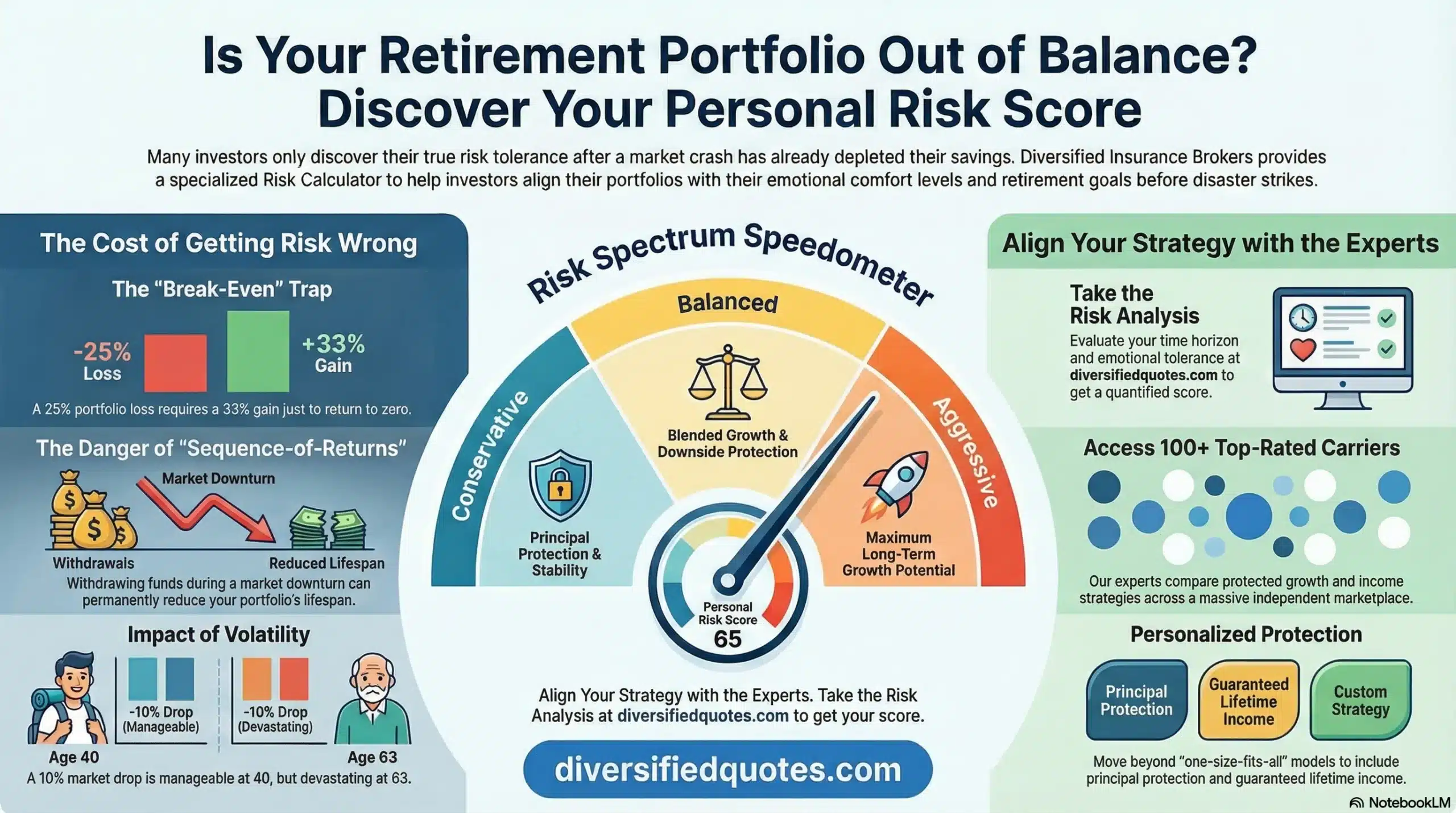
No — and this is one of the most important misconceptions about alternatives to address clearly. Alternatives do not reduce economic risk; they change how risk is experienced and when it becomes visible. Because many private investments are valued infrequently — quarterly or less often — they do not display the daily price fluctuations that characterize public stocks and bonds. This can make a portfolio’s reported volatility appear lower than the actual economic risk warrants. The real risks in alternative investments — credit events, counterparty exposure, leverage that amplifies losses as well as gains, valuation uncertainty from infrequent mark-to-market processes, and operational risk — are genuine and can be substantial. Alternatives can be legitimately useful for introducing different return drivers and reducing correlation with public market returns. But their appropriate use depends entirely on how they are sized relative to total portfolio risk, governed through documented processes, and aligned to liquidity needs. An allocation to alternatives is not inherently a risk-reduction decision — it is a portfolio design decision that requires the same disciplined evaluation as any other allocation. Our investment risk calculator provides broader context for thinking about allocation-level risk.
High-net-worth investors explore alternatives for several connected reasons, most of which relate to portfolio design rather than return maximization alone. Alternatives can introduce return drivers that are less correlated with public equity and fixed income markets, potentially reducing the degree to which the entire portfolio moves together during market stress. They can provide access to risk premia — such as the illiquidity premium — that are not available through public market investments. They can enable more intentional design of how a portfolio behaves across different macroeconomic environments: growth cycles, inflationary periods, rising rate environments, and risk-off events. And they can provide income characteristics, inflation sensitivity, or defensive characteristics that complement rather than duplicate existing public market exposure. The motivation is portfolio resilience and intentional design — not simply “more return” — and the approach requires the same process discipline applied to any other allocation decision. Strategic income considerations in sophisticated portfolios are also discussed in why the top 1% use structured income solutions instead of bonds.
Liquidity risk is the risk that capital cannot be accessed quickly and at full value when it is needed — either because there is no market for the position, because the investment’s terms restrict redemption, or because selling would require accepting a significant discount from fair value. Many alternative investments have lockup periods, limited redemption windows, capital call schedules that require investors to fund commitments on the manager’s timeline, and distribution patterns that are not synchronized with investor needs. This creates a specific planning requirement: the investor must ensure that the capital committed to illiquid alternatives is genuinely long-term capital that will not be needed to fund spending, taxes, or other obligations during the lockup period. Affluent investors address this through liquidity laddering — explicitly segmenting capital by time horizon and purpose before making any illiquid commitment — and through commitment pacing that spreads exposure across multiple vintage years rather than committing all at once. When liquidity planning is done correctly, alternatives can be allocated responsibly. When it is ignored, illiquidity becomes the mechanism through which investors make their most damaging decisions during periods of financial stress or changing needs.
Risk budgeting is a portfolio management framework that sizes each investment allocation based on its contribution to total portfolio risk rather than primarily on its expected return. Instead of asking “how much can I make with this allocation?”, a risk budget framework asks “how much risk am I adding to the total portfolio, and how does that risk interact with existing holdings under different market conditions?” This approach requires estimating the volatility, correlation, tail risk, and stress behavior of each allocation — including alternatives whose infrequent valuation may make those estimates more challenging. Applied to alternatives, risk budgeting ensures that no single allocation dominates the portfolio’s total risk profile, that the combined illiquidity of the portfolio does not exceed what the investor’s liquidity map can absorb, and that the overall portfolio can withstand adverse scenarios without requiring forced sales or policy abandonment. The alternative to risk budgeting — sizing positions based on return expectations and expected performance — tends to produce portfolios that are overly concentrated, underly diversified, and behaviorally fragile when conditions deviate from optimistic assumptions.
Sophisticated investors evaluate alternatives through a repeatable, documented framework that focuses on structural and governance factors rather than narrative. The evaluation typically covers: alignment between manager incentives and investor outcomes (fee structure, performance incentive design, co-investment requirements), operational infrastructure and compliance controls, transparency of fees at every level including underlying investment expenses, valuation methodology and the independence and frequency of valuation review, reporting cadence and the depth of position-level disclosure, liquidity terms including any lockup periods, extension rights, redemption restrictions or gates, and scenario behavior under adverse conditions — specifically what happens when refinancing becomes expensive, credit spreads widen, demand softens, or market conditions deteriorate. A manager who cannot clearly and specifically articulate the strategy’s behavior under stress has not earned serious consideration regardless of how compelling the favorable-case narrative sounds. Marketing materials describe opportunities; due diligence processes evaluate whether those opportunities are what they appear to be under conditions that are less favorable than the presentation assumed.
No. Diversified Insurance Brokers does not offer securities or investment advice and does not make investment recommendations about specific alternative investments or any other securities. The content on this page is provided for educational purposes to explain how sophisticated investors think about alternatives — the frameworks, processes, and evaluation criteria they apply — not to recommend any specific investment product or strategy. If appropriate, qualified clients who are interested in exploring private market opportunities may be introduced through Concierge Wealth Services to an independent SEC-registered investment adviser. That adviser evaluates the client’s objectives, constraints, risk capacity, and suitability under their own regulatory framework, and provides their own disclosures, fee schedules, and advisory services under their own regulatory obligations. All investment decisions, recommendations, and ongoing advisory services are the responsibility of the SEC-registered adviser, not of Diversified Insurance Brokers.
Diversified Insurance Brokers serves as a high-touch facilitation resource for qualified clients who want to explore institutional-style thinking, risk frameworks, and alternative investment concepts through a compliant, organized process. Our role is to facilitate the introduction to an independent SEC-registered investment adviser — confirming qualification, organizing the initial conversation, explaining the introduction process, and connecting the client to the advisory relationship if the fit is appropriate. We do not manage investments, make portfolio recommendations, provide securities advice, or participate in the advisory relationship that follows the introduction. All investment advisory services, portfolio recommendations, fees, and ongoing oversight are handled exclusively by the independent SEC-registered investment adviser under their own regulatory framework. If you want to understand the full introduction process before deciding whether to proceed, see An Invitation to Explore More.
The best starting point is to request a confidential qualification review using the form on this page. The qualification conversation is not a sales process — it is a structured conversation designed to understand your objectives, liquidity needs, risk constraints, and financial situation, and to confirm whether exploring private market or alternative investment concepts through an introduction to our independent advisory partner makes sense given your specific circumstances. If it does, we coordinate the introduction and the independent adviser takes it from there under their regulatory framework and process. If the fit is not right at this time, we will say so clearly. The goal is a process that is transparent, efficient, and genuinely aligned to your interests — not one that pushes toward a predetermined outcome. To understand what the experience looks like from the beginning, see Curated Investment Access for context on how the curated process operates.
About the Author:
Jason Stolz, CLTC, CRPC, DIA, CAA and Chief Underwriter at Diversified Insurance Brokers (NPN 20471358), is a senior insurance and retirement professional with more than 25 years of real-world experience helping individuals, families, and business owners protect their income, assets, and long-term financial stability. As a long-time partner of the nationally licensed independent agency Diversified Insurance Brokers, Jason provides trusted guidance across multiple specialties—including fixed and indexed annuities, long-term care planning, personal and business disability insurance, life insurance solutions, Group Health, Travel Medical and Evacuation Insurance, and short-term health coverage. Diversified Insurance Brokers maintains active contracts with over 100 highly rated insurance carriers, ensuring clients have access to a broad and competitive marketplace.
His practical, education-first approach has earned recognition in publications such as VoyageATL, and contributions from his agency featured in Kiplinger and GoBankingRates— highlighting his commitment to financial clarity and client-focused planning. Drawing on deep product knowledge and years of hands-on field experience, Jason helps clients evaluate carriers, compare strategies, and build retirement and protection plans that are both secure and cost-efficient. Visitors who want to explore current annuity rates and compare options across multiple insurers can also use this annuity quote and comparison tool.
Browse More Resources: Return to our complete Wealth Strategies & General Resources guide — covering wealth building, tax strategies, fiduciary, wills & broker resources.
Last Reviewed: May 11, 2026 |
Reviewed by: Jason Stolz, CLTC, CRPC, DIA, CAA
Chief Underwriter, Diversified Insurance Brokers, Inc. | NPN: 20471358 | Diversified Insurance Brokers, Inc. — Licensed in all 50 states
Fact Checked by: Tonia Pettitt, CMIP©
Medicare Specialist, Diversified Insurance Brokers, Inc. | NPN: 14374308 | Diversified Insurance Brokers, Inc. — Licensed in all 50 states
Did you find this content helpful? Leave us a Google review — it helps others find trustworthy guidance too.
Editorial Standards: Diversified Insurance Brokers maintains rigorous editorial standards to ensure accuracy, clarity, and independence in all content. Learn more about our editorial standards and commitment to transparency.
