
Disability Insurance for the Agriculture Industry

Jason Stolz CLTC, CRPC
Disability insurance for the agriculture industry is one of the most important forms of financial protection for individuals whose livelihoods depend on physical labor, operational oversight, and consistent productivity. Farming, ranching, and agricultural work require a combination of strength, endurance, technical skill, and long hours in unpredictable environments. If an injury or illness prevents you from working, income can stop immediately while expenses continue.
Agricultural professionals face risks that extend beyond most traditional occupations. Heavy machinery, livestock, weather exposure, and repetitive physical strain all contribute to a higher likelihood of disability. Whether you are a farm owner, equipment operator, or agricultural worker, your ability to generate income is directly tied to your physical and mental capacity to perform your role.
At Diversified Insurance Brokers, we help individuals in agriculture structure disability insurance policies that reflect real-world risks. A properly designed policy provides income continuity when your ability to work is interrupted, allowing you to focus on recovery without financial disruption.
Protect Your Income in Agriculture
Compare disability insurance options designed for farmers, ranchers, and agricultural professionals.
Why Disability Insurance Is Critical in Agriculture
The agriculture industry presents a unique combination of financial and physical risk. Unlike salaried employees who may have access to employer benefits, many agricultural workers are self-employed or operate within family-run businesses. This means there is often no built-in safety net if income stops.
If a farmer is unable to plant, harvest, manage livestock, or oversee operations, the financial consequences can be immediate and severe. Bills, equipment payments, land costs, and labor expenses do not pause when an injury occurs. Disability insurance ensures that income continues even when work cannot.
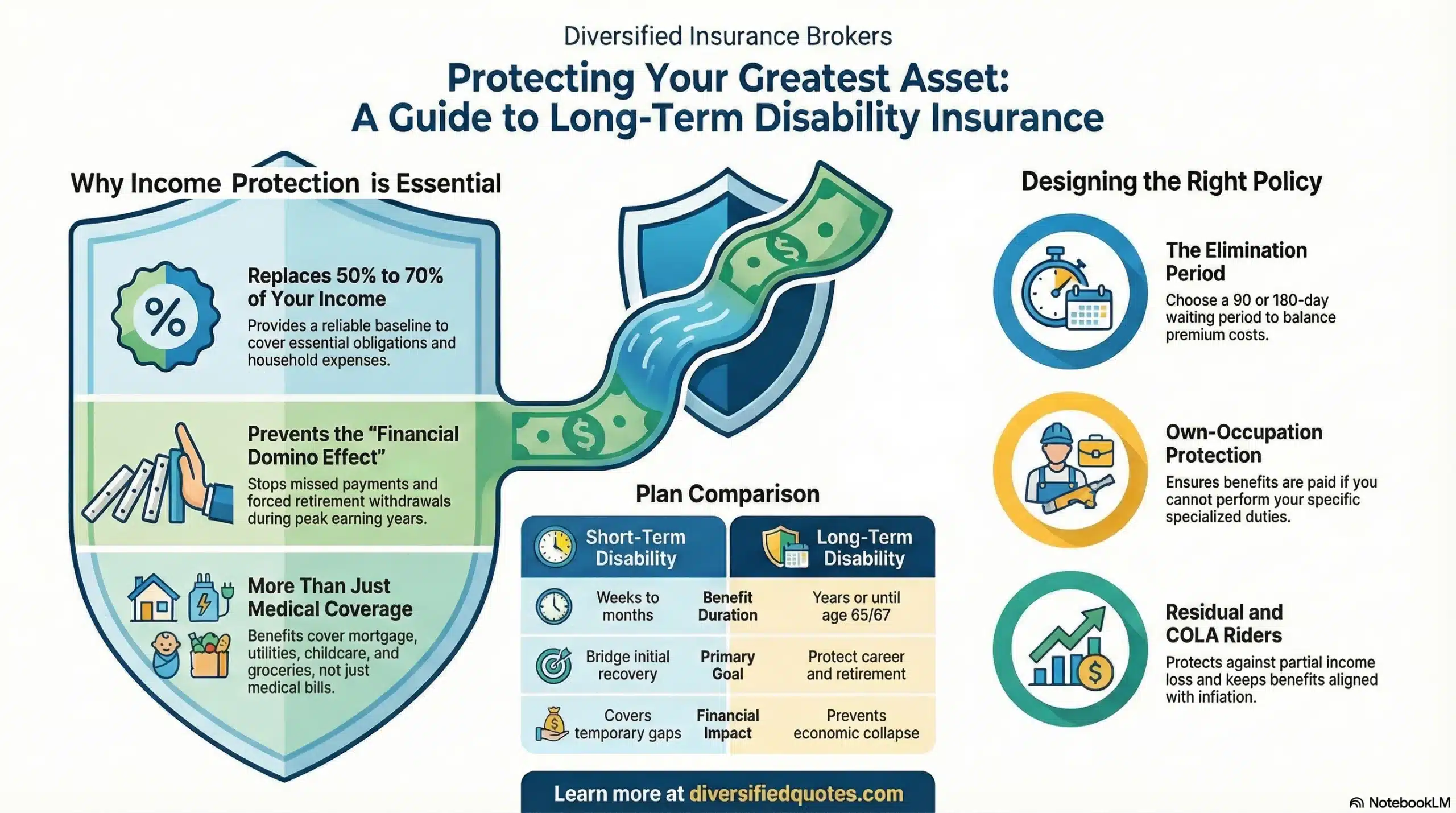
While some individuals explore broader solutions such as disability insurance for professionals, agricultural workers require coverage tailored to physically demanding and unpredictable environments.
The Physical Demands of Agricultural Work
Agriculture is one of the most physically intensive industries. Daily tasks often involve lifting heavy materials, operating machinery, handling livestock, and working in extreme weather conditions. These demands place continuous strain on the body, increasing the likelihood of both acute injuries and long-term wear and tear.
Unlike office-based roles, there is little opportunity to modify duties if an injury occurs. A back injury, joint issue, or repetitive strain condition can immediately limit the ability to perform essential tasks. Even minor injuries can escalate into serious problems if the body does not have time to recover.
Additionally, agricultural work often involves long hours during peak seasons. This lack of downtime increases the risk of fatigue-related injuries and chronic conditions that develop over time.
Income Volatility and Financial Exposure
Income in agriculture is rarely consistent. Seasonal cycles, market fluctuations, and environmental factors all influence earnings. This variability makes it even more important to protect income during periods when work cannot be performed.
If a disability occurs during a critical season such as planting or harvest, the financial impact can extend far beyond immediate income loss. Missed opportunities can affect the entire year’s revenue, making recovery even more challenging.
Disability insurance provides stability by replacing a portion of income, allowing agricultural professionals to maintain financial obligations even when operations are disrupted.
Case Study: Farmer Earning $85,000 Per Year
Consider a farmer earning $85,000 annually. If this individual suffers a serious injury that prevents them from working for five years, the financial impact can be substantial.
| Scenario | Without Disability Insurance | With Disability Insurance |
|---|---|---|
| Annual Income | $0 | $50,000–$60,000 |
| 5-Year Income | $0 | $250,000–$300,000 |
| Financial Outcome | Severe financial strain | Income stability |
This example highlights how disability insurance can protect long-term income and reduce financial disruption during recovery.
Designing a Policy for Agricultural Professionals
Disability insurance for agriculture must be carefully structured to reflect income variability and physical risk. Benefit amounts should align with average earnings, while benefit periods should consider the potential for extended recovery times.
Elimination periods should be selected based on available savings. Longer waiting periods can reduce premiums, while shorter periods provide faster financial support. The right balance depends on your financial situation and risk tolerance.
Planning may also involve coordinating disability insurance with other protections such as critical illness insurance to create a more comprehensive financial safety net.
Why Work with an Independent Disability Insurance Broker
Not all disability insurance policies are created equal, especially for high-risk industries like agriculture. Working with an independent broker allows you to compare multiple carriers and find coverage that fits your specific needs.
An independent approach focuses on strategy, ensuring that your policy aligns with your income, occupational risk, and long-term goals. This often results in stronger coverage and better value.
To better understand the advantages, review why working with an independent disability insurance broker matters.
Integrating Disability Insurance Into Your Financial Plan
Disability insurance is a foundational component of financial planning in agriculture. It works alongside savings, investments, and other forms of protection to create stability in an unpredictable industry.
Because your income depends on your ability to work, protecting that income ensures that your long-term financial goals remain achievable even during periods of disruption.
Exploring complementary strategies such as fixed index annuities can help provide additional long-term financial security.
Final Thoughts
The agriculture industry demands resilience, consistency, and physical capability. Disability insurance ensures that if your ability to work is compromised, your financial life remains stable. It provides income protection, peace of mind, and the ability to recover without financial pressure.
A well-structured policy protects not only your current income but also your future financial goals. Working with an experienced broker ensures that your coverage is aligned with the realities of agricultural work.
Related Pages
Financial Protection Essentials
Talk With an Advisor Today
Choose how you’d like to connect—call or message us, then book a time that works for you.
Schedule here:
calendly.com/jason-dibcompanies/diversified-quotes
Licensed in all 50 states • Fiduciary, family-owned since 1980
Disability Insurance for the Agriculture Industry FAQs
Agricultural professionals rely heavily on their physical ability to perform daily tasks such as operating equipment, managing livestock, and handling crops. If an injury or illness prevents them from working, income can stop immediately while expenses continue. Disability insurance provides a steady income during recovery, helping maintain financial stability.
Common disabilities include back injuries, joint damage, fractures, and repetitive strain conditions caused by physical labor. Long-term conditions such as arthritis, respiratory issues, and cardiovascular illness can also impact the ability to work in agriculture.
Yes, disability insurance can be structured around average annual income rather than month-to-month earnings. This helps stabilize income during periods when work cannot be performed, even if income is typically seasonal.
Coverage should generally replace a significant portion of your average income, often between 50% and 70%. The exact amount depends on expenses, savings, and financial obligations, as well as the variability of income throughout the year.
Because agriculture is considered a higher-risk occupation, premiums may be higher than for lower-risk professions. However, policies can be customized to balance cost and coverage, making it possible to obtain meaningful protection within a reasonable budget.
Yes, self-employed individuals in agriculture can qualify for disability insurance. In many cases, they benefit the most from coverage because they do not have access to employer-sponsored plans or paid leave.
Short-term disability insurance provides coverage for temporary conditions, typically lasting a few months, while long-term disability insurance covers extended periods, potentially lasting years or until retirement. Many agricultural professionals use a combination of both for comprehensive protection.
About the Author:
Jason Stolz, CLTC, CRPC and Chief Underwriter at Diversified Insurance Brokers (NPN 20471358), is a senior insurance and retirement professional with more than two decades of real-world experience helping individuals, families, and business owners protect their income, assets, and long-term financial stability. As a long-time partner of the nationally licensed independent agency Diversified Insurance Brokers, Jason provides trusted guidance across multiple specialties—including fixed and indexed annuities, long-term care planning, personal and business disability insurance, life insurance solutions, Group Health, and short-term health coverage. Diversified Insurance Brokers maintains active contracts with over 100 highly rated insurance carriers, ensuring clients have access to a broad and competitive marketplace.
His practical, education-first approach has earned recognition in publications such as VoyageATL, highlighting his commitment to financial clarity and client-focused planning. Drawing on deep product knowledge and years of hands-on field experience, Jason helps clients evaluate carriers, compare strategies, and build retirement and protection plans that are both secure and cost-efficient. Visitors who want to explore current annuity rates and compare options across multiple insurers can also use this annuity quote and comparison tool.
