
Is Wichita National a Good Insurance Company?
Is Wichita National a Good Insurance Company?

Jason Stolz CLTC, CRPC, DIA, CAA
Wichita National Life Insurance Company is one of the smallest carriers that consistently appears on MYGA rate comparison tables — and that appearance is the only reason most buyers outside Oklahoma and Arkansas have ever heard of it. Founded in 1957 in Lawton, Oklahoma, Wichita National has spent nearly seven decades as a regional insurer, never expanding to a national footprint and never building a broad product portfolio. What it has built is a consistently competitive fixed annuity rate and a daily compounding structure that produces a slightly better effective yield than the annual compounding most MYGA carriers use. That combination is enough to keep Wichita National on rate-chasing comparison lists, and it is exactly what makes an honest evaluation of this carrier necessary: the rate is real, the daily compounding is real, and the AM Best B+ rating is also real. B+ is two full rating tiers below the A- minimum that most independent financial advisors recommend for annuity placements. For a buyer placing a 7-or-10-year commitment, that gap matters. For a buyer placing a shorter-term allocation in a state where Wichita National is licensed, it is a trade-off that deserves eyes-open consideration rather than either automatic acceptance or automatic dismissal. The Security MYGA — the only annuity product Wichita National offers — comes in 3, 5, 7, and 10-year terms, issues to age 89, includes spousal continuation as a standard feature, and uses optional riders for free withdrawals and enhanced death benefits. It does not include automatic free withdrawals, no income rider exists, and no other annuity type is available. Wichita National is currently licensed in 10 states and DC: Alabama, Arkansas, Florida, Georgia, Mississippi, Nevada, Oklahoma, Texas, Utah, and Wyoming. At Diversified Insurance Brokers, Jason Stolz, CLTC, CRPC, DIA, CAA, evaluates Wichita National for clients in those states where its rate competitiveness and daily compounding warrant inclusion on a multi-carrier comparison — with the B+ rating fully disclosed and factored into the placement decision.
See Real-Term Rates Side by Side
Life Insurance Quoter
Ensure you are receiving the absolute top rates
Current Fixed Annuity Rates
Compare today’s best fixed annuity rates from top carriers.
Current Bonus Annuity Rates
See which annuities offer the highest upfront bonus today.
Request an Annuity Quote
Submit our annuity request form to get personalized rate options.
Lifetime Income Calculator
Use our calculator to see how much guaranteed income your annuity can provide.
The Security MYGA — What It Is and How It Works
| Feature | What Wichita National Offers | What Buyers Should Know |
|---|---|---|
| Security MYGA Terms | 3, 5, 7, and 10-year guarantee periods; $10,000 minimum; $1,000,000 maximum; issue ages 18 through 89 | Wide term range for such a small carrier; the high maximum issue age of 89 makes it accessible for older buyers who are otherwise declined by carriers that cap at 80 or 85 |
| Daily Compounding | Interest compounds daily from day one of the contract — most MYGA carriers compound annually | Daily compounding produces a slightly higher effective annual yield than the same nominal rate compounded annually — a real but modest advantage that adds up over a multi-year term |
| Spousal Continuation | Standard feature — if your spouse is the surviving joint owner or designated beneficiary, they can continue the contract as the new owner rather than triggering a death benefit payout | Spousal continuation avoids surrender penalties at death and keeps the contract growing rather than forcing a distribution — useful for married couples managing shared retirement assets |
| Free Withdrawals | No automatic free withdrawals — the base contract has no standard penalty-free withdrawal provision; a 10% Free Withdrawal Rider is available for 0.15% annually | This is a meaningful difference from most MYGAs, which include 10% annual free withdrawals at no charge; if you need liquidity, you must elect and pay for the rider, which reduces effective yield by 0.15% |
| Enhanced Death Benefit Rider | Optional rider at 0.15% annually; pays the full account value — not the reduced surrender value — to your beneficiary at death during the surrender period | Without this rider, beneficiaries during the surrender period receive the surrender value, which may be less than full account value; the rider closes that gap at a known annual cost |
| Market Value Adjustment | An MVA applies to excess withdrawals beyond any elected free withdrawal amount — if interest rates have risen since contract issue, the MVA may reduce your withdrawal value | The MVA adds a layer of interest-rate risk to early withdrawals that most standard MYGAs do not include; buyers who might need early access should understand this provision before committing |
The Rating Question — B+ and What It Means in Practice
The AM Best B+ rating is the most important fact on this page for any buyer placing a multi-year commitment with Wichita National, and it deserves a clear explanation rather than either dismissal or minimization. AM Best’s rating scale runs from A++ at the top to D at the bottom. A- — the level most independent advisors recommend as the minimum for annuity placements — is three tiers above B+. That is not a trivial gap. It means Wichita National’s balance sheet strength, operating performance, and enterprise risk management are assessed by AM Best as “Good” rather than “Excellent.” For a 3-year MYGA where the commitment is short and the state guaranty association backstop provides meaningful protection in the unlikely event of insolvency, B+ is a defensible choice for a rate-focused buyer. For a 10-year MYGA where you are depending on the carrier’s financial health for a full decade, the B+ rating is a more significant consideration and warrants a genuine comparison against A-rated alternatives. Wichita National carries only the AM Best rating — there is no S&P or Fitch coverage — which means there is less independent corroboration of the financial picture than most buyers would prefer for a long-term placement. The state guaranty association is the safety net, and our resource on state guaranty association protections covers what that means in the 10 states and DC where Wichita National operates. For buyers who want to understand the full rating framework and how B+ compares to B++ and A- in practical terms, our resource on what an AM Best rating means covers that in detail.
Who Wichita National Makes Sense For and Who It Does Not
Wichita National belongs on the comparison for a specific type of buyer: someone in one of its 10 licensed states who is rate-focused, placing a shorter-term commitment, comfortable with the B+ rating trade-off, and does not need the liquidity features that come standard with most MYGAs. The daily compounding is a genuine yield advantage over annual-compounding competitors at the same nominal rate. The competitive rates that repeatedly land Wichita National on multi-carrier rate tables are real. The issue age ceiling of 89 makes it an option for older buyers that many carriers exclude. For buyers who need annual penalty-free withdrawals as a standard feature, the calculus changes — adding the 10% Free Withdrawal Rider costs 0.15% annually, which narrows the rate advantage against A-rated MYGAs that include free withdrawals at no charge. For buyers placing $300,000 or more in a 7-or-10-year commitment, the B+ rating warrants a direct comparison against A-rated alternatives before committing. Our resource on best MYGA annuity rates covers the full competitive market so Wichita National can be evaluated in proper context. For buyers whose retirement timeline makes them wonder how long existing retirement accounts will sustain withdrawals before an annuity makes sense, our resource on how long a 401(k) lasts in retirement provides the depletion context that often precedes a MYGA placement decision. And for buyers who want an independent review of any Wichita National illustration, our resource on getting a second opinion on your annuity quote covers why that validation is especially important when carrier rating is a factor in the decision.
Talk With an Advisor Today
Choose how you’d like to connect—call or message us, then book a time that works for you.
Schedule here:
calendly.com/jason-dibcompanies/diversified-quotes
Licensed in all 50 states • Fiduciary, family-owned since 1980
Frequently Asked Questions: Is Wichita National a Good Insurance Company?
What is Wichita National’s AM Best rating and what does B+ mean for a MYGA buyer?
Wichita National Life holds AM Best B+ (Good) with a stable outlook. B+ sits two full tiers below A-, the rating level most independent financial advisors recommend as the minimum for annuity placements. In practical terms: the carrier is assessed as financially sound and capable of meeting its current obligations, but its balance sheet strength, operating performance, or risk management profile does not reach the “Excellent” threshold of the A- tier. Wichita National carries only the AM Best rating — there is no S&P or Fitch coverage — meaning there is less independent confirmation of the financial picture than most carriers at B++ and above provide. For a 3-year MYGA where the commitment is short, B+ is a defensible trade for a rate advantage. For a 7-or-10-year commitment of a substantial sum, the B+ rating warrants a direct comparison against A-rated alternatives. The state guaranty association provides a backstop if the carrier became insolvent — our resource on state guaranty association protections covers the specific limits in each of the states where Wichita National operates.
What makes the Security MYGA different from other multi-year guaranteed annuities?
Two features distinguish the Security MYGA. First, daily compounding — interest accumulates every day from contract issue rather than being credited once a year. Most MYGA carriers compound annually. The same nominal rate produces a slightly higher effective yield when compounded daily, and over a 5-or-7-year term that difference is measurable. Second, the Security MYGA has consistently competitive rates that appear in multi-carrier MYGA rate comparisons — it is not simply a regional carrier with below-market rates making up for limited distribution; it regularly prices at or near the top of its category. What it does not have: automatic free withdrawals are not included in the base contract (a 0.15% annual rider adds them), no income rider exists, and no FIA or SPIA option is available. Buyers who need annual penalty-free liquidity without a rider charge, or who need any annuity product beyond a MYGA, will need to look elsewhere.
Does the Security MYGA include free withdrawals?
No — the base Security MYGA contract does not include automatic penalty-free withdrawals. This is a meaningful difference from the standard MYGA structure, where most carriers include a 10% annual free withdrawal provision at no charge starting in year two. At Wichita National, adding that provision requires electing the 10% Free Withdrawal Rider at an annual cost of 0.15% of contract value. That 0.15% cost partially offsets the rate advantage Wichita National offers over some competitors — buyers should calculate the net effective yield with the rider included when making a rate comparison. The Security MYGA also includes a Market Value Adjustment on excess withdrawals, meaning that withdrawals beyond the free amount are subject to an upward or downward adjustment based on how interest rates have moved since contract issue. A rising-rate environment at the time of early withdrawal could reduce the amount you receive. Together — no automatic free withdrawals plus an MVA on excess — the Security MYGA is best suited for buyers who genuinely intend to hold the contract to maturity.
In which states is Wichita National Life available?
As of early 2025, Wichita National Life operates in 10 states and DC: Alabama, Arkansas, Florida, Georgia, Mississippi, Nevada, Oklahoma, Texas, Utah, and Wyoming. That is a significantly smaller footprint than most MYGA carriers — buyers outside those states will find Wichita National unavailable regardless of how competitive the rate is. If you are in one of those states, confirm current availability with a licensed agent before spending time on a rate comparison, as state authorizations can change. If you are outside those states, our MYGA rate comparison tools above cover A-rated alternatives available in your state, and our resource on best MYGA annuity rates covers the full competitive market.
How should I compare Wichita National against A-rated MYGA alternatives?
The comparison has two components: rate and rating. On rate, Wichita National’s daily compounding and competitive nominal rates mean the effective yield may be higher than the stated rate suggests relative to annual-compounding competitors. On rating, the B+ versus A- gap means you are accepting lower financial strength in exchange for that yield advantage. For shorter terms — 3 to 5 years — the rate advantage may outweigh the rating concern for buyers who understand the trade-off and are comfortable with the state guaranty association backstop. For longer terms — 7 to 10 years — or for larger deposit amounts, the rating difference becomes a more significant factor and A-rated alternatives with competitive rates deserve a genuine side-by-side comparison before committing. The right answer depends on your specific term, deposit size, state, and risk tolerance, which is exactly the kind of comparison a second opinion conversation is designed to sort through.
About the Author:
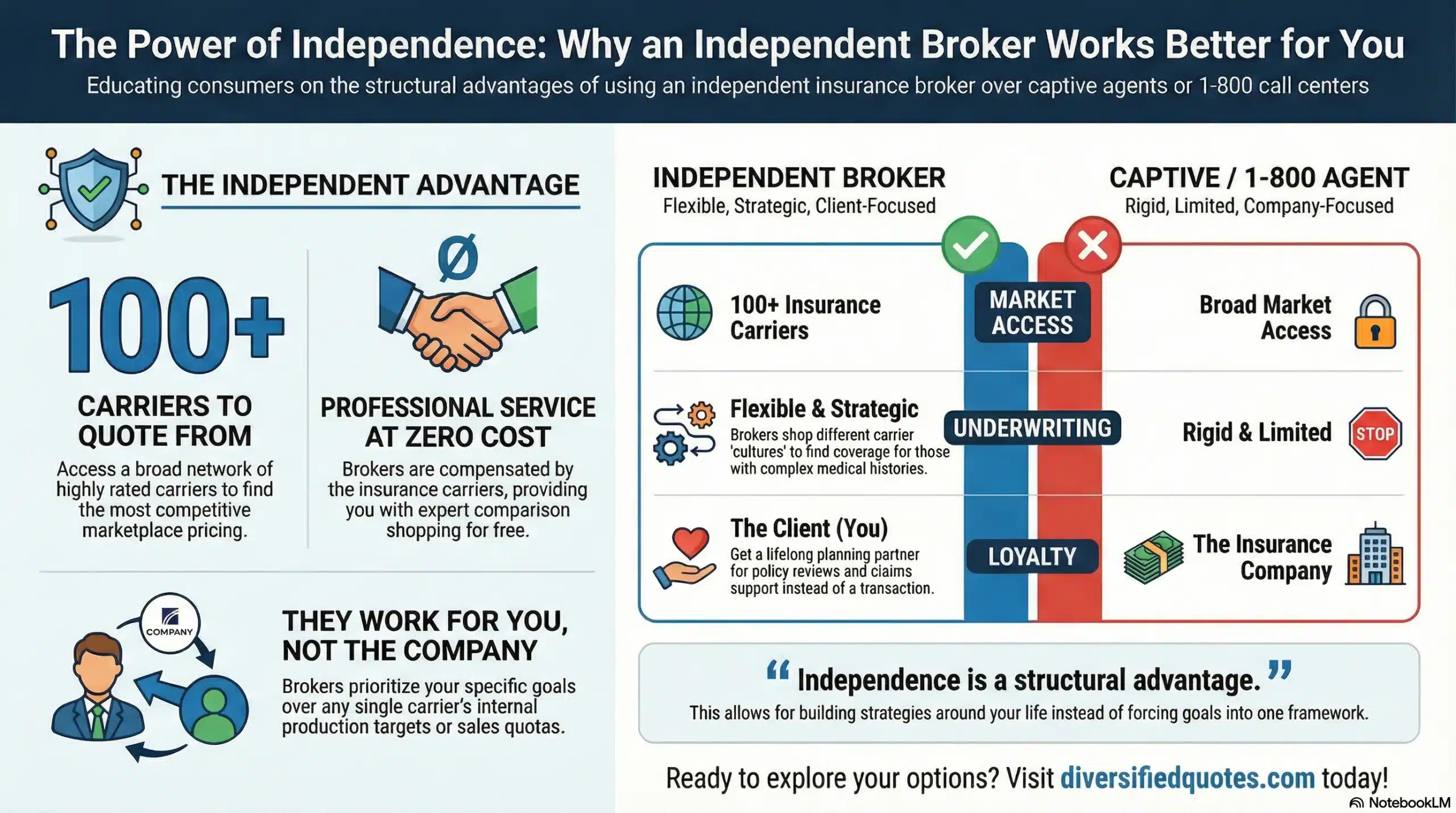
Jason Stolz, CLTC, CRPC, DIA, CAA and Chief Underwriter at Diversified Insurance Brokers (NPN 20471358), is a senior insurance and retirement professional with more than 25 years of real-world experience helping individuals, families, and business owners protect their income, assets, and long-term financial stability. As a long-time partner of the nationally licensed independent agency Diversified Insurance Brokers, Jason provides trusted guidance across multiple specialties—including fixed and indexed annuities, long-term care planning, personal and business disability insurance, life insurance solutions, Group Health, Travel Medical and Evacuation Insurance, and short-term health coverage. Diversified Insurance Brokers maintains active contracts with over 100 highly rated insurance carriers, ensuring clients have access to a broad and competitive marketplace.
His practical, education-first approach has earned recognition in publications such as VoyageATL, and contributions from his agency featured in Kiplinger and GoBankingRates— highlighting his commitment to financial clarity and client-focused planning. Drawing on deep product knowledge and years of hands-on field experience, Jason helps clients evaluate carriers, compare strategies, and build retirement and protection plans that are both secure and cost-efficient. Visitors who want to explore current annuity rates and compare options across multiple insurers can also use this annuity quote and comparison tool.
Review More Carrier Reviews: Browse our complete Burial Insurance Company Reviews — covering Mutual of Omaha, Americo, Globe Life, Colonial Penn, and more burial insurance carriers.
Last Reviewed: June 12, 2026 |
Reviewed by: Jason Stolz, CLTC, CRPC, DIA, CAA
Chief Underwriter, Diversified Insurance Brokers, Inc. | NPN: 20471358 | Diversified Insurance Brokers, Inc. — Licensed in all 50 states
Fact Checked by: Tonia Pettitt, CMIP©
Medicare Specialist, Diversified Insurance Brokers, Inc. | NPN: 14374308 | Diversified Insurance Brokers, Inc. — Licensed in all 50 states
Did you find this content helpful? Leave us a Google review — it helps others find trustworthy guidance too.
Editorial Standards: Diversified Insurance Brokers maintains rigorous editorial standards to ensure accuracy, clarity, and independence in all content. Learn more about our editorial standards and commitment to transparency.
