
Can You Get a 50-Year Term Life Insurance Policy?
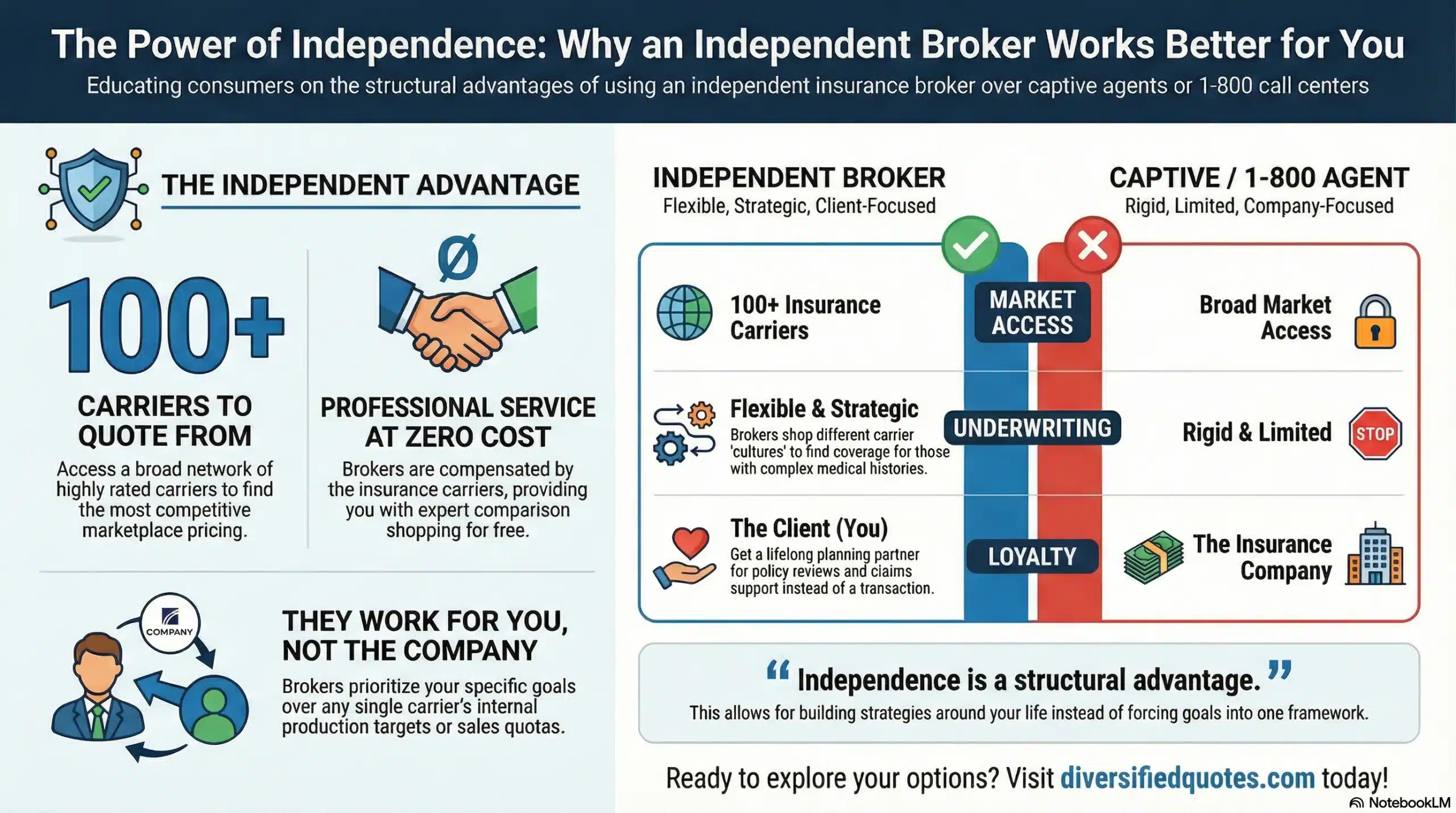
As an Independent Life Insurance Broker, we compare rates across 100+ carriers and prescreen every application before submission.
Can You Get a 50-Year Term Life Insurance Policy?

Jason Stolz CLTC, CRPC, DIA, CAA
Can you get a 50-year term life insurance policy? The direct answer is no — not in the United States market as it currently exists. No major U.S. carrier offers a level-premium term policy that guarantees coverage and locked premiums for a full 50 consecutive years. The maximum available in the market today is 40 years, and even that is offered by only a small number of carriers — Ethos, Protective Insurance, and Banner Life are among the few that currently go to 40. Most carriers in the U.S. market stop at 35 years, which is itself a niche product that not every carrier offers. The honest reason this ceiling exists is straightforward: the longer a level-premium term extends, the higher the probability of a claim during the guarantee period, the more actuarially complex the pricing, and the narrower the audience willing to pay for what becomes a very expensive long-term commitment. At 40 years, carriers are already pricing coverage for a window that extends through the most statistically high-mortality years of a buyer’s life. Adding another decade would require premiums so elevated that the product would compete directly with permanent insurance on cost — eliminating most of the affordability advantage that makes term life attractive in the first place.
But the question “Can I get 50-year term life insurance?” is almost always a proxy for a more important question: “Can I get 50 years’ worth of life insurance coverage?” And the answer to that question is yes — through strategies that are more thoughtful than a single 50-year term contract would have been anyway. A 30-year-old who wants protection until age 80 does not need a single contract promising unchanged premiums for five decades. They need a coverage architecture that provides adequate protection at each stage of their financial life — peak income protection during the child-raising, mortgage-carrying years; permanent protection for estate planning, final expense coverage, or lifetime obligations that do not expire; and the flexibility to adjust as circumstances change. The approach most experienced brokers take for clients who want 50 years of coverage is a deliberate combination of the longest available level term, a permanent life insurance foundation, and — ideally — a conversion rider that preserves the right to expand the permanent layer without new medical underwriting regardless of health changes that occur during the term period. Our resource on 50-year term life insurance covers the full product landscape for this coverage duration, and our 40-year term life insurance resource covers the longest available single term product in detail.
Understanding why the 40-year cap exists — and what the alternatives actually deliver — requires understanding both the cost math and the coverage math of long-duration life insurance. The cost of extending a level-premium term by one decade is not linear. A 40-year term costs approximately 60-80% more than a 30-year term for the same face amount at the same age and health class — a meaningful jump that reflects the actuarial weight of the additional decade’s mortality exposure being priced into every annual premium from day one. For many buyers who think they want 50-year term, what they actually want is the assurance that their family will be protected regardless of when they die — which is a description of permanent life insurance, not a description of longer term. For buyers who genuinely need maximum affordable coverage for as many years as possible, the 40-year term combined with a permanent base provides better lifetime value than an expensive hypothetical 50-year term would have. Our resource on what is term life insurance covers the foundational structure, and our resource on permanent life insurance covers the lifetime coverage alternatives that form the other half of the 50-year strategy.
Compare Term and Permanent Coverage Side by Side
Life Insurance Quoter
Compare All Available Term Lengths
The 40-year term is the longest available single contract. Compare all durations below.
Why 50-Year Term Life Insurance Doesn’t Exist — The Honest Explanation
Life insurance carriers price term policies based on mortality data: the probability of a claim occurring within the coverage window. Every year added to a term policy’s guarantee period adds additional mortality exposure that must be priced into every annual premium from issue date. A 10-year term policy on a 35-year-old covers a low-mortality window — most 35-to-45-year-olds survive in good health. A 30-year term on the same person covers years 35-65, adding the moderately elevated mortality of the mid-50s and early 60s. A 40-year term covers years 35-75, pricing in the significantly higher mortality of the late 60s and early 70s. A hypothetical 50-year term on the same 35-year-old would cover through age 85 — a decade that carries among the highest mortality rates in the actuarial tables. Pricing that decade’s expected claims into a level premium alongside coverage for ages 35-45 (low risk) and 45-75 (moderate to elevated risk) would produce premiums so high that most buyers would find permanent insurance — which provides lifetime coverage and builds cash value — more economically efficient on a total cost basis.
This is not a market gap waiting to be filled. It is an actuarial reality about how term pricing works. The absence of 50-year term products is not the result of carriers being conservative or failing to innovate — it is the result of the pricing math rendering such a product unattractive to nearly every buyer. A 35-year-old who wants coverage through age 85 is better served by a 40-year term supplemented by a permanent policy than they would be by a 50-year term priced to cover the mortality of ages 75-85 in every annual premium from day one. Our resource on how life expectancy is calculated provides useful context for understanding the actuarial data behind term pricing, and our resource on how much life insurance costs covers the premium landscape across term lengths and health classes.
How Many Years of Coverage Each Term Length Provides by Purchase Age
| Purchase Age | 30-Year Term Covers Through | 35-Year Term Covers Through | 40-Year Term Covers Through | Gap to Age 80 Coverage | Recommended Strategy |
|---|---|---|---|---|---|
| Age 25 | Age 55 | Age 60 | Age 65 | 15 years uncovered if stopping at 40-yr term | 40-year term + permanent base; or full permanent policy |
| Age 30 | Age 60 | Age 65 | Age 70 | 10 years uncovered through 80 | 40-year term + permanent base covering age 70+ |
| Age 35 | Age 65 | Age 70 | Age 75 | 5 years uncovered through 80 (minimal gap) | 40-year term; add small permanent for final expenses |
| Age 40 | Age 70 | Age 75 | Age 80 | None — 40-year term reaches age 80 exactly | 40-year term achieves the goal if carriers approve at this age (check age eligibility) |
| Age 45 | Age 75 | Age 80 | Age 85 (if approved — eligibility varies by carrier) | 35-year achieves age 80; 40-year goes beyond if available | 35-year term fully achieves age 80 goal; 40-year adds additional years if approved |
| Age 50+ | Age 80 | Age 85 (limited availability) | Generally not available at this age | 30-year term achieves age 80; consider GUL for beyond | 30-year term to age 80 + GUL for permanent coverage; full permanent review recommended |
Coverage ages shown are approximate based on purchase age plus term length. Actual carrier eligibility for 35- and 40-year terms varies by carrier, age at application, and state. Most carriers offering 40-year term impose age limits typically in the early-to-mid 40s — applicants above those ages may find 40-year term unavailable and should compare 30-year or 35-year options alongside permanent alternatives. GUL = Guaranteed Universal Life, a permanent policy structure that guarantees premiums and death benefit to a specific age (typically 90, 95, 100, or 121). “Permanent coverage” above refers broadly to any permanent life insurance product (whole life, GUL, or universal life) designed to remain in force for lifetime regardless of term expiration. Confirm specific carrier eligibility requirements through a licensed independent broker before making any product decision.
The Four Strategies That Actually Deliver 50 Years of Coverage
With the understanding that no single contract covers 50 years at level premiums, the practical planning focus shifts to the four strategies that deliver equivalent or better coverage outcomes through deliberate architecture. Each approach has a different cost profile, liquidity characteristic, and ideal buyer profile — and all four can be tailored specifically to the timeline and financial objectives of a buyer who wants to know their family is protected through retirement and beyond.
Strategy 1 — The 40-Year Term and Permanent Base
The most commonly recommended approach for buyers who want 50+ years of coverage is the combination of the longest available level term — currently 40 years from the handful of carriers that offer it — with a permanent life insurance foundation that provides lifetime coverage beyond the term’s expiration. The term handles the heavy lifting of the income-replacement, mortgage-coverage, and dependent-protection years when large face amounts at the lowest available premium are the priority. The permanent component — which can be a whole life policy, a guaranteed universal life contract, or an indexed universal life policy — handles the lifetime coverage objectives: final expenses, estate planning, legacy transfer, or simply the assurance that coverage will not expire at a fixed point.
The financial logic is compelling: a 30-year-old who purchases a $1 million 40-year term policy has coverage at the most affordable per-thousand premium available for that face amount, locked through age 70 without any need to requalify or reprice. Adding a $100,000-$250,000 permanent policy simultaneously secures lifetime coverage at rates available at age 30 — the most affordable permanent coverage that buyer will ever be eligible for — without reducing the large-face-value term protection. The combined approach delivers both the affordability and coverage magnitude of term and the permanence and certainty of a lifetime contract, at a total premium that is typically lower than a full permanent policy for the maximum face amount would have been. Our resource on what happens at the end of a term life insurance policy covers the transition options that arise when the term expires, and our resource on how to convert term to permanent life insurance covers the most important flexibility tool available within this strategy: the conversion rider.
Strategy 2 — Guaranteed Universal Life to a Specific Age
For buyers who want a single contract — rather than two separate policies — that provides guaranteed coverage for a defined long period, Guaranteed Universal Life (GUL) is the most appropriate permanent product. Unlike traditional whole life, which builds cash value and includes an investment component that affects premium pricing, GUL is designed to be lean: it provides a guaranteed death benefit and guaranteed level premiums to a specific age (commonly 90, 95, 100, or 121) with minimal cash accumulation. Because GUL is stripped of the cash value investment element, its premiums are substantially lower than whole life for equivalent death benefit guarantees — often comparable in price to a 30-year term for the same face amount, with the critical difference that the GUL’s guarantee extends for life rather than expiring at 30 years. A buyer who selects a GUL designed to age 121 for a meaningful face amount has effectively achieved permanent coverage at term-adjacent pricing — which is the closest available product to what a hypothetical 50-year term would have been for an early-30s buyer.
GUL is particularly well-suited for buyers in specific situations: those who want permanent coverage but do not need or want the cash value accumulation component of whole life, those who are interested in estate planning or survivorship coverage for long-term legacy objectives, and high-income professionals who have used other vehicles (retirement accounts, investment portfolios) for wealth accumulation and want life insurance to function purely as pure death benefit protection. Our resource on survivorship joint whole life insurance covers the two-life coverage structure that is often used alongside or in place of GUL for married couples whose estate planning objectives require coverage that extends beyond either individual life. Our resource on what is an irrevocable life insurance trust (ILIT) covers how permanent life insurance is often structured within estate planning vehicles when the 50-year coverage horizon intersects with legacy and estate tax planning objectives. Our resource on indexed universal life in qualified plans covers advanced permanent life designs for the appropriate circumstances.
Strategy 3 — Laddering Multiple Term Policies
Term laddering — purchasing two or more term policies with different face amounts and different term lengths simultaneously — is a strategy that provides maximum coverage at the most affordable total premium for buyers with a clearly tiered protection need over time. The concept is that a buyer’s life insurance need is not constant over 50 years: it is highest in the early years when the mortgage is largest, children are youngest and most dependent, and income replacement represents the biggest obligation, and it naturally decreases over time as the mortgage is paid down, children become financially independent, and retirement savings accumulate. A buyer who purchases a $1 million 20-year term alongside a $500,000 30-year term alongside a $250,000 40-year term has total coverage of $1.75 million in the first 20 years, $750,000 from years 20-30, and $250,000 from years 30-40 — precisely matching the coverage to the tapering obligation at each life stage, while keeping the total premium lower than a single large 40-year policy for the full $1.75 million would have been.
This laddering approach provides the functional equivalent of 40-year coverage while also providing temporarily elevated protection during the highest-obligation years — a more efficient architecture than trying to hold a single large face amount for the full 40-year window. Adding the permanent base to the ladder produces coverage that extends well beyond the 40-year term maximum. For buyers in specific high-risk occupations or activities where long-duration coverage is a priority, resources like our guides on life insurance for maritime workers, life insurance for extreme sports, and life insurance for high-income earners provide the underwriting context specific to those situations. Our resource on life insurance for atrial fibrillation covers an example of how health conditions that might develop during a long coverage period affect future insurability — highlighting why locking in long-duration or permanent coverage at younger, healthier ages is strategically important.
Strategy 4 — The Conversion Option
The conversion rider is the most underutilized strategic tool in long-duration life insurance planning. A conversion rider gives the term policy owner the contractual right to convert some or all of their term coverage to permanent coverage during a defined conversion period — without any new medical underwriting, regardless of health changes that have occurred since the original policy was issued. This means a 30-year-old who purchases a 40-year term with a conversion rider can convert a portion of that coverage to permanent life insurance at age 45, 50, or 55 without taking a medical exam, answering health questions, or being declined based on any diagnosis, medication change, or health development that occurred during the term. The permanent coverage is issued at the insured’s current age rather than their original age — but at whatever health class they were originally approved for, not at the health class that would apply to a new underwriting review given their current health.
For buyers who are young and healthy now but uncertain about their health over the next decade, the conversion rider is effectively free long-term insurability insurance. The right to convert without medical evidence protects against the most dangerous scenario in life insurance planning: developing a health condition during the term that would make new permanent coverage expensive or unavailable. Buyers who understand the conversion right structure it as an explicit part of their long-duration coverage plan — they intend to convert a defined portion of the term to permanent coverage at the point when their income, assets, and obligations have stabilized enough to determine the appropriate permanent coverage amount. Our resource on how to convert term to permanent life insurance covers the full mechanics and timing considerations. Our resource on am I too young for life insurance covers the age-specific framing that is directly relevant to buyers in their 20s and early 30s who are the primary market for 50-year coverage strategies. Our resources on how much life insurance do I need and our life insurance services overview provide the coverage sizing and product landscape context. Our life insurance quotes, no-exam life insurance, and second-opinion life insurance quote review resources round out the evaluation toolkit. For the final-expense and burial insurance dimension that sometimes motivates the 50-year coverage question — ensuring final expenses are covered regardless of when death occurs — our resources on final expense life insurance, burial insurance for mom and dad, and guaranteed issue life insurance under age 50 cover the permanent small-face-amount coverage options. And for the specific planning scenarios that arise when 50-year coverage intersects with estate planning, our resources on what is an ILIT and survivorship joint whole life insurance cover those advanced applications. For the disability and travel protection dimensions that often come up alongside long-horizon life insurance planning, our resources on best disability insurance rates, travel medical insurance from Spain, travel medical insurance from Italy, and travel medical insurance from Vietnam cover those parallel protection needs. Our carrier review on is USAA a good insurance company is relevant for buyers who are evaluating USAA’s long-term policies as part of this comparison. And our what to do with a Keogh plan at retirement resource serves the business-owner audience that often purchases long-duration life insurance alongside retirement plan distributions.
Talk With an Advisor Today
Choose how you’d like to connect—call or message us, then book a time that works for you.
Schedule here:
calendly.com/jason-dibcompanies/diversified-quotes
Licensed in all 50 states • Fiduciary, family-owned since 1980
FAQs: Can You Get a 50-Year Term Life Insurance Policy?
Can you buy a 50-year term life insurance policy?
No — 50-year term life insurance does not exist in the U.S. market. The maximum level-premium term policy currently available is 40 years, offered by a small number of carriers including Ethos, Protective Insurance, and Legal & General America (Banner Life). Most U.S. carriers stop at 35 years. The absence of 50-year term is not a market gap — it is an actuarial reality. Pricing in the mortality exposure of ages 75-85 into every annual premium from issue date would make premiums so expensive that the product would compete directly with permanent insurance on cost while providing no accumulated cash value. However, buyers who want coverage for 50 years or longer can achieve equivalent protection through deliberate combinations of long-duration term and permanent life insurance.
What is the longest term life insurance policy available in 2026?
The longest level-premium term life insurance available in 2026 is 40 years, offered by a limited number of carriers. Most major U.S. life insurance carriers still stop at 30 years for widely available products, with a moderate number offering 35 years. The 40-year term is a niche product offered by Ethos, Protective Insurance (formerly Protective Life), and Legal & General America among a small number of others. Most carriers that offer 40-year term impose upper age limits at application — typically in the early-to-mid 40s — meaning buyers who are 45 or older may find the 40-year term unavailable and should compare 30-year or 35-year options alongside permanent alternatives. Coverage costs approximately 60-80% more than a 30-year term for the same face amount and health class.
How can I get coverage that lasts 50 years?
Four strategies provide effective 50-year coverage despite the absence of a 50-year term product. Strategy 1: combine a 40-year level term with a permanent life insurance policy (whole life, GUL, or IUL) — the term handles large-face income replacement years affordably while the permanent base provides lifetime coverage beyond the term’s expiration. Strategy 2: use a Guaranteed Universal Life (GUL) policy with a guarantee to age 90, 95, 100, or 121 — this provides lifetime coverage at premiums comparable to long-term term life, without the term expiration problem. Strategy 3: ladder multiple term policies with different face amounts and expiration dates to match coverage to your tapering obligations over time. Strategy 4: purchase a 40-year term with a conversion rider — preserving the contractual right to convert term coverage to permanent coverage without medical underwriting during the conversion period, regardless of health changes that occur.
Is permanent life insurance better than a 40-year term for long-duration coverage?
It depends on the planning objective. Permanent life insurance — whole life, GUL, or indexed universal life — provides a death benefit that never expires, which is definitively the right structure when lifetime coverage certainty is the objective. Permanent policies cost more per dollar of coverage than term, but they never expire and often build cash value. A 40-year term provides the highest death benefit per premium dollar for the 40-year window, making it the most affordable structure for large income-replacement face amounts during working years. The most effective long-duration strategies typically use both: a 40-year term for the large-face-amount income replacement need during peak working years and a permanent policy for the lifetime coverage that continues after the term expires. The conversion rider bridges these two components by allowing the term to be converted to permanent coverage without medical underwriting if circumstances change.
Who typically looks for 50-year term life insurance?
The buyers who most commonly search for 50-year term life insurance are young adults — typically in their mid-20s to early 30s — who have recently purchased a home with a 30-year mortgage, have young children, and are thinking about coverage that extends through retirement age and beyond. They understand intuitively that 20 or 30 years is not enough time to cover all their obligations, but may not know that 40 years is the current market maximum. Some buyers searching for 50-year term are actually describing a need for lifetime coverage — they want to know their family is protected no matter when they die, not just for a defined period — which is a better description of permanent life insurance than of any term product. An independent broker can help distinguish between the income-replacement framing (where long-duration term is the right tool) and the permanent coverage framing (where permanent insurance is the right tool) before the coverage decision is made.
What is a conversion rider and why does it matter for long-duration coverage?
A conversion rider is a contractual provision in a term life insurance policy that gives the owner the right to convert some or all of the term coverage to a permanent life insurance policy during a defined conversion period — without any new medical underwriting, regardless of health changes that have occurred since the original term policy was issued. For a buyer who purchases a 40-year term policy at age 30, the conversion rider means that if they develop a significant health condition at age 45 or 50 that would make new permanent coverage expensive or unavailable, they can still convert the desired portion of their term to permanent coverage at whatever health class they originally qualified for. The conversion is based on the original underwriting class, not current health. This is one of the most important features to confirm before purchasing any term policy intended to serve as part of a long-duration coverage strategy.
Does a 40-year term make sense at age 40 or 45?
At age 40, a 40-year term covers through age 80 — which accomplishes the coverage goal for most buyers seeking protection through late retirement. However, carrier availability for 40-year term at age 40 is limited — most carriers that offer the 40-year product impose issue age maximums that exclude applicants in their mid-to-upper 40s. At age 45, the 40-year term may be unavailable at most carriers, making the 35-year term (through age 80) or the 30-year term (through age 75) the practical longest options. At age 45, the 35-year term achieves age 80 coverage exactly. Buyers at 45 or older evaluating long-duration coverage should compare 30-year and 35-year term options alongside Guaranteed Universal Life designs, which become increasingly competitive relative to term pricing as the applicant ages and the term pricing reflects more elevated mortality risk.
What is Guaranteed Universal Life and how does it compare to long-term term insurance for 50-year coverage?
Guaranteed Universal Life (GUL) is a permanent life insurance product that guarantees a level premium and a death benefit to a specific age — typically 90, 95, 100, or 121 — with minimal or no cash value accumulation. Unlike traditional whole life, which includes a savings component that increases its premium, GUL strips away the cash accumulation element and focuses on delivering maximum guaranteed permanent death benefit at the most affordable premium. For many buyers, GUL premiums are surprisingly close to 30-year term premiums for the same face amount — with the critical difference that GUL never expires. A GUL designed to age 121 provides lifetime coverage at term-adjacent pricing, which is the closest available product to what a hypothetical 50-year or longer term would have been. GUL is particularly suitable for buyers who want permanent coverage without the wealth-accumulation objective of whole life insurance.
About the Author:
Jason Stolz, CLTC, CRPC, DIA, CAA and Chief Underwriter at Diversified Insurance Brokers (NPN 20471358), is a senior insurance and retirement professional with more than 25 years of real-world experience helping individuals, families, and business owners protect their income, assets, and long-term financial stability. As a long-time partner of the nationally licensed independent agency Diversified Insurance Brokers, Jason provides trusted guidance across multiple specialties—including fixed and indexed annuities, long-term care planning, personal and business disability insurance, life insurance solutions, Group Health, Travel Medical and Evacuation Insurance, and short-term health coverage. Diversified Insurance Brokers maintains active contracts with over 100 highly rated insurance carriers, ensuring clients have access to a broad and competitive marketplace.
His practical, education-first approach has earned recognition in publications such as VoyageATL, and contributions from his agency featured in Kiplinger and GoBankingRates— highlighting his commitment to financial clarity and client-focused planning. Drawing on deep product knowledge and years of hands-on field experience, Jason helps clients evaluate carriers, compare strategies, and build retirement and protection plans that are both secure and cost-efficient. Visitors who want to explore current annuity rates and compare options across multiple insurers can also use this annuity quote and comparison tool.
Explore More Life Insurance Options: Browse our complete guide to How Life Insurance Works — covering term life, whole life, final expense, annuity alternatives & more from 100+ carriers.
Last Reviewed: September 28, 2026 |
Reviewed by: Jason Stolz, CLTC, CRPC, DIA, CAA
Chief Underwriter, Diversified Insurance Brokers, Inc. | NPN: 20471358 | Diversified Insurance Brokers, Inc. — Licensed in all 50 states
Fact Checked by: Tonia Pettitt, CMIP©
Medicare Specialist, Diversified Insurance Brokers, Inc. | NPN: 14374308 | Diversified Insurance Brokers, Inc. — Licensed in all 50 states
Did you find this content helpful? Leave us a Google review — it helps others find trustworthy guidance too.
Editorial Standards: Diversified Insurance Brokers maintains rigorous editorial standards to ensure accuracy, clarity, and independence in all content. Learn more about our editorial standards and commitment to transparency.
