
Life Insurance for Hepatitis B
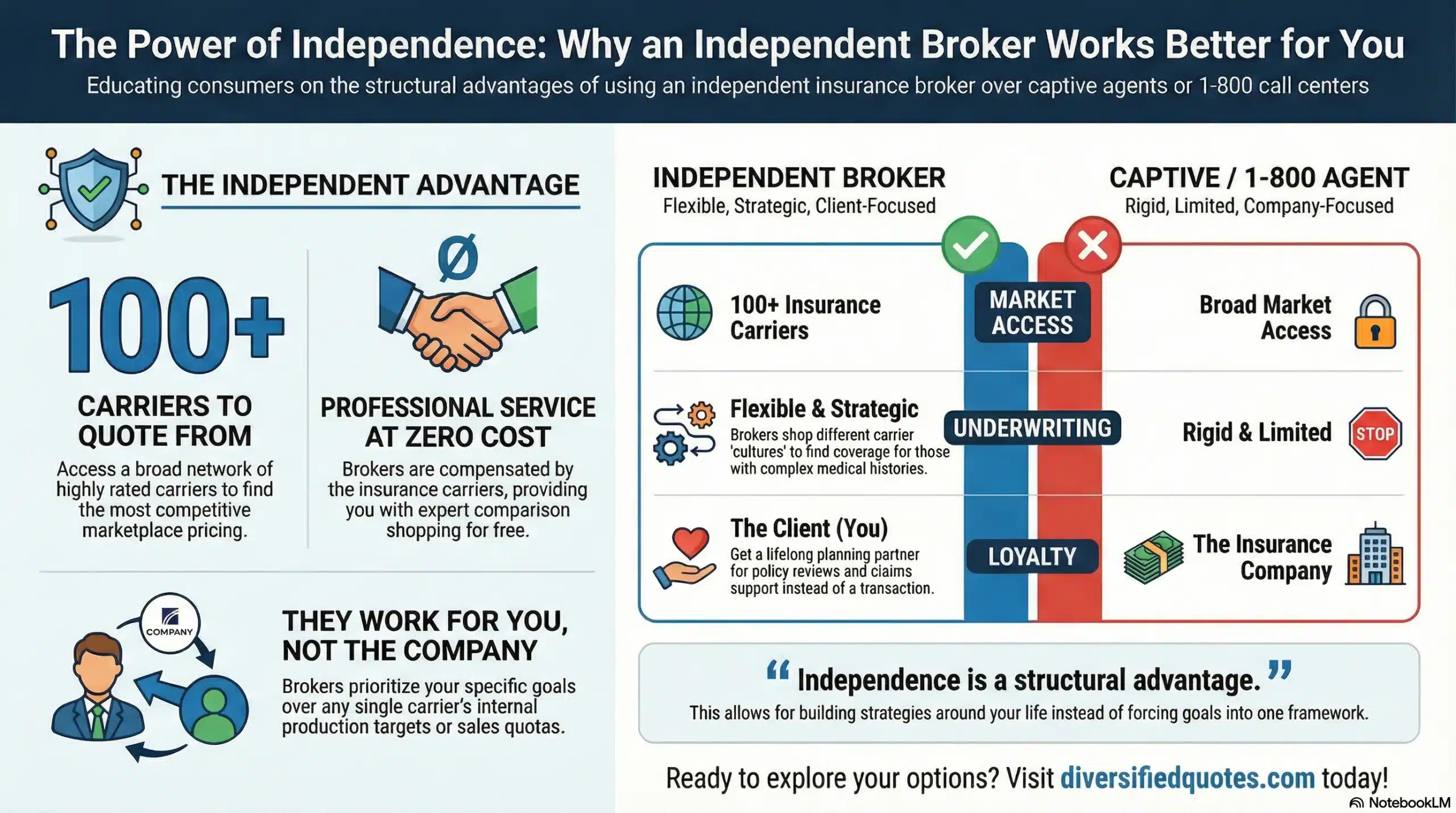
As an Independent Life Insurance Broker, we compare rates across 100+ carriers and prescreen every application before submission.
Life Insurance for Hepatitis B

Jason Stolz CLTC, CRPC, DIA, CAA
Life insurance for Hepatitis B is available to most applicants — including those with chronic, ongoing infection — and the range of possible outcomes is far wider than most people with a hepatitis history assume before they start the application process. The critical variable is not whether Hepatitis B appears in the medical record. The critical variable is the current clinical picture: whether the infection is acute and resolved or chronic and continuing, what the most recent liver function tests show, what the viral load trend looks like over time, whether treatment is in place and working, and whether there is any evidence of progressive liver damage. Two applicants who both have Hepatitis B on their records can receive outcomes separated by several rating classes, because the underwriting question is never “does this person have Hepatitis B?” — it is “what does this person’s liver health look like today, and what is the probability of meaningful progression over the policy term?”
Modern antiviral medications have transformed what chronic Hepatitis B means from both a clinical and an actuarial perspective. Applicants who are managing active chronic infections with antiviral therapy, maintaining undetectable or very low viral loads, and showing normal liver function panel results are presenting a fundamentally different risk profile than what Hepatitis B historically implied before effective treatment was widely available. Carriers who have updated their underwriting guidelines to reflect this clinical reality produce meaningfully better offers for well-managed cases than carriers still applying conservative blanket assumptions developed in an earlier era of liver disease management. At Diversified Insurance Brokers, we shop life insurance for Hepatitis B cases across over 100 carriers precisely because this carrier-guideline variation is one of the most consequential variables in determining whether a person with Hepatitis B receives a standard offer, a rated offer, or an unfavorable outcome that reflects carrier policy rather than actual clinical risk. Our resource on life insurance with pre-existing conditions covers the foundational approach we apply across all complex medical underwriting situations, and our resource on high-risk life insurance services covers how we navigate cases where standard underwriting lanes produce unnecessarily conservative results.
See Real-Term Rates Side by Side
Life Insurance Quoter
We shop 100+ A-rated carriers and position your Hepatitis B history the way underwriters actually evaluate it — not the way automated quote engines assume the worst.
How Underwriters Evaluate Hepatitis B: The Three Questions That Drive Every Decision
Every life insurance for Hepatitis B underwriting review reduces to three fundamental questions that the underwriter is trying to answer from the file: Is the infection active or resolved? What do current liver function markers show about liver health? Is there any evidence of progression toward cirrhosis or hepatocellular carcinoma? The answers to these three questions — not the presence of Hepatitis B as a diagnosis label — determine whether a case qualifies for standard rates, requires a rating adjustment, or needs specialized market placement.
The first question — active or resolved — creates the most significant fork in the underwriting road for life insurance for Hepatitis B applicants. An acute Hepatitis B infection that fully resolved, with documented clearance of the surface antigen and normal follow-up liver function tests, is underwritten very differently from a chronic infection in which the virus is still present and the immune system has not cleared it. Resolved acute cases are generally treated as historical events once the carrier is satisfied with the stability documentation. Chronic cases require ongoing clinical evidence of management and stability.
The second question — current liver function markers — is answered through lab values that the underwriter either obtains through the application’s medical exam or reviews from submitted records. ALT (alanine aminotransferase) and AST (aspartate aminotransferase) are the primary liver enzyme markers. Normal ranges for these enzymes — approximately 7 to 56 units per liter for ALT and 10 to 40 units per liter for AST, though reference ranges vary slightly by laboratory — signal that the liver is handling the viral presence without significant ongoing damage. Elevated enzymes indicate active inflammation that the underwriter will scrutinize closely, because persistent elevation raises the probability of progressive liver disease. Bilirubin and albumin levels provide additional markers of liver synthetic function that underwriters may also review in cases with any elevation in transaminases.
The third question — progression evidence — is the most consequential for long-term policy risk and the one that most dramatically changes outcomes when positive. Evidence of fibrosis (detected through biopsy, FibroScan elastography, or indirect serum markers), cirrhosis, or hepatocellular carcinoma creates an entirely different underwriting picture than the same Hepatitis B profile without those complications. Cases with confirmed fibrosis or cirrhosis typically require specialized market placement, higher face amount limitations, or alternative product structures even when the liver disease is currently compensated and stable.
Acute vs Chronic Hepatitis B: The Most Important Clinical Distinction for Underwriting
The distinction between acute and chronic Hepatitis B is the single most important variable in life insurance for Hepatitis B underwriting, and it is defined clinically by whether the surface antigen (HBsAg) is still detectable more than six months after initial infection. When the immune system successfully clears the virus within six months, the infection is classified as acute and resolved. When the surface antigen remains detectable beyond six months, the infection is classified as chronic — and underwriting enters a more detailed evaluation framework.
For resolved acute Hepatitis B, life insurance underwriting proceeds with the question: how long has the resolution been documented, and do current labs confirm normal liver function? Carriers typically want to see a stability window — some require 6 to 12 months of clean post-resolution labs, others are more flexible — before offering the most favorable rates. Once a carrier is satisfied that the infection is truly resolved, labs are normal, and there is no evidence of ongoing liver involvement, many applicants qualify at standard or near-standard rates. The historical acute infection becomes a footnote rather than an ongoing underwriting concern.
For chronic Hepatitis B, the underwriting evaluation is more nuanced and carrier-dependent. The chronic infection spectrum encompasses everyone from truly inactive carriers — who have essentially no active viral replication, undetectable viral load, and completely normal liver function — to individuals with high viral loads, active liver inflammation, and early signs of fibrosis. These are clinically distinct situations that should produce different underwriting outcomes, but only with carriers whose guidelines are sophisticated enough to make this distinction rather than treating “chronic Hepatitis B” as a single undifferentiated category.
Hepatitis B Underwriting Outcomes by Clinical Profile
| Clinical Profile | Viral Load Status | Liver Enzymes (ALT/AST) | Typical Underwriting Outcome | Product Accessibility |
|---|---|---|---|---|
| Acute, fully resolved — HBsAg cleared, normal labs | Undetectable — infection cleared | Normal | Standard to preferred — often treated as historical event | Full term and permanent options |
| Chronic — inactive carrier status, no active replication | Undetectable or very low | Normal — stable over time | Standard to mildly table-rated — best chronic outcome | Term; some permanent options |
| Chronic — on antiviral therapy, viral load suppressed | Low or undetectable on treatment | Normal or near-normal on treatment | Mildly to moderately table-rated — carrier-dependent | Term widely available; carrier-specific |
| Chronic — active replication, elevated liver enzymes | Detectable or elevated | Persistently elevated ALT/AST | Heavily rated or postponement until controlled | Limited; specialty carriers or smaller face amounts |
| Chronic with fibrosis — no cirrhosis, compensated | Variable | Variable — may be elevated | Significantly rated; specialty market often required | Simplified or guaranteed issue in some cases |
| Cirrhosis present — compensated or decompensated | Variable | Typically elevated | Decline or postponement at traditional carriers | Guaranteed issue; final expense; burial insurance |
The table makes the range of life insurance for Hepatitis B outcomes visible at a glance — from near-standard results for resolved acute cases to alternative product structures for the most complex presentations. The most important planning insight from the table is that “chronic Hepatitis B” encompasses at least four distinct clinical situations with very different underwriting outcomes, and an undifferentiated application that does not clearly establish which category applies will default toward the more conservative end of that range. Our resources on related liver health conditions — including life insurance for elevated liver enzymes, life insurance for fatty liver disease, and life insurance for liver transplants — cover adjacent clinical situations that sometimes intersect with Hepatitis B cases as they progress or as treatment changes the clinical picture.
The Specific Lab Values That Drive Hepatitis B Life Insurance Decisions
Underwriters evaluating life insurance for Hepatitis B do not read narrative medical records the same way a treating physician does — they extract specific data points that answer the clinical questions driving their risk assessment. Understanding which data points matter most allows applicants to ensure those values are current, clearly documented, and available for review when the application is submitted.
The hepatitis B surface antigen (HBsAg) is the marker that establishes whether the infection is ongoing. A positive HBsAg persisting beyond six months confirms chronic infection. HBsAg clearance confirms resolution. Hepatitis B e antigen (HBeAg) status and hepatitis B e antibody (anti-HBe) status provide additional information about viral replication activity — HBeAg-positive status generally indicates higher replication and more active liver inflammation than HBeAg-negative status.
HBV DNA viral load quantification is the most directly informative marker for underwriting because it measures the actual amount of virus actively replicating in the blood. An undetectable or very low viral load — whether achieved naturally through immune control or through antiviral suppression — is the single most favorable factor an applicant with chronic Hepatitis B can present. Detectable and elevated viral loads indicate active viral replication that increases the probability of ongoing liver inflammation and long-term progression risk.
Liver function tests — specifically ALT, AST, bilirubin, and albumin — tell the underwriter whether the liver is currently healthy regardless of the virus’s presence. Normal liver enzymes alongside suppressed viral load is the strongest possible chronic Hepatitis B underwriting profile. The duration of normal enzyme stability matters as well: labs showing stable normal values over 2 to 5 years carry significantly more underwriting weight than a single recent normal result, because they demonstrate that the current status is sustained rather than transient.
The Inactive Carrier: Life Insurance’s Most Favorable Hepatitis B Category
The “inactive carrier” designation in Hepatitis B medicine describes a subset of chronically infected individuals whose immune system has established effective control over viral replication without clearing the virus entirely. Inactive carriers typically have the hepatitis B surface antigen still detectable (confirming chronic infection) but maintain consistently undetectable or very low viral loads, normal liver enzyme levels, HBeAg-negative status, and no evidence of significant liver inflammation or fibrosis on imaging or biopsy.
For life insurance for Hepatitis B underwriting, the inactive carrier profile represents the most favorable category within the chronic infection spectrum. When a carrier’s underwriting guidelines recognize and appropriately price this distinction — rather than applying the same rating to all HBsAg-positive individuals regardless of replication activity — inactive carriers frequently qualify at standard or mildly substandard rates that reflect the genuinely low progression risk their clinical picture presents. The challenge is identifying which carriers make this distinction and which apply broad assumptions that fail to differentiate the inactive carrier from a high-replication chronic infection. This carrier selection challenge is precisely why an independent broker with access to multiple carriers and knowledge of each carrier’s underwriting appetite for Hepatitis B profiles produces meaningfully better outcomes than applying to a single carrier without advance research.
How Treatment Compliance Affects Life Insurance for Hepatitis B
For Hepatitis B patients on antiviral therapy — most commonly tenofovir-based regimens or entecavir — treatment compliance is a significant positive underwriting factor for life insurance for Hepatitis B applications. Consistent antiviral treatment that achieves and maintains viral suppression demonstrates both effective medical management and the patient’s engagement with their healthcare. Underwriters view documented treatment compliance favorably because it represents active risk reduction — the probability of liver damage progression is substantially lower in a well-suppressed patient on consistent antiviral therapy than in an untreated patient with active viral replication.
The documentation of treatment compliance for life insurance for Hepatitis B applications typically comes from gastroenterology or hepatology treatment records, pharmacy fill history, and the most recent viral load measurements confirming suppression. A gastroenterologist’s clinical note confirming the patient’s current medication adherence, the current viral load result, and the overall stability assessment provides the most efficient single-document summary of treatment compliance for the underwriting team. When that note also specifies the monitoring interval — quarterly, semi-annual, or annual lab reviews — it signals a well-managed case with appropriate clinical oversight rather than sporadic, unmonitored follow-up.
Documentation to Prepare Before Applying for Life Insurance With Hepatitis B
The quality and completeness of documentation submitted with a life insurance for Hepatitis B application has a direct effect on how quickly and favorably the underwriting team evaluates the case. Well-organized, underwriter-friendly documentation removes ambiguity, accelerates the review, and reduces the probability that the carrier issues a time-delayed additional evidence request that holds the application in limbo.
The documentation package that produces the most efficient life insurance for Hepatitis B underwriting experience includes: the most recent liver function panel (ALT, AST, bilirubin, albumin — within the past 6 to 12 months), the most recent viral load quantification, hepatitis B surface antigen and e antigen status, the attending gastroenterologist’s or hepatologist’s most recent progress note summarizing current status and treatment plan, a clear timeline of diagnosis date, acute vs chronic classification, and any treatment history, and confirmation of monitoring frequency. When prior imaging studies (ultrasound, FibroScan) or liver biopsy have been performed, including those results — even if they were normal — removes potential underwriter concern about unanswered questions regarding structural liver health.
The most common documentation gap that creates delays in life insurance for Hepatitis B reviews is the absence of a current viral load measurement. Without a recent viral load, the underwriter cannot answer the most important question about active replication status and must either request the information — adding weeks to the review timeline — or default to conservative assumptions. Ensuring a current viral load result is available before submission is the single most impactful preparation step for most Hepatitis B applicants.
When Hepatitis B Is Complicated by Other Conditions
Life insurance for Hepatitis B cases becomes more complex when additional health conditions or risk factors are present alongside the hepatitis history. The most consequential comorbidities for Hepatitis B underwriting are those that independently affect liver health or interact with the viral infection to amplify liver damage risk. Significant alcohol use history is the most common concern — alcohol independently damages the liver and in the presence of chronic Hepatitis B, the combination accelerates the risk of fibrosis and cirrhosis beyond what either risk factor produces alone. Underwriters scrutinize alcohol history carefully in any Hepatitis B application.
Co-infections with hepatitis C or HIV create additional complexity for life insurance for Hepatitis B applications. When Hepatitis B and C coexist, the combined liver disease burden is greater than either infection alone, and underwriting reflects that increased risk. When Hepatitis B and HIV are both present, the antiretroviral therapy that treats HIV often also suppresses Hepatitis B (since several HIV medications have activity against HBV), which can actually produce favorable lab results — but the dual-diagnosis picture requires specialist handling regardless of current control. Our resource on life insurance for HIV/AIDS covers the HIV underwriting framework that applies when HIV is part of the clinical picture alongside Hepatitis B.
Other conditions that can intersect with Hepatitis B underwriting include type 2 diabetes (which can contribute to non-alcoholic fatty liver disease that independently affects liver health), obesity and metabolic syndrome (which share the NAFLD risk pathway), and medications that are hepatotoxic (liver-affecting). When any of these are present in a Hepatitis B application, the underwriting evaluation considers the combined liver health picture rather than the hepatitis component in isolation. Our resource on life insurance for Hepatitis C covers the parallel underwriting framework for HCV, which is relevant when both viruses are present or when comparing across hepatitis types.
What Causes Postponements and Declines in Hepatitis B Life Insurance Applications
Understanding the specific circumstances that produce postponements and declines in life insurance for Hepatitis B applications allows applicants to either address those circumstances before applying or adjust carrier strategy to avoid the underwriters most likely to take an unfavorable position.
Postponements for life insurance for Hepatitis B most commonly occur when the infection is relatively recent and insufficient stability documentation exists, when liver enzyme values are currently elevated and the cause is being evaluated, when treatment has recently changed and the carrier wants to see the viral load response to the new regimen, or when a diagnostic workup is in progress following an abnormal imaging or lab result. In postponement scenarios, the typical guidance is to allow the specified stability period to pass, complete any pending diagnostic workup, document the results, and reapply when the clinical picture is clearer.
Declines at standard carriers most commonly result from documented cirrhosis (compensated or decompensated), evidence of hepatocellular carcinoma or a prior HCC diagnosis, very high viral loads with persistently elevated liver enzymes and evidence of active liver inflammation, or the presence of multiple converging risk factors that together push the assessed mortality risk beyond what the carrier’s underwriting guidelines accommodate. When a decline occurs at a traditional fully underwritten carrier, the application pathway shifts to alternative product strategies — including final expense or guaranteed issue products — that provide meaningful coverage without requiring the liver function and viral load documentation that traditional underwriting requires. Our resource on life insurance with a prior decline covers the options available when a previous application has been declined, and our burial insurance services overview covers the guaranteed issue and simplified underwriting alternatives for the most complex cases.
Alternative Coverage Options When Full Underwriting Is Challenging
For Hepatitis B applicants whose clinical profile does not currently support standard or rated coverage through traditional fully underwritten channels, alternative coverage structures provide access to meaningful life insurance without requiring the same level of liver function scrutiny that traditional underwriting demands.
Guaranteed issue whole life insurance provides coverage with no health questions and no medical exam — approval is guaranteed for eligible applicants within age limits, regardless of health history. The trade-offs are lower face amounts (typically $5,000 to $25,000), higher premiums per dollar of coverage than fully underwritten policies, and a graded death benefit provision that limits the benefit to a return of premiums plus interest for the first two years of the policy. For Hepatitis B applicants who cannot access traditional coverage due to complications, cirrhosis, or other disqualifying factors, guaranteed issue provides the certainty of approved coverage and a guaranteed death benefit after the graded period.
Simplified issue life insurance uses a brief health questionnaire rather than full medical underwriting. Applicants are asked a limited number of health questions — typically 5 to 15 — and are approved or declined based on those answers without a lab panel, medical exam, or physician records review. The face amounts available under simplified issue are typically higher than guaranteed issue (up to $500,000 at some carriers for applicants in strong health by question standards), and premiums are between fully underwritten and guaranteed issue levels. For some Hepatitis B profiles — particularly inactive carriers or resolved acute cases where the carrier’s simplified issue questionnaire does not specifically exclude hepatitis history — simplified issue can produce favorable coverage outcomes without the full disclosure that triggers conservative review. Our resource on how to get life insurance with health issues covers the full range of underwriting pathways for applicants with complex medical histories.
Why Carrier Selection Is the Single Most Important Variable in Hepatitis B Life Insurance
The most actionable insight for anyone seeking life insurance for Hepatitis B is that carrier selection produces a larger impact on outcome than any other single variable — including how the application is presented, how stable the labs are, or how long the stability period extends. The difference between a carrier with sophisticated Hepatitis B underwriting guidelines that appropriately distinguish between inactive carrier status and active high-replication chronic infection, and a carrier that applies blanket conservative assumptions to all HBsAg-positive applicants, can span multiple rating classes and translate to thousands of dollars in annual premium difference for the same applicant with the same clinical profile.
This carrier variation is the primary reason that applying to a single insurer — particularly one selected without advance knowledge of that carrier’s Hepatitis B underwriting guidelines — frequently produces an unfavorable result that does not reflect what the broader market would offer for the same case. It is also why online quote engines, which generate instant pricing without carrier-specific underwriting intelligence, typically cannot be relied upon for accurate rate estimates for Hepatitis B applicants. The quote engine prices based on a health category selection that does not capture the nuances that actually drive life insurance for Hepatitis B outcomes.
Working with an independent broker who has the ability to research carrier guidelines, submit preliminary case inquiries without formal applications, and compare multiple carriers’ likely approaches to a specific Hepatitis B profile before committing to an application represents the most efficient path to the best available outcome. Our resource on getting a second opinion on a life insurance quote covers how to evaluate whether a previous offer was the best available from the market — particularly important for Hepatitis B applicants who may have received unfavorable initial quotes and assumed those quotes reflected their market-wide outcome.
Start Your Hepatitis B Life Insurance Review
We’ll identify the carriers most competitive for your specific Hepatitis B profile, present your clinical history the way underwriters need to see it, and shop across 100+ carriers to find your best available offer.
Submit Your Confidential RequestRelated Life Insurance for Liver and Hepatitis Conditions
Explore underwriting resources for Hepatitis A and C, other liver conditions, and pre-existing condition guidance.
Financial Protection Essentials
Coordinate Hepatitis B life insurance with related health condition underwriting and comprehensive protection resources.
Compare Term Life Insurance Lengths
Explore different term periods to find coverage that best matches your timeline and budget.
Talk With an Advisor Today
Choose how you’d like to connect—call or message us, then book a time that works for you.
Schedule here:
calendly.com/jason-dibcompanies/diversified-quotes
Licensed in all 50 states • Fiduciary, family-owned since 1980
Frequently Asked Questions: Life Insurance for Hepatitis B
Can I get life insurance if I have or had Hepatitis B?
Yes. Most people with a Hepatitis B history — including many with chronic, ongoing infection — can qualify for life insurance. The range of outcomes is wide and depends primarily on whether the infection is acute and resolved or chronic and ongoing, current viral load levels, liver enzyme values (ALT and AST), treatment history and compliance, and the absence or presence of complications such as fibrosis or cirrhosis. Resolved acute cases frequently qualify at standard rates once stability is documented. Chronic cases with undetectable viral load and normal liver function often qualify at standard to mildly substandard rates at the right carriers. Cases with active inflammation or liver damage complications require specialized placement. The key is matching the specific clinical profile to the carrier whose underwriting guidelines treat that profile most favorably.
What is the difference between how underwriters evaluate acute vs chronic Hepatitis B?
Resolved acute Hepatitis B — where the immune system cleared the surface antigen within six months of infection and follow-up labs are normal — is treated as a historical event by most carriers once stability documentation is in place. Underwriting focuses on confirming the resolution is complete and liver function is normal. Chronic Hepatitis B — where the surface antigen remains detectable after six months — requires more detailed evaluation of the current clinical picture: viral load quantification, liver enzyme trends, treatment status, specialist follow-up frequency, and any evidence of liver inflammation or structural damage. These are two fundamentally different underwriting scenarios that should produce different outcomes when the application is handled correctly.
What lab values matter most for life insurance with Hepatitis B?
The most important lab values for life insurance for Hepatitis B underwriting are: HBV DNA viral load (the direct measure of active viral replication — undetectable is the strongest possible result); ALT and AST liver enzyme levels (normal values indicate the liver is handling the viral presence without significant ongoing damage); HBsAg status (confirming whether the infection is active or resolved); HBeAg status (providing additional replication activity information); and supporting markers including bilirubin and albumin that indicate overall liver synthetic function. Ensuring current versions of all these values — particularly a recent viral load — are available before submitting an application significantly accelerates the underwriting review and reduces the probability of delays.
Can I get competitive rates with chronic Hepatitis B?
Often yes, particularly when the clinical profile is strong. Chronic Hepatitis B applicants with undetectable or very low viral loads, consistently normal liver enzymes over an extended period (2 to 5 years of documented stability is helpful), and no evidence of fibrosis or cirrhosis frequently qualify at standard to mildly substandard rates at carriers whose underwriting guidelines appropriately recognize the inactive or suppressed carrier as a distinct and lower-risk clinical category. The critical step is identifying those carriers and matching the application to them rather than submitting to carriers whose guidelines treat all HBsAg-positive applicants identically regardless of replication activity. Carrier selection is the most consequential variable in competitive-rate outcomes for chronic Hepatitis B.
What documentation should I prepare for a Hepatitis B life insurance application?
The most effective documentation package for a life insurance for Hepatitis B application includes: a current viral load result (within the past 6 to 12 months — this is the single most important document), a current liver function panel (ALT, AST, bilirubin, albumin), HBsAg and HBeAg status records, the attending gastroenterologist’s or hepatologist’s most recent progress note summarizing current status and treatment plan, a clear timeline of diagnosis date and acute vs chronic classification, treatment history if applicable, and any imaging or biopsy results confirming the absence of fibrosis or cirrhosis. Organized, current documentation removes the ambiguity that leads to delays and conservative assumptions.
What if I was declined for life insurance because of Hepatitis B?
A prior decline is carrier-specific and does not reflect the full market’s position on your Hepatitis B profile. Different carriers apply fundamentally different underwriting guidelines to Hepatitis B cases — some apply conservative blanket assumptions to all hepatitis history, while others evaluate the specific clinical markers that differentiate low-risk profiles from high-risk ones. A decline from one carrier should prompt an evaluation with an independent broker who can identify which carriers are likely to view your specific profile more favorably, rather than treating the decline as a definitive statement about insurability across the full market. Our resource on life insurance with a prior decline covers the re-application strategy for declined applicants.
What coverage options exist if traditional underwriting is not available for my Hepatitis B profile?
When a Hepatitis B profile — typically due to complications such as cirrhosis, hepatocellular carcinoma history, or active severe liver disease — does not qualify for traditional fully underwritten coverage, alternative structures provide access to meaningful life insurance. Guaranteed issue whole life insurance provides approval regardless of health history (no medical questions) for applicants within eligible age ranges, with face amounts typically in the $5,000 to $25,000 range and a graded death benefit for the first two years. Simplified issue life insurance uses a brief health questionnaire without a medical exam and offers higher face amounts than guaranteed issue. These alternatives allow applicants who cannot access standard underwriting to still obtain coverage that protects their families from final expense and other financial obligations.
About the Author:
Jason Stolz, CLTC, CRPC, DIA, CAA and Chief Underwriter at Diversified Insurance Brokers (NPN 20471358), is a senior insurance and retirement professional with more than 25 years of real-world experience helping individuals, families, and business owners protect their income, assets, and long-term financial stability. As a long-time partner of the nationally licensed independent agency Diversified Insurance Brokers, Jason provides trusted guidance across multiple specialties—including fixed and indexed annuities, long-term care planning, personal and business disability insurance, life insurance solutions, Group Health, Travel Medical and Evacuation Insurance, and short-term health coverage. Diversified Insurance Brokers maintains active contracts with over 100 highly rated insurance carriers, ensuring clients have access to a broad and competitive marketplace.
His practical, education-first approach has earned recognition in publications such as VoyageATL, and contributions from his agency featured in Kiplinger and GoBankingRates— highlighting his commitment to financial clarity and client-focused planning. Drawing on deep product knowledge and years of hands-on field experience, Jason helps clients evaluate carriers, compare strategies, and build retirement and protection plans that are both secure and cost-efficient. Visitors who want to explore current annuity rates and compare options across multiple insurers can also use this annuity quote and comparison tool.
Explore More Life Insurance Options: Browse our complete guide to Life Insurance for Organ, Liver, Kidney & Infectious Disease — covering kidney disease, organ transplants, hepatitis, and HIV/AIDS underwriting from 100+ carriers.
Last Reviewed: June 14, 2026 |
Reviewed by: Jason Stolz, CLTC, CRPC, DIA, CAA
Chief Underwriter, Diversified Insurance Brokers, Inc. | NPN: 20471358 | Diversified Insurance Brokers, Inc. — Licensed in all 50 states
Fact Checked by: Tonia Pettitt, CMIP©
Medicare Specialist, Diversified Insurance Brokers, Inc. | NPN: 14374308 | Diversified Insurance Brokers, Inc. — Licensed in all 50 states
Did you find this content helpful? Leave us a Google review — it helps others find trustworthy guidance too.
Editorial Standards: Diversified Insurance Brokers maintains rigorous editorial standards to ensure accuracy, clarity, and independence in all content. Learn more about our editorial standards and commitment to transparency.
