
When to meet with a Financial Advisor
When to meet with a Financial Advisor

Jason Stolz CLTC, CRPC, DIA, CAA
Life changes fast — and your financial plan should change with it. Whether you are switching jobs, receiving an inheritance, approaching retirement, or navigating a divorce, each milestone creates tax, cash-flow, insurance, and estate implications that a well-timed planning conversation can address before they become expensive problems. Knowing when to meet with a financial advisor helps you capture opportunities, avoid irreversible mistakes, and stay on track when life doesn’t go exactly as planned. If you are within five years of retirement, start with our Pre-Retirement Checklist to make sure the essentials are in order before you lock in a retirement date.
Research consistently shows that meeting with an advisor 6 to 12 months before a known life transition gives you time to plan rather than react — compared to the common alternative of meeting after the event has already forced a decision that may have been handled differently with more runway. At Diversified Insurance Brokers, we help clients align retirement income planning, annuities, insurance, and long-term protection — then revisit the plan whenever life changes. The trigger events below are not an exhaustive checklist. They are the most common moments when waiting costs more than acting.
Ensure you are receiving the absolute top rates
Current Fixed Annuity Rates
Compare today’s best fixed annuity rates from top carriers.
Current Bonus Annuity Rates
See which annuities offer the highest upfront bonus today.
Request an Annuity Quote
Submit our annuity request form to get personalized rate options.
Lifetime Income Calculator
Use our calculator to see how much guaranteed income your annuity can provide.
20 Life Events That Should Trigger a Meeting
1) New job or career change
A job change usually brings new retirement plan options, employer benefits, and tax adjustments. Review your old 401(k) or 403(b) to decide between rollover, conversion, or consolidation. A review can also coordinate employer life and disability benefits — so you’re not relying on group coverage alone. If stability is a priority, a rollover may also involve exploring an IRA-to-annuity approach for conservative, tax-deferred accumulation depending on your goals and timeline.
2) Pay raise, bonus, or stock compensation
When your income jumps, lifestyle tends to follow unless you redirect part of the increase. A meeting is a good time to increase retirement plan contributions, build a tax plan, and consider how to create predictable future income. If you want a more conservative bucket alongside market exposure, compare guaranteed options such as short-term MYGA annuities or explore structured income planning using annuities for a portion of retirement assets.
3) Starting a business or side practice
Entrepreneurs face unique risks: uneven income, tax complexity, and lack of employer benefits. A planning review helps evaluate retirement plan choices and income protection. If your business depends on you showing up to work, consider Business Overhead Disability Insurance to help cover fixed expenses if you can’t work. This is also the time to structure buy-sell planning and fund it efficiently through life or disability coverage.
4) Marriage or domestic partnership
Marriage combines more than hearts — it merges financial responsibilities. Coordinating insurance, estate planning, and tax filing status early prevents later surprises. This is also when couples often evaluate predictable retirement income options like joint-life annuity income scenarios, especially when one spouse plans to retire earlier than the other.
5) Divorce or separation
Divorce affects retirement accounts, beneficiary designations, and sometimes annuity ownership. A review helps divide assets strategically to preserve tax advantages and minimize surrender charges. If annuities are involved, start with How Annuities Are Divided in Divorce and What Happens to Your Annuity in a Divorce? so you understand the common pitfalls before paperwork gets finalized.
6) New child or adoption
Parenthood changes priorities overnight. A meeting should tighten life insurance coverage, disability protection, and beneficiary structure. If the family depends on your income, income protection matters as much as life insurance. Professionals and business owners may also explore key-person coverage such as Key Employee Disability Insurance to stabilize cash flow if someone essential can’t work.
7) Major purchase or sale (home, business, property)
Big transactions change liquidity, taxes, and debt ratios. A review helps avoid over-committing to a payment while underfunding retirement. Some clients reposition part of equity into safe-growth solutions like fixed indexed annuities with lifetime income riders to reduce market risk while still keeping a path to growth.
8) Inheritance or windfall
Sudden wealth can trigger rushed decisions. A meeting helps slow the process, build a tax-aware plan, and decide what portion should stay liquid versus what portion can be positioned for predictable long-term income. Many clients allocate part of a windfall toward stable retirement income planning and compare options using current annuity rates as a starting point.
9) Health change or new diagnosis
A health change impacts insurance eligibility and long-term care risk. A review should look at cash reserves, deductibles, and long-term care coverage. Planning early gives you more options; if you want a “use it or benefit later” structure, explore hybrid long-term care policies or return-of-premium LTC solutions depending on your priorities.
10) Caring for aging parents
Family caregiving can strain finances and time. A review helps coordinate budgets and evaluate long-term care options such as Partnership-Qualified long-term care insurance, plus contingency planning if a caregiver reduces work hours. It’s also a good time to verify beneficiary and estate documents across the family to reduce chaos later.
11) Approaching retirement (5–10 years out)
This is often the best time to lock in predictable income sources. A meeting should stress-test your plan against a market downturn, inflation, and health costs. Many clients compare lifetime income rider strategies and coordinate them with Social Security strategy so your baseline income stays dependable.
12) Retirement date is set
Once the countdown begins, your focus shifts to distribution planning: Social Security timing, pension election, and withdrawal sequence. Many clients want a clear picture of predictable income, so we review annuity payout scenarios such as how much a $1 million annuity can pay and coordinate that with claiming decisions.
13) Market volatility or rate shocks
Volatility matters most when you’re withdrawing. A review can create a “paycheck floor” so essential expenses stay funded even when markets are down. Some clients use a portion of assets for contractually predictable income, then let the rest stay invested for growth. If legacy matters, combining income strategies with beneficiary-focused planning like annuity beneficiary and death benefits can reduce surprises.
14) Paying off major debt
When debt disappears, cash flow opens up. A review helps redirect the old payment into long-term savings or predictable income planning. If you want to understand “real dollar” scenarios, compare examples like how much a $500,000 annuity can pay based on age and options.
15) Tax law changes
Tax changes can affect RMD planning, Roth conversions, and distribution sequencing. A review helps coordinate account types and withdrawals so you’re not surprised by taxes later. Some clients also compare strategies like bonus annuity structures when they want to strengthen long-term income planning while staying conservative on principal.
16) Beneficiary or estate updates
Outdated beneficiaries can override your will. A planning review should confirm beneficiaries on retirement accounts, annuities, and life insurance. If annuities are part of your plan, start here: Annuity Beneficiary & Death Benefits.
17) Insurance coverage gaps
Life and income protection should be reviewed as income and responsibilities change. Many higher earners rely too heavily on employer coverage, which often isn’t portable and may not be enough. If you want a stronger base, explore profession-specific planning and high-limit options like high-income disability insurance.
18) Considering long-term care solutions
Planning early expands your options. A review can compare traditional LTC to hybrid solutions and evaluate tax considerations like tax benefits of long-term care insurance. If asset protection matters, Partnership-Qualified LTC planning can be a major advantage depending on state rules and your situation.
19) Charitable or legacy planning
If you want to give efficiently, a review can coordinate gifting with tax strategy and retirement income. For IRA owners, explore Qualified Charitable Distributions as a way to support causes while reducing taxable income in the right situations.
20) Any “gut-check” moment
If you’re uneasy about taxes, spending rate, market direction, or retirement timing, it’s time for a check-in. A short review can prevent big mistakes — especially around Social Security timing and realistic retirement income projections like annuity payout scenarios.
What to Do After You Identify a Trigger Event
Reading a list of trigger events is helpful, but the real value comes from what you do next. Most financial mistakes don’t happen because people lack intelligence — they happen because people act quickly during stressful transitions. After a life event, the best next step is to slow down and organize the decision into a short sequence: confirm what changed, list what the change impacts, choose your priorities, then align your accounts and protections to match those priorities.
If you changed jobs, you might be focused on your new salary and benefits, but the real planning risk is often the loose ends you left behind: an old 401(k), an old life policy, a disability plan you can’t take with you, and beneficiaries that were never updated. If you received an inheritance, the biggest risk is not choosing the perfect investment — it’s making an irreversible tax decision, overcommitting to an illiquid strategy, or letting emotion drive the timeline. A good planning meeting turns the trigger event into a checklist of actions with deadlines. It clarifies which decisions are reversible and which ones are not.
What a Good Financial Advisor Meeting Should Actually Produce
Many people schedule a meeting expecting a product pitch. That’s not what a useful review looks like. A strong meeting produces clarity and next steps. When the meeting is done, you should know what accounts need attention, what risks are currently uncovered, how taxes should be handled, and which decisions matter most in the next 30 to 90 days. In practical terms, here are outcomes we target for clients at Diversified Insurance Brokers: a clear retirement income picture (what’s guaranteed versus what’s variable), a map of where savings sit (taxable, tax-deferred, tax-free), an assessment of insurance gaps (life, disability, long-term care), and an action plan that fits the time horizon.
If annuities are part of the plan, the meeting should also clarify whether the annuity is being used for growth, for guaranteed income, or for a balanced approach — because the strategy selection is different depending on the goal. If you are within five years of retirement, the clarity step becomes even more valuable because sequence-of-returns risk becomes real. A market drop right before retirement can permanently reduce outcomes if withdrawals continue regardless. That’s why many clients who are close to retirement start with our Pre-Retirement Checklist and then build an income plan that includes a predictable baseline before the retirement date arrives.
Why Reviews Matter: The 4% Rule Isn’t a Plan
Rules of thumb can be helpful, but they are not a retirement plan. Static withdrawal rules ignore today’s realities: longer lifespans, inflation spikes, healthcare costs, and sequence risk. If a downturn hits early and withdrawals continue, a portfolio can be permanently impaired. One common solution is carving out a portion of assets for contractually guaranteed income so essentials are covered regardless of markets, while the remainder stays invested for growth and flexibility. If you want to see real-world payout scenarios instead of generic percentages, these resources can help frame the decision: What Is the 4% Rule? and How Much Does a $1 Million Annuity Pay? — so you can evaluate whether a portion of guaranteed income would reduce stress and improve the sustainability of your plan.
How Annuities Can Fit Into a “Two-Bucket” Retirement Strategy
One of the simplest ways to make retirement planning easier is to separate money into purpose buckets. A common approach uses one bucket for predictable income and stability, and another bucket for growth. The stability bucket may include Social Security, pensions, and potentially annuities that create a contractually defined income stream. The growth bucket may include market-based investments designed to outpace inflation over time. This approach isn’t about choosing annuities instead of investments — it’s about making sure essential expenses can be covered even when markets are down. Many people find they can take better long-term investment risk when the basics are protected, because they’re less likely to panic-sell during downturns. If you’re exploring options, start with current annuity rates, then compare the role of annuities in broader planning using how much a $500,000 annuity can pay and how much a $100,000 annuity can pay based on age and options.
Where Life Insurance Fits — Even If You Think You “Don’t Need It”
Life insurance is not only for parents with young kids. It is also a planning tool for couples, business owners, and families who want a cleaner transfer of wealth and a more predictable legacy. During many trigger events, life insurance becomes more important rather than less — especially marriage, divorce, business changes, inheritance planning, and retirement income coordination. In retirement income strategies, annuities can be used to create dependable income while life insurance can help protect heirs — a combination particularly useful for couples who want the confidence of a lifetime paycheck but also care about leaving something behind. If you are still healthy, it may be the best time to lock in coverage before underwriting becomes more difficult. That’s why a meeting after a health change is valuable: it helps you separate what should be addressed now versus what should be reviewed annually going forward.
Get a Life Insurance Estimate
If one of your trigger events involves new family responsibilities, debt, business planning, or protecting a spouse, it helps to start with a baseline estimate. Use the tool below to get a quick quote range, then we can help you shop options across carriers based on your health, age, and goals.
See Real-Term Rates Side by Side
Life Insurance Quoter
Don’t Overlook Long-Term Care & Taxes
A health event can derail even the best plan. The goal is not to predict the future perfectly — it’s to reduce the damage if a high-cost scenario happens. Long-term care planning is often ignored until it’s too late, and taxes are often ignored until the first large distribution surprises you. Many families compare traditional coverage to hybrid approaches depending on whether they prioritize pure protection, asset preservation, legacy planning, or premium flexibility. These resources help navigate the next step: Tax Benefits of Long-Term Care Insurance, Partnership-Qualified LTC, LTC with Return of Premium, and Affordable Hybrid LTC Policies.
Income Protection: Your Ability to Earn Is Often Your Biggest Asset
Many people insure their home, car, and phone before they insure the thing that pays for everything: their income. Disability coverage becomes especially important during career changes, business launches, salary increases, and family milestones. A planning meeting should confirm whether current coverage is portable, whether it’s sufficient, and what happens if you cannot work for months — or years. Profession-specific disability planning matters because definitions of disability and benefit structure can dramatically affect outcomes. If income is high or the job requires specialized skills, coverage designed to protect a specific occupation matters. Start here if you want to explore deeper: High-Income Disability Insurance. If you’re a business owner, revisit Business Overhead Disability Insurance to see how it can keep the business stable during a medical event.
What to Bring to Your First Planning Review
A productive meeting doesn’t require a binder full of documents — but it does require enough information to see the full picture. The fastest way to get value from a planning review is to bring (or list) the basics: current income sources, retirement account balances, insurance policies, debt payments, and any upcoming life transitions you’re anticipating. If retirement is within ten years, also bring a rough estimate of monthly expenses. The goal is to identify what spending must be covered no matter what, and what spending is optional — that single distinction drives better decisions around guaranteed income planning. If you have life insurance, bring policy type and face amount. If you have disability coverage, bring the monthly benefit amount and whether it’s employer-provided. If you have an annuity, bring the contract type and whether it includes an income rider.
What to Ask a Financial Advisor in the First Meeting
Most people ask: “What do you recommend?” A better first question is: “How do you make recommendations?” A good advisor should explain how they evaluate goals, risk tolerance, timeline, and tax situation. They should also be clear about what they do and do not manage. Other useful questions include: What are the biggest risks you see in my plan right now? What decisions are time-sensitive? Where am I overexposed to market risk? Where am I underinsured? If I retire earlier than expected, what breaks? If taxes rise, what breaks? If I need long-term care, what breaks? Those questions quickly separate generic advice from a plan built for real life. Finally, ask what a review cadence should look like. Many people don’t need constant meetings — they need a good plan and consistent check-ins at the right times, especially after major life events like the ones listed above.
Compare Today’s Best Annuity Rates
If one of your life events involves retirement timing, income planning, or protecting principal, it helps to compare conservative options side-by-side. Use the links below to review competitive rates and structures from top carriers.
Top Fixed Annuity Rates
Top Bonus Annuity Rates
Request a Plan Review
Talk with an Advisor
If a life event is forcing decisions about income, taxes, insurance, or retirement timing, we’ll help you identify gaps and map the next best step — without guesswork.
How Often Should You Meet With a Financial Advisor?
For most people, the right cadence is not monthly meetings — it’s structured check-ins based on your life stage and the complexity of your finances. During stable periods, an annual review can be enough. During transition periods, you may need a few meetings close together so decisions don’t drift and deadlines don’t sneak up. If you’re working and building, reviews often focus on contributions, protection, and tax diversification. If you’re within ten years of retirement, reviews tend to shift toward income strategy, risk reduction, and healthcare planning. If you’re retired, reviews become about distribution planning, tax efficiency, and making sure your plan still works when markets, rates, and life inevitably change. The simplest rule is this: whenever a life event changes your cash flow, taxes, responsibilities, or timeline, it’s time to meet. That includes good changes (raises, inheritance, business success) and hard changes (health issues, divorce, layoffs).
Common Mistakes People Make When They Wait Too Long
Waiting too long often turns a small decision into a costly one. People miss employer benefit windows, lose portability options on coverage, fail to update beneficiaries, or lock in a retirement date without testing how income will actually work. Sometimes the biggest mistake is simply failing to create a predictable baseline, then being forced to react to a market downturn at the worst possible time. Another common issue is making tax decisions without understanding the downstream effect. A rollover decision, an inheritance distribution, or a large withdrawal might look harmless in the moment, but the tax impact can last for years. That’s why we encourage clients to treat major transitions like a planning event and schedule a review before decisions become permanent. Even a brief planning review can prevent the most common problems: overconcentration, underinsurance, unnecessary taxes, and poorly timed withdrawals.
Related Topics to Explore
Additional planning resources for retirement income, annuity rates, and income protection strategies.
Talk With an Advisor Today
Choose how you’d like to connect—call or message us, then book a time that works for you.
Schedule here:
calendly.com/jason-dibcompanies/diversified-quotes
Licensed in all 50 states • Fiduciary, family-owned since 1980
FAQs: When to Meet With a Financial Advisor
When is the best time to meet with a financial advisor?
The best time to meet with a financial advisor is before a major life transition — not after it has already forced a decision. Research consistently shows that meeting 6 to 12 months ahead of a known change (job transition, retirement date, major purchase, inheritance) gives you time to plan rather than react. If the event has already occurred, meeting as soon as possible after the fact still dramatically improves outcomes compared to waiting. The events that most reliably benefit from a planning conversation include job changes, marriage, divorce, new children, inheritances, approaching retirement (especially within 5 years), major tax law changes, market volatility that threatens an income plan, and any moment when the plan feels uncertain. For clients within five years of retirement specifically, a review that stress-tests the plan against a market downturn is one of the highest-value conversations available — because sequence-of-returns risk becomes most dangerous in that window and the consequences of poor timing are difficult to reverse. Starting with our Pre-Retirement Checklist before that conversation helps identify which issues need immediate attention.
How often should I meet with a financial advisor in retirement?
During stable periods in retirement, an annual review is often sufficient for most households. During transition periods — a spouse’s death, a health event, a major market decline, a large distribution decision, or a tax law change — additional meetings close together are worthwhile to ensure decisions don’t drift and deadlines don’t create pressure. The practical rule for retirement reviews is that the meeting cadence should match the rate at which your plan is changing, not a fixed calendar schedule. In retirement specifically, reviews tend to focus on four things: distribution sequencing across account types (taxable, tax-deferred, tax-free), whether guaranteed income sources are sufficient to cover essential expenses regardless of market performance, healthcare and long-term care exposure as health needs evolve, and legacy and estate planning as beneficiary structures may need updating. If your retirement income depends heavily on market performance — rather than having a guaranteed floor — reviews during market downturns carry added urgency, because the combination of losses and withdrawals can permanently impair long-term sustainability in ways that later recoveries cannot fully undo.
What should I bring to a financial advisor meeting?
A productive first meeting doesn’t require a binder full of documents — but it does require enough information to give the advisor a real picture of where you stand. The core items to bring or list are: current income sources and monthly amounts, retirement account balances and account types (IRA, 401(k), Roth, taxable), insurance policies including type and coverage amount (life, disability, long-term care), current debt and monthly payments, and any known upcoming life transitions. If retirement is within ten years, also bring a rough estimate of monthly expenses — particularly the distinction between essential spending (housing, utilities, healthcare, food) and discretionary spending (travel, dining, hobbies). That single distinction between “must cover” and “optional” drives better decisions around guaranteed income planning than any other input. If you have an annuity, knowing the contract type and whether it includes an income rider helps the advisor understand your existing protection structure before suggesting any changes. If you don’t know the details, that’s fine — the advisor can help interpret the documents. The goal is to avoid guessing, because the fine print on existing coverage and existing contracts matters more than their marketing names.
What role do annuities play in retirement income planning?
Annuities in a retirement income plan typically serve one of three roles — and the planning conversation should clarify which role is relevant before any product is selected. The first role is growth: fixed annuities and fixed indexed annuities can provide tax-deferred accumulation with principal protection, functioning as a conservative alternative to bonds or CDs for assets the retiree wants to grow without market exposure. The second role is guaranteed income: annuities with Guaranteed Lifetime Withdrawal Benefit riders can create a contractual “personal paycheck” that continues regardless of how long the annuitant lives or what markets do — addressing the longevity risk that no investment portfolio can eliminate contractually. The third role is legacy and estate: certain annuity designs pass remaining value to named beneficiaries outside probate, providing cleaner and faster wealth transfer than assets that must go through an estate. The most common and valuable application for most retirees is the second role — using a portion of retirement assets to create a guaranteed income floor for essential expenses, then allowing the remaining assets to stay invested for growth. This “two-bucket” structure is often what enables retirees to take better long-term investment risk with the growth portion, because the guaranteed floor eliminates the psychological and financial pressure of depending on markets for basic monthly expenses. Comparing current annuity rates alongside income projections like how much a $500,000 annuity can pay is typically the starting point for that conversation.
About the Author:
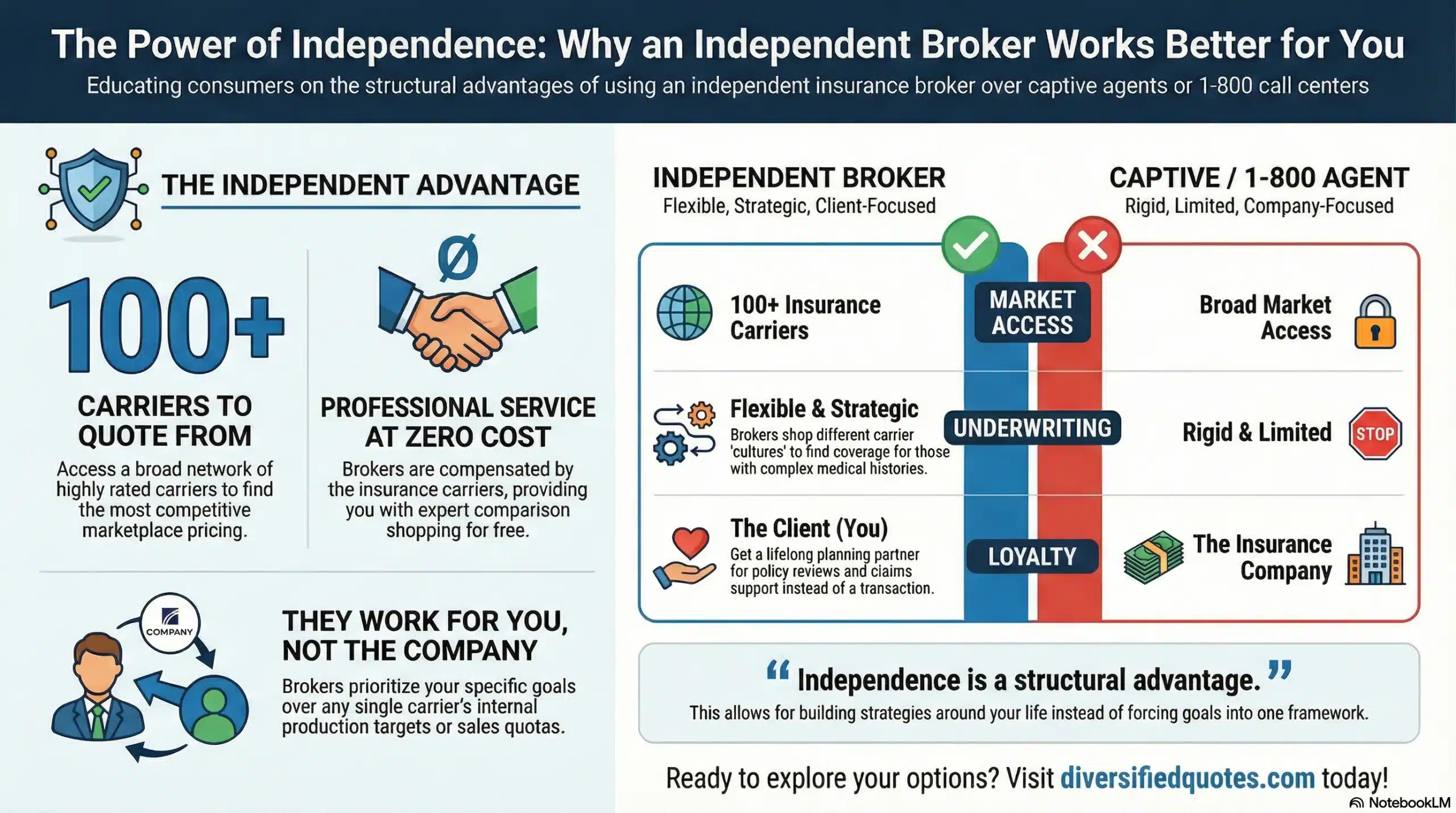
Jason Stolz, CLTC, CRPC, DIA, CAA and Chief Underwriter at Diversified Insurance Brokers (NPN 20471358), is a senior insurance and retirement professional with more than 25 years of real-world experience helping individuals, families, and business owners protect their income, assets, and long-term financial stability. As a long-time partner of the nationally licensed independent agency Diversified Insurance Brokers, Jason provides trusted guidance across multiple specialties—including fixed and indexed annuities, long-term care planning, personal and business disability insurance, life insurance solutions, Group Health, Travel Medical and Evacuation Insurance, and short-term health coverage. Diversified Insurance Brokers maintains active contracts with over 100 highly rated insurance carriers, ensuring clients have access to a broad and competitive marketplace.
His practical, education-first approach has earned recognition in publications such as VoyageATL, and contributions from his agency featured in Kiplinger and GoBankingRates— highlighting his commitment to financial clarity and client-focused planning. Drawing on deep product knowledge and years of hands-on field experience, Jason helps clients evaluate carriers, compare strategies, and build retirement and protection plans that are both secure and cost-efficient. Visitors who want to explore current annuity rates and compare options across multiple insurers can also use this annuity quote and comparison tool.
Browse More Resources: Return to our complete Wealth Strategies & General Resources guide — covering wealth building, tax strategies, fiduciary, wills & broker resources.
Last Reviewed: June 19, 2026 |
Reviewed by: Jason Stolz, CLTC, CRPC, DIA, CAA
Chief Underwriter, Diversified Insurance Brokers, Inc. | NPN: 20471358 | Diversified Insurance Brokers, Inc. — Licensed in all 50 states
Fact Checked by: Tonia Pettitt, CMIP©
Medicare Specialist, Diversified Insurance Brokers, Inc. | NPN: 14374308 | Diversified Insurance Brokers, Inc. — Licensed in all 50 states
Did you find this content helpful? Leave us a Google review — it helps others find trustworthy guidance too.
Editorial Standards: Diversified Insurance Brokers maintains rigorous editorial standards to ensure accuracy, clarity, and independence in all content. Learn more about our editorial standards and commitment to transparency.
