
Disability Insurance for Aquatic Therapists
As an Independent Disability Insurance Broker, we have access to exclusive discounts and negotiated pricing most captive agents can’t offer — see the full breakdown near the end of this page.
Disability Insurance for Aquatic Therapists

Jason Stolz CLTC, CRPC, DIA, CAA
Disability insurance for aquatic therapists is one of the most important financial protections available for healthcare professionals whose work depends on physical capability, clinical judgment, and sustained performance in a demanding therapeutic environment. Aquatic therapy is an intensely hands-on specialty — therapists work in pool environments assisting patients with neuromuscular conditions, orthopedic recovery, chronic pain management, and pediatric development, providing direct physical support that requires strength, balance, endurance, and precise coordination throughout every session. If an illness or injury interrupts that physical capability, income can stop almost immediately. Disability insurance for aquatic therapists is the primary mechanism for protecting the income that funds the household, supports savings, and maintains financial momentum during what could be a weeks-long, months-long, or permanent interruption in working capacity.
At Diversified Insurance Brokers, we help aquatic therapists and allied health professionals structure disability insurance coverage that reflects both the physical and clinical demands of therapy work, the income structures common in this field, and the long-term career risks that make income protection essential. This page provides a comprehensive treatment of disability risk for aquatic therapists, policy design considerations specific to this profession, the critical importance of own-occupation definitions, and the most common design mistakes that leave therapists with inadequate coverage when they need it most.
Protect Your Income as an Aquatic Therapist
Compare disability insurance options designed for therapy professionals and hands-on healthcare careers.
Request Disability Insurance Options
Questions? Call 800-533-5969
What Aquatic Therapists Actually Do — and Why It Creates Unique Disability Risk
Aquatic therapy is a specialized rehabilitation and therapeutic modality that uses the physical properties of water — buoyancy, hydrostatic pressure, viscosity, and thermal properties — to facilitate movement, reduce pain, and improve function for patients who may not tolerate equivalent land-based exercise. Aquatic therapists assess patient needs, design individualized aquatic exercise programs, provide hands-on assistance with movement in the water, monitor patient responses to treatment, document clinical progress, and adjust protocols as patients improve or encounter setbacks.
The physical demands of this work are substantial and multi-dimensional. Therapists spend most of their working hours in or immediately adjacent to the water, maintaining balance on wet pool decks and in the water itself while simultaneously supporting, guiding, and spotting patients who may have significant physical limitations, balance deficits, or unexpected movement patterns. The physical requirements include the ability to maintain stable footing on slippery surfaces, provide manual resistance or assistance to patients, react quickly to prevent patient falls or submersions, maintain prolonged standing and walking postures, and sustain upper body and core strength throughout sessions that may run 45 to 60 minutes each with minimal recovery between appointments.
The cumulative physical load of aquatic therapy practice over the course of a career creates meaningful long-term disability risk even in the absence of acute injury events. Shoulder impingement and rotator cuff pathology, lumbar strain and disc disease, knee and hip joint wear, and skin and respiratory conditions related to chlorine exposure are among the occupational health concerns documented in aquatic therapy and adjacent pool-based healthcare professions. Unlike conditions that develop in sedentary occupations, these physical wear patterns can limit the specific functional capabilities — overhead reach, sustained manual assistance, prolonged standing in water — that aquatic therapy requires, creating disability scenarios that are partial, progressive, and profession-specific.
The Aquatic Therapy Work Environment and Specific Hazard Profiles
The aquatic therapy environment creates hazard profiles that differ meaningfully from those of land-based clinical settings. Pool decks are inherently slippery surfaces where falls are a constant risk, particularly when therapists are moving quickly to assist patients, carrying equipment, or managing emergencies. The wet environment also increases the risk of electrical hazards, requires heightened infection control vigilance, and creates sustained chemical exposure through chlorine and other pool treatment compounds that affect respiratory health and skin integrity over time.
Temperature regulation is another occupational factor — pool environments are typically heated, and therapists working in warm therapeutic pools for multiple hours per day are subject to heat-related fatigue and the physiological effects of sustained warm water exposure. Pool chemicals, including chlorine and pH management compounds, are associated with occupational asthma, skin sensitization, and upper respiratory conditions in pool workers. Hearing is also a concern in indoor pool environments where the acoustic characteristics of tile and water surfaces create elevated noise levels during busy therapy sessions.
Acute injury events — slips and falls on pool decks, injuries from assisting patients who fall or have unexpected movements, back strains from transfers or patient support — can create sudden work-stopping disability events. But the more insidious and financially consequential disability risk for aquatic therapists often comes from the cumulative conditions that develop gradually over years of practice. A therapist who develops chronic shoulder impingement may be able to continue working through modified duties for a period, but the progressive nature of the condition may ultimately prevent the specific physical capabilities required for aquatic therapy even when other types of work remain possible. This graduated disability progression is precisely what residual and partial disability coverage is designed to address.
Why Own-Occupation Disability Definition Is Critical for Aquatic Therapists
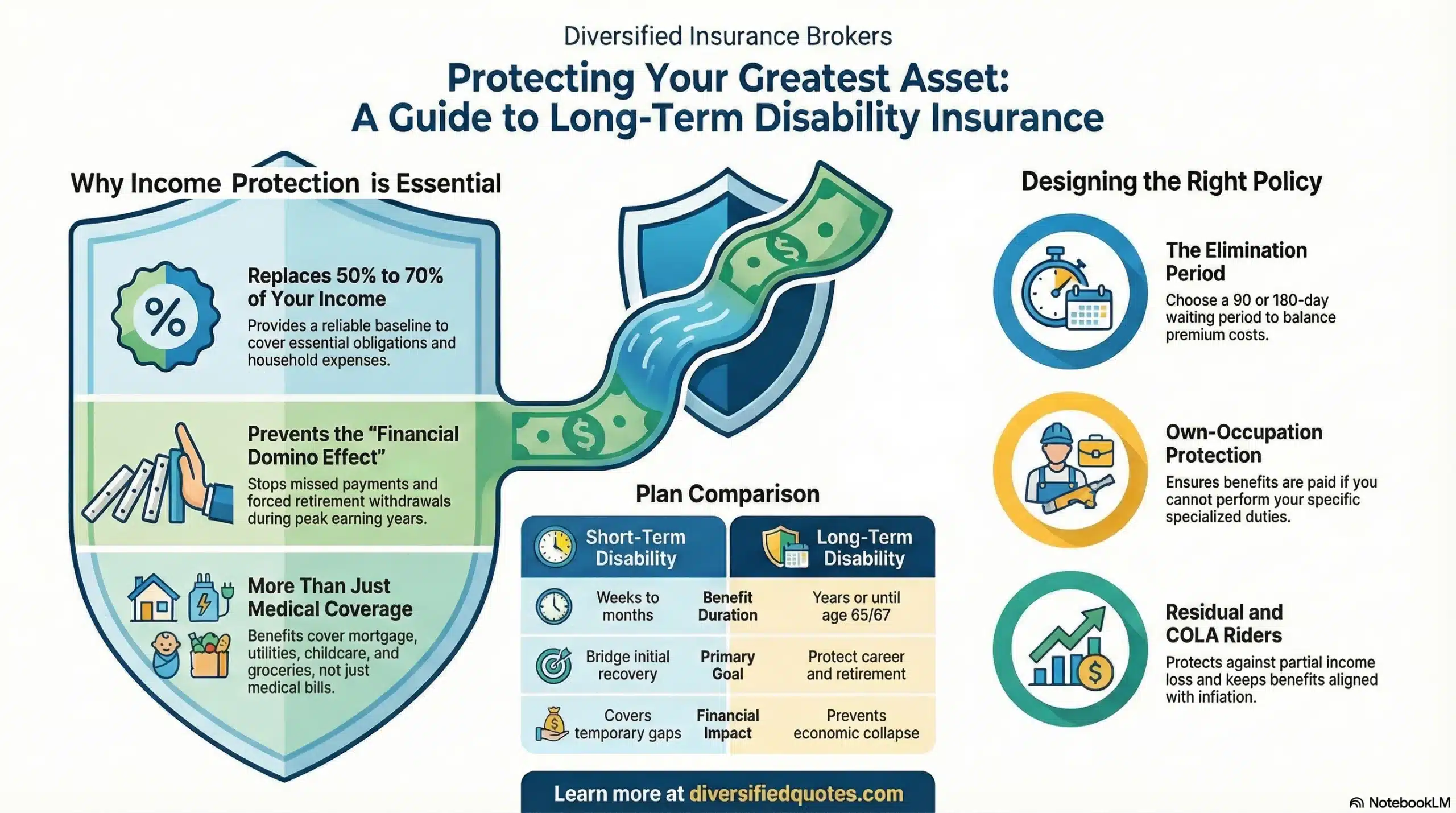
The disability definition in a policy is the single most consequential contract provision for any healthcare professional, and for aquatic therapists it is particularly important. An own-occupation disability definition pays benefits when the insured cannot perform the material and substantial duties of their specific occupation — aquatic therapy — even if they could work in a different capacity. An any-occupation definition, by contrast, pays benefits only when the insured cannot perform the duties of any occupation for which they are reasonably suited by education, training, or experience.
The practical difference is enormous. An aquatic therapist who develops a shoulder injury that prevents the physical demands of pool-based patient support may be physically capable of administrative work, consulting, or land-based clinical roles. Under an any-occupation definition, the injury would produce no disability benefit because the therapist could technically work in another capacity. Under a true own-occupation definition, the same therapist would receive benefits because they cannot perform the specific duties of aquatic therapy, regardless of other occupational possibilities.
For healthcare professionals who have invested years of education, clinical training, and specialized experience developing expertise in a specific practice area, the ability to practice that specialty is the foundation of their income trajectory. An injury or illness that ends that specific practice while leaving the therapist able to do other work is a genuine and material financial loss — and own-occupation coverage addresses it while any-occupation coverage does not. When comparing disability insurance options, aquatic therapists should prioritize carriers that offer true own-occupation definitions available for their specific occupation class, and should confirm the definition language in the policy contract rather than relying on marketing descriptions that may not accurately reflect the contract terms.
Residual and Partial Disability Coverage — Essential for Gradual Decline
Residual disability coverage pays proportionate benefits when a disability reduces but does not eliminate the ability to work. The benefit is calculated based on the percentage of income loss resulting from the disability — if earnings decline by 40% because of a covered disability, the residual benefit covers a proportionate share of the monthly benefit. This coverage is especially important for aquatic therapists because many of the most realistic disability scenarios in this profession are gradual, partial, and progressive rather than sudden and total.
A therapist who develops chronic back pain may reduce their caseload from 30 sessions per week to 15 before eventually reaching a point where they cannot continue practicing. A therapist with a shoulder condition may work at reduced capacity for months while undergoing treatment. A therapist with an occupational respiratory condition may reduce pool hours while continuing to work in dryer clinical environments. In each of these scenarios, a total-disability-only policy provides no benefit during the partial phase — months or years during which income has declined significantly and the financial strain is real and present. Residual coverage provides proportionate benefit throughout this partial phase, maintaining financial stability during the full continuum of the disability experience rather than only at its most extreme point.
Income Structure and Policy Design for Aquatic Therapists
Aquatic therapists work in diverse income structures: employed positions at rehabilitation centers, hospitals, and pediatric facilities with salary and benefits; private practice arrangements where income is directly tied to sessions conducted; contract or per-diem positions that create variable income without employer-sponsored benefits; and hybrid arrangements that combine some employed income with supplemental session fees. Each income structure creates different disability insurance design considerations.
For employed therapists with employer-sponsored group disability coverage, the group plan likely provides some baseline protection, but it is rarely sufficient on its own. Group plans typically cap monthly benefits at dollar maximums that may represent a fraction of actual compensation for higher-earning therapists, are almost never “own-occupation” throughout the full benefit period, are not portable when employment changes, and become taxable income when claims are paid (because the employer paid the premiums with pre-tax dollars). Individual disability insurance supplements group coverage to bridge the gap between what the group plan provides and what actual income replacement requires.
For self-employed and contract aquatic therapists, there is typically no baseline group coverage to supplement — individual disability insurance is the only meaningful income protection available. Carriers require documentation of self-employment income, typically two years of tax returns, to verify earnings for benefit amount purposes. The maximum monthly benefit available is determined by a formula applied to documented income, and because disability insurance is designed to replace a portion of income rather than create an incentive to remain disabled, the benefit amount is typically capped at 60 to 70 percent of documented pre-disability earnings.
Benefit periods should extend to age 65 or 67 for aquatic therapists who want protection against the long-duration scenarios — particularly progressive musculoskeletal conditions and cognitive changes — that could permanently alter career trajectory. Short benefit periods of two or five years protect against short-term events but leave the most consequential long-duration disabilities unprotected. Elimination periods of 90 days are commonly the most cost-effective choice when liquid emergency reserves are in place, balancing premium reduction against the delay before benefits begin. COLA (cost of living adjustment) riders ensure that benefits received over a multi-year disability maintain purchasing power as inflation erodes the real value of a fixed monthly payment.
The Employer Coverage Gap for Hospital and Facility-Employed Therapists
Many aquatic therapists employed by hospitals, rehabilitation facilities, or school systems have access to group long-term disability insurance through their employer benefits package. Understanding the limitations of this coverage is essential for any therapist who intends to rely on it as primary income protection. The most common limitations include a monthly benefit cap (often $5,000 to $10,000 per month maximum) that may not reflect actual compensation for experienced therapists; a disability definition that begins as own-occupation but transitions to any-occupation after 24 months, creating a cliff after which much of the benefit may disappear; non-portability when employment changes; taxability of benefits received (because employer-paid premiums reduce the tax efficiency of the benefit); and exclusion of bonus, overtime, or variable compensation components from the benefit calculation.
For a therapist earning $80,000 annually — $6,667 per month gross — a group plan with an any-occupation definition after 24 months could transition from adequate protection in the first two years to providing minimal or no benefit if the therapist can technically perform other work. An individual own-occupation policy that supplements or replaces the group plan’s coverage beyond 24 months provides the sustained protection that the group plan contractually withdraws. This supplement strategy — individual coverage designed to activate where group coverage ends or fails — is among the most cost-effective disability insurance designs available for employed therapists with existing group benefits.
Occupational Classification and Why It Matters for Aquatic Therapists
Disability insurance carriers classify occupations into risk categories that affect both premium levels and the definition language available. For aquatic therapists, the specific classification can vary across carriers depending on how the insurer categorizes the balance between physical and professional components of the role. Some carriers classify aquatic therapists favorably within a broad “therapist” or “allied health professional” category that provides access to own-occupation definitions and competitive rates. Others may classify the physical nature of pool-based work more restrictively, affecting both the definition available and the premium charged.
This carrier variation is one of the most practical reasons to work with an independent broker rather than applying to a single carrier. An independent broker who understands how different carriers classify aquatic therapy specifically — not just “healthcare workers” generically — can identify the carrier where your occupation class produces the most favorable combination of definition quality and premium cost. The difference between a favorable and an unfavorable occupation class classification can affect both the annual premium and the policy’s actual usefulness in a claim scenario by thousands of dollars over the life of the policy. For a deeper exploration of why this comparison process matters for healthcare professionals, see our guide on why working with an independent disability insurance broker matters.
Future Increase Options — Protecting Insurability as Career and Income Grow
Aquatic therapists in the early stages of their careers typically earn less than they will after 5, 10, or 15 years of experience and professional development. A future increase option (FIO) or guaranteed insurability rider in a disability policy allows the insured to increase the monthly benefit at specified future dates without undergoing new medical underwriting. This means that a therapist who purchases disability insurance at age 28 with an appropriate benefit for current income can increase coverage as income grows through career advancement without the risk that health changes in the intervening years create barriers to additional coverage.
The value of the future increase option is most apparent when viewed over the full career timeline. A therapist who develops a chronic condition at age 35 — while still working — may be unable to obtain additional disability insurance without exclusions or premium surcharges. But if a future increase option was built into their policy at age 28, they can still increase coverage according to the option schedule regardless of the health change. The right to increase benefits without new underwriting, purchased at a modest additional cost when the policy is first issued, provides an insurance-against-insurability function that can be extremely valuable when health and career trajectories diverge from initial assumptions.
Get Disability Insurance Quotes for Aquatic Therapists
We compare options across carriers specifically for therapy professionals to find the right combination of definition, benefit, and value.
Get Disability Insurance Quotes
Questions? Call 800-533-5969
Financial Protection Essentials
Talk With an Advisor Today
Choose how you’d like to connect—call or message us, then book a time that works for you.
Schedule here:
calendly.com/jason-dibcompanies/diversified-quotes
Licensed in all 50 states • Fiduciary, family-owned since 1980
Disability Insurance for Aquatic Therapists — FAQs
Yes — aquatic therapists typically qualify for disability insurance, and many qualify for favorable occupation class ratings due to the combination of professional training and clinical expertise involved in their work. The occupation classification can vary across carriers depending on how the insurer weighs the physical demands of pool-based therapy work against the professional and cognitive dimensions of the role, which is why working with an independent broker who understands how different carriers classify this specific occupation produces better results than applying to a single carrier without that comparative knowledge.
The underwriting process evaluates occupation, income, health history, and other standard factors. For aquatic therapists, documenting income accurately — particularly for those with variable session-based income structures — is important for maximizing the available monthly benefit. Applying while healthy and actively working produces the most favorable underwriting outcomes, both in terms of premium level and the availability of riders like own-occupation definitions and future increase options that become more restricted as health and age change over time.
The physical demands of aquatic therapy create occupational health risks concentrated in several body regions. Shoulder conditions — including rotator cuff strain, impingement syndrome, and progressive shoulder joint wear — are among the most commonly reported issues in pool-based therapy professionals due to the sustained overhead and reaching movements required for patient support. Lumbar spine conditions, including disc herniations and chronic low back pain, result from repeated patient transfers, bending at the pool edge, and sustained postures in water. Knee and hip joint conditions develop over years of walking and standing on pool decks and maintaining stability in water.
Beyond musculoskeletal conditions, aquatic therapists face occupational health risks from chlorine and pool chemical exposure that can produce occupational asthma, reactive airway conditions, and skin sensitization with prolonged exposure. Slip and fall accidents on pool decks are a consistent acute injury risk. Fatigue-related conditions — both physical and cognitive — result from the sustained performance demands of managing multiple complex patients in a physically active environment for extended periods. The diversity of these risk factors, spanning both acute and gradual-onset categories, makes disability insurance important from early in an aquatic therapy career rather than something to consider only after significant clinical experience has accumulated.
The own-occupation definition is the most important contract provision in any disability policy for a healthcare professional because it determines what must be true for benefits to be paid. An own-occupation policy pays benefits when the insured cannot perform the material and substantial duties of their specific occupation — aquatic therapy — even if they could work in a different capacity such as administrative healthcare, consulting, or land-based clinical roles. An any-occupation definition requires that the insured be unable to perform any occupation for which they are reasonably suited, which means a therapist with a physical limitation that prevents aquatic therapy but not desk work might receive no benefit.
For aquatic therapists, who have invested years of education and clinical development building specialized expertise in a specific high-value practice area, a condition that ends that specific practice while leaving them able to do other work represents a real and material financial loss. Own-occupation coverage addresses that loss; any-occupation coverage generally does not. When comparing disability insurance policies, confirming the specific definition language in the contract — not just the marketing description — and ensuring that own-occupation language applies throughout the full benefit period (not just for the first 24 months, as some policies provide) is essential for meaningful protection.
Yes — residual or partial disability coverage pays proportionate benefits when a covered disability reduces but does not eliminate the ability to work. This is particularly important for aquatic therapists because many realistic disability scenarios in this profession are gradual and partial — a shoulder condition that progressively reduces the number of sessions a therapist can safely conduct, a respiratory condition that limits pool hours, or a back condition that requires caseload reduction before eventually ending practice. Without residual coverage, a policy that triggers only on total inability to work may provide no benefit during these partial phases even when income has declined substantially.
Residual coverage typically triggers when income has declined by a minimum percentage — often 20 to 25% — due to a covered disability. The benefit is proportionate to the income loss: a 40% income decline produces approximately 40% of the monthly disability benefit. For therapists with session-based income structures, documenting income changes and maintaining clear records of session counts and earnings during a partial disability period is important for supporting residual benefit claims. Confirming that residual disability coverage is included in any disability policy under consideration is one of the most important evaluation steps for aquatic therapists and other healthcare professionals whose most realistic disability scenarios involve partial rather than total work limitation.
Disability insurance benefit amounts are based on documented pre-disability income, and carriers typically establish the maximum available monthly benefit by applying a percentage formula — usually 60 to 70% — to documented average monthly earnings. For employed aquatic therapists with W-2 income, the documentation process is straightforward: tax returns and W-2 forms confirm annual earnings from which average monthly income is calculated. The maximum benefit is then set at the applicable percentage of that documented income level.
For self-employed aquatic therapists and those with practice ownership structures, income documentation is more complex. Carriers typically require two years of Schedule C or business tax returns to establish average earned income, and business overhead expenses are typically deducted from gross revenue to determine net earned income for benefit calculation purposes. Aquatic therapists who have used aggressive tax minimization strategies that significantly reduce reported income should understand that the documented income level — not actual gross revenue — determines the maximum benefit available. Discussing income documentation strategy with an independent broker before applying ensures the application is structured to maximize the available benefit amount given the specific income documentation situation.
The best time for aquatic therapists to apply for disability insurance is while healthy and early in their career — before any occupational health conditions, musculoskeletal issues, or other health changes appear in medical records that could affect underwriting outcomes. Age is a continuous driver of disability insurance premiums, and every year of delay increases the cost for equivalent coverage. More importantly, the physical wear that accumulates over years of aquatic therapy practice — shoulder, back, and lower extremity conditions — often begins showing up in medical records before it causes significant functional limitation. Once those conditions are documented, subsequent disability applications may include exclusion riders that remove coverage for the very body regions most likely to be involved in an aquatic therapy disability claim.
Applying before those conditions are documented produces a policy without those exclusions — comprehensive coverage for the full occupational risk profile rather than a policy that specifically carves out the most predictable risk areas. Future increase option riders purchased at initial application protect the right to increase the monthly benefit as income grows without new medical underwriting, which means the coverage can scale with the career even if health changes in the intervening years would otherwise make additional coverage unavailable or exclusion-laden. The combination of early application for comprehensive coverage plus a future increase option is consistently the strongest long-term disability insurance strategy for aquatic therapists and other physical healthcare professionals.
About the Author:
Jason Stolz, CLTC, CRPC, DIA, CAA and Chief Underwriter at Diversified Insurance Brokers (NPN 20471358), is a senior insurance and retirement professional with more than 25 years of real-world experience helping individuals, families, and business owners protect their income, assets, and long-term financial stability. As a long-time partner of the nationally licensed independent agency Diversified Insurance Brokers, Jason provides trusted guidance across multiple specialties—including fixed and indexed annuities, long-term care planning, personal and business disability insurance, life insurance solutions, Group Health, Travel Medical and Evacuation Insurance, and short-term health coverage. Diversified Insurance Brokers maintains active contracts with over 100 highly rated insurance carriers, ensuring clients have access to a broad and competitive marketplace.
His practical, education-first approach has earned recognition in publications such as VoyageATL, and contributions from his agency featured in Kiplinger and GoBankingRates— highlighting his commitment to financial clarity and client-focused planning. Drawing on deep product knowledge and years of hands-on field experience, Jason helps clients evaluate carriers, compare strategies, and build retirement and protection plans that are both secure and cost-efficient. Visitors who want to explore current annuity rates and compare options across multiple insurers can also use this annuity quote and comparison tool.
Explore More Disability Insurance Options: Browse our complete guide to Disability Insurance for Nursing, Therapy & Allied Health — covering nurses, therapists, dental hygienists, pharmacists, lab techs & allied health professionals from 100+ carriers.
Last Reviewed: May 13, 2026 |
Reviewed by: Jason Stolz, CLTC, CRPC, DIA, CAA
Chief Underwriter, Diversified Insurance Brokers, Inc. | NPN: 20471358 | Diversified Insurance Brokers, Inc. — Licensed in all 50 states
Fact Checked by: Tonia Pettitt, CMIP©
Medicare Specialist, Diversified Insurance Brokers, Inc. | NPN: 14374308 | Diversified Insurance Brokers, Inc. — Licensed in all 50 states
Did you find this content helpful? Leave us a Google review — it helps others find trustworthy guidance too.
Editorial Standards: Diversified Insurance Brokers maintains rigorous editorial standards to ensure accuracy, clarity, and independence in all content. Learn more about our editorial standards and commitment to transparency.
