
Disability Insurance for Athletic Trainers
As an Independent Disability Insurance Broker, we have access to exclusive discounts and negotiated pricing most captive agents can’t offer — see the full breakdown near the end of this page.
Disability Insurance for Athletic Trainers

Jason Stolz CLTC, CRPC
Disability insurance for athletic trainers is one of the most important forms of financial protection for professionals whose careers depend on physical capability, mobility, and hands-on care. Athletic trainers work directly with athletes and active individuals to prevent, diagnose, and treat injuries. Their ability to perform physical assessments, demonstrate exercises, apply therapeutic techniques, and provide ongoing rehabilitation support is directly tied to how they earn income. Unlike many professions that allow for remote work or modified desk-based duties, athletic training is inherently physical. If you are unable to move, demonstrate techniques, or provide hands-on care, your ability to earn income can decline rapidly — and in many cases, immediately.
At Diversified Insurance Brokers, we help athletic trainers design disability insurance strategies that reflect the realities of physically demanding healthcare roles. A properly structured policy ensures that your income is protected while you recover and maintain your career trajectory. Whether you are employed by a school district, a professional sports organization, a rehabilitation clinic, or operating in private practice, the risk profile of your role warrants careful planning and coverage designed to respond when your physical ability to work is compromised.
Protect Your Income as an Athletic Trainer
Compare disability insurance options designed for healthcare and performance-based professions.
What Athletic Trainers Do and How Income Is Earned
Athletic trainers specialize in injury prevention, rehabilitation, and performance optimization. They work in a variety of settings including high schools, universities, professional sports organizations, rehabilitation clinics, corporate wellness programs, and private practices. Their responsibilities include evaluating injuries, developing individualized treatment plans, guiding rehabilitation exercises, applying therapeutic modalities, performing manual therapy techniques, and providing ongoing monitoring and care throughout an athlete’s recovery. The breadth of physical tasks involved in this role is significant — a typical workday may include kneeling, demonstrating exercises, assisting with mobility, lifting equipment, and providing manual resistance during rehabilitation.
Income for athletic trainers may come from salaried positions, hourly employment, contract work, or private practice revenue. In many cases, income is directly tied to the ability to actively work with clients and patients — particularly for those in contract or private practice settings where billing depends on the number of sessions performed. If a disability occurs and you cannot perform your duties, income can drop quickly, and rebuilding a client base or returning to a salaried position after an extended absence can take considerable time. This income structure is similar to other hands-on healthcare roles such as acupuncturists and aquatic therapists, where physical interaction with clients is essential to generating income and where disability creates immediate financial disruption.
Why Disability Insurance Is Essential for Athletic Trainers
Athletic trainers face a unique combination of physical and professional risk. Their work requires strength, mobility, coordination, and the sustained ability to demonstrate exercises and manual techniques across a full work schedule. If any of these physical abilities are compromised by injury, illness, or a chronic condition, the ability to work is directly and immediately affected. Unlike administrative or desk-based roles that may accommodate modified duties during recovery, athletic training offers limited opportunities to continue generating income without full physical capability. This makes disability insurance a critical safety net rather than an optional financial product.
The risk profile of an athletic trainer is meaningfully different from an office worker even within the healthcare sector. The constant physical demands — including bending, kneeling, demonstrating movement patterns, providing manual assistance, and standing for extended periods — create an elevated probability of both acute injury events and cumulative physical conditions developing over a career. Professionals in similarly demanding roles, such as those providing cosmetologist disability coverage and automobile industry disability coverage, face comparable structural challenges where physical capability directly drives income and where modified duty arrangements are limited or unavailable.
Physical Risks and Injury Exposure for Athletic Trainers
Athletic trainers are constantly moving, lifting, demonstrating exercises, and physically assisting clients during evaluation and rehabilitation sessions. This exposes them to a wide range of physical risks including muscle strains, joint injuries, rotator cuff damage, lumbar spine conditions, knee injuries, and repetitive stress syndromes. Over time, the cumulative physical demands of the role can lead to chronic conditions such as persistent back pain, shoulder instability, or joint deterioration that gradually reduces the ability to work at full capacity long before a single acute injury forces a complete work stoppage.
These physical exposure patterns are not limited to a single dramatic event. Many disability claims among physically demanding occupations arise from progressive conditions that compound over years — making it especially important for athletic trainers to secure disability coverage early, while health is strong and underwriting classifications are most favorable. The physical risk profile has meaningful parallels to professions like repairmen, electricians, and woodworking industry professionals, where physical capability is directly tied to income and where the consequences of physical deterioration are both clinical and financial.
Cognitive and Decision-Making Risk
In addition to physical ability, athletic trainers must make rapid and accurate decisions regarding injury assessment, safe return-to-play protocols, contraindications to treatment, and progression of rehabilitation. This requires focused attention, strong clinical reasoning, effective communication with athletes and physicians, and the ability to adapt treatment approaches in real time based on how a patient is responding. Conditions that affect cognitive function — including concussions, neurological events, significant mental health episodes, or the cognitive effects of certain medications — can impair the judgment and communication capacity that is as essential to safe athletic training practice as physical ability itself.
This combination of physical and cognitive demands is shared by other high-stakes healthcare roles. Professionals such as ambulance drivers and aerobics teachers face similarly layered risks where performance depends on both physical capability and real-time cognitive function — and where disability in either dimension can interrupt the ability to safely and effectively work.
Income Volatility and Career Risk
Many athletic trainers experience meaningful income variability, particularly those working in private practice, contract arrangements, or per-session billing structures. Income may depend on the number of clients seen, sessions completed, or contracts maintained — meaning a disability event that reduces work capacity does not simply pause income, it begins a process of client attrition that can take months or years to reverse. Clients who cannot receive ongoing care will seek alternative providers, and rebuilding that client base requires active physical participation in the profession that may not be possible during recovery.
This creates both short-term and long-term financial risk that goes beyond the immediate period of total disability. Residual disability coverage is particularly valuable for athletic trainers because it provides income replacement even during the partial recovery phase — when an athletic trainer may be able to return to some work but not at full capacity or full client volume. Exploring additional financial strategies such as creating guaranteed income streams through annuities can complement a disability plan, but disability insurance remains the primary protection for earned income during working years. Professionals in other performance-based roles — including actors and actresses and game wardens — face similarly direct connections between physical presence and income generation that make disability insurance essential rather than supplemental.
The Case for Own-Occupation Disability Coverage
The definition of disability used in a policy is one of the most important features for athletic trainers to evaluate. An “own-occupation” definition provides the strongest protection — it pays benefits if you are unable to perform the specific duties of your occupation as an athletic trainer, even if you are capable of performing some other type of work. This matters significantly because an athletic trainer with a shoulder injury that prevents hands-on patient care may technically be able to perform administrative or teaching duties — but an any-occupation policy might deny benefits in that scenario while an own-occupation policy would continue to pay. For a profession where the entire income model depends on physical patient interaction, own-occupation coverage is the appropriate standard rather than a premium upgrade. Professionals in similarly specialized roles such as those in the convenience store owner category also benefit from occupational specificity in their disability policy design, though the specific risk vectors differ substantially.
Partial Disability and Residual Income Protection
Many athletic trainers experience partial disabilities rather than complete and immediate inability to work. A shoulder condition may limit the number of clients seen per day without eliminating the ability to work entirely. A lumbar spine condition may prevent demonstration of certain exercises while still allowing some clinical work to continue. In these partial disability scenarios, standard total disability benefits may not trigger — leaving an athletic trainer with reduced income but no insurance support. Residual or partial disability coverage addresses this gap by providing income support proportional to the income reduction experienced, helping maintain financial stability during the gradual recovery process that characterizes many musculoskeletal conditions. This type of coverage is particularly important for athletic trainers because the nature of their physical work makes graded recovery — rather than binary disabled/not-disabled transitions — the more common clinical reality.
Designing a Disability Policy for Athletic Trainers
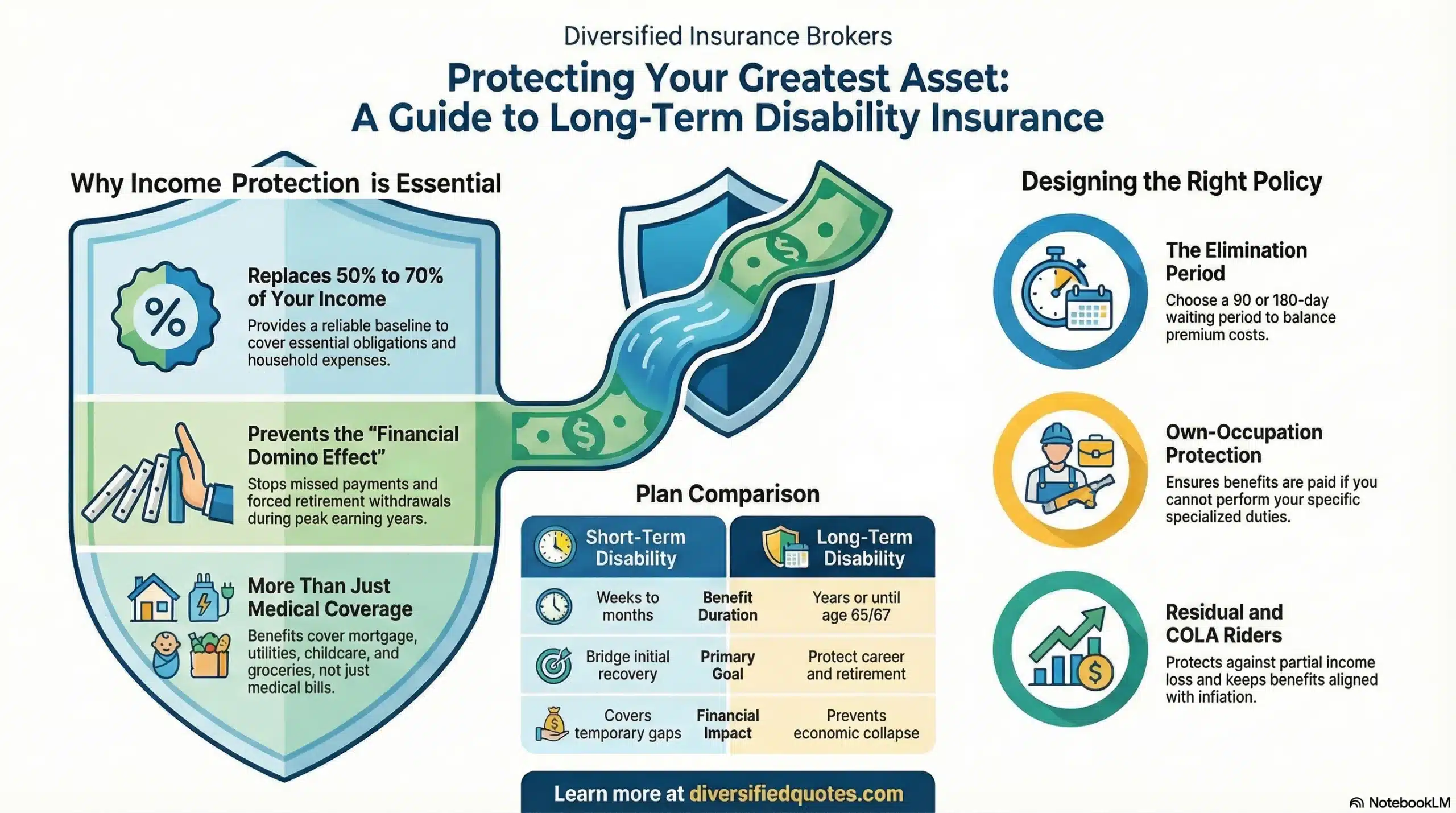
Disability insurance for athletic trainers should be structured around both income level and occupational demands. Benefit amounts should reflect total earnings including any variable income from client sessions, contract work, or private practice revenue — typically calculated as an average across recent tax years. The benefit amount should be sufficient to cover essential living expenses, ongoing professional expenses such as licensing and continuing education, and debt service without requiring a complete lifestyle restructuring during a disability event. Elimination periods should be selected based on your actual ability to cover short-term expenses from savings or employer-provided short-term disability benefits. Benefit periods should extend through peak earning years — to age 65 or 67 for most athletic trainers — to provide genuine long-term protection rather than a short-term bridge.
Additional features worth evaluating include inflation protection riders that increase benefits over time to offset rising living costs, future purchase option riders that allow coverage to increase as income grows without requiring additional medical underwriting, and catastrophic disability riders for situations involving total loss of independence. Understanding long-term cost trends such as rising healthcare premiums in retirement years provides important context for structuring disability benefits at a level that genuinely protects financial stability rather than simply providing a partial buffer. Working with an independent disability insurance broker is the most effective way to compare carrier underwriting classifications for athletic trainers across the full market rather than a single company’s pricing, and to structure a policy that genuinely reflects the occupational realities of the role.
Integrating Disability Insurance Into a Broader Financial Plan
For athletic trainers, disability insurance is not a standalone product — it is a foundational component of a complete financial protection strategy. It protects the income that supports your current lifestyle, funds retirement savings, services debt, and supports dependents. Without it, a significant disability event can unwind years of financial progress in a relatively short period. Reviewing existing disability coverage through a second opinion disability insurance review is particularly valuable for athletic trainers who may have acquired basic group coverage through an employer without evaluating whether the policy’s benefit amount, definition of disability, and benefit period are actually adequate for their income level and occupational risk. For those also exploring how to position retirement income to complement disability planning, our resource on medically underwritten annuities covers how health factors can affect annuity income in ways that interact with long-term financial planning for disability-affected individuals.
Get Disability Insurance Quotes for Athletic Trainers
We’ll compare multiple carriers and structure a policy that reflects your income, occupational risk, and long-term goals.
Related Disability Insurance Pages
Financial Protection Essentials
Talk With an Advisor Today
Choose how you’d like to connect—call or message us, then book a time that works for you.
Schedule here:
calendly.com/jason-dibcompanies/diversified-quotes
Licensed in all 50 states • Fiduciary, family-owned since 1980
Disability Insurance for Athletic Trainers — FAQs
Yes — athletic trainers typically qualify for individual disability insurance based on their income level and documented occupational duties. Most carriers classify athletic trainers as a healthcare occupation with physical demands, which means pricing will reflect both the income level being insured and the physical nature of the work. The classification assigned by the carrier determines the premium rate, and athletic trainers may fall into different categories depending on their primary work setting — a trainer in a clinical rehabilitation setting may receive a different classification than one working primarily in high-contact sports environments. Applying while actively employed and in good health produces the best underwriting outcomes, as occupational classification and health classification work together to determine the final premium. Working with an independent broker who knows how different carriers classify athletic training occupations can make a meaningful difference in both coverage quality and cost.
Athletic trainers face a broad range of physical risks throughout a typical workday that most office-based occupations do not encounter. Constant physical demands include manual therapy application, guiding resistance exercises, demonstrating movement patterns, assisting with transfers and mobility, and working in positions that stress the lumbar spine, shoulders, and knees. Over a career, the cumulative effect of these physical demands increases the probability of both acute injury events — such as a rotator cuff tear from a patient-assist incident — and progressive chronic conditions such as lumbar disc disease, osteoarthritis, or repetitive stress injuries. Even a condition that does not completely prevent all activity can reduce the physical capacity needed to perform athletic training duties at a professional standard, creating a partial disability situation where income is reduced without a complete work stoppage. Disability insurance is the financial tool that addresses both of these scenarios — total disability and partial disability — so that income protection is in place regardless of how the physical limitation presents clinically.
This distinction is one of the most important features to evaluate for athletic trainers. An own-occupation policy pays disability benefits if you are unable to perform the material duties of your specific occupation as an athletic trainer — even if you are technically capable of performing some other type of work entirely. An any-occupation policy only pays if you cannot perform any gainful occupation for which you are reasonably suited by education, training, or experience. For an athletic trainer, this difference is significant: a shoulder condition that prevents hands-on patient care, manual therapy, and exercise demonstration may make it impossible to work as an athletic trainer — but that same person might theoretically perform administrative, teaching, or consulting work. An any-occupation policy might deny benefits in that scenario. An own-occupation policy would continue to pay, recognizing that the ability to work as an athletic trainer specifically has been compromised even if the individual remains functional for other purposes. For any healthcare professional whose income is directly tied to a specific physical skill set, own-occupation coverage is the standard that genuinely protects income rather than simply providing a fallback benefit when all other options are exhausted.
Yes — residual or partial disability benefits can replace a portion of income when an athletic trainer is still able to work but experiencing a reduction in earnings due to a disability-related limitation. This type of coverage is particularly important for athletic trainers because the nature of physical rehabilitation work makes graded recovery the more common pattern rather than an immediate binary transition from fully disabled to fully recovered. A lumbar condition may allow limited patient care but prevent the full physical demands of a complete daily schedule. A hand or wrist condition may allow some client sessions while preventing the force application required for certain manual therapy techniques. In these scenarios, residual disability benefits supplement reduced earnings so that financial stability is maintained during recovery, and the insurance responds proportionally to the income loss rather than requiring a complete work stoppage to trigger any benefit at all. Policies with strong residual disability provisions are worth prioritizing for athletic trainers over policies that focus only on total disability definitions.
Disability insurance benefits for athletic trainers are calculated based on documented earned income, typically reflecting gross income from all professional sources including salary, contract payments, and private practice revenue. Insurers generally allow coverage of up to 60 to 70 percent of pre-disability gross income, with the benefit amount determined at the time of application based on the most recent one or two years of documented income — commonly verified through W-2 forms, 1099 forms, or tax returns. For athletic trainers with variable income from multiple sources, carriers typically average income across recent years to establish a representative baseline. The elimination period — the waiting period before benefits begin — does not affect the benefit calculation but does affect the timing of first payment. Choosing a benefit amount that genuinely covers essential living expenses, ongoing professional expenses, and debt service is more important than maximizing the benefit percentage, since benefits that cover actual needs provide more useful protection than high-dollar figures that are either unnecessary or unavailable due to income documentation limits.
Benefit periods for individual disability policies vary and can be structured for two years, five years, to age 65, or to age 67 depending on the policy purchased. For athletic trainers in the prime of their careers, a benefit period extending to age 65 or 67 is almost always the most appropriate choice because it provides genuine long-term income protection across the full working horizon rather than a short-term bridge. Short benefit periods of two or five years may be less expensive in premium, but they leave significant unprotected exposure if a disability prevents working for longer than the benefit period — which is a very real possibility for conditions such as degenerative spinal disease, autoimmune disorders, or serious musculoskeletal injuries. Selecting the benefit period is one of the most consequential decisions in the policy design process, and for most athletic trainers, the long-term financial security provided by an extended benefit period justifies the additional premium cost compared to a shorter benefit period that could exhaust benefits while the disability is still active.
The best time to apply for disability insurance is while you are actively working, in good health, and without existing conditions that could complicate underwriting. Disability insurance premiums and underwriting classifications are locked in at the time of application and remain fixed for the life of the policy — meaning that applying early in your career while healthy typically produces better classifications, lower premiums, and cleaner policy terms than waiting until health issues have developed. Many athletic trainers delay purchasing coverage because the risk feels theoretical when they are physically healthy and performing well — but the cumulative physical demands of the profession mean that early application is strategically advantageous. Waiting until after a significant injury has occurred, or after the early signs of a chronic condition are documented in medical records, can result in exclusion riders that carve out coverage for exactly the conditions most likely to cause a disability claim. Applying early eliminates that risk and locks in protection at the most favorable terms available.
The elimination period is the waiting period between the onset of a qualifying disability and the date when benefit payments begin — similar to a deductible measured in time rather than dollars. Common elimination period options are 30, 60, 90, or 180 days. A shorter elimination period means benefits begin sooner but costs more in premium. A longer elimination period reduces premium cost but requires the policyholder to cover expenses from savings or other resources during the waiting period before benefits begin. For athletic trainers, the appropriate elimination period depends on how much liquid savings are available to cover living expenses during the waiting period, whether employer-provided short-term disability benefits exist that would bridge the gap, and how quickly income would be affected if the ability to work were compromised. A 90-day elimination period is a common choice for many professionals because it balances premium affordability with a manageable self-funded waiting period, but the right answer depends entirely on the individual’s financial reserves and employer benefits situation.
Group disability coverage provided through an employer is valuable as a foundation but typically has several structural limitations that make it insufficient as the only source of disability protection for most athletic trainers. Group policies often provide benefits equal to 60 percent of base salary only — excluding bonuses, variable income, or contract revenue — which means athletic trainers with diversified income sources may have a larger income gap than the group benefit covers. Group policy benefits are commonly taxable when the employer pays premiums, further reducing the net benefit received. The definition of disability in group policies is frequently “any occupation” after an initial “own occupation” period of 24 months, which means long-term benefits become much harder to collect after the first two years. Group coverage also does not follow you if you change employers or move to private practice — meaning the protection evaporates exactly when a career transition makes disability risk most significant. Individual disability insurance provides portability, own-occupation definitions, and benefit amounts structured around total income rather than just base salary, addressing the gaps that group coverage consistently leaves open.
Yes — athletic trainers operating in private practice can obtain individual disability insurance, though the application process and documentation requirements differ somewhat from salaried employees. Private practice income is typically documented through business tax returns, profit and loss statements, and 1099 forms, and carriers generally look at net business income as the basis for benefit calculations. For private practice athletic trainers, the coverage considerations extend beyond personal income replacement to include business overhead expense disability insurance, which covers fixed business costs — rent, staff salaries, equipment leases, and professional subscriptions — during a period of disability when the business owner cannot generate revenue but the practice’s fixed expenses continue regardless. Combining personal income replacement disability coverage with business overhead expense coverage provides comprehensive protection for the private practice athletic trainer’s financial life on both the personal and business dimensions simultaneously.
About the Author:
Jason Stolz, CLTC, CRPC, DIA, CAA and Chief Underwriter at Diversified Insurance Brokers (NPN 20471358), is a senior insurance and retirement professional with more than 25 years of real-world experience helping individuals, families, and business owners protect their income, assets, and long-term financial stability. As a long-time partner of the nationally licensed independent agency Diversified Insurance Brokers, Jason provides trusted guidance across multiple specialties—including fixed and indexed annuities, long-term care planning, personal and business disability insurance, life insurance solutions, Group Health, Travel Medical and Evacuation Insurance, and short-term health coverage. Diversified Insurance Brokers maintains active contracts with over 100 highly rated insurance carriers, ensuring clients have access to a broad and competitive marketplace.
His practical, education-first approach has earned recognition in publications such as VoyageATL, and contributions from his agency featured in Kiplinger and GoBankingRates— highlighting his commitment to financial clarity and client-focused planning. Drawing on deep product knowledge and years of hands-on field experience, Jason helps clients evaluate carriers, compare strategies, and build retirement and protection plans that are both secure and cost-efficient. Visitors who want to explore current annuity rates and compare options across multiple insurers can also use this annuity quote and comparison tool.
Explore More Disability Insurance Options: Browse our complete guide to Disability Insurance for Food, Hospitality, Arts & Entertainment — covering chefs, musicians, actors, bartenders, hospitality workers & entertainment professionals from 100+ carriers.
Last Reviewed: May 7, 2026 |
Reviewed by: Jason Stolz, CLTC, CRPC, DIA, CAA
Chief Underwriter, Diversified Insurance Brokers, Inc. | NPN: 20471358 | Diversified Insurance Brokers, Inc. — Licensed in all 50 states
Fact Checked by: Tonia Pettitt, CMIP©
Medicare Specialist, Diversified Insurance Brokers, Inc. | NPN: 14374308 | Diversified Insurance Brokers, Inc. — Licensed in all 50 states
Did you find this content helpful? Leave us a Google review — it helps others find trustworthy guidance too.
Editorial Standards: Diversified Insurance Brokers maintains rigorous editorial standards to ensure accuracy, clarity, and independence in all content. Learn more about our editorial standards and commitment to transparency.
