
Disability Insurance for Repairmen
As an Independent Disability Insurance Broker, we have access to exclusive discounts and negotiated pricing most captive agents can’t offer — see the full breakdown near the end of this page.
Disability Insurance for Repairmen

Jason Stolz CLTC, CRPC, DIA, CAA
Disability insurance for repairmen is essential income protection for skilled trade professionals whose livelihoods depend on their physical ability to work with their hands, operate in challenging environments, and perform technically demanding repair and maintenance tasks every day. Whether you work as an HVAC technician servicing heating and cooling systems, an appliance repair specialist, an electronics or computer repair technician, an elevator mechanic, a general maintenance and repair worker, or any other skilled repair professional — your income stops the moment a disabling injury or illness prevents you from doing the physical work your career requires.
Repairmen face a disability risk profile that combines the physical demands of skilled manual work with the unique hazards of the specific systems and environments they service. Back injuries from heavy lifting, electrical shocks from live circuits, falls from ladders and rooftops, chemical exposure from refrigerants and solvents, cuts and lacerations from tools and equipment, and the cumulative musculoskeletal wear of sustained physical trade work all contribute to an occupational injury rate that the Bureau of Labor Statistics has documented as among the highest across all American occupational categories for certain repair specializations.
At Diversified Insurance Brokers, we work with repair professionals across all specializations to structure disability insurance coverage that reflects the real physical demands, genuine occupational hazards, and income structure of repair trade work. A well-designed policy provides income replacement from any disabling event — whether it strikes suddenly from an acute workplace injury or develops gradually from years of physical trade work — and it does so in a way that is built around how repairmen actually earn their income.
Protect Your Income as a Repairman
Compare disability insurance options designed for HVAC technicians, appliance repairmen, electronics technicians, elevator mechanics, and all skilled repair professionals.
The Many Faces of Repair Work and Why Each Carries Meaningful Disability Risk
Disability insurance for repairmen serves a diverse professional population whose specific work environments, tools, and hazards vary significantly between specializations — but whose common thread is that physical capacity to perform skilled manual work is the direct source of income for all of them.
HVAC technicians install, maintain, and repair heating, ventilation, air conditioning, and refrigeration systems in residential, commercial, and industrial buildings. The BLS has documented that HVAC mechanics and installers have one of the highest rates of injuries and illnesses of all occupations — a distinction that reflects the combination of heavy equipment handling, electrical work, chemical refrigerant exposure, confined space entry, and ladder and rooftop work that characterizes the HVAC trade on a daily basis. An HVAC technician who sustains a serious back injury from lifting heavy rooftop equipment, a significant electrical shock while servicing a commercial unit, or a fall through a skylight while working on a rooftop installation faces an income gap that disability insurance for repairmen directly addresses.
Appliance repair technicians service washing machines, dryers, refrigerators, dishwashers, ovens, and other household equipment, working in customers’ homes under conditions they cannot fully control — including uneven surfaces, cluttered spaces, and equipment that may be improperly installed or in hazardous condition. Electronics and computer repair technicians perform precision technical work that demands fine motor skill and, in some specializations, exposure to electrical hazard. Elevator mechanics and escalator technicians work in one of the most injury-intensive specialty repair environments, regularly entering deep elevator pits, working above moving components, and navigating confined spaces with significant machinery hazard. General maintenance and repair workers across commercial, industrial, and residential settings perform the broadest range of physical repair tasks, often combining electrical, plumbing, mechanical, and carpentry repair duties in a single workday.
Across all of these specializations, the income-to-physical-capacity dependency is direct and unbroken. A repairman who cannot physically work does not get paid — and for the majority of repair professionals who are self-employed independent contractors, small repair business owners, or employees of small service companies without meaningful group disability benefits, that income loss has no institutional cushion. The financial vulnerability of repair trade professionals without disability insurance mirrors that of other skilled trade professionals managing the same self-employment income risk, including construction workers and independent contractors managing trade income protection.
Musculoskeletal Injuries — The Most Prevalent Disability Risk for Repairmen
Musculoskeletal injuries are the most prevalent, most documented, and most financially consequential disability category for repair trade professionals. OSHA identifies HVAC technicians specifically as a population at high risk of musculoskeletal disorders due to routine heavy lifting, sustained awkward positions while accessing equipment, repetitive forceful tasks, and daily exposure to whole-body vibration from driving between service calls. These conditions apply across virtually all repair specializations — not just HVAC — because the physical demands of reaching into equipment, working under vehicles, crouching in utility spaces, lifting heavy components, and performing repetitive tool operations are universal features of repair work.
Lower back injuries are the single most common disabling condition across all manual trade professions, and repairmen are no exception. Each sheet of drywall a repair contractor lifts, each condenser unit an HVAC technician hoists into position, each heavy appliance an appliance repairman moves to access its components — every one of these lifting tasks accumulates spinal loading that over years of daily repetition produces herniated discs, spinal stenosis, and degenerative disc disease at rates well above the general population. A lumbar spine condition that prevents sustained lifting, bending, and awkward-position work removes the ability to perform repair work at a professional level — and for a self-employed repairman, that removal of physical capacity is simultaneous with a complete elimination of income.
Shoulder injuries from sustained overhead work — rotator cuff tears, shoulder impingement syndrome, and acromioclavicular joint conditions — are particularly prevalent among HVAC technicians, elevator mechanics, and repair professionals who regularly work overhead on ceiling-mounted equipment, attic installations, or elevated systems. Knee conditions from sustained kneeling and crouching during equipment access, wrist and hand conditions from sustained tool operation and vibration, and cervical spine conditions from awkward neck postures while accessing confined or poorly lit equipment spaces round out a musculoskeletal risk profile that accumulates progressively over a repair career. A residual disability rider in any disability policy is particularly valuable for repair professionals whose musculoskeletal conditions may reduce but not completely eliminate their ability to work — our resource on how residual disability insurance benefits work explains how this protection covers the partial recovery period comprehensively.
Electrical Shock and Burns — The Acute Life-Altering Hazard for Repair Technicians
Among the acute injury hazards facing repair professionals, electrical shock stands apart in its potential to produce sudden, severe, and permanent disability. The Electrical Safety Foundation International documents that 77% of non-fatal electrical injuries requiring days away from work affect workers in installation, maintenance, and repair trades — meaning that repairmen are among the workers most consistently and seriously exposed to electrical injury in the American workforce.
An electrical shock from an energized circuit can produce a range of injuries depending on the voltage, current path through the body, and duration of contact. At lower voltages, muscular contraction from the shock can cause falls from ladders or scaffolding — producing fractures, spinal injuries, or head trauma as secondary injuries that far exceed the severity of the shock itself. At higher voltages, direct tissue damage includes internal burns, cardiac arrhythmia requiring emergency intervention, neurological damage producing persistent cognitive and neurological symptoms, and in the most severe cases, permanent functional impairment or death. An HVAC technician who contacts an energized 480-volt commercial unit, an appliance repairman who encounters an incorrectly wired circuit, or an electronics technician who misjudges the state of a capacitor bank all face injury scenarios that can produce career-ending disability in an instant.
Electrical burns — the most common non-fatal electrical injury requiring days away from work — can affect the hands and extremities in ways that permanently impair fine motor function. For a repairman whose income depends on skilled hand tool operation and precise manual work, permanent burn damage affecting hand function constitutes a career-ending disability. The acute electrical injury risk facing repairmen parallels the electrical hazard exposure facing other skilled trade workers, including electricians managing electrical occupational disability risk.
Falls and Height Hazards in Repair Work
Falls represent one of the most serious acute disability and fatality risks for repairmen across multiple specializations. HVAC technicians routinely work on rooftops installing and servicing commercial units, climb ladders to access attic-mounted or ceiling-mounted equipment, and navigate roof structures to reach curb-mounted systems. Elevator mechanics work above elevator cabs and in deep pit environments where falls and entrapment hazards are omnipresent. Appliance and electronics repairmen work in customers’ homes and commercial facilities with varying and sometimes hazardous floor conditions.
A fall from a rooftop, through a skylight, or from a ladder while accessing elevated equipment can produce fractures, spinal cord injuries, traumatic brain injuries, and orthopedic injuries requiring surgical repair and extended recovery measured in months. Depending on the severity, fall injuries can produce permanent functional limitations that prevent return to the physical demands of repair work indefinitely. Workers’ compensation covers acute workplace fall injuries for employed repairmen — but self-employed repair contractors who have not secured workers’ compensation coverage for themselves, and all repairmen facing non-work-related disability events, have no workers’ compensation protection and depend entirely on individual disability insurance for income replacement during recovery.
The fall hazard that repairmen face across their daily work environments is among the most consequential acute injury risks in the skilled trades. For any repairman who regularly uses ladders, works on rooftops, or accesses elevated equipment as part of their normal service routine, disability insurance that covers fall-related injuries from the onset of recovery — without requiring the injury to be work-related — is essential financial protection. The fall risk that repair professionals navigate parallels the elevated work exposure of other skilled trade workers, including chimney sweepers working at height on residential and commercial structures.
Chemical Exposure Risks for Repair Professionals
Many repair specializations involve regular contact with chemical compounds that carry occupational health risks beyond the acute hazards of physical injury. HVAC technicians work with refrigerants — chemical compounds including hydrochlorofluorocarbons and hydrofluorocarbons that are regulated for environmental reasons and that can produce respiratory irritation, chemical burns, oxygen displacement in confined spaces, and at high concentrations, serious acute health effects. Carbon monoxide exposure from faulty furnaces and heat exchangers is a documented occupational hazard for HVAC technicians servicing older heating equipment.
Appliance repair technicians working on older equipment may encounter asbestos insulation in pre-1980s appliances and ductwork — a hazard requiring specific protection and handling procedures that, when exposure occurs without adequate protection, can produce serious long-term respiratory consequences. Electronics repair technicians may work with lead-based solder, chemical cleaning solvents, and flux compounds that carry respiratory and dermal exposure risks with sustained daily contact. Cleaning solvents and degreasers used across repair specializations to clean equipment components before service carry their own respiratory and skin sensitization risks when used daily in confined service environments.
The chemical exposure dimension of repair work adds a long-latency occupational disease risk to the acute physical injury hazards that dominate the disability risk profile for most repairmen. Individual disability insurance that covers disability from any cause — including occupational illness from chemical exposure — is the appropriate financial protection for repairmen whose careers involve sustained contact with these compounds. The importance of applying for coverage before chemical exposure-related conditions appear in the medical record applies directly to repair professionals, as it does to other chemically exposed workers, including dry cleaners managing long-term chemical occupational exposure.
Workers’ Compensation vs. Individual Disability Insurance for Repairmen
Many employed repairmen have access to workers’ compensation coverage through their employer — and many self-employed repair contractors assume workers’ compensation is sufficient protection for their occupational risks. Both assumptions leave critical income protection gaps that only become apparent when a disability actually occurs.
Workers’ compensation covers only work-related injuries and occupational illnesses resulting from a specific workplace event or documented occupational exposure. It does not cover non-work-related disabilities of any kind. A repairman who develops cancer, suffers a heart attack, is injured in an off-duty automobile accident, or becomes disabled from any condition unrelated to a specific workplace event receives zero workers’ compensation benefit regardless of how long their career has exposed them to the physical demands of the trade. Workers’ compensation also provides limited income replacement — typically two-thirds of pre-injury wages — and ends when the injured worker reaches maximum medical improvement, which may occur well before they have recovered the full physical capacity needed to return to repair work.
Self-employed repairmen and independent repair contractors who have not secured workers’ compensation coverage for themselves — which is optional for sole proprietors in many states — may have no workers’ comp protection at all. For these professionals, individual disability insurance is the only meaningful income replacement available from any source when a disabling condition occurs. Understanding the workers’ comp coverage gap is essential for every repair professional, and our full resource on how disability insurance elimination periods work explains how to coordinate the waiting period with workers’ comp income during the early weeks of a disability when both may apply.
Case Study: HVAC Technician Earning $72,000 Per Year
Consider a self-employed HVAC technician running a one-person residential and light commercial service business, earning $72,000 annually. During a commercial rooftop service call, this technician misses a step on a roof ladder and sustains a serious lumbar spine fracture requiring surgical repair and eight months of recovery during which lifting and physical HVAC service work are medically prohibited.
| Scenario | Without Disability Insurance | With Disability Insurance |
|---|---|---|
| Monthly Income During Recovery | $0 | $3,000–$4,000 |
| 8-Month Total Income | $0 | $24,000–$32,000 |
| Business Continuity | Service client base lost to competitors during absence | Income bridge supports planned return without desperation |
| Financial Outcome | Savings depleted, business obligations unmet, financial crisis | Financial stability maintained through full recovery |
Falls from ladders and rooftop surfaces are among the most common serious injury events in HVAC and repair trade work. Disability insurance for repairmen ensures that this predictable occupational injury scenario does not simultaneously produce a financial crisis that forces premature return to physical work before medical recovery is complete — compounding injury risk and potentially producing a worse long-term outcome.
Disability Insurance for Self-Employed Repairmen and Independent Repair Contractors
The majority of skilled repair professionals — particularly in HVAC, appliance repair, electronics repair, and general maintenance — operate as self-employed sole proprietors or small business owners without the employee benefit structures that provide baseline protection to salaried workers. No employer sick pay. No group disability plan. No paid leave. When a self-employed repairman cannot work, income stops immediately and completely — and the ongoing fixed costs of the repair business continue regardless.
Vehicle payments or lease costs for the service van, tool financing, equipment maintenance, insurance premiums, licensing fees, and marketing costs all accumulate during a disability period regardless of whether the repairman can perform service calls. Business overhead expense insurance is a companion product to personal income replacement disability insurance, covering these fixed business costs during disability and preventing a temporary health event from forcing permanent closure of an established repair business. For a self-employed repairman who has built a local service reputation, a client base, and a network of referral relationships over years of professional practice, maintaining the business infrastructure during recovery has significant financial value beyond any individual cost it covers.
Income documentation for self-employed repairmen follows the same pattern as other self-employed trade professionals — disability insurance carriers base benefit amounts on verified earned income using federal tax returns, with Schedule C net profit as the primary figure. Repairmen who aggressively deduct vehicle costs, tools, parts inventory, and business expenses reduce their reported net profit and simultaneously reduce their insurable income base. Working with an independent broker who understands how to present self-employment income documentation most effectively is essential for securing a benefit amount that reflects genuine earning capacity. Our resource on disability insurance for independent contractors provides a parallel framework for navigating the self-employment underwriting process.
Key Policy Features for Repairman Disability Insurance
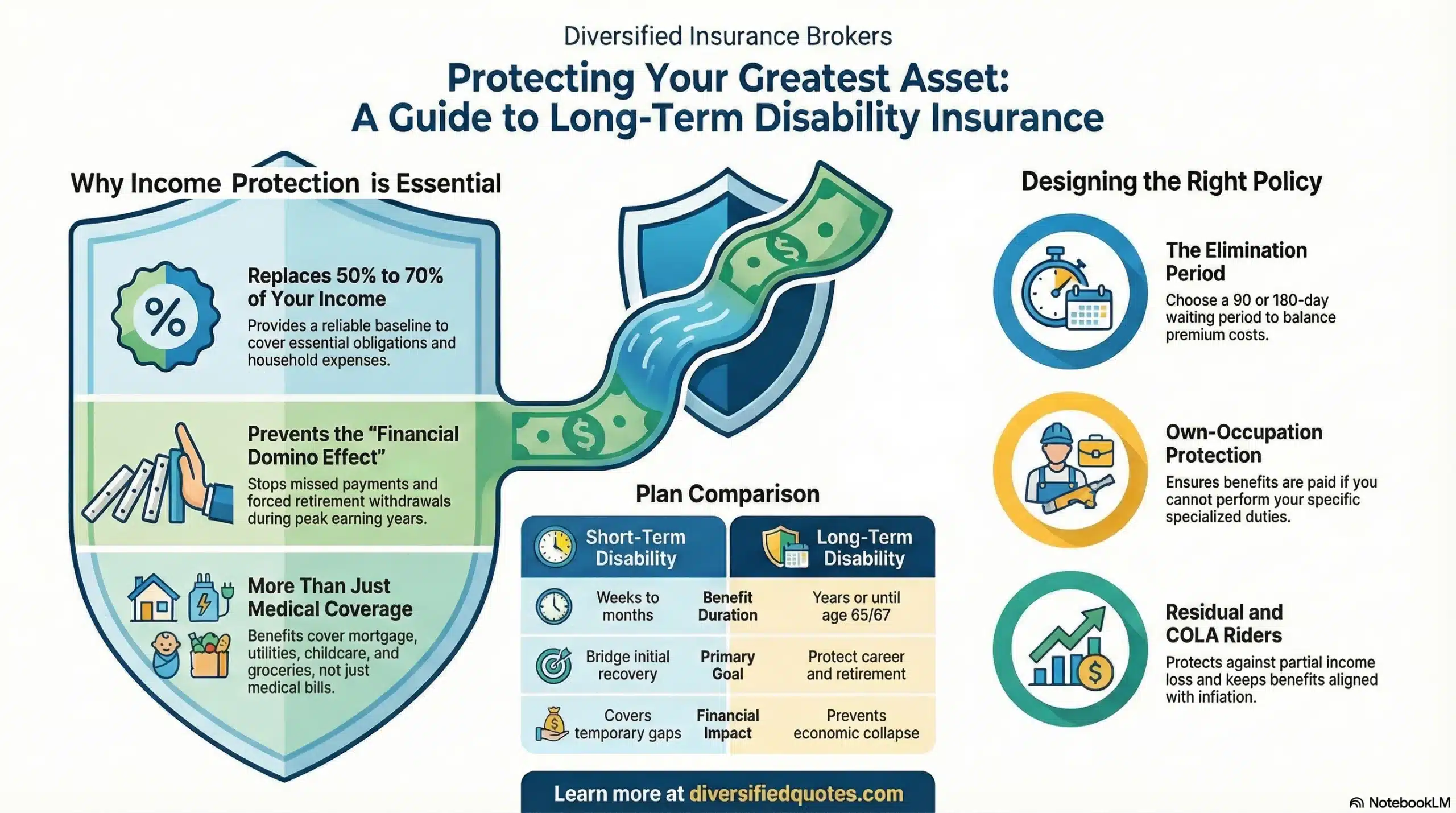
Disability insurance for repairmen should be structured with specific policy provisions that address the realities of physical trade work. The own-occupation definition of disability is important — it pays benefits when a condition prevents the repairman from performing the specific duties of their repair trade, regardless of whether they could theoretically perform lighter or desk-based work. For a repairman whose back injury prevents sustained lifting, bending, and physical equipment service work, an own-occupation policy recognizes the genuine occupational disability and pays accordingly, even if the repairman could technically perform sedentary work. Understanding this distinction thoroughly is essential — our resource on own-occupation disability insurance explained covers the full picture of how this definition works in practice for skilled trade professionals.
A cost-of-living adjustment rider is valuable for repairmen facing long-term or permanent disability from a serious injury or progressive musculoskeletal condition. Without COLA protection, a monthly benefit adequate at the onset of disability loses real purchasing power over years of sustained claim payment. Our resource on disability income insurance with a COLA rider explains how this inflation protection preserves benefit value during extended claims. For repairmen exploring shorter-term coverage options alongside long-term policies, our guide on how to buy short-term disability insurance provides a useful framework for understanding the full spectrum of income protection available.
The elimination period should be calibrated to the repairman’s available financial reserves. Self-employed repairmen with limited emergency savings and no workers’ compensation protection should seriously consider 30 or 60-day elimination periods — even at higher premium cost — to ensure faster benefit access when income stops. Those with stronger reserves or workers’ compensation coverage that bridges early weeks may comfortably accept a 90-day elimination period. Our full guide on how disability insurance elimination periods work provides the complete framework for making this decision based on individual financial circumstances.
Why Repairmen Need an Independent Disability Insurance Broker
Disability insurance for repairmen is a physical trade occupational placement that varies meaningfully between carriers in terms of how each company classifies specific repair specializations, what maximum benefit amounts are available, what own-occupation definitions are offered, and whether exclusion riders on musculoskeletal conditions or hand and wrist injuries are imposed. For a repairman whose most likely disabling conditions involve precisely the body parts and physical demands that some carriers restrict, identifying the carriers that offer comprehensive coverage without these exclusions requires independent broker access to the full marketplace.
At Diversified Insurance Brokers, we evaluate options across multiple carriers for every repair professional we serve — comparing occupational class assignments, policy definitions, exclusion rider policies, and premium structures to identify the coverage that provides the most meaningful protection for each individual’s specific repair specialization and income structure. We understand how to present repair trade self-employment income to underwriters effectively and how to structure coverage that will actually perform when a physical disability occurs. Our dedicated resource on why independent disability insurance brokers matter explains the full value of this approach for skilled trade and service professionals navigating the disability insurance marketplace.
Final Thoughts on Disability Insurance for Repairmen
Repairmen provide essential skilled services that keep homes, businesses, and infrastructure functional. The physical demands of that work — heavy lifting, electrical system service, ladder and rooftop work, chemical handling, and sustained physical tool operation in challenging environments — create genuine, documented occupational disability risks that can interrupt or end a repair career at any stage. For the majority of repair professionals who are self-employed or work without meaningful employer group disability benefits, the financial consequences of a disabling injury or illness without individual coverage in place are immediate and severe.
Disability insurance for repairmen is the financial tool that ensures a physical health event does not become a career-ending financial catastrophe. A well-structured policy — calibrated to the specific physical demands of the individual’s repair specialization, built around meaningful benefit amounts, and equipped with residual disability and COLA rider provisions — provides the income replacement that allows a repairman to recover from any disabling condition from a position of financial stability.
Related Pages
Talk With an Advisor Today
Choose how you’d like to connect—call or message us, then book a time that works for you.
Schedule here:
calendly.com/jason-dibcompanies/diversified-quotes
Licensed in all 50 states • Fiduciary, family-owned since 1980
Disability Insurance for Repairmen FAQs
Yes, repairmen and repair technicians can obtain individual disability insurance across all major repair specializations — HVAC, appliance, electronics, elevator, and general maintenance and repair. The occupational classification reflects the physical demands and hazard profile of the specific repair role, with most skilled repair specializations classified in the lower physical labor tiers — typically 1A to 2A — which affects premium costs and the specific policy features available. Maximum benefit amounts, benefit period options, and own-occupation definition availability all depend on the specific classification assigned to each individual’s repair duties. Self-employed repair contractors face additional income documentation requirements in underwriting. An experienced independent broker who understands skilled trade occupational classifications produces materially better coverage outcomes than a standard retail application for repair professionals in any specialization.
Musculoskeletal injuries are the most prevalent disabling conditions for repair professionals across all specializations. Lower back injuries from heavy equipment lifting and awkward position work — herniated discs, lumbar strain, spinal stenosis — are the most frequently documented disabling conditions in repair trades. Shoulder injuries including rotator cuff tears from sustained overhead work, knee conditions from sustained kneeling, and hand and wrist conditions from sustained tool operation and vibration round out the musculoskeletal risk profile. Acute electrical injuries — shocks and burns — affect repair professionals at among the highest rates in the American workforce, with 77% of non-fatal electrical injuries requiring days away from work affecting installation, maintenance, and repair workers. Falls from ladders, rooftops, and elevated work surfaces produce fractures, spinal injuries, and traumatic brain injuries that can require months of recovery. Chemical exposure from refrigerants, solvents, asbestos in older equipment, and cleaning compounds adds long-term occupational disease risk. For more on how musculoskeletal conditions affect physical trade workers, see our page on disability insurance for boilermakers.
No. Workers’ compensation covers only work-related injuries and occupational illnesses resulting from specific workplace events. It does not cover non-work-related disabilities of any kind — a repairman who develops cancer, suffers a cardiovascular event, or is injured off-duty receives zero workers’ compensation benefit regardless of career length. Workers’ compensation also ends when the injured worker reaches maximum medical improvement — not when they have fully recovered or returned to equivalent income. Self-employed repairmen who have not elected workers’ compensation coverage for themselves may have no protection at all for work-related events. Individual disability insurance covers disability from any cause regardless of origin, providing income replacement for the full benefit period and filling all the gaps that workers’ compensation leaves open for repair professionals.
Own-occupation disability insurance pays benefits when a condition prevents a repairman from performing the specific physical duties of their repair trade — lifting, bending, tool operation, electrical work, ladder use — regardless of whether they could theoretically perform lighter or desk-based work. Any-occupation coverage only pays if the insured cannot perform virtually any gainful employment. For a repairman whose back injury prevents sustained lifting and physical equipment service work but who could technically perform a sedentary desk job, an any-occupation policy would deny benefits. An own-occupation policy recognizes the genuine inability to perform repair work and pays accordingly. This distinction determines whether a disability policy actually provides meaningful financial protection for the physical conditions most likely to affect a repairman’s career. Our resource on own-occupation disability insurance explained covers this critical difference in full detail.
Residual disability coverage pays proportional benefits when a disabling condition reduces earning capacity without eliminating the ability to work entirely. A repairman recovering from a back injury or shoulder surgery may be able to perform limited light repair work — perhaps four to five hours per day instead of a full schedule — earning reduced income without being completely unable to work. Without a residual disability rider, a total-disability-only policy pays nothing during this partial recovery period. A residual rider supplements reduced earnings proportionally throughout the return-to-work arc, providing continuous financial support from the onset of disability through full return to normal work capacity. For repairmen whose physical recovery from injuries typically involves a graduated return to full-duty work over weeks or months, this rider is essential for the policy to function as genuine income protection across the entire recovery timeline. Our full resource on how residual disability benefits work covers this feature in full detail.
Yes. Self-employed repair business owners with ongoing fixed costs — service vehicle payments, tool financing, equipment maintenance, licensing fees, insurance premiums, and marketing expenses — should strongly consider business overhead expense coverage alongside personal income replacement disability insurance. These fixed costs continue during a disability regardless of whether the owner can perform service calls. Business overhead expense insurance covers these fixed business costs during disability, preventing a temporary health event from forcing permanent closure of an established repair business. For a self-employed repairman who has built a local service reputation, a client base, and referral relationships over years of professional practice, the ability to maintain the business infrastructure during recovery has significant financial value. Personal disability insurance and business overhead expense coverage address two distinct financial needs and are most effective when structured together.
The elimination period should be calibrated to the repairman’s available financial reserves and any workers’ compensation coverage that may bridge early weeks of a work-related disability. Self-employed repairmen with no workers’ compensation protection and limited emergency savings should evaluate 30 or 60-day elimination periods for faster benefit access, even at higher premium cost. For a sole operator whose service income stops immediately when they cannot work and who has ongoing business costs continuing during disability, a shorter waiting period before benefits begin can be critical financial protection. Repairmen with stronger reserves or access to workers’ compensation income during the initial period may comfortably accept a 90-day elimination period to reduce premiums. Our full guide on how elimination periods work provides the framework for calibrating this decision to individual financial circumstances.
Yes. Individual disability insurance covers disabling conditions resulting from electrical shock injuries when those conditions meet the policy’s definition of disability. If an electrical shock produces burns affecting hand function, neurological damage impairing motor or cognitive capacity, cardiac injury requiring extended recovery, or a secondary fall injury from muscle contraction — and these conditions prevent the repairman from performing their trade work — benefits are payable under a well-structured disability policy. This coverage applies regardless of whether the electrical injury was work-related, meaning it fills the gap for off-duty electrical accidents that workers’ compensation would not cover. For repairmen in HVAC, appliance, electronics, and electrical repair specializations whose daily work involves electrical system contact, having this coverage in place before any exposure-related injury occurs is essential financial protection.
A cost-of-living adjustment rider increases the monthly disability benefit amount annually during a claim period, preserving the real purchasing power of benefits across an extended disability. For a repairman who sustains a serious spinal injury or progressive musculoskeletal condition producing long-term or permanent disability, a monthly benefit adequate at the onset of the claim loses meaningful real value over years without COLA protection. The COLA rider ensures the benefit maintains its effective value across the full duration of the claim — whether that spans three years or the remainder of a working career. For repair professionals who face the realistic possibility of long-term disability from a severe fall injury, serious electrical burn, or progressive musculoskeletal disease, including a COLA rider produces meaningfully better financial protection over the life of an extended claim. Our resource on disability income insurance with a COLA rider explains how this protection works.
The best time is as early as possible in a repair career — before occupational health conditions from physical demands, chemical exposure, or workplace injury events have accumulated in the medical record. Disability insurance premiums are based in part on age and health status at the time of application, and younger, healthier applicants secure the most comprehensive coverage at the most favorable rates. Musculoskeletal conditions that develop over years of heavy lifting and physical trade work — herniated discs, rotator cuff tears, knee conditions — can result in exclusion riders or more restricted policy terms if present at the time of application. Applying before these conditions appear ensures they are covered under an existing policy when they eventually develop. For repairmen in specializations with significant chemical exposure — HVAC refrigerants, asbestos in older equipment — applying before any exposure-related health findings appear is equally important, as documented occupational illness at application significantly affects available coverage terms.
An independent broker has access to multiple disability insurance carriers and can compare occupational class assignments, policy definitions, exclusion rider policies, rider availability, and premium structures across the full marketplace. For repairmen, carrier selection matters significantly because some carriers approach physical trade occupational classes with exclusion riders on musculoskeletal conditions or hand and wrist injuries — the most likely disabling conditions for repair professionals — that effectively eliminate the most relevant coverage. A captive agent representing a single carrier can only present that company’s approach. At Diversified Insurance Brokers, we evaluate the full competitive landscape and structure coverage that reflects the actual physical demands and hazards of repair work without exclusions that undermine policy value at claim time. Our dedicated resource on why independent disability insurance brokers matter explains this value for skilled trade professionals in full detail.
About the Author:
Jason Stolz, CLTC, CRPC, DIA, CAA and Chief Underwriter at Diversified Insurance Brokers (NPN 20471358), is a senior insurance and retirement professional with more than 25 years of real-world experience helping individuals, families, and business owners protect their income, assets, and long-term financial stability. As a long-time partner of the nationally licensed independent agency Diversified Insurance Brokers, Jason provides trusted guidance across multiple specialties—including fixed and indexed annuities, long-term care planning, personal and business disability insurance, life insurance solutions, Group Health, Travel Medical and Evacuation Insurance, and short-term health coverage. Diversified Insurance Brokers maintains active contracts with over 100 highly rated insurance carriers, ensuring clients have access to a broad and competitive marketplace.
His practical, education-first approach has earned recognition in publications such as VoyageATL, and contributions from his agency featured in Kiplinger and GoBankingRates— highlighting his commitment to financial clarity and client-focused planning. Drawing on deep product knowledge and years of hands-on field experience, Jason helps clients evaluate carriers, compare strategies, and build retirement and protection plans that are both secure and cost-efficient. Visitors who want to explore current annuity rates and compare options across multiple insurers can also use this annuity quote and comparison tool.
Explore More Disability Insurance Options: Browse our complete guide to Disability Insurance for Trades, Construction & Industrial — covering contractors, electricians, plumbers, welders, roofers, machinists & skilled trades from 100+ carriers.
Last Reviewed: June 8, 2026 |
Reviewed by: Jason Stolz, CLTC, CRPC, DIA, CAA
Chief Underwriter, Diversified Insurance Brokers, Inc. | NPN: 20471358 | Diversified Insurance Brokers, Inc. — Licensed in all 50 states
Fact Checked by: Tonia Pettitt, CMIP©
Medicare Specialist, Diversified Insurance Brokers, Inc. | NPN: 14374308 | Diversified Insurance Brokers, Inc. — Licensed in all 50 states
Did you find this content helpful? Leave us a Google review — it helps others find trustworthy guidance too.
Editorial Standards: Diversified Insurance Brokers maintains rigorous editorial standards to ensure accuracy, clarity, and independence in all content. Learn more about our editorial standards and commitment to transparency.
