
Disability Insurance for Cosmetologist
As an Independent Disability Insurance Broker, we have access to exclusive discounts and negotiated pricing most captive agents can’t offer — see the full breakdown near the end of this page.
Disability Insurance for Cosmetologist

Jason Stolz CLTC, CRPC, DIA, CAA
Cosmetologists work in one of the most chemically intensive professional environments in the American service economy — a fact documented by the International Labour Organization’s industry encyclopedia, peer-reviewed occupational health literature, and the Rutgers School of Public Health’s analysis of cosmetology worker health, all of which identify chemical exposure, musculoskeletal strain, and the resulting occupational health consequences as the defining disability risk of this profession. The ILO specifically documents that cosmetologists are at risk for wrist and hand problems including tendinitis and carpal tunnel syndrome from bending and twisting of the wrist during cutting and styling, and that musculoskeletal disorders from repetitive motion, prolonged standing, cramped workspaces, and poorly designed tools affect a significant portion of the cosmetology workforce. Research published in peer-reviewed nursing and public health literature found that approximately 40 percent of cosmetology study participants had left the occupation due to an occupational allergy or health problem — a documented career-ending disability rate that no other white-collar profession approaches. Cosmetologists who develop a serious chemical sensitization, a disabling wrist condition, or a respiratory illness that prevents continued salon work face complete income loss — and the majority of cosmetologists in America work either as self-employed booth renters or as independent stylists with no employer-provided benefit baseline to absorb that loss. Protecting that earned income through occupation-specific disability coverage — structured for the self-employed cosmetologist’s specific employment reality — is the planning decision that separates a career-ending health event from a household financial crisis.
At Diversified Insurance Brokers, Jason Stolz, CLTC, CRPC, DIA, CAA works with licensed cosmetologists across the full range of professional arrangements the industry encompasses — employed stylists at salons and spas who may have limited group benefit access, booth renters who are entirely self-employed and carry no employer benefit baseline whatsoever, salon owners who generate income from both their own styling work and from their business ownership stake, and independent mobile cosmetologists who serve clients in homes and facilities without any institutional coverage infrastructure. The coverage architecture for a self-employed booth renter who earns entirely from their own hands is structurally different from what a salon employee with part-time group access needs — but both require specific attention to the chemical sensitization pathway that the occupational health research on cosmetology has documented as producing career exits at rates that dwarf most other professional health-event statistics.
Compare Disability Coverage for Cosmetologists
We review coverage options across 100+ carriers and identify the policy structure that fits your salon income, self-employment structure, and chemical exposure risk profile.
Cosmetologist Disability Risk — Chemical Exposure, Musculoskeletal Strain, and the Income Protection Gap
| Risk Category | Research Documentation | Resulting Disability Risk | Coverage Status | Income Protection Gap |
|---|---|---|---|---|
| Occupational contact dermatitis and chemical sensitization | Peer-reviewed literature documents hairdressing as associated with dermatitis, respiratory problems, and increased cancer risk; approximately 39.5% of cosmetologists surveyed reported health symptoms in the previous three months; 18.7% reported skin symptoms; contact dermatitis is documented as the most common occupational dermatosis, predominantly affecting exposed hands | Allergic contact dermatitis from hair dye, bleach, or perm solution developing into a sensitization severe enough to prevent continued chemical service work — career-ending occupational allergy documented at approximately 40% of cosmetology workers | Gradual sensitization outside workers’ comp discrete incident framework; booth renters and self-employed stylists entirely unprotected; gradual onset disputes occupational causation attribution | Full gap for self-employed; own-occupation DI covers sensitization-based disability without requiring incident documentation |
| Occupational asthma and respiratory conditions | Research documents hairdressers are 3.5 times more likely to leave the profession due to asthma-related illness; approximately 49.5% of cosmetologists reporting health symptoms reported respiratory symptoms including nasal irritation, cough, and dyspnea; indoor air quality research documents VOC levels and chemical vapors in salon environments creating ongoing respiratory exposure | Occupational asthma or chronic respiratory sensitization that prevents continued work in the chemical-dense salon environment — eliminating all chemical service income even when non-salon work might theoretically continue | Occupational disease provisions for employees; self-employed entirely unprotected; gradual respiratory conditions disputed in workers’ comp | Full gap for booth renters; individual DI covers respiratory disability preventing salon work regardless of gradual development |
| Wrist, hand, and upper extremity musculoskeletal conditions | ILO encyclopedia documents cosmetologists at risk for tendinitis, CTS, and musculoskeletal disorders from bending and twisting the wrist during cutting and styling, forceful gripping with shears, and holding hair dryers and styling tools; occupational elbow, wrist, neck, and shoulder strain documented as associated with career changes among cosmetologists in Rutgers research | CTS, tendinitis, De Quervain’s tenosynovitis, epicondylitis — hand and wrist conditions that can prevent the sustained cutting, chemical application, and styling manual work that cosmetology service income requires | Cumulative conditions disputed in workers’ comp; self-employed unprotected; gradual onset complicates incident attribution | Significant gap; individual DI covers qualifying wrist and hand disability regardless of how it developed over a styling career |
| Lower back, neck, and standing-related conditions | ILO documents prolonged standing, cramped work spaces, and musculoskeletal disorders as pervasive in cosmetology; cosmetologists who work 12-14 hour split shifts bear cumulative spinal and lower extremity loading from sustained standing client service throughout their careers | Chronic back syndrome, varicose veins, knee degeneration, cervical disc conditions — progressive conditions from sustained standing that can eventually prevent continued full-schedule client service | Not covered as discrete incidents; gradual onset outside workers’ comp framework; self-employed entirely unprotected | Full gap for self-employed; individual DI covers disability from any qualifying cause including standing-related progressive conditions |
| Booth renter and self-employed income gap | The majority of working cosmetologists in the United States operate as booth renters — self-employed independent contractors who rent station space from a salon owner and generate their entire income from their own client base; this structure produces the complete absence of any employer benefit | Any qualifying disability produces complete income loss with no floor whatsoever — the salon independence that characterizes most cosmetology careers eliminates institutional protection simultaneously | Zero employer coverage; zero workers’ comp; individual DI is the entire protection system | Complete gap; individual coverage is foundational, not supplemental |
The table documents the dimension that makes cosmetology disability planning distinctive: a profession where peer-reviewed research documents approximately 40 percent of workers leaving the occupation due to occupational allergy or health problems — an involuntary career-exit rate driven by the chemical exposure that defines the profession’s daily work. This is not a theoretical disability risk. It is a documented career-ending pathway that affects a large fraction of the cosmetology workforce and that most individual disability insurance policies — if purchased before the sensitization history develops — directly address. Understanding why cosmetologists choose to protect their income begins with recognizing that the occupational health consequences of salon chemical exposure are not hypothetical — they are documented at scale across the profession.
Chemical Exposure and the Sensitization Disability Pathway — What Makes Cosmetology Unique
The chemical exposure profile of cosmetology practice is among the most diverse in any service profession: hair dyes containing phenylenediamine compounds and other sensitizing agents, alkaline perms and relaxers, bleach and developer oxidizing agents, formaldehyde-releasing smoothing treatments, nail polish and acrylic compounds at nail-service stations, and the general salon ambient chemical environment from aerosol sprays, acetone, and disinfectants all create sustained daily exposure across a cosmetology career. The occupational health consequence of this exposure — documented in peer-reviewed literature, ILO occupational health analysis, and Rutgers public health research — is a profession-specific pattern of allergic sensitization that produces contact dermatitis, occupational asthma, and the chemical allergy conditions that Rutgers research documents as driving approximately 40 percent of cosmetology career exits.
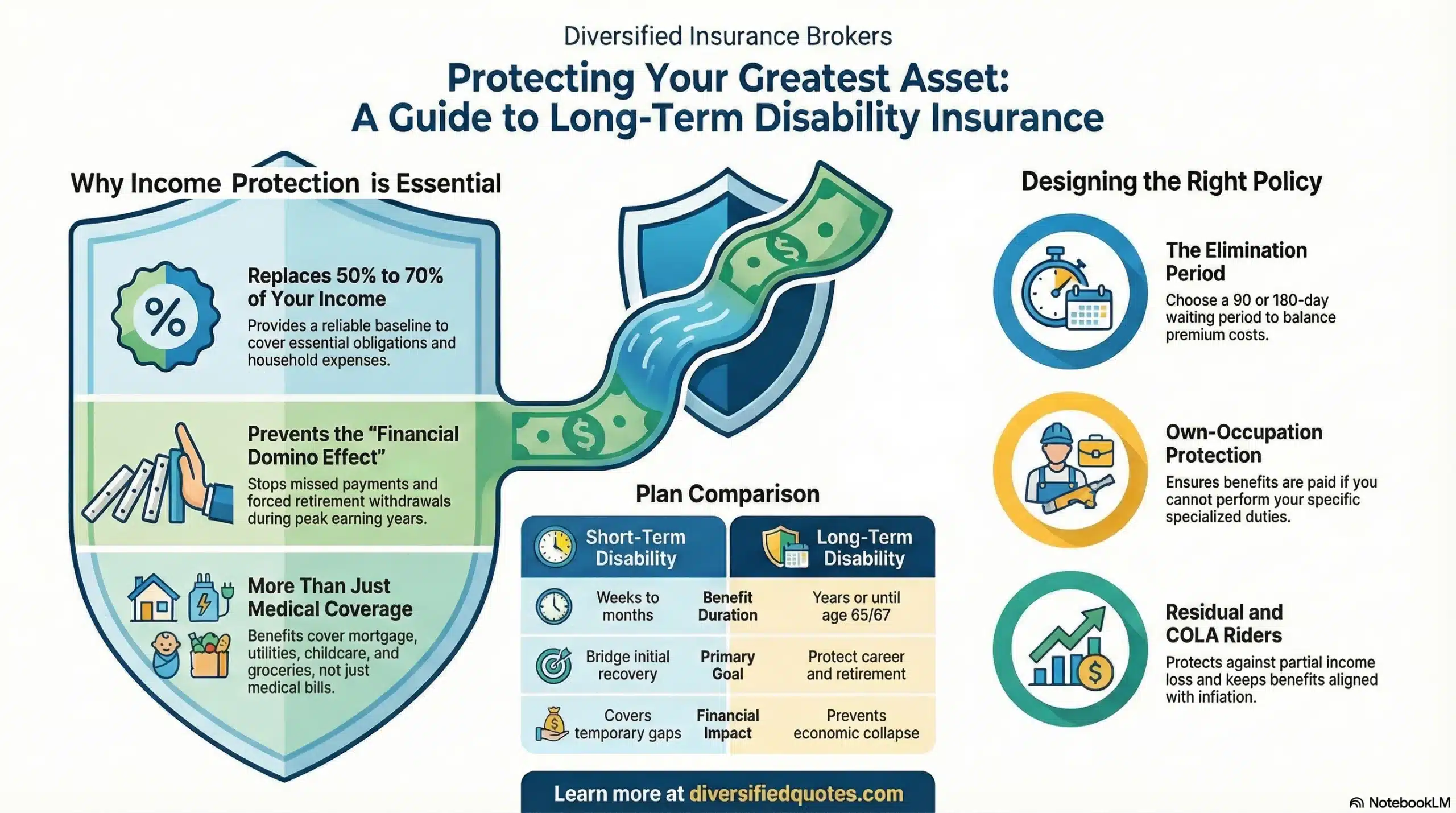
The disability insurance planning implication of chemical sensitization is specific and severe: once a cosmetologist develops a documented allergic sensitization to specific salon chemicals — phenylenediamine in hair dye, persulfate compounds in bleach, acrylates in nail products — continued occupational chemical exposure is medically contraindicated, and the cosmetologist may be medically advised to leave the profession entirely. An own-occupation disability policy covering the cosmetologist’s specific occupation pays benefits when the sensitization prevents continued salon work regardless of whether other non-salon employment might theoretically be possible. A policy with a weaker any-occupation standard may deny a claim for a cosmetologist who cannot continue salon work due to chemical sensitization but who could theoretically perform non-chemical-exposure employment. The disability definition is therefore the most important single policy feature for a cosmetologist reviewing coverage options. Long-term income replacement coverage provides protection across the full disability period when chemical sensitization produces a permanent career exit. Short-term disability coverage addresses the initial recovery and transition period following an acute chemical reaction or allergic event before long-term coverage activates.
Musculoskeletal Risk — The Physical Demands of a Full Styling Career
Alongside the chemical exposure pathway, the physical demands of cosmetology work create a parallel musculoskeletal disability risk that accumulates across a career. The ILO’s occupational health encyclopedia is specific: cosmetologists face wrist and hand problems including tendinitis and carpal tunnel syndrome from bending and twisting the wrist during cutting and styling, forceful gripping with shears, and sustained holding of tools; shoulder, neck, and back conditions from prolonged standing, awkward postures bending over clients, and the cramped workspace ergonomics of many salon environments; and the lower extremity conditions — varicose veins, knee problems — that develop from full-day sustained standing across years of client service. Rutgers School of Public Health research documents that occupational elbow, wrist, neck, and shoulder strain was specifically associated with reported career changes among cosmetologists — confirming that musculoskeletal conditions, alongside chemical sensitization, are a primary driver of involuntary career exits in the profession.
A cosmetologist whose wrist condition prevents the sustained manual cutting and chemical application that service income requires has experienced a genuine occupational disability, regardless of whether their condition arose from a single documented incident or from the gradual accumulation of years of styling work. Residual disability coverage addresses the realistic scenario where a wrist or shoulder condition reduces the number of clients a cosmetologist can serve per day without completely eliminating work — partial disability producing partial income loss that a residual benefit compensates proportionally. Understanding how short-term and long-term disability structures interact is important for cosmetologists whose injury scenarios range from recoverable — CTS surgery with a three-month recovery — to career-altering, where cumulative chemical sensitization or permanent musculoskeletal damage ends salon work entirely. Accident-only disability coverage offers an accessible lower-cost entry point for cosmetologists on tight budgets who want immediate protection for acute injuries while building toward a comprehensive policy.
Booth Renters and Salon Owners — The Self-Employment Coverage Architecture
The majority of professional cosmetologists in the United States operate as booth renters — licensed professionals who rent chair or station space from a salon owner and run their own independent client business as self-employed individuals. This structure, which defines the working life of most cosmetologists who have developed their own clientele, produces the complete absence of employer benefit infrastructure: no workers’ comp protection for the booth renter’s own injuries or illnesses, no employer group disability plan, and no income protection mechanism of any kind other than individually purchased coverage. Coverage for independent cosmetology contractors and income protection for 1099-earning stylists is built specifically for this employment structure — using Schedule C and business income documentation to establish the benefit basis from the self-employed styling income the policy is designed to protect.
For salon owners who have built a business beyond their own chair — renting space to other stylists, employing employees, and generating business income from the salon’s operations — the disability exposure adds the business overhead layer that personal income replacement alone does not address. The salon’s fixed costs — rent or mortgage, licensing fees, utilities, software and booking systems, employee wages if any — continue during a disability period when the owner’s personal styling income has stopped. Business overhead expense disability coverage addresses this second layer — a monthly benefit calibrated to the salon’s actual fixed operating costs that maintains the business infrastructure during the owner’s disability. The BOE structure preserves client relationships and business continuity during recovery, rather than allowing the salon operation to collapse against unmet overhead obligations while the owner is unable to work.
Timing, Underwriting, and Policy Design for Cosmetology Professionals
The timing of purchasing disability insurance is particularly critical for cosmetologists because the occupational health conditions that drive career exits — chemical sensitization, wrist conditions — develop gradually over the career and, once documented in medical records, generate exclusion riders that limit coverage for the precise conditions the occupation most specifically produces. A cosmetologist who purchases coverage early in their career, before any skin sensitization, respiratory condition, or wrist history is documented, secures comprehensive coverage — including full chemical sensitization and musculoskeletal coverage — without exclusion riders. A cosmetologist who applies after years of documented chemical exposure health effects may find those conditions generating exclusions that leave the most profession-specific disability pathways unprotected. Why early-career cosmetologists need coverage before occupational health histories develop is answered directly by the 40 percent career-exit rate from occupational health conditions: the window to purchase comprehensive coverage without those exclusions is early in the career, before the salon exposure produces its clinical record.
How much coverage a cosmetologist needs depends on documented booth rental income or styling service income, household financial obligations, and for salon owners, the overhead obligations that BOE coverage addresses separately. The future increase option on early-career policies allows benefit increases as income grows without new medical underwriting. The cost of living adjustment rider protects real purchasing power across a multi-year disability period. No-exam disability coverage provides streamlined approval for healthy cosmetologists. Coverage for cosmetologists with prior skin or respiratory histories is available through independent broker channels, typically through partial condition-specific exclusion riders. Specialty and modified market options address cosmetologists whose documented sensitization history creates standard underwriting complexity. Getting the best available rates as a cosmetologist means applying early, maintaining clean health records, and comparing across the full carrier market. Buying disability insurance online makes the process accessible for cosmetologists whose salon schedules don’t accommodate traditional in-person broker appointments. Whether disability insurance is worth the cost is answered by calculating what three or six months of lost booth rental income would cost the household against the annual premium of adequate coverage. Guarantee issue coverage options provide an access point for cosmetologists whose health history creates standard underwriting challenges.
Get Your Cosmetologist Coverage Review
We compare coverage options across 100+ carriers and identify the policy structure that fits your salon income, booth rental structure, and chemical sensitization risk profile.
Talk With an Advisor Today
Choose how you’d like to connect—call or message us, then book a time that works for you.
Schedule here:
calendly.com/jason-dibcompanies/diversified-quotes
Licensed in all 50 states • Fiduciary, family-owned since 1980
FAQs: Disability Insurance for Cosmetologists
I’m a booth renter — am I covered by the salon’s insurance if I’m injured or get sick?
No. As a booth renter, you are legally classified as a self-employed independent contractor — not an employee of the salon. The salon owner’s workers’ compensation policy covers the salon’s employees, not independent booth renters. If you develop carpal tunnel syndrome from years of styling, a chemical sensitization that forces you out of salon work, or a back condition that prevents continued client service, you have no claim against the salon’s insurance. You are operating your own independent business from the salon’s premises, and the legal and financial responsibility for your own injury or illness is entirely yours. For the millions of cosmetologists who earn their entire professional income as booth renters, the absence of any employer benefit baseline makes the individual disability insurance decision foundational — the question is not whether to have coverage, but how to structure it correctly for the specific risks of salon work.
The self-employed booth renter’s income documentation for disability insurance underwriting uses Schedule C from federal tax returns to establish the net earned income from the cosmetology business — service income, retail product income, and any other earned sources — as the basis for the maximum approvable monthly benefit. Most carriers use a two to three year average of documented net income to smooth year-to-year variability. A second opinion from an independent broker who has placed coverage for booth-renter cosmetologists confirms whether the income documentation approach and policy terms are appropriate for the specific self-employment structure before premiums are committed.
I’ve developed a skin reaction to some salon chemicals — can I still get disability insurance?
Yes, but the underwriting outcome depends on the severity, current status, and documentation of the reaction. For documented mild or resolved skin reactions — a prior contact reaction that was treated and has not recurred, a managed sensitivity with documented stability — the standard underwriting outcome may be a partial exclusion rider for that specific condition while leaving full coverage in place for all other disability causes. The exclusion rider limits coverage for disability specifically attributable to the documented prior skin condition while protecting against all other causes including other chemical exposure conditions not yet documented, musculoskeletal disability, serious illness, and all other qualifying events. For severe or ongoing documented chemical sensitization affecting multiple chemical classes used in cosmetology, the exclusion may be broader — potentially covering all chemical sensitization disability.
The practical implication is clear: the optimal time to purchase disability insurance as a cosmetologist is before any chemical reaction or sensitization is documented in medical records — when coverage can be purchased comprehensively without the exclusion riders that documented sensitization histories generate. Coverage for cosmetologists with prior chemical exposure histories is available through independent broker comparison across carriers with varying sensitization history guidelines. Specialty and modified market options exist for cosmetologists whose documented chemical history makes standard underwriting produce unfavorable terms. Carrier guidelines for cosmetology chemical sensitization histories vary significantly between carriers, making independent broker comparison the most effective approach for identifying the most favorable available terms.
Are disability insurance benefits taxable for a cosmetologist?
For cosmetologists who purchase individual disability insurance personally and pay premiums with after-tax personal income — which describes the situation for most booth renters and self-employed stylists — monthly disability benefits received during a qualifying disability are generally received income-tax-free. The full benefit amount reaches the household without income tax reduction. Whether disability insurance payments are taxable directly affects how to size the benefit: a tax-free individually purchased benefit should replace actual after-tax take-home styling income, ensuring genuine replacement of what was lost without a further tax reduction on top of the income loss. At modest cosmetology income levels, receiving the benefit without income tax reduction is a meaningful planning factor — the full dollar benefit matters when it is the only income the household receives during the disability period.
For employed cosmetologists at salons where the employer pays group LTD premiums, the resulting benefits are typically taxable as ordinary income at claim time, reducing effective replacement below the stated plan percentage. Self-employed cosmetologists who deduct disability insurance premiums as a business expense — through their Schedule C — should confirm the specific tax treatment with a tax professional, as the business deduction may affect whether benefits received at claim time are taxable income. The tax-free character of personally purchased individual disability benefits is one of the financial advantages of the individual over group structure that the booth renter’s situation, despite being entirely self-insured, actually enables.
I own a salon — what disability coverage structure do I need beyond personal income protection?
A salon owner who is both the primary stylist and the business owner faces a two-layer disability exposure that personal income replacement alone cannot address. The personal income layer — the styling service income generated from your own chair — stops when you cannot work. The business overhead layer — the salon’s rent or mortgage, utilities, licensing fees, software and booking systems, supply accounts, and any employee wages — continues whether you are present and working or not. A disability that eliminates your ability to work for three, six, or twelve months creates both simultaneous income loss and unmet overhead obligations that, uncovered, can end the salon business even after you physically recover.
Business overhead expense disability coverage specifically addresses the salon’s fixed operating costs during the owner’s disability period — paying a monthly benefit calibrated to the actual documented overhead of the salon operation rather than to personal income. This preserves the salon infrastructure, maintains client relationships, and gives the business the ability to operate in a limited capacity — or simply to survive the owner’s absence — without collapsing against unmet fixed obligations. The BOE policy benefit amount is sized to actual documented business overhead costs, separately from the personal disability income policy that replaces the owner’s styling wages. Together, the two policies create the complete protection architecture for a salon owner: personal income floor plus business continuity floor, each addressing the distinct financial layer the disability affects. Many salon owners who have only personal DI coverage discover the BOE gap only when a disability forces the business to close — the BOE policy prevents that outcome by keeping the overhead covered during the recovery period.
I’m just starting my cosmetology career after school — should I be thinking about disability insurance now?
The beginning of a cosmetology career is the single best time to establish disability insurance — for reasons that are more specifically urgent in this profession than in most others. The chemical exposure that drives approximately 40 percent of cosmetology career exits has not yet had time to produce any documented sensitization or skin reaction history. The wrist and hand conditions that years of cutting, styling, and chemical service gradually accumulate have not yet developed into a clinical record. Purchasing disability insurance at the beginning of the career — before the salon’s chemical environment and physical demands produce the occupational health events that have ended so many cosmetology careers — means comprehensive coverage is in place for precisely the conditions that are most likely to matter, without the exclusion riders that documented histories generate.
Why early-career cosmetologists need income protection before the exposure accumulates is answered directly by the documented career-exit rate: the window to purchase comprehensive coverage including full chemical sensitization and musculoskeletal coverage closes as the professional exposure builds its health record. Disability coverage for new cosmetology professionals is structured with the future increase option that allows benefit increases as income grows without new medical underwriting — so a cosmetologist who purchases at the beginning of their career, when income is building and savings are limited, can start at an appropriate benefit level and increase coverage as income and client base develop, all while preserving the favorable health-based underwriting terms of the early purchase.
My cosmetology income varies week to week — how does that affect how my coverage is sized?
Variable week-to-week styling income is common in cosmetology — client cancellations, seasonal booking patterns, and the natural variability of a service business all create income that fluctuates around an annual average. Disability insurance underwriting for variable-income cosmetologists uses the same two to three year average of documented net earned income that applies to any self-employed professional: Schedule C records establish the average annual income basis, and the maximum approvable monthly benefit is calculated as approximately 60 percent of that documented average. The variability within a year is smoothed by the multi-year average, giving the underwriter a reliable income basis for the benefit calculation rather than rewarding a peak month or penalizing a slow one.
The residual disability benefit provision is especially valuable for cosmetologists with variable income, because the realistic disability scenario often involves partial work capacity — serving fewer clients per day due to a wrist condition or fatigue — rather than a complete stop. A residual benefit pays proportionally based on actual income reduction from partial disability, which matters specifically when pre-disability income was variable to begin with and post-disability income may be at a different but still non-zero level during recovery. Accurate and complete Schedule C documentation across multiple years — capturing all service income, retail product income, and any other styling-related earned income — produces the most favorable and complete income basis for the benefit calculation. An independent broker familiar with self-employed cosmetology income structures can help structure the documentation approach and benefit sizing to reflect actual income levels accurately rather than inadvertently understating the covered income basis.
About the Author:
Jason Stolz, CLTC, CRPC, DIA, CAA and Chief Underwriter at Diversified Insurance Brokers (NPN 20471358), is a senior insurance and retirement professional with more than 25 years of real-world experience helping individuals, families, and business owners protect their income, assets, and long-term financial stability. As a long-time partner of the nationally licensed independent agency Diversified Insurance Brokers, Jason provides trusted guidance across multiple specialties—including fixed and indexed annuities, long-term care planning, personal and business disability insurance, life insurance solutions, Group Health, Travel Medical and Evacuation Insurance, and short-term health coverage. Diversified Insurance Brokers maintains active contracts with over 100 highly rated insurance carriers, ensuring clients have access to a broad and competitive marketplace.
His practical, education-first approach has earned recognition in publications such as VoyageATL, and contributions from his agency featured in Kiplinger and GoBankingRates— highlighting his commitment to financial clarity and client-focused planning. Drawing on deep product knowledge and years of hands-on field experience, Jason helps clients evaluate carriers, compare strategies, and build retirement and protection plans that are both secure and cost-efficient. Visitors who want to explore current annuity rates and compare options across multiple insurers can also use this annuity quote and comparison tool.
Explore More Disability Insurance Options: Browse our complete guide to Disability Insurance for Food, Hospitality, Arts & Entertainment — covering chefs, musicians, actors, bartenders, hospitality workers & entertainment professionals from 100+ carriers.
Last Reviewed: June 8, 2026 |
Reviewed by: Jason Stolz, CLTC, CRPC, DIA, CAA
Chief Underwriter, Diversified Insurance Brokers, Inc. | NPN: 20471358 | Diversified Insurance Brokers, Inc. — Licensed in all 50 states
Fact Checked by: Tonia Pettitt, CMIP©
Medicare Specialist, Diversified Insurance Brokers, Inc. | NPN: 14374308 | Diversified Insurance Brokers, Inc. — Licensed in all 50 states
Did you find this content helpful? Leave us a Google review — it helps others find trustworthy guidance too.
Editorial Standards: Diversified Insurance Brokers maintains rigorous editorial standards to ensure accuracy, clarity, and independence in all content. Learn more about our editorial standards and commitment to transparency.
