
Disability Insurance for Caterers
As an Independent Disability Insurance Broker, we have access to exclusive discounts and negotiated pricing most captive agents can’t offer — see the full breakdown near the end of this page.
Disability Insurance for Caterers

Jason Stolz CLTC, CRPC, DIA, CAA
Disability insurance for caterers is income protection for an occupation that is almost universally structured as a small business or sole proprietorship — which means the absence of employer group coverage, workers’ compensation for the owner, or paid sick leave is the default condition rather than the exception. Professional catering combines the physical kitchen hazards of restaurant cooking with the logistical demands of off-site event execution: burns and cuts from kitchen preparation work, heavy lifting for equipment transport and event setup, back and foot conditions from extended standing and physical event production, and vehicle accident risk from regular transport of equipment and food to event sites. When a disability prevents the caterer from managing kitchen production, transporting equipment, and executing events — the core functions that generate the revenue — the business income stops entirely and the fixed overhead continues. At Diversified Insurance Brokers, we help professional caterers, catering business owners, and event food service contractors structure disability coverage that reflects the physical production demands, self-employed income patterns, and business overhead exposure of professional catering operations. The income protection insurance framework covers how individual policies are built for self-employed professionals whose income depends on sustained physical capability, and the disability insurance by occupation context covers how food service and event production occupations are evaluated across the carrier underwriting landscape.
The disability risk profile of professional catering directly mirrors the kitchen hazard profile of chefs and bakers — burns, cuts, back and foot conditions from extended standing — with the added physical dimensions of event logistics: carrying and loading heavy chafing dishes, serving equipment, food containers, and event supplies; vehicle loading and unloading at multiple sites per week; setup and breakdown of service stations in event spaces that often involve stairs, uneven outdoor terrain, and time-critical physical exertion. Workers’ compensation covers work-related injuries for any employed catering staff, but the caterer-owner typically has no workers’ comp protection for their own injuries under standard employer policies. The majority of catering businesses are structured as sole proprietorships or single-member LLCs where the owner is both the primary producer and the business itself — meaning a disability that prevents the owner from working produces both personal income loss and business operational failure simultaneously. The own-occupation disability insurance standard covers how disability definitions are built for physical service business owners, and the close culinary professional planning parallels are at disability insurance for chefs and bakers and disability insurance for butchers.
Compare Disability Insurance for Caterers
We compare options across multiple carriers and structure coverage around the physical kitchen and event production demands, self-employed income patterns, and business overhead structure of professional catering businesses.
Request Disability Insurance OptionsDisability Insurance for Caterers — Risk Profile, Business Structure, and Coverage Design
| Disability Risk | The Caterer’s Exposure | Coverage Role |
|---|---|---|
| Kitchen preparation injuries — burns and cuts | Catering production kitchen work carries the same burn and laceration risks as restaurant kitchens — contact burns from hot surfaces, flames, and hot liquids; cuts and knife injuries from food preparation — plus the added time pressure of event-driven production schedules where quality must be consistent across large quantities produced in compressed timeframes | Individual disability coverage for burn and knife injury recovery periods; the self-employed caterer has no employer workers’ comp baseline for work injuries — individual coverage provides both the acute injury protection and illness-based coverage that sole proprietors require; short-term disability especially relevant for burn and laceration recovery periods |
| Event logistics — heavy lifting and transport | Catering events require loading, transporting, and unloading chafing dishes, warming equipment, food containers, service stations, and event supplies — regularly involving heavy items across uneven terrain, stairs, and time-critical situations; back injuries and shoulder injuries from this sustained heavy logistics work are a distinctive caterer disability risk beyond what stationary restaurant chefs face | Own-occupation coverage reflecting both the production kitchen functions and the physical logistics functions of catering; a caterer whose back injury prevents the lifting and transport component of event execution is disabled from the work even if they could do some kitchen preparation from a seated position |
| Back and foot conditions from standing | Catering events require extended standing across production kitchen work and event service — often 12-16 hours on event days combining kitchen setup, service, and breakdown; plantar fasciitis, lumbar disc conditions, and knee degeneration from sustained standing are the most common chronic disability-producing musculoskeletal conditions in the catering profession | Illness-based own-occupation coverage for chronic musculoskeletal conditions developing from sustained standing demands; these gradual conditions are not covered by workers’ comp’s acute-injury framework but represent real career-limiting disability for caterers who cannot stand and move dynamically through full production and event service days |
| Vehicle accident risk | Catering operations require regular vehicle use — often daily — transporting food, equipment, and staff to event sites; professional caterers accumulate vehicle exposure substantially above average levels, creating proportionally elevated vehicle accident disability risk | Individual disability insurance covers vehicle accident disability from both work-related and off-duty incidents; workers’ comp would cover employees in work-related vehicle accidents but doesn’t protect the owner-operator caterer for their own vehicle disability in most structures |
| Business overhead — when the owner is the business | Most catering businesses are structured so the owner’s personal production capability is the business’s core revenue-generating asset; when the owner-caterer is disabled, the business loses its primary producer simultaneously with the owner losing personal income; fixed costs — vehicle payments, equipment, commercial kitchen rent, marketing contracts, staff wages — continue during disability | Business overhead expense coverage reimbursing documented catering business overhead during disability; personal LTD replacing household income; the two-layer planning need is particularly acute for sole-operator catering businesses where no second operator can easily fill the production gap |
The Self-Employed Caterer’s Coverage Foundation
The overwhelming majority of professional caterers operate as self-employed sole proprietors, single-member LLCs, or small partnerships — structures that provide no employer group LTD, no workers’ comp for the owner’s own injuries, and no paid sick leave of any kind. When disability occurs, the financial impact is twofold and immediate: personal income stops while business overhead continues. Individual disability insurance is not a supplement for caterers — it is the entire income protection foundation. Benefit sizing for catering businesses with variable event-driven income uses Schedule C net income averaged across two to three years to establish a stable baseline that reflects the seasonal and event-cycle variability of catering revenue. Disability insurance for self-employed caterers and disability insurance for 1099 workers in catering and food service contracting cover the income documentation approach. The business protection layer requires business overhead disability insurance sized to the catering operation’s documented fixed costs, and the companion disability business overhead expense resource covers the BOE design specifics. For catering businesses with employed staff or business partners, key person disability insurance addresses the firm-level revenue impact when the key producing caterer is disabled. The independent contractor context for contract food service and private catering arrangements is at disability insurance for independent contractors. The food service professional community’s disability planning parallels are at disability insurance for barbers and hairstylists and disability insurance for aerobics teachers, where the same physical service professional self-employment structure creates identical two-layer disability planning needs.
Policy Design for Catering Business Owners
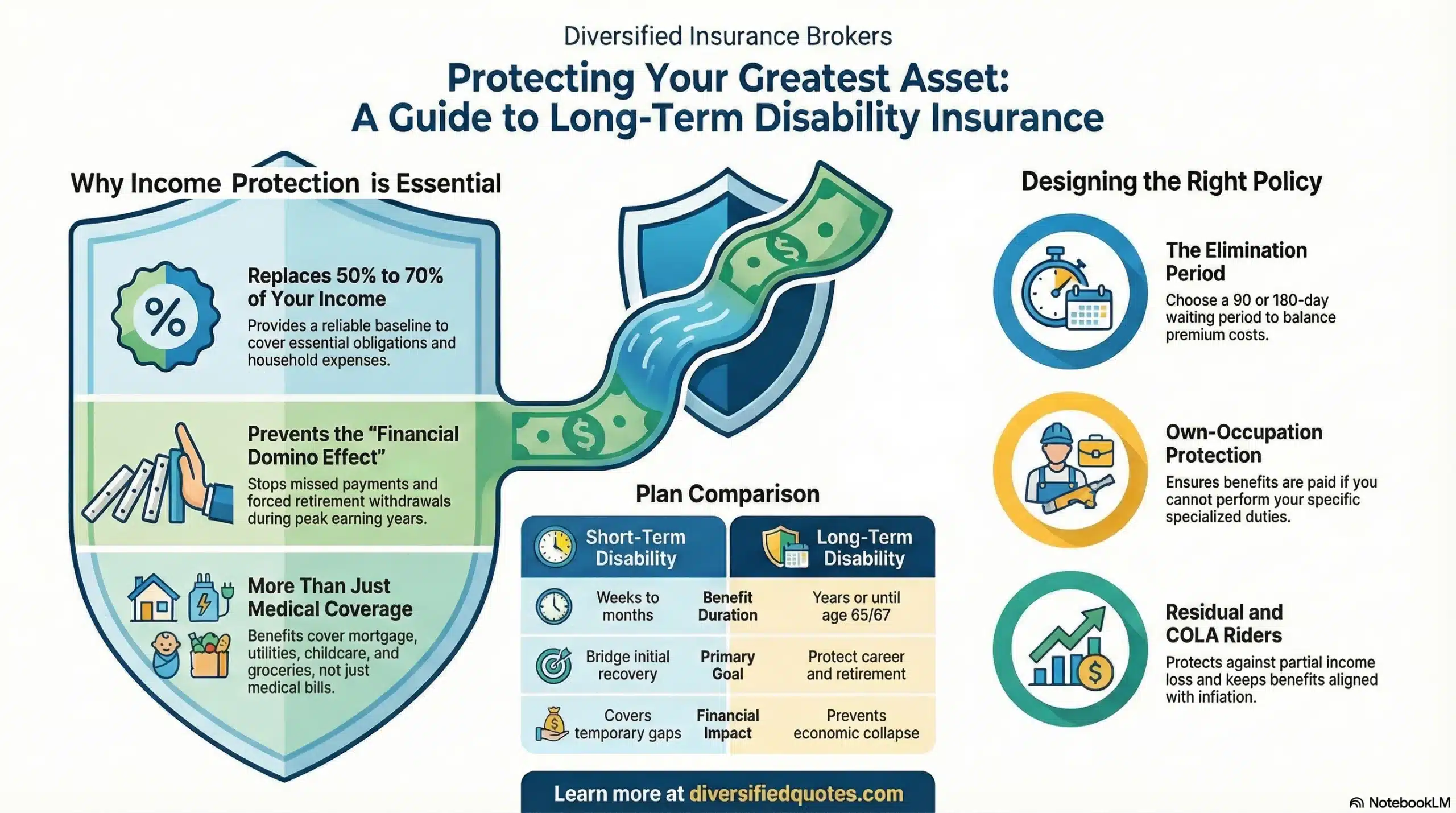
The benefit period to age 65 — long-term disability insurance to the full career standard — protects the investment in building a catering business reputation and client base that compounds over decades of event execution. The elimination period for self-employed caterers without employer sick leave should be matched to available personal savings; 30-day elimination periods are appropriate for caterers without substantial cash reserves. Short-term disability is particularly relevant for catering professionals given the frequency of injuries producing weeks-to-months recovery periods. The residual disability rider captures partial income loss when a disability reduces event execution capability but doesn’t prevent all kitchen preparation or client consultation. The full rider framework is at disability insurance riders explained. Tax treatment is at are disability insurance payments taxable. Benefit sizing is at how much disability insurance do I need. No-exam options are at no-exam disability insurance. The broker comparison value for food service and event business owners is at why work with an independent disability insurance broker. For an independent review of any existing or proposed policy, get a 2nd opinion on your disability insurance quote covers the full process.
Talk With an Advisor Today
Choose how you’d like to connect—call or message us, then book a time that works for you.
Schedule here:
calendly.com/jason-dibcompanies/diversified-quotes
Licensed in all 50 states • Fiduciary, family-owned since 1980
FAQs: Disability Insurance for Caterers
What makes catering disability risks different from restaurant kitchen work?
Catering shares the kitchen hazard profile of restaurant work — burns, cuts, back and foot conditions from extended standing — but adds the physical logistics demands of off-site event execution that stationary restaurant chefs don’t face. Caterers regularly load, transport, and unload heavy chafing dishes, warming equipment, and service supplies; navigate uneven outdoor terrain and stairs under time pressure; and execute full production and service across 12-16 hour event days combining kitchen and floor work. The heavy logistics component creates back and shoulder injury risk that is distinctive to catering and more physically demanding than fixed-location kitchen work alone.
Does workers’ compensation cover catering business owners?
Standard workers’ compensation typically covers employed catering staff for work-related injuries, but the owner of a catering sole proprietorship or single-member LLC is generally not automatically covered by the workers’ comp policy that covers employees — and in many states, sole proprietors are excluded from mandatory workers’ comp requirements entirely. A catering business owner injured in the kitchen, during equipment transport, or in a vehicle accident while executing events needs individual disability insurance as their income protection, because the workers’ comp structure that protects their employees does not extend the same protection to them.
How is catering income documented for disability insurance purposes?
Self-employed caterers document income through Schedule C tax returns reflecting catering business revenue, averaged across two to three years to account for event-driven and seasonal income variability. Net Schedule C income after legitimate business expenses — food costs, equipment, vehicle, staff wages, commercial kitchen rental, insurance — is the figure carriers use for benefit sizing for sole proprietors. Caterers with LLCs or S-corps may document income through reasonable compensation on W-2 or K-1 distributions depending on their entity structure and how they pay themselves. Multi-year averaging smooths year-to-year variability in event bookings and seasonal peaks.
Why do caterers need both personal LTD and business overhead expense coverage?
For a catering business where the owner is also the primary producer, a disability creates two simultaneous financial problems: the household loses its income, and the business faces accumulating fixed costs without the revenue the owner was generating. Personal LTD replaces the household income. BOE coverage reimburses documented business overhead — vehicle payments, kitchen rental, equipment financing, marketing contracts, and staff wages — during the disability period. Without BOE coverage, a disability long enough to require personal LTD benefits will often destroy the business infrastructure at the same time, leaving the caterer to rebuild from zero upon recovery rather than returning to an intact business.
What elimination period should a self-employed caterer choose?
Self-employed caterers without employer sick leave or substantial cash reserves should evaluate shorter elimination periods — 30 days rather than the standard 90 days — because a 90-day income gap with no backup employer sick pay can rapidly produce financial pressure that forces poor decision-making. The elimination period should match the number of days the caterer can genuinely sustain household expenses without income through available savings. For caterers with seasonal revenue cycles and event deposits that create cash cushions before peak seasons, the available savings picture may support a longer elimination period than the cash balance at any given moment suggests. Discuss your actual cash flow pattern with a broker to determine the right EP.
About the Author:
Jason Stolz, CLTC, CRPC, DIA, CAA and Chief Underwriter at Diversified Insurance Brokers (NPN 20471358), is a senior insurance and retirement professional with more than 25 years of real-world experience helping individuals, families, and business owners protect their income, assets, and long-term financial stability. As a long-time partner of the nationally licensed independent agency Diversified Insurance Brokers, Jason provides trusted guidance across multiple specialties—including fixed and indexed annuities, long-term care planning, personal and business disability insurance, life insurance solutions, Group Health, Travel Medical and Evacuation Insurance, and short-term health coverage. Diversified Insurance Brokers maintains active contracts with over 100 highly rated insurance carriers, ensuring clients have access to a broad and competitive marketplace.
His practical, education-first approach has earned recognition in publications such as VoyageATL, and contributions from his agency featured in Kiplinger and GoBankingRates— highlighting his commitment to financial clarity and client-focused planning. Drawing on deep product knowledge and years of hands-on field experience, Jason helps clients evaluate carriers, compare strategies, and build retirement and protection plans that are both secure and cost-efficient. Visitors who want to explore current annuity rates and compare options across multiple insurers can also use this annuity quote and comparison tool.
Explore More Disability Insurance Options: Browse our complete guide to Disability Insurance for Food, Hospitality, Arts & Entertainment — covering chefs, musicians, actors, bartenders, hospitality workers & entertainment professionals from 100+ carriers.
Last Reviewed: June 6, 2026 |
Reviewed by: Jason Stolz, CLTC, CRPC, DIA, CAA
Chief Underwriter, Diversified Insurance Brokers, Inc. | NPN: 20471358 | Diversified Insurance Brokers, Inc. — Licensed in all 50 states
Fact Checked by: Tonia Pettitt, CMIP©
Medicare Specialist, Diversified Insurance Brokers, Inc. | NPN: 14374308 | Diversified Insurance Brokers, Inc. — Licensed in all 50 states
Did you find this content helpful? Leave us a Google review — it helps others find trustworthy guidance too.
Editorial Standards: Diversified Insurance Brokers maintains rigorous editorial standards to ensure accuracy, clarity, and independence in all content. Learn more about our editorial standards and commitment to transparency.
