
Disability Insurance for Artists
As an Independent Disability Insurance Broker, we have access to exclusive discounts and negotiated pricing most captive agents can’t offer — see the full breakdown near the end of this page.
Disability Insurance for Artists

Jason Stolz CLTC, CRPC, DIA, CAA
Disability insurance for artists addresses a financial risk that is easy to underestimate because the work appears physically light. The reality is different. Visual artists — painters, sculptors, illustrators, ceramicists, printmakers, muralists, and digital artists — depend on a combination of capabilities that can each be independently impaired: fine motor precision in the hands and wrists that precise brushwork, sculpting, and detailed illustration require; the sustained cognitive focus and creative capacity that translates intention into original work; and the physical stamina of studio hours that accumulate across a career. When any of those capabilities is genuinely interrupted — by carpal tunnel, a shoulder injury, a depressive episode that eliminates creative motivation, chemical exposure that affects health, or any of the health events that affect adults regardless of profession — the artist’s income does not slow gradually. It stops, because there is no alternative version of the work that maintains the same output without the specific capabilities the art requires. The disability insurance services available to creative professionals address this specific income-to-capability dependency, and the income protection insurance framework covers how individual policies are structured for self-employed creative professionals with variable income.
The overwhelming majority of visual artists are self-employed — working as independent practitioners, freelancers, commissioned artists, or studio-based sole proprietors with no employer disability backup of any kind. When an artist cannot work, income stops that same day. There is no employer sick leave, no group long-term disability plan, no paid leave structure. The individual disability policy is the entire income protection plan. At Diversified Insurance Brokers, we help visual artists across all disciplines design disability coverage that reflects the actual creative and physical demands of their specific practice, the variable income documentation realities of the art market, and the self-employed structure that defines how almost every working artist earns their living. The disability insurance by occupation framework covers how occupational class is determined for creative and design professions.
Compare Disability Insurance for Artists
We compare options across 100+ carriers and structure coverage around the creative practice, studio work, and self-employed income structure of visual artists.
Request Disability Insurance OptionsDisability Insurance for Artists — Occupational Profile, Disability Risks, and Coverage Design
| Coverage Dimension | The Visual Artist Reality | What the Right Design Looks Like |
|---|---|---|
| Occupational class — medium matters | Visual artists qualify for occupational classes that reflect the primarily creative, non-hazardous, non-physical nature of the work; the specific class depends on medium and working conditions — digital artists and screen-based illustrators trend toward the higher end; traditional media artists working with chemical paints, solvents, clay dust, or printmaking materials may receive a somewhat lower class that reflects chemical exposure risk; carriers evaluate the actual studio practice, not just the job title “artist” | Accurately describe the actual working medium, studio conditions, and chemical exposure level in the application; digital and screen-based artists should describe that work specifically rather than accepting a generic “artist” classification that may not reflect the favorable profile of entirely computer-based work; independent broker comparison identifies which carrier evaluates the specific medium profile most favorably |
| Physical risk — hands, wrists, and precision | Carpal tunnel syndrome from sustained fine motor work with brushes, pencils, styluses, and sculpting tools is the leading documented physical occupational risk for visual artists; shoulder and neck conditions from sustained working postures at easels, drafting tables, and sculpture stands accumulate over careers; chemical exposure from oil paint pigments (heavy metals), turpentine and mineral spirits, clay dust, and printmaking solvents creates progressive respiratory and neurological risk for traditional media artists | Coverage for any cause of disability — physical and cognitive; applying before any hand, wrist, or shoulder conditions develop prevents pre-existing exclusions on the physical risks most directly tied to artistic production; own-occupation language that reflects the precision fine motor demands of professional art creation, not just general ability to use hands |
| Disability definition — the own-occupation problem | An artist with carpal tunnel severe enough to prevent controlled brushwork or sculpture may still be capable of typing, administrative work, or other employment; an artist whose depression has eliminated the creative motivation and cognitive focus that producing original art requires may still appear functional in routine activities; under any-occupation language, both of these genuine career-ending disabilities can be denied because alternative work is possible | Own-occupation coverage that evaluates whether the artist can perform the specific activities of their artistic practice — controlled fine motor work, sustained creative focus, sustained studio production — not whether any form of employment remains theoretically possible; the definition must reflect the specialized nature of professional artistic output |
| Mental health and creative output dependency | Depression and anxiety are documented at elevated rates in creative professionals; the income volatility, isolation of studio work, and vulnerability of creative identity to market reception all contribute; mental health conditions can eliminate the motivational and cognitive capacity for artistic production while leaving the person physically functional; most group LTD plans cap mental/nervous benefits at 24 months — inadequate for serious conditions requiring extended recovery | Individual policy with unlimited mental/nervous benefit period matching physical coverage; own-occupation language covering cognitive and creative impairment from any cause; for self-employed artists who have no group plan at all, the individual policy provides the only mental health disability protection that exists |
| Income documentation — commissions, licensing, and variable output | Artist income flows through multiple streams — commissioned work, gallery sales, licensing fees, print sales, teaching — that vary significantly year to year; licensing and print royalties are passive income that continues during disability and does not offset disability benefits in most individual policies; active earned income is what benefits are based on; year-to-year variability requires multi-year averaging for benefit sizing | Two to three years of Schedule C or business return income averaged to establish active earned income baseline; passive royalty and licensing income is not counted against benefits and not used to inflate the benefit calculation; benefit sized to active earned income that reflects what actually stops when the artist cannot produce work; accurate income documentation from the start prevents disputes at claim time |
| Self-employment — the full coverage responsibility | Most visual artists are self-employed with no employer group disability plan as a baseline; no employer sick leave, no employer-paid short-term disability, no paid leave structure; income stops immediately when studio work stops; 1099 artists working on commission and project basis face the same immediate income vulnerability as any self-employed professional | Individual LTD policy as the complete income protection plan (not a supplement to an existing group plan); shorter elimination periods may be appropriate if savings are limited; benefit sized to documented active income; no employer layer to coordinate against — the individual policy must stand alone as the entire financial protection structure |
The Physical Precision Risk — Hands and the Artist’s Primary Tool
The most specifically occupation-relevant physical disability risk for visual artists is impairment to the fine motor precision that art creation requires. Carpal tunnel syndrome from the repetitive motions of brushwork, pencil illustration, pottery throwing, and sustained stylus use on digital tablets is the leading documented physical occupational condition for artists. Unlike carpal tunnel in data entry or administrative work — where keyboard modifications can often maintain productivity — carpal tunnel that impairs the controlled micro-movements that produce a brushstroke, the pressure sensitivity that creates tonal variation in a drawing, or the manual dexterity that shapes clay cannot be worked around. Even moderate impairment in hand strength or coordination can drop the quality of fine work below professional standards without completely preventing the physical act of picking up a brush. Shoulder conditions from sustained reaching and working postures at large canvases, easels, and sculpture stands accumulate over long careers. Back and neck conditions from sustained studio work postures are common across all visual disciplines. For traditional media artists, chemical exposure creates a separate long-term health dimension: oil paint pigments containing cadmium, lead, and other heavy metals; solvents including turpentine and mineral spirits that are lung and neurological irritants with repeated exposure; ceramic clay dust containing silica; printmaking acids and solvents — all represent progressive occupational health risks that develop over careers of studio exposure. The closest parallel across other creative professions is graphic artists and designers whose precision computer-based work creates the same repetitive strain risk, and photographers whose sustained camera handling and equipment work shares the fine motor and musculoskeletal exposure profile.
Creative Output Dependency and the Cognitive Disability Dimension
The other dimension of disability risk for visual artists — one that is harder to quantify but no less real — is cognitive and creative impairment. Art is not produced by physical capability alone. Sustained creative focus, the ability to conceptualize and visualize complex compositions, the motivational engagement that drives studio hours, and the original generative capacity that distinguishes professional art from mechanical reproduction all depend on cognitive function that health conditions can genuinely impair. Depression, which is documented at elevated rates in creative professionals, can eliminate the motivational drive for studio production while leaving the person physically capable of activities that don’t require creative initiative. Anxiety disorders that prevent sustained engagement with creative work in progress can stop output as effectively as a hand injury. Neurological conditions affecting memory, spatial processing, or sustained concentration can impair the complex visual and compositional thinking that art creation requires. For own-occupation disability insurance purposes, this cognitive dimension matters enormously: an artist who cannot produce professional-quality original work due to a genuine mental health disability is occupationally disabled regardless of other functional capabilities. The parallel creative professions where this same cognitive disability risk profile applies — and where the same own-occupation definitional protection is equally important — include authors and writers, musicians, and actors and actresses whose income depends on the same fusion of cognitive and creative capability that visual artists depend on. The entertainment industry disability insurance framework covers the broader creative professional disability planning landscape.
Income Documentation — Commissions, Licensing, and the Variable Creative Career
Visual artists face income documentation challenges that closely parallel the royalty and advance income complexity described for authors and musicians. Commission income varies year to year based on project flow, market conditions, and reputation. Gallery sales are unpredictable in timing. Licensing fees and print royalties are passive income streams that continue regardless of whether the artist is working — they don’t offset disability benefits in most individual policies, but they also cannot be used to inflate the active earned income baseline for benefit sizing. Teaching income provides more stability but may represent only a portion of total earnings. The result is that two artists with similar average annual income may have very different tax return profiles depending on whether a particular year included a major commission or an unusually strong gallery year. Two to three years of Schedule C returns averaged across the documented period provides the most accurate active earned income baseline for benefit calculation. For artists structured through an LLC or S-corporation, business returns and W-2 wages from the entity serve the same documentation purpose. Disability insurance for self-employed artists and disability insurance for 1099 workers cover the income documentation and benefit sizing framework for independent creative professionals. The benefit sizing calculation for variable creative income is at how much disability insurance do I need.
Policy Design for Visual Artists
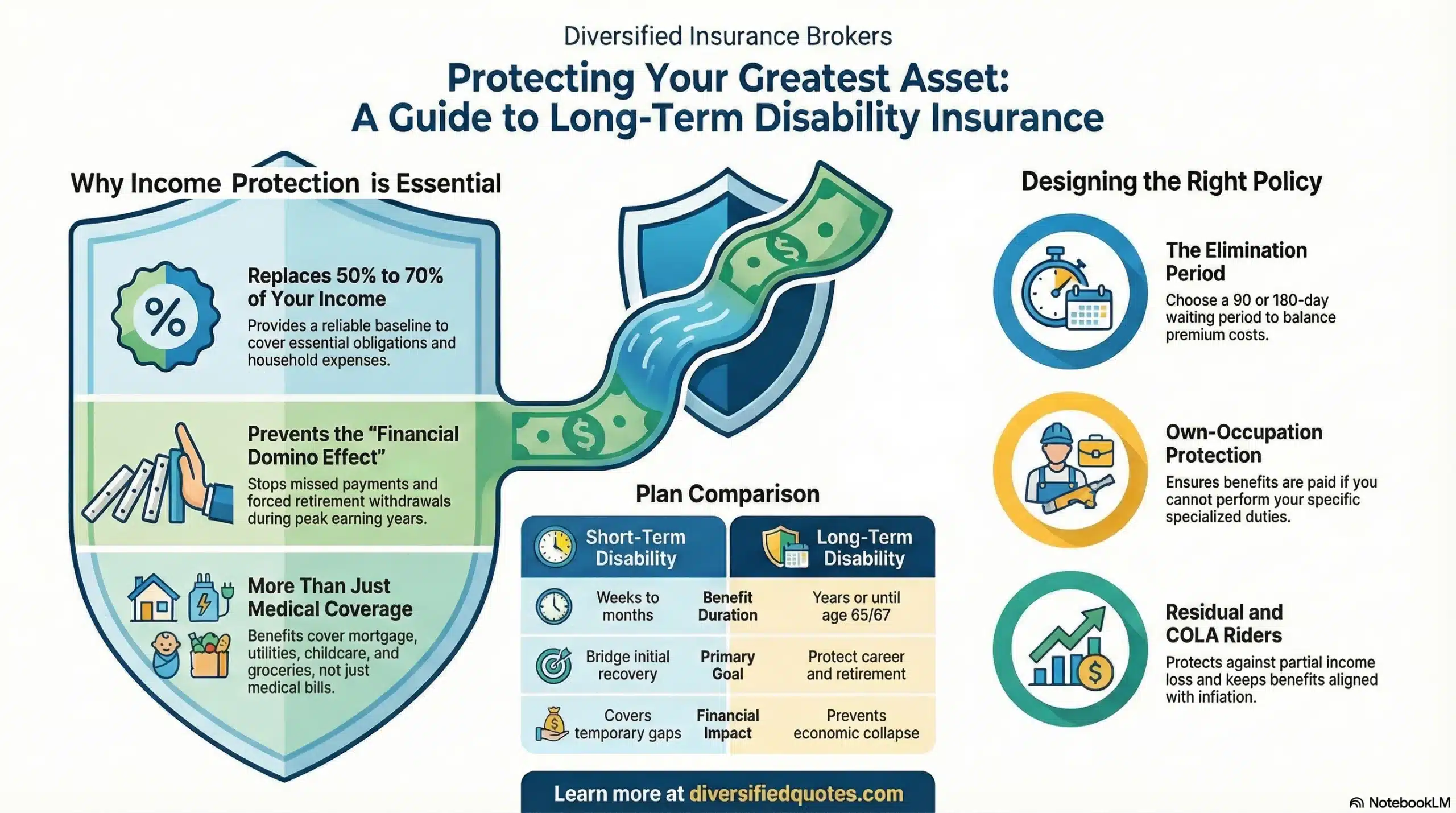
The benefit period for a visual artist’s disability policy should extend to retirement age — long-term disability insurance to age 65 protects against career-ending conditions across the full working life. The elimination period should be calibrated against available savings — self-employed artists without employer sick leave need savings sufficient to bridge the gap before benefits begin, making shorter elimination periods (30-60 days) appropriate when savings are limited. The future increase option allows coverage to expand as income grows through the career without new medical underwriting — important for artists in growth phases where income is increasing alongside reputation. The full rider framework is at disability insurance riders explained. Tax treatment of individually owned benefits — generally received income-tax-free when premiums are paid personally — is at are disability insurance payments taxable. The design parallels for adjacent creative professionals at similar career stages are at disability insurance for interior designers, disability insurance for architects, and disability insurance for film and print editors. For an independent evaluation of any existing or proposed policy, get a 2nd opinion on your disability insurance quote covers the review process.
Talk With an Advisor Today
Choose how you’d like to connect—call or message us, then book a time that works for you.
Schedule here:
calendly.com/jason-dibcompanies/diversified-quotes
Licensed in all 50 states • Fiduciary, family-owned since 1980
FAQs: Disability Insurance for Artists
What occupational class do visual artists typically qualify for?
Visual artists qualify for occupational classes that reflect the creative, non-hazardous, primarily cognitive nature of the work — generally in the middle-to-high range. The specific class depends on medium and working conditions: digital artists and screen-based illustrators working entirely on computers tend toward higher classifications; traditional media artists working with chemical paints, solvents, clay dust, or printmaking materials may receive a somewhat lower class that reflects chemical exposure risk. Accurately describing the actual working medium and studio conditions in the application ensures the most appropriate and favorable classification is assigned, rather than a generic “artist” designation that may not capture the specific profile.
What are the most common disability risks specifically for visual artists?
Carpal tunnel syndrome and repetitive strain from sustained fine motor work — brushwork, pencil illustration, pottery throwing, sustained stylus use — is the leading physical occupational risk for visual artists. Even moderate impairment in hand coordination can drop work quality below professional standards without completely stopping the ability to use hands. Shoulder and back conditions from sustained working postures at easels and sculpture stands accumulate over careers. For traditional media artists, chemical exposure from oil paint pigments, solvents, clay dust, and printmaking chemicals creates progressive respiratory and neurological risk. Mental health conditions — depression and anxiety, which are documented at elevated rates in creative professionals — represent the cognitive disability risk that can eliminate creative output capacity while leaving the person physically functional.
Why is own-occupation coverage important for artists specifically?
An artist with carpal tunnel severe enough to prevent controlled fine motor art production may still be capable of typing, administrative work, or other employment. Under any-occupation language, that remaining capability provides grounds to deny disability benefits even though the career-defining work can no longer be performed. Under own-occupation coverage, the policy evaluates whether the artist can perform the specific activities of their artistic practice — controlled fine motor work, sustained creative production, studio output at professional standards — not whether any alternative employment is theoretically possible. The professional specialization of artistic output — which is not equivalent to general hand use — is what own-occupation language protects.
How does commission and licensing income affect disability benefit calculations?
Disability benefits are based on active earned income — the income generated by current artistic production and active commissioned work. Passive licensing fees and print royalties that continue regardless of whether the artist is working are not counted as earned income for benefit sizing purposes. They also do not reduce disability benefits in most individual policy designs. Two to three years of Schedule C tax returns are used to establish an average active earned income baseline for benefit calculation, averaging across years to account for the natural variability of commission and sale income. Variable peak years from a major commission are not used alone — the average is more accurate and more defensible at claim time.
Can early-career artists afford disability insurance?
Early-career artists are typically at the lowest premium point for disability insurance, since premiums are locked in at the issue age and do not increase with age alone. A policy purchased at 25 with modest income, combined with a future increase option rider, provides a foundation that can grow as income increases without requiring new medical underwriting. Waiting until income is higher is a common mistake: if health changes occur — a hand condition, a mental health diagnosis, or any other health event — the ability to get coverage at favorable terms may be significantly impaired. Even a modest benefit amount that matches early-career income provides real financial protection and establishes the coverage framework that can be expanded as the career grows.
About the Author:
Jason Stolz, CLTC, CRPC, DIA, CAA and Chief Underwriter at Diversified Insurance Brokers (NPN 20471358), is a senior insurance and retirement professional with more than 25 years of real-world experience helping individuals, families, and business owners protect their income, assets, and long-term financial stability. As a long-time partner of the nationally licensed independent agency Diversified Insurance Brokers, Jason provides trusted guidance across multiple specialties—including fixed and indexed annuities, long-term care planning, personal and business disability insurance, life insurance solutions, Group Health, Travel Medical and Evacuation Insurance, and short-term health coverage. Diversified Insurance Brokers maintains active contracts with over 100 highly rated insurance carriers, ensuring clients have access to a broad and competitive marketplace.
His practical, education-first approach has earned recognition in publications such as VoyageATL, and contributions from his agency featured in Kiplinger and GoBankingRates— highlighting his commitment to financial clarity and client-focused planning. Drawing on deep product knowledge and years of hands-on field experience, Jason helps clients evaluate carriers, compare strategies, and build retirement and protection plans that are both secure and cost-efficient. Visitors who want to explore current annuity rates and compare options across multiple insurers can also use this annuity quote and comparison tool.
Explore More Disability Insurance Options: Browse our complete guide to Disability Insurance for Food, Hospitality, Arts & Entertainment — covering chefs, musicians, actors, bartenders, hospitality workers & entertainment professionals from 100+ carriers.
Last Reviewed: June 6, 2026 |
Reviewed by: Jason Stolz, CLTC, CRPC, DIA, CAA
Chief Underwriter, Diversified Insurance Brokers, Inc. | NPN: 20471358 | Diversified Insurance Brokers, Inc. — Licensed in all 50 states
Fact Checked by: Tonia Pettitt, CMIP©
Medicare Specialist, Diversified Insurance Brokers, Inc. | NPN: 14374308 | Diversified Insurance Brokers, Inc. — Licensed in all 50 states
Did you find this content helpful? Leave us a Google review — it helps others find trustworthy guidance too.
Editorial Standards: Diversified Insurance Brokers maintains rigorous editorial standards to ensure accuracy, clarity, and independence in all content. Learn more about our editorial standards and commitment to transparency.
