
Disability Insurance for Antique Dealers
As an Independent Disability Insurance Broker, we have access to exclusive discounts and negotiated pricing most captive agents can’t offer — see the full breakdown near the end of this page.
Disability Insurance for Antique Dealers

Jason Stolz CLTC, CRPC, DIA, CAA
Disability insurance for antique dealers addresses the income risk of a profession that looks deceptively simple from the outside — buying old things and selling them — but is built on a combination of physical capability and cognitive expertise that is harder to replace than almost any retail business model. The income of an antique dealer is not generated by inventory sitting on shelves. It is generated by the dealer’s knowledge: the ability to recognize value in objects others overlook, the expertise to authenticate pieces under examination, the judgment to price accurately in a market that is constantly shifting, and the relationships with auction houses, estate executors, and collectors that make sourcing possible. When any of those capabilities is interrupted by a health event — a back injury that limits estate sale attendance and hauling, a vision problem that impairs the detail work of authentication, a cognitive condition that disrupts the specialized judgment that pricing requires — the income that depends on them stops. The disability insurance services available to self-employed specialty retailers and dealers address this income-to-expertise dependency, and the broader income protection insurance framework covers how individual policies are structured for business owners with no employer income backup.
The vast majority of antique dealers are self-employed — operating sole proprietorships, partnerships, or small LLCs with no employer disability plan, no paid sick leave, and no income continuation when they cannot work. A dealer who spends a month recovering from a back injury misses estate sales, misses show dates, and misses the sourcing opportunities that create the inventory pipeline their business depends on. A dealer with a longer-term condition faces the prospect of inventory sitting unsold, overhead continuing, and the client relationships and sourcing networks that took years to build quietly eroding. At Diversified Insurance Brokers, we help antique dealers and specialty dealers structure disability coverage that reflects the hybrid physical and cognitive nature of the work, the self-employed business structure, and the variable transaction-based income that defines how most dealers earn. The disability insurance by occupation framework covers how carriers evaluate self-employed specialty retail and dealer occupations.
Compare Disability Insurance for Antique Dealers
We compare options across 100+ carriers and structure coverage around the self-employed business structure, appraisal expertise, and variable transaction income of antique dealing professionals.
Request Disability Insurance OptionsDisability Insurance for Antique Dealers — Coverage Dimensions, Risk Profile, and Business Protection
| Coverage Dimension | The Antique Dealer Reality | What the Right Design Looks Like |
|---|---|---|
| Occupational class and duty description | Antique dealers fall in a middle occupational class that reflects both the physical handling and cognitive appraisal components of the work; carriers evaluate actual duties rather than a generic retail classification; dealers who primarily buy, authenticate, and manage sales at a shop or online have a more favorable profile than those doing heavy hauling and restoration regularly | Accurate description of actual duty balance — authentication, sourcing, client relationship management, online sales management versus physical lifting and transportation — supports the best available class; describing the expertise and knowledge dimension of the work prevents a generic “retail worker” classification that would understate the favorable professional profile |
| Physical risks — lifting, handling, and travel | Sourcing inventory at estate sales, auction houses, and storage units involves lifting furniture, handling fragile items, and loading vehicles; back and musculoskeletal conditions from repetitive heavy handling are the leading physical occupational risks; extensive driving between sales, shows, and client visits creates vehicle accident exposure; outdoor shows and estate sales involve prolonged standing and uneven terrain | Coverage for any cause of disability — physical and cognitive; residual disability rider capturing partial income loss when reduced mobility limits sourcing frequency but doesn’t eliminate selling activity; benefit sized to replace the income from active dealing, not just one component of the work |
| Cognitive expertise — authentication and valuation | The expertise to authenticate pieces, recognize makers’ marks and period characteristics, evaluate condition accurately, and price for both profitability and competitive positioning is accumulated over careers and cannot be replaced by physical ability alone; cognitive impairment from any cause — neurological conditions, depression, medication effects — can degrade the judgment that makes a dealer’s sourcing and pricing decisions valuable | Own-occupation coverage that recognizes antique dealing as specialized expertise work, not generic retail; a dealer who cannot reliably authenticate and price due to cognitive impairment is disabled from their profession regardless of physical capability; unlimited mental/nervous benefit period in individual policies addressing this cognitive expertise risk |
| Business overhead during disability | Dealers with physical shop locations, booth rentals, storage units, and online selling infrastructure face ongoing fixed costs that continue during disability regardless of whether income is being generated; shop rent, utilities, insurance, and platform fees accumulate while the dealer cannot source or sell actively | Business Overhead Expense coverage for dealers with documented fixed overhead that exceeds a threshold justifying a separate BOE policy; personal LTD for income replacement; coordinating both layers prevents both personal financial hardship and business infrastructure deterioration during a disability period |
| Income documentation — transaction-based variability | Antique dealer income fluctuates significantly with market conditions, successful finds, and sale timing; a year with several major pieces may produce dramatically higher income than a slow year; income may include sales, consignment fees, appraisal fees, and show income — all variable and transaction-based; accurate income averaging prevents both understating and overstating the benefit need | Two to three years of Schedule C returns averaged to establish active earned income baseline; variable years averaged to produce a realistic ongoing income figure; benefit sized to what the dealer actually earns from active dealing activity on a sustainable basis, not peak transaction years |
| The self-employed income void | Self-employed antique dealers have no employer group disability plan, no employer sick leave, and no paid leave structure; income stops when active dealing stops; the individual policy is the entire income protection plan with no other layer beneath it | Elimination period calibrated against available savings — dealers without cash reserves need shorter elimination periods (30-60 days); benefit sized to documented income; to-age-65 benefit period protecting the full career trajectory of a specialty expertise business that grows more valuable over time |
The Expertise Dimension — Why Antique Dealing Is a Specialty Profession
What separates a successful antique dealer from someone who buys and resells items is accumulated expertise that takes years to develop and cannot be quickly transferred to an employee or substitute. The ability to walk into an estate sale and identify a piece of genuine period furniture from a later reproduction, to recognize a genuine maker’s mark on silver from a plated imitation, to evaluate the condition of a textile or ceramic with the accuracy needed to price it profitably — these are specialized cognitive skills with direct income implications. A dealer who loses the confidence and accuracy of that judgment, whether from cognitive decline, visual impairment that prevents close inspection detail work, or a health event that disrupts the analytical function of appraisal expertise, cannot simply be replaced. The own-occupation parallel to the appraisal professions is direct: real estate appraisers whose income depends on the specific valuation judgment they provide, and assessors whose professional value comes from the accuracy and consistency of their evaluation expertise, both face the same fundamental challenge that own-occupation disability coverage addresses: the specialized expertise is the product, and any-occupation language that equates that expertise to generic retail work mischaracterizes what the dealer actually does. The closest specialty dealer parallel is jewelers, whose authentication and valuation expertise drives income in exactly the same way, and auctioneers who navigate the same estate sale and auction house ecosystem that antique dealers source from.
Physical Risks — The Sourcing Side of the Business
The physical dimension of antique dealing is often underestimated in discussions of the profession. Sourcing inventory at estate sales, auction preview days, storage unit auctions, and private collections regularly involves moving and handling furniture, artwork, and decorative objects that are heavy, fragile, and awkwardly shaped. Dealers who transport their own inventory load and unload vehicles repeatedly, set up and break down show booths that require physical labor, and navigate the uneven terrain and variable conditions of estate sale properties, outdoor shows, and warehouse environments. Back injuries from repetitive lifting and poor ergonomics of handling large pieces are among the most common acute injuries in the profession. The cumulative vehicle mileage from traveling to sources adds accident exposure. These physical risks are distinct from the cognitive expertise risk but equally real — and a back injury that prevents estate sale attendance can cut off the sourcing pipeline that the entire business depends on regardless of how intact the dealer’s expertise remains. The creative and visual specialist parallel is at disability insurance for photographers and disability insurance for artists, both of whom combine physical handling demands with specialized visual and creative expertise in comparable income-exposure patterns. Interior designers whose work intersects with antique sourcing and period furniture advising face the same hybrid risk profile at disability insurance for interior designers.
Business Overhead and Self-Employment Planning
Antique dealers with physical shop locations, permanent antique mall booth rentals, or significant online selling infrastructure carry fixed overhead that continues during disability — rent, utilities, storage, platform fees, and insurance are expenses that do not pause when the dealer cannot work. Business overhead disability insurance and the companion disability business overhead expense coverage address this specific layer, keeping the business operational and infrastructure intact during disability periods. For dealers with employees or partners who contribute to operations, the disability insurance for high earners and business owners framework covers the full planning architecture. The disability insurance for self-employed dealers and disability insurance for 1099 workers cover the income documentation and benefit sizing considerations for the transaction-based income patterns of independent dealers, while disability insurance for independent contractors addresses the 1099-specific income documentation approach for dealers working through consignment arrangements and auction commissions.
Policy Design for Antique Dealers
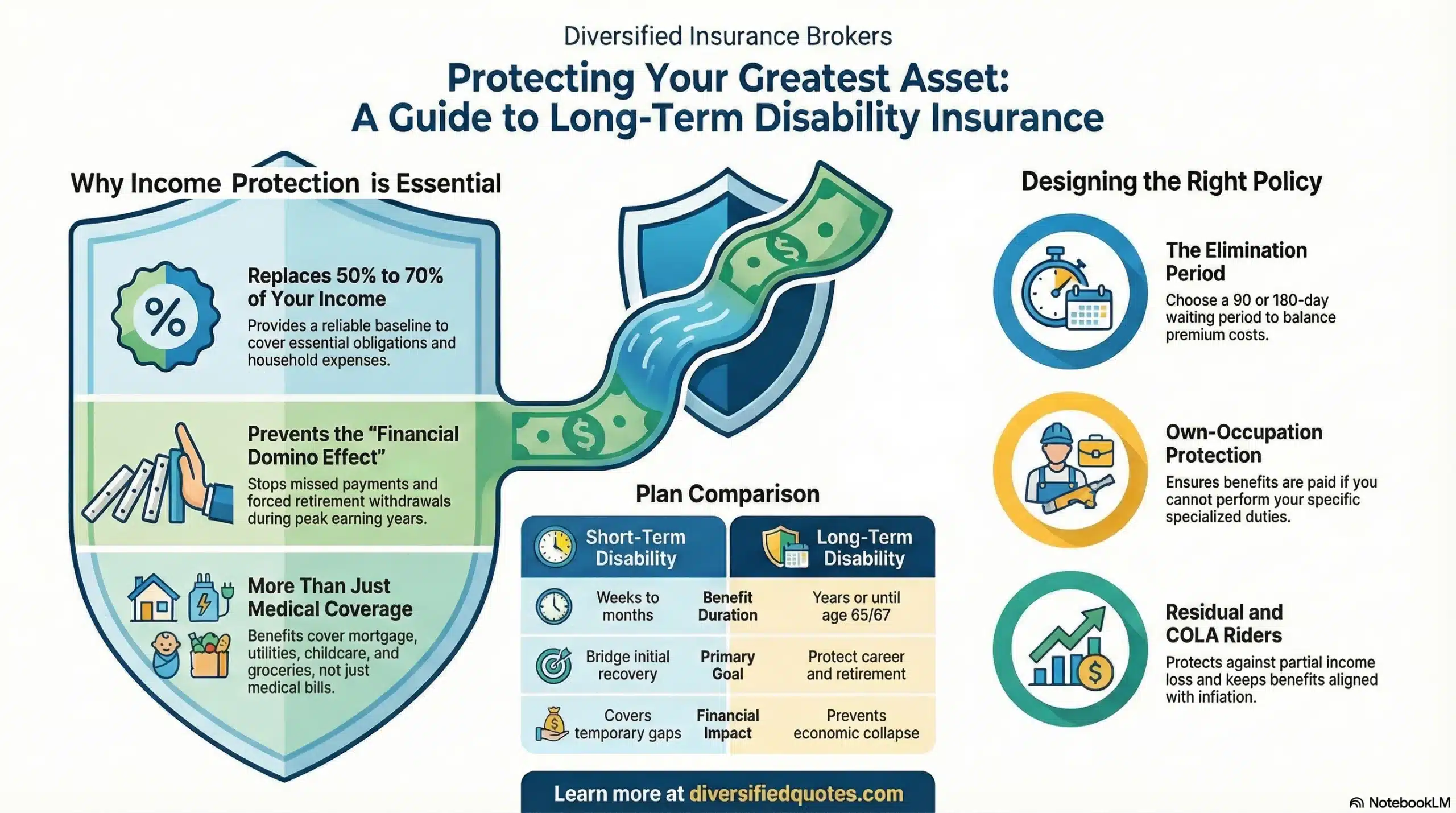
The benefit period should extend to retirement age — long-term disability insurance to age 65 protects the full career of a specialty expertise business whose value compounds over time. The elimination period should be calibrated against actual savings and cash flow; self-employed dealers without employer backup typically benefit from 30-60 day elimination periods. The residual disability rider is particularly relevant for antique dealers whose physical limitations may reduce sourcing frequency and show attendance without completely eliminating online selling or shop-based sales — capturing the partial income loss that is the most realistic early-phase disability scenario. Tax treatment of individually owned policy benefits is at are disability insurance payments taxable. Benefit sizing for variable transaction-based income is at how much disability insurance do I need. For independent evaluation of any existing or proposed policy, get a 2nd opinion on your disability insurance quote covers the review process. The case for working with an independent disability insurance broker is strong for specialty occupations where accurate occupational description and carrier selection together determine both the available definitions and the premium outcome.
Talk With an Advisor Today
Choose how you’d like to connect—call or message us, then book a time that works for you.
Schedule here:
calendly.com/jason-dibcompanies/diversified-quotes
Licensed in all 50 states • Fiduciary, family-owned since 1980
FAQs: Disability Insurance for Antique Dealers
What occupational class do antique dealers typically qualify for?
Antique dealers typically qualify for a middle occupational class that reflects both the physical handling components of sourcing and transport and the cognitive appraisal and valuation expertise that drives income. Dealers who primarily authenticate, price, and manage sales with minimal heavy lifting may qualify for a more favorable classification than those who regularly handle large furniture and transport inventory themselves. Accurately describing the actual duty balance in the application is the most important step — “antique dealer” as a job title doesn’t tell a carrier whether someone is primarily an expert buyer-seller or primarily a physical hauler, and the class assigned can differ significantly based on that distinction.
Do antique dealers need Business Overhead Expense coverage in addition to personal disability insurance?
Dealers with physical shop locations, permanent booth rentals, storage units, or meaningful monthly overhead should consider whether BOE coverage makes sense alongside personal LTD. BOE insurance reimburses documented fixed business expenses — rent, utilities, storage, business insurance, platform fees — during a disability period when income drops but those costs continue. For dealers with modest overhead who work primarily from home or online, personal LTD alone may be sufficient. For dealers with a shop, antique mall presence, or staff, the BOE layer prevents the business infrastructure from deteriorating while the owner recovers. The two policies serve distinct purposes: personal LTD replaces personal income; BOE keeps the business running.
How is disability insurance income calculated for antique dealers with variable transaction income?
Carriers require two to three years of Schedule C tax returns to establish an average active earned income baseline for benefit sizing. Variable year-to-year transaction income is averaged across the documented period — a strong year from several significant finds is not used alone. The benefit amount is based on net income after business expenses, not gross sales revenue. Dealers whose income swings significantly between years benefit from the averaging approach because it produces a more accurate ongoing income figure than any single year would. Consignment fees, appraisal fees, and show income all count as active earned income for benefit sizing purposes.
What are the most realistic disability scenarios for active antique dealers?
The most immediately realistic physical disability scenarios involve back and musculoskeletal injuries from lifting and handling inventory — a back injury severe enough to prevent attending estate sales and auction previews removes the entire sourcing function of the business. Vehicle accidents from high mileage between sources represent a consistent acute risk. Vision problems that impair the close-inspection detail work of authentication can gradually reduce the accuracy and confidence of valuations. For cognitive disability, depression and neurological conditions that degrade the judgment and pattern-recognition expertise that makes a dealer’s sourcing decisions profitable represent genuine career-interrupting conditions that own-occupation coverage addresses directly.
Is residual disability coverage important for antique dealers?
Yes — the residual disability rider is particularly valuable for antique dealers because partial capacity loss is a more realistic near-term disability scenario than complete inability to work. A dealer with a back injury may still be able to manage online sales, handle phone and email client relationships, and do some local sourcing while being unable to attend distant estate sales, haul inventory, or work extended show weekends. That reduced capacity produces real income loss without meeting a total disability threshold. Residual benefits pay proportionally when documented income drops 20-25%+ from a qualifying condition, capturing the partial productivity loss that precedes total disability — or that may represent the entire disability episode for many dealers.
About the Author:
Jason Stolz, CLTC, CRPC, DIA, CAA and Chief Underwriter at Diversified Insurance Brokers (NPN 20471358), is a senior insurance and retirement professional with more than 25 years of real-world experience helping individuals, families, and business owners protect their income, assets, and long-term financial stability. As a long-time partner of the nationally licensed independent agency Diversified Insurance Brokers, Jason provides trusted guidance across multiple specialties—including fixed and indexed annuities, long-term care planning, personal and business disability insurance, life insurance solutions, Group Health, Travel Medical and Evacuation Insurance, and short-term health coverage. Diversified Insurance Brokers maintains active contracts with over 100 highly rated insurance carriers, ensuring clients have access to a broad and competitive marketplace.
His practical, education-first approach has earned recognition in publications such as VoyageATL, and contributions from his agency featured in Kiplinger and GoBankingRates— highlighting his commitment to financial clarity and client-focused planning. Drawing on deep product knowledge and years of hands-on field experience, Jason helps clients evaluate carriers, compare strategies, and build retirement and protection plans that are both secure and cost-efficient. Visitors who want to explore current annuity rates and compare options across multiple insurers can also use this annuity quote and comparison tool.
Explore More Disability Insurance Options: Browse our complete guide to Disability Insurance for Food, Hospitality, Arts & Entertainment — covering chefs, musicians, actors, bartenders, hospitality workers & entertainment professionals from 100+ carriers.
Last Reviewed: June 6, 2026 |
Reviewed by: Jason Stolz, CLTC, CRPC, DIA, CAA
Chief Underwriter, Diversified Insurance Brokers, Inc. | NPN: 20471358 | Diversified Insurance Brokers, Inc. — Licensed in all 50 states
Fact Checked by: Tonia Pettitt, CMIP©
Medicare Specialist, Diversified Insurance Brokers, Inc. | NPN: 14374308 | Diversified Insurance Brokers, Inc. — Licensed in all 50 states
Did you find this content helpful? Leave us a Google review — it helps others find trustworthy guidance too.
Editorial Standards: Diversified Insurance Brokers maintains rigorous editorial standards to ensure accuracy, clarity, and independence in all content. Learn more about our editorial standards and commitment to transparency.
