
Disability Insurance for Photographers
As an Independent Disability Insurance Broker, we have access to exclusive discounts and negotiated pricing most captive agents can’t offer — see the full breakdown near the end of this page.
Disability Insurance for Photographers

Jason Stolz CLTC, CRPC, DIA, CAA
Disability insurance for photographers is a financial protection that most professional photographers never adequately plan for — despite working in a profession where the majority are self-employed, where income depends directly on the photographer’s personal physical capability and specialized technical skill, and where a range of disability scenarios from acute injury to chronic overuse conditions to mental health challenges can interrupt or end the income stream that professional photography generates. The Bureau of Labor Statistics reports an average wage of $26.76 per hour for employed photographers in May 2024, with a mean annual salary of approximately $55,650. Data USA places the average yearly wage for photographers at $47,610 in 2024. These figures reflect only the employed portion of the photography workforce, substantially understating total professional photography income — because the majority of full-time professional photographers are self-employed, and BLS wage surveys do not capture self-employment income. Self-employed commercial and wedding photographers in established markets routinely generate $60,000 to $120,000 or more annually from photography services, with top commercial photographers in major markets generating $150,000 to $300,000 or more. This self-employment income structure — entirely dependent on the photographer’s physical capability, creative capability, and professional availability — means that disability produces immediate and total income cessation with no employer group coverage safety net of any kind. At Diversified Insurance Brokers, we help photographers across all specializations design disability coverage that reflects the specific income structure, occupational demands, and financial planning considerations of professional photography careers. For foundational disability insurance context, our disability insurance services overview provides essential background, and our resource on disability insurance for the self-employed addresses the specific income documentation and coverage design considerations for self-employed photography professionals.
Protect Your Income as a Photographer
Compare disability insurance options designed for self-employed photographers and visual arts professionals across all specializations.
Request Disability Insurance OptionsQuestions? Call 800-533-5969
What Professional Photographers Do and Why Their Self-Employment Structure Creates Financial Vulnerability
Professional photographers create commercial, editorial, documentary, wedding, portrait, product, architectural, sports, news, and artistic visual content across a range of specializations, each with its own physical demands, income structure, and disability risk profile. Commercial photographers work on advertising campaigns, brand content, product photography, and corporate assignments — often in controlled studio environments but frequently on location with complex equipment setups, travel demands, and the physical requirements of managing lighting, sets, and equipment across demanding production schedules. Wedding and event photographers work the most physically demanding single-day schedules in the profession — 8 to 12 hours of continuous shooting, often while moving through outdoor venues in variable weather, carrying 20 to 40 pounds of camera bodies, lenses, and accessories, kneeling and crouching for compositional angles throughout the day. Photojournalists and documentary photographers work in the field environments where newsworthy events occur — which can include conflict zones, natural disasters, civil unrest, and other physically dangerous and psychologically taxing environments. Sports photographers work at the sidelines and venues of athletic competition, requiring the physical agility to reposition quickly and the sustained physical stamina of long shooting days at professional sporting events.
What unites most professional photographers is the self-employment structure that makes disability insurance not a supplement to existing protection but the only protection. The BLS’s own methodology notes that because actors and musicians are paid hourly rates but do not work 40 hours per week year-round, annual income calculations from hourly wage data are not representative — the same applies to photography. The full-time professional photographer who generates $90,000 per year from a combination of wedding bookings, commercial assignments, and portrait sessions is not captured accurately in BLS wage data because most of that income flows through self-employment. And that photographer, when injury or illness prevents them from shooting for 8 to 16 weeks, faces the same immediate and total income cessation that any independent worker without employer coverage faces. There is no HR department, no group LTD claim, no sick leave balance — just the savings account and the disability insurance policy, if one exists. Our resource on why people buy disability insurance explains the core protection logic that applies with particular force to self-employed professionals whose income is entirely dependent on their personal capability to work.
Physical Injury: The Most Acute and Common Disability Trigger
Photography is more physically demanding than most people outside the profession realize, and professional photographers are more susceptible to acute physical injury than the office-based visual profession stereotype suggests. The equipment demands of professional photography — heavy camera bodies, telephoto lenses weighing 5 to 10 pounds each, lighting equipment including strobes, modifiers, and stands, tripods and support systems, camera bags and cases — generate sustained physical load that photographers carry across shooting locations, up stairs, across venues, and through field environments where the terrain is rarely flat or easy. A commercial photographer arriving at a location shoot may carry 40 to 60 pounds of equipment from vehicle to location, set up and position lighting stands and modifiers, and then spend hours in active physical work managing the shoot environment.
Wedding photographers face some of the most physically concentrated demands in the profession. A full-day wedding typically involves 10 to 14 hours of active shooting across multiple locations — ceremony, reception, portraits, detail photography — requiring continuous physical mobility, frequent kneeling and crouching for compositional angles, repetitive camera raising and lowering with equipment weighing 3 to 6 pounds per body-lens combination, and the sustained physical and mental engagement of managing a complex, schedule-driven creative production. A wedding photographer who arrives at a Saturday wedding with a recently injured ankle, wrist, or shoulder is not able to simply “take it easy” — the client has paid a non-refundable fee for specific coverage of a specific irreplaceable event, and the photographer must perform at full capability regardless of physical condition. This creates an occupational dynamic that makes even moderate physical injuries financially catastrophic: the inability to perform a booked wedding due to injury means losing the booking fee and potentially the professional reputation damage of breaching a client contract.
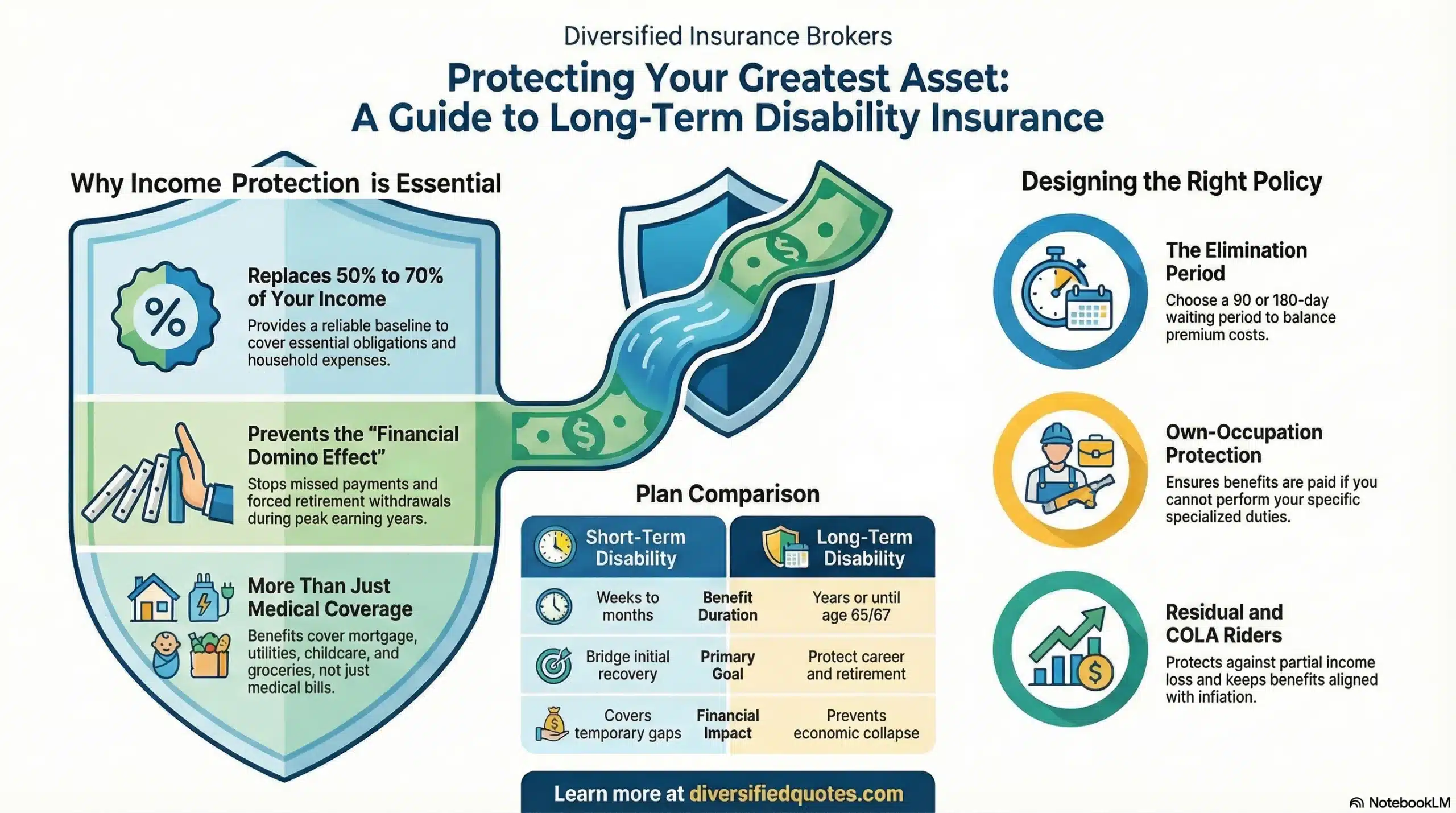
Acute injuries that most commonly disable photographers include wrist fractures and sprains from falls while moving through locations with heavy equipment, shoulder injuries from repetitive camera-raising with telephoto lenses, knee injuries from repeated kneeling and crouching during long shooting days, and back injuries from sustained bending postures and heavy equipment carrying. Any of these injuries producing 6 to 12 weeks of physical limitation generates both direct income loss from cancelled or rescheduled bookings and potential long-term client relationship damage from the disruption. Disability insurance provides income replacement during the recovery period — not replacing the cancelled bookings themselves but replacing the income equivalent that the disability has eliminated. Our resource on disability insurance elimination periods explained helps calibrate the waiting period before benefits begin to actual financial reserves.
Repetitive Strain and Overuse Conditions: The Chronic Disability Pathway
Beyond acute injuries, professional photographers accumulate the repetitive strain conditions that develop from the sustained physical demands of their work over career-length timeframes. The camera-raising and holding demands of professional photography generate documented upper extremity repetitive strain pathways: the sustained gripping of camera bodies activates forearm flexor muscles continuously, producing the forearm tendinitis conditions that affect musicians, construction workers, and others in high-repetition grip occupations. The sustained weight of telephoto lenses — professional wildlife, sports, and event photographers may use 400mm and 500mm lenses weighing 5 to 10 pounds for hours at a time — generates the shoulder loading that produces rotator cuff conditions over years of sustained use. The repeated camera raising and lowering that characterizes active event photography produces the repetitive shoulder stress that accumulates into impingement and tendinopathy across career timeframes.
Carpal tunnel syndrome — compression of the median nerve at the wrist — is documented as a common occupational condition in photographers from the combination of sustained gripping, repetitive shutter activation, and the extended computer editing work that follows every professional shoot. A photographer who spends 8 hours shooting and then 6 hours editing in Lightroom or Photoshop in the days following a major assignment is performing sustained hand and wrist work that, without adequate ergonomic support and recovery periods, generates the cumulative nerve compression that produces carpal tunnel syndrome. For a photographer whose professional function depends entirely on hand and wrist capability — both for shooting and for post-processing — significant carpal tunnel syndrome producing hand weakness and pain is a genuine functional disability that may prevent professional-level work for weeks to months during treatment and recovery.
The residual disability rider is particularly valuable for photographers whose overuse conditions may limit but not completely eliminate their ability to work. A photographer who can manage portrait sessions but cannot handle the physical demands of a full-day wedding due to a shoulder condition, or who can perform some commercial assignments but not the most physically demanding location shoots, has experienced a real income reduction that proportionate residual benefits address. Our resource on residual disability insurance benefits explained covers how partial disability benefits work in practice for self-employed creative professionals.
Vision and Sensory Conditions: The Profession-Specific Disability Pathway
Photography is a vision-dependent profession in a way that is more direct and more complete than most other occupations. The technical functions of professional photography — composing images in the viewfinder, assessing focus and exposure, reviewing images on camera monitors and computer screens, performing color grading and retouching in post-processing — all require vision of sufficient quality to perform at the level clients and markets expect. A professional photographer who develops a significant vision condition — severe myopic progression requiring correction that affects viewfinder use, macular degeneration affecting central vision and color perception, or an inflammatory eye condition requiring treatment and activity restriction — faces a profession-specific disability that other occupations with different primary sensory demands would not generate in the same way.
Eye strain from sustained screen work is one of the most common complaints among professional photographers who spend long hours in post-processing — the combination of color-critical monitor work requiring precise visual discrimination, high-contrast retouching work, and extended computer sessions can produce the digital eye strain and headache conditions that affect sustained professional productivity. More serious conditions — retinal issues, corneal conditions, and inflammatory eye diseases that affect the vision quality photographers depend on — represent genuine occupational disability pathways for which the own-occupation definition must explicitly protect the visual professional functions of photography work. Our resource on own-occupation disability insurance explains how this definition protects specialized professional sensory functions.
Psychological Demands: Photojournalists, Documentary Photographers, and Burnout
Photojournalists and documentary photographers who work in conflict zones, disaster areas, and civil unrest environments face one of the most psychologically demanding occupational environments in any visual profession. The sustained exposure to violence, death, suffering, and human tragedy that conflict and disaster photography requires generates secondary traumatic stress and PTSD at documented rates in photojournalism populations — rates that have been studied by organizations including the Dart Center for Journalism and Trauma, which has documented significant rates of PTSD, depression, and anxiety among photojournalists with extensive conflict zone experience. The psychological consequences of this exposure are genuine occupational health outcomes that, when they reach clinical severity, constitute disability that disability insurance with appropriate mental health coverage must address without a 24-month benefit period limitation.
Beyond photojournalism, the broader photography profession carries occupational psychological demands that, while less extreme, are real and can accumulate over career-length timeframes. Wedding photographers navigate the intense emotional demands of documenting the most significant days in clients’ lives, managing client anxiety, family dynamics, and the professional pressure of producing perfect results in irreplaceable, non-repeatable moments. Commercial photographers manage client relationship demands, creative direction challenges, and the business stress of income volatility that characterizes self-employed creative professional careers. The combination of creative pressure, income uncertainty, and the sustained client service demands of running a photography business generates occupational stress that can progress to burnout and clinical mental health conditions when adequate recovery and support are absent. Our resource on disability insurance riders explained covers how mental health provisions are structured across policy types and why the 24-month limitation is an important comparison point for all creative professionals.
Income Documentation and Coverage Design for Self-Employed Photographers
Self-employed photographers need individual disability insurance structured around self-employment income documentation — typically prior year tax returns showing net self-employment income from photography services, licensing fees, and related professional activities. Income volatility is a characteristic of photography careers, particularly in the early to mid-career years as client relationships are established and booking volumes grow toward peak career levels. Carriers typically average income across 2 to 3 prior years to establish the benefit calculation base for self-employed applicants, which means early-career photographers with rapidly growing income may find benefit amounts limited relative to current earnings. Establishing a policy early and using the future increase option to expand coverage as income grows and is documented is the standard planning approach.
Photographers who operate their businesses as sole proprietors or LLCs with employees — assistants, second photographers, studio staff — face the same two-layer financial exposure as other self-employed business owners. Business overhead expense coverage protects the fixed costs of the photography business — studio lease if applicable, equipment loan payments, business insurance premiums, software and service subscriptions, and employee payroll — during a disability period when the photographer cannot work. Our resource on business overhead disability insurance explains how BOE coverage works alongside personal disability insurance for self-employed creative professionals, and our resource on disability insurance for independent contractors addresses the specific considerations for contract-based photography income structures. For photographers with existing coverage who want an independent evaluation, our disability insurance second opinion service provides a carrier-neutral review.
Simplified-Issue Options for Photographers With Variable Income
For photographers in the earlier stages of their career when income is growing but prior year tax documentation may understate current earning capacity, simplified-issue disability insurance provides an accessible path to meaningful income protection. Many simplified-issue programs allow self-employed applicants to obtain coverage up to specified benefit limits — commonly $3,000 to $4,000 per month — without producing extensive income documentation, making this option especially practical for photographers who have strong current booking activity but whose prior year tax returns do not yet fully reflect their professional income trajectory. Our resource on no-exam disability insurance explains how simplified-issue programs work, what the benefit limits are for self-employed applicants, and how the approval process compares to traditional disability underwriting for self-employed photographers.
When to Apply: Protecting the Career-Building Years
The optimal time for a photographer to apply for disability insurance is as early in their professional photography career as possible — ideally upon launching their professional practice, before any documented wrist conditions, shoulder conditions, or other health history from the physical demands of photography work have appeared in medical records. The argument for early application in photography parallels the argument for other self-employed creative professions: age-based premium locking, clean health history at the time of application, and the future increase option that allows coverage to expand as photography career income grows toward peak levels without new medical underwriting.
A photographer who applies at age 25 upon launching their professional photography practice obtains the lowest available lifetime premium at the cleanest health history point, with the broadest available coverage terms and no exclusion riders. The future increase option purchased alongside the base policy allows coverage to expand from early-career booking volume to established mid-career income to peak-career commercial rates without any health qualification — regardless of what occupational health developments occur during the intervening years of active professional work. Every year of delay increases both the premium at future application and the probability that documented health history from active professional photography work will limit the coverage available. Our resource on disability insurance for new professionals addresses early-career planning for self-employed creative professionals, and our resource on how to get the best disability insurance rates explains all the factors that determine coverage quality and cost for self-employed applicants.
Get Disability Insurance Quotes for Photographers
We compare options across carriers for self-employed photographers to find coverage that fits your income structure, specialization, and career stage.
Request Disability Insurance OptionsQuestions? Call 800-533-5969
Financial Protection Essentials
Income protection resources and disability insurance planning tools for photographers and visual arts professionals.
Talk With an Advisor Today
Choose how you’d like to connect—call or message us, then book a time that works for you.
Schedule here:
calendly.com/jason-dibcompanies/diversified-quotes
Licensed in all 50 states • Fiduciary, family-owned since 1980
FAQs: Disability Insurance for Photographers
Why do self-employed photographers need disability insurance when they have no employer?
The absence of an employer is precisely why disability insurance is most urgently necessary for self-employed photographers. Employed workers in larger organizations typically have employer group LTD coverage, sick leave, and HR systems that provide partial income replacement when disability prevents work. Self-employed photographers have none of these safety nets. When injury or illness prevents a photographer from shooting for 8 to 16 weeks, income stops immediately and completely — there is no group disability claim to file, no sick leave to draw on, and no employer sharing the financial burden. The photographer’s savings and any disability insurance policy they have personally arranged are the entire protection structure.
The income at stake is also more significant than many people assume. Self-employed commercial and wedding photographers in established markets routinely generate $60,000 to $120,000 or more annually from photography services — income that produces the same household financial obligations as any professional-level career but with zero employer-side income protection infrastructure. A 10-week recovery from a wrist injury or shoulder surgery produces $11,500 to $23,000 in direct income loss for a photographer at those income levels, against a disability insurance premium that might be $60 to $100 per month. Our resource on whether disability insurance is worth it provides the full cost-benefit framework.
What injuries most commonly disable professional photographers?
Professional photographers face acute injury risks from the physical demands of their work that most people outside the profession underappreciate. Wedding and event photographers are among the most physically active professionals in any creative field — carrying 20 to 40 pounds of camera bodies, lenses, and accessories through 10 to 14-hour shooting days, repeatedly kneeling and crouching for compositional angles, and managing the sustained physical demands of active event coverage. Acute injuries most common in this population include wrist fractures and sprains from falls while moving through locations with heavy equipment, shoulder injuries from repetitive camera raising with telephoto lenses, knee injuries from sustained kneeling on hard surfaces, and back injuries from heavy equipment carrying and sustained bending postures.
Chronic overuse conditions are equally significant: carpal tunnel syndrome from sustained gripping and extended post-processing computer work, rotator cuff conditions from sustained holding of heavy telephoto lenses, and forearm tendinitis from repetitive shutter activation and camera-raising all develop across career-length timeframes in active photographers. A photographer whose wrist injury or shoulder condition prevents them from shooting a booked wedding faces not only income loss from the cancelled booking but potential professional liability and reputation consequences from the breach. Disability insurance provides income replacement during the recovery period — replacing the equivalent of the disrupted income rather than the bookings themselves.
How does disability insurance work when a photographer’s income varies year to year?
For self-employed photographers with variable income — which describes most professional photography businesses in the growth and mid-career stages — disability insurance benefit amounts are typically calculated based on prior year tax returns showing net self-employment income, sometimes averaged across 2 to 3 years to establish a stable benefit base. This averaging approach can limit benefit amounts for photographers whose income has been growing rapidly, because prior year documentation does not yet reflect current earning capacity. The future increase option addresses this limitation directly: it allows the policy’s benefit amount to be increased as income grows and is documented, without new medical underwriting.
For photographers in the early stages of their career whose prior year tax documentation is not yet representative of current income, simplified-issue disability programs that do not require extensive income documentation up to specified benefit limits — commonly $3,000 to $4,000 per month for self-employed applicants — provide an accessible path to meaningful protection while the income documentation track record is being built. Our resource on no-exam disability insurance explains how these simplified-issue options work for self-employed creative professionals with variable income.
Do photojournalists and documentary photographers need special mental health coverage considerations?
Yes — photojournalists and documentary photographers who work in conflict zones, disaster areas, and civil unrest environments face documented mental health risks that make mental health coverage provisions especially important in any disability policy they consider. The Dart Center for Journalism and Trauma has documented significant rates of PTSD, depression, and anxiety among photojournalists with extensive conflict zone experience — genuine occupational health outcomes from the sustained exposure to violence, death, and severe human suffering that conflict and disaster photography requires. When secondary traumatic stress or PTSD reaches clinical severity that prevents continued field work, it constitutes genuine occupational disability.
The specific provision to confirm is that the policy does not apply a 24-month benefit period limitation to mental and nervous condition claims. Most group LTD policies apply this standard cap, but individual disability insurance can be structured without it. For photojournalists whose profession-specific disability risk runs significantly through psychological occupational health outcomes, coverage without the 24-month mental health limitation is essential — not optional. The same applies to wedding and commercial photographers whose occupational stress conditions may eventually produce clinical mental health conditions requiring extended treatment and recovery. Our resource on disability insurance riders explained covers how mental health provisions are structured across different policy types.
When is the best time for a photographer to apply for disability insurance?
The optimal time is at the beginning of the professional photography career — upon launching the photography practice, before any documented wrist conditions, shoulder conditions, or other health history from the physical demands of professional photography work have appeared in medical records. A photographer who applies at age 25 upon launching their professional practice obtains the lowest available lifetime premium at the cleanest health history point, with the broadest available coverage terms and no exclusion riders.
The future increase option purchased with an early policy is especially valuable for photographers because professional photography income typically grows substantially from early-career to mid-career and peak-career levels — allowing coverage to expand through each income growth stage without medical qualification, regardless of what health developments occur during active professional work years. Every year of delay increases premium cost and the probability that documented health history — wrist conditions, shoulder tendinitis, or stress-related health documentation — will limit the coverage available at a later application. Our resource on disability insurance future insurability riders explains how this works, and our resource on how to get the best disability insurance rates explains all the factors that determine coverage quality and cost for self-employed creative professionals.
About the Author:
Jason Stolz, CLTC, CRPC, DIA, CAA and Chief Underwriter at Diversified Insurance Brokers (NPN 20471358), is a senior insurance and retirement professional with more than 25 years of real-world experience helping individuals, families, and business owners protect their income, assets, and long-term financial stability. As a long-time partner of the nationally licensed independent agency Diversified Insurance Brokers, Jason provides trusted guidance across multiple specialties—including fixed and indexed annuities, long-term care planning, personal and business disability insurance, life insurance solutions, Group Health, Travel Medical and Evacuation Insurance, and short-term health coverage. Diversified Insurance Brokers maintains active contracts with over 100 highly rated insurance carriers, ensuring clients have access to a broad and competitive marketplace.
His practical, education-first approach has earned recognition in publications such as VoyageATL, and contributions from his agency featured in Kiplinger and GoBankingRates— highlighting his commitment to financial clarity and client-focused planning. Drawing on deep product knowledge and years of hands-on field experience, Jason helps clients evaluate carriers, compare strategies, and build retirement and protection plans that are both secure and cost-efficient. Visitors who want to explore current annuity rates and compare options across multiple insurers can also use this annuity quote and comparison tool.
Explore More Disability Insurance Options: Browse our complete guide to Disability Insurance for Technology, Science & Education — covering software developers, engineers, scientists, teachers, architects & researchers from 100+ carriers.
Last Reviewed: May 14, 2026 |
Reviewed by: Jason Stolz, CLTC, CRPC, DIA, CAA
Chief Underwriter, Diversified Insurance Brokers, Inc. | NPN: 20471358 | Diversified Insurance Brokers, Inc. — Licensed in all 50 states
Fact Checked by: Tonia Pettitt, CMIP©
Medicare Specialist, Diversified Insurance Brokers, Inc. | NPN: 14374308 | Diversified Insurance Brokers, Inc. — Licensed in all 50 states
Did you find this content helpful? Leave us a Google review — it helps others find trustworthy guidance too.
Editorial Standards: Diversified Insurance Brokers maintains rigorous editorial standards to ensure accuracy, clarity, and independence in all content. Learn more about our editorial standards and commitment to transparency.
