
What is a Long Term Care Insurance Benefit Period
As an Independent Long Term Care Insurance Broker, we compare traditional, hybrid, and partnership-qualified policies across dozens of carriers to find the structure that actually fits your situation.
What is a Long Term Care Insurance Benefit Period

Jason Stolz CLTC, CRPC, DIA, CAA
A long term care insurance benefit period is one of the most important — and most misunderstood — components of a long term care policy. It determines how long your policy will pay benefits once you qualify for care. While many people focus on the daily or monthly benefit amount, the benefit period ultimately defines the total duration of protection your policy provides. In practical terms, it answers a critical question: how long will your coverage actually last if you need care?
Understanding the benefit period is essential because long term care events are often unpredictable in both their nature and their duration. Some individuals may need care for only a short period following surgery or illness, while others may require extended assistance for years due to chronic conditions. According to the 2025 Milliman Long-Term Care Index, approximately half of all individuals who require paid long-term care will need it for less than one year — but 14% of women and 6% of men require paid care for five or more years. That distribution is precisely why benefit period selection matters: a two-year benefit period protects well against the average claim but leaves the extended-duration scenario exposed, while lifetime coverage eliminates duration risk entirely at a meaningfully higher premium. Choosing the right benefit period means balancing cost, risk, and long-term financial protection in the context of your specific situation.
The benefit period is closely tied to other policy features such as inflation protection, elimination periods, and overall benefit pools — all of which play a role in how your coverage performs when you need it most. When evaluating long term care coverage, many individuals compare policies alongside broader planning strategies such as how to get the best long term care insurance rates and whether coverage requires medical underwriting as explained in does long term care insurance require a medical exam. These considerations all intersect with the benefit period because eligibility, pricing, and coverage duration are deeply connected.
What Is a Long Term Care Benefit Period?
The benefit period is the length of time your long term care insurance policy will pay for covered services after you qualify for benefits. Most policies offer benefit periods ranging from two years to lifetime coverage. The longer the benefit period, the more total protection the policy provides — but also the higher the cost.
For example, if your policy has a three-year benefit period and you begin receiving care, the insurance company will pay benefits for up to three years, assuming you continue to meet eligibility requirements. Once the benefit period is exhausted, the policy stops paying even if care is still needed. This is why selecting the appropriate duration is such a critical part of long term care planning — and why it should be evaluated thoughtfully rather than chosen by default based on premium alone.
The benefit period works together with your daily or monthly benefit amount to create a total benefit pool. A policy that provides $5,000 per month for three years creates a total benefit pool of $180,000. A policy that provides the same monthly benefit for five years creates a pool of $300,000. Understanding this relationship is essential because it determines how much financial support your policy can realistically provide during a care event — and whether that support will last for the duration of a longer-than-average claim.
Common Benefit Period Options
Most long term care policies offer standardized benefit period options. Each option reflects a different level of risk tolerance and financial planning approach. Shorter benefit periods are more affordable but provide less protection against extended care events, while longer benefit periods increase both coverage duration and premium cost.
| Benefit Period | Typical Use Case | Risk Coverage Level |
|---|---|---|
| 2 Years | Short-term recovery or budget-focused planning; works well when other assets can cover extended care costs | Lower protection |
| 3 Years | Most common choice; aligns with average purchased benefit windows of approximately 3.57 years per industry data; balances cost and coverage | Moderate protection |
| 5 Years | Extended care scenarios and chronic or cognitive conditions; protects against the longer-duration claims that represent the largest financial exposure | High protection |
| Lifetime | Maximum protection for long-duration care needs; eliminates duration risk entirely; most appropriate when elimination of catastrophic exposure is the primary goal | Full protection |
Choosing between these options depends on your financial situation, family history, and overall retirement plan. Industry data shows that the average benefit period purchased is approximately 3.57 years, with a median of 3 years — reflecting a market consensus that three years covers most claims while remaining within a manageable premium budget. However, individuals with a family history of Alzheimer’s disease, dementia, or other cognitive conditions may prefer longer coverage, since cognitive care events often extend well beyond average claim durations. Women statistically face longer care needs than men, which is one reason gender is an important factor in benefit period selection.
Why the Benefit Period Matters So Much
The benefit period is one of the primary drivers of both policy cost and long-term value. A shorter benefit period may reduce premiums, but it also increases the risk that coverage will run out during a prolonged care event. On the other hand, a longer benefit period provides stronger protection but requires a higher premium investment. When 13.5% of long term care insurance claims end because policy benefits have been exhausted — as reported in 2025 industry data — it reflects a real and measurable cost of selecting too short a benefit period relative to actual care duration.
This decision is similar to broader retirement planning strategies, such as determining how to replace income after retirement or evaluating why people buy long term care insurance. In each case, the goal is to manage financial risk over time rather than simply minimizing short-term cost. Optimizing for the lowest premium without evaluating the adequacy of the benefit period creates a coverage gap that can be far more costly than the premium savings.
Without sufficient coverage duration, even a well-designed policy can fall short. Long term care costs accumulate quickly, particularly for extended care situations involving assisted living or memory care. The 2025 Milliman LTC Index estimates the average projected lifetime long-term care cost for a 65-year-old at approximately $135,000 — but that average conceals a wide distribution, with extended-duration cases carrying costs that far exceed the average. Once benefits are exhausted, individuals must rely on personal savings, family support, or ultimately Medicaid to continue funding care. The benefit period is the line between the policy bearing that cost and the individual bearing it.
How Benefit Periods Interact With Other Policy Features
The benefit period does not operate in isolation. It works in combination with several other policy components that influence how coverage performs in practice. Understanding these interactions is critical when designing an effective long term care strategy, because optimizing one feature without considering its interaction with others can produce a policy that looks strong on paper but underperforms in a real claim situation.
The elimination period determines how long you must wait — and self-fund — before benefits begin. Most policies offer elimination periods of 30, 60, 90, or 100 days, though some offer 0-day options. A longer elimination period reduces the premium but requires more out-of-pocket spending before coverage activates. It is important to understand how the elimination period is calculated in a specific policy: some are satisfied by calendar days, while others require service days — meaning the elimination period is only credited on days when care services are actually being received. A 90-day service-day elimination period can take considerably longer than 90 calendar days to satisfy, particularly for home care situations where services are received intermittently rather than daily. Some carriers waive the elimination period for home care or offer riders that reduce this cost.
Inflation protection is the other major feature that directly interacts with benefit period selection. If you purchase a policy decades before you need care, a daily or monthly benefit that seems adequate today may cover significantly less at the time of a claim due to rising care costs. The Insurance Information Institute notes that even 3% annual inflation reduces the purchasing power of a benefit by half over approximately 24 years. Without inflation protection, a benefit period that appears robust today may produce meaningfully less actual protection by the time care is needed. Wisconsin’s state insurance office data confirms that all policies must offer at least 5% compounded annual inflation protection as an option — and for younger buyers, compounded inflation protection is particularly important because the gap between purchase date and claim date can be 20 to 30 years or more.
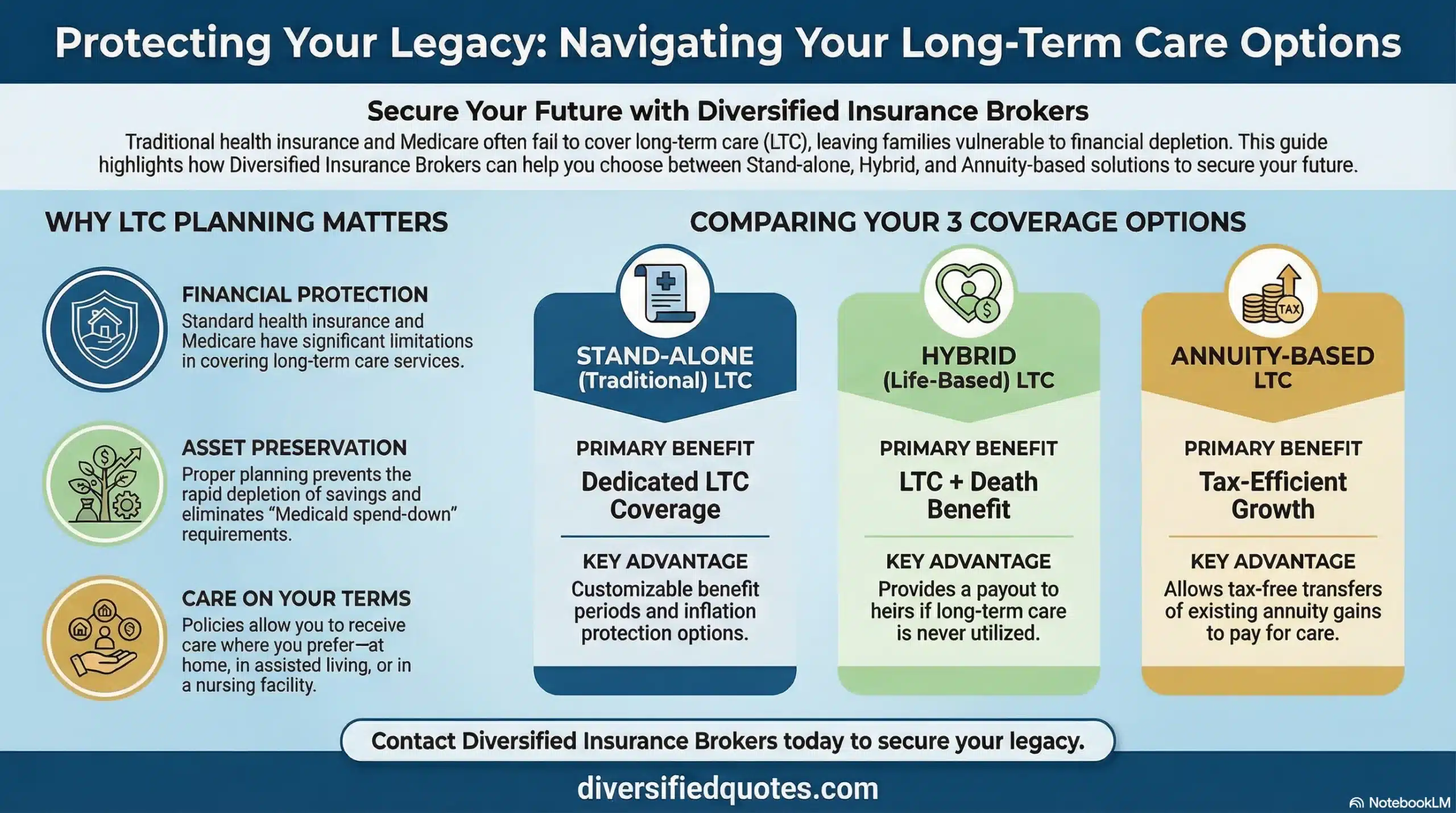
The benefit pool is directly tied to the benefit period and monthly benefit amount together. Increasing either factor increases the total pool of available funds. This is why many individuals evaluate long term care insurance alongside other financial planning tools such as the benefits of annuities, which can provide supplemental income during retirement and potentially help self-fund shorter-term care events while the LTC policy covers extended duration claims.
Benefit Period and Cognitive Care — A Special Consideration
Cognitive conditions such as Alzheimer’s disease and other dementias represent a particular planning challenge in benefit period selection because of their duration profile. Unlike post-surgical recovery or rehabilitation events that often resolve within months, cognitive decline is progressive and can require increasingly intensive care for years or even decades. According to NCOA data, Medicare covers some cognitive assessment and care planning costs for dementia patients, but does not cover sustained custodial care costs in memory care facilities or at home over the long term.
The benefit triggers for cognitive impairment differ from the standard activities of daily living triggers that most policies use. Most long term care policies cover care needs arising from an inability to perform two of six activities of daily living — bathing, dressing, eating, transferring, toileting, and continence — for 90 days or longer, or from a cognitive impairment diagnosis that requires substantial supervision. This means Alzheimer’s and dementia can qualify independently of ADL impairment, which is important for beneficiaries whose cognitive decline precedes physical decline.
For individuals with a personal or family history of cognitive conditions, selecting a five-year benefit period rather than a three-year period, or evaluating lifetime coverage, is a particularly meaningful consideration. The additional premium cost of a longer benefit period is most relevant precisely in the scenarios — extended cognitive care — where it pays the largest protection dividend.
How to Choose the Right Benefit Period
Choosing the right benefit period requires a thoughtful evaluation of personal risk factors rather than defaulting to the most common or least expensive option. Age, health history, family longevity, the presence of cognitive conditions in the family, financial resources, and overall retirement income security all play a role in determining the appropriate level of coverage. Individuals with strong retirement savings and income may choose a shorter benefit period as a form of partial protection — covering the extended tail risk while self-funding shorter claims — while others may prefer longer coverage to minimize the financial uncertainty of a prolonged care event entirely.
It is also important to consider how long term care insurance fits within your broader financial plan. Some individuals coordinate coverage with assets such as retirement accounts or annuities, while others focus on preserving specific assets for heirs. Understanding these trade-offs is essential when designing a comprehensive plan — particularly when the benefit period decision affects both the total benefit pool available during a care event and the annual premium required to maintain the coverage.
Working with an independent long term care broker allows you to compare multiple carriers and policy structures side by side, ensuring that the benefit period, benefit amount, elimination period, and inflation protection all work together coherently for your specific situation. This approach is similar to evaluating other types of coverage, such as how to get the best annuity rates, where product design and pricing can vary significantly between providers even for what appears to be a comparable product. The differences between carrier offerings — in how benefit periods are structured, how the benefit pool is managed, and how the elimination period is calculated — can matter substantially in a real claim.
Request Long Term Care Insurance Options
Every long term care plan should be tailored to your specific needs, risk tolerance, and financial goals. The benefit period is one of the most important decisions you will make when designing long term care coverage, as it directly impacts how long your coverage will last and how much total protection your policy provides. By understanding how benefit periods work, how they interact with other policy features, and how the underlying statistics inform the risk you are managing, you can make a more informed decision that supports long-term financial security regardless of how your care needs ultimately unfold.
Related Pages
Financial Protection Essentials
Talk With an Advisor Today
Choose how you’d like to connect—call or message us, then book a time that works for you.
Schedule here:
calendly.com/jason-dibcompanies/diversified-quotes
Licensed in all 50 states • Fiduciary, family-owned since 1980
FAQs: What Is a Long Term Care Insurance Benefit Period?
What is a long term care insurance benefit period and how does it work?
The benefit period is the maximum length of time your long term care insurance policy will pay covered benefits once you qualify for care. Most traditional policies offer benefit period options ranging from two years to lifetime coverage. When you begin receiving care and meet the policy’s benefit triggers — typically an inability to perform two of six activities of daily living for 90 days or longer, or a cognitive impairment requiring substantial supervision — the benefit period clock starts running. The policy will pay covered benefits for up to the duration selected, assuming you continue to meet eligibility requirements. If care continues after the benefit period is exhausted, the policy stops paying and you are responsible for ongoing costs from other sources. The benefit period and the monthly benefit amount together determine the policy’s total benefit pool — the total financial support the policy can provide across an entire claim.
How long do most long term care claims actually last?
The duration of long term care claims varies widely, which is precisely what makes benefit period selection challenging. According to comparative industry claims data spanning over 295,000 claims, 43% of claims last one year or less. However, the longer-duration claims represent the most significant financial exposure — approximately 14% of women and 6% of men require paid long-term care for five or more years according to the 2025 Milliman LTC Index. The average benefit period purchased by consumers is approximately 3.57 years, with a median of 3 years — reflecting a market consensus that three years covers most claims while remaining within a manageable premium range. Extended cognitive conditions such as Alzheimer’s disease and other dementias account for many of the longest-duration claims, which is why individuals with a family history of cognitive conditions often benefit from selecting longer benefit periods than the market average.
What is the difference between a benefit period and an elimination period?
The benefit period and the elimination period serve opposite functions in a long term care policy. The benefit period is the maximum duration for which the policy will pay benefits once they have begun — it defines how long your coverage lasts. The elimination period is the waiting period at the start of a claim during which you must self-fund care before the policy begins paying — it defines how long you wait before coverage activates. Common elimination periods are 30, 60, 90, or 100 days. A longer elimination period reduces the annual premium but requires more out-of-pocket spending upfront when care begins. It is also important to understand how the elimination period is calculated in a specific policy: some are satisfied by calendar days, while others require service days — meaning only days on which care services are actually received count toward the elimination period. A 90-day service-day elimination period can take considerably longer to satisfy than 90 calendar days, particularly for home care situations where services are received on some days but not others.
Why does inflation protection matter for the benefit period?
Inflation protection matters because the benefit amount that seems adequate at the time of purchase may cover significantly less actual care by the time a claim occurs — particularly for buyers who purchase coverage decades before they need care. Even modest inflation compounds significantly over long periods: at 3% annual inflation, a daily benefit loses approximately half its purchasing power over 24 years. At 5% annual inflation, that erosion is even faster. Without inflation protection, a benefit period that appears to provide substantial financial support today may produce meaningfully less real-world protection by the time care is needed. State regulations generally require that insurers offer at least 5% compounded annual inflation protection as an option. For younger buyers — those purchasing in their 50s who may not need benefits until their 80s — compounded inflation protection is particularly important because the gap between purchase date and claim date can be 30 years or more. Selecting an appropriate benefit period should always be evaluated in the context of whether the daily or monthly benefit amount includes adequate inflation protection to maintain its purchasing power over that time horizon.
Should I choose a three-year or five-year benefit period?
The choice between a three-year and five-year benefit period depends on your personal risk profile, financial resources, and planning priorities. A three-year benefit period covers most claims — industry data shows the median claim duration is approximately three years — and carries a meaningfully lower premium than a five-year design. For individuals with substantial retirement assets who are comfortable self-funding a portion of extended care costs, a three-year benefit period combined with adequate reserves may represent the right balance of coverage and cost. A five-year benefit period provides stronger protection against the extended-duration claims that represent the greatest financial exposure — particularly cognitive care situations that can last five to ten years or more. For individuals with a family history of dementia or Alzheimer’s disease, those with limited retirement assets who cannot absorb the cost of extended care, or those who simply want to eliminate the risk of benefits running out, the five-year benefit period may be the more appropriate choice even at a higher premium. Working with an independent broker who can model the premium difference between the two options in the context of your overall retirement income plan is the most effective way to make this decision.
What happens when my long term care benefit period runs out?
When the benefit period is exhausted, the policy stops paying benefits — even if care is still needed. At that point, the individual or family must fund ongoing care from other sources. These typically include personal savings and retirement assets, family financial support, other insurance coverage, or Medicaid once personal assets have been spent down to the applicable state eligibility thresholds. In 2025, approximately 13.5% of long term care insurance claims ended because policy benefits were exhausted rather than because care ended — illustrating that benefit period exhaustion is a real outcome for a meaningful portion of claimants. This is why selecting a benefit period that genuinely reflects the duration of risk you are trying to manage, rather than choosing the shortest available option to minimize premium, is such an important planning decision. Once benefits are exhausted, there is no mechanism to extend the policy retroactively.
About the Author:
Jason Stolz, CLTC, CRPC, DIA, CAA and Chief Underwriter at Diversified Insurance Brokers (NPN 20471358), is a senior insurance and retirement professional with more than 25 years of real-world experience helping individuals, families, and business owners protect their income, assets, and long-term financial stability. As a long-time partner of the nationally licensed independent agency Diversified Insurance Brokers, Jason provides trusted guidance across multiple specialties—including fixed and indexed annuities, long-term care planning, personal and business disability insurance, life insurance solutions, Group Health, Travel Medical and Evacuation Insurance, and short-term health coverage. Diversified Insurance Brokers maintains active contracts with over 100 highly rated insurance carriers, ensuring clients have access to a broad and competitive marketplace.
His practical, education-first approach has earned recognition in publications such as VoyageATL, and contributions from his agency featured in Kiplinger and GoBankingRates— highlighting his commitment to financial clarity and client-focused planning. Drawing on deep product knowledge and years of hands-on field experience, Jason helps clients evaluate carriers, compare strategies, and build retirement and protection plans that are both secure and cost-efficient. Visitors who want to explore current annuity rates and compare options across multiple insurers can also use this annuity quote and comparison tool.
Explore More Long Term Care Insurance Options: Browse our complete guide to How to Buy, Qualify & Coverage Details — covering how to buy, who qualifies, policy types, shared benefits, partnership plans & more from top carriers.
Last Reviewed: June 19, 2026 |
Reviewed by: Jason Stolz, CLTC, CRPC, DIA, CAA
Chief Underwriter, Diversified Insurance Brokers, Inc. | NPN: 20471358 | Diversified Insurance Brokers, Inc. — Licensed in all 50 states
Fact Checked by: Tonia Pettitt, CMIP©
Medicare Specialist, Diversified Insurance Brokers, Inc. | NPN: 14374308 | Diversified Insurance Brokers, Inc. — Licensed in all 50 states
Did you find this content helpful? Leave us a Google review — it helps others find trustworthy guidance too.
Editorial Standards: Diversified Insurance Brokers maintains rigorous editorial standards to ensure accuracy, clarity, and independence in all content. Learn more about our editorial standards and commitment to transparency.
