
Disability Insurance for Evangelists
As an Independent Disability Insurance Broker, we have access to exclusive discounts and negotiated pricing most captive agents can’t offer — see the full breakdown near the end of this page.
Disability Insurance for Evangelists

Jason Stolz CLTC, CRPC, DIA, CAA
Disability insurance for evangelists is an essential form of income protection for men and women in one of the most vocationally distinctive and financially vulnerable positions in ministry. Whether you travel independently as an itinerant evangelist speaking at churches, conferences, and revival meetings across the country, minister through a personally established evangelistic association or nonprofit ministry, broadcast the gospel through media, digital platforms, or radio and television outreach, or combine personal appearances with written, recorded, or streamed ministry — your income is directly tied to your personal capacity to perform your ministry, and a disability that prevents that performance produces an immediate and often complete income loss.
Evangelists occupy a unique position in the landscape of professional ministry. Unlike pastors who are employed by a single congregation with some degree of institutional support, the majority of evangelists operate as self-employed independent contractors — a status that the IRS has explicitly recognized, classifying traveling evangelists as independent contractors under the common law. This employment structure carries meaningful financial consequences: no employer sick pay, no group disability plan, no denominational safety net, and no paid leave. When an evangelist cannot minister — whether because of a disabling illness, a vocal condition that prevents preaching, a cognitive impairment that affects the ability to communicate the gospel effectively, or any other health event that interrupts ministry activity — income stops immediately and entirely.
At Diversified Insurance Brokers, we help evangelists and independent ministry professionals structure disability insurance coverage that reflects the genuine income vulnerabilities and specific disability risks of evangelical ministry work — including the complex income documentation that ministry compensation requires and the particular disability scenarios most likely to affect a preaching and teaching ministry.
Protect Your Ministry Income
Compare disability insurance options designed for traveling evangelists, independent ministry professionals, and self-supported gospel workers.
Who Evangelists Are and Why Their Income Needs Protection
Disability insurance for evangelists begins with a clear understanding of how evangelical ministry works as a vocation — because the income structure, employment status, and professional demands of evangelistic work all directly shape the disability insurance planning needs of this profession.
An evangelist is a minister whose primary calling centers on proclaiming the gospel to audiences who may not yet be believers, or on equipping and reviving the faith of existing believers through preaching and teaching ministries. Evangelists are distinguished from pastors by the itinerant nature of their work — they move between churches, denominations, conferences, and events rather than serving a single congregation. The traveling evangelist ministers through a continuous cycle of invitations, engagements, travel, and public speaking that makes their ministry activity directly and immediately responsible for generating the honoraria, love offerings, speaker fees, and ministry donations that constitute their income.
The IRS makes the self-employed status of traveling evangelists explicit. Most pastors are classified as common-law employees of their churches, but traveling evangelists are specifically identified as independent contractors whose ministry income is self-employment income — reported on Schedule C, subject to self-employment tax, and entirely the responsibility of the evangelist to document, protect, and manage without any institutional employer behind them. This legal and tax status is significant for disability insurance purposes because it confirms that evangelists have no employer-sponsored disability coverage of any kind and are entirely dependent on individual disability insurance as their income protection during any disabling period. This self-employed ministry income structure creates financial vulnerability paralleling that of other independent professionals, including independent contractors managing income protection without employer-provided benefits.
The Voice — The Most Career-Critical Disability Risk for Evangelists
No disability risk is more directly relevant to an evangelist’s ability to earn than vocal health. An evangelist’s ministry is primarily a speaking and preaching ministry — the public proclamation of the gospel through the spoken word is not merely one component of the work but the central, defining activity from which all income flows. A disabling vocal condition that prevents the sustained public speaking that evangelistic ministry requires is an occupational disability that eliminates income as directly as a hand injury eliminates a surgeon’s ability to operate.
Medical research on occupational voice disorders identifies clergy as one of the professional groups most likely to seek otolaryngological care for voice problems — alongside singers, teachers, and lawyers. The occupational voice demands of evangelical preaching are significant: projecting to large audiences, varying vocal intensity and register for rhetorical effect, sustaining elevated vocal effort across multiple services or sessions per week, and doing so in environments ranging from acoustically poor church sanctuaries to outdoor tent meetings to acoustically challenging conference venues. This sustained high-demand vocal use creates the conditions for the most common disabling vocal conditions affecting professional speakers.
Vocal nodules — benign but functionally disabling thickening of the vocal fold tissue — develop from sustained vocal overuse and represent one of the most common career-threatening conditions for professional speakers and preachers. An evangelist who develops vocal nodules may face months of medically mandated vocal rest, surgical intervention, and rehabilitation before public preaching can safely resume — during which all ministry activity and all associated income must cease. Vocal fold hemorrhage from acute vocal effort, contact granulomas from chronic vocal strain, and spasmodic dysphonia — a neurological voice disorder producing involuntary vocal spasms that make sustained public speaking difficult or impossible — are additional vocal conditions documented in professional speaking and clergy populations that can each produce career-altering disability for an evangelist whose livelihood depends on the voice.
Under an own-occupation disability policy, an evangelist who develops a vocal condition that prevents sustained public preaching and speaking ministry would qualify for disability benefits — even if they retain the ability to perform other types of work that do not require the sustained elevated vocal demand of evangelistic ministry. Under an any-occupation policy, benefits would likely be denied because the evangelist can technically perform lower-demand work. The own-occupation definition is essential for any disability insurance for evangelists to provide meaningful income protection for the disability scenarios most directly relevant to ministry work. Our resource on own-occupation disability insurance explained provides the full picture of how this definition works in practice for voice-dependent professionals.
Mental Health and Clergy Burnout — A Documented Disability Risk for Evangelical Ministers
The mental health of clergy — including evangelists — is a subject of growing documentation in occupational health and pastoral care research, and the findings consistently identify ministers as a population with elevated rates of depression, anxiety, and burnout compared to the general working population. Multiple studies have found that clergy depression rates substantially exceed national averages, with one body of research documenting clergy depression rates of 8.7% to 12.7% compared to national estimates of approximately 6.7% for American adults generally. The occupational demands that produce these elevated rates are well-documented: the emotional labor of sustained pastoral and evangelistic engagement, the high accountability of public speaking ministry, the financial precarity of self-supported itinerant ministry, the isolation of frequent travel, and the sometimes significant gap between the personal challenges facing any human being and the publicly projected role of spiritual authority and gospel confidence.
For a traveling evangelist, the specific stressors of itinerant ministry add additional dimensions to the baseline clergy mental health risk. Living out of a travel schedule, maintaining family relationships across weeks of ministry travel, managing the business administration of an independent evangelistic ministry alongside active ministry engagement, and sustaining the spiritual and emotional resources required for effective public gospel proclamation across year after year of continuous ministry activity creates a cumulative burden that, when it produces clinical depression, anxiety disorder, or severe burnout, can render sustained public ministry impossible.
Many individual disability insurance policies provide coverage for mental health conditions including clinical depression and anxiety disorders that prevent the insured from performing their occupational duties — but coverage terms vary significantly between carriers. Some policies provide full benefits for mental health disabilities throughout the benefit period; others limit mental health claims to 24 months. For evangelists, where mental health disability is a documented and meaningful occupational risk, evaluating the specific mental health coverage provisions of any disability policy before purchase is an important planning step. The mental health disability risk for clergy and evangelical ministry professionals is explored in a parallel professional context on our page on disability insurance for high-stress occupations with documented burnout risk.
Physical Disability Risks from Extensive Travel and Sustained Engagement
The traveling evangelist’s lifestyle creates physical disability risks that are distinct from those of office-based ministry professionals. An active itinerant evangelist may travel hundreds of thousands of miles annually — driving between engagements, flying to conferences, navigating airports, hotels, and unfamiliar venues week after week across a full ministry calendar. The physical health consequences of this sustained travel lifestyle — disrupted sleep, irregular nutritional patterns, limited opportunity for consistent exercise, and the physical stress of constant movement between environments — accumulate over a ministry career in ways that elevate cardiovascular risk, compromise immune function, and create chronic fatigue patterns that can produce disabling health events at rates above those expected from a primarily sedentary office profession.
The physical demands of public ministry days also contribute meaningfully to disability risk. Evangelists speaking at revivals, conferences, and camp meetings often preach multiple services in a single day — each service requiring sustained elevated physical and vocal exertion, emotional engagement, and the heightened physiological arousal of public performance. Cardiovascular events, particularly those involving cardiac arrhythmia or acute coronary syndrome, have documented elevated incidence in populations with sustained high-performance speaking and public ministry demands.
Vehicle accidents during the extensive driving component of itinerant ministry are an acute injury risk that evangelists who drive between engagements face with a frequency proportional to their travel volume. A traveling evangelist who drives 30,000 to 50,000 miles annually between ministry engagements has a meaningful statistical exposure to vehicle accident injury that other ministry professionals with more stable schedules do not share. The physical health consequences of sustained travel ministry mirror those documented for other professionals whose income depends on sustained physical and performance activity while traveling, including coaches and performance professionals managing health across high-demand travel schedules.
The Complex Income Documentation Challenge for Evangelists
One of the most practically significant aspects of disability insurance for evangelists is the income documentation challenge — because the way ministry compensation is structured, received, and reported differs significantly from conventional earned income and requires careful navigation in the disability insurance underwriting process.
An evangelist’s ministry income typically flows from multiple sources: honoraria paid directly by churches and organizations that host ministry events, love offerings received from congregations and audiences at ministry engagements, speaking fees from conferences and events, royalties from books, recordings, or media ministry products, donations to an evangelistic ministry association through which the evangelist may receive a salary or stipend, and potentially housing allowance income that is treated differently for income tax and self-employment tax purposes. This multi-source, variable income stream creates documentation complexity that a disability insurance underwriter must evaluate carefully to determine the appropriate insurable income base.
The housing allowance is a particularly important nuance. Ministers who receive a housing allowance can exclude it from federal income tax — meaning it may not appear as taxable income on the federal tax return that underwriters use for income verification. However, the housing allowance is included in self-employment income for Social Security purposes and represents genuine economic compensation that the evangelist depends on for living expenses. Failing to account for housing allowance in disability insurance planning can result in benefit amounts that significantly understate the evangelist’s actual financial need during a disability.
The variability of offering-based income is an additional underwriting challenge. An evangelist whose income fluctuates based on the number and size of engagements in a given year, the generosity of congregations encountered, and the ministry platform’s current visibility may show significant year-to-year income variation that a single-year tax return does not adequately represent. A weighted average of multiple recent income years, combined with complete documentation of all ministry compensation streams, produces a more accurate insurable income figure. Working with an independent broker who understands clergy income documentation — including housing allowance treatment, offering income, and ministry association compensation structures — is essential for securing a benefit amount that reflects genuine ministry earning capacity. The income documentation complexity for self-employed ministry professionals parallels that of other self-employed professionals with non-traditional income structures, including independent consultants managing variable self-employment income documentation.
Case Study: Traveling Evangelist Earning $68,000 Per Year
Consider a traveling evangelist operating an independent evangelistic association, earning $68,000 annually through a combination of honoraria, ministry offerings, and a housing allowance. Following a diagnosis of vocal fold nodules requiring surgical intervention and six months of strict vocal rest and rehabilitation during which public preaching is medically prohibited, this evangelist cannot fulfill existing ministry engagements and must cancel a full season of booked events.
| Scenario | Without Disability Insurance | With Disability Insurance |
|---|---|---|
| Monthly Income During Recovery | $0 — no engagements, no offerings | $2,800–$3,600 |
| 6-Month Total Income | $0 | $16,800–$21,600 |
| Ministry Relationship Impact | Cancelled engagements damage ministry relationships and future bookings | Financial stability supports full recovery without pressure to return prematurely |
| Financial Outcome | Savings depleted, ministry obligations unmet, financial crisis compounds health crisis | Full vocal recovery supported on medical timeline, ministry preserved |
Vocal fold nodules are not a remote scenario for a preacher engaged in sustained high-demand public speaking ministry. For an evangelist whose entire income depends on the ability to stand and preach, disability insurance ensures that a vocal health crisis does not simultaneously produce a financial crisis that pressures premature return to preaching — which would risk permanent vocal damage and a worse long-term outcome for both health and ministry.
The Gap in Denominational and Church Benefit Programs for Evangelists
Many denominational church benefit programs provide disability coverage for pastors and church staff — but the independent, itinerant nature of evangelistic ministry typically places traveling evangelists outside the coverage of these institutional programs. An evangelist who is not employed by a specific church or denominational organization generally cannot participate in denominational group disability benefit programs, leaving them entirely dependent on individual disability insurance for any income protection during disability periods.
Some evangelistic associations provide group disability benefits to their staff evangelists — a valuable resource that, where available, should be understood and evaluated in the context of its limitations. Association group plans typically replace a modest percentage of base compensation, may not account for housing allowance or offering income in the benefit calculation, and may not provide the own-occupation definition necessary to protect against the vocal and speaking-specific disabilities most directly relevant to evangelistic work. Individual disability insurance — owned personally by the evangelist, portable across association relationships, and calibrated to actual total ministry income — provides the comprehensive protection that institutional and group programs consistently fail to deliver. The supplemental coverage gap that evangelists face parallels that of other professionals where group plans inadequately address the specific income and disability risk profile of the individual, including self-employed performance professionals relying entirely on individual coverage.
Key Policy Features for Evangelist Disability Insurance
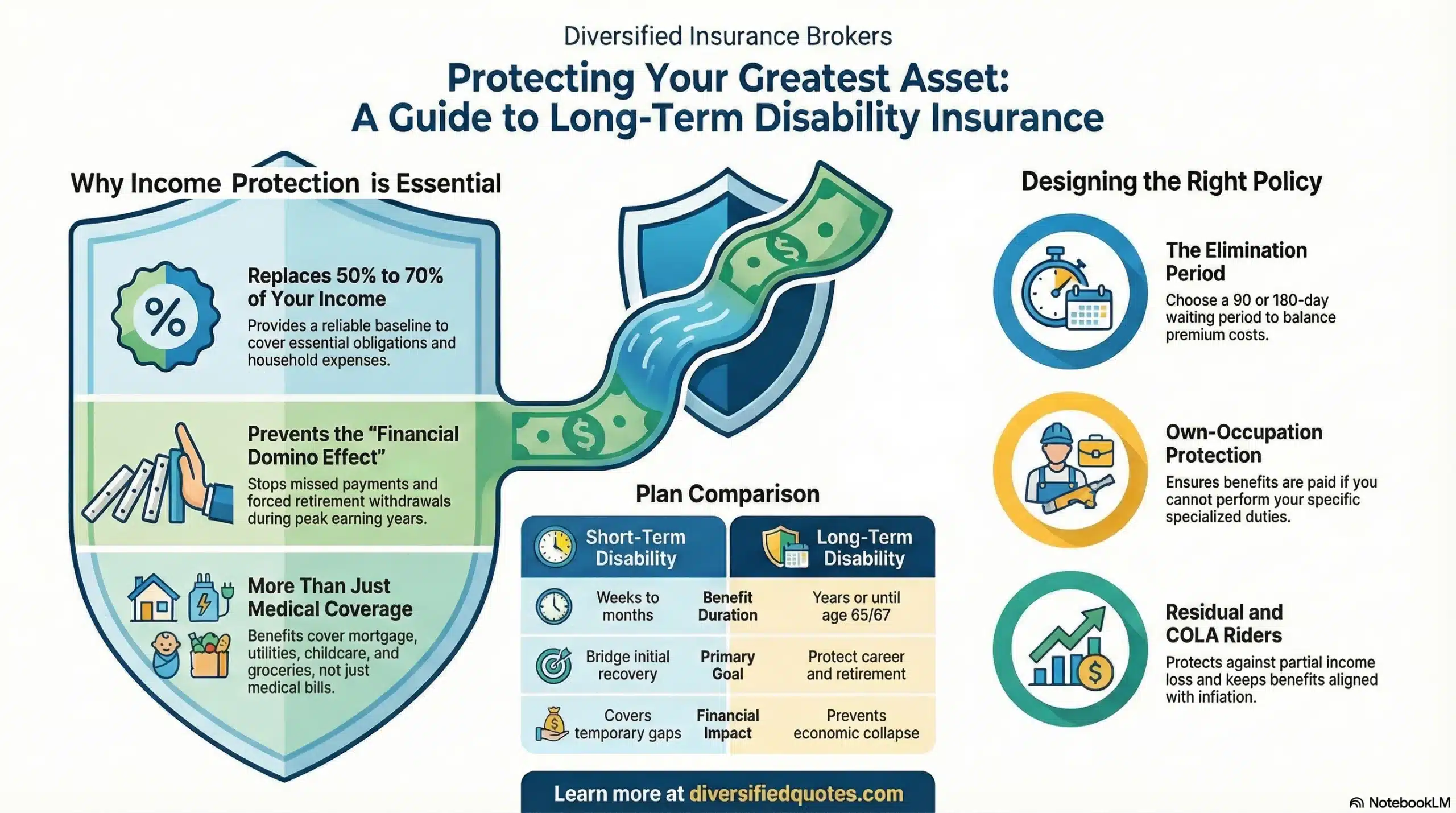
Disability insurance for evangelists should be structured with specific policy provisions that address the realities of itinerant preaching ministry. The own-occupation definition is foundational — it pays benefits when a condition prevents the evangelist from performing the specific work of their evangelistic ministry, regardless of whether they could theoretically perform other types of less demanding work. A residual disability rider is equally important, providing proportional benefits when a condition reduces ministry activity without eliminating it entirely — for example, an evangelist who can speak occasionally but cannot sustain the full engagement calendar their ministry normally produces. Our full resource on how residual disability benefits work explains this important protection in full detail.
A cost-of-living adjustment rider preserves the real purchasing power of disability benefits across an extended claim period — particularly important for evangelists facing long-term vocal, neurological, or mental health disabilities that may produce extended claim durations. The elimination period should be calibrated to the evangelist’s available financial reserves and their typical engagement booking cycle. An evangelist with a full calendar booked months in advance whose income stops immediately when they cannot preach should evaluate shorter elimination periods carefully. Our guide on how disability insurance elimination periods work provides the framework for matching the waiting period to individual financial circumstances. For evangelists who want to complement long-term disability coverage with shorter-term protection, our resource on how to buy short-term disability insurance provides a practical starting point.
Why Evangelists Need an Independent Disability Insurance Broker
Disability insurance for evangelists involves income documentation complexity — housing allowance treatment, offering income, ministry association compensation structures — that standard retail disability insurance applications are not designed to handle effectively. An independent broker who understands clergy income structures, who knows how to present the full picture of ministry compensation to underwriters, and who can identify the carriers most favorable to ministry occupational classifications produces materially better coverage outcomes than a standard retail application.
At Diversified Insurance Brokers, we work with evangelical ministry professionals — traveling evangelists, independent ministry founders, itinerant preachers, and conference speakers — to structure disability coverage that reflects both the full scope of ministry income and the specific disability scenarios most likely to affect a preaching and speaking ministry. We evaluate mental health coverage provisions, own-occupation definitions, and income documentation approaches across the full competitive marketplace to identify the coverage that provides the most meaningful financial protection for each individual evangelist’s ministry and financial situation. Our dedicated resource on why independent disability insurance brokers matter explains the full value of this approach for self-employed ministry professionals.
Final Thoughts on Disability Insurance for Evangelists
The evangelist’s calling is one of the most demanding and rewarding in ministry — traveling in the service of the gospel, standing before audiences to proclaim the Christian message, and building a ministry life that is entirely dependent on the grace of God and the personal capacity to show up and preach. That personal capacity — the voice, the physical health, the cognitive and emotional resilience required for sustained public ministry — is both the source of the evangelist’s income and the thing that a disability most directly threatens.
Disability insurance for evangelists is the financial tool that ensures a health crisis does not also become a ministry-ending financial crisis. A well-structured policy — calibrated to actual ministry income including housing allowance and offering compensation, built around own-occupation protection for voice-dependent ministry work, and equipped with mental health coverage provisions appropriate for the documented psychological demands of itinerant ministry — provides the income replacement that allows an evangelist to recover from a disabling condition from a position of financial stability and return to ministry when health truly permits it.
Related Pages
Talk With an Advisor Today
Choose how you’d like to connect—call or message us, then book a time that works for you.
Schedule here:
calendly.com/jason-dibcompanies/diversified-quotes
Licensed in all 50 states • Fiduciary, family-owned since 1980
Disability Insurance for Evangelists FAQs
Yes, evangelists can obtain individual disability insurance. Evangelists — particularly traveling evangelists — are classified by the IRS as independent contractors, and disability insurance carriers evaluate them as self-employed professionals for underwriting purposes. The specific policy features available, premium costs, and maximum benefit amounts reflect the occupational classification assigned to ministry work, which for a preaching and speaking profession typically falls in a favorable professional tier reflecting the non-physical, cognitive and communication-centered nature of ministry activity. The primary challenge for evangelists is not qualification but income documentation — presenting the full picture of ministry compensation, including housing allowance, honoraria, offering income, and ministry association stipends, in a way that accurately reflects insurable income and supports the appropriate benefit amount. Working with an independent broker who understands clergy income structures is essential for navigating this process effectively.
The most directly career-threatening disability risk for evangelists is vocal disorder — conditions including vocal fold nodules, vocal fold hemorrhage, contact granulomas, and spasmodic dysphonia that develop from sustained high-demand public preaching and speaking ministry. Medical research identifies clergy as one of the professional populations most likely to seek specialist care for voice problems — alongside singers and teachers — precisely because the occupational voice demands of ministry are exceptional. A vocal condition that prevents sustained public preaching eliminates ministry income immediately and entirely for a traveling evangelist. Mental health conditions are a second major documented risk: clergy depression rates are documented in multiple studies at significantly higher rates than national averages, driven by the emotional labor, financial precarity, and sustained performance demands of itinerant ministry. The physical health consequences of extensive travel — cardiovascular risk from irregular schedules, immune compromise from sustained travel stress, and vehicle accident risk from high annual driving mileage — add additional disability exposure that less mobile professionals do not face. For more on how voice disorders affect voice-dependent professionals, our resource on own-occupation disability insurance explained addresses how this protection works for performance-dependent vocations.
Yes, under a well-structured own-occupation disability policy. A vocal condition — such as vocal fold nodules, spasmodic dysphonia, or vocal fold paralysis — that prevents an evangelist from engaging in sustained public preaching and speaking ministry qualifies as a disabling condition under an own-occupation policy definition, even if the evangelist retains the ability to speak in conversational settings or to perform other types of work that do not require sustained elevated vocal demand. Under an any-occupation policy, benefits would likely be denied because the evangelist can technically perform work that does not require extended public speaking. Under an own-occupation policy, the inability to perform the specific work of evangelistic ministry — which is fundamentally a public speaking and preaching ministry — is recognized as the occupational disability it genuinely is, and benefits are paid accordingly. This is precisely why own-occupation coverage is the non-negotiable foundation of any disability policy for voice-dependent ministry professionals.
The housing allowance is an important and often overlooked dimension of disability insurance planning for evangelists. Ministers who receive a housing allowance can exclude it from federal income tax, which means it may not appear as taxable income on the federal tax return that disability insurance underwriters use for income verification. However, the housing allowance represents genuine economic compensation that the evangelist depends on for living expenses, and it is included in self-employment income for Social Security purposes. Failing to account for housing allowance income in disability insurance planning can result in a benefit amount that significantly understates the evangelist’s actual financial need during a disability — because the monthly benefit is calculated against taxable income that excludes the housing allowance. An experienced broker who understands clergy income documentation knows how to present housing allowance income in the underwriting process to ensure it is appropriately factored into the benefit calculation. For evangelists receiving substantial housing allowances, this planning detail can meaningfully affect the adequacy of disability coverage secured.
Many individual disability insurance policies provide coverage for mental health conditions including clinical depression, anxiety disorders, and burnout-related illness when those conditions prevent performing occupational duties. For evangelists, where documented research shows clergy depression rates substantially above national averages, mental health disability is a genuine career risk rather than a remote hypothetical. Coverage terms vary significantly between carriers — some policies provide full benefits for mental health disabilities throughout the benefit period, while others limit mental health claims to 24 months even when the base policy would otherwise pay to age 65. For evangelists, evaluating the specific mental health benefit period provisions of any disability policy before purchase is an important planning step. At Diversified Insurance Brokers, we specifically assess mental health coverage provisions when structuring disability insurance for ministry professionals, because this is an area where policy fine print can produce materially different real-world protection for the conditions most likely to affect evangelical ministers.
Most denominational church benefit programs are designed for clergy and staff who are employed by affiliated churches or denominational organizations — with coverage eligibility tied to that employment relationship. Traveling evangelists who operate independently — through their own evangelistic associations, as independent contractors invited by churches of various denominations, or as itinerant ministers without a single denominational employer — typically do not qualify for participation in these institutional group programs because they lack the employment relationship that defines eligibility. Even evangelists who are ordained within a denomination may find that their independent itinerant status places them outside the denomination’s group benefit eligibility. This institutional gap is not a bureaucratic technicality — it is a genuine and significant income protection exposure that individual disability insurance is specifically designed to fill for the substantial population of independent ministry professionals who fall outside the coverage of institutional clergy benefit programs.
Residual disability coverage pays proportional benefits when a disabling condition reduces ministry activity and income without eliminating the ability to minister entirely. An evangelist recovering from vocal surgery or managing a mental health condition may be able to take a limited number of ministry engagements — perhaps a few smaller services per month rather than the full calendar of major events their ministry normally produces — earning reduced income without being completely unable to preach. Without a residual disability rider, a total-disability-only policy pays nothing during this partial recovery period. A residual rider supplements reduced ministry income proportionally throughout the return-to-ministry arc, ensuring continuous financial support from the onset of disability through full return to normal ministry engagement volume. For evangelists whose recovery from vocal or health conditions typically involves a gradual rebuilding of capacity rather than a sudden complete return, this rider is essential for genuine income protection across the full recovery timeline. Our resource on how residual disability insurance benefits work covers this protection in full detail.
Disability insurance carriers base benefit amounts on verified earned income — typically using two to three years of federal tax returns. For evangelists whose income includes honoraria, love offerings, and speaking fees reported as self-employment income on Schedule C, these figures become the basis for benefit calculation. Evangelists who operate through ministry associations may receive a salary or stipend from the association, which may be reported as W-2 income alongside Schedule C self-employment income. The housing allowance — typically excluded from taxable income — requires specific handling in the underwriting documentation process to ensure it is appropriately reflected in the insurable income calculation. For evangelists with variable annual ministry income based on engagement volume and the size of ministry audiences, a weighted average of recent income years may produce a more accurate and favorable benefit calculation than a single-year snapshot. An independent broker with experience in clergy and ministry professional income documentation is essential for presenting the full picture of ministry compensation effectively. Our resource on disability insurance for independent contractors provides parallel context on navigating self-employment income underwriting.
The elimination period should be calibrated to the evangelist’s available financial reserves and how their ministry income actually flows. A traveling evangelist with a full engagement calendar booked months in advance who suddenly cannot preach faces immediate and complete income cessation — with no employer sick pay, no group benefit, and no guaranteed alternative income source. For evangelists with limited financial reserves, a 30 or 60-day elimination period provides faster benefit access at a higher premium cost that may be justified by the income fragility of itinerant ministry. Those with stronger reserves, a ministry association that provides some financial support during disability, or a spouse’s income that can bridge an initial waiting period may comfortably accept a 90-day elimination period to reduce premiums. Our full guide on how elimination periods work provides the framework for matching the waiting period to individual financial circumstances.
The best time is as early as possible in an evangelistic ministry career — before vocal conditions, mental health treatment history, or other health developments have appeared in the medical record. Disability insurance premiums are based in part on age and health status at the time of application, and younger evangelists in good health secure the most comprehensive coverage at the most favorable rates. Vocal conditions that develop over years of sustained preaching ministry, mental health conditions that emerge from the stresses of itinerant ministry, and any other health developments that are documented before application can result in exclusion riders or more restricted policy terms. Applying while health is excellent secures the most comprehensive coverage at the best rates — and for the vocal conditions most relevant to ministry disability, applying before any documented voice pathology exists ensures those conditions are covered under the policy rather than excluded. The future increase option rider, where available, allows benefit amounts to grow with ministry income without requiring new medical underwriting as the evangelist’s ministry platform develops.
An independent broker with experience in clergy and ministry professional income structures can compare policy definitions, mental health benefit provisions, income documentation approaches, and premium structures across multiple carriers — identifying the options that best serve the specific disability risks and income structure of evangelistic ministry work. Standard retail disability insurance applications are not designed to handle the complexity of ministry compensation including housing allowance, offering income, and ministry association compensation structures. A captive agent representing a single carrier can only present that company’s approach. At Diversified Insurance Brokers, we work specifically with independent ministry professionals to structure disability coverage that accounts for the full scope of ministry income, evaluates mental health coverage provisions carefully, and identifies own-occupation definitions that genuinely protect voice-dependent ministry work. Our resource on why independent disability insurance brokers matter explains this value for self-employed professionals in full detail.
About the Author:
Jason Stolz, CLTC, CRPC, DIA, CAA and Chief Underwriter at Diversified Insurance Brokers (NPN 20471358), is a senior insurance and retirement professional with more than 25 years of real-world experience helping individuals, families, and business owners protect their income, assets, and long-term financial stability. As a long-time partner of the nationally licensed independent agency Diversified Insurance Brokers, Jason provides trusted guidance across multiple specialties—including fixed and indexed annuities, long-term care planning, personal and business disability insurance, life insurance solutions, Group Health, Travel Medical and Evacuation Insurance, and short-term health coverage. Diversified Insurance Brokers maintains active contracts with over 100 highly rated insurance carriers, ensuring clients have access to a broad and competitive marketplace.
His practical, education-first approach has earned recognition in publications such as VoyageATL, and contributions from his agency featured in Kiplinger and GoBankingRates— highlighting his commitment to financial clarity and client-focused planning. Drawing on deep product knowledge and years of hands-on field experience, Jason helps clients evaluate carriers, compare strategies, and build retirement and protection plans that are both secure and cost-efficient. Visitors who want to explore current annuity rates and compare options across multiple insurers can also use this annuity quote and comparison tool.
Explore More Disability Insurance Options: Browse our complete guide to Disability Insurance for Food, Hospitality, Arts & Entertainment — covering chefs, musicians, actors, bartenders, hospitality workers & entertainment professionals from 100+ carriers.
Last Reviewed: June 7, 2026 |
Reviewed by: Jason Stolz, CLTC, CRPC, DIA, CAA
Chief Underwriter, Diversified Insurance Brokers, Inc. | NPN: 20471358 | Diversified Insurance Brokers, Inc. — Licensed in all 50 states
Fact Checked by: Tonia Pettitt, CMIP©
Medicare Specialist, Diversified Insurance Brokers, Inc. | NPN: 14374308 | Diversified Insurance Brokers, Inc. — Licensed in all 50 states
Did you find this content helpful? Leave us a Google review — it helps others find trustworthy guidance too.
Editorial Standards: Diversified Insurance Brokers maintains rigorous editorial standards to ensure accuracy, clarity, and independence in all content. Learn more about our editorial standards and commitment to transparency.
