
Life Insurance for X-linked Adrenoleukodystrophy
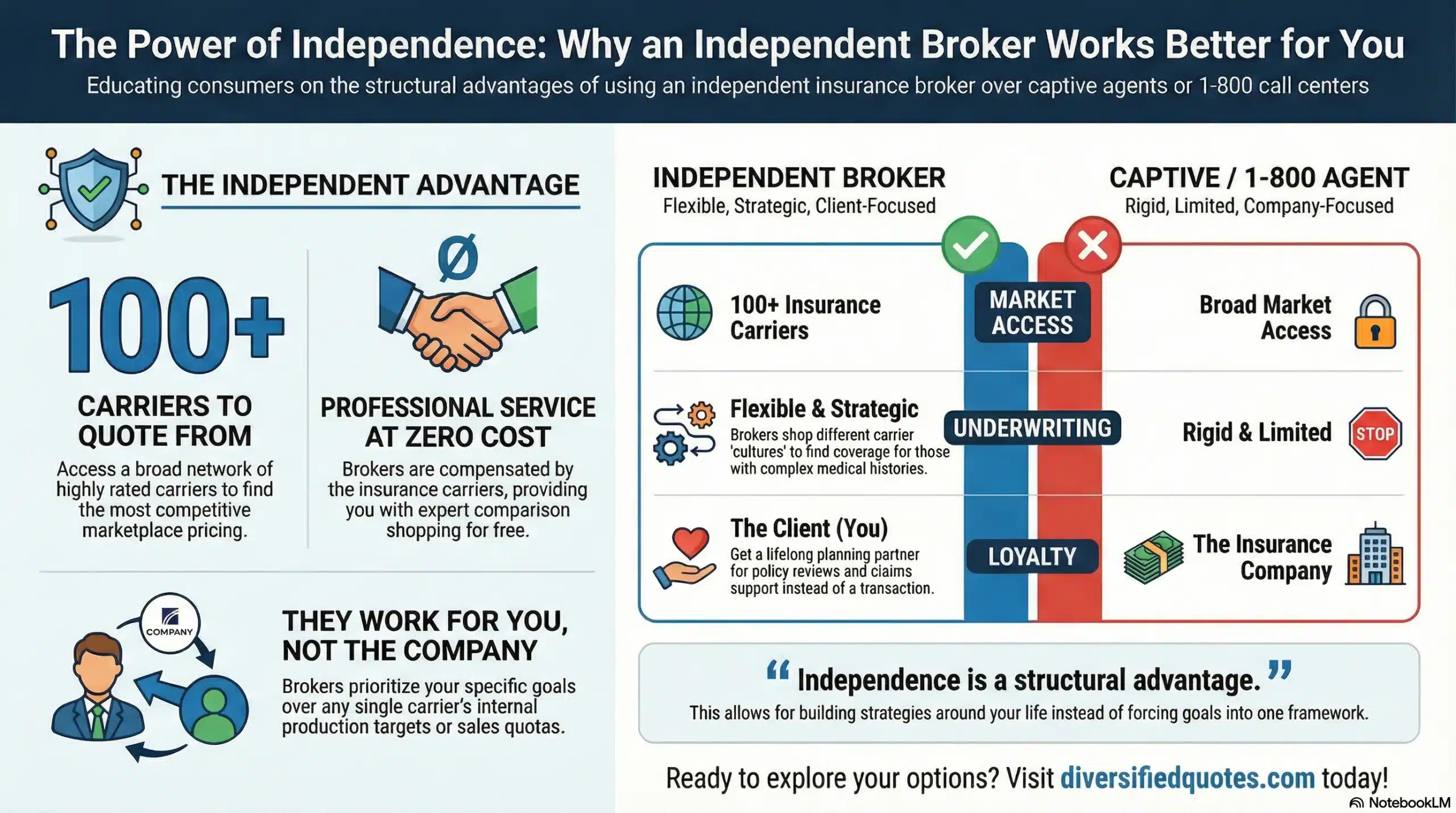
As an Independent Life Insurance Broker, we compare rates across 100+ carriers and prescreen every application before submission.
Life Insurance for X-linked Adrenoleukodystrophy

Jason Stolz CLTC, CRPC, DIA, CAA
At Diversified Insurance Brokers, we specialize in helping families navigate life insurance decisions involving complex, rare, and genetic medical conditions. X-linked adrenoleukodystrophy (X-ALD) is one of the most challenging diagnoses life insurance underwriters evaluate because it is both inherited and highly variable in how it presents, progresses, and impacts long-term outcomes. For families affected by X-ALD, the most important thing to understand upfront is that life insurance underwriting is not one-size-fits-all. Outcomes depend on the specific form of the condition, age at diagnosis, neurologic involvement, adrenal function, treatment history, and — most critically — whether the applicant is symptomatic or asymptomatic at the time of application.
Many families searching for life insurance for X-linked adrenoleukodystrophy do so after being told coverage is impossible. That is not always accurate. While X-ALD is considered a high-risk condition, underwriting decisions vary widely based on presentation and stability. Some applicants will face severe limitations or guaranteed-issue-only options, while others — particularly asymptomatic carriers or individuals with adrenal-only involvement — may still qualify for traditional coverage when cases are approached correctly. The difference usually comes down to carrier selection, case presentation, and whether underwriting is guided by experience rather than automated decline rules. Our resource on life insurance with pre-existing conditions provides foundational context on how complex medical histories are evaluated across carriers and why the approach matters as much as the diagnosis.
Request a Confidential Life Insurance Review
If you or a family member has X-linked adrenoleukodystrophy, we can review your situation confidentially and explain what life insurance options may realistically be available.
Request a ReviewUnderstanding X-ALD: Why the Diagnosis Label Is Only the Starting Point
X-linked adrenoleukodystrophy is caused by mutations in the ABCD1 gene, leading to impaired metabolism of very long-chain fatty acids. Over time, these fatty acids accumulate and damage the myelin sheath of nerve cells while also affecting adrenal gland function. Because the condition is X-linked, males are typically more severely affected, while females may be carriers with mild, delayed, or slowly progressive symptoms. This inheritance pattern plays a major role in how life insurance carriers assess risk, particularly when determining whether an applicant is symptomatic, presymptomatic, or an unaffected carrier.
From an underwriting perspective, one of the first distinctions carriers make is whether the applicant has cerebral involvement, spinal involvement, adrenal insufficiency only, or is an asymptomatic carrier identified through family screening. Childhood cerebral ALD is associated with rapid neurologic decline and significantly shortened life expectancy without early intervention, and in those cases traditional life insurance is typically not available. By contrast, adult-onset adrenomyeloneuropathy, adrenal-only Addison’s disease related to ALD, or asymptomatic carrier status can produce very different underwriting outcomes — particularly when the condition has remained stable over time. Our resource on life insurance for autistic people provides useful parallel context on how spectrum-based conditions — where severity and presentation vary dramatically across individuals — are evaluated in ways that make individual case presentation critical to the underwriting outcome.
Families are often surprised to learn that underwriters do not view all ALD diagnoses the same way. The diagnosis label alone is rarely the deciding factor. Instead, carriers evaluate functional status, progression rate, cognitive involvement, mobility, independence in daily living, and adherence to treatment. This is why working with an independent brokerage that understands how to frame these details is essential. Without proper context, applications are frequently declined before the full clinical picture is even reviewed.
See Real-Term Rates Side by Side
Life Insurance Quoter
How Age at Diagnosis and Disease Form Shape Underwriting Outcomes
Age at diagnosis is a critical variable in X-ALD life insurance underwriting, and the form of the condition that presents at diagnosis often determines the realistic range of options available. Childhood-onset cerebral ALD carries the highest underwriting risk and frequently results in automatic declines for fully underwritten policies. The rapid neurologic progression that characterizes this form, combined with the historically poor long-term prognosis without early intervention, makes traditional life insurance coverage largely unavailable in most circumstances. Adult-onset adrenomyeloneuropathy, which typically presents with spinal cord involvement and more gradual progression, produces materially different underwriting evaluations than the childhood cerebral form — and outcomes depend heavily on documented stability and functional capacity at the time of application.
Individuals diagnosed through family screening who remain asymptomatic for many years are often evaluated very differently than those who present with neurologic symptoms at diagnosis. This distinction alone can determine whether an application is declined outright or considered for alternative policy types. Families are often surprised by the degree to which documented stability — years of specialist follow-up showing no progression, preserved functional status, and consistent treatment adherence — can shift what a carrier will offer. Our resource on life insurance for cardiomyopathy illustrates how a serious genetic cardiac condition with significant variability in progression and outcome is underwritten based on individual functional status rather than the diagnosis name alone — a similar dynamic to X-ALD underwriting.
Adrenal Involvement, Female Carriers, and Underwriting Nuance
Life insurance carriers evaluate adrenal involvement separately from neurologic involvement in X-ALD cases. Some individuals with X-ALD initially present with adrenal insufficiency and experience little to no neurologic impairment for extended periods. In these cases, underwriting often focuses on how well adrenal function is controlled, whether hormone replacement therapy is stable, and whether there have been adrenal crises or hospitalizations. Applicants with well-managed adrenal-only involvement sometimes have more options than families expect, particularly when there is a long documented record of stability without neurologic progression. The framework carriers apply here is similar to how they evaluate other adrenal and endocrine conditions — with stability, management compliance, and absence of complications being the primary favorable factors.
For female carriers, underwriting outcomes can be especially nuanced. Many female carriers remain asymptomatic or develop mild symptoms later in life. Underwriters will look closely at whether neurologic symptoms are present, whether mobility or daily functioning is affected, and whether progression is documented. Asymptomatic carriers with no neurologic impairment may still qualify for certain traditional policies, though pricing and availability vary significantly by carrier. Carriers with experience in rare genetic and neurologic conditions are generally more sophisticated in their evaluation of carrier status than those relying on automated exclusion rules — which is one of the most concrete reasons carrier selection matters in X-ALD cases specifically. Our resource on life insurance for Tourette syndrome provides additional context on how neurologically-connected genetic conditions are evaluated based on functional impact and stability rather than the presence of a genetic marker alone.
Policy Types: Matching the Right Product to Medical Reality
When evaluating life insurance options for X-linked adrenoleukodystrophy, understanding the differences between fully underwritten policies, simplified issue policies, and guaranteed issue coverage is essential — because choosing the wrong path can produce unnecessary declines that complicate future applications. Fully underwritten policies require detailed medical records and specialist documentation but offer the highest coverage amounts and lowest costs when available. They are the right starting point when the clinical picture is favorable — stable, mild, or adrenal-only presentation with a strong documented history. Simplified issue policies reduce medical scrutiny but limit face amounts and increase premiums. These can be a realistic option when some medical history would make traditional underwriting challenging but where the condition is not severe enough to require guaranteed issue. Guaranteed issue policies involve no medical questions but come with graded benefits, higher costs, and lower death benefits — and they remain a viable planning tool when no other option exists, provided expectations are set correctly from the outset.
Choosing the correct path depends on medical reality, not optimism. Applying for the wrong product can result in unnecessary declines that complicate future applications and narrow future options. This is why pre-screening is especially important for X-ALD cases. At Diversified Insurance Brokers, we routinely pre-screen complex genetic and neurologic conditions before a formal application is submitted, allowing us to identify realistic carriers and avoid the unnecessary decline history that can follow an ill-targeted application. For families who want to understand the full range of non-traditional options that remain available when conventional underwriting is limited, our resources on guaranteed issue life insurance and life insurance for people with organ transplants illustrate how coverage is structured when medical history produces the most complex underwriting environments.
Treatment History, Genetic Testing, and Future Insurability
Treatment history is a meaningful underwriting variable for X-ALD applicants, and the type and outcome of treatment shapes how carriers evaluate current and long-term risk. Treatments such as early stem cell transplantation in childhood cerebral ALD have altered outcomes for some patients, and underwriters do consider treatment success and long-term stability when evaluating post-treatment applicants. However, documentation is critical. Underwriters rely on neurologist notes, MRI findings, endocrine evaluations, and long-term follow-up records — not assumptions or summaries. The strength of the medical documentation supporting a stable post-treatment course often determines whether a carrier is willing to consider an application that might otherwise be automatically declined based on the diagnosis alone.
For families with known genetic history, timing decisions around insurance applications matter. Genetic testing alone does not always trigger automatic declines, but a documented diagnosis — even without symptoms — can still influence underwriting in ways that depend heavily on the carrier and how the case is presented. Securing coverage while asymptomatic is generally more favorable than waiting until symptoms develop, particularly for conditions with known progression risks. For families navigating this timing question, our resource on what to do if nobody will insure you for life insurance provides practical guidance on the full range of alternatives and strategies available when conventional underwriting has been difficult. The most important principle is that a thoughtful, targeted pre-screening approach almost always produces better outcomes than a broad application strategy that generates declines across multiple carriers.
Planning Goals: Why Families Pursue Life Insurance With X-ALD
From a planning standpoint, families affected by X-linked adrenoleukodystrophy pursue life insurance for varied and legitimate reasons that influence the type of policy that makes the most sense. Parents of an affected child may prioritize permanent coverage for long-term planning — ensuring financial resources are available for ongoing care, special needs planning, and caregiver support across a lifetime. Adult carriers may focus on term coverage for income replacement during working years, ensuring that a spouse and children are financially protected regardless of how the condition progresses. Estate protection, special needs trust funding, and coverage for the parent whose income is most critical to household stability are all common planning motivations in X-ALD-affected families. Our resource on special needs trusts and life insurance covers how these two planning tools work together for families managing long-term care and financial security for a family member with a serious medical condition.
The key planning principle for X-ALD families is that coverage goals should drive product selection rather than the reverse. A family whose primary concern is providing a death benefit that supports a special needs child’s long-term care does not need the same policy structure as a parent focused on replacing income for a surviving spouse during the working years. Setting realistic expectations about what products and coverage amounts are achievable — and then selecting the approach that best serves the actual planning goal within those realistic constraints — is more valuable than pursuing an unattainable ideal policy that results in a string of declines and narrowing options. Our resource on life insurance for kids addresses the specific coverage landscape for insuring a child with a serious health condition — an area of frequent inquiry for X-ALD families concerned about protecting an affected child’s future insurability.
How to Approach the Application Process for X-ALD
For X-linked adrenoleukodystrophy, the application process itself requires a deliberate, pre-screened strategy rather than a direct online application or simultaneous submissions to multiple carriers. Each formal decline becomes part of the underwriting record and can influence future carrier decisions — which is why avoiding unnecessary declines is as important as identifying realistic options. Online applications for complex rare conditions almost always lead to quick declines because the application process does not provide the nuance underwriters need to evaluate a condition as variable as X-ALD.
At Diversified Insurance Brokers, our role is not to promise approval where it is unrealistic. Our role is to identify what is possible, what is unlikely, and what alternatives exist — before unnecessary declines occur. We work with carriers experienced in complex neurologic and genetic conditions and avoid those that rely heavily on automated exclusion rules. For X-linked adrenoleukodystrophy, this nuance matters. Understanding how life insurance underwriting works after a prior decline is particularly valuable for families who have already received a declination and want to understand what options remain. For families with a broader set of medical circumstances intersecting with X-ALD — including substance use history, other neurologic conditions, or unusual occupational exposures — our resource on high-risk life insurance provides the complete framework for navigating multi-factor underwriting complexity.
Request a Confidential Life Insurance Review
We review X-ALD cases confidentially, identify realistic carrier options, and help families avoid unnecessary declines that can narrow future opportunities.
Request a ReviewRelated Life Insurance Pages
Talk With an Advisor Today
Choose how you’d like to connect—call or message us, then book a time that works for you.
Schedule here:
calendly.com/jason-dibcompanies/diversified-quotes
Licensed in all 50 states • Fiduciary, family-owned since 1980
Life Insurance for X-linked Adrenoleukodystrophy — FAQs
Sometimes — but it depends heavily on who is applying and how the condition presents. Some applicants may qualify for traditional coverage with significant ratings if the condition is stable and functional impact is limited. In many cases — especially with progressive neurological involvement — coverage may be limited to simplified issue or guaranteed issue options. The diagnosis label alone is rarely the deciding factor. Underwriters evaluate functional status, progression rate, cognitive involvement, mobility, independence in daily living, and adherence to treatment. Many families are told coverage is impossible based on a surface-level review of the diagnosis and then find options through a carrier-targeted approach that provides the full clinical context underwriters need to make an informed decision.
Yes. Because X-ALD is X-linked, males are more likely to have severe or earlier-onset disease, which typically increases underwriting risk. Female carriers may have milder or later-onset symptoms — many remain asymptomatic for years or develop only gradual spinal involvement in mid or later life. Underwriting for female carriers is generally based on current symptoms, functional status, and whether there is documented neurological or adrenal involvement rather than the carrier status alone. Asymptomatic female carriers with no documented neurologic impairment may qualify for traditional coverage that would not be available to an affected male with the same ABCD1 mutation. This is an area where carrier selection matters significantly — some carriers apply the same risk assumptions to all X-ALD diagnoses regardless of sex or presentation, while more sophisticated underwriters evaluate the clinical picture individually.
Underwriters focus on the type of presentation — childhood cerebral form, adult-onset adrenomyeloneuropathy, adrenal-only involvement, or carrier status; age of onset; progression over time; neurological symptoms and their functional impact; mobility and independence in daily living; cognitive changes; adrenal function and hormone replacement stability; treatment history including whether stem cell transplant or other major interventions have occurred and their outcomes; and overall documented stability over time. They also review recent specialist notes from neurologists and endocrinologists, imaging studies when relevant, medication compliance records, and the frequency and severity of any medical crises or hospitalizations. The strength and recency of this documentation often matters as much as what the documentation says — gaps in specialist follow-up or outdated records can create underwriting problems independent of the underlying clinical picture.
Adrenal insufficiency can increase underwriting risk, but documented stability matters significantly. Applicants with well-managed adrenal insufficiency who are consistent with hormone replacement therapy and have no recent adrenal crises or emergency hospitalizations may be viewed more favorably than the diagnosis initially suggests. Underwriters typically look for: how long the adrenal insufficiency has been managed, whether the replacement regimen is stable and well-tolerated, the frequency and severity of any adrenal crises, and the most recent endocrine evaluation results. For individuals whose X-ALD presentation is limited to adrenal involvement without neurologic progression, the underwriting conversation shifts primarily to the endocrine management picture — and in some cases, options exist that families with purely neurologic-framed applications would not identify.
It can — and in some cases significantly. Underwriters will want to understand the timing of the treatment, outcomes achieved, current neurologic and functional status, any complications that occurred, and what ongoing follow-up requirements look like. For childhood cerebral ALD where stem cell transplant was performed early and resulted in documented neurologic stabilization with preserved function, underwriters do consider the altered outcome trajectory. However, the documentation supporting this picture needs to be comprehensive — neurologist follow-up notes showing stable MRI findings, cognitive assessments showing preserved function, and endocrine management records all contribute to building the case that the treatment produced the favorable outcome being claimed. Underwriters do not take treatment claims at face value without supporting specialist documentation, which is why a targeted approach that assembles and frames documentation correctly before submitting to carriers is so important for post-treatment applications.
Options vary considerably based on the specific presentation. For asymptomatic carriers and individuals with adrenal-only involvement who have documented stability, traditional fully underwritten coverage may be possible — though rated premiums are common and coverage amounts may be limited depending on the carrier. For individuals with mild adult-onset spinal involvement with preserved function and documented stability, simplified issue coverage that reduces medical scrutiny while still providing meaningful face amounts may be the most realistic path. For individuals with more significant neurologic involvement or childhood cerebral ALD without treatment stabilization, guaranteed issue coverage — which involves no medical questions but includes graded benefits and higher costs — is often the most practical option. In all cases, the goal is to match the product to the realistic underwriting outcome rather than pursuing fully underwritten coverage when the clinical picture makes it unlikely, producing an unnecessary decline that complicates future applications.
A prior decline does not eliminate all options, but it changes the strategy and requires careful handling. Different carriers have meaningfully different underwriting philosophies for rare neurologic and genetic conditions — a decline from a carrier that relies on automated exclusion rules does not necessarily reflect what a carrier with experienced manual underwriting in complex medical conditions would decide. Alternative product types — simplified issue or guaranteed issue — may also still be available regardless of prior declines on traditional applications. The key principle is that the next application strategy should be more targeted, not broader. Submitting multiple simultaneous applications without pre-screening after a decline compounds the underwriting record problem rather than solving it. A confidential review to assess what the current realistic options are — given the clinical picture and the existing decline history — is the most productive next step for families in this situation.
The biggest improvements come from clear, comprehensive, and current documentation of stability and function — and from choosing the right underwriting path before a formal application is submitted. Up-to-date specialist notes from neurologists and endocrinologists, a coherent longitudinal timeline of symptoms and progression, stable treatment plans with documented compliance, and records showing preserved daily functioning collectively build the strongest possible case for the most favorable underwriting outcome available. The other critical factor is carrier targeting — not all carriers evaluate X-ALD with the same sophistication, and identifying the carriers most likely to consider the application favorably before submitting prevents the unnecessary declines that narrow future options. Pre-screening complex genetic conditions before formal applications is the most reliable strategy for maximizing outcomes across both coverage availability and pricing.
For fully underwritten applications involving rare neurologic conditions, underwriting typically takes several weeks from complete application submission because carriers frequently request records from multiple specialists — neurologists, endocrinologists, and any relevant treating physicians — as well as imaging summaries and longitudinal follow-up notes. The timeline depends heavily on how quickly medical records can be obtained and how complete the initial submission is. Applications that arrive with comprehensive, pre-assembled documentation from all relevant specialists tend to move more efficiently than those requiring the carrier to send record requests to multiple offices and wait for responses. Simplified issue and guaranteed issue options can be significantly faster because they require fewer or no medical records — but the speed comes at the cost of coverage amounts and pricing that reflect the reduced underwriting scrutiny.
In many cases, traditional coverage is limited or unavailable for a child with a significant X-ALD diagnosis — particularly childhood cerebral ALD. However, the planning goals that drive the question are important to address even when direct coverage for the affected child is limited. Some families explore smaller juvenile policies where they may be available given the specific clinical picture. Others focus on ensuring that the parents — particularly the parent whose income is most critical to the household — carry comprehensive life and disability protection, so the family’s financial position is protected regardless of the caregiving demands the condition creates. Special needs trust planning funded by parental life insurance is another approach that addresses the long-term financial security goals many X-ALD families have even when direct coverage on the affected child is not achievable in traditional form.
No — for complex rare conditions like X-ALD, applying online without a targeted strategy almost always leads to quick automated declines because the online application process does not provide the clinical nuance underwriters need to evaluate a condition as variable as X-ALD. Automated underwriting systems are built around simplified risk categories, and rare genetic neurologic conditions fall outside those categories in ways that typically trigger automatic declination before any human underwriter has reviewed the medical details. Each formal decline becomes part of the underwriting record that future applications must account for. A pre-screening and targeted carrier approach — identifying realistic carriers before any formal application is submitted, assembling documentation that presents the clinical picture accurately, and submitting through the right channel for the right product type — almost always produces better outcomes than online application followed by a string of quick declines.
About the Author:
Jason Stolz, CLTC, CRPC, DIA, CAA and Chief Underwriter at Diversified Insurance Brokers (NPN 20471358), is a senior insurance and retirement professional with more than 25 years of real-world experience helping individuals, families, and business owners protect their income, assets, and long-term financial stability. As a long-time partner of the nationally licensed independent agency Diversified Insurance Brokers, Jason provides trusted guidance across multiple specialties—including fixed and indexed annuities, long-term care planning, personal and business disability insurance, life insurance solutions, Group Health, Travel Medical and Evacuation Insurance, and short-term health coverage. Diversified Insurance Brokers maintains active contracts with over 100 highly rated insurance carriers, ensuring clients have access to a broad and competitive marketplace.
His practical, education-first approach has earned recognition in publications such as VoyageATL, and contributions from his agency featured in Kiplinger and GoBankingRates— highlighting his commitment to financial clarity and client-focused planning. Drawing on deep product knowledge and years of hands-on field experience, Jason helps clients evaluate carriers, compare strategies, and build retirement and protection plans that are both secure and cost-efficient. Visitors who want to explore current annuity rates and compare options across multiple insurers can also use this annuity quote and comparison tool.
Browse More Resources: Return to our complete Life Insurance Special Topics guide — covering permanent life, estate planning, key person, IUL, infinite banking & special needs.
Last Reviewed: June 15, 2026 |
Reviewed by: Jason Stolz, CLTC, CRPC, DIA, CAA
Chief Underwriter, Diversified Insurance Brokers, Inc. | NPN: 20471358 | Diversified Insurance Brokers, Inc. — Licensed in all 50 states
Fact Checked by: Tonia Pettitt, CMIP©
Medicare Specialist, Diversified Insurance Brokers, Inc. | NPN: 14374308 | Diversified Insurance Brokers, Inc. — Licensed in all 50 states
Did you find this content helpful? Leave us a Google review — it helps others find trustworthy guidance too.
Editorial Standards: Diversified Insurance Brokers maintains rigorous editorial standards to ensure accuracy, clarity, and independence in all content. Learn more about our editorial standards and commitment to transparency.
