
Life Insurance for Autistic People
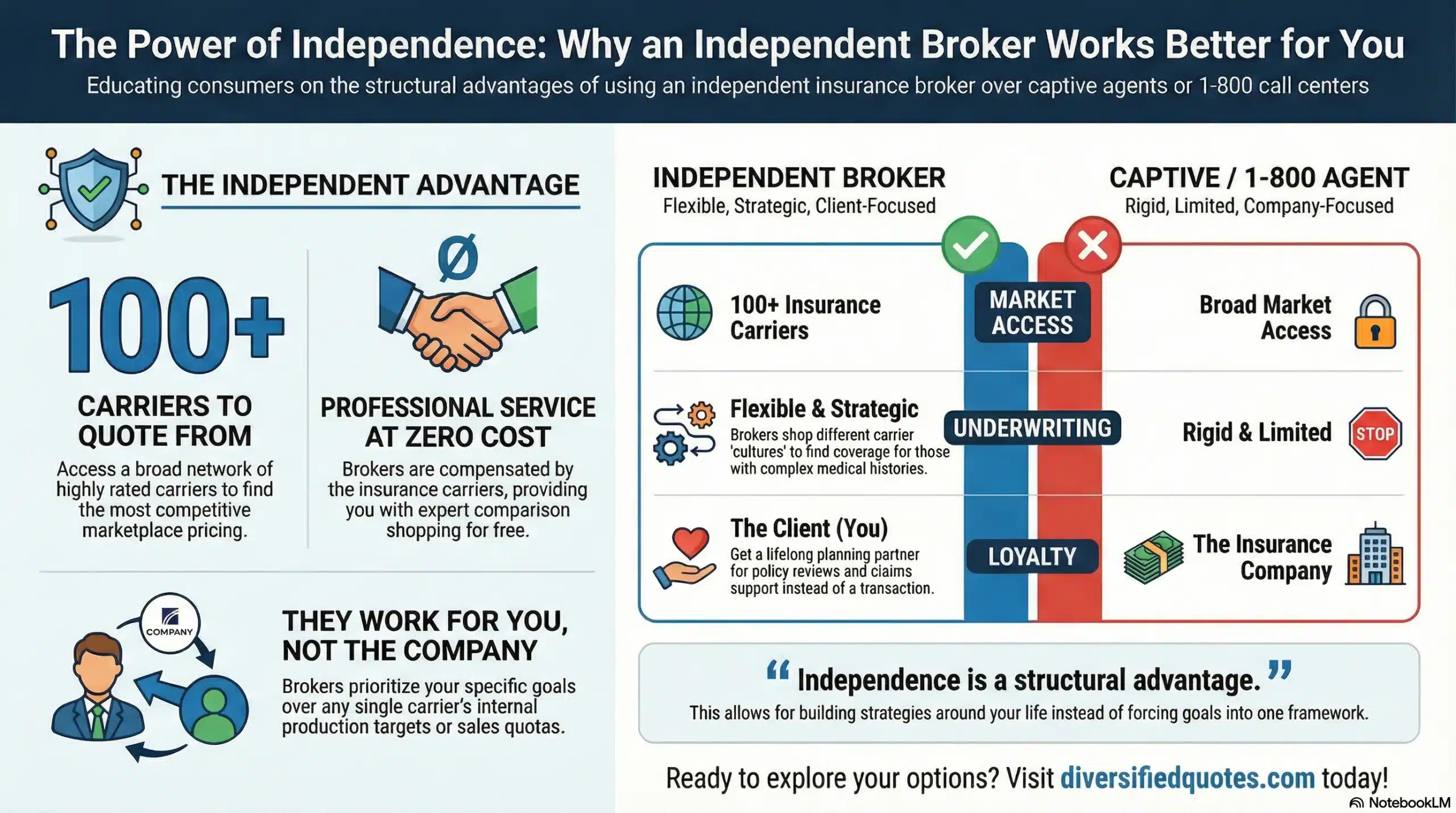
As an Independent Life Insurance Broker, we compare rates across 100+ carriers and prescreen every application before submission.
Life Insurance for Autistic People

Jason Stolz CLTC, CRPC, DIA, CAA
Life insurance for autistic people is not only possible — it is often far more accessible than many families expect. The challenge is that autism is a broad spectrum, and insurance companies underwrite individuals rather than diagnostic labels. That means approval and pricing depend on the full picture: overall health, day-to-day functioning, stability over time, coexisting medical conditions, and whether the application is presented to a carrier whose underwriting guidelines are well-suited to that specific profile. When the case is positioned correctly and submitted to the right carrier, many autistic adults qualify for meaningful coverage, and many parents can build a long-term financial plan that protects their child’s future without creating unnecessary complications at the point when the benefit is actually needed.
At Diversified Insurance Brokers, Jason Stolz, CLTC, CRPC, DIA, CAA, helps families nationwide navigate underwriting for autism and special-needs planning scenarios. Because we are independent and work with 100+ top-rated carriers, we can match each applicant to companies that take a practical, case-by-case approach to neurological and developmental profiles rather than applying a blanket exclusion based on diagnosis alone. The goal is to avoid needless declines, avoid overpaying, and create a policy structure that is clean, durable, and manageable for caregivers and beneficiaries long after the policy is issued. These objectives — underwriting outcome, pricing, and structural clarity — are the three elements that most frequently go wrong in autism-related life insurance planning, and all three are addressable with the right guidance.
See Real-Term Rates Side by Side
Life Insurance Quoter
Compare real-time life insurance quotes from top carriers.
Get Life Insurance Options for Autism
We’ll help you pick the right carrier, right policy type, and a beneficiary setup that fits your family’s long-term plan.
Call 800-533-5969
Can Autistic People Qualify for Life Insurance?
Yes — many autistic people qualify for life insurance, including fully underwritten term life insurance and permanent coverage. The underwriting question is not whether autism exists as a diagnosis but what that diagnosis means in the context of this specific individual’s daily functioning, medical history, stability over time, and overall risk picture. Insurance companies underwrite individuals, not labels, and the practical reality is that autism across the spectrum produces an enormous range of functional presentations that carry very different actuarial implications. An autistic adult who lives independently, works, manages their own health care, and has a stable medical history may look very similar to many other applicants on the documents that underwriters evaluate. An applicant who requires 24-hour care, has a significant seizure disorder, and has been hospitalized repeatedly for self-injury presents a fundamentally different risk picture — even though both individuals carry the same diagnostic label.
This is the core principle that families and applicants need to internalize before beginning the life insurance process: the word “autism” on an application will trigger underwriter questions, but those questions are about functioning and stability, not about the diagnosis itself. Autism itself is not automatically a decline. The practical question is whether the applicant has stable care, consistent routine, and a health history that supports long-term insurability — and whether the application is submitted to a carrier whose underwriting team is equipped to evaluate autism profiles fairly rather than reflexively applying a restriction based on the diagnostic category alone. A large portion of autistic applicants fall into categories where traditional coverage is realistic, and many families are surprised to discover that the options available are significantly better than what they assumed before consulting a specialist. Understanding what special needs life insurance is and who needs it provides foundational context for families who are approaching this for the first time.
How Life Insurance Underwriting Evaluates Autism
Life insurance underwriters evaluate autism by building a risk narrative from medical records, the application itself, and in many cases a physician statement or attending physician statement that provides context beyond what the applicant can describe on the application form. The underwriting goal is to estimate long-term mortality risk for this specific individual — not to categorize autism as a class but to understand what this individual’s health and functional picture means for the probability of a claim during the policy period. The areas underwriters typically focus on are support level and functional independence, medical stability over time, coexisting conditions that create independent mortality risk, and any history of significant safety events.
Support level is evaluated because it correlates with the overall complexity of the care environment and the associated health risks. An autistic adult who lives independently and requires minimal structured support is evaluated in a framework closer to a typical applicant than one who requires residential care and around-the-clock supervision. This is not a judgment about the value or capability of individuals at different support levels — it is simply an actuarial framework that correlates functional independence with mortality risk outcomes in population data. Carriers who have experience with autism underwriting tend to evaluate support level through physician documentation, care plan records, and the overall picture the medical file presents rather than through a simple checkbox.
Stability over time is the second major focus. Underwriters want to see a consistent pattern — stable care arrangements, consistent medication management if medications are part of the treatment plan, absence of escalating crisis events or hospitalizations, and a health history that suggests the current baseline is durable rather than in active flux. A file that shows consistent stability across two to three years of records is evaluated very differently from a file that shows recent changes in care setting, new medication starts or significant dosage changes, or recent hospitalizations or crisis interventions. The stability window that most carriers evaluate most heavily is the most recent 12 to 24 months, though prior history is noted and some carriers extend the review to three to five years for certain risk factors.
Coexisting conditions are often the most significant underwriting factor in autism cases, because many autistic individuals have medical conditions that are independently evaluated in the underwriting process and that may carry more actuarial weight than the autism diagnosis itself. Epilepsy and seizure disorders are among the most commonly co-occurring and most carefully underwritten coexisting conditions — carriers evaluate seizure type, frequency, medication response, and the length of the seizure-free period very specifically, because those variables determine the mortality risk associated with seizure disorder independent of the autism. Genetic syndromes that co-occur with autism — Fragile X syndrome, Angelman syndrome, Tuberous Sclerosis Complex, Rett syndrome — are each evaluated on their own terms with guidelines that vary by carrier and syndrome. Sleep disorders, gastrointestinal conditions, metabolic disorders, cardiovascular anomalies, and immune system conditions that appear alongside autism each add to the complexity of the underwriting evaluation and require their own documentation.
Safety history is evaluated carefully when it is present. A history of serious self-injurious behavior, wandering with associated injury, or repeated hospitalizations for behavioral crisis creates underwriting concern that carriers address through their specific guidelines for that type of history. Absence of safety events — or resolution of prior safety concerns through behavioral interventions, environmental modifications, or care plan changes — is documented through records and physician notes. When families are concerned about safety history affecting coverage, understanding how to pre-screen a life insurance application before formal submission is one of the most important strategic steps available — it allows the broker to confirm which carriers are positioned to evaluate the full profile fairly before any MIB record is created.
The Autism Spectrum and What Underwriting Actually Looks Like Across It
The diagnostic category of autism spectrum disorder encompasses a range of functional presentations so wide that applying uniform underwriting expectations across the spectrum is not useful. Understanding how underwriting practically approaches different portions of the spectrum helps families and applicants set realistic expectations and make better decisions about carrier selection and product type.
At one end of the functional spectrum, autistic adults who live and work independently, manage their own medical care, have no significant coexisting conditions, and maintain stable health records frequently qualify for fully underwritten term or permanent life insurance at standard or near-standard rates. These applicants may encounter an underwriter question about the autism notation in the records, respond with documentation confirming independence and stability, and receive a favorable offer from any of several carriers without the autism creating a meaningful pricing impact. This outcome is more common than many families realize, particularly for individuals diagnosed with what was previously called Asperger syndrome or high-functioning autism.
In the middle range of the spectrum — autistic individuals who require some structured support but maintain reasonable day-to-day stability, manage with a consistent care routine, and do not have high-risk coexisting conditions — fully underwritten coverage is often still available, though carrier selection becomes more important and some carriers may apply table ratings that others would not. The underwriting outcome in this range is most sensitive to the quality of documentation that accompanies the application. A well-organized file with clear physician notes describing functional status, stable medication management, and absence of recent crisis events produces a meaningfully better outcome than an application that leaves the underwriter to draw their own conclusions from sparse or disorganized records.
At the more complex end of the spectrum — autistic individuals who require intensive support, have significant behavioral histories, multiple serious coexisting conditions, or recent hospitalizations — fully underwritten traditional coverage may not be the most appropriate starting point. This does not mean coverage is unavailable. It means the product strategy needs to match the realistic underwriting picture: simplified issue products that rely on health questions rather than full medical evaluation, guaranteed issue life insurance for special needs adults, or coverage obtained on the lives of parents as part of a broader estate and care planning strategy rather than on the autistic individual’s life directly. Understanding which lane is appropriate for a specific profile — and navigating to that lane efficiently rather than spending time and applications in the wrong product category — is where experienced placement guidance produces the most concrete value.
Coexisting Conditions That Shape the Underwriting Picture
The most consequential factor in many autism-related life insurance evaluations is not the autism diagnosis itself but the coexisting conditions that appear alongside it. Epilepsy is the most commonly co-occurring neurological condition, present in a meaningful percentage of autistic individuals, and it receives its own detailed underwriting evaluation whenever it appears in the medical records. Carriers evaluate epilepsy by seizure type and classification, seizure frequency over the past two to five years, anticonvulsant medication regimen and response, the length of the most recent seizure-free period, and any history of status epilepticus or trauma resulting from seizures. A well-controlled seizure disorder with documented seizure-free period of two or more years on stable medication produces a very different underwriting outcome than uncontrolled epilepsy with recent tonic-clonic activity despite medication. Understanding how carriers approach this independently helps families recognize why the coexisting condition documentation may matter more than the autism documentation in the underwriting evaluation. The page on life insurance for depression illustrates a parallel dynamic — how a psychiatric or neurological coexisting condition is evaluated alongside and sometimes above the primary diagnosis in the underwriting process.
Genetic syndromes that co-occur with autism each carry their own actuarial literature and carrier-specific underwriting guidelines. Tuberous Sclerosis Complex is evaluated in terms of tumor burden, organ involvement, seizure history, and cognitive impact. Fragile X syndrome is evaluated through the lens of its associated medical complications and functional impact. Angelman syndrome and Rett syndrome each carry their own underwriting considerations that are separate from the autism diagnosis and that require specific carrier knowledge to navigate effectively. When a genetic syndrome is part of the picture, carrier selection based on which companies have developed specific guidelines for that syndrome — rather than applying general developmental disability frameworks — is the strategy that produces the most accurate and favorable assessment.
Sleep disorders, which are highly prevalent in the autistic population, are evaluated when they appear in medical records and can interact with other risk factors in the underwriting assessment. Significant sleep apnea requires the same documentation approach as for any applicant — diagnosis confirmation, treatment compliance, follow-up assessment showing improvement — and when it co-occurs with autism and other conditions, carriers evaluate the combined respiratory risk picture. Gastrointestinal conditions, metabolic disorders, and immune system conditions that appear alongside autism are similarly evaluated on their own terms and can collectively add meaningful complexity to a file that might otherwise be straightforward.
Coverage Options for Autistic Applicants — Matching Product to Profile
| Product Type | Best Fit Profile | Coverage Amount | Underwriting Process | Key Planning Consideration |
|---|---|---|---|---|
| Fully Underwritten Term | Independent or semi-independent autistic adult; stable; no high-risk coexisting conditions | $100K to $2M+ | Paramedical exam plus medical records; physician statement likely | Best cost per dollar of coverage; carrier selection is primary outcome driver; convert option valuable for future flexibility |
| Fully Underwritten Permanent | Autistic adult or parent planning for estate, legacy, or lifetime care funding; good underwriting classification achievable | $50K to $1M+ | Full underwriting; most rigorous evaluation | Lifetime coverage eliminates re-qualification risk; policy ownership and beneficiary structure critical for special needs planning |
| Simplified Issue | Moderate support needs; stable; full underwriting uncertain; faster approval desired | $25K to $500K | Health questions only; no paramedical exam | Higher cost per dollar than fully underwritten; useful when traditional underwriting is uncertain or timing is critical |
| Guaranteed Issue (Special Needs) | Complex medical history; intensive support needs; traditional underwriting not accessible | $5K to $25K typically | No health questions; no exam | Graded benefit first 2 years; last resort for direct coverage; parent coverage strategy often more efficient at this profile level |
| Coverage on Parent’s Life | Any profile — parent insures their own life to fund long-term care for autistic child or adult | Any amount — sized to projected care funding need | Parent’s health drives underwriting; autistic beneficiary’s profile does not affect parent’s premium | SNT coordination essential; policy ownership structure must avoid benefit eligibility disruption; trustee designation required |
Parents Planning for Long-Term Care and Financial Continuity
For parents of autistic children and adults, life insurance planning is often less about income replacement in the traditional sense and more about continuity of care — ensuring that the financial resources and care infrastructure that currently exist for an autistic family member can continue to function after the parent or primary caregiver is no longer present. This is a fundamentally different planning objective than the typical income replacement calculation, and it requires a different approach to both the product design and the legal and beneficiary structure surrounding the policy.
The central planning challenge is that many supports are provided informally by parents or close family members, often without formal documentation of their value or a clear plan for their replacement. If that informal support disappears — through death, disability, or incapacity of the caregiver — there can be immediate and significant gaps in housing, transportation, supervision, therapeutic services, medical management, and the administrative coordination of accessing formal support systems. The financial resource required to replace those informal supports is often substantially larger than families initially estimate, particularly when the expectation of government benefit programs is factored in and the reality of those programs’ actual coverage scope is understood. Life insurance is the mechanism through which a family can ensure that financial resource exists when needed, regardless of when the parent dies and regardless of what happens to investment markets or other assets in the interim.
The legal structure through which life insurance proceeds flow to an autistic beneficiary is as important as the coverage amount itself. In most cases, leaving life insurance proceeds directly to an autistic individual — particularly one who is receiving means-tested government benefits such as SSI or Medicaid — creates an asset that can disqualify that individual from the government benefits they depend on. This is not a theoretical risk: a life insurance death benefit paid directly to a beneficiary who has no legal mechanism for holding assets without benefit disruption can eliminate eligibility for programs that cannot easily be restored once lost. The solution is coordination with a special needs trust, which can receive life insurance proceeds without creating a countable asset for means-tested benefit purposes while making those resources available for supplemental needs beyond what government programs provide. Special needs trust and life insurance covers how these structures work together, and why a special needs trust is important provides the legal planning context. Choosing a special needs trustee addresses the practical decision of who manages the trust after the parents are gone, which is one of the most consequential and most frequently underprepared elements of the overall plan.
The policy ownership structure also requires careful attention. A life insurance policy owned by the insured autistic individual creates a potential asset that can affect benefit eligibility depending on the policy type and cash value. Policies owned by a special needs trust or by a parent with the trust named as beneficiary may be more appropriate depending on the family’s specific situation, the type of policy, and the legal framework governing the trust. These decisions interact with state-specific rules governing trust administration, Medicaid eligibility, and estate planning, which is why coordination between the life insurance planning and the legal planning is not optional — it is essential to ensure the plan actually accomplishes what it was designed to do.
Life Insurance for the Autistic Adult Themselves — Coverage on Their Own Life
When an autistic adult is the insured — not the beneficiary — the underwriting question is about that individual’s mortality risk, and the planning question is about who benefits from the policy and why. Both questions have answers that depend heavily on the specific individual’s situation and that benefit from specialized guidance.
Autistic adults who are in committed relationships, who have partners or spouses who depend on their income or contributions to the household, who have taken on co-signed debt obligations, or who have caregiving responsibilities for aging parents or other family members have legitimate income replacement and financial protection needs that life insurance addresses. The underwriting approach for these applicants depends on their specific functional profile, medical history, and the coexisting conditions discussed above. Many autistic adults in this category qualify for standard or near-standard coverage with appropriate carrier selection and documentation — and the process of applying for coverage is no different from the process for any other applicant with a medical history that requires thoughtful positioning.
Autistic adults who require significant support and who do not have dependents in the traditional income-replacement sense may be better served by a planning approach centered on the parents’ or caregivers’ life insurance rather than on coverage of their own life. This is not a categorical statement — there are situations where coverage on an autistic adult with high support needs serves legitimate planning purposes — but it is a useful starting point for thinking about which life is most appropriately insured relative to the financial protection objective. The page on life insurance for a special needs child addresses the closely related planning question of insuring a child with special needs and how that decision interacts with the family’s overall coverage strategy. How much life insurance is needed provides the framework for calculating coverage amounts relative to the specific financial obligations and care costs being protected against.
Why Carrier Selection and Pre-Screening Are Critical for Autism Cases
Carrier selection is the single most impactful variable in autism-related life insurance underwriting, and it operates through a mechanism that is not visible to applicants who approach the market without specialized knowledge. Different carriers have developed different underwriting guidelines for autism and related developmental profiles, and those guidelines produce meaningfully different outcomes for the same applicant. A carrier that has invested in developing specific autism underwriting frameworks based on functional status and stability will produce a more favorable result for a well-functioning autistic applicant than a carrier that applies a generic developmental disability exclusion or that lacks underwriter familiarity with autism presentations. The carrier difference is not marginal — it can be the difference between a standard offer, a table rating, and a decline for the same medical file.
The MIB implication of this variation makes carrier selection a strategic rather than just an efficiency concern. When a formal life insurance application is submitted and a medical underwriting decision is made, that decision is reported to the Medical Information Bureau, a shared database that participating carriers access when evaluating subsequent applications. A decline from one carrier — even a carrier that was simply the wrong fit for the profile — creates a record that other carriers will see and ask about. This is one of the most important reasons why understanding how to pre-screen a life insurance application before formal submission is particularly valuable in autism cases. Pre-screening allows the broker to informally present the case facts to one or more target carriers and receive feedback on likely underwriting approach without triggering a formal application or MIB record. The information gained through pre-screening — which carriers are likely to be favorable, what additional documentation would help, whether timing should be adjusted — allows the formal application to be submitted to the right carrier at the right time with the right documentation, producing a substantially higher probability of the best available outcome.
Working with an independent broker who has specific experience placing autism-related cases and who has relationships with carriers whose underwriting teams are familiar with autism profiles is the most reliable path to accessing the best available market for any given applicant. Working with the best independent life insurance broker for this specific category combines carrier market access with the underwriting strategy expertise that complex developmental profile cases require. The goal is not just submitting an application — it is identifying the right carrier, preparing the right documentation, and submitting at the right time so that the first formal application produces the classification the actual profile supports. Families who engage an experienced independent broker specifically for this purpose consistently achieve better outcomes than those who apply directly or through generalist channels that do not routinely handle developmental profile underwriting.
Preparing the Application — What Makes the Difference
The quality of preparation before a formal application is submitted is one of the most controllable variables in autism-related life insurance outcomes. Underwriters make decisions based on what the file contains, and a file that is incomplete, disorganized, or that leaves key questions unanswered consistently produces more conservative decisions than the actual risk picture would warrant. Several specific preparation elements make the biggest difference in autism underwriting outcomes.
Current and organized medical records are the foundation. The most recent physician visit records, care plan documentation, medication management records, and any specialist reports relevant to coexisting conditions should all be available and organized before application. Underwriters who receive a comprehensive, well-organized file that directly answers the questions they are likely to ask can reach favorable decisions more quickly and with more confidence than those who are assembling a picture from scattered records. If there are gaps in the recent record — visits that have not yet been documented, labs that have not been transcribed — addressing those gaps before application prevents the underwriter from noting the absence of recent follow-up as a concern.
A physician narrative that specifically addresses functional status, stability, coexisting condition management, and current care plan can be one of the most valuable single documents in an autism underwriting file. Underwriters who receive a clear, concise physician statement that says “This patient functions independently in daily living activities, has had no behavioral crises in three years, manages their health care routine with minimal support, and I expect the current status to remain stable” have a specific, authoritative answer to the most important questions they are asking. Underwriters who receive only clinical visit notes that document routine follow-up without any narrative summary of overall functional status must draw their own conclusions — and conservative is always the default when conclusions must be drawn from incomplete evidence.
Timing relative to significant events matters as much in autism underwriting as it does in other medical underwriting contexts. If there has been a recent change in care setting, a recent hospitalization, a recent medication change, or a recent crisis event, waiting until a defined stability period has elapsed since that event — typically 12 months, sometimes longer depending on the carrier and the severity of the event — significantly improves the underwriting picture. The decision about whether to apply now or wait for a better timing window is exactly the kind of strategic judgment that pre-screening helps inform, because a carrier’s pre-screening response often includes specific guidance about timing that allows the family to make an informed decision rather than guessing.
Finally, the ownership and beneficiary structure of the policy needs to be planned before the application is submitted rather than addressed as an afterthought after the policy is issued. Changing policy ownership or beneficiary designations after the fact can create legal, tax, and benefit eligibility complications that are far more difficult to resolve than addressing them correctly from the beginning. Whether the policy should be owned by the insured, by a trust, or by a parent; how the beneficiary designation should be structured to avoid means-tested benefit disruption; and what trustee arrangements are in place to receive and manage policy proceeds — all of these decisions should be confirmed with appropriate legal guidance before the application is finalized. The combination of correct life insurance placement and correct legal structure is what makes the overall plan actually work for the family when it is needed.
Start Your Autism Life Insurance Review
We’ll review the full picture — underwriting profile, policy type, and beneficiary structure — and identify the path most likely to produce the coverage your family needs.
Call 800-533-5969
Compare Term Life Insurance Lengths
Explore different term periods to find coverage that best matches your timeline and budget.
Talk With an Advisor Today
Choose how you’d like to connect—call or message us, then book a time that works for you.
Schedule here:
calendly.com/jason-dibcompanies/diversified-quotes
Licensed in all 50 states • Fiduciary, family-owned since 1980
Frequently Asked Questions: Life Insurance for Autistic People
Can an autistic person get life insurance on their own life?
Yes — many autistic people qualify for life insurance on their own lives, including fully underwritten term and permanent coverage. The underwriting question is not whether autism exists as a diagnosis but what that diagnosis means for this specific individual’s daily functioning, medical stability, and overall risk picture. Autistic adults who live independently, manage their own health care, and have stable medical histories without high-risk coexisting conditions often qualify at standard or near-standard rates with the right carrier. Autistic adults who require more structured support or who have significant coexisting conditions — seizure disorders, genetic syndromes, complex behavioral histories — may qualify at table ratings, through simplified issue products, or through guaranteed issue coverage for special needs adults, depending on the specific profile. The key is carrier selection and documentation rather than the autism diagnosis itself.
What do insurance underwriters actually look at when reviewing an autism case?
Underwriters focus on four primary areas. First, level of support and functional independence — how much structured support the applicant requires for daily living, and whether that support level has been stable. Second, medical stability over time — whether the care plan, medication regimen, and health status have been consistent over the most recent 12 to 24 months without significant escalations or changes. Third, coexisting conditions — epilepsy, genetic syndromes, sleep disorders, cardiovascular anomalies, and other medical conditions that are independently evaluated and that may carry more actuarial weight than the autism diagnosis itself. Fourth, safety history — whether there have been serious self-injury events, hospitalizations for behavioral crisis, or elopement incidents that suggest elevated mortality risk. Clear documentation addressing each of these areas from a treating physician is the most effective way to support a favorable underwriting outcome.
Should life insurance for an autistic family member be on the parent’s life or the autistic person’s life?
The answer depends on the specific planning objective. If the goal is ensuring financial resources exist for long-term care after parents are gone, coverage on the parents’ lives with proceeds directed to a special needs trust is often the most efficient structure — the parents’ underwriting profile is usually more straightforward than the autistic individual’s, the coverage amounts can be sized to the actual projected care cost, and the special needs trust structure prevents benefit disruption. If the autistic individual is an independent adult with dependents or financial obligations of their own, coverage on their own life makes direct sense and may qualify for standard underwriting. Many families use both — coverage on the parent’s life for long-term care planning, and coverage on the autistic adult’s own life for their own financial protection needs — with the structure of each policy coordinated with legal counsel to ensure the benefit flows correctly.
What happens if I name my autistic child directly as the beneficiary of my life insurance policy?
Naming an autistic individual who receives means-tested government benefits — SSI, Medicaid, group home funding, and similar programs — directly as a beneficiary can trigger serious problems. When a life insurance death benefit is paid directly to a beneficiary, it becomes their asset. For individuals receiving SSI or Medicaid, receiving more than $2,000 in countable assets typically results in benefit suspension until those assets are spent down. This can eliminate access to programs that are difficult or impossible to reinstate, and it can force the individual or their family to spend the insurance proceeds in ways that were not intended before benefits can be restored. The solution is to name a properly established special needs trust as the beneficiary rather than the individual directly. A special needs trust can receive the proceeds without creating a countable asset, can use the funds for supplemental needs beyond what government programs provide, and can be administered by a trustee on behalf of the beneficiary indefinitely. This structure should be established with an attorney experienced in special needs planning before the policy is issued.
Why do different carriers produce different underwriting outcomes for the same autism case?
Carriers use different underwriting manuals, different actuarial assumptions, and different levels of familiarity with autism presentations to evaluate the same medical file. Some carriers have invested in developing specific underwriting frameworks for autism that evaluate functional status, support level, and stability — and produce favorable outcomes for well-documented cases that fit those frameworks. Other carriers apply generic developmental disability guidelines or lack underwriter familiarity with autism spectrum presentations, producing unnecessarily conservative results for the same file. The same applicant can receive a standard offer from one carrier and a decline from another — not because the risk is different but because the carrier’s guidelines and the underwriter’s familiarity with autism profiles are different. This is why working with an independent broker who knows which carriers are positioned favorably for autism profiles and who can pre-screen cases before formal application is the most reliable path to the best available outcome.
About the Author:
Jason Stolz, CLTC, CRPC, DIA, CAA and Chief Underwriter at Diversified Insurance Brokers (NPN 20471358), is a senior insurance and retirement professional with more than 25 years of real-world experience helping individuals, families, and business owners protect their income, assets, and long-term financial stability. As a long-time partner of the nationally licensed independent agency Diversified Insurance Brokers, Jason provides trusted guidance across multiple specialties—including fixed and indexed annuities, long-term care planning, personal and business disability insurance, life insurance solutions, Group Health, Travel Medical and Evacuation Insurance, and short-term health coverage. Diversified Insurance Brokers maintains active contracts with over 100 highly rated insurance carriers, ensuring clients have access to a broad and competitive marketplace.
His practical, education-first approach has earned recognition in publications such as VoyageATL, and contributions from his agency featured in Kiplinger and GoBankingRates— highlighting his commitment to financial clarity and client-focused planning. Drawing on deep product knowledge and years of hands-on field experience, Jason helps clients evaluate carriers, compare strategies, and build retirement and protection plans that are both secure and cost-efficient. Visitors who want to explore current annuity rates and compare options across multiple insurers can also use this annuity quote and comparison tool.
Explore More Life Insurance Options: Browse our complete guide to Life Insurance for Mental Health & Substance Use — covering depression, PTSD, ADHD, bi-polar disorder, and substance use from 100+ carriers.
Last Reviewed: June 14, 2026 |
Reviewed by: Jason Stolz, CLTC, CRPC, DIA, CAA
Chief Underwriter, Diversified Insurance Brokers, Inc. | NPN: 20471358 | Diversified Insurance Brokers, Inc. — Licensed in all 50 states
Fact Checked by: Tonia Pettitt, CMIP©
Medicare Specialist, Diversified Insurance Brokers, Inc. | NPN: 14374308 | Diversified Insurance Brokers, Inc. — Licensed in all 50 states
Did you find this content helpful? Leave us a Google review — it helps others find trustworthy guidance too.
Editorial Standards: Diversified Insurance Brokers maintains rigorous editorial standards to ensure accuracy, clarity, and independence in all content. Learn more about our editorial standards and commitment to transparency.
