
Disability Insurance for the Steel Industry
As an Independent Disability Insurance Broker, we have access to exclusive discounts and negotiated pricing most captive agents can’t offer — see the full breakdown near the end of this page.
Disability Insurance for the Steel Industry

Jason Stolz CLTC, CRPC, DIA, CAA
The steel industry employs hundreds of thousands of American workers in one of the most physically demanding and occupationally hazardous manufacturing environments in the world. From production floor steelworkers and rolling mill operators to crane operators, quality control inspectors, and plant engineering staff, steel industry workers face a disability risk profile that is genuinely elevated across multiple hazard categories simultaneously. Understanding that risk profile — and building disability income protection that addresses it — is essential for every steel industry professional who depends on their earnings and physical capacity to support a household and a career.
At Diversified Insurance Brokers, we help steel industry workers across every role level design disability income strategies calibrated to their actual occupational classification, their existing group benefits through employers or union programs, and the specific provisions that matter most given their income level and physical risk profile. Our overview of disability insurance for high-risk occupations provides the carrier market context, and our resource on disability insurance for the mining industry addresses closely parallel occupational hazard profiles and classification considerations for heavy industrial workers.
Disability Insurance for Steel Industry Workers
Income protection built for the hazardous realities of steel manufacturing, processing, and production — for every role from the production floor to plant management.
Request a Disability Insurance Quote
Call 800-533-5969
The Hazard Profile That Defines Steel Industry Disability Risk
Steel production involves a combination of acute injury hazards and cumulative occupational health exposures that together create one of the most complex disability risk profiles in American manufacturing. On the acute side, production floor workers face molten metal burn injuries from spills and splatter, crush and laceration injuries from heavy equipment and raw material handling, falls from elevated platforms and equipment installations, and the serious mechanical injury potential associated with crane operations, rolling mill equipment, and heavy industrial presses. These are not incidental hazards — they are intrinsic to an environment where the materials being processed weigh hundreds of tons and temperatures can exceed 2,500 degrees Fahrenheit.
The cumulative occupational health dimension is equally significant. Rolling mills, presses, and grinding operations routinely exceed 100–110 dB, well above OSHA’s 90 dBA threshold for an 8-hour shift. Unlike burns, noise damage is invisible and cumulative. The research on hearing impairment among steel workers is sobering: nearly 71% of noise-exposed steelworkers had hearing impairment in peer-reviewed studies, and the probability of noise-induced hearing loss in noise-exposed steelworkers is 6.55 times higher than in unexposed workers. A career in steel production involves sustained exposure to noise levels that exceed occupational safety thresholds even with protective equipment in place, and the resulting hearing loss produces progressive disability that develops below the threshold of immediate awareness until audiometric testing documents the functional impairment.
Respiratory conditions from metal dust, iron oxide fume, and various process chemical exposures represent another cumulative health pathway. Musculoskeletal disorders — repetitive stress injuries, back injuries from heavy lifting and sustained physically demanding postures, shoulder and knee injuries from the sustained physical demands of production work — develop over careers in ways that can produce permanent functional limitations affecting the ability to perform the specific physical demands of steel production work. The iron and steel industry is a “heavy industry”: in addition to the safety hazards inherent in giant plants, massive equipment and movement of large masses of materials, workers are exposed to the heat of molten metal and slag at temperatures that require comprehensive personal protective equipment.
Occupational Classification by Role
| Role Category | Primary Hazards | Occupational Class | Coverage Outlook |
|---|---|---|---|
| Production Floor / Rolling Mill | Extreme heat, noise, heavy equipment, molten metal, lifting | Class 1 | Limited individual market; higher premiums; group/GI programs most valuable |
| Crane / Overhead Equipment Operator | Equipment operation, floor environment, noise | Class 1–2 | Coverage available; some carrier restrictions remain |
| Quality Control / Inspector | Floor inspection with sampling; some office duties | Class 2–3 | Broader carrier access; better provisions available |
| Supervisor / Foreman | Production oversight; some floor presence; less manual work | Class 2–3 | Improved options; depends on manual duty percentage |
| Engineering / Technical (office-based) | Office-based engineering; occasional floor visits; no regular manual duties | Class 4–5 | Full range of provisions; most favorable terms available |
| Management / Administrative | Office-based management; no regular floor duties | Class 5 | Full own-occupation; to-age-65/67; lowest relative premiums |
Workers’ Compensation vs. Individual Disability Insurance
Steel industry workers often assume that workers’ compensation adequately covers their disability risk because the industry involves genuine and recognized occupational hazards. This assumption produces dangerous coverage gaps. Workers’ compensation covers only workplace-caused injuries and illnesses — the majority of long-term disability events even among production floor workers arise from medical conditions that are not workplace-caused or that cannot have workplace causation established: cardiovascular disease, cancer, diabetes, non-occupational musculoskeletal conditions, and the full range of medical causes of disability that develop in the general population regardless of occupation.
Even for repetitive strain injuries and hearing loss that may be occupationally caused, workers’ compensation claims for cumulative, gradual-onset conditions are frequently disputed on causation grounds. An employer or insurer may contest whether a steelworker’s hearing loss was caused by workplace noise versus aging, recreational noise exposure, or other factors — disputes that can delay or reduce benefits during the period when financial support is most needed. Individual disability insurance does not require workplace causation for benefit payment — it covers any disabling condition from any cause, eliminating the causation dispute problem entirely and providing more reliable income protection for the gradual-onset conditions that are most prevalent among steel industry workers.
Union Coverage and the Supplementation Question
Many steel industry workers are represented by the United Steelworkers (USW) or other unions that negotiate disability benefits through collective bargaining. Group disability coverage through union-negotiated plans provides a meaningful base layer of protection for covered workers. However, group benefit amounts are typically capped at levels designed around average worker income rather than higher-wage production workers, skilled tradespeople, or supervisory staff, and the benefit formulas may not replace full income at all income levels.
For steel workers whose group coverage is inadequate relative to their actual income and financial obligations, supplemental individual disability insurance fills the gap between the group plan benefit and full income replacement — subject to aggregate benefit limits that cap total disability coverage from all sources as a percentage of pre-disability income. Understanding the existing group coverage terms before applying for individual supplemental coverage is essential, because the individual policy’s available benefit amount will be calculated net of the existing group benefit. Our resource on guaranteed issue disability insurance explains the group program structure that may provide the most accessible coverage path for Class 1 production workers whose individual market options are most constrained.
The Residual Rider for Modified Duty Returns
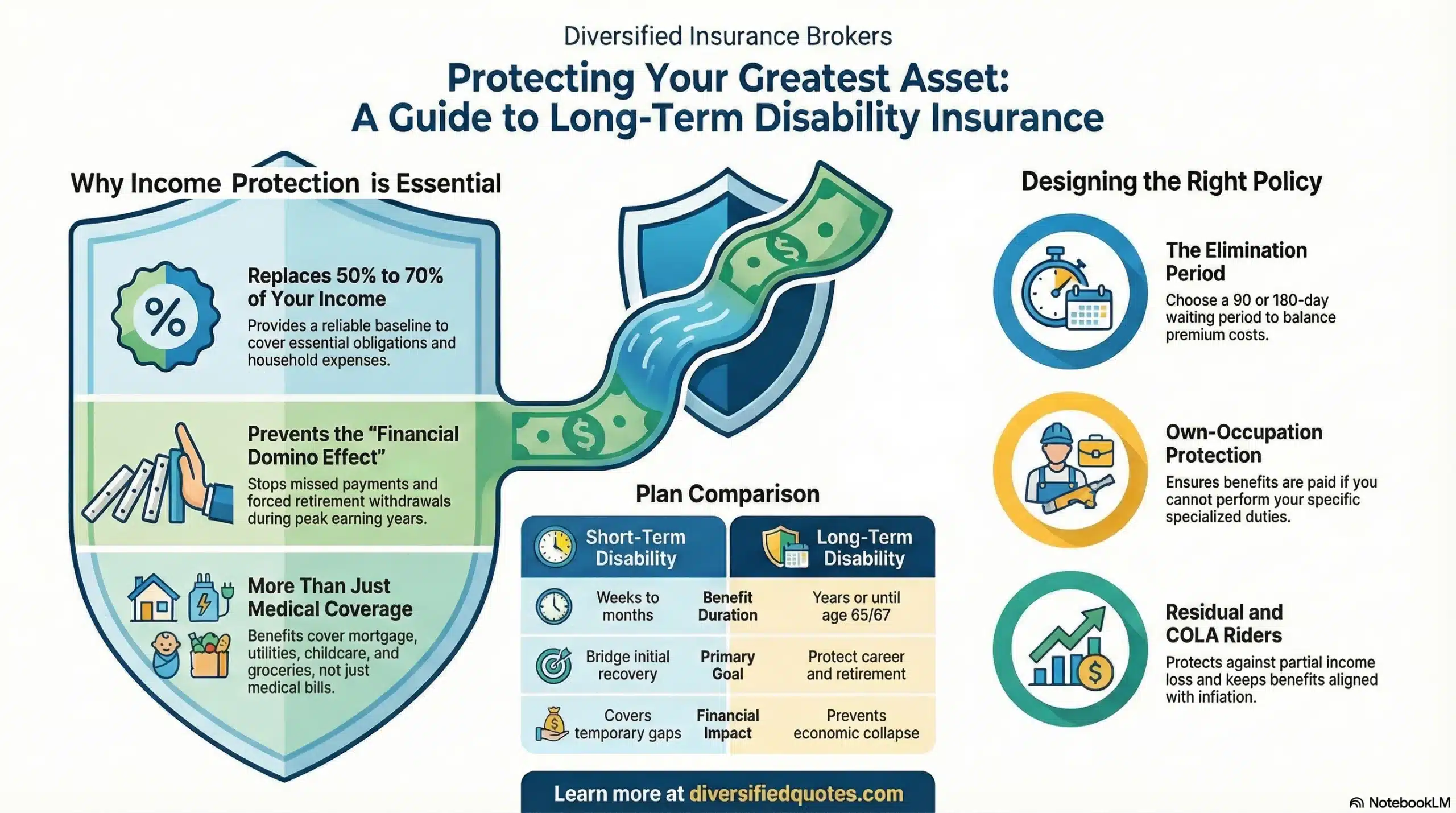
Steel industry workers who are injured and return to work on modified or light duty — a common scenario in heavy manufacturing where injury protocols often include transitional return-to-work programs — frequently experience income reduction during the modified duty period. A production floor worker returning at 50% capacity earns 50% of previous income but may not meet the total disability threshold for full disability benefits. The residual disability rider pays proportional benefits based on the actual income reduction during the partial disability period, making the return-to-work transition financially sustainable rather than a choice between recovery and financial crisis.
For steel workers returning from back injuries, orthopedic injuries, or hearing-related limitations on specific job duties, the modified duty period can last weeks to months while the worker progressively returns to full capacity. The residual rider’s income bridge during this period can be the difference between a successful return to full work capacity and a financial crisis that forces premature return to full-duty demands before the worker is medically ready. Our resource on disability insurance elimination periods explained covers the interaction between elimination period selection and the beginning of partial disability benefits during recovery.
Build a Disability Strategy for Your Steel Industry Role
We identify the strongest available coverage for each role — production, operations, engineering, and management — across 100+ carriers.
Get Your Disability Insurance Quote
Call 800-533-5969
Related Disability Insurance Pages
Talk With an Advisor Today
Choose how you’d like to connect—call or message us, then book a time that works for you.
Schedule here:
calendly.com/jason-dibcompanies/diversified-quotes
Licensed in all 50 states • Fiduciary, family-owned since 1980
FAQs: Disability Insurance for the Steel Industry
Does workers’ compensation cover all disability risk for steel workers?
No — workers’ compensation has a fundamental limitation that individual disability insurance addresses: it covers only workplace-caused conditions. The majority of long-term disability events even among production floor steel workers arise from medical conditions not linked to the workplace — cardiovascular disease, cancer, diabetes, non-occupational musculoskeletal conditions — that are entirely outside workers’ compensation coverage. Even for occupationally linked conditions like hearing loss and repetitive strain injuries, workers’ compensation claims for cumulative gradual-onset conditions are frequently disputed on causation grounds, potentially delaying or reducing benefits during the period financial support is most needed. Individual disability insurance covers any disabling condition from any cause, eliminating the causation dispute and filling the non-occupational disability gap entirely.
How significant is hearing loss risk for steel workers?
Extremely significant. Research on steel industry workers documents that nearly 71% of noise-exposed workers had hearing impairment, with noise-exposed steelworkers having a probability of noise-induced hearing loss 6.55 times higher than unexposed workers. Rolling mills, presses, and grinding operations routinely exceed 100–110 dB, well above OSHA’s 90 dBA threshold for an 8-hour shift. This noise damage is invisible and cumulative — it develops over a career below the threshold of immediate awareness until audiometric testing documents the functional impairment. Hearing loss that is severe enough to prevent communication on the production floor, limit safety awareness, or affect the ability to perform job duties represents genuine occupational disability with real income consequences. Individual disability insurance covers hearing-related disability regardless of causation attribution.
I have union group disability coverage — do I still need individual disability insurance?
Likely yes, depending on the benefit amount your union-negotiated coverage provides relative to your actual income. Group disability plans through collective bargaining agreements provide a meaningful base layer but typically cap benefits at levels that may not fully replace income for higher-wage production workers, skilled tradespeople, or supervisory staff. Individual supplemental disability insurance fills the gap between the group benefit and full income replacement — subject to aggregate limits that cap total coverage as a percentage of pre-disability income. Understanding the existing group coverage terms before applying for individual supplemental coverage is the essential first step, since the individual policy’s available amount is calculated net of existing group benefits.
Can a production floor steelworker with Class 1 rating get meaningful coverage?
Yes, though the individual market options are most constrained at Class 1 and the strategy needs to be thoughtful. For Class 1 production workers, the combination of group plan coverage from the employer or union (which provides a base layer without individual underwriting barriers), guaranteed issue disability programs through qualifying group or association structures, and whatever individual market supplemental coverage is available at the Class 1 rating produces the strongest total protection achievable. Carriers vary significantly in how favorably they underwrite Class 1 industrial manufacturing workers — some are more favorable on premium rates and provisions than others — making an independent broker’s market knowledge essential for identifying the best available outcome. The individual market typically becomes more favorable as role responsibility increases toward supervisory and technical classifications.
About the Author:
Jason Stolz, CLTC, CRPC, DIA, CAA and Chief Underwriter at Diversified Insurance Brokers (NPN 20471358), is a senior insurance and retirement professional with more than 25 years of real-world experience helping individuals, families, and business owners protect their income, assets, and long-term financial stability. As a long-time partner of the nationally licensed independent agency Diversified Insurance Brokers, Jason provides trusted guidance across multiple specialties—including fixed and indexed annuities, long-term care planning, personal and business disability insurance, life insurance solutions, Group Health, Travel Medical and Evacuation Insurance, and short-term health coverage. Diversified Insurance Brokers maintains active contracts with over 100 highly rated insurance carriers, ensuring clients have access to a broad and competitive marketplace.
His practical, education-first approach has earned recognition in publications such as VoyageATL, and contributions from his agency featured in Kiplinger and GoBankingRates— highlighting his commitment to financial clarity and client-focused planning. Drawing on deep product knowledge and years of hands-on field experience, Jason helps clients evaluate carriers, compare strategies, and build retirement and protection plans that are both secure and cost-efficient. Visitors who want to explore current annuity rates and compare options across multiple insurers can also use this annuity quote and comparison tool.
Explore More Disability Insurance Options: Browse our complete guide to Disability Insurance for Trades, Construction & Industrial — covering contractors, electricians, plumbers, welders, roofers, machinists & skilled trades from 100+ carriers.
Last Reviewed: May 18, 2026 |
Reviewed by: Jason Stolz, CLTC, CRPC, DIA, CAA
Chief Underwriter, Diversified Insurance Brokers, Inc. | NPN: 20471358 | Diversified Insurance Brokers, Inc. — Licensed in all 50 states
Fact Checked by: Tonia Pettitt, CMIP©
Medicare Specialist, Diversified Insurance Brokers, Inc. | NPN: 14374308 | Diversified Insurance Brokers, Inc. — Licensed in all 50 states
Did you find this content helpful? Leave us a Google review — it helps others find trustworthy guidance too.
Editorial Standards: Diversified Insurance Brokers maintains rigorous editorial standards to ensure accuracy, clarity, and independence in all content. Learn more about our editorial standards and commitment to transparency.
