
Disability Insurance for Cattle Herders
As an Independent Disability Insurance Broker, we have access to exclusive discounts and negotiated pricing most captive agents can’t offer — see the full breakdown near the end of this page.
Disability Insurance for Cattle Herders

Jason Stolz CLTC, CRPC, DIA, CAA
Disability insurance for cattle herders addresses the income risk of an occupation that Bureau of Labor Statistics data consistently places among the most dangerous in the United States — with agricultural work recording fatality rates approximately twice that of law enforcement occupations and many times higher than most civilian jobs. Cattle herding and ranching involve daily proximity to large animals whose behavior is unpredictable: kicks, bites, and trampling from cattle and horses are documented causes of serious and fatal occupational injuries, and the forces involved in livestock handling accidents — animals weighing 1,000 to 1,500 pounds moving with little warning — produce injuries that are frequently severe. Equipment hazards compound the animal injury risk: tractor rollovers are the leading cause of serious injury and death in agricultural work broadly, and ranch operations involving tractors, skid steers, feed equipment, and fencing machinery create additional mechanical injury exposure alongside the livestock handling risks. When a disability occurs — whether from animal injury, equipment accident, back disease from years of physical outdoor work, or illness — the ranch or farm operation loses its primary working member in an occupation where workers’ compensation protection is inconsistent and often absent. At Diversified Insurance Brokers, we help cattle herders, ranchers, and agricultural workers structure disability coverage that reflects the physical outdoor hazard profile, self-employed income structures, and workers’ comp gap that characterize agricultural careers. The income protection insurance framework covers individual policy construction for outdoor physical occupations, and the disability insurance for high-risk occupations context covers how carriers evaluate the agricultural hazard profile in their underwriting process.
One of the most significant disability planning realities for cattle herders is the workers’ compensation gap that exists specifically in agricultural employment. Multiple states exempt agricultural workers and farm employees from mandatory workers’ compensation requirements — Georgia is one of 16 states that does not require workers’ comp coverage for migrant or seasonal farmworkers, and variations in agricultural workers’ comp exemptions exist across many state systems. Self-employed ranchers and family farm operators typically carry no workers’ comp protection for themselves regardless of state requirements, since those requirements apply to employers covering employees rather than to owner-operators covering their own labor. The isolation dimension of ranch and farm work compounds this gap: injuries occurring in remote ranch settings far from emergency medical services can involve delayed treatment, longer recovery periods, and extended disability timelines compared to injuries in urban or suburban occupational settings. Individual disability insurance is not supplemental for many cattle herders and ranchers — it is the only income protection available. The disability insurance by occupation framework covers how agricultural occupations are evaluated for occupational class, and the key reasons professionals in any occupation choose disability insurance are at what is the primary reason people buy disability insurance.
Compare Disability Insurance for Cattle Herders and Ranchers
We compare options across multiple carriers and structure coverage around the livestock handling hazard profile, agricultural income structures, and self-employed ranch operation needs.
Request Disability Insurance OptionsDisability Insurance for Cattle Herders — Risk Profile, Coverage Gaps, and Policy Design
| Disability Risk | How It Affects the Cattle Herder | Coverage Consideration |
|---|---|---|
| Livestock animal injuries — kicks, bites, trampling | Cattle and working horses can weigh 1,000-1,500 pounds; kicks, head strikes, trampling in confined handling areas, and crushing against fences and gates during moving and loading operations produce injuries with force levels that can cause skeletal fractures, internal injuries, traumatic brain injury, and in serious cases, fatality; even experienced handlers face these risks because large animal behavior is inherently unpredictable regardless of handler skill | Any-cause individual disability coverage protecting against animal injury disability; for the self-employed rancher with no workers’ comp, individual disability insurance is the only income protection available for the occupation’s primary acute injury risk; workers’ comp where it exists covers work-related animal injuries for employed ranch workers but typically at two-thirds wages |
| Tractor and equipment rollovers and accidents | Tractor rollovers are the leading cause of serious injury and death in agricultural work; ranch operations involve tractors, skid steers, ATVs, and feed and fencing equipment on uneven terrain that creates rollover, tip-over, and collision risks; machinery entanglement from PTO shafts, augers, and moving components represents a separate severe injury category in farm and ranch equipment operation | Individual disability insurance covering equipment accident disability; for ranchers operating alone in remote settings, the injury-to-treatment timeline can extend disability severity beyond comparable urban workplace accidents; own-occupation coverage reflecting the physical outdoor ranch operation functions |
| Musculoskeletal conditions from physical outdoor ranch work | Ranch and herding work involves sustained heavy physical labor — fencing, feeding, loading/unloading hay and feed, repairing equipment, working on rough terrain — that creates chronic musculoskeletal loading on the back, hips, knees, and shoulders over years of work; these gradual cumulative conditions are not work-related injuries under workers’ comp frameworks but produce genuine disability for physical agricultural workers | Illness-based own-occupation coverage for chronic musculoskeletal conditions developing from years of physical ranch work demands; a cattle herder whose back condition prevents the sustained physical outdoor functions of herding, fencing, and livestock management is disabled from the work regardless of the gradual onset nature of the condition |
| Workers’ comp exclusions for agricultural workers | Multiple states exempt agricultural workers from mandatory workers’ compensation coverage requirements; self-employed ranchers and family farm operators typically have no workers’ comp protection for themselves regardless of state requirements; even where agricultural workers’ comp exists, the structure of coverage varies significantly by state and may not cover all ranch operations or all types of workers on the operation | Individual disability insurance as the complete income protection plan for self-employed ranchers with no workers’ comp baseline; for employed ranch workers whose state workers’ comp provides some baseline, individual coverage fills the gap for illness-based conditions and the income difference above the two-thirds replacement |
| Rural isolation — longer recovery timelines | Ranch and cattle operations often operate in rural settings distant from emergency medical services, trauma centers, and specialized rehabilitation; injuries that would receive rapid intervention in urban settings may involve extended emergency response times; the physical demands of returning to ranch work often require more complete recovery before the work functions can be safely resumed, creating longer disability durations | Benefit period to age 65 protecting a long agricultural career; elimination period calibrated to available savings rather than a standard 90-day default; residual benefit capturing partial income loss during recovery when lighter ranch duties are possible but full herding and heavy physical operations are not |
Agricultural Income Documentation and Benefit Sizing
Cattle herders and ranchers who operate their own operations document disability insurance income through Schedule F (Farm Income and Expenses) on their federal tax returns, reflecting gross farm income minus farm operating expenses. The net farm income on Schedule F is the income basis for disability insurance benefit sizing for self-employed agricultural operators. Ranch income is inherently variable year-to-year based on cattle prices, weather conditions, feed costs, and market timing — multi-year averaging across two to three years of Schedule F returns produces the most representative income baseline for benefit sizing and smooths the volatility that any single year’s farm income might reflect. Cattle herders employed by ranch operations as wage workers document income through W-2 forms. The self-employed and contractor planning context is at disability insurance for self-employed ranchers and disability insurance for 1099 workers in seasonal and contract agricultural arrangements. The agricultural science professional parallels where the same outdoor physical and self-employed income documentation issues appear are at disability insurance for agronomists and disability insurance for arborists. The outdoor physical labor planning context shared with other equipment-intensive outdoor occupations is at disability insurance for heavy equipment operators and disability insurance for construction workers. The independent contractor context for seasonal ranch workers is at disability insurance for independent contractors.
Policy Design for Cattle Herders and Ranchers
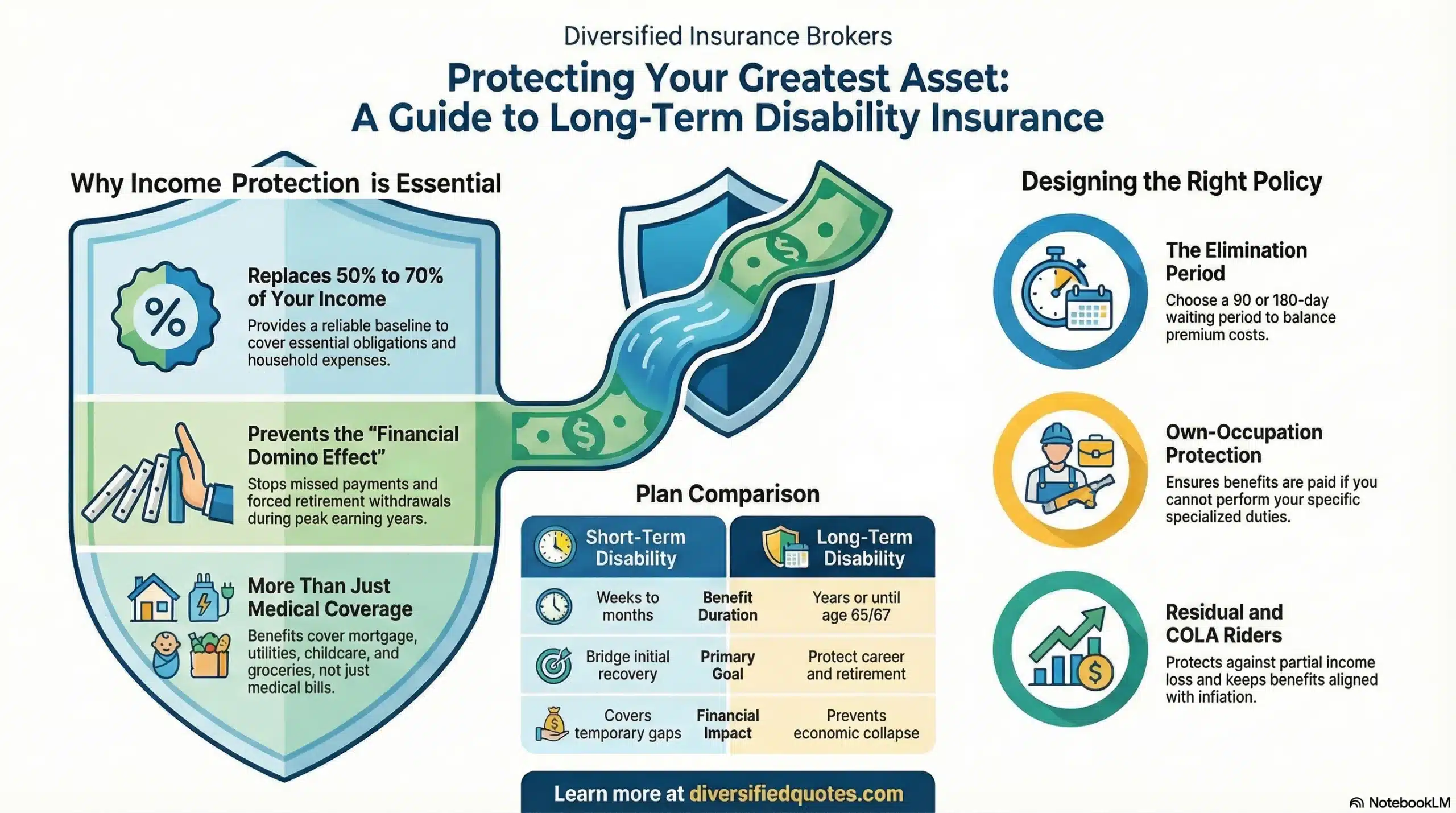
The benefit period to age 65 — long-term disability insurance to the full career standard — protects a ranching career that builds land, herd, and operational value over decades. The elimination period should be matched to available cash reserves; self-employed ranchers without substantial liquid savings should evaluate shorter elimination periods to prevent a 90-day income gap from creating forced sale or livestock liquidation pressure. Short-term disability provides the initial bridge period following an animal injury or equipment accident. The residual disability rider captures partial income loss during recovery when lighter ranch duties are possible but the full physical demands of active cattle herding and heavy operations cannot be performed. The full rider framework is at disability insurance riders explained. Tax treatment of individually owned policy benefits is at are disability insurance payments taxable. Benefit sizing considerations for variable agricultural income are at how much disability insurance do I need. No-exam options for ranchers seeking simpler coverage are at no-exam disability insurance. The case for working with an independent broker who can evaluate multiple carriers for an agricultural occupation is at why work with an independent disability insurance broker. For welders and other physical trade workers who may also work on ranch properties, the trade professional disability planning context is at disability insurance for welders. For an independent review of any existing or proposed coverage, get a 2nd opinion on your disability insurance quote covers the full process.
Talk With an Advisor Today
Choose how you’d like to connect—call or message us, then book a time that works for you.
Schedule here:
calendly.com/jason-dibcompanies/diversified-quotes
Licensed in all 50 states • Fiduciary, family-owned since 1980
FAQs: Disability Insurance for Cattle Herders
What are the most common disabilities affecting cattle herders and ranchers?
Livestock animal injuries — kicks, bites, trampling, and crushing against handling structures from cattle and horses — are the primary occupation-specific acute injury risk in cattle herding. Animals weighing 1,000 to 1,500 pounds produce injury forces capable of causing serious skeletal fractures, internal injuries, and traumatic brain injury even in experienced handlers. Tractor rollovers are the leading cause of serious injury and death in agricultural work broadly. Musculoskeletal conditions from sustained heavy physical outdoor work — back disease, hip and knee degeneration — are the most common chronic disability-producing conditions over a full agricultural career. Heat exhaustion and heat stroke during summer operations represent an additional acute risk.
Do agricultural workers have workers’ compensation coverage?
Workers’ compensation coverage for agricultural workers is inconsistent and incomplete compared to most other industries. Multiple states exempt agricultural workers — including seasonal and migrant workers — from mandatory workers’ comp requirements. Self-employed ranchers and family farm operators are typically not covered by any workers’ comp policy for their own injuries regardless of state requirements. Even in states where agricultural workers’ comp exists, the scope of coverage varies and may not reach all ranch operations or all worker categories. Individual disability insurance fills this gap as the primary income protection for self-employed cattle herders and ranchers with no workers’ comp baseline.
How do self-employed ranchers document income for disability insurance?
Self-employed ranchers document disability insurance income through Schedule F (Farm Income and Expenses) on federal tax returns, reflecting gross farm income minus operating expenses. Net farm income on Schedule F is the primary income basis for benefit sizing for owner-operators. Ranch income is inherently variable year-to-year based on cattle prices, weather conditions, and market timing; two to three years of Schedule F returns are averaged to produce a representative income baseline that reflects the operation’s typical earnings rather than a single anomalous year. Wage-earning ranch employees document income through standard W-2 forms.
What occupational class do cattle herders receive for disability insurance?
Cattle herders and ranchers typically receive a lower-middle occupational class reflecting the combination of physical outdoor labor, livestock animal handling hazard, and agricultural equipment operation that characterizes the work. The occupational class is lower than desk professionals but the classification doesn’t necessarily prevent coverage — it affects premium structure, maximum benefit limits, and which riders are available. Providing a specific and accurate description of the type of livestock work, equipment operated, and primary duties during underwriting produces the most accurate classification and ensures coverage is built on accurate occupational information.
How does rural isolation affect disability planning for cattle herders?
Ranch and cattle operations often occur in rural settings with extended emergency response times, limited proximity to trauma centers and specialized rehabilitation facilities, and reduced access to the support systems — family, neighbors, professional networks — that can facilitate faster recovery in urban settings. These isolation factors tend to extend disability durations for cattle herders compared to comparable injuries in urban occupations, because the time from injury to treatment may be longer, and the physical demands of returning to full ranch operations often require more complete recovery before the work can safely resume. The disability benefit period and elimination period should both account for the realistic timeline of ranch-setting injury recovery rather than assuming urban-context recovery speeds.
About the Author:
Jason Stolz, CLTC, CRPC, DIA, CAA and Chief Underwriter at Diversified Insurance Brokers (NPN 20471358), is a senior insurance and retirement professional with more than 25 years of real-world experience helping individuals, families, and business owners protect their income, assets, and long-term financial stability. As a long-time partner of the nationally licensed independent agency Diversified Insurance Brokers, Jason provides trusted guidance across multiple specialties—including fixed and indexed annuities, long-term care planning, personal and business disability insurance, life insurance solutions, Group Health, Travel Medical and Evacuation Insurance, and short-term health coverage. Diversified Insurance Brokers maintains active contracts with over 100 highly rated insurance carriers, ensuring clients have access to a broad and competitive marketplace.
His practical, education-first approach has earned recognition in publications such as VoyageATL, and contributions from his agency featured in Kiplinger and GoBankingRates— highlighting his commitment to financial clarity and client-focused planning. Drawing on deep product knowledge and years of hands-on field experience, Jason helps clients evaluate carriers, compare strategies, and build retirement and protection plans that are both secure and cost-efficient. Visitors who want to explore current annuity rates and compare options across multiple insurers can also use this annuity quote and comparison tool.
Explore More Disability Insurance Options: Browse our complete guide to Disability Insurance for Agriculture, Natural Resources & Outdoor Industries — covering farmers, ranchers, fishermen, foresters, miners, oil & gas workers & outdoor industries from 100+ carriers.
Last Reviewed: June 6, 2026 |
Reviewed by: Jason Stolz, CLTC, CRPC, DIA, CAA
Chief Underwriter, Diversified Insurance Brokers, Inc. | NPN: 20471358 | Diversified Insurance Brokers, Inc. — Licensed in all 50 states
Fact Checked by: Tonia Pettitt, CMIP©
Medicare Specialist, Diversified Insurance Brokers, Inc. | NPN: 14374308 | Diversified Insurance Brokers, Inc. — Licensed in all 50 states
Did you find this content helpful? Leave us a Google review — it helps others find trustworthy guidance too.
Editorial Standards: Diversified Insurance Brokers maintains rigorous editorial standards to ensure accuracy, clarity, and independence in all content. Learn more about our editorial standards and commitment to transparency.
