
Disability Insurance for Lobbyists
As an Independent Disability Insurance Broker, we have access to exclusive discounts and negotiated pricing most captive agents can’t offer — see the full breakdown near the end of this page.
Disability Insurance for Lobbyists

Jason Stolz CLTC, CRPC, DIA, CAA
Disability insurance for lobbyists is income protection for one of the most relationship-intensive professional careers in Washington and in every state capital — a career where income depends not on physical capacity but on the sustained ability to maintain active client engagement, cultivate legislator relationships, analyze complex policy developments, and be present in the corridors of government when it matters. Professional lobbyists, government relations consultants, and public affairs principals earn incomes that research data consistently places in the $100,000 to $160,000 range for established practitioners, with senior and independent operators frequently exceeding $200,000. That income is not generated by physical presence at a workstation — it is generated by sustained cognitive performance, relationship maintenance, and the continuous professional activity that a lobbying practice requires. When a medical event — a stroke, a cardiovascular condition, a serious psychiatric condition, a neurological event, or any other disabling illness or injury requiring extended recovery — removes a lobbyist from active professional practice, the income consequences are immediate and compounded by a professional reality unique to this field: client relationships and legislative access do not pause and wait for recovery. They migrate to available practitioners.
At Diversified Insurance Brokers, we help lobbyists and government relations professionals across every practice setting — principals at independent lobbying firms, in-house government affairs directors at corporations and trade associations, contract lobbyists working as independent consultants, nonprofit advocacy professionals, and registered state-level lobbyists — structure disability insurance coverage that reflects both the genuine disability risks of a high-pressure professional career and the income vulnerability that self-employment or relationship-dependent compensation creates. A well-structured policy provides income replacement from any qualifying disability, whether it originates from a cardiovascular event, a cognitive or neurological condition, a psychiatric condition, or any other medical event that prevents active professional practice. Our resource on disability insurance for high-income professionals provides important context on how coverage is structured and sized for professionals whose incomes exceed standard benefit calculation thresholds.
Get Disability Insurance Quotes for Lobbyists
We compare carriers, explain how government relations and professional advocacy work is classified, and build policies sized for the real income a lobbying career generates.
Request Disability Insurance OptionsWhat Lobbyists Actually Do — and Why the Disability Risk Is Significant
The professional profile of lobbying work is built around sustained cognitive performance, strategic relationship management, and continuous active engagement with legislative processes that operate on their own calendar and cannot be paused or delegated without professional cost. A working lobbyist’s day involves monitoring and analyzing legislative developments across multiple active issue areas, preparing policy briefs and testimony that distill complex regulatory or statutory questions into persuasive advocacy positions, meeting with legislators and their staff to present client positions and build the ongoing relationships that make those presentations effective, attending hearings, markups, and committee proceedings, and managing client expectations and communications across multiple simultaneous engagements. For lobbyists at the federal level, the physical geography of the work — between client offices, congressional offices, agency meetings, and hearing rooms — adds sustained travel demands that the lobbying role at major firms in Washington makes a daily professional reality rather than an occasional requirement.
The disability risk in this context is not primarily physical — it is cognitive and cardiovascular, with an important psychiatric dimension that research on the profession documents explicitly. Studies on the psychology of lobbying identify the profession as characterized by chronic high-pressure environments, significant cognitive load from managing multiple complex legislative engagements simultaneously, tight deadlines around legislative calendars, and the sustained stress of an adversarial advocacy environment where outcomes are uncertain and client expectations are high. Research on professional burnout documents that chronic exposure to high-stress environments without adequate coping mechanisms produces emotional exhaustion, depersonalization, and reduced professional effectiveness — outcomes that in a lobbying practice translate directly to reduced income through damaged client relationships and lost effectiveness in the legislative arena. Beyond burnout, the cardiovascular and neurological consequences of sustained high-stress professional environments — elevated hypertension, stroke risk, and cardiac event risk — represent the acute disability scenarios that professional disability insurance is most commonly called to address for knowledge workers in demanding advocacy careers. Our resource on what is the primary reason people buy disability insurance provides the foundational framework for understanding why high-income professionals in demanding careers need individual disability coverage regardless of how they access group benefits.
The Disability Risks That Matter Most for Lobbyists
Cardiovascular conditions represent the most acute disability risk for lobbyists whose professional lives are characterized by the chronic stress, irregular hours, intensive client demands, and the sustained psychological pressure of working in adversarial legislative environments. Hypertension is a documented occupational health outcome in high-stress professional careers — and lobbying, with its combination of long hours, high-stakes client outcomes, and the irreducible uncertainty of legislative processes, creates exactly the sustained stress profile that elevated cardiovascular risk research consistently identifies. A cardiac event or stroke that requires extended recovery prevents a lobbyist from performing the active relationship cultivation, legislative monitoring, and client-facing advocacy that their practice generates — and for a profession where legislative access is time-sensitive and client relationships are continuously cultivated by competitors, an extended absence has professional consequences that outlast the medical recovery period.
Cognitive and neurological conditions represent a disability risk category that is particularly significant for a profession whose entire value proposition rests on the quality of analytical thinking, strategic judgment, and persuasive communication that the lobbyist brings to every client engagement. A neurological event — a stroke, a traumatic brain injury, a degenerative condition affecting cognitive function — that impairs the analytical acuity, memory, or communication capacity that effective advocacy requires is as professionally disabling as a physical injury is for a trade professional whose income depends on manual capacity. Psychiatric conditions — including clinical depression, anxiety disorders, and the burnout-related conditions that the high-pressure lobbying environment produces — represent a third disability risk category that is both clinically significant and often underappreciated by professionals who do not associate their knowledge work with meaningful disability exposure. The own-occupation disability definition is particularly critical for lobbyists precisely because these cognitive and psychiatric conditions may leave full physical mobility intact while rendering the specific professional activities that generate income impossible to perform. Our resource on disability insurance for financial planners provides useful parallel context on how high-income cognitive professionals with relationship-dependent practices face analogous disability risks and income protection needs.
The Unique Income Vulnerability of a Lobbying Practice
The professional and financial structure of lobbying creates an income vulnerability that is more acute than standard professional employment — and it applies across both the employed and self-employed segments of the profession. For independent contract lobbyists and principals at lobbying firms, the vulnerability is the most direct: income depends on client retention, and client retention depends on continuous active professional engagement. A contract lobbyist who cannot work for three to six months does not have clients waiting on their return — they have clients who have engaged other practitioners to maintain the legislative relationships and advocacy momentum the retainer was paying for. Rebuilding a client base after an extended absence requires rebuilding the legislative access and reputation for reliability that took years to establish, in a competitive marketplace where clients have no incentive to wait and competitors have every incentive to consolidate relationships during an absence.
For employed lobbyists — in-house government affairs directors, association lobbyists, and staff at lobbying firms — employer group disability coverage exists but leaves the same material gaps it leaves for any employed professional in a high-income role. Group plans typically replace 60 percent of base salary and frequently exclude bonus compensation and performance-related pay that represents a meaningful share of total compensation in lobbying. Group coverage is not portable — it ends when employment ends, and for a lobbyist whose career involves transitions between firms, associations, and in-house roles, the group plan of any given employer is a temporary benefit rather than a permanent protection. Many group plans also weaken their disability definition after 24 months from own-occupation to any-occupation — a transition that can deny benefits to a lobbyist who retains any capacity for unrelated sedentary work even while being unable to perform the sustained cognitive and relational demands of active lobbying. Our resource on disability insurance for advertising executives illustrates how high-income communication and relationship professionals in similarly competitive industries navigate the gap between employer group coverage and genuine income protection.
How Disability Insurance Carriers Classify Lobbyists
Disability insurance carriers assign occupational class ratings that reflect the estimated disability risk of each profession. Lobbyists and government relations professionals generally receive favorable occupational class ratings that reflect the primarily office-based, cognitive, and professional nature of their work — typically in the upper tiers of classification that produce lower premiums and access to the strongest policy features, including comprehensive own-occupation definitions, the highest available benefit amounts, and favorable underwriting terms for the cognitive and psychiatric disability risks that are most relevant to the profession.
The specific terms available depend significantly on how the lobbyist’s work is described to underwriters — a contract lobbyist or independent consulting principal whose income comes from multiple client retainers documents income differently than a salaried in-house government affairs director with W-2 compensation, and the income documentation approach affects the benefit amount available. Independent lobbyists whose income is project-based or retainer-based may need to demonstrate income stability across multiple years to secure the maximum available benefit amount. Understanding how much disability insurance you need as a high-income professional is an important planning step before applying, because the benefit amount calculations and coordination with any existing group coverage require deliberate structuring rather than default acceptance of what a single carrier initially offers. For lobbyists evaluating how disability coverage fits within a comprehensive personal financial protection plan, our resource on disability insurance for high earners and business owners covers the specific structuring considerations that apply when income is high enough to require non-standard benefit sizing.
Case Study — Independent Lobbying Consultant, Cardiac Event
Consider an established independent contract lobbyist operating a solo consulting practice, maintaining five active client retainers at the state and federal level, and generating $150,000 per year in retainer income. After sustaining a serious cardiac event requiring hospitalization, surgical intervention, and a minimum of four months of medically supervised recovery during which active client engagement, legislative monitoring, and Capitol Hill access are impossible, this lobbyist faces a simultaneous income crisis and professional relationship crisis. The table below illustrates the financial stakes.
| Scenario | Without Disability Insurance | With Disability Insurance |
|---|---|---|
| Monthly Income During Recovery | $0 — retainer clients engage other lobbyists to maintain legislative coverage during absence | $6,000–$8,000+ depending on benefit amount structured |
| 4-Month Income Total | $0 | $24,000–$32,000+ |
| Client Relationships | Clients transition to substitute lobbyists; relationships require rebuilding from reduced position after recovery | Financial stability allows planned communication and managed client transitions during recovery |
| Practice Overhead During Recovery | Registration fees, office costs, research database subscriptions, and professional memberships continue regardless | Monthly benefit offsets fixed practice costs during recovery period |
| Return-to-Practice Pressure | Financial crisis forces premature return to high-stress active practice before full cardiac recovery; re-event risk | Full recovery supported on medical timeline; return to practice when medically appropriate |
Cardiac events among high-income, high-stress professionals in demanding cognitive careers are among the most documented acute disabling events in the professional disability insurance claims literature. For an independent lobbyist whose practice depends on the continuous active engagement of a solo practitioner, the financial consequence of a four-month absence without income replacement is compounded by the professional consequence of returning to a rebuilt competitor landscape rather than a waiting client base. Disability insurance for lobbyists addresses both the immediate income gap and the financial foundation that allows recovery to proceed on a medical rather than a financial timeline. For context on how high-income consulting and advisory professionals in other relationship-dependent fields structure income protection, our resource on disability insurance for event planners provides perspective on how client-relationship-dependent professional practices evaluate and structure disability coverage.
Key Policy Features That Matter Most for Lobbyists
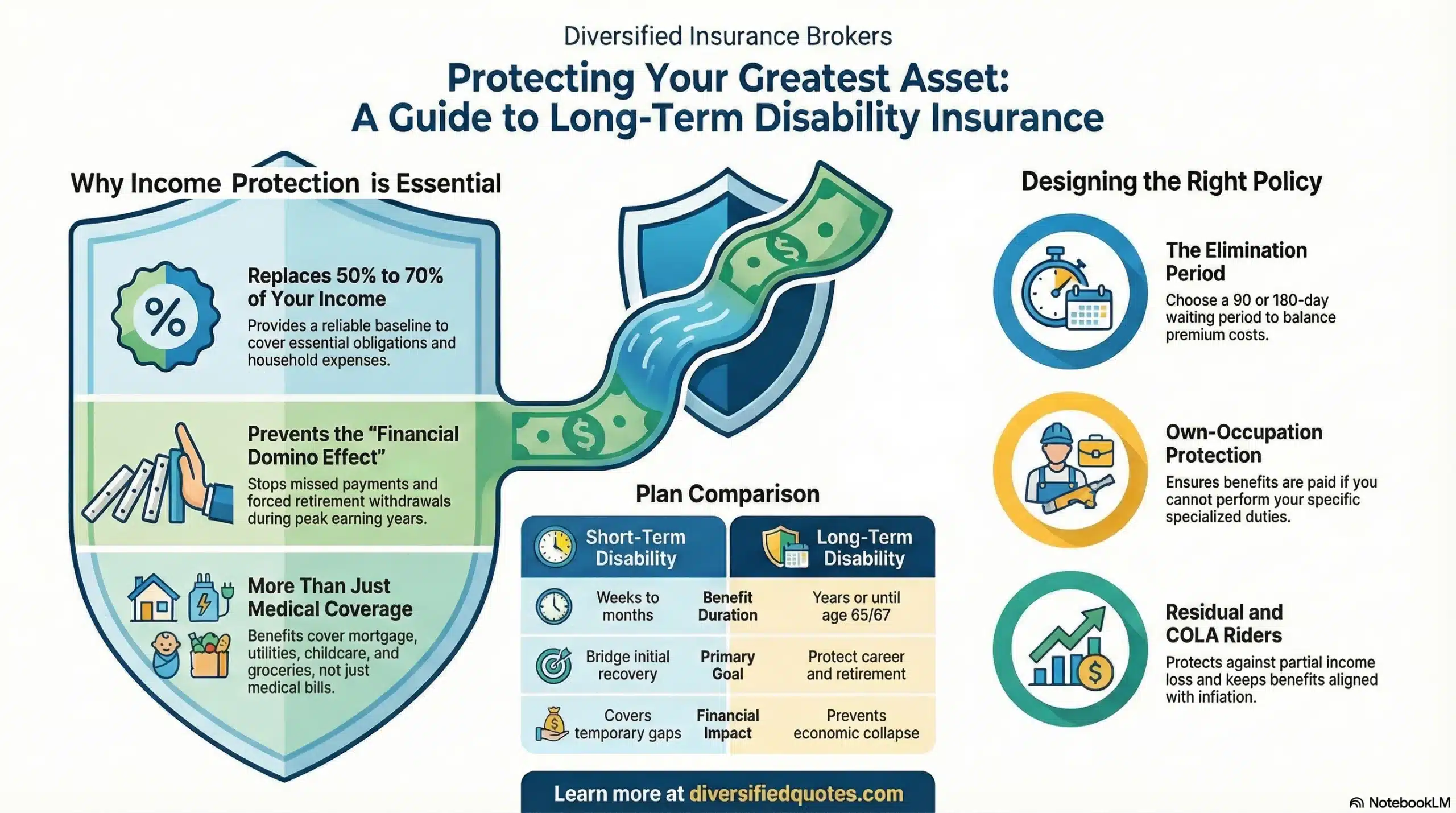
The own-occupation definition of disability is the most critical policy feature for lobbyists — and the cognitive and psychiatric dimensions of the profession make this definition more consequential than many lobbyists initially appreciate. Under an own-occupation definition, a policy pays benefits when a condition prevents the lobbyist from performing the specific duties of their profession — sustained legislative monitoring and analysis, client advocacy and relationship management, strategic policy positioning, and the active professional engagement that lobbying practice requires — regardless of whether the lobbyist could theoretically perform some other type of lighter or unrelated work. A lobbyist whose stroke or serious depressive episode prevents the sustained cognitive performance, interpersonal effectiveness, and strategic judgment that lobbying requires may technically be capable of performing some sedentary clerical activity, but an own-occupation policy recognizes the genuine inability to practice as a lobbyist and pays benefits accordingly. Our dedicated resource on own-occupation disability insurance explained covers how this definition works in practice for cognitive professionals and why it is the single most important feature to evaluate.
A residual disability rider is particularly valuable for lobbyists whose conditions may produce a gradual or partial return to professional capacity. A lobbyist recovering from a cardiac event or a serious psychiatric condition may be able to maintain a reduced client load and a limited active practice while still unable to sustain the full engagement level that their normal practice requires — generating reduced income without being completely unable to work. A total-disability-only policy provides no benefits during this partial recovery phase. A residual disability rider pays proportional benefits based on the percentage reduction in earnings, providing continuous financial support from the onset of disability through to full return to normal practice volume. Our resource on how residual disability benefits work covers the proportional mechanics in plain language. For lobbyists facing potential long-term disability, our resource on disability income insurance with a COLA rider explains how inflation protection maintains the purchasing power of the monthly benefit across years of claim payment — particularly relevant for high-income professionals whose living expenses are calibrated to incomes well above the median.
Income Documentation for Independent and Employed Lobbyists
Income documentation for disability insurance underwriting varies significantly based on employment structure, and lobbyists span a wide range of structures. Salaried government affairs directors and association lobbyists document income through W-2 compensation straightforwardly, with the structuring question being how to size the individual supplement to fill the gap between group coverage and actual income protection needs. Independent contract lobbyists and consulting firm principals document income through Schedule C net profit or business entity distributions — which requires accurately presenting the relationship between gross retainer revenue and net distributable income in a way that reflects actual financial need rather than artificially reduced post-deduction net figures.
For independent lobbyists whose income is variable across legislative sessions, political cycles, and client retention patterns, two-to-three year income averaging produces the most accurate and favorable benefit amount calculations. Principals of small lobbying firms who pay themselves through a combination of salary and distributions face additional documentation complexity that working with an experienced broker navigates more effectively than self-directed carrier applications. Our resource on getting disability insurance when self-employed covers the income documentation mechanics for independent professionals across different business structures. For independent lobbyists who also carry fixed practice overhead — lobbying registration fees, office costs, research subscriptions, and staff — our resource on business overhead expense coverage explains how a supplemental policy can cover those fixed costs during a disability period when the practice is not generating revenue but its infrastructure obligations continue.
Why Independent Broker Access Matters for Government Relations Professionals
Lobbyists typically receive favorable occupational classifications from disability insurance carriers, which means the primary value of working with an independent broker is not fighting for access to coverage — it is ensuring that the benefit amount is sized correctly for a high-income professional, that the own-occupation definition is the strongest available version in the specific policy language, that the residual disability rider is structured to address the partial-recovery scenarios most relevant to a professional practice, and that the coordination of individual and group coverage is done deliberately rather than by default. A single-carrier application accepts whatever that carrier’s terms happen to be. An independent broker evaluation across multiple carriers identifies which carrier’s underwriting guidelines produce the strongest available terms for a specific lobbyist’s income level, health profile, and employment structure.
At Diversified Insurance Brokers, we evaluate options across multiple carriers for every government relations professional we serve. We understand how to document lobbying and public affairs income accurately for underwriters across both employed and independent structures, how to structure own-occupation definitions and residual riders that address the cognitive and professional disability scenarios most relevant to advocacy careers, and how to size benefit amounts that genuinely reflect the income a lobbying practice generates rather than defaulting to standard calculations that underinsure high-income professionals. Our resource on why independent disability insurance brokers matter explains the full value of independent carrier access for professionals whose income and coverage needs exceed what standard single-carrier applications address.
When to Apply — and Why the Timing Decision Matters for Lobbyists
The best time for a lobbyist to apply for individual disability insurance is early in their career — before the cardiovascular, cognitive, or psychiatric conditions that high-pressure professional work produces over time have been documented in the medical record. Disability insurance premiums are based in part on age and health at the time of application, and younger, healthier applicants secure the most comprehensive coverage at the most favorable rates. For lobbyists who are currently in good health and early in their careers, the premium cost of comprehensive individual own-occupation coverage is lower now than it will be at any subsequent point — and the coverage secured locks in both the premium and the terms regardless of health developments in subsequent years of demanding professional work.
For lobbyists who currently have employer group coverage and are focused on that coverage as their primary protection, the portable individual own-occupation supplement secured while health is good is the protection that remains in force through every career transition — regardless of whether future employers offer comparable group benefits. For lobbyists who are further along in their careers and have not yet secured individual coverage, the urgency of applying before any cardiovascular, cognitive, or psychiatric conditions appear in the medical record is genuine rather than theoretical. Our resource on why disability insurance matters even when you’re young and healthy provides the financial case for early application that applies across every high-income professional career. Our resource on how to choose the right disability insurance policy covers the feature-by-feature evaluation framework that produces the best available policy for a specific professional’s needs and circumstances.
Request Disability Insurance Quotes for Lobbyists
We compare carriers, size benefit amounts for high-income advocacy professionals, and build policies that protect the income and practice your government relations career depends on.
Get Disability Insurance QuotesRelated Disability Insurance Pages
Talk With an Advisor Today
Choose how you’d like to connect—call or message us, then book a time that works for you.
Schedule here:
calendly.com/jason-dibcompanies/diversified-quotes
Licensed in all 50 states • Fiduciary, family-owned since 1980
Disability Insurance for Lobbyists — FAQs
The misconception that disability primarily threatens physical workers is precisely why many high-income cognitive professionals are underinsured when a disabling event occurs. The reality is that disability statistics consistently show that illness — not injury — is the leading cause of long-term disability claims across all professional occupations. For lobbyists specifically, the cardiovascular and psychiatric conditions that are most likely to produce a disabling event are directly connected to the professional environment: chronic high-stress advocacy work, long hours during legislative sessions, the sustained pressure of high-stakes client outcomes, and the competitive relationship-management demands of a lobbying practice. A cardiac event, a stroke, a serious depressive episode, or a neurological condition that requires months of recovery removes a lobbyist from active practice at exactly the moment when client relationships and legislative access — the primary professional assets in lobbying — are most vulnerable to competitive erosion. The income consequences of even a four-to-six month absence without income replacement are severe for any professional earning $100,000 to $200,000 annually, and the professional relationship consequences can outlast the medical recovery by months or years.
For an independent contract lobbyist operating as a solo consulting principal or small firm owner, individual disability insurance is not a supplement to employer coverage — it is the entire income protection structure. When a disability prevents an independent lobbyist from working, retainer clients do not hold their engagements open indefinitely. They engage other practitioners to maintain the legislative access and advocacy momentum the retainer was covering. An individual disability policy pays a defined monthly benefit — typically 60 to 70 percent of documented net earned income — after an elimination period that the lobbyist selects based on their financial reserves. That monthly benefit covers household obligations during the disability period and can be supplemented by a business overhead expense policy that covers fixed practice costs — registration fees, office space, research database subscriptions, and professional memberships — that continue regardless of whether the practice is generating revenue. The combination of a personal income replacement policy and a business overhead expense policy is the structure that protects both the lobbyist’s household and the practice infrastructure from a single disabling event.
For lobbyists, the disability conditions most likely to produce an extended inability to work are cardiovascular, cognitive, and psychiatric — not physical injuries. Cardiovascular events including heart attack and stroke are the most acute disabling conditions for professionals in high-pressure, long-hours environments: they require extended medical recovery, and stroke in particular can produce lasting cognitive and communication impairments that are directly incompatible with the analytical and interpersonal demands of a lobbying practice. Serious psychiatric conditions — clinical depression, anxiety disorders, and the burnout-related conditions that published research on high-pressure professional environments documents — can prevent the sustained engagement, client-facing effectiveness, and strategic judgment that lobbying requires for clinically significant periods. Neurological conditions affecting memory, processing speed, or executive function remove the cognitive capacity that distinguishes effective advocacy from merely going through the motions. Cancer, autoimmune conditions, and other serious medical diagnoses that require intensive treatment and extended recovery round out the disability risk profile for a professional population whose disability exposure is primarily health-driven rather than injury-driven.
Group disability coverage provides a foundation — but for a lobbyist earning $100,000 to $200,000 annually, the gaps are material and predictable. Most group plans replace 60 percent of base salary and typically exclude bonus compensation and performance pay — which for a senior lobbyist or practice principal may represent a substantial portion of total annual income. A group plan on $150,000 base salary produces roughly $90,000 in annual benefit — a $60,000 annual gap from pre-disability income before any consideration of bonus exclusions. Group coverage is not portable: it ends when employment ends, and lobbying careers involve transitions between firms, trade associations, in-house corporate roles, and independent practice that group coverage does not follow across. Many group plans also convert from an own-occupation to an any-occupation disability definition after 24 months — meaning that in the second year of a long-term disability, a lobbyist who retains any capacity for unrelated sedentary work may lose benefits under the group plan even while being genuinely unable to practice lobbying. An individual own-occupation supplement secured while health is good fills all three gaps: it increases total income replacement toward 80 percent, is portable through every career transition, and maintains the stronger disability definition for the full benefit period.
For independent contract lobbyists and consulting firm principals whose income varies across legislative sessions, political cycles, and client retention patterns, disability insurance underwriting uses federal tax return documentation — Schedule C net profit or business entity distributions — typically averaged over two to three years to establish a representative income base for benefit calculations. Variable income that includes strong legislative-session peaks alongside quieter periods is accounted for through this multi-year averaging approach. The challenge for independent lobbyists is that Schedule C net profit after deducting office costs, registration fees, research subscriptions, travel, and professional memberships may understate actual financial need during a disability — household expenses continue at their pre-disability level regardless of business deductions. Working with a broker who understands how to present professional service business income accurately and in the most favorable light for underwriters is an important step in securing a benefit amount that genuinely reflects what the lobbyist actually needs during a disability rather than an artificially reduced net-income figure.
Yes — clinically diagnosed psychiatric conditions including major depressive disorder, anxiety disorders, and burnout-related conditions meeting clinical diagnostic criteria can qualify for disability benefits under most individual disability insurance policies. The key distinctions that determine whether a psychiatric condition produces a compensable disability claim are clinical diagnosis by a treating physician, documented functional impairment that prevents the specific duties of the insured’s occupation, and active treatment. Published research on the psychology of lobbying specifically identifies the profession as one where chronic high-pressure environments produce documented burnout risk — characterized by emotional exhaustion, depersonalization, and reduced professional effectiveness. A lobbyist whose clinical depression or anxiety disorder prevents the sustained client engagement, legislative monitoring, and strategic judgment their practice requires meets the functional impairment standard for an own-occupation disability claim. It is worth noting that some disability policies limit the benefit duration for psychiatric claims — typically to 24 months — while physical conditions may be covered for longer benefit periods. Reviewing policy language for mental and nervous disorder limitations is an important step in evaluating any individual disability policy for a profession where psychiatric disability risk is genuinely significant.
The standard underwriting guideline for disability insurance benefit amounts is 60 to 70 percent of gross monthly earned income — a threshold that most carriers apply to prevent over-insurance while providing meaningful income replacement. For a lobbyist earning $150,000 annually, that produces a target individual benefit of approximately $7,500 to $8,750 per month before coordination with any existing group coverage. For lobbyists who have employer group coverage already replacing 60 percent of base salary, the individual supplement targets the remaining gap — bringing total income replacement to 75 to 80 percent of pre-disability income. The practical question is whether the combined benefit amount would actually cover household obligations during a disability: housing, insurance, food, transportation, and loan payments do not adjust automatically because lobbying income has stopped. For lobbyists whose income includes significant bonus or performance pay excluded from group plan calculations, securing an individual policy that captures the full income picture — not just the base salary the group plan covers — is the most important sizing decision available. High-income lobbyists earning above standard benefit thresholds should specifically evaluate policies designed for high-income professionals where benefit limits and non-cancellable terms are structured for earnings above standard coverage levels.
It is the most financially advantageous time to apply — and the case for doing so early is not based on catastrophizing about immediate risk but on straightforward economics and contract terms. Disability insurance premiums are set at the time of application based on age and health status, and a non-cancellable policy locks in those terms permanently — the carrier cannot increase the premium or change the coverage regardless of subsequent health developments. A lobbyist who applies at 30 in excellent health secures the lowest available premium and the most comprehensive available terms. The same coverage applied for at 42 — when a decade of high-pressure professional work has potentially produced blood pressure concerns, back problems, or other documented conditions — costs more and may include exclusion riders for conditions that have emerged during the intervening years. Additionally, the lobbying career involves significant earnings growth over time: the benefit amount secured early can typically be increased through future increase options without medical underwriting as income grows — meaning the policy secured early in a career scales with professional success in ways that policies applied for later, with potentially limited increase options, may not.
Yes — and for a lobbying firm principal whose practice has meaningful fixed monthly operating costs, business overhead expense coverage is one of the most important financial protection decisions available alongside personal income replacement disability insurance. Business overhead expense coverage specifically covers the fixed costs of keeping the firm operational during a disability period when the principal cannot work and is not generating revenue: office lease payments, staff salaries for any support personnel, lobbying registration fees that must be maintained to preserve regulatory standing, research database subscriptions, professional association memberships, and other fixed costs that continue regardless of whether the principal is actively engaged with clients. Without this coverage, a lobbying firm principal who cannot work faces the compounding problem of no personal income and accumulating fixed business obligations that can force the closure of a practice that took years to build — potentially forcing a sale of client relationships, surrender of registrations, and dissolution of staff arrangements that cannot easily be reconstituted after recovery. Business overhead expense coverage is not income replacement — it is practice preservation, and for a lobbying firm principal, the practice is often the most valuable professional asset they own.
The future insurability rider — also called a future increase option or guaranteed insurability rider — is particularly valuable for lobbyists in the earlier and middle stages of their careers, where income growth over time can be substantial. This rider allows the policyholder to increase their monthly benefit amount at specified intervals without additional medical underwriting — meaning the increase is available regardless of health changes that have occurred since the original policy was issued. For a lobbyist who applies at 32 with a $5,000 monthly benefit sized to their current income, and whose practice grows to $180,000 annually by age 40, the future insurability rider allows increasing the benefit to match the higher income without the risk of new exclusion riders or declined coverage for health conditions that developed during the intervening years. Without this rider, a lobbyist who wants to increase coverage at 40 must go through full underwriting at that point — with whatever health history has accumulated. The future insurability rider essentially locks in the right to match coverage to income growth at the health status of the original application, which for a young, healthy applicant is almost always the most favorable available standard. This rider is one of the most underappreciated planning tools for high-income professionals whose earnings are expected to grow substantially over a career.
About the Author:
Jason Stolz, CLTC, CRPC, DIA, CAA and Chief Underwriter at Diversified Insurance Brokers (NPN 20471358), is a senior insurance and retirement professional with more than 25 years of real-world experience helping individuals, families, and business owners protect their income, assets, and long-term financial stability. As a long-time partner of the nationally licensed independent agency Diversified Insurance Brokers, Jason provides trusted guidance across multiple specialties—including fixed and indexed annuities, long-term care planning, personal and business disability insurance, life insurance solutions, Group Health, Travel Medical and Evacuation Insurance, and short-term health coverage. Diversified Insurance Brokers maintains active contracts with over 100 highly rated insurance carriers, ensuring clients have access to a broad and competitive marketplace.
His practical, education-first approach has earned recognition in publications such as VoyageATL, and contributions from his agency featured in Kiplinger and GoBankingRates— highlighting his commitment to financial clarity and client-focused planning. Drawing on deep product knowledge and years of hands-on field experience, Jason helps clients evaluate carriers, compare strategies, and build retirement and protection plans that are both secure and cost-efficient. Visitors who want to explore current annuity rates and compare options across multiple insurers can also use this annuity quote and comparison tool.
Explore More Disability Insurance Options: Browse our complete guide to Disability Insurance for Legal, Finance & White Collar Professionals — covering attorneys, accountants, bankers, executives, financial planners & business professionals from 100+ carriers.
Last Reviewed: June 8, 2026 |
Reviewed by: Jason Stolz, CLTC, CRPC, DIA, CAA
Chief Underwriter, Diversified Insurance Brokers, Inc. | NPN: 20471358 | Diversified Insurance Brokers, Inc. — Licensed in all 50 states
Fact Checked by: Tonia Pettitt, CMIP©
Medicare Specialist, Diversified Insurance Brokers, Inc. | NPN: 14374308 | Diversified Insurance Brokers, Inc. — Licensed in all 50 states
Did you find this content helpful? Leave us a Google review — it helps others find trustworthy guidance too.
Editorial Standards: Diversified Insurance Brokers maintains rigorous editorial standards to ensure accuracy, clarity, and independence in all content. Learn more about our editorial standards and commitment to transparency.
