
Group Health Insurance Cost for Small Business

Jason Stolz CLTC, CRPC
Understanding the cost of group health insurance for a small business is one of the most important steps in building a competitive and sustainable employee benefits package. For many employers, health insurance represents one of the largest ongoing expenses outside of payroll, yet it is also one of the most valuable tools for attracting and retaining employees. The challenge is finding the right balance between affordability, coverage quality, and long-term cost control. While there is no single “average cost” that applies to every business, there are clear patterns and variables that determine what small businesses can expect to pay.
At a high level, group health insurance costs are driven by four primary factors: the demographics of your workforce, the plan design you choose, your employer contribution strategy, and the insurance carrier underwriting your policy. Each of these elements interacts with the others, which is why two businesses with the same number of employees can have significantly different premiums. A younger, healthier workforce will generally result in lower rates, while an older workforce or one with higher utilization may lead to higher premiums. Understanding these dynamics is essential for making informed decisions.
For most small businesses, monthly premiums per employee typically range anywhere from a few hundred dollars to well over a thousand dollars depending on coverage level. Employers usually share these costs with employees, often covering between 50% and 80% of the premium. The exact percentage depends on the company’s budget and benefits philosophy. Offering a higher employer contribution can improve employee participation and satisfaction, but it also increases the company’s financial commitment.
Plan design plays a major role in determining cost. Plans with lower deductibles and broader provider networks tend to have higher premiums, while high-deductible health plans (HDHPs) generally offer lower premiums but require employees to pay more out-of-pocket before coverage begins. Many small businesses choose a middle-ground approach, balancing affordability with reasonable coverage levels. Evaluating plan structures alongside other financial tools—such as understanding HSA strategies—can help optimize both cost and employee value.
Average Cost Breakdown for Small Business Health Insurance
| Coverage Type | Average Monthly Premium (Per Employee) | Employer Share (Typical) | Employee Share (Typical) |
|---|---|---|---|
| Single Coverage | $450 – $800 | $250 – $600 | $150 – $300 |
| Family Coverage | $1,200 – $2,000+ | $700 – $1,500 | $400 – $900 |
Another key factor is participation. Insurance carriers require a certain percentage of eligible employees to enroll in the plan. Higher participation spreads risk across a larger group, which can help stabilize pricing. If participation is low, carriers may increase rates or decline coverage altogether. This is why employer contribution strategy is so important—it directly impacts how many employees choose to enroll.
Geographic location also affects cost. Healthcare expenses vary significantly by region, and insurance premiums reflect those differences. Businesses in areas with higher medical costs will generally pay more for coverage. Additionally, state regulations can influence pricing and plan availability. Comparing options across multiple carriers—similar to evaluating providers like insurance company comparisons—can help identify the best value.
Small businesses should also consider how group health insurance fits into their broader financial planning. Benefits are often part of a larger strategy that includes retirement planning, income protection, and risk management. For example, understanding how benefits interact with long-term planning concepts such as retirement income strategies can help create a more comprehensive approach to employee compensation.
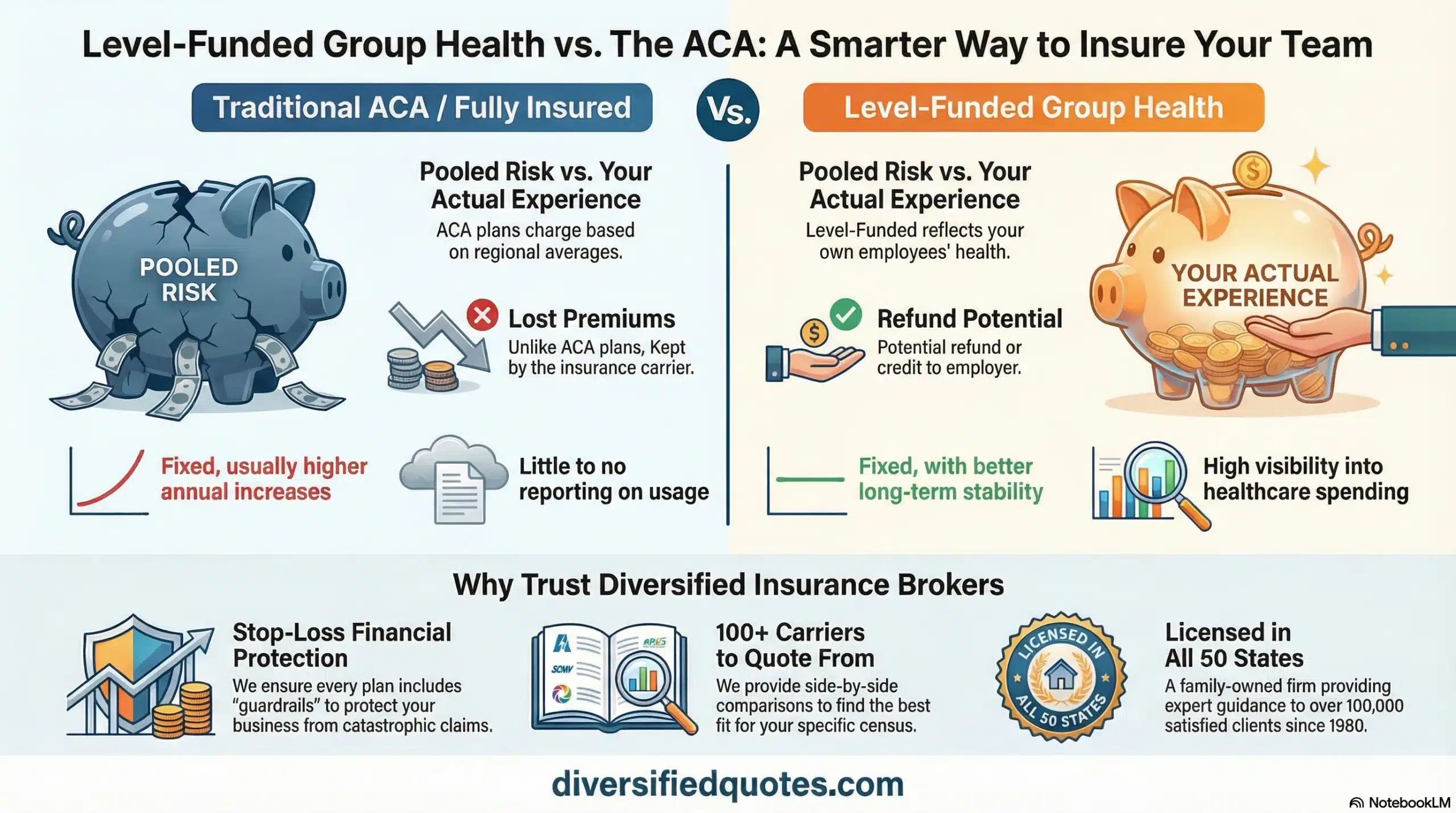
Cost control strategies are essential for maintaining affordability over time. Employers can manage costs by adjusting plan designs, increasing deductibles, or implementing wellness programs that encourage healthier lifestyles. Some businesses also explore alternative funding arrangements as they grow, which can provide greater flexibility and potential savings. However, these strategies require careful evaluation to ensure they align with the company’s goals and risk tolerance.
Working with an independent group health insurance broker is one of the most effective ways to control costs and improve outcomes. Independent brokers have access to multiple carriers and can compare plans objectively, helping businesses find the best combination of price and coverage. They can also provide guidance on compliance, enrollment, and ongoing plan management. This level of support is particularly valuable for small businesses that may not have dedicated HR resources.
Employers should also consider the impact of additional benefits. Many small businesses bundle health insurance with other forms of coverage, such as dental, vision, and disability insurance. Understanding the role of these benefits—such as insights from why disability insurance matters—can help create a more comprehensive and attractive benefits package.
Over time, group health insurance costs tend to increase due to rising healthcare expenses. This makes it important to review your plan annually and explore alternative options when necessary. Regular benchmarking against other plans and carriers can help ensure you are not overpaying. Businesses that take a proactive approach to benefits management are often better positioned to control costs and maintain competitive offerings.
Ultimately, the cost of group health insurance for a small business is influenced by a combination of controllable and uncontrollable factors. While employers cannot control healthcare inflation or regional pricing, they can make strategic decisions about plan design, contributions, and carrier selection. By understanding these variables and working with experienced professionals, businesses can build a benefits program that delivers value without exceeding budget constraints.
Related Pages
Financial Protection Essentials
Pick Your Company Size
Not the right headcount? Use the buttons below to jump to the group health page that matches your workforce.
Group Health Insurance for 10 Employees
Small-team pricing, participation strategy, and easy rollout.
Group Health Insurance for 20 Employees
Plan design choices that improve cost control and retention.
Group Health Insurance for 30 Employees
Reduce renewal spikes and address pharmacy cost drivers.
Group Health Insurance for 40 Employees
Better plan efficiency as your claims credibility improves.
Group Health Insurance for 50 Employees
Cost containment strategies and scalable benefit design.
Group Health Insurance for 60 Employees
Improve predictability and reduce waste without cutting benefits.
Group Health Insurance for 70 Employees
Funding choices that reduce renewal volatility as you grow.
Group Health Insurance for 80 Employees
Plan design and vendor strategy to control cost trends.
Group Health Insurance for 90 Employees
Prepare for 100+ pricing leverage and stabilize renewals.
Group Health Insurance for 100 Employees
A major transition point: funding options expand and plan design matters more.
Group Health Insurance for 150 Employees
More claims credibility means more leverage—optimize funding and reduce overpaying.
Group Health Insurance for 250 Employees
Advanced funding and transparency strategies for stronger cost control.
Group Health Insurance for 500 Employees
Enterprise approach: analytics, vendor oversight, and smarter funding strategy.
Group Health Insurance for 750 Employees
Scaled cost-control with deeper data visibility and targeted interventions.
Group Health Insurance for Over 1,000 Employees
Enterprise governance, advanced funding, and high-impact cost management.
Talk With an Advisor Today
Choose how you’d like to connect—call or message us, then book a time that works for you.
Schedule here:
calendly.com/jason-dibcompanies/diversified-quotes
Licensed in all 50 states • Fiduciary, family-owned since 1980
Frequently Asked Questions
Costs typically range from $450 to $800 per month for single coverage and $1,200 to $2,000+ for family coverage, depending on plan design, location, and employee demographics.
Most employers contribute between 50% and 80% of employee premiums, though this varies based on budget and benefits strategy.
Costs are influenced by workforce age, location, plan type, participation levels, and the insurance carrier selected.
Yes. Businesses can reduce costs by adjusting plan design, increasing deductibles, promoting wellness programs, and working with an independent broker to compare carriers.
Yes. Employer contributions are generally tax-deductible, and small businesses may qualify for tax credits depending on size and employee income levels.
No, but most carriers require a minimum participation rate to qualify for group coverage.
Small businesses are not always required to offer coverage, but providing it can improve employee retention and competitiveness.
About the Author:
Jason Stolz, CLTC, CRPC and Chief Underwriter at Diversified Insurance Brokers (NPN 20471358), is a senior insurance and retirement professional with more than two decades of real-world experience helping individuals, families, and business owners protect their income, assets, and long-term financial stability. As a long-time partner of the nationally licensed independent agency Diversified Insurance Brokers, Jason provides trusted guidance across multiple specialties—including fixed and indexed annuities, long-term care planning, personal and business disability insurance, life insurance solutions, Group Health, and short-term health coverage. Diversified Insurance Brokers maintains active contracts with over 100 highly rated insurance carriers, ensuring clients have access to a broad and competitive marketplace.
His practical, education-first approach has earned recognition in publications such as VoyageATL, highlighting his commitment to financial clarity and client-focused planning. Drawing on deep product knowledge and years of hands-on field experience, Jason helps clients evaluate carriers, compare strategies, and build retirement and protection plans that are both secure and cost-efficient. Visitors who want to explore current annuity rates and compare options across multiple insurers can also use this annuity quote and comparison tool.
