
Disability Insurance for Computer Engineers and Scientists
Disability Insurance for Computer Engineers and Scientists

Jason Stolz CLTC, CRPC, DIA, CAA
Computer engineers and scientists occupy one of the most financially significant positions in the American technology workforce — a professional category where Bureau of Labor Statistics data documents a median annual wage for the broader computer and information technology occupational group well above six figures, with computer and information research scientists reaching a median approaching $141,000 and the category as a whole posting median compensation that is more than double the median for all U.S. occupations. The income computer engineers and scientists generate is exceptional by any workforce standard — and it derives entirely from a combination of cognitive capacity, technical expertise, and the physical ability to perform sustained high-intensity computer work, including the keyboard, mouse, and screen interaction that occupational health research has specifically documented as a significant risk factor for the carpal tunnel syndrome, repetitive strain injuries, and musculoskeletal conditions that are among the most common work-related disability pathways in the technology profession. When disability eliminates any component of that capacity — whether from a hand condition, a mental health event, a serious illness, or any other qualifying cause — the exceptional income stops with it. Disability insurance for computer engineers and scientists is the income protection structure that remains in place when that income disappears.
At Diversified Insurance Brokers, Jason Stolz, CLTC, CRPC, DIA, CAA works with computer hardware engineers, computer and information research scientists, systems software engineers, computer architects, machine learning researchers, and the full range of engineering and scientific computing professionals across the employment structures the field encompasses — employed engineers at technology companies with group benefits that may or may not be adequate, independent consulting engineers and contract technical professionals who are entirely self-employed, and technology startup founders and technical executives whose compensation includes equity and other elements that standard group plans cannot protect. The income protection structure appropriate for a salaried software engineer at a large employer with comprehensive group benefits differs substantially from what an independent technical consultant or startup CTO needs — and getting that structure right requires understanding both the disability risk profile of computer engineering and science work and the employment structure within which that work is performed.
Compare Disability Insurance for Computer Engineers and Scientists
We review coverage options across 100+ carriers and identify the policy structure that fits your technical income, employment setting, and occupational risk profile.
Request Disability Insurance OptionsComputer Engineer and Scientist Disability Risk — Occupational Hazards, Income Exposure, and the Protection Gap
| Risk Category | Source / Work Context | Resulting Disability Risk | Group Plan Coverage | DI Coverage Gap |
|---|---|---|---|---|
| Carpal tunnel and repetitive strain injury | Occupational health research documents that professional computer users face the highest impact of carpal tunnel syndrome among all occupational groups; repetitive keyboard and mouse use is a major factor in CTS pathogenesis, with elevated repetition creating documented risk regardless of force level | Carpal tunnel syndrome requiring surgical intervention and recovery; De Quervain’s tenosynovitis; wrist tendinopathy — conditions that can prevent the sustained keyboard and mouse work that computing careers require | Group plans cap benefits at stated percentages of base salary with dollar ceilings; cumulative RSI conditions frequently disputed as occupational; self-employed contractors carry no group plan baseline | Full gap for self-employed; own-occupation DI covers income loss when hand or wrist conditions prevent sustained technical computing work |
| Cervical and back strain from sedentary posture | Research documents that IT workers face a substantially higher occupational exposure risk for sedentary work compared to all other employed workers; sustained screen-forward posture loading cervical and lumbar spine structures over full workdays and careers | Cervical disc disease, chronic lower back syndrome, herniated disc — conditions that can prevent the sustained seated computer work that engineering and research roles require | Group plan 24-month own-to-any transition may deny benefits after 24 months for a computer engineer who cannot perform technical computing work but could theoretically do non-technical employment | Significant gap at 24-month transition; individual own-occupation DI maintains the own-occupation standard to age 65 |
| Mental health and cognitive disability | Research documents elevated burnout, techno-strain, and mental health risk in IT and computing occupations; demanding project cycles, on-call availability expectations, and the cognitive intensity of sustained technical problem-solving create occupational mental health stress | Disabling anxiety, depression, or burnout preventing sustained technical work, complex reasoning, and the cognitive performance that computer engineering and research requires | Most group plans cap mental/nervous condition benefits at 24 months — exactly the limitation that most damages long-term mental health claims | Full gap at 24 months; individual DI with unlimited mental health benefit period is essential for high-cognitive computing professionals |
| Vision and eye strain | Sustained screen-intensive work across full workdays and often into personal time; research documents computer workers’ elevated screen time both at work and outside work compared to other employed populations | Progressive vision conditions or eye disorders severe enough to prevent sustained screen-based technical work — a disability that directly eliminates the core working medium of computing careers | Group plans provide no specific accommodation for vision-based computing disability; self-employed contractors carry no group plan protection | Gap for vision disability preventing sustained technical screen work; individual own-occupation DI covers qualifying disability from any cause |
| Group plan benefit cap on high earner income | Computer engineers and scientists earn well above median compensation — but group plans calculate the stated 60% benefit on base salary up to a fixed cap, often $6,000 to $15,000 per month regardless of actual compensation | A computer engineer earning $200,000+ annually receives far less than 60% income replacement from a capped group plan — potentially only 20-30% of actual income | The group plan’s stated percentage is meaningless above the cap; bonus and equity compensation not covered by any group plan | Major income protection gap above the cap; individual DI is calibrated to documented total compensation including variable pay |
| Illness-based disability (non-occupational) | Cancer, cardiac events, neurological conditions — health events entirely independent of computing activity that eliminate the cognitive and physical capacity for sustained technical work | Extended inability to perform the sustained cognitive and technical work that computer engineering and research requires | Group plan mental health caps, definition transitions, and benefit caps all apply; self-employed contractors have no coverage | Approximately 90% of long-term disabilities are illness-based; individual DI to age 65 covers the dominant disability risk category |
The table establishes the disability risk landscape for computer engineers and scientists — a profile dominated by the physical and cognitive demands of sustained high-intensity computing work and the high-earner group plan inadequacy that affects the professionals with the largest income at stake. Disability insurance by occupation places computer engineers and scientists in the top occupational class tiers — reflecting the primarily sedentary, cognitive, professional nature of the work — which produces the most favorable premium rates available and makes individual disability insurance genuinely affordable relative to the exceptional income being protected.
The Ergonomic Disability Pathways of Computing Work — What the Research Documents
Computer engineering and scientific computing work is among the most keyboard-intensive professional activity performed by any occupational group — and the occupational health research on computing work specifically has documented that professional computer users bear the highest burden of carpal tunnel syndrome among all occupation types. Research published in peer-reviewed occupational health literature notes that among work-related upper extremity disorders, CTS has the biggest impact in professional computer users on their health and in industrial-related medical and non-medical costs. From a clinical mechanics standpoint, the elevated repetition rate of sustained keyboard use — even at the relatively low force levels of modern keyboards — creates the progressive nerve compression pathway that produces CTS, with research documenting that typing speed, keystroke frequency, and total percentage of time spent in keyboard exertion are significant contributors to CTS pathogenesis in computing professionals.
A computer engineer or research scientist who develops bilateral carpal tunnel syndrome severe enough to require surgical intervention faces a recovery timeline measured in months during which sustained keyboard work is impossible — precisely the work that generates their exceptional income. The financial stakes of this disability scenario are dramatically higher for a computer engineer earning $180,000 annually than for a lower-income worker in the same medical situation, because the income lost during the recovery period is correspondingly larger. Long-term disability insurance with a true own-occupation definition addresses the scenario where recovery extends beyond weeks into the months of eliminated income that savings alone cannot sustain. Short-term disability insurance addresses the immediate recovery window following carpal tunnel surgery or other acute ergonomic injuries — filling the gap before long-term coverage activates.
Beyond the hand and wrist conditions, the sedentary posture dimension of computing work creates a parallel disability pathway through the cervical and lumbar spine. Research on IT worker occupational health documents that IT professionals face dramatically elevated sedentary work exposure compared to all other employed populations — with one large-scale study finding an odds ratio greater than five for sedentary work exposure among IT workers compared to all other employed participants. Sustained forward-neck and lower-back loading from screen-forward postures across full workdays, compounded by the elevated screen time that computing professionals carry outside of work hours, creates the cumulative spinal loading that produces the chronic disc and postural conditions that eventually require medical intervention and recovery time away from the technical work that generates their income. Disability insurance for high-risk occupations recognizes that the ergonomic disability pathways of computing work, while different in character from the physical hazards of trade occupations, produce equally consequential income loss events for the high earners who experience them.
Mental Health, Burnout, and the 24-Month Group Plan Trap
The technology industry’s mental health and burnout challenge is among the most discussed occupational health topics in the professional computing community — and the occupational health research on IT workers specifically documents elevated techno-strain and burnout risk associated with the cognitive intensity, pace demands, and always-available expectations of technology careers. Research examining the relationship between technology-related workplace stressors and mental health outcomes specifically documents associations between techno-strain and increased risk of poor mental health and high burnout among computing and technology professionals. For a computer engineer or research scientist whose professional output depends on the sustained cognitive capacity to reason about complex technical problems, design systems, and produce working code or research results — a disabling anxiety disorder or depressive condition is an occupational disability just as consequential as a hand injury. The inability to perform sustained technical reasoning at the level computing work demands is a genuine economic disability regardless of what theoretical non-technical employment might be possible.
The disability insurance planning implication is direct: most employer group long-term disability plans cap mental and nervous condition benefits at 24 months — terminating income replacement at exactly the point where a serious psychiatric condition has proven itself to be long-term and persistent. A computer engineer who develops a disabling anxiety disorder that requires 36 months of treatment before stable remission receives 24 months of group LTD benefit and then faces the any-occupation standard that may deny further payments. Individual disability insurance with unlimited mental health benefit periods and own-occupation language extending to age 65 fills this gap — providing the protection that group plans specifically fail to deliver for the disability pathway that is most likely to be long-term in a high-cognitive, high-pressure computing career. Disability insurance for white-collar professionals covers the specific policy design considerations that apply when cognitive capacity and mental health are the primary professional assets.
The High-Earner Group Plan Gap — Why Computing Professionals Need Individual Coverage
Computer engineers and scientists represent one of the most significant high-earner group plan gap populations in the technology workforce — because the gap between what their group plan provides and what their income actually requires is largest at exactly the income levels these professionals typically occupy. Bureau of Labor Statistics data documents that computer and information technology occupations as a group carry median compensation well above double the all-occupation median — and computer and information research scientists specifically reach median compensation in the high six figures. Yet group long-term disability plans are built on a fixed-cap structure that was designed for average employee income levels: most plans cap monthly benefits at $5,000 to $15,000 per month regardless of the insured’s actual compensation, and calculate the stated 60% benefit on base salary only — excluding the annual bonuses, equity grants, and variable compensation that may represent a substantial portion of a senior computer engineer’s or research scientist’s total earnings.
A computer engineer earning $250,000 annually who expects approximately $12,500 per month in disability benefits at 60% replacement may receive only $6,000 per month if the group plan caps at that level — delivering roughly 29% of actual income replacement rather than the stated 60%. Add the taxability of employer-paid group plan benefits at higher income tax rates, and the effective after-tax replacement rate drops further. Individual disability insurance addresses this gap comprehensively: it is sized to documented total compensation including variable pay, provides tax-free benefits when purchased personally with after-tax dollars, and is not subject to the arbitrary monthly caps that make group plans inadequate for high-earning computing professionals. Disability insurance for high earners and business owners covers this gap in detail and provides the framework for building the complete coverage architecture that computing professionals at this income level require.
Independent Contractors, Consultants, and the Self-Employed Computing Professional
A significant and growing portion of the computer engineering and scientific computing workforce operates as independent contractors — technical consultants, freelance engineers, contract research scientists, and project-based computing professionals who provide specialized expertise on a contract basis without the employment relationship that provides group benefits access. For these professionals, individual disability insurance is not a supplement to an inadequate group plan — it is the entire income protection system. A self-employed computer engineer who develops a wrist condition preventing sustained keyboard work, or a contract research scientist whose serious illness eliminates their ability to work on active projects, has experienced a disability event with zero workers’ comp coverage, no group plan floor, and no income replacement mechanism other than individual disability insurance. Self-employed computing professionals and 1099-earning contract technical professionals need individual disability insurance as their foundational income protection — sized to their documented technical income and structured with the own-occupation definition that recognizes inability to perform specialized computing work as a genuine disability regardless of theoretical alternative employment capacity.
For independent computing professionals who have structured their consulting operations as technical businesses — with clients, overhead, and business infrastructure — business overhead expense disability insurance addresses the practice overhead layer that personal income replacement cannot cover. The BOE structure funds the professional liability insurance, software subscriptions, client relationship maintenance, and other fixed business costs that continue during a disability period, preserving the client relationships and business infrastructure that represent years of technical reputation building. Disability insurance for independent contractors covers the specific coverage architecture for computing professionals who structure their work through contract arrangements.
Own-Occupation Coverage and Policy Design for Computer Engineers and Scientists
The disability definition is the most consequential policy design decision for computer engineers and scientists, particularly at the 24-month point where most group plans transition from own-occupation to any-occupation. A computer engineer who develops a serious wrist condition preventing sustained keyboard work but who could theoretically perform some non-computing role loses group plan benefits at the 24-month transition under an any-occupation standard — at exactly the point when the disability has proven itself long-term. A true own-occupation disability insurance policy pays benefits when the insured cannot perform the material and substantial duties of their specific occupation — computer engineering or scientific computing — even if theoretically capable of other work. The own-occupation standard recognizes that a computer engineer’s income derives from a specific combination of technical expertise and physical computing capacity, and that the loss of either is a genuine economic disability.
Understanding how short-term and long-term disability coverage interact in a complete protection architecture matters for computing professionals whose disability scenarios range from the recoverable — carpal tunnel surgery with a two to three month recovery — to the long-term, where a serious mental health condition, neurological event, or chronic illness produces a multi-year or permanent disability. A coverage structure that addresses both ends of this spectrum without gaps in timing or definition serves the full range of disability events a computer engineering career can produce.
Computing professionals’ top-tier occupational class assignment — reflecting the primarily sedentary, cognitive, professional nature of the work — produces the most competitive premium rates available, making comprehensive individual disability insurance genuinely affordable relative to the high income being protected. How much disability insurance a computer engineer actually needs depends on documented total compensation, household financial obligations, and for independent consultants, practice overhead obligations addressed separately through BOE coverage. The elimination period should reflect actual reserves — a 90-day period is appropriate for most computing professionals with adequate savings. The rider options include the future insurability option for early-career engineers with income expected to grow, and the cost of living adjustment rider that protects real benefit purchasing power across a multi-year disability period. Computing professionals with documented RSI or mental health histories should expect underwriting scrutiny. Disability insurance with pre-existing conditions is available through independent broker channels, and no-exam disability insurance may serve those whose health history makes traditional underwriting uncertain. Working with an independent disability insurance broker who understands how computing profession income structures and occupational classifications are evaluated across the full carrier market produces consistently better outcomes than a single-carrier direct application.
Get Your Computer Engineer and Scientist Disability Insurance Review
We compare top-tier occupational class assignments, mental health benefit periods, and high-earner income protection structures across 100+ carriers to identify the coverage that fits your technical income and career.
Request Disability Insurance Options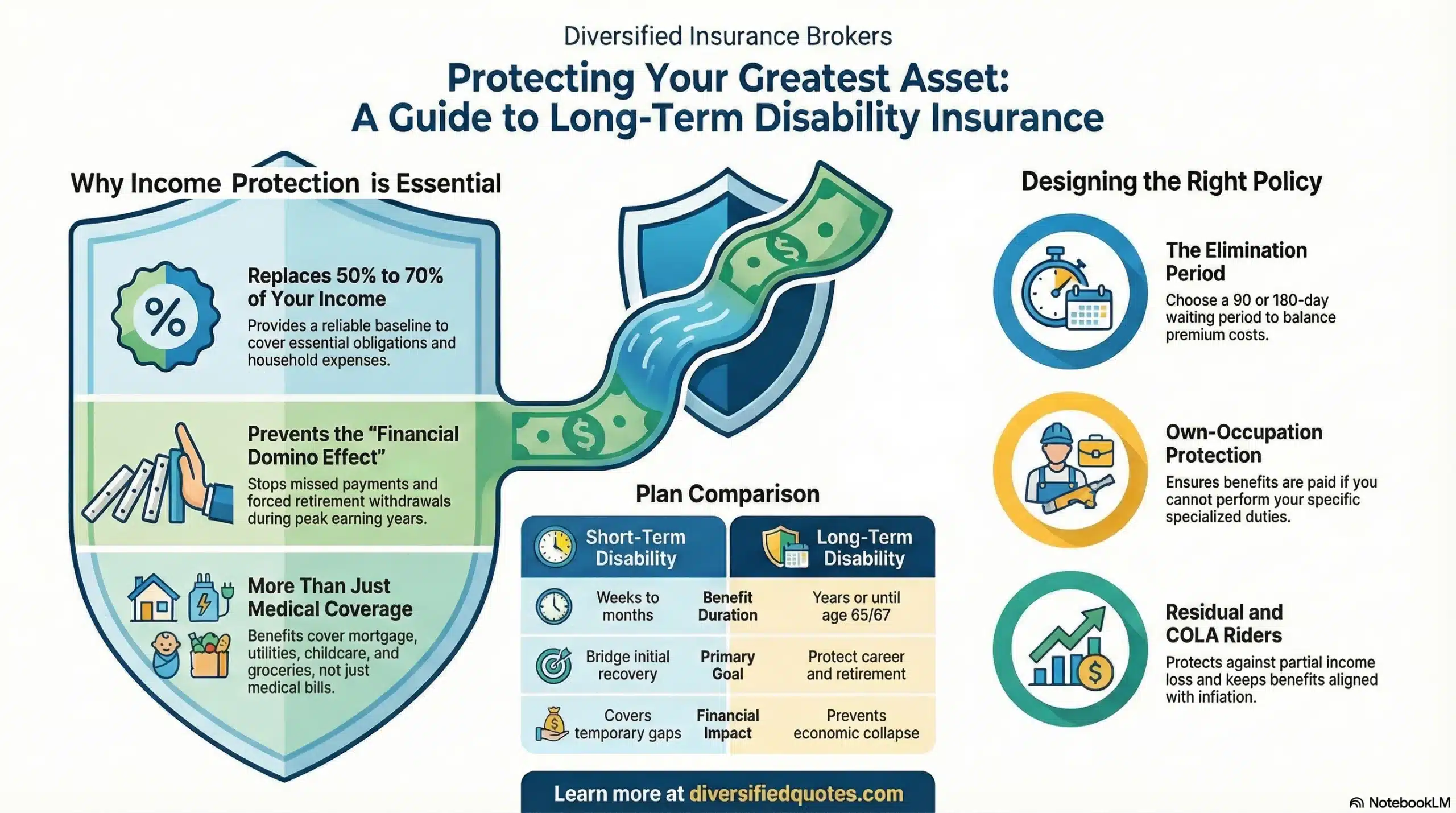
Talk With an Advisor Today
Choose how you’d like to connect—call or message us, then book a time that works for you.
Schedule here:
calendly.com/jason-dibcompanies/diversified-quotes
Licensed in all 50 states • Fiduciary, family-owned since 1980
FAQs: Disability Insurance for Computer Engineers and Scientists
What occupational class do computer engineers and scientists receive for disability insurance?
Computer engineers and computer and information research scientists typically receive top-tier occupational class assignments from most disability insurance carriers — reflecting the primarily sedentary, cognitive, professional nature of computing work, the advanced educational credentials and technical expertise required, and the primarily office-based work environment. This top-tier classification produces the most competitive premium rates and highest maximum benefit ceilings available in the disability insurance market, making comprehensive individual disability insurance genuinely affordable relative to the exceptional income these professionals generate.
The favorable classification reflects the absence of physical hazard — not the absence of disability risk. The ergonomic disability pathways of sustained keyboard and computer work, the mental health and burnout risk documented in IT occupational health research, and the illness-based conditions that affect the general population all represent significant disability probability over a computing career. A residual disability benefit provision is worth including for computer engineers and scientists, since realistic disability scenarios — a carpal tunnel condition that reduces keyboard capacity but doesn’t eliminate all work, a mental health condition that limits cognitive performance without preventing all professional activity — often produce partial rather than total disability. A residual benefit pays proportionally based on actual income loss, addressing these common realistic trajectories directly.
I have a good group disability plan at my tech company — why would I need individual coverage?
A good group disability plan at a technology employer fails computer engineers and scientists in at least three ways that are specific to this population and that individual coverage directly addresses. First, the monthly benefit cap: most group plans cap monthly disability benefits at $5,000 to $15,000 per month regardless of actual compensation. For a computer engineer earning $200,000 or more annually, the stated 60% replacement translates to far less in practice — often 20 to 30 percent of actual income when the cap is applied. The group plan that appears generous actually leaves the majority of a high-earning computing professional’s income unprotected.
Second, the mental health cap: most group plans limit mental and nervous condition benefits to 24 months — the same 24-month limit that matters most for an occupational group where burnout and mental health challenges are documented as elevated risk factors. A computing professional whose disabling anxiety or depressive condition requires more than two years of treatment hits the group plan’s mental health benefit wall at exactly the point the disability has proven to be serious and long-term. Third, the any-occupation definition transition: most group plans transition from own-occupation to any-occupation at 24 months, potentially denying continued benefits to a computer engineer who cannot perform technical computing work but could theoretically perform some non-technical role. Individual disability insurance with unlimited mental health coverage, own-occupation language to age 65, and benefit amounts calibrated to actual total compensation addresses each of these group plan limitations directly.
Are disability insurance benefits taxable for a computer engineer or scientist?
The tax treatment depends on how the premiums are paid — a particularly important question for computing professionals given the high income levels involved. For computer engineers and scientists who purchase individual disability insurance personally and pay premiums with after-tax dollars, monthly disability benefits received during a qualifying disability are generally received income-tax-free. The full benefit amount reaches the household without income tax reduction — making the coverage meaningfully more effective than a gross benefit comparison suggests at the high marginal tax rates that apply to computing professionals’ income levels. Whether disability insurance payments are taxable is a particularly consequential planning factor for computing professionals, because the difference between a taxable group plan benefit and a tax-free individual benefit at their income and tax rate translates into substantial additional purchasing power during the disability period.
For computer engineers whose employer pays their group LTD premiums, the resulting benefits are taxable as ordinary income at claim time — adding another layer to the group plan’s effective inadequacy at high income levels. A group plan paying 60% of salary that is then taxed at a 35% marginal rate delivers approximately 39% of gross salary in net benefit — well below the 60% stated coverage percentage. Independent consulting computer engineers who deduct disability insurance premiums as a business expense should confirm the specific tax treatment with a tax professional, as the business deduction may affect whether benefits received during a claim are taxable.
I work as an independent computing consultant — what disability insurance structure do I need?
An independent computing consultant or contract computer engineer needs a disability insurance structure built entirely from individual coverage — because no employer-provided group plan, no workers’ comp, and no institutional disability protection exists for self-employed technical professionals. The first layer is personal disability income coverage: an individual own-occupation policy that replaces your technical consulting income when a qualifying disability prevents you from performing your specific computing work. This should be sized to your documented total earned income from consulting, not just to a portion of it, and should use a true own-occupation definition that specifically addresses the technical computing nature of your work rather than a generic white-collar professional standard.
For independent computing consultants who have built a business structure around their technical expertise — with recurring clients, contractual obligations, professional liability insurance, software subscriptions, and business infrastructure — business overhead expense disability insurance addresses the second layer: the fixed costs of the consulting business that continue during a disability period while income generation has stopped. Maintaining the business infrastructure, the client relationships, and the professional credibility during a disability period through BOE coverage means the consulting practice can resume when the disability resolves, rather than requiring the entire client development and business building process to restart. The key person disability dimension is also worth evaluating if your consulting arrangement involves technical partnerships where your disability would create financial losses to a partner or collaborative arrangement beyond your personal income loss.
I’m an early-career computer engineer just starting in the field — is it too soon to get disability insurance?
Early in a computer engineering or scientific computing career is the most financially optimal time to purchase disability insurance — for compounding reasons that are particularly relevant to computing professionals. Disability insurance premiums are age-rated: the younger the applicant at issue, the lower the annual premium locked in for the policy’s full duration. A computer engineer who purchases coverage at 24 or 26 locks in a substantially lower rate for a policy that can protect their technical income to age 65 compared to one who waits until 35 or 40 — with the cumulative premium savings over a computing career representing meaningful dollars at the premium rates that top-tier occupational class qualification produces.
The ergonomic health dimension adds specific urgency for early purchase in computing careers: the carpal tunnel conditions, wrist tendinopathy, and cervical disc conditions that sustained keyboard work can produce over a computing career have not yet had time to develop at the beginning of the career. Purchasing disability insurance before those conditions are documented means comprehensive coverage including for ergonomic disabilities — without the exclusion riders for specific hand or wrist conditions that documented histories trigger at underwriting. The mental health dimension adds further urgency: a computing professional who develops a documented anxiety condition early in their career and then attempts to purchase disability insurance will find that condition triggers a mental health exclusion rider precisely when coverage for mental health disability is most important. Why young and healthy computing professionals need disability insurance is answered by the timeline: the window to purchase comprehensive coverage without ergonomic or mental health exclusions exists only before the sustained computing work produces those documented health effects.
My total compensation includes equity and bonuses — how does that affect my disability coverage needs?
Variable compensation — annual performance bonuses, RSU vesting, profit-sharing, and other equity-based compensation — represents a significant and sometimes dominant component of total compensation for senior computer engineers and scientists at technology companies. Group plans universally exclude variable compensation from the benefit calculation — they calculate the stated percentage on W-2 base salary only, categorically excluding all bonus and equity income regardless of its magnitude. A senior computer engineer whose base salary is $150,000 but whose total annual compensation including RSU vesting, annual bonus, and other variable pay reaches $300,000 or more has a group plan that protects only 50% of actual annual earnings even before the monthly cap limitation further reduces effective coverage.
Individual disability insurance underwriting uses documented total earned income — including documented average annual bonus and variable cash compensation over a two-year period — as the income basis for benefit calculation. RSU and equity income presents specific underwriting questions because equity value is variable and may or may not qualify as earned income depending on the carrier’s guidelines and the specific equity structure. Working with an independent broker who understands how technology industry compensation structures — particularly the RSU, equity, and bonus components common in tech — are evaluated across the carrier market is essential for computing professionals whose variable compensation is a substantial portion of total income. The gap between protecting base salary and protecting total compensation can represent many thousands of dollars in monthly benefit during a disability period at the income levels most senior computing professionals occupy.
Browse Disability Insurance for Technology, Science & Education
About the Author:
Jason Stolz, CLTC, CRPC, DIA, CAA and Chief Underwriter at Diversified Insurance Brokers (NPN 20471358), is a senior insurance and retirement professional with more than 25 years of real-world experience helping individuals, families, and business owners protect their income, assets, and long-term financial stability. As a long-time partner of the nationally licensed independent agency Diversified Insurance Brokers, Jason provides trusted guidance across multiple specialties—including fixed and indexed annuities, long-term care planning, personal and business disability insurance, life insurance solutions, Group Health, Travel Medical and Evacuation Insurance, and short-term health coverage. Diversified Insurance Brokers maintains active contracts with over 100 highly rated insurance carriers, ensuring clients have access to a broad and competitive marketplace.
His practical, education-first approach has earned recognition in publications such as VoyageATL, and contributions from his agency featured in Kiplinger and GoBankingRates— highlighting his commitment to financial clarity and client-focused planning. Drawing on deep product knowledge and years of hands-on field experience, Jason helps clients evaluate carriers, compare strategies, and build retirement and protection plans that are both secure and cost-efficient. Visitors who want to explore current annuity rates and compare options across multiple insurers can also use this annuity quote and comparison tool.
Explore All Disability Insurance Options: Browse our complete Disability Insurance guide — covering occupations, high risk jobs, medical professionals, self-employed, and planning strategies from 100+ carriers.
Last Reviewed: June 8, 2026 |
Reviewed by: Jason Stolz, CLTC, CRPC, DIA, CAA
Chief Underwriter, Diversified Insurance Brokers, Inc. | NPN: 20471358 | Diversified Insurance Brokers, Inc. — Licensed in all 50 states
Fact Checked by: Tonia Pettitt, CMIP©
Medicare Specialist, Diversified Insurance Brokers, Inc. | NPN: 14374308 | Diversified Insurance Brokers, Inc. — Licensed in all 50 states
Did you find this content helpful? Leave us a Google review — it helps others find trustworthy guidance too.
Editorial Standards: Diversified Insurance Brokers maintains rigorous editorial standards to ensure accuracy, clarity, and independence in all content. Learn more about our editorial standards and commitment to transparency.
