
Disability Insurance for Karate and Martial Arts Instructors
As an Independent Disability Insurance Broker, we have access to exclusive discounts and negotiated pricing most captive agents can’t offer — see the full breakdown near the end of this page.
Disability Insurance for Karate and Martial Arts Instructors

Jason Stolz CLTC, CRPC, DIA, CAA
Disability insurance for karate and martial arts instructors is income protection built around a career that requires daily physical participation in a high-contact training environment — not as an athlete competing for prize money, but as the professional whose presence, physical demonstration, and active floor instruction is the product students are paying for. Karate instructors, taekwondo instructors, Brazilian jiu-jitsu coaches, MMA instructors, judo sensei, and the owners of independent dojos and martial arts academies earn their income by teaching — and teaching in the martial arts means physically demonstrating kicks, strikes, throws, takedowns, and grappling techniques, absorbing strikes on pads and mitts for students developing power and precision, and maintaining the physical capability and presence that the authority of instruction in a contact discipline requires. When a disabling condition prevents a martial arts instructor from teaching on the mat — a knee injury that eliminates kicking and stance transitions, a shoulder condition that prevents throwing and pad work, a back injury that prevents the bending, falling, and dynamic movement that instruction requires — income stops. For instructors who own their school, overhead does not.
At Diversified Insurance Brokers, we help karate and martial arts instructors across every discipline and employment structure — dojo owners, independent instructors, academy employees, and part-time community center instructors — structure disability insurance coverage that reflects the genuine physical risks of their work and the self-employed income vulnerability that most martial arts professionals face. A well-structured policy provides income replacement from any qualifying disability, whether it originates from an injury sustained during instruction, a cumulative condition that develops from years of physical teaching, or a medical event entirely unrelated to the dojo. Our resource on what is the primary reason people buy disability insurance provides essential context on why individual coverage is the only meaningful financial protection available to self-employed martial arts professionals who have no employer safety net to fall back on.
Get Disability Insurance Quotes for Karate and Martial Arts Instructors
We compare carriers, explain occupational class ratings, and structure policies built for the real physical risks and business exposures of martial arts instruction.
Request Disability Insurance OptionsWhat Karate and Martial Arts Instructors Actually Do — and Why It Creates Real Disability Risk
The physical profile of martial arts instruction is substantially more demanding than teaching most other subjects, and the demands do not diminish with experience or seniority — they are continuous professional requirements that persist across an entire instructing career. A working karate or martial arts instructor does not stand at the front of a room explaining technique from a safe distance. They demonstrate it. A kicking drill requires the instructor to execute kicks — often repeatedly, with controlled power, across multiple class sections per day. A throwing or grappling technique requires the instructor to perform the throw or apply the hold, taking falls themselves or guiding students through contact at a level that preserves the physical authenticity the lesson requires. Pad and mitt work requires the instructor to absorb repeated impact from students developing striking power — a physically demanding activity that loads the shoulders, wrists, and hands differently but no less significantly than the strikes themselves.
Instructors who teach contact-heavy disciplines — Muay Thai, Brazilian jiu-jitsu, wrestling, MMA, judo — spend significant class time in physical contact with students, demonstrating live technique at functional intensity. Even karate and taekwondo instructors whose teaching style is more demonstration-based than contact-based execute hundreds of kicks, punches, and stances across multiple class sessions each week, accumulating physical loading on joints and soft tissues that produces the cumulative injury patterns most commonly associated with disability in this profession. For dojo owners who are the primary instructor — a structure that describes the majority of independent martial arts schools, where the business literally stops generating revenue when the owner cannot teach — disability creates a simultaneous income crisis and business crisis that no savings cushion can absorb indefinitely without income replacement in place. Understanding why disability insurance is worth it for self-employed professionals starts with recognizing that for a dojo owner, the instructor is the business — and if the instructor is out, the business is out.
The Most Common Disabling Conditions for Martial Arts Instructors
Knee injuries are among the most prevalent disabling conditions for karate and martial arts instructors, following directly from the physical mechanics of the work. Kicking is foundational to most striking disciplines — and kicking, at instructional volume across multiple classes per day over years of teaching, produces the knee loading that leads to meniscus damage, patellar tendonitis, ACL strain, and ligament deterioration. Deep stances required in traditional karate, taekwondo, and kung fu styles place sustained compressive force on the knee joint across every class session. A knee condition serious enough to prevent execution of kicks, deep stances, and the dynamic movement that active instruction requires can effectively end an instructor’s ability to teach a full class schedule, even when every other aspect of health is unaffected. ACL tears, which can occur from a sudden change of direction or an awkward landing during demonstration, represent an acute injury pathway that can require surgical reconstruction and months of rehabilitation.
Shoulder injuries represent the second major disability risk category for martial arts instructors, developing from the sustained physical demands of striking demonstrations, pad-holding, throwing techniques, and grappling work that contact disciplines require. Rotator cuff tears, SLAP tears of the shoulder labrum, shoulder impingement syndrome, and AC joint injuries are documented outcomes of the high-volume overhead and rotational shoulder activity that striking and throwing martial arts demand. Hand and wrist injuries — including fractures from impact, ligament damage from throws and joint locks, and repetitive strain from sustained punching and striking work — are a consistent occupational health exposure for instructors whose teaching involves direct physical demonstration of hand techniques. Back and cervical spine conditions develop from the sustained physical loading of falls, throws, and the forward-bending body mechanics of grappling instruction, as well as from sustained standing and instructional movement across long class days. Concussions from incidental contact during sparring demonstrations or from falls during throwing technique instruction represent an additional risk that is specific to contact discipline instructors. For perspective on how similar mixed physical-and-cognitive-demand professions are evaluated across carriers, our resource on disability insurance for the entertainment industry provides useful context on how professions requiring both physical performance and professional presence are structured and classified.
Why Most Martial Arts Instructors Have No Disability Safety Net
The majority of full-time karate and martial arts instructors are self-employed — either as dojo owners operating their own schools, as independent instructors working on a per-class or contract basis across multiple facilities, or as sole practitioners whose entire professional identity and income is built around their personal teaching capacity. For the dojo owner who is the primary instructor, the financial exposure is compounded by the business structure itself: the school generates revenue because this instructor shows up, teaches, and personally delivers the product students are paying for. A common observation in the martial arts business world is that many dojos are “a job with overhead” — meaning when the owner cannot work, the business effectively ceases operation while monthly overhead costs continue. The studio lease, equipment costs, liability insurance, and any staff costs continue regardless of whether the owner is on the mat.
Workers’ compensation does not cover self-employed instructors and does not address the gradual cumulative injuries that produce most martial arts instructor disabilities. It does not cover a knee condition that develops from years of high-volume kicking instruction, the shoulder condition that develops from sustained pad-holding across a decade of teaching, or any medical event unrelated to a specific documented workplace incident. Social Security Disability Insurance exists but requires demonstrating inability to perform virtually any gainful employment — a standard that would deny benefits to an injured instructor who could hypothetically perform sedentary work despite being entirely unable to teach a martial arts class. Our resource on no-exam disability insurance options covers streamlined coverage pathways available for qualifying applicants who want to secure protection quickly. For instructors evaluating the full picture of their income protection needs, our resource on income protection insurance covers the full spectrum of tools available alongside individual disability coverage.
How Disability Insurance Carriers Classify Martial Arts Instructors
Disability insurance carriers assign occupational class ratings that reflect the estimated disability risk of each profession, and martial arts instructors are generally classified in the lower occupational class tiers that reflect the active, physical, contact-involved nature of their work. The specific classification an individual instructor receives can vary based on how their actual duties are presented to underwriters — an instructor whose practice is primarily demonstration-based with limited physical contact may be classified more favorably than one who teaches grappling-heavy disciplines requiring regular physical engagement with students at functional intensity. The discipline being taught matters in underwriting evaluation: an instructor whose primary discipline is traditional kata-based karate with controlled sparring presents a different physical risk profile than an MMA or Brazilian jiu-jitsu instructor whose teaching regularly involves live rolling, takedowns, and submission work.
Presenting occupational duties accurately — distinguishing the percentage of time spent in active physical demonstration versus classroom instruction, administrative work, and business management — is an area where working with an experienced independent broker produces meaningfully better classification outcomes than applying to a single carrier directly. For dojo owners whose role includes substantial business management, marketing, and administrative activity alongside teaching, the administrative component of the role can support a more favorable classification when accurately documented. Our guide on how disability insurance elimination periods work provides essential context on how waiting period selection affects the financial planning implications for dojo owners whose business overhead continues from the first day of disability regardless of when benefits begin. For additional cross-occupational perspective, our resources on disability insurance for golf club pros and disability insurance for cosmetologists illustrate how physical service professions with mixed teaching and hands-on components are evaluated and structured across carriers.
Case Study — Dojo Owner and Head Instructor, Knee Injury
Consider a self-employed karate dojo owner and head instructor generating approximately $85,000 per year in student tuition revenue, teaching six class sections per week as the school’s primary instructor. After sustaining a medial meniscus tear during a kicking technique demonstration — landing awkwardly from a spinning kick — this instructor requires arthroscopic surgery and a minimum of three months of recovery during which executing kicks, deep stances, and the sustained floor movement that active instruction requires are medically contraindicated. The table below illustrates the financial difference disability insurance makes in this specific scenario.
| Scenario | Without Disability Insurance | With Disability Insurance |
|---|---|---|
| Monthly Income During Recovery | $0 — classes cancelled or dramatically reduced without the primary instructor | $3,500–$4,500 |
| 3-Month Income Total | $0 | $10,500–$13,500 |
| Student Retention | Students cancel memberships during instructor absence; rebuilding enrollment after return takes months | Financial stability allows communication and managed class coverage during recovery |
| Business Overhead During Recovery | Studio lease, equipment, liability insurance, and association fees continue regardless | Monthly benefit offsets fixed dojo operating costs |
| Return-to-Work Pressure | Financial desperation forces premature return to full teaching before surgical recovery; re-injury risk | Full recovery supported on medical timeline without financial crisis driving the decision |
Meniscus injuries from kicking and stance work are among the most commonly documented disabling conditions for active martial arts practitioners — the combination of high-volume kicking, rotational knee loading from stances and pivots, and the sustained physical engagement of active instruction creates exactly the mechanical conditions that produce meniscus damage over the course of a teaching career. Disability insurance for karate and martial arts instructors ensures that this predictable occupational health outcome does not simultaneously become a financial emergency that collapses the dojo the instructor spent years building. For comparable context on how self-employed professionals in physically demanding service occupations manage disability risk, our resources on disability insurance for the woodworking industry and disability insurance for convenience store owners illustrate how small business owners with high physical demand profiles evaluate and structure income protection.
Key Policy Features That Matter Most for Martial Arts Instructors
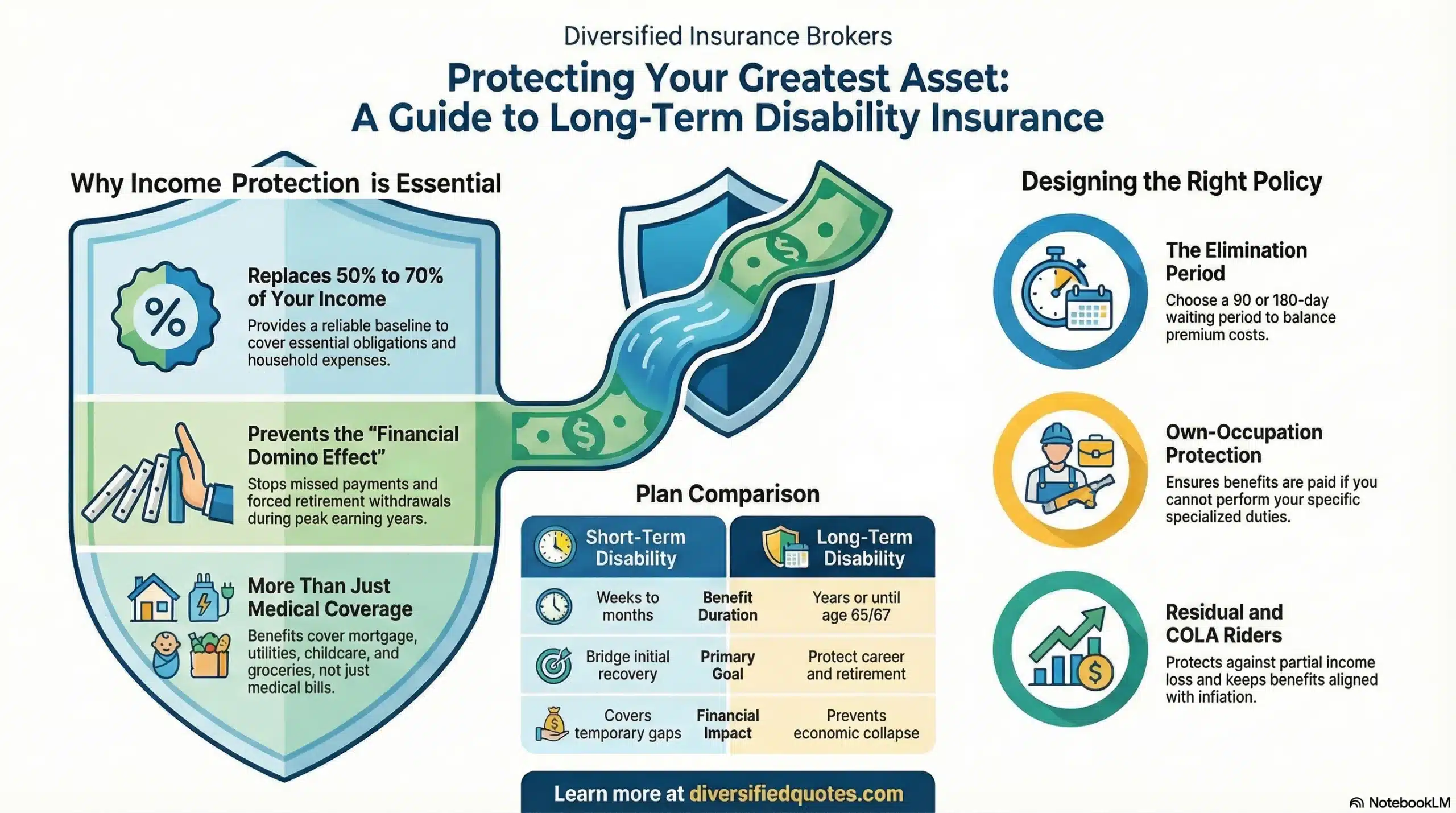
The own-occupation definition of disability is the most important policy feature for karate and martial arts instructors. Under an own-occupation definition, the policy pays benefits when a condition prevents the instructor from performing the specific duties of their occupation — active physical instruction, technique demonstration, pad-holding, and the floor-level teaching that martial arts students pay for — regardless of whether they could theoretically perform some other type of unrelated work. An instructor whose knee injury prevents kicking and dynamic floor movement may technically be able to perform sedentary administrative work, but an own-occupation policy recognizes the genuine inability to work as a martial arts instructor and pays benefits accordingly. Without an own-occupation definition, a policy would only pay benefits if the insured could not perform virtually any gainful employment — denying benefits to an instructor who retains any light-work capacity even though that capacity has nothing to do with their professional skill set or income. Our dedicated resource on own-occupation disability insurance explained covers how this definition protects physical service professionals in real disability scenarios.
A residual disability rider is equally critical for martial arts instructors whose recovery may involve a gradual return to teaching capacity. An instructor recovering from shoulder surgery may be able to teach kata and forms classes — lower-contact instruction requiring limited shoulder engagement — while still unable to teach grappling, pad work, or sparring sessions that require full shoulder function, earning substantially less than normal without being completely unable to work. A total-disability-only policy provides no benefits during this partial recovery period. A residual disability rider pays proportional benefits based on the percentage reduction in earnings, providing continuous financial support from disability onset through full return to normal teaching capacity. Our resource on how residual disability benefits work covers exactly how proportional calculations function in practice. A cost-of-living adjustment rider protects the long-term purchasing power of the monthly benefit for instructors facing extended disability. Our resource on disability income insurance with a COLA rider explains when this protection produces the most meaningful financial benefit.
Dojo Income Documentation and Business Overhead Coverage
Because most full-time martial arts instructors are self-employed, disability insurance underwriting involves income documentation requirements that differ from W-2 employee applications. Carriers base benefit amounts on verified earned income using federal tax returns — typically two to three years of Schedule C net profit for self-employed applicants. For dojo owners who carry significant fixed business expenses — studio lease costs, equipment maintenance, liability insurance premiums, martial arts association membership fees, management software, and any employee or assistant instructor costs — the reported net profit may substantially understate the owner’s actual financial need during a disability, when household expenses continue regardless of what the Schedule C shows after business deductions.
Dojo owners and self-employed instructors should strongly consider business overhead expense coverage alongside personal income replacement disability insurance. Business overhead expense policies cover the fixed costs of keeping the school operational during a disability period when the owner cannot teach: studio lease payments, equipment and mat maintenance, liability insurance premiums, association membership fees, and any assistant instructor or staff costs. These costs continue whether the owner is teaching or not, and allowing them to lapse during a disability means losing the lease, the equipment, and the student base that took years to build. A personal disability income policy replaces the instructor’s household income. A business overhead expense policy preserves the dojo infrastructure so the instructor has a business to return to after recovery. Our resource on how much disability insurance you need provides a practical framework for determining the right benefit amount and supplemental coverage structure for self-employed professionals whose business and personal financial needs both require protection during a disability.
Why Independent Broker Access Matters for Martial Arts Instructors
Not every disability insurance carrier classifies martial arts instructional work equally, and the contact-involved physical activity that teaching in this profession requires leads some carriers to approach martial arts instructor classifications conservatively — with exclusion riders targeting the joint conditions, back injuries, and head trauma most likely to result from active instruction. Other carriers write martial arts instructor classifications more comprehensively when the health profile and income documentation support a clean underwriting outcome. Identifying the carriers whose underwriting guidelines produce the most favorable coverage for the specific discipline and duty profile of a given instructor requires independent access to the full carrier marketplace.
At Diversified Insurance Brokers, we evaluate options across multiple carriers for every martial arts instructor we serve. We understand how to present mixed instructing and administrative duty profiles accurately, how to distinguish teaching disciplines in ways that support the best available classification, and how to structure policy provisions that produce genuinely comprehensive income protection rather than a generic policy that fails exactly when it is needed most. Our resource on why independent disability insurance brokers matter explains the full value of this approach for self-employed physical service professionals navigating the disability insurance marketplace.
When to Apply for Coverage
The best time for a karate or martial arts instructor to apply for disability insurance is as early as possible in their teaching career — before any occupational health conditions from the physical demands of instruction have accumulated in the medical record. Disability insurance premiums are based in part on age and health status at the time of application, and younger applicants in good health secure the most comprehensive coverage at the most favorable rates. Conditions that develop from years of active martial arts instruction — knee deterioration from high-volume kicking and stance work, shoulder conditions from sustained pad-holding and throwing demonstrations, back conditions from falls and grappling instruction — can result in exclusion riders that specifically eliminate coverage for exactly those conditions if they are already documented when the application is submitted.
An exclusion rider eliminating knee coverage is particularly problematic for a karate instructor whose most probable disability scenario involves exactly that joint. Applying before occupational conditions are documented — when health is good and no martial arts-related conditions have yet appeared in the medical record — secures comprehensive coverage that remains in place as those conditions develop in later teaching years. That is exactly when comprehensive coverage matters most. For instructors who have already developed some documented conditions and are evaluating what coverage options remain available, our resource on disability insurance with preexisting conditions covers how underwriters approach existing health history. Our resource on how to buy disability insurance online provides practical guidance on the application process for self-employed instructors evaluating their options.
Request Disability Insurance Quotes for Karate and Martial Arts Instructors
We compare carriers, explain how martial arts instruction is classified, and structure policies that protect the income your dojo depends on.
Get Disability Insurance QuotesRelated Disability Insurance Pages
Financial Protection Essentials
Talk With an Advisor Today
Choose how you’d like to connect—call or message us, then book a time that works for you.
Schedule here:
calendly.com/jason-dibcompanies/diversified-quotes
Licensed in all 50 states • Fiduciary, family-owned since 1980
Disability Insurance for Karate and Martial Arts Instructors — FAQs
Yes — karate and martial arts instructors can obtain individual disability insurance, though the active, physical, contact-involved nature of the work typically places the occupation in a lower to moderate occupational class tier. The specific classification an individual instructor receives depends significantly on how their duties are presented to underwriters — an instructor whose practice involves primarily demonstration-based teaching with limited physical contact may receive a more favorable classification than one who teaches grappling-heavy disciplines requiring regular physical engagement with students. The discipline being taught, the percentage of time spent in active physical instruction versus administrative and business management, and the overall health profile all affect the classification outcome. Working with an independent broker who understands how to present martial arts instructional duty profiles accurately produces consistently better terms than applying to a single carrier directly.
Knee injuries are among the most prevalent disabling conditions, developing from the high-volume kicking and deep stance work that martial arts instruction demands across multiple class sessions per week over years of teaching. Meniscus damage, patellar tendonitis, ACL tears, and ligament deterioration follow the mechanical patterns of sustained knee loading from kicks, pivots, and stance transitions. Shoulder injuries — including rotator cuff tears, SLAP tears of the shoulder labrum, and shoulder impingement syndrome — develop from the striking demonstrations, pad-holding, throwing techniques, and grappling work that contact disciplines require, particularly from the sustained overhead and rotational shoulder activity those movements involve. Back and cervical spine conditions develop from falls, throws, and the sustained physical loading of grappling and floor-level instruction. Hand and wrist injuries from striking demonstrations and pad work, ankle sprains from dynamic movement and kicking, and concussions from incidental contact during sparring demonstrations round out the occupational injury profile for instructors in contact-heavy disciplines.
Own-occupation disability insurance pays benefits when a condition prevents the insured from performing the specific duties of their own profession — regardless of whether they could theoretically perform different or lighter work. For a martial arts instructor, this means benefits are paid when conditions prevent active physical instruction, technique demonstration, pad-holding, and the floor-level teaching that students are paying for — even if the instructor could hypothetically perform sedentary administrative or clerical work unrelated to their profession. Without an own-occupation definition, a policy would only pay benefits if the insured could not perform virtually any gainful employment, which would deny benefits to an instructor whose knee or shoulder condition prevents teaching while leaving some capacity for desk work. For a professional whose entire income depends on the ability to physically demonstrate and actively instruct in a contact discipline, the own-occupation definition is the single most consequential policy feature available.
No — and the gaps are substantial for martial arts instructors. Workers’ compensation is structured for employer-employee relationships, and self-employed dojo owners and independent instructors typically have no workers’ compensation coverage at all. Even for instructors who are employees of a gym or community center, workers’ compensation covers only injuries that are directly and demonstrably work-related and occur during a specific documented work event. It does not cover the knee deterioration that develops gradually from years of high-volume kicking instruction, the shoulder condition that develops from sustained pad-holding across a decade of teaching, or any medical event unrelated to the workplace. Individual disability insurance covers disability from any cause regardless of origin, providing comprehensive protection across the full range of events that could prevent an instructor from teaching — not just the narrow subset of acute, clearly work-related injuries that workers’ compensation addresses.
Residual disability coverage pays proportional benefits when a disability reduces earning capacity without eliminating the ability to work entirely. A martial arts instructor recovering from shoulder surgery may be able to teach kata, forms, and lower-contact classes while still unable to teach grappling, pad work, or sparring sessions that require full shoulder function — earning substantially less than normal without being completely unable to work. A total-disability-only policy provides no benefits during this partial recovery period, even though income is far below normal and a genuinely disabling condition is still being managed. A residual disability rider pays a proportional benefit based on the percentage reduction in earnings, providing continuous income support from disability onset through full return to normal teaching capacity and class volume. For dojo owners rebuilding their full class schedule and student count gradually after a disabling injury, this rider is essential protection across the entire recovery arc.
For dojo owners who are the primary or sole instructor, disability creates a two-part financial crisis: personal income stops and business overhead continues simultaneously. A personal income replacement disability policy covers the owner’s household expenses — mortgage or rent, food, insurance, transportation — during a period when the dojo is generating little or no revenue because its primary instructor cannot teach. A business overhead expense policy covers the fixed operating costs of keeping the dojo running during that same period: the studio lease, equipment and mat maintenance, liability insurance, association membership fees, and any staff costs. These two policies address different but equally real financial needs. Without both, a dojo owner who cannot teach for three to six months faces the compounded problem of no income and accumulating business debt that can make the school impossible to return to even after physical recovery. Structuring coverage that addresses both personal and business financial needs is one of the most important planning decisions a self-employed dojo owner can make.
The appropriate benefit amount for a martial arts instructor is generally 60 to 70 percent of gross monthly earned income, which reflects the standard underwriting guideline most disability insurance carriers apply. For self-employed instructors and dojo owners, this is calculated based on net earned income from Schedule C after business deductions — which can meaningfully understate actual financial need when significant studio costs, equipment expenses, liability insurance, and association fees reduce net profit well below gross tuition revenue. The practical question is whether the benefit amount would actually cover household obligations during a disability: mortgage or rent, utilities, food, insurance, and loan payments do not decrease because teaching has stopped. For dojo owners, adding a business overhead expense policy that covers fixed studio costs alongside a personal income replacement policy produces the most complete financial protection structure for the period when neither personal income nor business revenue is being generated.
The elimination period — the waiting period between disability onset and when benefits begin — is a critical planning decision for self-employed instructors and dojo owners who have no employer sick pay and no organizational income buffer. Instructors with limited cash reserves and dojo overhead that continues immediately from the day they cannot teach should strongly consider a 30- or 60-day elimination period, which minimizes the gap between disability onset and the arrival of monthly benefit payments. The shorter the elimination period, the higher the premium — but for a dojo owner whose monthly studio lease alone may exceed several thousand dollars, waiting 90 days without income replacement while overhead accumulates can produce a financial situation that savings cannot absorb. Instructors with stronger cash reserves or household income from other sources may comfortably accept a 90-day elimination period to reduce premium cost. The right choice depends on how long the individual could realistically sustain both household expenses and business overhead from existing savings without benefit payments beginning.
Yes — health history affects both eligibility and the specific terms of coverage offered. Disability insurance underwriting evaluates the full health picture alongside occupational risk: musculoskeletal history, prior injuries, chronic conditions, and any documented history of the conditions most likely to produce a disability claim. For martial arts instructors, existing knee conditions, shoulder injuries, back problems, or hand and wrist issues already documented in the medical record at the time of application can result in exclusion riders that specifically eliminate coverage for those conditions going forward. An exclusion rider removing knee coverage is particularly significant for an instructor whose most probable disability scenario involves exactly that joint from years of kicking instruction. This is the most important reason to apply as early as possible in an instructing career — before the physical demands of active teaching have produced documented conditions that underwriters will exclude. Coverage secured before these conditions develop remains comprehensive as they emerge in later teaching years.
The best time is as early as possible in a teaching career — ideally when first opening a school or beginning full-time instruction, before any occupational health conditions from the physical demands of active teaching have appeared in the medical record. Premiums are based in part on age and health at application, and younger, healthier applicants secure the most comprehensive coverage at the most favorable rates. For martial arts instructors, this timing is particularly consequential because the cumulative conditions most likely to produce a disability claim — knee deterioration from sustained kicking, shoulder conditions from pad work and throwing, back conditions from grappling and falls — develop progressively across a teaching career and begin appearing in the medical record gradually rather than suddenly. An instructor who applies before these conditions are documented secures comprehensive coverage that continues protecting against exactly those conditions as they develop in subsequent years of teaching. The timing advantage of applying early cannot be recaptured once occupational conditions have been documented.
About the Author:
Jason Stolz, CLTC, CRPC, DIA, CAA and Chief Underwriter at Diversified Insurance Brokers (NPN 20471358), is a senior insurance and retirement professional with more than 25 years of real-world experience helping individuals, families, and business owners protect their income, assets, and long-term financial stability. As a long-time partner of the nationally licensed independent agency Diversified Insurance Brokers, Jason provides trusted guidance across multiple specialties—including fixed and indexed annuities, long-term care planning, personal and business disability insurance, life insurance solutions, Group Health, Travel Medical and Evacuation Insurance, and short-term health coverage. Diversified Insurance Brokers maintains active contracts with over 100 highly rated insurance carriers, ensuring clients have access to a broad and competitive marketplace.
His practical, education-first approach has earned recognition in publications such as VoyageATL, and contributions from his agency featured in Kiplinger and GoBankingRates— highlighting his commitment to financial clarity and client-focused planning. Drawing on deep product knowledge and years of hands-on field experience, Jason helps clients evaluate carriers, compare strategies, and build retirement and protection plans that are both secure and cost-efficient. Visitors who want to explore current annuity rates and compare options across multiple insurers can also use this annuity quote and comparison tool.
Explore More Disability Insurance Options: Browse our complete guide to Disability Insurance for Food, Hospitality, Arts & Entertainment — covering chefs, musicians, actors, bartenders, hospitality workers & entertainment professionals from 100+ carriers.
Last Reviewed: June 8, 2026 |
Reviewed by: Jason Stolz, CLTC, CRPC, DIA, CAA
Chief Underwriter, Diversified Insurance Brokers, Inc. | NPN: 20471358 | Diversified Insurance Brokers, Inc. — Licensed in all 50 states
Fact Checked by: Tonia Pettitt, CMIP©
Medicare Specialist, Diversified Insurance Brokers, Inc. | NPN: 14374308 | Diversified Insurance Brokers, Inc. — Licensed in all 50 states
Did you find this content helpful? Leave us a Google review — it helps others find trustworthy guidance too.
Editorial Standards: Diversified Insurance Brokers maintains rigorous editorial standards to ensure accuracy, clarity, and independence in all content. Learn more about our editorial standards and commitment to transparency.
