
Disability Insurance for Librarians
As an Independent Disability Insurance Broker, we have access to exclusive discounts and negotiated pricing most captive agents can’t offer — see the full breakdown near the end of this page.
Disability Insurance for Librarians

Jason Stolz CLTC, CRPC, DIA, CAA
Disability insurance for librarians is income protection for a profession that combines the cognitive demands of information management, research assistance, and technology instruction with physical work requirements that published occupational health research explicitly identifies as carrying a broader and higher range of ergonomic hazards than standard office work. Professional librarians — academic librarians, public librarians, school library media specialists, law librarians, medical librarians, and corporate information specialists — earn their income through a combination of sustained computer-intensive work and repetitive physical material handling that produces the musculoskeletal conditions most commonly associated with workplace disability, often without the institutional recognition that a physically demanding trade would receive. A librarian who develops a disabling carpal tunnel condition from years of cataloging and computer work, a back condition from sustained shelving and cart-pushing, or a cognitive condition that prevents the complex research and information analysis their role requires faces the same income vulnerability as any other professional — and the group disability coverage most librarians receive through their employer leaves more of that income exposed than many realize.
At Diversified Insurance Brokers, we help librarians and information professionals across every setting — public and academic library systems, school districts, law firms, hospitals, corporate environments, and government agencies — structure disability insurance coverage that fills the genuine gaps in employer-provided group plans and provides comprehensive income protection from any qualifying disability. A well-structured individual policy provides portable, own-occupation coverage that a group plan typically cannot match — and for a librarian whose Master of Library Science degree represents a significant professional and financial investment, protecting the income that investment generates is not a minor planning consideration. Our resource on what is the primary reason people buy disability insurance provides essential context on why individual coverage matters even for employed professionals with access to group benefits.
Get Disability Insurance Quotes for Librarians
We compare carriers, explain group plan gaps, and structure individual policies that protect the full value of a librarian’s professional income.
Request Disability Insurance OptionsWhat Librarians Actually Do — and Why It Creates Real Disability Risk
The professional profile of library work is considerably more physically demanding than its public image suggests, and research on librarian occupational health has documented that the dual nature of library work — combining sustained computer-intensive professional activity with repetitive physical material handling — creates an ergonomic risk profile that occupational health researchers describe as carrying a broader and higher level of ergonomic hazards than standard office work alone produces. A working librarian’s day involves sustained use of computers and catalog systems for cataloging, reference research, and patron assistance — activities that require sustained awkward postures of the head, neck, and upper extremities and produce the cumulative loading on soft tissues and nerves that generates repetitive strain injuries across careers. Cataloging alone involves continuous keyboard and mouse use in fixed workstation positions that are documented sources of carpal tunnel syndrome, cervical strain, and shoulder conditions.
The physical material handling component of library work compounds the computer-related ergonomic exposure. Shelving involves repetitive reaching overhead to shelves at heights up to nine feet, bending to floor-level shelves, and the sustained awkward positioning of handling books of varying sizes and weights repeatedly throughout a shift. Pushing and maneuvering heavy book carts — which can weigh several hundred pounds when fully loaded — across library floors generates back, shoulder, and wrist loading. Receiving and processing new materials involves lifting and carrying boxes of books, periodicals, and media from delivery areas. Processing collections at circulation desks involves sustained static postures and repetitive handling cycles across long shifts. For academic and special librarians who spend significant time on complex research assistance, information analysis, and database instruction, the cognitive demands of the role add a second disability dimension: a condition affecting concentration, memory, or executive function can prevent the sophisticated information work their professional role requires as effectively as a physical injury that prevents computer use. Our resource on is disability insurance worth it provides the financial framework for understanding how income loss during disability compounds into a crisis that even strong institutional employment cannot insulate against without comprehensive individual income protection in place.
What the Research Actually Shows
The connection between librarian duties and musculoskeletal injury isn’t just occupational theory — it’s documented in a 2022 systematic review and meta-analysis of carpal tunnel syndrome risk factors, which found high-certainty evidence linking CTS to repetitive movement, high force intensity, and elevated strain index scores — the exact combination produced by shelving, cart-pushing, and repetitive material handling. Worth noting honestly: the same review found computer use alone was associated with a lower rate of work-related CTS, not a higher one. The occupational risk for librarians comes predominantly from the physical handling side of the job — reaching, lifting, and repetitive wrist-loaded material movement — rather than from keyboard use in isolation.
The real-world consequences of this exposure are documented outside the research literature as well. In one U.S. Department of Labor Employees’ Compensation Appeals Board decision, a librarian filed an occupational injury claim after sustaining a back injury from duties that included shelving books, moving heavy containers, and opening large boxes of incoming materials — the same physical task profile described throughout this page. Federal workers’ compensation case records document these claims specifically because the underlying physical exposure is real and recurring across library settings, not an isolated event.
The Most Common Disabling Conditions for Librarians
Upper limb repetitive strain injuries are the dominant disabling condition category for professional librarians, developing from the dual occupational exposures that characterize library work. Carpal tunnel syndrome — compression of the median nerve at the wrist — develops from the combination of sustained keyboard use in fixed positions and the repetitive material handling of cataloging, shelving, and circulation work. Occupational health research has documented the particular vulnerability of workers who combine computer-intensive activity with repetitive material handling to carpal tunnel syndrome and related conditions. Tendinitis of the wrist and forearm, de Quervain’s tenosynovitis, and shoulder impingement syndrome develop from the same combination of sustained computer work and repetitive overhead and low-level reaching during shelving operations. These conditions progress gradually across a library career — from initial discomfort that resolves on days off, to persistent symptoms, to conditions that prevent the computer use and material handling that library work requires across the full range of professional duties.
Back and cervical spine conditions represent the second major disability risk category, developing from the sustained awkward postures that sustained workstation use produces and the physical loading of shelving, cart-pushing, and material handling. A case documented in occupational health literature describes a library employee developing a herniated disc attributed to 14 years of shelving work — the combination of repeated bending, reaching, and asymmetrical loading that shelving involves produces spinal loading patterns that produce disc and musculoskeletal conditions over time. Cervical strain from sustained forward-head computer posture is particularly prevalent in professions with high computer use, and librarians’ combination of heavy computer activity and physical material handling makes neck and upper back conditions a consistent occupational health outcome. Cognitive and psychiatric conditions — including anxiety disorders and depression that can develop from the cumulative stress of high-demand public service environments, complex patron interactions, and the cognitive intensity of professional information work — represent a disability risk category that is relevant for all professional librarians whose work depends on sustained mental performance. For comparable disability risk profiles across knowledge-intensive professions with significant physical work components, our resource on disability insurance for the entertainment industry provides useful context on how professions with both cognitive and physical disability exposure are evaluated across carriers.
Why Employer Group Coverage Leaves Most Librarians Underinsured
Most professional librarians employed by public library systems, academic institutions, school districts, or government agencies have access to employer-provided group disability insurance. This is a meaningful benefit — but it leaves material and predictable gaps that individual coverage fills. Employer group disability plans typically replace only 60 percent of base salary, which for a librarian earning the national median of approximately $69,000 leaves a meaningful income gap during a disability. Group plans often exclude overtime, supplemental income, and any professional earnings outside the primary employer relationship — gaps that matter for librarians who supplement their income through consulting, adjunct instruction, or professional development work.
The most important gap in group disability coverage for librarians is the portability problem. Group disability coverage belongs to the employer — not the employee. If a librarian changes positions within the profession, transitions to a different library system, moves to a private sector information role, or leaves employment for any reason, the group disability policy does not travel with them. Individual coverage applied for later in a career comes at higher premium and potentially with exclusions for conditions — carpal tunnel, back problems, cervical strain — that have accumulated in the medical record during the years of library work. Group policies also commonly carry any-occupation or modified any-occupation disability definitions that provide weaker protection than an individual own-occupation policy. Under a modified any-occupation definition, benefits may be denied to a librarian who can theoretically perform any sedentary work — regardless of whether that work represents their actual professional role or income. Our resource on no-exam disability insurance covers streamlined coverage pathways that make supplementing group coverage with individual protection straightforward for qualifying applicants.
How Disability Insurance Carriers Classify Librarians
Disability insurance carriers assign occupational class ratings that reflect the estimated disability risk of each profession. Librarians generally receive favorable to moderate occupational class ratings that reflect the predominantly professional, office-based nature of the work — substantially better than the classifications applied to manual trades. The specific classification a librarian receives can vary based on how their duties are described to underwriters, particularly the balance between professional information work and physical material handling. A cataloger or technical services librarian whose work is primarily computer and database intensive will typically receive a more favorable classification than a circulation librarian whose duties involve sustained physical material handling, heavy cart management, and repetitive shelving across a full shift.
Librarians who hold Master of Library Science degrees and who work in predominantly professional roles — academic reference librarians, law librarians, corporate information specialists, medical librarians — are generally positioned in more favorable classification tiers than support staff roles with heavier physical components. Understanding how disability insurance elimination periods work is particularly relevant for employed librarians who have sick leave accrual through their employer — a librarian with strong sick leave accumulation can often accept a longer elimination period without significant financial risk, reducing the premium cost of an individual supplemental policy. For additional perspective on how professional educational occupations with dual physical and cognitive demand profiles are classified across carriers, our resources on disability insurance for golf club pros and disability insurance for cosmetologists provide useful cross-occupational context on how mixed-demand professional service roles are structured.
Case Study — Academic Librarian, Carpal Tunnel Syndrome
Consider a full-time academic reference librarian earning $69,000 per year with employer-provided group disability coverage that replaces 60 percent of base salary after a 90-day elimination period. After developing significant bilateral carpal tunnel syndrome from years of sustained cataloging and reference work — progressing to numbness, loss of fine motor control, and inability to sustain keyboard use — this librarian requires bilateral carpal tunnel release surgery and a minimum of three months of recovery during which sustained computer use is medically contraindicated. The table below illustrates why supplemental individual coverage matters even with employer group coverage in place.
| Scenario | Group Coverage Only | Group + Individual Supplement |
|---|---|---|
| Monthly Income Replacement | ~$3,450 (60% of $69K salary after 90-day wait) | Group benefit plus individual supplement approaching 80% income replacement |
| 90-Day Elimination Gap | $0 from group plan during first 90 days (sick leave only) | Individual policy with shorter elimination period begins benefits sooner |
| Policy Portability | Coverage ends if employment changes; new coverage subject to higher cost and exclusions | Individual policy travels with the librarian regardless of employment transitions |
| Disability Definition | Often any-occupation or modified definition after 24 months; benefit can be reduced or eliminated if librarian can perform any work | Individual own-occupation policy protects against inability to perform librarian duties specifically |
| Income Gap Over 12 Months | ~$13,800 annual gap at 60% replacement vs. pre-disability income | Supplement closes the gap; household financial obligations fully supported |
Carpal tunnel syndrome is among the most consistently documented occupational conditions for professionals whose work combines sustained computer use with repetitive material handling — and the specific combination of cataloging, reference work, and circulation duties that library work involves creates exactly the occupational conditions that produce this condition across a professional career. Individual supplemental disability coverage for librarians closes the income gaps, portability gaps, and definition gaps that group coverage leaves open — ensuring that when a disabling condition occurs, the financial protection actually functions as intended. For comparable case study context across professional occupations where employer coverage gaps create underinsurance, our resource on disability insurance for convenience store owners illustrates how employed and self-employed professionals alike face meaningful income vulnerability without individual coverage in place.
Key Policy Features That Matter Most for Librarians
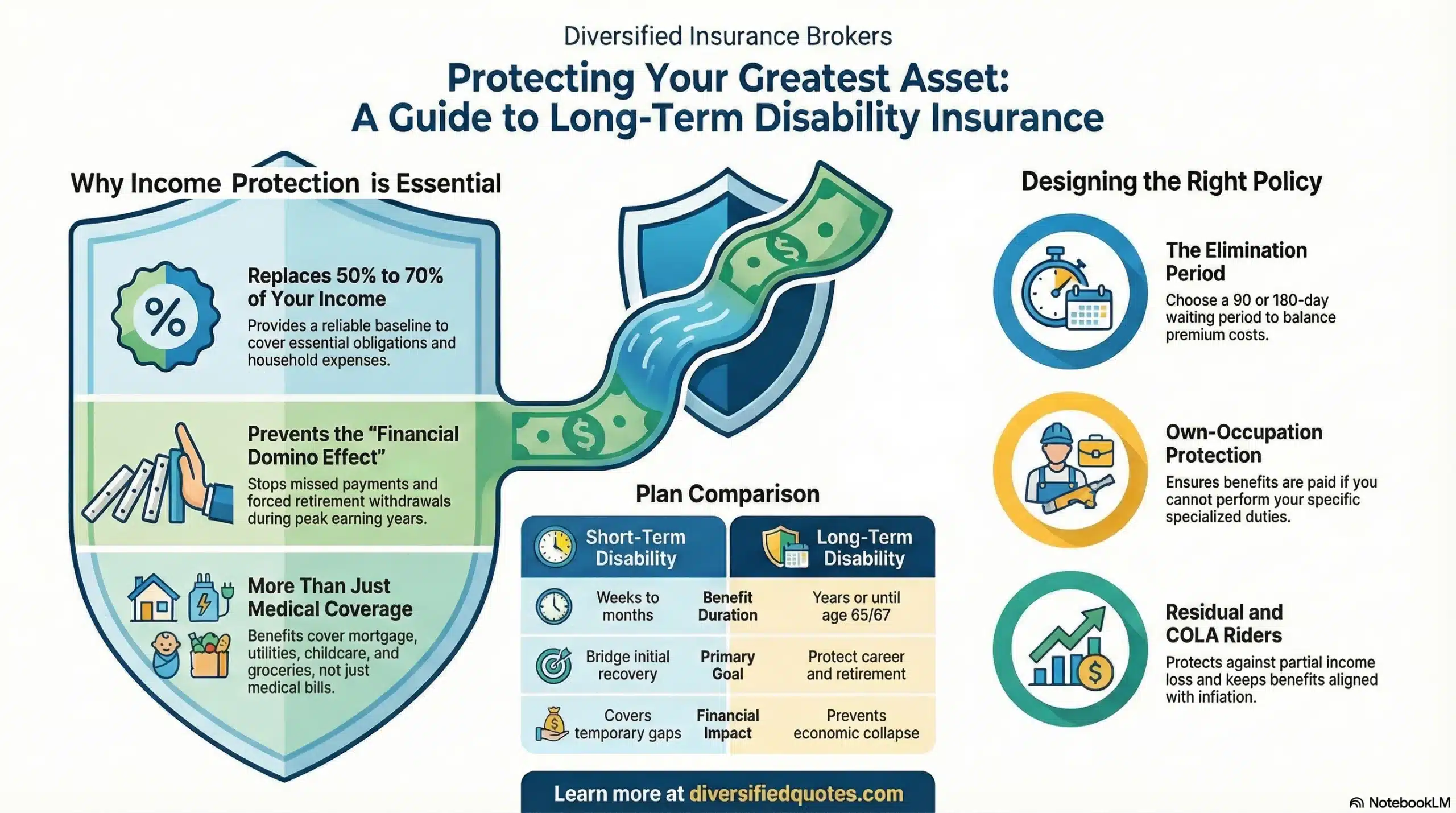
The own-occupation definition of disability is the most important policy feature for professional librarians, particularly for those whose work is cognitively specialized in ways that make an any-occupation standard practically meaningless. Under an own-occupation definition, the policy pays benefits when a condition prevents the librarian from performing the specific duties of their own profession — sustained computer use for research and cataloging, physical material handling for circulation and collection management, and the cognitive and communicative demands of patron assistance and professional information work — regardless of whether they could theoretically perform some other type of sedentary or unrelated work. A reference librarian whose carpal tunnel syndrome prevents sustained keyboard use may theoretically be able to perform telephone customer service, but an own-occupation policy recognizes the genuine inability to work as a librarian and pays benefits accordingly. Many group disability plans transition from an own-occupation to an any-occupation or modified any-occupation standard after 24 months of disability — which means the very period when a librarian faces a long-term disability is when their group coverage weakens. Our dedicated resource on own-occupation disability insurance explained covers how this definition protects knowledge workers and professional service providers in real disability scenarios and why it matters more than almost any other policy feature.
A residual disability rider is equally important for librarians whose recovery from surgery or medical treatment may involve a gradual return to full professional capacity. A librarian recovering from carpal tunnel release or back surgery may be able to return to limited duty — fewer hours, no shelving, modified computer use — while still unable to perform a full professional workload, earning reduced income without being completely unable to work. A total-disability-only policy provides no benefits during this partial recovery period. A residual disability rider pays proportional benefits based on the percentage of income reduction, providing continuous financial support through the entire recovery arc. Our resource on how residual disability benefits work covers how proportional calculations function in practice. A cost-of-living adjustment rider maintains the purchasing power of the monthly benefit for librarians facing long-term disability. Our resource on disability income insurance with a COLA rider explains when inflation protection produces the most meaningful long-term financial benefit.
Income Documentation and Coverage Structuring for Employed Librarians
Because most professional librarians are employees of public institutions, academic organizations, or government agencies, disability insurance underwriting for librarians typically involves straightforward W-2 income documentation rather than the Schedule C self-employment income documentation that trade and small business professionals navigate. The benefit amount an individual can secure through an individual supplemental policy is coordinated with any existing group coverage — carriers use offset provisions that ensure total disability benefits do not exceed a specified percentage of pre-disability income, typically 70 to 80 percent combined. For librarians with substantial employer group coverage already in place, the individual supplemental policy fills the remaining income gap, provides the stronger own-occupation definition the group plan may lack, and delivers the portability the group plan cannot provide.
For librarians who work in private sector roles — corporate information departments, law firm libraries, hospital systems — where group coverage may be weaker or absent, or for librarians who work part-time or in contract roles without employer benefits access, the individual policy provides primary income replacement rather than supplemental coverage. Understanding how much disability insurance you need provides a practical framework for calibrating the right combination of group and individual coverage for a librarian’s specific employment situation and income protection objectives. Our resource on income protection insurance covers the full spectrum of tools available for building comprehensive income protection across different employment structures.
Why Independent Broker Access Matters for Librarians
Not every disability insurance carrier classifies librarian occupational profiles equally, and the specific duty mix — heavily computer-based academic or reference work versus circulation and material handling intensive work — produces different underwriting outcomes across carriers. Some carriers provide more favorable terms for the professional, MLS-credentialed librarian role than others, and identifying the carriers whose underwriting guidelines best support the specific type of library work a given librarian performs requires independent access to the full carrier marketplace.
At Diversified Insurance Brokers, we evaluate options across multiple carriers for every librarian we serve. We understand how to coordinate individual coverage effectively with existing employer group plans, how to structure own-occupation definitions that hold up through the full duration of a disability claim, and how to select elimination periods that work with sick leave accrual to maximize value and minimize premium cost. Our resource on why independent disability insurance brokers matter explains the full value of independent carrier access for employed professionals navigating the intersection of group coverage and individual supplemental planning. For librarians also evaluating whether a preexisting condition affects their individual coverage options, our resource on disability insurance with preexisting conditions covers how underwriters approach documented health history and what coverage remains accessible.
When to Apply for Coverage
The best time for a librarian to apply for individual disability insurance is as early as possible in their professional career — ideally at the point of entering the profession, before the occupational health conditions that library work produces have accumulated in the medical record. Disability insurance premiums are based in part on age and health status at the time of application, and younger applicants in good health secure the most comprehensive coverage at the most favorable rates. Carpal tunnel syndrome, cervical strain, back conditions, and the wrist and shoulder conditions that develop from years of combined computer work and material handling can result in exclusion riders if they are already documented when an application is submitted.
For an academic librarian whose most probable disability scenario involves exactly the upper limb and cervical conditions that cataloging and reference work produce, an exclusion rider eliminating coverage for those conditions substantially undermines the practical value of owning any individual policy. Applying early in a career — before these conditions accumulate in the medical record — secures comprehensive coverage that remains in force as conditions develop in subsequent years of professional library work. That is exactly when comprehensive coverage matters most, and the timing advantage of applying early cannot be recaptured once conditions have been documented. Our resource on how to buy disability insurance online provides practical guidance on the individual application process for employed professionals evaluating their supplemental coverage options.
Request Disability Insurance Quotes for Librarians
We compare carriers, explain how group coverage gaps are filled with individual policies, and structure coverage that protects the full value of a librarian’s professional income.
Get Disability Insurance QuotesRelated Disability Insurance Pages
Financial Protection Essentials
Talk With an Advisor Today
Choose how you’d like to connect—call or message us, then book a time that works for you.
Schedule here:
calendly.com/jason-dibcompanies/diversified-quotes
Licensed in all 50 states • Fiduciary, family-owned since 1980
Disability Insurance for Librarians — FAQs
Yes — and the reasons come down to three consistent gaps in employer group disability coverage that individual policies fill. First, group plans typically replace only 60 percent of base salary, leaving a meaningful income gap during a disability for a librarian earning near the national median of approximately $69,000. Second, group plans are not portable — they belong to the employer, and if a librarian changes positions, transitions to a different institution, or leaves employment for any reason, the group policy ends. Individual coverage applied for later comes at higher premium and potentially with exclusions for the carpal tunnel, back, and cervical conditions that library work produces over time. Third, many group plans weaken their disability definition after 24 months — transitioning from an own-occupation standard to an any-occupation or modified standard that can deny benefits to a librarian who retains any capacity for unrelated sedentary work. Individual own-occupation coverage maintains the stronger definition for the full benefit period and travels with the librarian regardless of employment transitions.
Upper limb repetitive strain injuries are the dominant disabling condition category for professional librarians, developing from the documented combination of sustained computer work and repetitive physical material handling that occupational health research identifies as producing a broader range of ergonomic hazards than standard office work alone. Carpal tunnel syndrome, tendinitis of the wrist and forearm, de Quervain’s tenosynovitis, and shoulder impingement develop from cataloging and reference work’s sustained keyboard and mouse use combined with shelving and circulation’s repetitive overhead and low-level reaching. Back and cervical spine conditions develop from sustained workstation postures and the physical loading of shelving, cart-pushing, and box-handling. Occupational health literature specifically documents back conditions, including herniated discs, attributed to long careers of sustained library shelving work. Cognitive and psychiatric conditions — including anxiety disorders and depression from high-demand public service environments — represent an additional disability risk dimension for librarians whose professional performance depends on sustained mental acuity.
Own-occupation disability insurance pays benefits when a condition prevents the insured from performing the specific duties of their own profession — regardless of whether they could theoretically perform different or lighter work. For a librarian, this means benefits are paid when conditions prevent the sustained computer use for research and cataloging, the physical material handling for circulation and collection management, and the cognitive demands of patron assistance and professional information work — even if the librarian could hypothetically perform some other type of unrelated sedentary activity. Without an own-occupation definition, a policy would only pay benefits if the insured could not perform virtually any gainful employment, which would deny benefits to a librarian whose carpal tunnel prevents sustained keyboard use while leaving some capacity for non-computer work. For a professional whose income depends on a specific combination of physical and cognitive capabilities that general sedentary work cannot replicate, the own-occupation definition is the most consequential single policy feature — and the definition most commonly weakened or absent in employer group plans.
Employer group disability plans leave three consistent gaps. The benefit amount gap: most group plans replace 60 percent of base salary, meaning a librarian earning $69,000 receives approximately $41,400 annually during a disability while household obligations continue at their pre-disability level. The portability gap: group coverage belongs to the employer and ends when employment ends — a librarian who changes institutions, moves to a private sector role, or leaves the workforce loses coverage at exactly the moment they may most need it, and individual coverage applied for later in a career with documented conditions costs more and may include exclusion riders. The definition gap: many group plans transition from an own-occupation to an any-occupation or modified any-occupation definition after 24 months of disability, potentially eliminating benefits for a librarian who retains capacity for sedentary work unrelated to their profession. Individual own-occupation coverage addresses all three gaps simultaneously.
Residual disability coverage pays proportional benefits when a disability reduces earning capacity without eliminating the ability to work entirely. A librarian recovering from carpal tunnel surgery or back treatment may be able to return to limited duty — reduced hours, modified computer use, no shelving or cart work — while still unable to perform a full professional workload, earning reduced income without being completely unable to work. A total-disability-only policy provides no benefits during this partial recovery period, even though income is reduced and a genuine disabling condition is still being managed. A residual disability rider pays a proportional benefit based on the percentage reduction in earnings, providing continuous financial support from the onset of disability through full return to normal professional capacity. For librarians whose recovery from surgery involves a gradual, medically supervised return to full professional activity, this rider is essential protection across the entire recovery arc and the period when financial pressure can feel most acute.
The target for total disability income replacement — combining group and individual coverage — is generally 70 to 80 percent of pre-disability gross income. For a librarian whose employer group plan already provides 60 percent of base salary, the individual supplemental policy needs to close the remaining gap to reach the desired total replacement percentage while respecting offset provisions that prevent over-insurance beyond the carrier’s allowable limit. For a librarian earning approximately $69,000 annually with a group plan paying 60 percent of base salary, supplemental individual coverage in the range of $1,000 to $1,500 per month typically closes the gap meaningfully without creating coordination complications. The right benefit amount depends on the specific group plan terms, the librarian’s actual monthly household obligations, and whether any non-salary income sources exist that need protection separately. An experienced independent broker can model the coordination correctly and identify the benefit amount that produces genuinely comprehensive protection given the existing coverage structure.
The elimination period for an individual supplemental policy should be coordinated with the librarian’s employer sick leave accrual and the elimination period on any existing group plan. A librarian with strong sick leave accrual — 60, 90, or 120 days of accumulated paid leave — can typically accept a longer elimination period on an individual policy without significant financial risk, because sick leave payments provide income during the waiting period before individual benefits begin. This coordination can meaningfully reduce the premium cost of individual supplemental coverage. A librarian with limited sick leave accrual, or one purchasing primary individual coverage without employer group coverage in place, should consider a 30- or 60-day elimination period to minimize the gap between disability onset and benefit arrival. The right elimination period is the one that matches the actual income bridge available from sick leave and any short-term disability coverage without creating a period of genuine financial vulnerability.
Yes — health history affects both eligibility and the specific terms of individual coverage offered. Disability insurance underwriting evaluates the full health picture alongside occupational risk: musculoskeletal history, prior injuries, chronic conditions, and any documented history of conditions most likely to produce a disability claim. For librarians, existing carpal tunnel syndrome, wrist or shoulder conditions, back problems, or cervical strain already documented in the medical record at application can result in exclusion riders eliminating coverage for those conditions. Given that these are exactly the occupational conditions that library work produces over time, an exclusion rider covering carpal tunnel or back conditions represents a significant practical reduction in the protective value of an individual policy. This is the most important reason to apply for individual coverage as early as possible in a library career — before the occupational conditions of library work have been documented — to secure comprehensive coverage that remains in force as those conditions develop.
Yes — self-employed librarians, independent information consultants, and contract librarians without employer group benefit access face a more acute income vulnerability than employed librarians, because they have no group plan baseline coverage to supplement. For a self-employed information professional or freelance librarian, individual disability insurance provides primary income replacement rather than supplemental gap coverage. Income documentation involves Schedule C net profit or 1099 income rather than W-2 wages, which requires working with a broker who understands how to document variable professional service income accurately for underwriters. The benefit amount, elimination period, and own-occupation definition considerations are all more critical for the self-employed librarian who has no institutional income buffer during a disability. The portability benefit that supplements employer coverage for employed librarians is the entire coverage structure for the freelance information professional — making early application before occupational conditions accumulate even more consequential.
The best time is as early as possible in a library career — ideally at the point of entering the profession, before the occupational health conditions that library work produces have accumulated in the medical record. Premiums are based in part on age and health at application, and younger, healthier applicants secure the most comprehensive coverage at the most favorable rates. Carpal tunnel syndrome, cervical strain, back conditions, and the shoulder and wrist conditions that develop from years of combined computer work and material handling appear in the medical record progressively across a library career. Exclusion riders for these conditions, applied after they are documented, substantially reduce the practical value of any individual policy — precisely because they eliminate coverage for the most probable disability scenarios. For employed librarians with existing group coverage, applying early for an individual own-occupation supplement while young and healthy secures portable comprehensive protection that remains in force through every career transition, at the rates and terms available only before occupational conditions are part of the medical record.
About the Author:
Jason Stolz, CLTC, CRPC, DIA, CAA and Chief Underwriter at Diversified Insurance Brokers (NPN 20471358), is a senior insurance and retirement professional with more than 25 years of real-world experience helping individuals, families, and business owners protect their income, assets, and long-term financial stability. As a long-time partner of the nationally licensed independent agency Diversified Insurance Brokers, Jason provides trusted guidance across multiple specialties—including fixed and indexed annuities, long-term care planning, personal and business disability insurance, life insurance solutions, Group Health, Travel Medical and Evacuation Insurance, and short-term health coverage. Diversified Insurance Brokers maintains active contracts with over 100 highly rated insurance carriers, ensuring clients have access to a broad and competitive marketplace.
His practical, education-first approach has earned recognition in publications such as VoyageATL, and contributions from his agency featured in Kiplinger and GoBankingRates— highlighting his commitment to financial clarity and client-focused planning. Drawing on deep product knowledge and years of hands-on field experience, Jason helps clients evaluate carriers, compare strategies, and build retirement and protection plans that are both secure and cost-efficient. Visitors who want to explore current annuity rates and compare options across multiple insurers can also use this annuity quote and comparison tool.
Explore More Disability Insurance Options: Browse our complete guide to Disability Insurance for Legal, Finance & White Collar Professionals — covering attorneys, accountants, bankers, executives, financial planners & business professionals from 100+ carriers.
Last Reviewed: September 21, 2026 |
Reviewed by: Jason Stolz, CLTC, CRPC, DIA, CAA
Chief Underwriter, Diversified Insurance Brokers, Inc. | NPN: 20471358 | Diversified Insurance Brokers, Inc. — Licensed in all 50 states
Fact Checked by: Tonia Pettitt, CMIP©
Medicare Specialist, Diversified Insurance Brokers, Inc. | NPN: 14374308 | Diversified Insurance Brokers, Inc. — Licensed in all 50 states
Did you find this content helpful? Leave us a Google review — it helps others find trustworthy guidance too.
Editorial Standards: Diversified Insurance Brokers maintains rigorous editorial standards to ensure accuracy, clarity, and independence in all content. Learn more about our editorial standards and commitment to transparency.
