
Disability Insurance for Mineralogists
As an Independent Disability Insurance Broker, we have access to exclusive discounts and negotiated pricing most captive agents can’t offer — see the full breakdown near the end of this page.
Disability Insurance for Mineralogists

Jason Stolz CLTC, CRPC, DIA, CAA
Disability insurance for mineralogists is an important but frequently overlooked financial protection for earth science professionals whose work spans laboratory environments, field collection in geologically active and physically challenging terrain, mining sites and quarries, and research institutions — creating a disability risk profile that is more multidimensional than most people associate with a scientific career. Mineralogists study the physical and chemical properties of minerals, conduct field investigations to collect specimens and geological data, perform laboratory analyses using specialized equipment, and apply their expertise in mining and resource extraction, environmental assessment, materials science, and academic research. The average mineralogist earns $126,466 annually according to ERI’s 2026 compensation data, with salary ranges of $87,515 to $154,163 and high-end earners reaching $221,321 according to Glassdoor’s 2026 survey data — income that reflects doctoral or master’s-level education, specialized scientific expertise, and in many cases the field work and hazardous environment exposure that applied mineralogy requires. At Diversified Insurance Brokers, we help mineralogists and geoscience professionals design disability coverage that reflects their specific work environments, income level, and the planning considerations of a scientific career that may span laboratory, field, and industry settings across decades. For foundational disability insurance context, our disability insurance services overview provides the essential framework, and our resource on why people buy disability insurance explains the core protection logic that applies across scientific and professional occupations at every income level.
Protect Your Income as a Mineralogist
Compare disability insurance options designed for geoscience professionals across academic, industry, and field research settings.
Request Disability Insurance OptionsQuestions? Call 800-533-5969
What Mineralogists Do and the Disability Risks Their Work Creates
Mineralogists are earth scientists who specialize in the identification, characterization, and analysis of minerals — the naturally occurring inorganic compounds that make up the rocks of the earth’s crust and that underlie virtually every materials-based industry from construction through electronics through pharmaceuticals. Their work encompasses a wide range of settings and activities: field collection of mineral specimens and geological samples from outcrops, quarries, mine sites, and remote terrain; laboratory analysis using X-ray diffraction, optical microscopy, scanning electron microscopy, and mineral chemical analysis techniques; research into the formation, distribution, and properties of specific mineral groups; applied work in mining resource assessment, ore deposit characterization, and mineral processing; and environmental mineralogy assessment of contaminated sites where mineral phases control contaminant mobility and treatment options.
This diverse range of work settings creates a correspondingly diverse disability risk profile. Laboratory-based mineralogists face the chemical exposure hazards of analytical chemistry — acid digestion procedures, solvent use, heavy metal standard solutions, and the range of laboratory reagents used in mineral analysis. Field mineralogists working in active mining environments, quarries, and remote geological terrain face the physical hazards of those environments — unstable terrain, remote location isolation from medical care, physical demands of geological field work, and the hazardous dust exposures present in mine sites and quarries. Applied mineralogists working directly in the mining industry share exposure to the full range of mining industry occupational hazards described in our resource on disability insurance for the mining industry.
Toxic Mineral and Chemical Exposure: The Most Distinctive Occupational Hazard
The most occupationally distinctive disability risk for mineralogists is exposure to toxic minerals and the hazardous substances associated with mineral analysis and collection work. Mineralogy as a discipline involves direct handling and study of minerals that in some cases are acutely or chronically toxic to human health — and the laboratory and field work that mineralogists perform creates exposure pathways that require careful management and that, over career-length timeframes, can generate genuine occupational health consequences.
Asbestos-group minerals — including chrysotile, amosite, crocidolite, and other fibrous silicates — are studied by mineralogists working in geological research, environmental assessment of asbestos-contaminated sites, and industrial mineral characterization. Direct handling and microscopic analysis of asbestos minerals creates inhalation exposure risk that requires rigorous protective protocols. Mineralogists who have worked extensively with asbestos-containing samples over career-length timeframes carry elevated risk of asbestos-related respiratory disease, including mesothelioma and asbestosis — conditions with decades-long latency periods that may not manifest until well after exposure has ceased.
Heavy metal-bearing minerals represent another significant exposure category. Lead minerals (galena, cerussite, anglesite), mercury minerals (cinnabar, metacinnabar), arsenic minerals (arsenopyrite, realgar, orpiment), and uranium minerals are all studied and characterized by mineralogists in various research and applied contexts. Fine grinding, polishing, and preparation of mineral specimens for analytical work creates dust and particulate that can carry these toxic elements in inhalable form. Laboratory analysis procedures involving acid dissolution of heavy metal-bearing minerals create chemical exposure pathways that require careful engineering controls. Chronic heavy metal exposure producing neurological, renal, or systemic health consequences constitutes a genuine occupational disease pathway for mineralogists with career-long laboratory and field exposure to metal-bearing mineral assemblages.
Crystalline silica exposure is present wherever mineralogists work with quartz-bearing rocks and mineral assemblages — which encompasses the vast majority of geological environments. Laboratory preparation of silica-containing samples through crushing, grinding, and polishing generates respirable quartz dust that, with sufficient cumulative exposure, can produce silicosis. The disability insurance implication is direct: any occupational disease acquired through documented mineral and chemical exposures that produces a period of incapacity or chronic functional limitation constitutes a covered disability under a properly structured individual disability policy. Our resource on disability insurance with preexisting conditions explains why applying before any such documented exposure-related health events is the optimal approach for mineralogists in high-exposure research and field environments.
Field Work Hazards: Remote Terrain, Physical Demands, and Isolation
Mineralogists who conduct field work — collecting samples from geological outcrops, investigating mine workings, assessing quarry operations, or conducting remote terrain geological surveys — face a set of physical hazards that are absent from laboratory-only scientific work. Geological field work frequently takes mineralogists to terrain that is physically demanding, geologically unstable, and remote from medical care: cliff faces and steep talus slopes where mineral outcrops are accessible, active and abandoned mine workings with their documented hazards of unstable ground and poor air quality, quarry environments with active blasting and heavy equipment operations, and remote wilderness geological surveys where emergency medical response may be hours away.
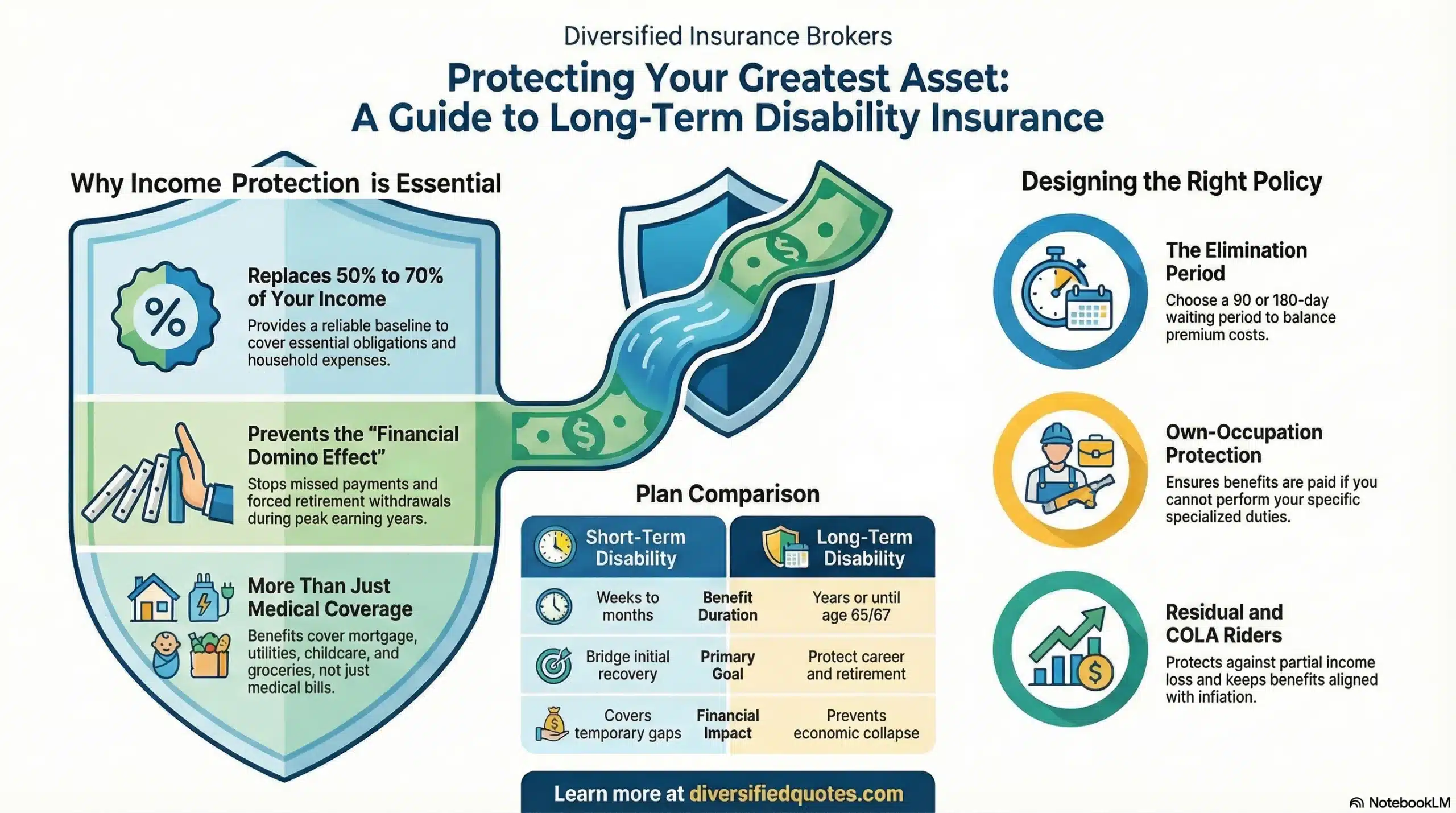
Physical injuries from falls in rugged geological terrain — sprained and fractured ankles from unstable talus slopes, wrist and hand injuries from catching falls on rocky surfaces, back injuries from carrying heavy sample bags and field equipment — are the most common acute field work injury scenarios for mineralogists. A mineralogist whose ankle fracture from a field fall prevents weight-bearing activity for 8 to 12 weeks faces an immediate income disruption that disability insurance addresses through income replacement during the recovery period. Our resource on disability insurance elimination periods explained helps calibrate the waiting period before benefits begin to actual financial reserves.
Laboratory Ergonomic Demands and Repetitive Strain
Mineralogists who spend the majority of their working time in laboratory environments face the ergonomic hazards of sustained microscope work, extended computer-based spectral analysis and data interpretation, and the repetitive fine motor demands of mineral preparation and analytical procedures. Sustained forward head posture during microscopy, extended wrist and hand positioning during sample preparation, and the prolonged seated postures of data analysis generate cumulative musculoskeletal loading that produces the cervical and lumbar conditions, wrist conditions, and upper extremity repetitive strain injuries documented in research scientist populations.
A mineralogist whose cervical disc condition prevents sustained microscope work — the core analytical function that defines laboratory mineralogy — has experienced a genuine occupational disability even when they retain the ability to perform other activities. The own-occupation disability definition is therefore critical for mineralogists: it must protect the specific scientific functions that generate their income, not just the generic ability to work in some capacity. Our resource on own-occupation disability insurance explains how this definition protects specialized professional functions in real claim scenarios.
Income Structure and Financial Exposure
Mineralogist compensation reflects the specialized education — typically a bachelor’s degree minimum, with many positions requiring master’s or doctoral credentials — and the applied expertise that applied and research mineralogy demands. ERI’s 2026 compensation data places the average mineralogist salary at $126,466 annually, with a range of $87,515 to $154,163. Glassdoor’s 2026 survey data reports a higher average of $158,086, with top earners reaching $221,321. The variation reflects the range from academic and government research positions at the lower end through senior industry mineralogist roles in mining, petroleum, and materials companies at the upper end.
Industry mineralogists working in mining and resource companies — applying mineralogical expertise to ore deposit characterization, mineral processing optimization, and environmental compliance — often earn at the upper ranges of this compensation scale, particularly those with advanced degrees and significant applied experience. The financial exposure of disability across this income range is meaningful and real: a mineralogist earning $130,000 annually who develops an occupational respiratory condition at age 40 that prevents continued laboratory and field work faces potential income loss across 25 remaining working years. Our resource on how much disability insurance you need provides the framework for translating specific income and financial obligations into appropriate benefit amounts, and our resource on whether disability insurance is worth it provides the cost-benefit framework.
Employer Coverage Gaps for Mineralogists
Mineralogists employed by universities, government agencies, mining companies, and research institutions typically receive employer group LTD coverage as part of their benefits package. The standard limitations of group coverage apply: the 60% of base salary benefit cap excludes bonuses, research supplements, and field allowances that may represent significant additional compensation; the 24-month own-occupation to any-occupation definition transition may deny benefits for a mineralogist whose specific scientific functions are impaired even when they retain capacity for less specialized work; and group coverage ends when employment ends, which matters for mineralogists who move between academic, government, and industry positions across a scientific career.
Self-employed consulting mineralogists and independent geoscience contractors face more acute financial exposure — immediate income cessation when illness or injury prevents work, with no employer sick leave or group coverage safety net. Our resource on disability insurance for the self-employed covers the income documentation and coverage design considerations for independent mineralogists and geoscience consultants, and our resource on disability insurance for independent contractors addresses contract-based geoscience work arrangements. For mineralogists with existing coverage who want an independent evaluation, our disability insurance second opinion service provides an unbiased review against the full market of available options.
When to Apply
For mineralogists, the optimal time to apply for disability insurance is as early in their career as possible — ideally upon completing their degree program and entering their first professional position, before field work and laboratory work have produced any documented occupational health history. A mineralogist who applies at age 25 upon starting their first industry or research position obtains the lowest locked-in lifetime premium at the cleanest health history point. The future increase option purchased with an early policy allows coverage to expand as mineralogist income grows through experience and career advancement without new medical underwriting. Our resource on disability insurance for new professionals addresses early-career planning considerations, and our resource on how to get the best disability insurance rates explains all the factors that determine coverage quality and cost.
Get Disability Insurance Quotes for Mineralogists
We compare options across carriers for geoscience professionals to find the right combination of coverage, definition strength, and value for your specific work environment.
Request Disability Insurance OptionsQuestions? Call 800-533-5969
Financial Protection Essentials
Income protection resources and disability insurance planning tools for mineralogists and geoscience professionals.
Related Pages
Talk With an Advisor Today
Choose how you’d like to connect—call or message us, then book a time that works for you.
Schedule here:
calendly.com/jason-dibcompanies/diversified-quotes
Licensed in all 50 states • Fiduciary, family-owned since 1980
Frequently Asked Questions: Disability Insurance for Mineralogists
Mineralogists face disability risks across three overlapping categories that reflect the diversity of their work environments. Laboratory chemical and mineral exposure is the most distinctive risk — including direct handling and analysis of toxic minerals such as asbestos-group minerals, heavy metal-bearing minerals (lead, mercury, arsenic, uranium compounds), and crystalline silica-bearing assemblages. Laboratory preparation procedures including grinding, crushing, polishing, and acid dissolution create exposure pathways for these toxic substances that, with career-length cumulative exposure, can produce occupational respiratory disease, heavy metal toxicity, and other chronic health conditions with long latency periods between exposure and disease manifestation.
Field work physical injury risk is the second category — falls in rugged geological terrain, injuries from geological field equipment, and the physical demands of carrying heavy sample loads across challenging terrain generate acute injury risk that is absent from purely laboratory scientific work. Laboratory ergonomic conditions — sustained microscope work, extended computer-based spectral analysis, and repetitive fine motor demands of mineral preparation — generate the cumulative musculoskeletal conditions that affect research scientist populations over career-length timeframes. Our resource on own-occupation disability insurance explains how the policy definition must protect these specific scientific functions that generate mineralogist income.
Yes — disability insurance covers the income consequences of illness from toxic mineral exposure when that illness produces a qualifying disability under the policy definition. A mineralogist who develops occupational respiratory disease from asbestos mineral exposure, silicosis from crystalline silica dust in laboratory preparation work, or systemic health consequences from heavy metal mineral exposure requiring treatment that prevents professional work has experienced a genuine disability event that a properly structured policy addresses through income replacement. The policy covers the income loss during treatment and any period of clinical limitation regardless of whether an employer or workers’ compensation system formally acknowledges the occupational exposure connection.
The critical planning requirement is that the policy must be in place before the illness develops and is documented. A mineralogist who applies for disability insurance after an occupational disease diagnosis will face either denial or exclusion riders eliminating coverage for the specific condition. The long latency periods of some occupational diseases — asbestosis and mesothelioma can take 10 to 40 years to manifest after exposure — make early application particularly important: a mineralogist who establishes coverage early in their career before any exposure-related health findings appear will have comprehensive coverage in place throughout the latency period when the disease is silently developing. Our resource on disability insurance with preexisting conditions explains how documented health history affects underwriting outcomes.
Yes — the work environment and employment structure meaningfully affect the coverage design that best addresses each mineralogist’s situation. Industry mineralogists working for mining companies, petroleum companies, and materials corporations typically earn at the upper end of the mineralogist salary range — often $130,000 to $221,000 or more for senior positions — and may have access to employer group LTD coverage that provides a baseline but inadequate income protection foundation. They also face direct exposure to active mining and industrial environments with the full range of occupational hazards those settings generate. Individual disability insurance that fills the income gap above group policy caps, maintains own-occupation coverage for the full benefit period, and is portable through employment changes is the standard of adequate protection.
Academic mineralogists typically earn toward the lower end of the salary range but may have more access to institutional disability benefits. Self-employed consulting mineralogists and independent geoscience contractors face the most acute financial exposure — immediate income cessation when illness or injury prevents work, with no employer group coverage safety net of any kind. For consulting and independent mineralogists, both personal income replacement coverage and business overhead expense protection may be appropriate depending on their practice structure. Our resource on disability insurance for the self-employed covers the specific considerations for independent geoscience practice, and our resource on guaranteed issue group disability insurance explains how employer group coverage works for those with institutional employment.
Mineralogist occupation classification in disability insurance underwriting depends significantly on the specific work environment and activities. Laboratory-based mineralogists who work primarily in controlled research or academic settings typically receive more favorable occupation class ratings — often Class 3A or 4A — that provide access to own-occupation definitions, full benefit periods, and a complete range of rider options. Field mineralogists who regularly work in mining environments, active quarries, or remote terrain may receive lower classification reflecting the elevated physical hazard of those environments.
The key is that different carriers classify mineralogist roles differently based on their specific underwriting guidelines and industry experience. A mineralogist who works primarily in a laboratory setting at a university may receive a substantially better classification — and therefore lower premium and stronger policy provisions — from one carrier than from another that applies a more conservative blanket classification to all geoscience professionals. Working with an independent broker who understands how specific carriers classify scientific occupations with field work components is the most effective way to identify the best available classification before any application is submitted. Our resource on why working with an independent disability insurance broker matters explains how carrier-specific occupation classification knowledge drives better coverage outcomes.
The optimal time is as early in the mineralogist’s career as possible — ideally upon completing their degree program and entering their first professional position, before field work and laboratory work have produced any documented occupational health history. A mineralogist who applies at age 25 upon starting their first industry or research position obtains the lowest locked-in lifetime premium at the cleanest health history point, with the broadest available coverage terms and no exclusion riders limiting the conditions that occupational exposure might eventually produce.
The long latency periods of some occupational diseases associated with mineral exposure — particularly asbestos-related diseases — make early application especially critical: establishing comprehensive coverage before any exposure-related health findings appear ensures coverage is in place throughout the decades-long period when disease may be developing silently. A mineralogist who delays application until symptoms appear, or until screening reveals exposure-related changes, faces underwriting complications that may permanently limit the coverage available for the conditions most relevant to their specific work exposures. Our resource on disability insurance for new professionals addresses the specific planning considerations for geoscience professionals at career entry, and our resource on how to get the best disability insurance rates explains all the factors that determine coverage quality and cost.
About the Author:
Jason Stolz, CLTC, CRPC, DIA, CAA and Chief Underwriter at Diversified Insurance Brokers (NPN 20471358), is a senior insurance and retirement professional with more than 25 years of real-world experience helping individuals, families, and business owners protect their income, assets, and long-term financial stability. As a long-time partner of the nationally licensed independent agency Diversified Insurance Brokers, Jason provides trusted guidance across multiple specialties—including fixed and indexed annuities, long-term care planning, personal and business disability insurance, life insurance solutions, Group Health, Travel Medical and Evacuation Insurance, and short-term health coverage. Diversified Insurance Brokers maintains active contracts with over 100 highly rated insurance carriers, ensuring clients have access to a broad and competitive marketplace.
His practical, education-first approach has earned recognition in publications such as VoyageATL, and contributions from his agency featured in Kiplinger and GoBankingRates— highlighting his commitment to financial clarity and client-focused planning. Drawing on deep product knowledge and years of hands-on field experience, Jason helps clients evaluate carriers, compare strategies, and build retirement and protection plans that are both secure and cost-efficient. Visitors who want to explore current annuity rates and compare options across multiple insurers can also use this annuity quote and comparison tool.
Explore More Disability Insurance Options: Browse our complete guide to Disability Insurance for Technology, Science & Education — covering software developers, engineers, scientists, teachers, architects & researchers from 100+ carriers.
Last Reviewed: May 14, 2026 |
Reviewed by: Jason Stolz, CLTC, CRPC, DIA, CAA
Chief Underwriter, Diversified Insurance Brokers, Inc. | NPN: 20471358 | Diversified Insurance Brokers, Inc. — Licensed in all 50 states
Fact Checked by: Tonia Pettitt, CMIP©
Medicare Specialist, Diversified Insurance Brokers, Inc. | NPN: 14374308 | Diversified Insurance Brokers, Inc. — Licensed in all 50 states
Did you find this content helpful? Leave us a Google review — it helps others find trustworthy guidance too.
Editorial Standards: Diversified Insurance Brokers maintains rigorous editorial standards to ensure accuracy, clarity, and independence in all content. Learn more about our editorial standards and commitment to transparency.
