
Disability Insurance for Radio and Television Industries
As an Independent Disability Insurance Broker, we have access to exclusive discounts and negotiated pricing most captive agents can’t offer — see the full breakdown near the end of this page.
Disability Insurance for Radio and Television Industries

Jason Stolz CLTC, CRPC, DIA, CAA
Disability insurance for radio and television industries is an essential but frequently overlooked financial protection for the broad range of professionals who make broadcast media work — on-air talent, reporters, broadcast technicians, producers, directors, camera operators, editors, and the full supporting cast of technical and creative professionals whose daily work fills America’s airwaves and television screens. The Bureau of Labor Statistics May 2024 data paints a detailed picture of this workforce: the media and communication sector employs approximately 634,400 workers nationally with a mean annual wage of $83,030. News analysts, reporters, and journalists employed in broadcast settings earned a median of $60,280 in May 2024. Broadcast announcers and radio disc jockeys earned a median hourly wage of $21.96 — approximately $45,677 annually — with the top 10% earning above $63.36 per hour. Broadcast and sound technicians earned a median annual wage of $56,600. Radio broadcasting stations had an average annual wage of $68,900 across all roles, with senior positions such as sales managers earning $154,510 and general and operations managers earning $100,180. Television journalists and anchors in major markets can earn well into six figures, with top on-air talent at network level earning substantially more. This income — whether it is the entry-level reporter building a career in a mid-market television station or the veteran network correspondent whose face is recognized nationally — represents the financial foundation that household obligations, retirement savings, and family financial security depend on. And it is income that a disability event can interrupt or end without warning. At Diversified Insurance Brokers, we help broadcasting and media professionals across all roles and market sizes design disability coverage that reflects the specific occupational demands, income structure, and career trajectory of their specific position in the broadcast industry. For foundational disability insurance context, our disability insurance services overview provides essential background, and our resource on why people buy disability insurance explains the core protection logic that applies across the full spectrum of broadcasting professionals.
Protect Your Income in Radio and Television
Compare disability insurance options designed for broadcast media professionals across all roles, market sizes, and employment structures.
Request Disability Insurance OptionsQuestions? Call 800-533-5969
Who Works in Radio and Television and Why Their Disability Risks Vary by Role
The radio and television broadcasting industry encompasses an extraordinarily diverse range of occupations — from the on-air anchor whose voice and face are the public face of the station to the broadcast technician who ensures the signal reaches the audience, from the field reporter who covers breaking news in dangerous or physically demanding conditions to the editor who assembles the finished product in a darkened editing suite. Each role carries a distinct disability risk profile, and effective disability insurance planning requires understanding the specific risks that apply to the individual’s actual job rather than applying a generic media industry assessment.
On-air talent — anchors, reporters, hosts, and broadcast announcers — face a profession-specific disability risk that parallels the situation of singers and other vocal professionals: the voice is both the primary professional instrument and the specific capability most directly exposed to occupational health risk. A broadcaster whose voice is their professional identity faces a career threat from vocal conditions — vocal fold nodules, polyps, hemorrhage, laryngitis, or other conditions requiring voice rest and treatment — that has no equivalent in most other professions. The career consequences of a voice condition that requires extended rest or produces permanent changes to vocal quality can be severe, particularly for talent whose voice is a defining characteristic of their professional brand. An on-air reporter at a major television station whose voice condition prevents broadcasting for 8 to 12 weeks faces immediate income interruption that disability insurance addresses through income replacement during the treatment and recovery period.
Field reporters and journalists who cover breaking news — including natural disasters, civil unrest, crime scenes, active conflict zones, and other dangerous news environments — face acute physical hazards that are genuinely comparable to the risks of hazardous occupations outside the media industry. The Global Center for Journalism and Trauma has documented that journalists covering conflict, disaster, and violence face significant rates of PTSD, secondary traumatic stress, and depression from their sustained exposure to traumatic events as a professional function. A television correspondent who covers multiple natural disasters, mass casualty events, or conflict zones over a career accumulates a psychological occupational burden that, when it reaches clinical severity, constitutes genuine occupational disability that mental health coverage without a 24-month limitation must address.
Broadcast technicians, camera operators, and engineers face a different but equally real disability risk profile. The physical demands of broadcast technical work — carrying and setting up heavy camera equipment, lighting rigs, and broadcast gear; climbing towers and poles for antenna and transmission equipment maintenance; working in all weather conditions for remote broadcast locations; and sustaining the repetitive computer-intensive editing and production work that generates ergonomic conditions over career-length timeframes — produce the musculoskeletal injuries and cumulative conditions that are documented occupational hazards in broadcast technical work. A camera operator whose shoulder condition prevents sustained camera-holding and operation has experienced genuine occupational disability even with intact cognitive and communication functions.
Shift Work, Irregular Schedules, and Their Health Consequences
Broadcasting is a 24-hour, 7-day-per-week operation. Radio and television stations operate continuously — news coverage never stops, morning drive programming starts before most people wake up, late night programming runs until the early morning hours — and the workforce that makes that continuous operation possible works the full range of overnight, early morning, weekend, and holiday shifts that continuous broadcast operations require. BLS data confirms that evening, weekend, and holiday work is common in broadcasting because most radio and television stations are on the air 24 hours a day.
The occupational health consequences of sustained rotating shift work are well-documented in the occupational medicine literature. Cardiovascular disease risk is elevated in workers who maintain rotating shift schedules compared to day-shift workers at equivalent income and lifestyle profiles, with the risk premium most pronounced for workers who have maintained rotating shifts for more than five years. Metabolic disorders including Type 2 diabetes show higher prevalence in long-term shift workers. Sleep disorders — both from the direct circadian disruption of rotating shifts and from the difficulty of sleeping during daylight hours for overnight workers — affect both physical health and cognitive performance in ways that compound over career-length timeframes of shift work in broadcasting.
For a radio morning show host who rises at 3:30 AM every working day, or a television news producer who manages overnight production for the morning broadcast, the cumulative cardiovascular and metabolic health burden from years of circadian disruption represents a genuine occupational health risk that is specific to their work pattern. The health consequences of that sustained disruption — which may manifest as hypertension, cardiac arrhythmia, or metabolic disease years into a broadcast career — are disability risks that individual disability insurance must address, because they are not typically acknowledged as occupational conditions under workers’ compensation frameworks and because group LTD policies with their standard limitations may not provide adequate long-term protection.
Deadline Pressure, Burnout, and Psychological Occupational Health
Broadcasting is an industry organized around non-negotiable deadlines that repeat daily and in many roles happen multiple times per day. The morning news broadcast goes live at 5:00 AM regardless of whether every story is fully reported. The evening news airs at 6:00 PM whether or not the story the team spent the day chasing produced the footage needed. Breaking news requires immediate response regardless of what else is happening. Sports scores must be reported as they happen. Markets close and business news is reported in real time. This sustained deadline pressure — which is the defining operational feature of broadcast journalism and production — generates occupational stress at a level that research on media professionals has consistently documented as a significant driver of burnout, anxiety disorders, and depression in the broadcast workforce.
The broadcast industry has additionally experienced significant structural disruption over the past decade — consolidation, layoffs, format changes, the transition from traditional broadcasting to digital and streaming delivery, and the generally unsettled employment landscape of an industry undergoing fundamental transformation. The BLS projects employment of news analysts, reporters, and journalists to decline 4 percent from 2024 to 2034. This structural disruption adds career uncertainty stress to the operational deadline pressure that broadcast professionals already manage, compounding the occupational psychological burden that can progress to clinical mental health conditions when adequate recovery and support are absent.
When burnout reaches clinical severity — producing major depressive disorder, generalized anxiety disorder, or the PTSD-spectrum conditions that field journalists covering traumatic content develop — it constitutes genuine occupational disability. A broadcast journalist whose clinical depression prevents the sustained cognitive performance, professional reliability, and public-facing performance that on-air work requires has experienced a genuine impairment of their professional function. Disability insurance with mental health coverage without a 24-month benefit period limitation is therefore an important provision for broadcasting professionals — particularly those in high-stress on-air and field reporting roles. Our resource on disability insurance riders explained covers how mental health provisions are structured across different policy types, and our resource on disability insurance with preexisting conditions explains why applying before any mental health treatment is documented is the optimal approach for broadcasting professionals in high-pressure environments.
Ergonomic Conditions and Repetitive Strain in Broadcast Technical Work
The technical and production side of broadcasting generates significant ergonomic occupational health hazards from the sustained, high-intensity computer workstation use that characterizes editing, production, and technical broadcast operations. Video editors, audio engineers, graphics producers, and digital content creators spend the majority of their working hours at sophisticated computer workstations — often under deadline pressure that discourages ergonomic discipline about taking breaks, adjusting positioning, or addressing early warning signs of repetitive strain conditions before they become clinically significant.
Carpal tunnel syndrome from sustained keyboard and mouse use, cervical disc conditions from sustained forward head posture at editing and production workstations, and the eye strain and headache conditions from extended high-intensity color-critical monitor work are documented occupational conditions in broadcast technical and production professionals. For a video editor whose professional function depends on sustained fine motor control for precise edit point selection, color correction, and audio manipulation, carpal tunnel syndrome that prevents sustained computer workstation use is a genuine occupational disability — not merely a discomfort. The own-occupation disability definition is therefore important for broadcast technical professionals: it must protect the specific technical functions that generate their income, not just a generic ability to perform some employment. Our resource on own-occupation disability insurance explains how this definition applies to technical and creative professional functions.
Field Work Hazards for Reporters and Camera Operators
Television reporters and camera operators who work in the field — covering natural disasters, crime scenes, civil unrest, severe weather events, and other breaking news situations — face acute physical hazards that are genuinely dangerous and that have produced documented injuries and fatalities among broadcast news professionals. Reporters and camera crews covering active hurricane or tornado conditions face the same extreme weather hazards as the events they are documenting. Journalists covering protests, civil unrest, or crime scenes can be struck by objects, assaulted, or injured by the events around them. Reporters working at accident or disaster scenes face the physical hazards of unstable structures, hazardous materials, and the generally dangerous physical environments that major news events create.
Beyond the acute hazard of news-gathering in dangerous environments, field reporters and camera operators face the physical demands of their technical equipment. Professional broadcast cameras weigh 10 to 20 pounds or more, and a camera operator who shoots for 8 to 10 hours on a demanding field assignment is performing sustained physical work that generates the shoulder, back, and neck conditions that develop from repetitive heavy equipment handling over career-length timeframes. Broadcast reporters who travel extensively for assignments — flying frequently, working across multiple time zones, carrying equipment through airports and across field locations — accumulate the physical and psychological wear that sustained intensive travel and physical field work produce.
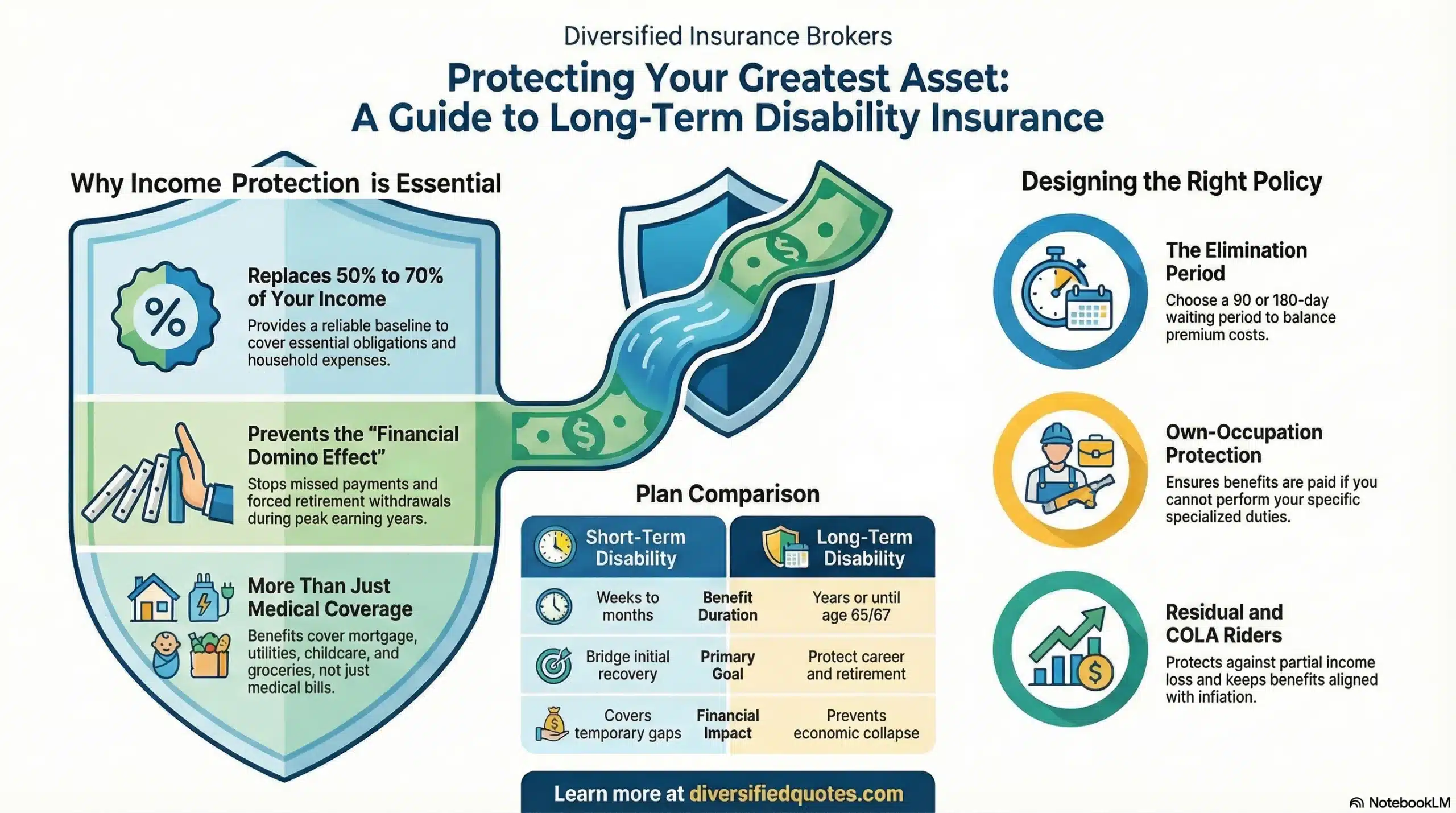
For broadcasting professionals in these physically and psychologically demanding field roles, disability insurance provides income replacement when injury or illness prevents continued professional work — whether the cause is an acute injury on a news-gathering assignment, an occupational health condition that develops from sustained physical field work demands, or a mental health condition from the cumulative psychological burden of covering traumatic content. Our resource on short-term vs. long-term disability insurance explains how the two layers of protection work together to cover both brief and extended income interruptions.
Income Structure Across Broadcasting: Market Size, Role, and Career Stage
Broadcasting income varies more dramatically across market size and career stage than in most other professional industries. An entry-level reporter at a small market television station in a secondary city may earn $35,000 to $45,000 annually — near the bottom of the professional broadcasting income range but still generating the household financial obligations that make disability insurance necessary. A mid-career anchor or reporter at a top-25 market television station may earn $80,000 to $200,000. A network correspondent or nationally recognized anchor may earn $500,000 to several million dollars annually. The BLS data reflects this range: broadcast announcers span from the lowest 10% earning below $12.50 per hour through the top 10% earning above $63.36 per hour — a range from approximately $26,000 annually to more than $131,000, with major market and network talent earning far above even these figures through contracts that reflect their market value.
For broadcast technicians, engineers, and production professionals, the income range is somewhat narrower: broadcast and sound technicians span from below $33,980 at the lowest 10% through above $104,610 at the top 10%. Audio engineers at major network operations, senior broadcast engineers, and technical directors at large stations can earn well above the BLS median, and union broadcasting professionals — covered by IATSE, SAG-AFTRA, NABET-CWA, or other relevant broadcast unions — may have additional benefits structures including guild disability provisions that provide baseline protection but often fall short of adequate income replacement at mid-career and above compensation levels.
The financial exposure of disability across this income range is real and meaningful at every level. An entry-level reporter earning $40,000 who requires 10 weeks of recovery from a vocal condition produces $7,700 in direct income loss. A major market anchor earning $150,000 who develops a clinical anxiety disorder requiring 6 months of leave loses $75,000 in income during that period. Disability insurance — individually purchased, with benefit amounts calibrated to actual income and policy provisions that cover the specific disability pathways most relevant to the individual’s role — is the financial protection that addresses this exposure across the full income range of the broadcasting workforce. Our resource on how much disability insurance you need provides the framework for this calculation.
Employer Group Coverage and Its Limitations for Broadcasting Professionals
Most full-time broadcasting professionals employed by television stations, radio stations, and network organizations receive employer group LTD coverage as part of their benefits package. Union-represented broadcasting professionals may additionally have access to guild or union disability benefit programs. These coverage structures provide important baseline protection, but they carry systematic limitations that create real income protection gaps for broadcasting professionals.
The standard group LTD 60% of base salary benefit cap may not reflect the total compensation that broadcasting professionals earn — particularly for on-air talent whose compensation packages include bonuses, appearance fees, and other contract elements above base salary that group policies typically exclude from benefit calculations. The 24-month own-occupation to any-occupation definition transition is a particularly significant limitation for broadcasters in specialized roles — a television anchor whose clinical depression prevents on-air work could theoretically be denied benefits at 24 months on the grounds that they retain capacity for non-broadcast employment, even when the specific on-air professional function that defines their career is impaired. Group policies also end with employment, which matters in an industry where employment relationships change through station consolidation, format changes, and the structural disruption that characterizes contemporary broadcasting.
Individual disability insurance that maintains own-occupation coverage for the full benefit period, protects actual total compensation including contract components above base salary, carries no 24-month mental health limitation, and is portable through any employment change is the standard of adequate protection for broadcasting professionals. For broadcasting professionals with existing coverage who want an independent evaluation, our disability insurance second opinion service provides a carrier-neutral review, and our resource on why working with an independent disability insurance broker matters explains how carrier-neutral comparison produces better outcomes.
Freelance and Independent Broadcasting Professionals
A significant and growing share of the broadcasting workforce operates as freelancers, independent contractors, or per-diem professionals — camera operators, field reporters, editors, audio engineers, graphics artists, and other technical and creative professionals who work project-by-project for multiple stations, networks, and production companies rather than as full-time employees of a single broadcast organization. For these independent broadcasting professionals, disability insurance is not a supplement to existing group coverage — it is the entire protection structure. There is no employer group LTD policy, no sick leave, and no paid time off. When illness or injury prevents work, income stops immediately and completely.
Freelance broadcasting professionals need individual disability insurance structured around self-employment income documentation — typically prior year tax returns showing net self-employment income from broadcast contracts, production fees, and related professional activities. The future increase option allows coverage to expand as freelance income grows through career advancement without new medical underwriting. Our resource on disability insurance for the self-employed covers income documentation and policy design for independent broadcasting professionals, and our resource on disability insurance for independent contractors addresses contract-based broadcasting work structures specifically.
When to Apply: The Case for Early Coverage in Broadcasting
The optimal time for a broadcasting professional to apply for disability insurance is as early in their career as possible — ideally upon completing their broadcast education and entering their first professional broadcasting position, before any documented vocal conditions, mental health treatment history, or occupational health conditions from field work have appeared in medical records. Broadcasting careers accumulate health history quickly: the vocal conditions that affect on-air talent, the PTSD and anxiety conditions that affect field reporters, and the ergonomic conditions that affect technical professionals can all generate documented health history within years of active professional broadcasting work.
A broadcaster who applies at age 24 upon starting their first on-air or technical position obtains the lowest locked-in lifetime premium at the cleanest health history point, with the broadest available coverage terms and no exclusion riders limiting the conditions most likely to produce a future disability claim. The future increase option purchased with an early policy allows coverage to expand as broadcasting career income grows — from entry-level small market through mid-market through major market or network compensation — without new medical underwriting. Every year of delay in a profession where vocal conditions, psychological occupational health conditions, and ergonomic conditions can generate documented health history that affects underwriting increases both the premium at future application and the probability that coverage options will be limited by documented occupational health history. Our resource on disability insurance for new professionals addresses early-career planning, and our resource on how to get the best disability insurance rates explains all the factors that determine coverage quality and cost.
Get Disability Insurance Quotes for Radio and Television Professionals
We compare options across carriers for broadcasting professionals to find the right combination of coverage, definition strength, and value for your specific role and market.
Request Disability Insurance OptionsQuestions? Call 800-533-5969
Financial Protection Essentials
Income protection resources and disability insurance planning tools for radio, television, and media professionals.
Talk With an Advisor Today
Choose how you’d like to connect—call or message us, then book a time that works for you.
Schedule here:
calendly.com/jason-dibcompanies/diversified-quotes
Licensed in all 50 states • Fiduciary, family-owned since 1980
FAQs: Disability Insurance for Radio and Television Industries
What are the main disability risks for radio and television professionals?
Broadcasting professionals face disability risks that vary significantly by role but fall into several consistent categories across the industry. On-air talent — anchors, reporters, announcers, and hosts — face a profession-specific risk through vocal conditions: nodules, polyps, hemorrhage, or other disorders requiring voice rest and treatment can prevent broadcasting entirely for weeks to months. Field reporters and journalists covering dangerous news environments face acute physical hazards and the cumulative psychological burden of traumatic content exposure that the Dart Center for Journalism and Trauma has documented produces significant rates of PTSD, depression, and anxiety in broadcast journalism populations.
Shift work and irregular schedules — common in broadcasting because most stations operate 24 hours a day — create cardiovascular, metabolic, and sleep disorder risks that accumulate over career-length timeframes of rotating schedule work. Deadline pressure and occupational stress from the high-stakes, time-critical nature of broadcast production generate the burnout and mental health conditions documented in media professional research. Broadcast technicians, camera operators, and editors face ergonomic conditions from sustained computer workstation use and the physical demands of heavy equipment handling that produce musculoskeletal injuries and repetitive strain conditions over career timeframes. Our resource on own-occupation disability insurance explains how the policy definition must protect the specific professional functions of each broadcasting role.
Does disability insurance cover voice conditions for on-air talent?
Yes — disability insurance covers income loss when a voice condition produces a qualifying disability under the policy definition, meaning the condition prevents the on-air professional from performing the material and substantial duties of their broadcasting occupation for the elimination period and beyond. A broadcast announcer or television anchor whose vocal fold nodules require 10 weeks of complete voice rest, or whose vocal condition requires surgical intervention and extended recovery before return to on-air professional performance is medically appropriate, has experienced a genuine occupational disability event that income replacement insurance addresses during the recovery period.
The own-occupation definition is particularly important for on-air talent in this context. Under a true own-occupation policy, the disability determination focuses on whether the professional can perform the specific functions of on-air broadcasting — which requires voice quality, vocal endurance, and vocal performance at a professional level — not simply whether they retain some general capacity to communicate. Under an any-occupation standard, an on-air talent with a significant voice condition might be denied benefits because they retain capacity for non-broadcasting work. The own-occupation definition prevents this outcome by protecting the broadcasting career specifically. Our resource on disability insurance riders explained covers how policy provisions are structured for specialized professional functions.
Do freelance camera operators and broadcast technicians qualify for disability insurance?
Yes — freelance camera operators, broadcast technicians, editors, audio engineers, and other independent broadcasting professionals qualify for individual disability insurance as self-employed workers. The key requirement is documented income. Freelancers with prior year tax returns showing net self-employment income from broadcast contracts and production fees have the documentation needed for standard individual disability insurance application. For freelancers in the early stages of their career whose income documentation doesn’t yet fully reflect current earning capacity, simplified-issue programs that provide coverage up to specified benefit limits without extensive income documentation offer accessible baseline protection.
For freelance broadcasting professionals, individual disability insurance is not a supplement to existing group coverage — it is the entire protection structure. There is no employer group LTD policy, no sick leave, and no paid time off. When illness or injury prevents work, income stops immediately and completely. Our resource on disability insurance for the self-employed covers income documentation and policy design for independent broadcasting professionals, and our resource on no-exam disability insurance explains simplified-issue options available for freelancers with variable income documentation.
What mental health coverage provisions should broadcasting professionals look for?
The most important mental health provision for broadcasting professionals — particularly field journalists, war correspondents, disaster coverage reporters, and other professionals with significant traumatic content exposure — is confirmation that the policy does not apply a 24-month benefit period limitation to mental and nervous condition claims. Most employer group LTD policies apply this standard cap, which means a broadcaster whose clinical PTSD or major depression from traumatic content exposure may require 3 or more years of treatment and recovery finds group benefits terminated at exactly 24 months. Individual disability insurance without this limitation, confirmed in the actual policy contract language, is the appropriate protection for broadcasting professionals whose occupational profile makes mental health a realistic disability pathway.
Beyond the 24-month limitation, the definition of covered mental health conditions matters — the policy should cover PTSD, major depressive disorder, generalized anxiety disorder, and other clinical mental health diagnoses that impair professional function, not merely acute crisis conditions. For journalists and field broadcasters who have already sought treatment for stress, anxiety, or trauma-related symptoms, our resource on disability insurance with preexisting conditions explains how documented health history affects underwriting outcomes and why applying before any such documentation exists is the optimal approach.
Is employer group disability coverage sufficient for broadcasting professionals?
For most broadcasting professionals, employer group LTD coverage provides a useful baseline but leaves meaningful income protection gaps. The 60% of base salary benefit cap typically excludes the bonus payments, appearance fees, and contract elements above base salary that are common in broadcasting compensation structures — particularly for on-air talent whose total compensation meaningfully exceeds base salary. The 24-month own-occupation to any-occupation definition transition is especially problematic for specialized broadcasting roles where the specific professional function — on-air performance, field reporting, specialized technical work — is distinct from generic employment capacity. Group policies also end when employment ends, which matters in a media industry that has experienced significant consolidation and employment disruption.
Individual disability insurance that maintains own-occupation coverage for the full benefit period, reflects actual total compensation including all contract components, carries no 24-month mental health limitation, and is portable through employment changes is the standard of comprehensive protection. Our resource on guaranteed issue group disability insurance explains group coverage structure, and for broadcasting professionals with existing coverage who want an independent evaluation, our disability insurance second opinion service provides a carrier-neutral review.
When is the best time for a broadcasting professional to apply for disability insurance?
The optimal time is as early in the broadcasting career as possible — ideally upon completing broadcast education and entering the first professional position, before any documented vocal conditions, mental health treatment, or occupational health history have appeared in medical records. A broadcaster who applies at age 24 upon starting their first on-air or technical position obtains the lowest locked-in lifetime premium at the cleanest health history point, with the broadest coverage terms and no exclusion riders. The future increase option purchased with an early policy allows coverage to expand as broadcasting career income grows from entry-level small market through major market or network compensation levels without new medical underwriting — preserving insurability regardless of what occupational health developments occur during an active broadcasting career.
Every year of delay increases both the premium at future application age and the probability that documented health history — vocal conditions for on-air talent, psychological occupational health conditions for field journalists, or ergonomic conditions for technical professionals — will limit the coverage available. A broadcaster who applies at 35 after 10 years of active professional work faces both substantially higher premiums and the potential for exclusion riders on conditions that have been documented during those years. Our resource on how to get the best disability insurance rates explains all the factors that determine coverage quality and cost for broadcasting professionals.
About the Author:
Jason Stolz, CLTC, CRPC, DIA, CAA and Chief Underwriter at Diversified Insurance Brokers (NPN 20471358), is a senior insurance and retirement professional with more than 25 years of real-world experience helping individuals, families, and business owners protect their income, assets, and long-term financial stability. As a long-time partner of the nationally licensed independent agency Diversified Insurance Brokers, Jason provides trusted guidance across multiple specialties—including fixed and indexed annuities, long-term care planning, personal and business disability insurance, life insurance solutions, Group Health, Travel Medical and Evacuation Insurance, and short-term health coverage. Diversified Insurance Brokers maintains active contracts with over 100 highly rated insurance carriers, ensuring clients have access to a broad and competitive marketplace.
His practical, education-first approach has earned recognition in publications such as VoyageATL, and contributions from his agency featured in Kiplinger and GoBankingRates— highlighting his commitment to financial clarity and client-focused planning. Drawing on deep product knowledge and years of hands-on field experience, Jason helps clients evaluate carriers, compare strategies, and build retirement and protection plans that are both secure and cost-efficient. Visitors who want to explore current annuity rates and compare options across multiple insurers can also use this annuity quote and comparison tool.
Explore More Disability Insurance Options: Browse our complete guide to Disability Insurance for Food, Hospitality, Arts & Entertainment — covering chefs, musicians, actors, bartenders, hospitality workers & entertainment professionals from 100+ carriers.
Last Reviewed: May 16, 2026 |
Reviewed by: Jason Stolz, CLTC, CRPC, DIA, CAA
Chief Underwriter, Diversified Insurance Brokers, Inc. | NPN: 20471358 | Diversified Insurance Brokers, Inc. — Licensed in all 50 states
Fact Checked by: Tonia Pettitt, CMIP©
Medicare Specialist, Diversified Insurance Brokers, Inc. | NPN: 14374308 | Diversified Insurance Brokers, Inc. — Licensed in all 50 states
Did you find this content helpful? Leave us a Google review — it helps others find trustworthy guidance too.
Editorial Standards: Diversified Insurance Brokers maintains rigorous editorial standards to ensure accuracy, clarity, and independence in all content. Learn more about our editorial standards and commitment to transparency.
