
Disability Insurance for Rheumatologists
As an Independent Disability Insurance Broker, we have access to exclusive discounts and negotiated pricing most captive agents can’t offer — see the full breakdown near the end of this page.
Disability Insurance for Rheumatologists

Jason Stolz CLTC, CRPC, DIA, CAA
Disability insurance for rheumatologists is a critical and often underplanned financial protection for physicians who have invested 9 years in post-undergraduate medical training — four years of medical school, three years of internal medicine residency, and a two-year rheumatology fellowship — to reach independent practice in one of medicine’s most intellectually demanding, chronically under-resourced, and structurally burnout-prone specialties. Rheumatologists diagnose and manage the full spectrum of musculoskeletal and systemic autoimmune conditions — rheumatoid arthritis, lupus, psoriatic arthritis, ankylosing spondylitis, gout, vasculitis, myositis, scleroderma, and the broad landscape of inflammatory and connective tissue disease that defines their clinical scope — providing the longitudinal specialist care that these complex chronic conditions require across decades of patient relationships. Despite this demanding clinical role and full physician training investment, rheumatology compensation ranks among the lowest in physician medicine: Medscape’s 2024 Physician Compensation Report placed average rheumatologist earnings at $286,000, Doximity’s 2025 report at $324,954, and AMN Healthcare market data found a range of $214,000 to $450,000 with a median around $341,000. This compensation-to-training-investment imbalance is itself a documented driver of the specialty’s 51% burnout rate — and that burnout, not physical injury, is the primary disability risk for rheumatologists. The ACR has projected a 31% decline in rheumatology supply against 138% growth in demand by 2030, meaning each practicing rheumatologist operates under the compound pressure of workforce scarcity, overwhelming referral volume, and an administrative burden — particularly the prior authorization process for biologic medications — that is among the most time-consuming in all of physician medicine. At Diversified Insurance Brokers, we help rheumatologists design disability coverage that reflects the full physician-level income protection need, the specialty’s specific burnout-driven disability risk, and the career planning considerations of a highly trained specialist practicing in a high-demand, under-resourced environment. For the foundational physician disability planning framework, our resource on disability insurance for physicians provides essential background before examining rheumatology-specific considerations in depth.
Protect Your Income as a Rheumatologist
Compare disability insurance options designed for rheumatologists across academic, employed, and private practice settings.
Request Disability Insurance Options
Questions? Call 800-533-5969
What Rheumatologists Do and Why Their Specialty Creates Significant Disability Risk
Rheumatology is one of medicine’s most cognitively demanding specialties — defined by diagnostic complexity, longitudinal patient relationship management, and the sustained intellectual engagement required to manage some of the most difficult conditions in all of medicine to classify, monitor, and treat effectively. Rheumatologists are internists-turned-specialists who receive referrals from primary care and other specialties for patients with joint, muscle, bone, and systemic symptoms suggesting inflammatory or autoimmune disease. They function as both diagnosticians and long-term care managers for patients whose conditions are chronic, progressive, and in many cases life-altering or life-threatening if inadequately managed.
In the outpatient setting — where the vast majority of rheumatology practice is concentrated — rheumatologists conduct detailed musculoskeletal and systemic examinations, interpret complex laboratory panels including autoantibody profiles and inflammatory markers, perform joint aspiration and injection procedures, coordinate diagnostic imaging review, prescribe and monitor biologic and immunosuppressive therapies with significant safety surveillance requirements, and maintain the longitudinal patient relationships that autoimmune disease management demands across years and decades. A rheumatologist managing a full panel of patients with rheumatoid arthritis, lupus, and other systemic autoimmune conditions must simultaneously track disease activity, monitor lab values for medication toxicity, navigate prior authorization processes for biologic therapies, and provide the education and reassurance that patients with frightening, unpredictable conditions consistently need.
Inpatient rheumatology consultation adds the hospital environment — acute rheumatologic emergencies including lupus nephritis, vasculitis flares, inflammatory myopathy crises, and crystalline arthropathy requiring urgent management — and the interprofessional coordination that hospitalized patients with complex systemic disease require. Emergency consultations for undifferentiated inflammatory presentations, urgent steroid management decisions, and the management of serious complications from immunosuppressive therapies all fall within the rheumatologist’s inpatient scope.
The procedural component of rheumatology — while more limited than procedural specialties — adds meaningful physical demand. Joint aspiration and injection procedures require sustained fine motor precision and positioning, particularly for smaller joint injections of the wrists, hands, feet, and ankles. Ultrasound-guided procedures increasingly require prolonged scanning postures that generate cervical and upper extremity loading. A rheumatologist whose hand condition impairs the precision of joint injection technique, or whose wrist or shoulder condition limits the procedural scope of their practice, has experienced a genuine partial disability even when cognitive function remains intact.
Burnout: The Dominant Disability Risk in Rheumatology
No disability risk assessment of rheumatology can be complete without a thorough examination of burnout — because in this specialty, burnout is not a background concern but a documented, prevalent, and structurally driven occupational health crisis that has been formally recognized by the specialty’s own professional organizations as a primary workforce threat. A 2020 study found that 51% of rheumatologists at a continuing medical education meeting met at least one domain of the Maslach Burnout Inventory — placing the specialty among the higher-burnout physician fields in a profession-wide landscape where overall physician burnout has remained above 40% for over a decade according to AMA data.
The structural drivers of rheumatology burnout are specific, well-understood, and deeply embedded in the specialty’s practice environment. The first and most pervasive driver is the compensation-to-training-investment imbalance that defines rheumatology’s economic position in physician medicine. Medscape’s surveys have consistently found 53% of rheumatologists reporting they feel unfairly compensated — one of the highest dissatisfaction rates in the specialty surveys — and 41% taking on extra work to supplement their income. A physician who has completed 9 years of post-undergraduate training and carries $200,000 to $300,000+ in medical school debt to enter a specialty paying $284,000 to $324,000 annually experiences a financial stress and professional dissatisfaction that compounds the operational stressors of the clinical environment.
The second major burnout driver is the administrative burden of managing patients on biologic medications — the immunotherapy agents that have transformed inflammatory disease outcomes but that require extensive prior authorization processes, step therapy documentation, insurance appeals, and ongoing authorization maintenance that consume disproportionate physician and staff time. Rheumatologists managing large panels of biologic patients navigate a near-continuous flow of prior authorization requests, denial appeals, and peer-to-peer review calls that directly reduce the time available for patient care and generate the frustration and moral injury that are well-established burnout accelerants. Research has consistently identified administrative burden as the top driver of physician burnout across specialties — and rheumatologists, with their high biologic prescription volumes, face this burden particularly acutely relative to their compensation level.
The third structural driver is the workforce shortage that places each actively practicing rheumatologist under demand pressure that far exceeds their capacity to provide timely access. The ACR’s 2015 Workforce Study projected that by 2030, the supply of adult rheumatologists would decline 31% relative to demand growing by 138%. A 2024 study found that 72% of U.S. counties had no clinically active rheumatologist. New patient appointment wait times of 4 to 6 months or more are reported across many markets — creating the daily moral injury of knowing that patients with potentially joint-destructive and organ-threatening disease are waiting months for the specialist evaluation they need. This persistent inability to provide timely care to patients who urgently need it, in a specialty where delay can mean irreversible joint destruction or organ damage, generates the moral injury that research has documented as a powerful independent burnout driver in rheumatology specifically.
When these compounding stressors produce clinical major depressive disorder, generalized anxiety disorder, or other mental health conditions that impair the sustained diagnostic precision, complex therapeutic judgment, and longitudinal patient engagement that rheumatology practice requires, they constitute genuine occupational disability. A rheumatologist who can no longer maintain the sustained attention required for safe biologic therapy monitoring, the cognitive clarity needed for complex autoimmune disease diagnosis, or the emotional availability that chronic disease patient relationships demand is experiencing genuine impairment of their professional function — disability that insurance with appropriate mental health coverage must address without a restrictive 24-month benefit period limitation. Our resource on disability insurance riders explained covers how mental health provisions are structured across different policy types, and our resource on why working with an independent disability insurance broker matters explains how carrier-specific expertise in mental health provisions drives better coverage outcomes for physicians in high-burnout specialties.
The 24-Month Mental Health Limitation: The Most Dangerous Policy Trap for Rheumatologists
Many standard disability insurance policies — including the majority of employer group LTD policies and some individual policies — apply a benefit period limitation specifically to mental and nervous condition claims. Under this limitation, even when a policy covers mental health disabilities in principle, it terminates mental health benefits after 24 months regardless of whether the condition has resolved. For most physician specialties, this is a concerning policy provision. For rheumatologists — whose primary disability risk pathway runs directly through burnout-driven mental health conditions at a documented 51% burnout prevalence — it is the most dangerous policy trap in the entire coverage landscape.
A rheumatologist who develops disabling major depression from the compound occupational stressors of their practice may require 3 to 5 years of treatment, recovery, and gradual return to practice before they can resume full clinical function — or may never return to full independent rheumatology practice. A policy that caps mental health benefits at 24 months leaves the remaining recovery period completely unprotected at exactly the point when the long-term financial consequences of extended disability are most severe. Explicitly confirming the absence of this limitation — confirming in the actual policy contract language that mental health benefits are not capped at 24 months — is the single most important policy evaluation step for any rheumatologist comparing disability coverage options. Our resource on disability insurance with preexisting conditions covers how documented mental health history affects underwriting, reinforcing why applying before any burnout treatment documentation exists is the optimal approach for rheumatologists in high-stress practice environments.
Income Structure and the Financial Stakes of Disability
Rheumatologist income, while among the lowest of physician specialties by survey average, remains significantly above the general professional workforce and carries the full financial obligations of a physician career — medical school debt, professional liability insurance, the cost of maintaining board certification and continuing medical education, and the household financial structure that a physician-level career enables. Medscape 2024 placed average compensation at $286,000; Doximity 2025 at $324,954; AMN Healthcare market data found ranges of $214,000 to $450,000 with a median around $341,000. Academic rheumatologists typically earn at the lower end with protected research time, while private practice and high-demand market rheumatologists reach compensation significantly above the specialty average.
The training investment context amplifies the financial stakes of disability. Medical school tuition and living expenses typically generate $200,000 to $300,000 or more in educational debt before residency and fellowship stipends begin. A rheumatologist who becomes disabled and cannot practice has not only lost current and future specialty income — they have foreclosed the long-term return on a decade of training investment that their credential represents, while continuing to service the debt that training generated. The financial gap between “unable to practice rheumatology” and “able to perform some other work” is precisely the gap that own-occupation disability insurance bridges — and the gap that any-occupation standards applied at 24 months by group policies fail to address for this specialty-trained physician. Our resource on how much disability insurance you need helps translate specific rheumatologist income and financial obligations into appropriate benefit amounts, and our resource on disability income insurance with COLA covers inflation protection for long-duration claims that may extend across decades of a career foreclosed by early disability.
Employer Group Coverage Gaps for Employed Rheumatologists
Most rheumatologists are employed by hospitals, academic medical centers, or large physician organizations, and nearly all receive group LTD coverage as an employer benefit. The systematic limitations of that coverage create the financial exposure gap that individual disability insurance must address. Standard group LTD policies replace 60% of base salary subject to a monthly maximum benefit cap typically between $10,000 and $20,000 per month. A rheumatologist earning $324,000 annually ($27,000 per month) whose group policy caps at $15,000 per month has only 56% of actual monthly income protected — leaving 44% completely unprotected even when the group policy is functioning exactly as designed. Productivity bonuses and compensation components above base salary are typically excluded from the group policy benefit calculation, widening this gap further.
The disability definition transition at 24 months from own-occupation to any-occupation is the second and most consequential limitation — particularly for rheumatologists whose primary disability pathway involves mental health conditions. An any-occupation standard at 24 months could deny benefits for a rheumatologist with ongoing major depression on the grounds that they retain theoretical capacity for general internal medicine or administrative physician work, even when their specialty-trained function and specialty income are permanently compromised. Group policies are also not portable — they end when employment ends, which matters for rheumatologists who may transition between academic and private practice settings, move to locum arrangements, or change hospital employment during their career. Individual disability insurance filling the income gap above the group cap, maintaining own-occupation coverage for the full benefit period with no 24-month mental health limitation, and following the rheumatologist through any employment change is the standard of comprehensive physician income protection. Our resource on guaranteed issue group disability insurance explains group coverage structure, and our resource on high income disability insurance covers benefit amount design for physician-level compensation.
The Own-Occupation Definition: What It Protects for Rheumatologists
For a rheumatologist, the own-occupation disability definition protects the specific cognitive and clinical functions that define rheumatology practice — functions that are not replicated in any other physician role and that represent the entire value of the specialty training investment. These functions include the complex pattern-recognition diagnostic reasoning for inflammatory and autoimmune disease, the safe prescribing and monitoring of biologic and immunosuppressive therapies with their significant safety profiles, the interpretation of autoantibody and inflammatory marker panels in clinical context, the joint examination skills that diagnose synovitis and structural joint disease, and the longitudinal patient relationship management that chronic disease care requires across decades.
Under true own-occupation coverage, a rheumatologist whose burnout-driven depression or anxiety disorder impairs the sustained diagnostic precision required for safe autoimmune therapy management receives disability benefits even if they theoretically retain capacity for less-demanding physician work. Under any-occupation standard — applied by group policies at 24 months — the same rheumatologist might be denied because they could perform general internal medicine consultative work or administrative physician roles, even when their specialty function is permanently impaired. For a physician who invested 9 years and $250,000+ in training to develop a specific clinical expertise, this definition failure eliminates coverage for the professional capability that represents the entire return on that investment. The own-occupation definition must apply for the full benefit period — not just the first 24 months — to genuinely protect the rheumatologist’s specialty-specific income. Our resource on own-occupation disability insurance explains in detail how this critical distinction operates in physician claim scenarios.
Practice Setting Variations and Additional Coverage Considerations
Academic rheumatologists typically practice with protected research and teaching time alongside clinical duties, at compensation levels at the lower end of the specialty’s range. Academic positions generally include employer benefits with group LTD coverage, but at the compensation level where the gap between group policy caps and actual income is proportionally significant. Burnout in academic rheumatology reflects the compound pressure of clinical productivity requirements alongside grant funding, research output demands, and academic administrative responsibilities — creating a different but equally real burnout environment from private practice.
Private practice rheumatologists who own their practices face the two-layer financial exposure that all healthcare practice owners face — personal income replacement and practice overhead protection. A private practice rheumatologist who cannot see patients loses both household income and the ongoing fixed costs of operating the practice: office lease, staff wages, electronic health record costs, malpractice insurance, billing service fees. Our resource on disability business overhead expense coverage explains how a separate BOE policy addresses the practice cost layer, and our resource on business overhead disability insurance covers how this policy works alongside personal DI. For practice-owning rheumatologists with partners, our resource on key person disability insurance addresses the business-level impact of a partner’s disability.
Hospital-employed rheumatologists operate under the most direct workforce shortage pressure — the highest referral volumes, the most urgent call for new patient capacity, and the institutional employment structures that may provide less practice autonomy but stronger benefits packages. The group coverage limitations described above apply fully in this setting, and the portability advantage of individual disability insurance is particularly relevant for hospital-employed rheumatologists given the consolidation and restructuring of hospital-based physician employment that has accelerated in recent years.
Designing a Disability Policy for Rheumatologists
Effective disability insurance for rheumatologists integrates physician-level income protection, the specialty’s burnout-driven primary disability risk, and the financial context of a long-trained specialist with significant educational debt into coverage built around what would actually protect the rheumatologist’s financial life during a realistic disability event.
The own-occupation definition must apply for the full benefit period and protect the specific functions of rheumatology practice — not just “physician” generally. The mental health provision must carry no 24-month benefit period limitation, confirmed explicitly in the policy contract language. The benefit amount must reflect actual total compensation including any productivity components, requiring individual coverage that fills the income gap above group policy caps. For a rheumatologist earning $324,000, a $15,000 group policy cap leaves $12,000 in unprotected monthly income — the gap that individual supplemental coverage must address. The benefit period must extend to age 65 or 67 — a burnout-driven disability occurring at age 42 represents a 23-year income gap that a 5-year benefit period leaves almost entirely unaddressed.
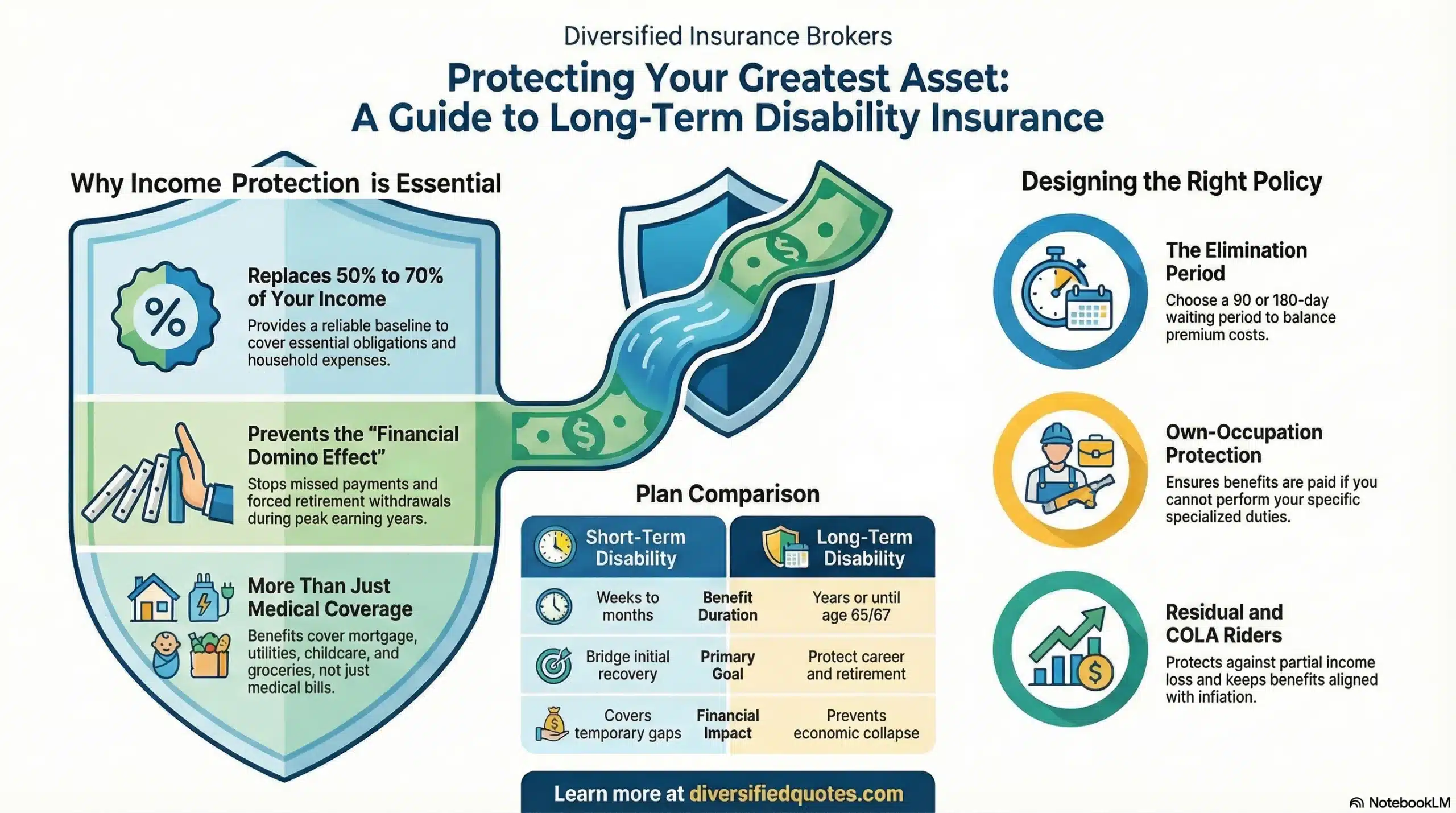
The residual disability rider is important for rheumatologists whose burnout or physical conditions may reduce clinical capacity below full productivity without producing complete inability to work — paying proportionately as income declines through partial disability scenarios. Our resource on residual disability insurance benefits explained covers how this works. The elimination period should reflect actual financial reserves — our resource on disability insurance elimination periods explained provides the calibration framework. The future increase option allows coverage to expand as productivity income and career advancement increase compensation without new medical underwriting — our resource on disability insurance future insurability riders covers how this protection works for physicians at different career stages. For rheumatologists with existing coverage who want an independent evaluation, our disability insurance second opinion service provides an unbiased review against the full market of available options.
When to Apply: The Timing Decision That Shapes Lifetime Coverage Quality
For rheumatologists, the optimal application window is during internal medicine residency or rheumatology fellowship — before attending-level practice has produced the burnout treatment documentation, anxiety episodes, or other documented health conditions that may complicate underwriting for the specialty’s primary disability pathway. A rheumatology fellow who applies at age 29 or 30 obtains the lowest available premium for a career-long policy at the cleanest point in their health history — before years of high-pressure, high-volume attending rheumatology practice have produced any documented episodes of stress-related health treatment.
The urgency for rheumatologists already in attending practice without individual coverage is real and compounds with each passing year. Every year increases the premium at eventual application age and, in a specialty with 51% burnout prevalence, increases the probability that documented mental health treatment history will affect the mental health coverage provisions of a later-obtained policy — which is precisely the coverage most critical to protect. A rheumatologist who has sought care for anxiety, sleep disturbance, or burnout-related symptoms may find those episodes affect the mental health provisions of a policy obtained after the fact. Applying while health history is clean produces both the most cost-effective and the most comprehensive coverage outcome. Our resource on disability insurance for medical residency explains the specific planning considerations for physicians in training, and our resource on how to get the best disability insurance rates explains all the factors that determine coverage quality and cost for physician specialty applicants.
Get Disability Insurance Quotes for Rheumatologists
We compare options across carriers for physician-level income and rheumatology-specific risk profiles to find the right combination of mental health coverage, definition strength, and value.
Request Disability Insurance Options
Questions? Call 800-533-5969
Financial Protection Essentials
Income protection resources and disability insurance planning tools for physicians and medical specialists.
Related Pages
Talk With an Advisor Today
Choose how you’d like to connect—call or message us, then book a time that works for you.
Schedule here:
calendly.com/jason-dibcompanies/diversified-quotes
Licensed in all 50 states • Fiduciary, family-owned since 1980
Frequently Asked Questions: Disability Insurance for Rheumatologists
A 2020 study found 51% of rheumatologists met at least one domain of the Maslach Burnout Inventory — among the higher-burnout rates in physician medicine. The structural drivers are specific and deeply embedded. Compensation ranks among the lowest in physician medicine ($284,000 to $324,954 average) despite requiring the full 9-year post-undergraduate physician training investment, and 53% of rheumatologists report feeling unfairly compensated. The prior authorization burden for biologic medications — some of the most transformative treatments in modern medicine — consumes hours of physician and staff time per patient through step therapy requirements, documentation demands, and appeals that must be repeated continuously. The ACR projects the rheumatology workforce will decline 31% relative to 138% demand growth by 2030, meaning currently practicing rheumatologists face referral volumes far exceeding their capacity — a daily source of moral injury from knowing patients with joint-destructive or organ-threatening disease wait months for specialist evaluation.
When this compound occupational stress produces clinical major depression, anxiety disorder, or other conditions that impair the sustained diagnostic precision and longitudinal patient management that rheumatology requires, it constitutes genuine occupational disability. Disability insurance without a 24-month mental health benefit period limitation is therefore the foundational coverage requirement for this specialty. Our resource on disability insurance riders explained covers how mental health provisions are structured across policy types, and our resource on disability insurance with preexisting conditions explains why applying before any burnout treatment is documented is the optimal approach.
The workforce shortage affects disability planning in two distinct ways. First, the demand-supply imbalance — 72% of U.S. counties have no clinically active rheumatologist and the ACR projects a worsening shortage through 2030 — creates the specific occupational stress environment driving the specialty’s 51% burnout rate. Overwhelming referral volumes, long new-patient wait times, and the moral injury of being unable to provide timely access to patients with serious inflammatory disease are the structural burnout accelerants that make mental health the primary disability pathway for this specialty. Selecting disability coverage that addresses this pathway without a 24-month mental health limitation is the direct planning implication.
Second, the shortage means each individual rheumatologist’s continued ability to practice is especially valuable to their patient community — patients with rheumatoid arthritis, lupus, or vasculitis may have no alternative specialist locally if their rheumatologist becomes disabled. This underscores the importance of protecting career longevity through disability coverage that ensures a disability event does not permanently end a career that patients genuinely depend on. Our resource on disability insurance for physicians provides the broader physician planning context within which rheumatology-specific considerations sit.
For most rheumatologists, employer group LTD coverage leaves significant and consequential gaps. Standard group policies cap monthly benefits at $10,000 to $20,000 per month. A rheumatologist earning $324,000 annually ($27,000 per month) whose group policy caps at $15,000 per month has only 56% of actual monthly income protected — leaving $12,000 per month completely unprotected. For rheumatologists with productivity bonuses and compensation above base salary — which group policies typically exclude from benefit calculations — the gap is wider still.
The 24-month own-occupation to any-occupation definition transition is the most dangerous group policy limitation for rheumatologists. An any-occupation standard could deny benefits for a rheumatologist with ongoing major depression who retains theoretical capacity for general internal medicine or administrative physician work — even when specialty-trained function is permanently compromised. Group policies also end with employment, which matters for rheumatologists who transition between academic and private practice settings. Individual disability insurance filling the income gap above the group cap, maintaining own-occupation coverage for the full benefit period with no 24-month mental health cap, and portable through any employment change is the standard of comprehensive protection. Our resource on high income disability insurance covers benefit amount design for physician-level income, and our resource on guaranteed issue group disability insurance explains group coverage structure.
For rheumatologists, own-occupation coverage protects the specific clinical functions that define specialty rheumatology practice — functions not replicated in any other physician role. These include complex pattern-recognition diagnostic reasoning for inflammatory and autoimmune disease, safe prescribing and monitoring of biologic and immunosuppressive therapies with significant safety surveillance requirements, interpretation of autoantibody panels and inflammatory markers in clinical context, the joint examination skills that identify synovitis and structural disease, and the longitudinal patient relationship management that chronic autoimmune disease care requires across decades.
Under true own-occupation coverage, a rheumatologist whose burnout-driven depression or anxiety impairs the sustained precision and judgment that safe biologic therapy management requires receives benefits even with theoretical capacity for less-demanding physician work. Under any-occupation standard — applied by group policies at 24 months — the same physician might be denied because they retain capacity for general internal medicine or administrative roles, even when their specialty function is permanently impaired. For a physician who invested 9 years and $200,000 to $300,000+ in training to develop a specific expertise, this definition failure eliminates coverage for the professional capability representing the entire return on that investment. Our resource on own-occupation disability insurance explains how this distinction operates in real physician claim scenarios.
The compensation-to-training-investment imbalance creates a financial structure that makes disability insurance more urgently necessary than in higher-paid physician specialties. A rheumatologist who has completed 9 years of post-undergraduate training and carries $200,000 to $300,000+ in medical school debt enters a specialty that pays $284,000 to $324,000 on average — the lowest tier of physician compensation. This means the financial margin available to absorb a disability period without income replacement is thinner than in surgical or procedural specialties. The same physician earning $290,000 with $250,000 in educational debt and the household expenses of an attending physician has significantly less financial runway during an unprotected disability than a higher-paid colleague with the same debt.
Additionally, the 53% of rheumatologists who report feeling unfairly compensated and the 41% who take on extra work to supplement income are often operating at the margins of their financial structure — making a disability that eliminates or severely reduces income especially damaging. Disability insurance providing genuine income replacement is the protection that ensures a health event does not produce financial catastrophe on top of the clinical challenge it already represents. Our resource on why young physicians need disability coverage addresses the financial urgency argument, and our resource on disability insurance for medical residency explains why establishing coverage during training produces the best financial outcome.
The optimal time is during internal medicine residency or rheumatology fellowship — before attending-level practice has produced the burnout treatment documentation, anxiety episodes, or other health conditions that may affect underwriting for the specialty’s primary mental health disability pathway. A rheumatology fellow applying at age 29 or 30 obtains the lowest available premium for a career-long policy at the cleanest point in their health history — before years of high-pressure attending practice have produced any documented stress-related health treatment. The future increase option purchased alongside the base policy allows coverage to expand from fellowship stipend to attending to peak career compensation without new medical underwriting, preserving insurability as income grows.
For rheumatologists already in attending practice without individual disability coverage, the urgency compounds with each year. In a specialty with 51% burnout prevalence, every year of active practice increases the probability that documented mental health treatment history will affect the mental health coverage provisions of a later-obtained policy — which is precisely the coverage most critical to protect. A rheumatologist who has already sought care for anxiety, sleep disturbance, or burnout-related symptoms should apply immediately while coverage options remain fully available. Our resource on how to get the best disability insurance rates explains all the factors that determine coverage quality and cost, and our disability insurance second opinion service provides independent evaluation for those with existing coverage who want to confirm it is adequate.
About the Author:
Jason Stolz, CLTC, CRPC, DIA, CAA and Chief Underwriter at Diversified Insurance Brokers (NPN 20471358), is a senior insurance and retirement professional with more than 25 years of real-world experience helping individuals, families, and business owners protect their income, assets, and long-term financial stability. As a long-time partner of the nationally licensed independent agency Diversified Insurance Brokers, Jason provides trusted guidance across multiple specialties—including fixed and indexed annuities, long-term care planning, personal and business disability insurance, life insurance solutions, Group Health, Travel Medical and Evacuation Insurance, and short-term health coverage. Diversified Insurance Brokers maintains active contracts with over 100 highly rated insurance carriers, ensuring clients have access to a broad and competitive marketplace.
His practical, education-first approach has earned recognition in publications such as VoyageATL, and contributions from his agency featured in Kiplinger and GoBankingRates— highlighting his commitment to financial clarity and client-focused planning. Drawing on deep product knowledge and years of hands-on field experience, Jason helps clients evaluate carriers, compare strategies, and build retirement and protection plans that are both secure and cost-efficient. Visitors who want to explore current annuity rates and compare options across multiple insurers can also use this annuity quote and comparison tool.
Explore More Disability Insurance Options: Browse our complete guide to Disability Insurance for Physicians & Medical Specialists — covering physicians, surgeons, anesthesiologists, radiologists, podiatrists & medical specialists from 100+ carriers.
Last Reviewed: June 8, 2026 |
Reviewed by: Jason Stolz, CLTC, CRPC, DIA, CAA
Chief Underwriter, Diversified Insurance Brokers, Inc. | NPN: 20471358 | Diversified Insurance Brokers, Inc. — Licensed in all 50 states
Fact Checked by: Tonia Pettitt, CMIP©
Medicare Specialist, Diversified Insurance Brokers, Inc. | NPN: 14374308 | Diversified Insurance Brokers, Inc. — Licensed in all 50 states
Did you find this content helpful? Leave us a Google review — it helps others find trustworthy guidance too.
Editorial Standards: Diversified Insurance Brokers maintains rigorous editorial standards to ensure accuracy, clarity, and independence in all content. Learn more about our editorial standards and commitment to transparency.
