
Life Insurance for Truck Drivers
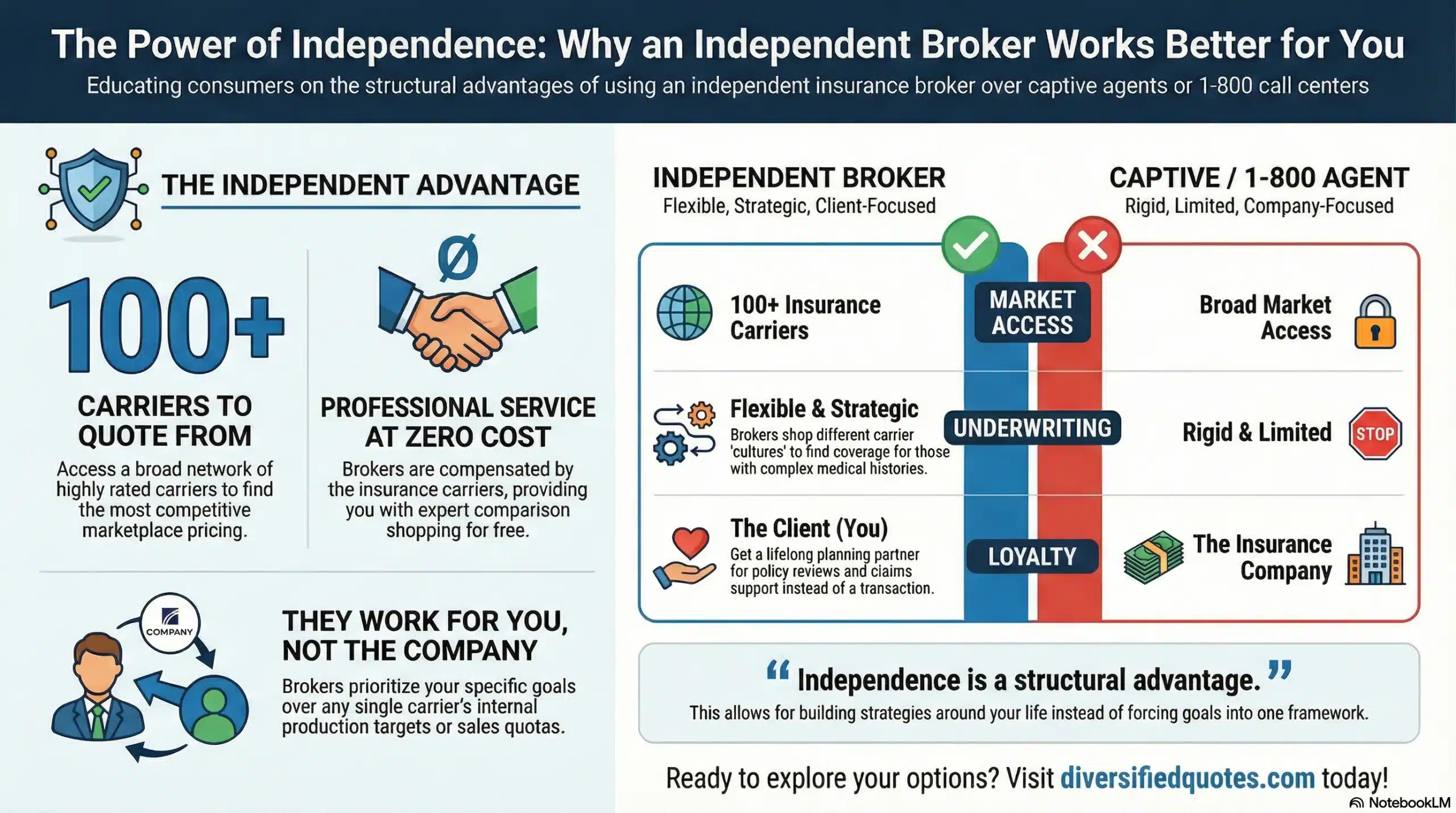
As an Independent Life Insurance Broker, we compare rates across 100+ carriers and prescreen every application before submission.
Life Insurance for Truck Drivers

Jason Stolz CLTC, CRPC, DIA, CAA
Truck drivers can qualify for strong life insurance rates, and most do. Over the past ten years, about 80% of the truck driver applications our office has placed were approved at Standard or better, including long-haul and owner-operator drivers. The job title rarely decides the outcome. What decides it is how the application describes the work and which carrier sees it first, which is why presenting trucking risk accurately matters as much as your health history. A 32-year-old local delivery driver with a clean CDL and a 48-year-old long-haul owner-operator hauling hazardous materials are both truck drivers, but carriers price them very differently, and the carriers that look at route, cargo, and mileage instead of applying a blanket surcharge produce the better offers.
The coverage matters because the paycheck does. Bureau of Labor Statistics data show that heavy and tractor-trailer truck drivers earn a median wage above the median for all occupations, and in many households that one income carries a mortgage, a truck note, and a family at the same time. At Diversified Insurance Brokers, we represent over 100 carriers, and Prudential and Banner Life are the two we turn to most often for trucking profiles. Our overview of high-risk life insurance services explains how we handle complex occupations, and our guide to how life insurance works covers the basics for first-time buyers.
See Real-Term Rates Side by Side
Life Insurance Quoter
Underwriters Price the Route, the Cargo, and the Record, Not the Job Title
Carriers do not all evaluate commercial drivers the same way. Some apply a single surcharge to anyone with a CDL. Others, including the carriers we use most for trucking cases, look at the details of the work and price the actual risk. Getting a good result starts with giving the underwriter those details instead of leaving them to guess.
Before you apply, gather six pieces of information: your route type, whether local, regional, or long-haul; what you haul, whether general freight, food, equipment, or hazardous materials; your annual miles; whether you are a company driver, an independent contractor, or an owner-operator; your CDL status and motor vehicle record for the past three to five years; and any safety program or fleet telematics data your employer keeps. A clear answer to each of those questions lets an underwriter rate you on your own record rather than on the worst case for the profession.
Our process follows the same order every time. We prescreen your driving record, cargo, and health history first, match the file to the carrier most likely to credit your strengths, and only then submit a formal application. That sequence is what keeps a manageable profile from ending up with a rating it did not need.
How Underwriters Evaluate Trucking Risk: The Spectrum That Determines Pricing
The table below shows how the main underwriting factors usually play out for different driver profiles. Finding where you fall on each one gives a realistic idea of the rate class you can expect and the kind of carrier most likely to offer it.
| Driver Profile | Route Type | Cargo Risk Level | Typical Underwriting Outcome | Likely Rate Class |
|---|---|---|---|---|
| Local delivery driver — clean record, good health | Local, predictable routes | Low — consumer goods, food, general freight | Favorable — many carriers approve at standard or preferred | Standard to preferred plus |
| Regional driver — company employee, clean record | Regional, daytime/overnight | Moderate — general commercial freight | Generally favorable with clean record | Standard |
| Long-haul company driver — clean record, managed health | OTR — multiple states, extended trips | Moderate — general commercial freight | Variable — depends on health and miles driven | Standard to table-rated |
| Long-haul owner-operator — clean record, good health | OTR — high mileage, varied routes | Moderate to high — depends on cargo | Achievable at competitive rates with right carrier | Standard |
| Hazmat carrier — any route type | Varies | High — regulated hazardous materials | More scrutiny; specialized carriers often needed | Standard to rated; carrier-specific |
| Any driver — poor driving record or recent incidents | Any | Any | Significant surcharge or decline at standard carriers | Rated to declined; specialized market required |
Our own results bear this out. About 80% of the truck driver applications we have placed over the past ten years were approved at Standard or better, and some came in higher than drivers expected. One long-haul driver in the mid-fifties with an elevated BMI, the kind of file most people assume will be rated, was approved at Preferred because a strong family history and other healthy markers earned underwriting credits. That result came from matching the file to a carrier that rewards those strengths, which is the practical work an independent broker does for truck drivers. Our resource on best high-risk life insurance companies covers the carrier landscape for occupationally complex profiles.
Company Drivers vs Owner-Operators: Why the Distinction Matters for Life Insurance
Company drivers and owner-operators are different planning situations, not just different employment classifications. Company drivers usually work under an employer’s safety program, maintenance schedule, and compliance oversight, and that structure often helps in underwriting because it documents consistent, regulated driving. The coverage goal is usually simple: replace income and protect the household.
Owner-operators have more to cover. When the owner dies, the family still needs income, and the business still owes on truck and trailer loans, equipment leases, accounts payable, and in some cases obligations to a partner or co-owner. That is why the right coverage amount for an owner-operator is usually higher than for a company driver with the same household income: the death benefit has to close both the personal gap and the business gap.
Many owner-operators are best served by two policies rather than one: a personally owned term policy sized to replace household income, and a separate policy sized to the equipment debt and business obligations, each placed with whichever carrier prices that piece best. Our resource on life insurance for business owners covers the framework for structuring both personal and business coverage, and our resource on buy-sell life insurance covers the business continuity structure for owner-operators with partners.
Health Conditions Common in Trucking and How They Affect Life Insurance Underwriting
Long hours behind the wheel, irregular sleep, limited access to healthy food, and little time for exercise all show up in underwriting. Three conditions come up again and again in truck driver applications, and in each case, documented control matters more than the diagnosis itself.
Hypertension and elevated blood pressure are among the most commonly disclosed health conditions in truck driver life insurance applications. Well-controlled blood pressure, documented through consistent prescription management and regular follow-up care, is not a disqualifying condition. Carriers look at current readings, medication history, and treatment compliance. Drivers whose blood pressure is controlled and documented typically qualify for standard or near-standard rates, while uncontrolled readings or inconsistent treatment lead to larger rating adjustments. Our resource on life insurance for high blood pressure covers how specific readings and medication profiles affect rate class outcomes.
Type 2 diabetes is the second condition we see most often, particularly among long-haul drivers. An A1c in the well-controlled range, consistent physician oversight, a stable medication regimen, and no significant complications produce far better outcomes than uncontrolled diabetes with elevated A1c and complications. Our resource on life insurance for diabetes covers the complete underwriting framework for diabetic applicants across different control levels.
Sleep apnea is the third, and it is more common in trucking than in most occupations because of how drivers are screened for medical certification. The FMCSA Medical Examiner’s Handbook guides certified medical examiners on sleep apnea, and an examiner who sees signs of the condition may require evaluation and treatment before certifying a driver. As a result, many truck drivers have a formal diagnosis and CPAP compliance records. That documentation can work in the driver’s favor: a driver with a confirmed diagnosis and consistent CPAP use may underwrite better than an undiagnosed driver whose actual risk is higher. Our resource on life insurance for sleep apnea covers how compliance documentation specifically affects underwriting outcomes.
How Much Life Insurance Truck Drivers Need
A common rule of thumb is 10 to 15 times annual income. For a driver earning $70,000 a year, that works out to roughly $700,000 to $1,050,000. It is a reasonable starting point, but it misses the details of a driving household, so it is worth doing the math directly.
Start with the income your family would need to replace and multiply it by the number of years they would need it. Add your mortgage balance, any car or truck loans, final expenses, and what you want set aside for children’s education. Owner-operators should also add the balance on truck and trailer loans or leases, any business line of credit or equipment financing, accounts payable, and the cost of either hiring a replacement driver or winding the business down in an orderly way. Then subtract any life insurance you already have and savings your family could realistically use. The result is a coverage target built on your own numbers rather than a multiplier. Our resource on how much life insurance you need covers the complete needs analysis framework.
Choosing the Right Policy Type for Life Insurance for Truck Drivers
Term life insurance fits most working truck drivers because it buys the largest death benefit per premium dollar during the years when income replacement matters most. A 20-year or 30-year level term policy covers the period when mortgage balances are high, children are at home, and retirement savings are still growing, and as those obligations shrink, the household’s own savings can take over. Our resource on what term life insurance is covers the product mechanics, and our resource on the best term life insurance policy covers how to evaluate term options across the carrier market.
Permanent life insurance plays a different role. It suits drivers who want coverage for estate planning, a legacy, or final expenses that does not expire, and it remains available after term coverage becomes harder to buy because of age or health. Many drivers pair a large term policy with a smaller permanent policy. Our resource on permanent life insurance covers the product structures available in this category. For drivers considering transitioning from term coverage to permanent as they age, our resource on converting term to permanent life insurance covers how conversion privileges preserve the option without requiring new medical underwriting.
Final expense insurance fills a specific gap for older drivers and retirees who no longer need income replacement but want funeral costs, final medical bills, and small debts covered. These policies use simplified underwriting, usually a short health questionnaire instead of an exam, and typically provide $10,000 to $50,000 of coverage. Our burial insurance services overview covers this coverage category in detail.
Accidental Death Coverage as a Supplement to Life Insurance for Truck Drivers
Driving for a living carries real accident exposure. In Bureau of Labor Statistics fatal injury data, transportation and material moving occupations, the group that includes truck drivers, account for more workplace deaths than any other occupational group. That is why some drivers add an accidental death benefit, which pays an additional amount when death results from a covered accident.
Accidental death coverage is a supplement, not a substitute. It pays nothing for deaths caused by illness, and heart disease, cancer, and other medical causes still account for most deaths, even among people in higher-risk jobs. A driver who buys only accidental death coverage is unprotected against the risks that most often end a life early. It makes the most sense once adequate life insurance is in place, as a lower-cost way to raise the total benefit for accident scenarios. Our resource on Gerber Life accident protection covers one specific accidental death product available to truck drivers, and our resource on Assurity Life accidental death insurance covers another carrier option in this category.
How Driving Records Affect Life Insurance for Truck Drivers
Your motor vehicle record is one of the most influential factors in a truck driver’s underwriting, and one of the easiest for carriers to check. It is pulled during underwriting and shows the behavior that underwriters connect to accident risk.
Underwriters look at the number and severity of violations over the past three to five years, any DUI or reckless driving convictions, whether incidents are isolated or recurring, and how recently they happened. A single minor ticket from a few years ago usually has little effect. A pattern of violations, especially speeding, hours-of-service, or vehicle safety violations, raises more concern because it suggests ongoing behavior rather than a one-time event. A DUI on a professional driver’s record is the most serious driving-related factor and usually calls for a specialized market rather than a standard carrier.
The practical step is to know what is on your record before an underwriter does. Request a copy of your motor vehicle record from your state, note the date of your most recent violation, and talk with us about timing. If a violation is about to age past a carrier’s look-back window, waiting a few months to apply can mean a meaningfully better rate class for the life of the policy.
BMI, Weight, and Life Insurance Underwriting for Truck Drivers
Weight is one of the most common reasons truck drivers receive a rating, because the sedentary hours, irregular meals, and stress of professional driving make weight gain hard to avoid. When height and weight fall outside a carrier’s build chart, the result can be a table rating or, at the extremes, a postponement until weight-related health markers improve.
A higher BMI does not automatically mean a higher premium. Build charts differ from carrier to carrier, and some carriers weigh healthy blood pressure, cholesterol, lab results, and family history heavily enough to offset weight, as the mid-fifties long-haul driver described above showed with a Preferred approval. The practical approach is to compare build charts across carriers before applying, document any improvements in your health markers, and avoid assuming a rating is inevitable. Our resource on life insurance for overweight applicants covers how different carriers weight BMI in their underwriting models and where specific profiles find the best outcomes.
Disability Income Insurance as the Critical Companion to Life Insurance for Truck Drivers
Life insurance pays if a driver dies. It pays nothing if a driver is hurt or sick and cannot work. For truck drivers, that second risk is often the larger one over a career: a back injury, a crash, or a health condition that costs a driver the medical certification can stop income for months while every bill keeps coming. Disability income insurance replaces part of that income while you recover.
If you drive for a living, protect the paycheck as well as the family. Our guide to disability income insurance for truck drivers explains how carriers underwrite commercial drivers and which benefit features matter most. For a broader look at how these policies work, see income protection insurance, and our disability insurance services page explains how we shop disability coverage across carriers.
Common Reasons Truck Drivers Are Overcharged or Declined — and How to Avoid Them
Most of the overpriced and declined truck driver cases we see trace back to a few avoidable mistakes. Each one is easier to fix before an application is submitted than after.
The first is applying to only one carrier. Each carrier has its own guidelines for commercial drivers, and a carrier that applies one surcharge to every CDL holder will make a worse offer to a local delivery driver than a carrier that looks at route, cargo, and mileage. When we compare offers across carriers for the same driver profile, the difference often runs 20% to 40%. Applying only to a familiar carrier, such as the one that writes your auto policy, means accepting its answer without knowing what else was available.
The second is a vague occupation description. An application that lists only “truck driver” or “CDL holder” gives the underwriter no way to tell a local box-truck route from a long-haul hazmat tanker, so the underwriter assumes the riskier version. Spell out your route type, annual miles, cargo, and any employer safety program, and attach supporting details when you have them. Our resource on life insurance for high-risk occupations covers the documentation approach that produces the best application presentations across occupationally complex profiles.
The third is skipping the prescreen. One hazmat driver we worked with had applied without a prescreen and ended up table-rated, an outcome that a review of the cargo, route, and history beforehand could have flagged while there was still time to choose a different carrier or adjust the timing. A prescreen costs nothing but a phone call and a few minutes of your time, and it keeps a rating off your record that you may not have needed.
The fourth is waiting too long. Premiums are based on your age and health when you apply, so every year of delay adds a year of age to the rate, and any health change in the meantime can change the outcome. That higher premium stays with you for the entire term. Our resource on the hidden costs of waiting to buy life insurance covers the specific financial math of delay in detail.
Get Life Insurance for Truck Drivers Priced Correctly
We compare over 100 carriers, prescreen your driving and health history before any carrier sees it, and place your application where your route, cargo, and health profile earn the best rate class.
Call 800-533-5969Related Life Insurance for High-Risk and Specialty Occupations
Other demanding jobs face the same underwriting questions about risk on the job. See how carriers treat them.
Financial Protection Essentials
Coordinate life insurance for truck drivers with health condition underwriting, business protection, and income protection resources.
Compare Term Life Insurance Lengths
Explore different term periods to find coverage that best matches your timeline and budget.
Talk With an Advisor Today
Choose how you’d like to connect—call or message us, then book a time that works for you.
Schedule here:
calendly.com/jason-dibcompanies/diversified-quotes
Licensed in all 50 states • Fiduciary, family-owned since 1980
Frequently Asked Questions: Life Insurance for Truck Drivers
Can truck drivers qualify for life insurance?
Yes, and more easily than most drivers expect when the application is handled correctly. Trucking is not a single underwriting category — carriers evaluate route type, cargo, mileage, employment relationship, and driving record individually rather than applying a blanket occupational surcharge to all commercial drivers. A local delivery driver with a clean record and good health frequently qualifies at standard or near-preferred rates. Even long-haul drivers with managed health conditions typically qualify for meaningful coverage when the application is matched to the right carrier. Working with an independent broker who has access to the full carrier market — rather than a single insurer — is the most reliable path to the best available outcome for life insurance for truck drivers.
What factors most affect life insurance pricing for truck drivers?
The most influential underwriting factors for life insurance for truck drivers are: route type (local, regional, or long-haul); cargo classification (consumer goods versus hazardous materials); annual miles driven; employment status (company driver versus owner-operator); CDL driving record over the prior 3 to 5 years; age and health history, including conditions common in the profession such as hypertension, type 2 diabetes, sleep apnea, and BMI. A clean driving record, well-controlled health conditions supported by clear documentation, and accurate occupational disclosure are the three most actionable factors drivers can influence before applying.
Is term or whole life better for truck drivers?
For most working truck drivers, term life insurance is the most appropriate structure because it provides the highest death benefit per premium dollar during the working years when income replacement need is greatest. A 20-year or 30-year level term policy covers the period of maximum financial vulnerability — active earning years, mortgage payoff period, and child dependency years — at the most affordable cost. Whole life or other permanent life insurance serves a different purpose: guaranteed lifelong coverage for estate planning, legacy goals, or final expense needs that extend beyond the working years. Many drivers carry a larger term policy for income replacement and a smaller permanent policy for lifetime protection. Both goals can be served simultaneously with different policy structures.
Does sleep apnea affect life insurance for truck drivers?
Yes, but often less negatively than drivers assume — particularly when the condition is documented and treated. The FMCSA requires sleep apnea evaluation and treatment compliance for commercial drivers, which means many truck drivers have formal diagnoses and CPAP compliance records. From a life insurance underwriting perspective, a driver with a documented diagnosis who demonstrates consistent CPAP compliance and has controlled the cardiovascular risks of untreated apnea may actually underwrite better than an undiagnosed driver with the same underlying condition. Carriers evaluate the controlled or uncontrolled status of sleep apnea, not its mere presence. Our resource on life insurance for sleep apnea covers how compliance documentation specifically affects rate outcomes.
Do owner-operators need more life insurance than company drivers?
Typically yes. Company drivers primarily need life insurance to replace household income, which is a straightforward calculation based on annual earnings, debts, and dependents. Owner-operators carry the additional financial burden of business obligations — truck and trailer loans, equipment leases, accounts payable, and in some cases partnership or co-ownership obligations — that do not disappear when the owner-operator dies. The life insurance for truck drivers coverage calculation for an owner-operator must account for both household financial needs and business financial needs, which typically produces a significantly higher coverage target than the household income alone would suggest. Structuring separate policies for personal and business purposes — rather than trying to serve both needs with a single policy — often produces better coverage design and pricing.
What if I was declined for life insurance before as a truck driver?
A prior decline is carrier-specific — it does not mean every carrier in the market will reach the same conclusion. Different insurers apply different underwriting guidelines to commercial driving occupations, and some are materially more favorable for truck driver profiles than others. A decline from one carrier, particularly a carrier without a specialty appetite for occupationally complex profiles, should be treated as information about that carrier’s guidelines rather than as a definitive statement about insurability. Working with an independent broker who can evaluate your specific profile across multiple carriers — including those with established experience underwriting trucking occupations — frequently identifies options that were not available through the original application channel.
Is accidental death insurance a replacement for life insurance for truck drivers?
No. Accidental death insurance pays a benefit only when death results from a covered accident — it does not pay for deaths caused by illness, medical conditions, or any other non-accidental cause. Because the majority of deaths — even among people in higher-risk occupations — are caused by illness rather than accidents, accidental death coverage alone leaves the largest portion of mortality risk completely unaddressed. Accidental death coverage is appropriate as a supplement to traditional life insurance for truck drivers, increasing the total benefit specifically for accident scenarios at a lower incremental cost than increasing the base policy face amount. It is not a substitute for comprehensive life insurance that covers all causes of death.
About the Author:
Jason Stolz, CLTC, CRPC, DIA, CAA and Chief Underwriter at Diversified Insurance Brokers (NPN 20471358), is a senior insurance and retirement professional with more than 25 years of real-world experience helping individuals, families, and business owners protect their income, assets, and long-term financial stability. As a long-time partner of the nationally licensed independent agency Diversified Insurance Brokers, Jason provides trusted guidance across multiple specialties—including fixed and indexed annuities, long-term care planning, personal and business disability insurance, life insurance solutions, Group Health, Travel Medical and Evacuation Insurance, and short-term health coverage. Diversified Insurance Brokers maintains active contracts with over 100 highly rated insurance carriers, ensuring clients have access to a broad and competitive marketplace.
His practical, education-first approach has earned recognition in publications such as VoyageATL, and contributions from his agency featured in Kiplinger and GoBankingRates— highlighting his commitment to financial clarity and client-focused planning. Drawing on deep product knowledge and years of hands-on field experience, Jason helps clients evaluate carriers, compare strategies, and build retirement and protection plans that are both secure and cost-efficient. Visitors who want to explore current annuity rates and compare options across multiple insurers can also use this annuity quote and comparison tool.
Explore More Life Insurance Options: Browse our complete guide to Life Insurance for High Risk Occupations & Activities — covering pilots, construction workers, extreme sports, scuba diving & more from 100+ carriers.
Last Reviewed: October 6, 2026 |
Reviewed by: Jason Stolz, CLTC, CRPC, DIA, CAA
Chief Underwriter, Diversified Insurance Brokers, Inc. | NPN: 20471358 | Diversified Insurance Brokers, Inc. — Licensed in all 50 states
Fact Checked by: Tonia Pettitt, CMIP©
Medicare Specialist, Diversified Insurance Brokers, Inc. | NPN: 14374308 | Diversified Insurance Brokers, Inc. — Licensed in all 50 states
Did you find this content helpful? Leave us a Google review — it helps others find trustworthy guidance too.
Editorial Standards: Diversified Insurance Brokers maintains rigorous editorial standards to ensure accuracy, clarity, and independence in all content. Learn more about our editorial standards and commitment to transparency.
