
Disability Insurance for Geneticist
As an Independent Disability Insurance Broker, we have access to exclusive discounts and negotiated pricing most captive agents can’t offer — see the full breakdown near the end of this page.
Disability Insurance for Geneticist

Jason Stolz CLTC, CRPC, DIA, CAA
Disability insurance for geneticists is income protection for a scientific and clinical profession at the frontier of modern medicine — one that spans from bedside clinical geneticists who diagnose and counsel patients with hereditary conditions, to PhD research scientists unraveling the mechanisms of inherited disease in university and government laboratories, to genetic counselors who translate complex genomic information into guidance families can use, to molecular geneticists and bioinformaticians driving the computational revolution in genomic medicine. These professionals share a common foundation in the science of heredity and genetic variation, but their employment structures, income levels, disability risk profiles, and income protection needs differ significantly across specialties and career paths. What unites them is a professional identity built on years of advanced training — medical degrees and residencies for clinical geneticists, doctoral degrees for research scientists, master’s programs with national certification for genetic counselors — and an income that reflects that investment, ranging from approximately $98,910 for genetic counselors to $100,000 and above for clinical and molecular geneticists. When a disabling condition prevents any of these professionals from practicing — whether through a neurological event affecting the cognitive precision that genetic data interpretation demands, a chemical or biological exposure from laboratory work, burnout progressing to clinical psychiatric disorder from delivering devastating hereditary diagnoses, or any other medical event requiring extended recovery — income stops and the professional consequences extend beyond the financial gap.
At Diversified Insurance Brokers, we help genetics professionals across every specialty and career path — clinical geneticists, genetic counselors, research geneticists, molecular geneticists, cytogeneticists, genomic scientists, and bioinformaticians — structure disability insurance coverage that reflects the genuine professional risks of their specific role and provides own-occupation income protection calibrated to the educational investment and career trajectory their genetics specialty represents. Our resource on disability insurance for high-income professionals provides context on how coverage is structured and sized for professionals whose incomes exceed standard individual policy benefit thresholds — relevant for clinical geneticists, molecular geneticists, and senior research scientists across this diverse field.
Get Disability Insurance Quotes for Geneticists
We compare carriers across clinical, research, and counseling specialties, explain how genetics roles are classified, and build policies matched to your specific career path.
Request Disability Insurance OptionsThe Genetics Profession Spans Multiple Distinct Career Paths — Each With Its Own Disability Profile
Understanding disability insurance for geneticists requires first understanding that “geneticist” describes a family of related but meaningfully different professional roles, each with its own educational requirements, income level, employment structure, and disability risk profile. Clinical geneticists are physicians — typically holding MD or DO degrees plus completion of a medical genetics residency and American Board of Medical Genetics and Genomics (ABMGG) certification — who diagnose and treat patients with known or suspected genetic conditions. They evaluate families affected by hereditary cancer syndromes, rare monogenic disorders, chromosomal conditions, and the expanding range of conditions where genomic medicine is transforming clinical care. Their work involves direct patient interaction, complex diagnostic reasoning across genetics and clinical medicine, and the delivery of life-altering information about inherited conditions — a clinical and emotional demand profile comparable to oncology. Their income reflects physician-level training and carries physician-equivalent occupational classification from most disability insurance carriers.
Genetic counselors occupy a distinct professional role — holding master’s degrees from accredited genetic counseling programs with ABGC or ABMGG board certification, earning a median income of $98,910 according to BLS 2024 data, and providing the specialized communication, risk assessment, and psychological support that translates genomic information into actionable guidance for patients and families. They work in prenatal genetics, cancer genetics, pediatric genetics, cardiology genetics, and an expanding range of specialty contexts where genomic medicine is integrated into clinical practice. Research geneticists — typically holding PhD degrees — work at the bench and behind computational screens in university laboratories, government agencies including NIH and CDC, and the pharmaceutical and biotechnology companies driving drug development. Their work is primarily cognitive and analytical: experimental design, genomic data analysis, grant writing, peer review, and the mentorship of graduate students and postdoctoral researchers. Molecular geneticists, cytogeneticists, and bioinformaticians occupy specialized technical and computational roles within the broader genetics field — some primarily laboratory-based, others increasingly computational. Our resource on disability insurance for physicians provides foundational context on how the clinical genetics subspecialty — as an ABMGG-certified physician specialty — approaches disability planning at physician-equivalent income and classification levels.
The Cognitive Disability Risk: What Disables a Geneticist Is Often Not Physical
The dominant disability risk across most genetics specialties is not physical injury but cognitive impairment — and this distinguishes genetics from the more obviously hazardous healthcare and laboratory professions in ways that disability insurance planning must address explicitly. A research geneticist’s professional value is built entirely on the ability to design rigorous experiments, analyze complex multi-dimensional genomic datasets, interpret statistical findings correctly, write grants and papers that advance scientific understanding, and mentor developing scientists through the analytical reasoning that cutting-edge genetics research requires. A neurological event — stroke, traumatic brain injury, a progressive neurological condition — that impairs the working memory, processing speed, or executive function that complex data analysis demands is professionally disabling for a research geneticist even when physical mobility is fully preserved and general daily function appears intact. A clinical geneticist whose neurological condition impairs the diagnostic reasoning required to identify rare syndrome diagnoses from phenotypic patterns, interpret chromosomal and molecular test results, or counsel families about recurrence risks has experienced a genuine professional disability even if they could theoretically perform other types of work.
This cognitive disability dimension is particularly consequential for the own-occupation disability definition — the policy feature that determines whether disability benefits are paid when a condition prevents the specific professional work rather than requiring inability to perform any work at all. Under an own-occupation definition, a neurological condition that prevents the cognitive precision of genomic data analysis qualifies as a disability for a research geneticist even when the scientist could theoretically perform simpler cognitive tasks. Under any-occupation definitions — which some employer group plans apply after 24 months — benefits could be denied because the geneticist retains some general cognitive capacity even though their specific professional analytical precision is permanently impaired. Our resource on own-occupation disability insurance explained covers how this definition operates for high-cognitive-demand professionals in exactly the scenarios that weaker definitions would miss. For parallel context on how other high-cognitive-demand scientific professionals approach disability planning, our resource on disability income insurance for software developers illustrates how professionals whose entire professional value rests on sustained cognitive performance structure income protection against cognitive disability scenarios.
Laboratory Hazards: Physical and Chemical Risks for Bench Geneticists
For geneticists who work primarily at the laboratory bench — research geneticists, molecular geneticists, cytogeneticists, and laboratory directors — the physical and chemical hazard profile of genetics laboratory work adds a second disability risk dimension alongside the cognitive risks that apply across the profession. Research genetics laboratories handle hazardous chemical compounds including mutagens, carcinogens, solvents, and reagents that studies of research laboratory workers have associated with both acute effects — skin rashes, eye irritation, burns — and severe long-term effects including adverse reproductive outcomes and potentially elevated cancer risk with chronic exposure. The Italian study of research laboratory workers specifically noted the “extreme variability of the used compounds” in research laboratory settings, creating a chemical exposure profile that is broader and more variable than most industrial chemical environments.
Geneticists working in gene therapy or viral vector research face an additional occupational exposure category — working with viral vectors engineered to carry genetic material, some of which operate at biosafety level 3 facilities with protocols for infectious agents. Research on occupational health support for biomedical research specifically notes that even highly genetically modified particles should not be presumed risk-free to exposed staff, and that the long-term health risks of novel genetic constructs are not fully characterized. For genetics researchers who work with laboratory animals — common in mouse model studies of genetic disease, developmental genetics, and behavioral genetics research — published data indicates that 20 to 30 percent of laboratory animal workers develop allergies to animal proteins, and approximately 5 percent progress to occupational asthma that can threaten both wellbeing and career viability. An occupational asthma condition preventing return to animal-model laboratory research constitutes a genuine own-occupation disability for a research geneticist whose scientific program depends on that experimental system. The same ergonomic and repetitive strain risks documented in clinical laboratory workers — musculoskeletal disorders from sustained pipetting, microscope work, and prolonged computer use — apply to genetics laboratory workers performing the same types of tasks. Our resource on disability insurance for geologists provides perspective on how PhD-level scientific professionals with significant laboratory and field exposure risks approach disability income protection.
The Emotional Demands of Clinical Genetics — Burnout and the Psychiatric Disability Risk
Clinical geneticists and genetic counselors face an emotional burden that is among the most sustained and ethically complex in medicine. The clinical work of genetics involves delivering diagnoses that fundamentally alter a patient’s and family’s understanding of their health, their future, and their children’s futures: the positive BRCA test that tells a patient she carries a hereditary breast cancer risk that may require prophylactic surgery; the prenatal diagnosis of a chromosomal abnormality incompatible with life; the confirmation of Huntington’s disease in a young adult whose parent died from the same condition; the identification of a de novo mutation in a child with a severe developmental disorder that will affect the family for decades. Genetic counselors, who bear the primary communication responsibility for these conversations in most clinical genetics programs, face a sustained emotional exposure that the genetics counseling literature specifically identifies as a source of compassion fatigue, secondary traumatic stress, and burnout.
When the emotional demands of clinical genetics work progress to clinically diagnosable psychiatric conditions — major depressive disorder, anxiety disorders, post-traumatic stress disorder — they can prevent the sustained patient-facing engagement, the precise information delivery, and the empathic professional presence that genetic counseling and clinical genetics require. A genetic counselor whose psychiatric condition prevents them from conducting emotionally intensive BRCA disclosure sessions, prenatal diagnosis counseling, or Huntington’s disease predictive testing appointments has experienced a genuine own-occupation disability even when general cognitive and physical function is preserved. Research on genetics workforce wellbeing has identified burnout as a significant concern in the field, with the emotionally demanding nature of delivering life-altering hereditary information being a documented contributing factor. For additional context on how clinical healthcare professionals whose work involves sustained delivery of serious diagnoses approach the psychiatric dimension of disability risk, our resource on disability insurance for midwives illustrates how the emotional demands of high-stakes clinical specialties create disability risks that own-occupation definitions must specifically address.
The Academic Employment Structure and Grant-Dependent Income Risk
Research geneticists working in academic settings — the largest employment category for PhD-trained geneticists — face an employment structure that creates income vulnerability distinct from standard employment. Academic research geneticists typically hold faculty positions funded through a combination of institutional salary support and externally funded research grants from NIH, NSF, private foundations, and biotechnology partnerships. When the salary component is partially or fully grant-dependent — as it is for many junior and mid-career research geneticists and for nearly all postdoctoral researchers — the ability to maintain income during a disability depends not just on whether employer group coverage exists but on whether the grant funding that supports the salary position continues during a period when the principal investigator cannot perform the research activities that the grant funds.
An extended disability that prevents a research geneticist from conducting the laboratory experiments, directing graduate students, analyzing data, and writing the reports and publications that grant deliverables require can produce income disruption that employer group coverage does not address — because the group coverage often covers only the base institutional salary rather than the full compensation package that grant funding provides. Individual disability insurance covers the documented earned income from all sources, providing protection across the full compensation picture that grant-dependent academic researchers depend on. For research geneticists who generate income from multiple sources — university salary, grant-funded research, consulting fees, speaking honoraria, advisory board compensation — working with a broker who understands how to document multi-source academic income accurately for benefit calculations is an important step in securing adequate coverage. Our resource on disability insurance for the self-employed provides relevant context on how non-W-2 and variable income components are documented for disability insurance underwriting purposes.
How Disability Insurance Carriers Classify Different Genetics Roles
Disability insurance carriers assign occupational class ratings that vary significantly across the genetics specialty spectrum based on the specific duties, income level, and risk profile of each role. Clinical geneticists — as ABMGG-board-certified physicians — are typically classified in the same favorable physician-equivalent tier that carriers apply to medical specialists, providing access to the strongest own-occupation definitions, the highest available benefit amounts, and the most favorable premium terms. Genetic counselors — as master’s-level certified advanced practice professionals — receive favorable occupational classifications comparable to other credentialed healthcare professionals, with access to own-occupation definitions and favorable premium terms reflecting the primarily cognitive, communication-based nature of their clinical work. Research geneticists with PhD credentials working primarily in cognitive and laboratory analytical roles typically receive moderate to favorable occupational classifications reflecting the primarily scientific and intellectual nature of the work — better than physical labor classifications, with premium levels appropriate to the income levels the profession generates.
Molecular geneticists, cytogeneticists, and laboratory-based genetics scientists receive classifications that reflect the mix of bench laboratory work, data analysis, and intellectual work that their specific roles involve. Bioinformaticians and computational geneticists — whose work is primarily software, data analysis, and computer-based — may receive particularly favorable classifications reflecting the primarily sedentary, cognitive nature of work that carries no significant physical hazard exposure. The specific classification an individual geneticist receives can vary based on how their actual duties are described to underwriters — a research geneticist who spends significant time on administrative, supervisory, and writing activities alongside bench work may receive a more favorable classification than one who performs exclusively hands-on laboratory procedures. Understanding how elimination periods work is particularly relevant for academic research geneticists whose institutional sick leave policies and employment terms vary significantly from the standard employed healthcare professional context.
Case Study — Genetic Counselor, Psychiatric Condition From Emotional Demands
Consider a cancer genetic counselor at a hospital-based genetics program, earning $104,000 annually with employer group disability coverage that replaces 60 percent of base salary after a 90-day elimination period. After developing major depressive disorder following a series of particularly devastating clinical cases — including the disclosure of de novo pediatric genetic diagnoses and multiple BRCA+ results with complex family dynamics — this counselor requires a leave of absence during which conducting emotionally intensive genetic counseling sessions is medically contraindicated. The table below illustrates the financial and coverage stakes.
| Scenario | Group Coverage Only | Group + Individual Supplement |
|---|---|---|
| Monthly Income Replacement | $5,200 (60% of $104K base, after 90-day wait) | Group benefit plus individual supplement approaching 75–80% income replacement |
| Annual Income Gap | ~$41,600 gap from pre-disability income; student loan payments and household obligations continue | Individual supplement closes the gap; household budget remains stable through recovery |
| Psychiatric Benefit Duration | Group plan psychiatric benefit commonly limited to 24 months regardless of condition duration | Individual policy terms vary — reviewing specific policy language on psychiatric duration is essential at purchase |
| Definition Strength | Group plan may convert to any-occupation at month 25 — benefits potentially denied if counselor can perform any non-clinical work despite inability to conduct genetic counseling | Individual own-occupation policy maintains stronger definition for full benefit period |
| Portability | Coverage ends if counselor transitions employers, moves to private practice, or changes hospital systems | Individual policy travels regardless of employment transitions across a genetics career |
Psychiatric conditions from the emotional demands of clinical genetics work are a documented occupational health concern for genetic counselors — the sustained delivery of devastating hereditary diagnoses across a clinical career creates exactly the compassion fatigue and secondary traumatic stress exposure that, when progressing to clinical psychiatric diagnosis, constitutes a genuine own-occupation disability. Individual supplemental coverage closes the income gap, preserves the stronger own-occupation definition, and provides the portable protection that remains in force through every career transition across a genetics career. Our resource on how residual disability benefits work covers how proportional benefits function when a geneticist or counselor can return to some modified professional activity before reaching full clinical capacity — important for recovery scenarios involving gradual return to counseling practice.
Key Policy Features for Genetics Professionals
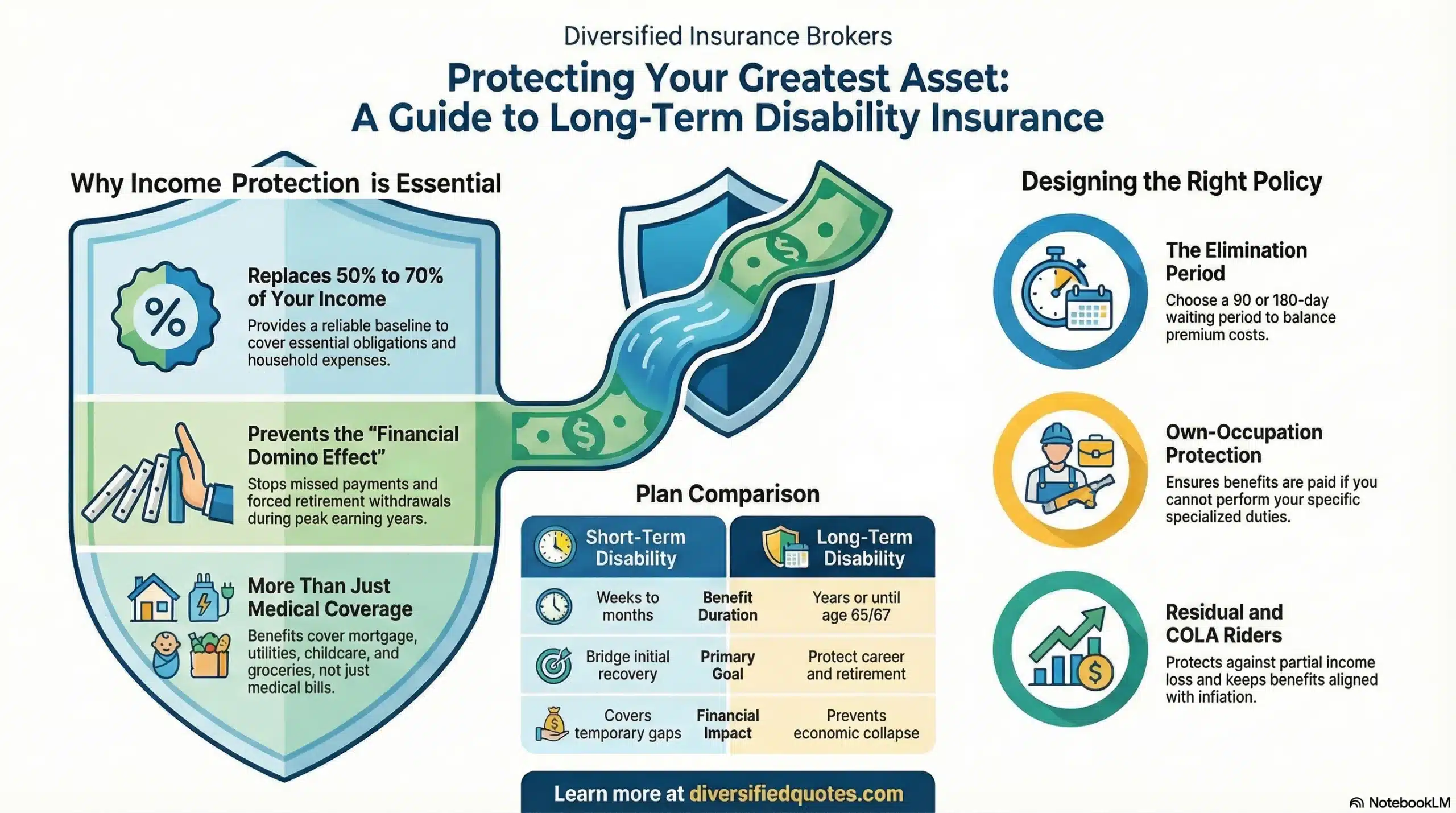
The own-occupation disability definition is the most consequential policy feature for all genetics professionals — and the cognitive nature of the disability risk that most genetics roles carry makes the precision of this definition especially important. For a research geneticist, the own-occupation definition means benefits are paid when a condition prevents the specific cognitive and analytical work of genetics research — experimental design, genomic data analysis, grant writing, and scientific judgment — regardless of whether the geneticist could theoretically perform other cognitively lighter work. For a genetic counselor, it means benefits are paid when a condition prevents the delivery of genetic counseling services — conducting family history assessments, interpreting genetic test results for patients, facilitating emotionally intensive disclosure conversations — even if the counselor could perform administrative or other non-clinical work. For a clinical geneticist, it means benefits are paid when a condition prevents the practice of clinical genetics — diagnosing genetic conditions, interpreting chromosomal and molecular results, managing patients with hereditary disorders — regardless of what other activity might theoretically be possible. Our resource on disability insurance riders explained covers the full range of provisions that accompany own-occupation definitions and how each shapes claim outcomes for scientific and clinical professionals.
The future increase option is particularly valuable for genetics professionals in the growth phase of their careers — genetic counselors advancing from early-career roles toward senior or leadership positions, research geneticists moving from postdoctoral positions to faculty and laboratory director roles, or clinical geneticists building an academic and clinical practice. This rider allows benefit amounts to increase as income grows without new medical underwriting, protecting against the scenario where career advancement produces income growth that outpaces a benefit amount locked in at an earlier career stage. Our resource on the disability insurance future insurability rider explains how this provision operates and why it is especially valuable for professionals in growing fields where income progression across a career can be substantial. A residual disability rider provides important protection for genetics professionals whose conditions may produce partial recovery — returning to some professional activities before reaching full capacity — through proportional benefit payment during the recovery arc. For genetics professionals evaluating long-term protection, our resource on disability income insurance with a COLA rider explains how inflation protection maintains benefit purchasing power across multi-year claim periods.
Coverage Gaps for Employed Genetics Professionals
Most genetics professionals — across clinical, research, and counseling specialties — are employees of hospitals, academic medical centers, universities, government agencies, or biotechnology and pharmaceutical companies, and have access to employer-provided group disability benefits. The structural weaknesses of group coverage are the same across these employment settings as they are for any employed professional: income replacement capped at 60 percent of base salary, monthly benefit maximums that cap coverage below actual income for higher earners, any-occupation definition conversion at 24 months, and coverage that ends when employment ends. For genetics professionals who earn above standard group plan caps — clinical geneticists, senior molecular geneticists, laboratory directors — the income gap between group benefit and actual income can be substantial. For genetic counselors and early-career research geneticists at more moderate income levels, the income gap is smaller in dollar terms but more financially consequential as a percentage of total household income.
For academic research geneticists whose compensation includes grant-funded components alongside base institutional salary, group coverage may only address the base salary portion — leaving the grant-funded income unprotected. Private practice or consulting geneticists have no group coverage at all and need primary individual disability coverage rather than supplemental. For all genetics professionals, the portability gap is particularly consequential in a field where career transitions between academia, industry, government, and clinical settings are common across a professional lifetime — no group plan follows those transitions, but an individual policy secured early in a career does. Our resource on is disability insurance worth it provides the financial framework for understanding how these gaps compound into significant household financial exposure across even moderate disability periods. Our resource on how much disability insurance you need provides a practical framework for calibrating the right benefit amount given existing group coverage and actual monthly household obligations.
Why Independent Broker Access Matters for Genetics Professionals
The genetics profession spans a wider range of employment structures, income levels, and occupational classifications than most single-specialty professional categories — from clinical geneticists at physician-equivalent classification and income levels, to genetic counselors at advanced professional classification levels, to research geneticists whose academic employment structures require specific income documentation expertise. Not every disability insurance carrier handles this full spectrum equally well, and identifying the carrier whose policy language, occupational class ratings, and benefit limits best match the specific genetics role and career stage requires independent access to the full marketplace.
At Diversified Insurance Brokers, we evaluate options across multiple carriers for every genetics professional we serve. We understand how to present the cognitive and analytical demands of research genetics accurately to underwriters, how to document academic and grant-funded income for benefit calculations, how to structure own-occupation definitions that capture the specific professional incapacity of genetic counseling practice, and how to identify the most favorable classification and coverage terms for each specific genetics role and career path. Our resource on why independent disability insurance brokers matter explains the full value of this approach for scientific and clinical professionals whose needs span a wide range of career structures within a single field.
When to Apply — The Timing Logic Across Different Genetics Career Paths
The optimal application timing differs across the genetics career spectrum but shares a common principle: apply as early as possible before health conditions accumulate in the medical record, while application age is lowest, and while the future increase option preserves the right to grow coverage as income grows. For clinical geneticists, this means applying during or immediately after the medical genetics residency — when the physician-equivalent classification is secured at a relatively young age and when GSI programs available through residency training may be accessible. For genetic counselors, it means applying upon completing the master’s program and entering the workforce, before the emotional demands of clinical genetics work and the repetitive strain of sustained computer work have produced documented health conditions. For research geneticists, it means applying during or immediately after the PhD or postdoctoral training period, before the laboratory and cognitive demands of a research career have accumulated in the medical record.
For genetics professionals at any career stage who have not yet secured individual coverage, applying before any health conditions — neurological concerns, psychiatric history, laboratory-exposure-related conditions, repetitive strain issues — appear in the medical record is the most important available timing decision. Coverage secured before these conditions are documented remains in force and comprehensively protects against them as they potentially develop across a career. For genetics professionals who already have documented health history, our resource on disability insurance with preexisting conditions covers what options remain available. Our resource on why disability insurance matters even when young and healthy provides the financial case for early application that is especially compelling for genetics professionals whose years of doctoral or medical training represent substantial investments in the income that individual disability coverage is designed to protect.
Request Disability Insurance Quotes for Geneticists
We work across clinical, research, and counseling specialties to compare carriers and structure policies that match your specific genetics career path and income level.
Get Disability Insurance QuotesRelated Disability Insurance Pages
Talk With an Advisor Today
Choose how you’d like to connect—call or message us, then book a time that works for you.
Schedule here:
calendly.com/jason-dibcompanies/diversified-quotes
Licensed in all 50 states • Fiduciary, family-owned since 1980
Disability Insurance for Geneticists — FAQs
Each role carries a distinct classification, income level, and disability risk profile that shapes how disability insurance is structured. Clinical geneticists — as ABMGG-board-certified physicians — receive physician-equivalent occupational classification from most disability insurance carriers, providing access to the strongest own-occupation definitions, the highest benefit limits, and the most favorable premium terms available in the market. Their income, which ranges well above $100,000 and can approach $150,000 or more for molecular geneticists and lab directors, requires benefit amounts that may exceed single carrier limits and need multi-policy coordination. Genetic counselors — as master’s-level certified professionals — receive favorable professional-tier classifications comparable to other advanced-degree clinical professionals, with own-occupation definitions available and premium levels appropriate to median incomes near $98,910. Research geneticists with PhD credentials working primarily in analytical and laboratory roles receive moderate to favorable classifications reflecting the scientific and cognitive nature of their work, with the specific classification depending on how the balance of laboratory, computational, and administrative duties is accurately presented. The disability risk profile also differs: clinical geneticists and genetic counselors face primarily cognitive and psychiatric risks from demanding clinical work; research geneticists face cognitive risk alongside laboratory chemical, biological, and ergonomic hazard exposure.
The disability risk profile for genetics professionals is primarily cognitive and psychiatric, with laboratory-specific physical and chemical risks applying to those with significant bench work. Neurological events — stroke, traumatic brain injury, progressive neurological conditions — represent the most acutely disabling scenarios for research geneticists and clinical geneticists whose professional value rests on sustained analytical precision, complex diagnostic reasoning, and the cognitive performance that genomic data interpretation and genetic diagnosis require. Even moderate neurological impairment can be professionally disabling in a field where data analysis, experimental design, and diagnostic accuracy require processing at the highest levels of cognitive function. For genetic counselors, psychiatric conditions — major depressive disorder, anxiety disorders, compassion fatigue progressing to clinical diagnosis — represent a significant and often underappreciated disability risk from the sustained delivery of emotionally devastating hereditary diagnoses. Musculoskeletal conditions from sustained laboratory work — pipetting injuries, neck and shoulder conditions from microscope work, repetitive strain from sustained computational work — represent the physical disability pathway most likely for bench and bioinformatics geneticists. Laboratory animal allergies progressing to occupational asthma are a documented risk for research geneticists whose work involves animal models of genetic disease.
It matters enormously — and in ways that are specific to the cognitive nature of genetics research that general disability policy descriptions may not make obvious. A research geneticist’s professional value is built on specific analytical capabilities: the ability to design rigorous genetic experiments, interpret complex multi-dimensional genomic datasets with statistical precision, write grants and papers that advance scientific understanding, and exercise the expert judgment that distinguishes productive genetics research from technically competent but scientifically unproductive activity. A neurological condition that impairs working memory, processing speed, or executive function at the level that complex genetic data analysis requires can be professionally disabling — preventing the specific cognitive precision that research genetics demands — while leaving the geneticist able to perform cognitively simpler tasks, interact socially, or carry out basic daily activities. Under an own-occupation definition, this professional incapacity qualifies as disability and triggers benefits. Under an any-occupation definition, benefits would be denied because the geneticist retains some cognitive capacity for other types of work. For a profession where intellectual precision is the entire product of professional labor, the own-occupation definition is not a technical distinction — it is the mechanism that determines whether disability coverage actually pays when the most probable career-ending events occur.
The academic employment structure creates income protection complexity that standard employee disability planning does not address. Many academic research geneticists hold positions where total compensation combines base institutional salary with grant-funded salary components, startup packages, consulting income, speaking fees, and other variable sources. Employer group disability coverage typically covers only the base institutional salary — leaving grant-funded income components unprotected. Individual disability insurance covers documented earned income from all sources, providing protection across the full compensation picture. For junior faculty and postdoctoral researchers whose positions are primarily or entirely grant-funded, the base institutional salary component may be minimal or absent, making the grant-dependent income the primary protection need — and individual coverage, rather than group supplementation, the primary coverage vehicle. Additionally, career transitions in academic genetics — from postdoctoral positions to faculty, from university to industry, from domestic to international institutions — are common across a research career, and group coverage provides no continuity across those transitions. An individual policy secured early in the research career travels through every transition, providing continuous protection regardless of the institutional employment structure at any given career stage.
Research genetics laboratories handle a broad range of potentially hazardous materials that create chronic occupational exposure relevant to disability planning. Chemical hazards include mutagens, carcinogens, solvents, and reagents that research on laboratory workers has associated with both acute and long-term health effects — skin conditions, respiratory effects, and potentially elevated cancer risk with sustained exposure. Gene therapy and viral vector research laboratories may operate at biosafety level 3, handling agents with infectious potential and novel genetic constructs whose long-term health risks remain incompletely characterized. For genetics researchers whose work involves laboratory animals — mouse models of genetic disease, developmental genetics using animal systems, behavioral genetics research — published data indicates that 20 to 30 percent of animal laboratory workers develop allergies to animal proteins, and approximately 5 percent progress to occupational asthma that can prevent continued work in animal research environments. An individual disability insurance policy that covers disability from any qualifying cause — regardless of whether it is attributed to an occupational chemical or biological exposure or a non-occupational medical event — provides comprehensive protection across this full range of health events. Workers’ compensation, by contrast, covers only directly work-attributed events and consistently fails to address gradual-onset conditions from cumulative occupational exposure.
Yes — and the specific nature of genetic counseling work makes this concern particularly grounded rather than theoretical. The genetic counseling role involves sustained delivery of emotionally intensive information — positive BRCA results that change a patient’s understanding of their cancer risk, prenatal diagnoses of conditions incompatible with life, Huntington’s disease confirmations in young adults, and the full range of hereditary diagnoses that fundamentally alter a family’s future. Genetic counselors bear the primary communication responsibility for these conversations in most clinical genetics programs, creating a sustained emotional exposure that the genetics counseling literature specifically identifies as a source of compassion fatigue and secondary traumatic stress. When these occupational exposures progress to clinically diagnosable psychiatric conditions — major depressive disorder, anxiety disorder, PTSD — they can prevent the specific clinical functions that genetic counseling requires: conducting emotionally intensive disclosure sessions, managing complex family dynamics around hereditary diagnoses, providing psychological support through catastrophic genetic results. Individual disability policies cover psychiatric disability when it meets clinical diagnostic criteria and produces documented functional impairment preventing professional activity. Most policies apply a 24-month duration limit to psychiatric claims — reviewing this specific provision carefully is important for genetic counselors evaluating policy options, as the duration limit may be the most consequential single coverage term for this specific disability risk.
The standard underwriting target is 60 to 70 percent of gross monthly earned income — which for a genetic counselor at the $98,910 BLS 2024 median produces a monthly benefit target of approximately $4,950 to $5,770. For genetic counselors employed with group disability coverage already in place, the individual supplement targets the gap between what the group plan pays and the total replacement target — typically in the range of $1,500 to $2,500 per month for counselors at median income levels, adjusted for any group plan monthly caps. For genetic counselors in private practice, telehealth genetics services, or consulting arrangements without group coverage, the individual policy provides primary income replacement rather than supplemental coverage. The practical sizing goal is ensuring the total combined monthly benefit actually covers all monthly household obligations during a disability: student loan payments from master’s genetic counseling programs, housing costs, family expenses, and personal insurance all continue at their pre-disability level when a counselor cannot work. Ensuring those specific obligations are covered — not just a percentage calculation applied to gross income — is the concrete financial planning goal that drives the right benefit amount decision.
Often yes — and the classification difference can be favorable for computational specialists whose work is primarily cognitive and computer-based rather than laboratory bench-based. Bioinformaticians and computational genomics scientists whose daily work involves genomic data analysis, software development, statistical modeling, and manuscript writing carry a professional profile that most disability insurance carriers evaluate similarly to other highly trained technology and scientific professionals whose work is primarily sedentary and cognitive. This can produce more favorable occupational class ratings than those available to bench geneticists whose work involves significant laboratory chemical and biological exposure, physical laboratory procedures, and the repetitive manual tasks that ergonomic research documents as sources of musculoskeletal disorder in laboratory workers. For computational genetics professionals, the primary disability risk is cognitive — neurological events, progressive neurological conditions, severe psychiatric conditions — rather than physical. The own-occupation definition for a bioinformatician means benefits are paid when a condition prevents the specific computational and analytical work that generates professional income, regardless of whether the scientist could perform other types of less cognitively demanding work. Presenting the primarily computational and analytical nature of a bioinformatician’s work accurately to underwriters — rather than accepting a generic laboratory scientist classification that may not capture the actual duty profile — is an area where broker expertise produces better coverage outcomes.
The best time differs somewhat across the genetics career spectrum but shares a common principle. For clinical geneticists in medical genetics residency, the optimal window is during training — when physician-equivalent classification is secured at a relatively young age, when GSI programs through training programs may offer access to comprehensive coverage without individual medical underwriting, and before the clinical demands of genetics practice have produced any documented health conditions. For genetic counselors, the optimal window is upon completing the master’s program and beginning clinical practice — before the emotional demands of delivering hereditary diagnoses and the repetitive strain of sustained computer work have been documented in the medical record. For research geneticists, the optimal window is during or immediately following the PhD or postdoctoral period — before laboratory chemical or biological exposure, animal allergen sensitization, or repetitive strain conditions have been documented. In all cases, applying while young and healthy captures the lowest available premium, the most comprehensive coverage terms, and the future increase option that allows benefit amounts to grow with career income without additional underwriting. The years of doctoral or medical training that geneticists invest before reaching independent professional practice represent a substantial commitment — protecting the income that investment generates is a planning priority from the earliest career stage, not an afterthought after other financial decisions have been made.
Yes — for genetics professionals whose work is essential to a laboratory, clinical program, or specialized team in ways that their incapacity would produce significant disruption, key person disability insurance can be structured to protect the organization rather than just the individual. Research geneticists who are principal investigators on major NIH grants represent a clear key person scenario — their disability could prevent the research program from continuing, jeopardize grant funding that supports multiple laboratory members, and disrupt scientific objectives that took years to establish. Clinical genetics programs where one or two board-certified geneticists provide the specialized diagnostic services for a hospital system represent another key person scenario — their disability disrupts patient care in a specialty where replacement is difficult due to limited training program capacity. Biotechnology and pharmaceutical company geneticists who lead critical drug development programs may represent key person interests for their employers as well. Key person disability insurance is typically purchased by the organization — the university, the hospital, the company — to cover the financial impact of a key professional’s disability on the organization’s operations, as a complement to the individual’s own personal disability income replacement policy. Our resource on key person disability insurance covers how these policies work and when they make financial sense for organizations dependent on specialized genetics expertise.
About the Author:
Jason Stolz, CLTC, CRPC, DIA, CAA and Chief Underwriter at Diversified Insurance Brokers (NPN 20471358), is a senior insurance and retirement professional with more than 25 years of real-world experience helping individuals, families, and business owners protect their income, assets, and long-term financial stability. As a long-time partner of the nationally licensed independent agency Diversified Insurance Brokers, Jason provides trusted guidance across multiple specialties—including fixed and indexed annuities, long-term care planning, personal and business disability insurance, life insurance solutions, Group Health, Travel Medical and Evacuation Insurance, and short-term health coverage. Diversified Insurance Brokers maintains active contracts with over 100 highly rated insurance carriers, ensuring clients have access to a broad and competitive marketplace.
His practical, education-first approach has earned recognition in publications such as VoyageATL, and contributions from his agency featured in Kiplinger and GoBankingRates— highlighting his commitment to financial clarity and client-focused planning. Drawing on deep product knowledge and years of hands-on field experience, Jason helps clients evaluate carriers, compare strategies, and build retirement and protection plans that are both secure and cost-efficient. Visitors who want to explore current annuity rates and compare options across multiple insurers can also use this annuity quote and comparison tool.
Explore More Disability Insurance Options: Browse our complete guide to Disability Insurance for Technology, Science & Education — covering software developers, engineers, scientists, teachers, architects & researchers from 100+ carriers.
Last Reviewed: June 8, 2026 |
Reviewed by: Jason Stolz, CLTC, CRPC, DIA, CAA
Chief Underwriter, Diversified Insurance Brokers, Inc. | NPN: 20471358 | Diversified Insurance Brokers, Inc. — Licensed in all 50 states
Fact Checked by: Tonia Pettitt, CMIP©
Medicare Specialist, Diversified Insurance Brokers, Inc. | NPN: 14374308 | Diversified Insurance Brokers, Inc. — Licensed in all 50 states
Did you find this content helpful? Leave us a Google review — it helps others find trustworthy guidance too.
Editorial Standards: Diversified Insurance Brokers maintains rigorous editorial standards to ensure accuracy, clarity, and independence in all content. Learn more about our editorial standards and commitment to transparency.
